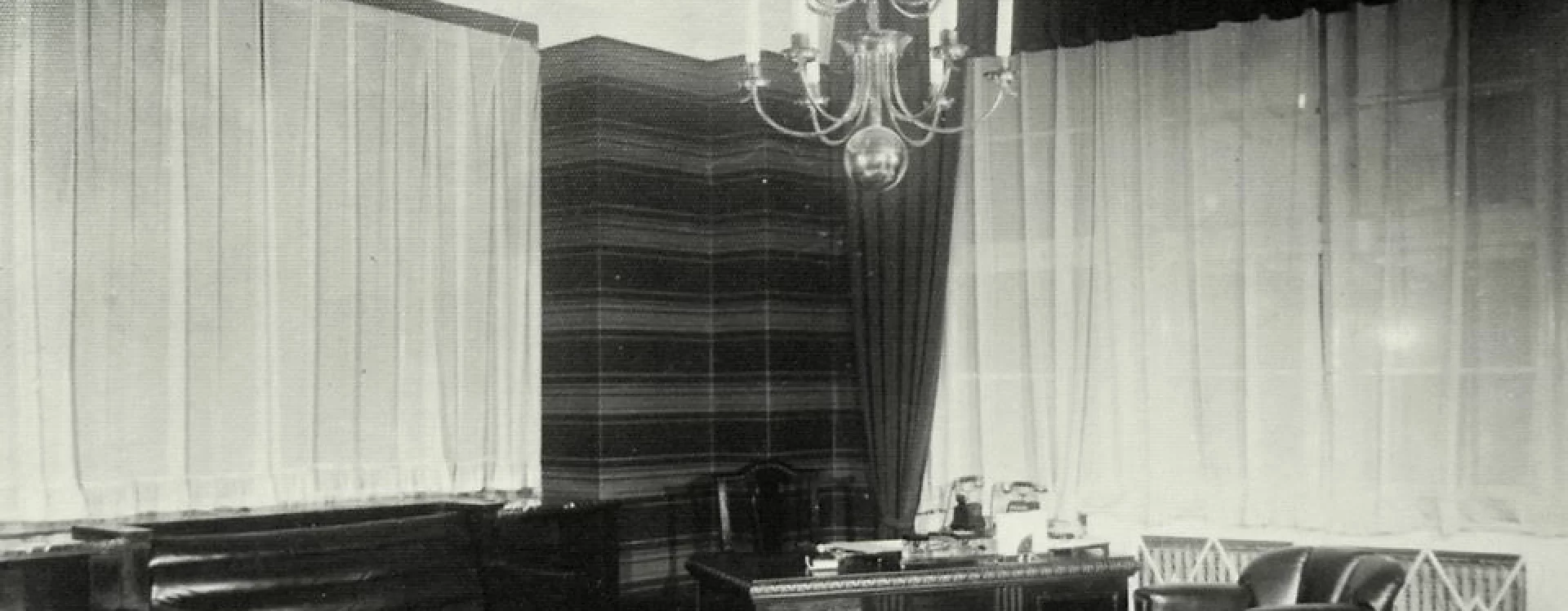
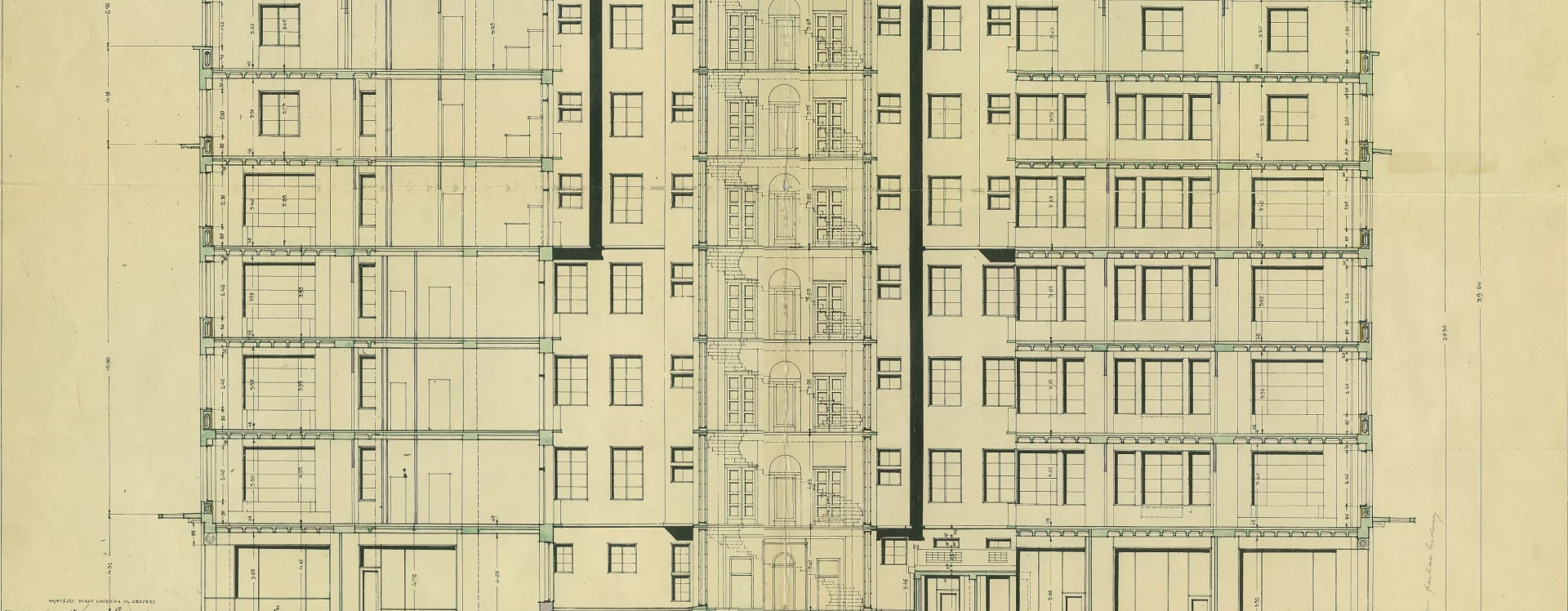
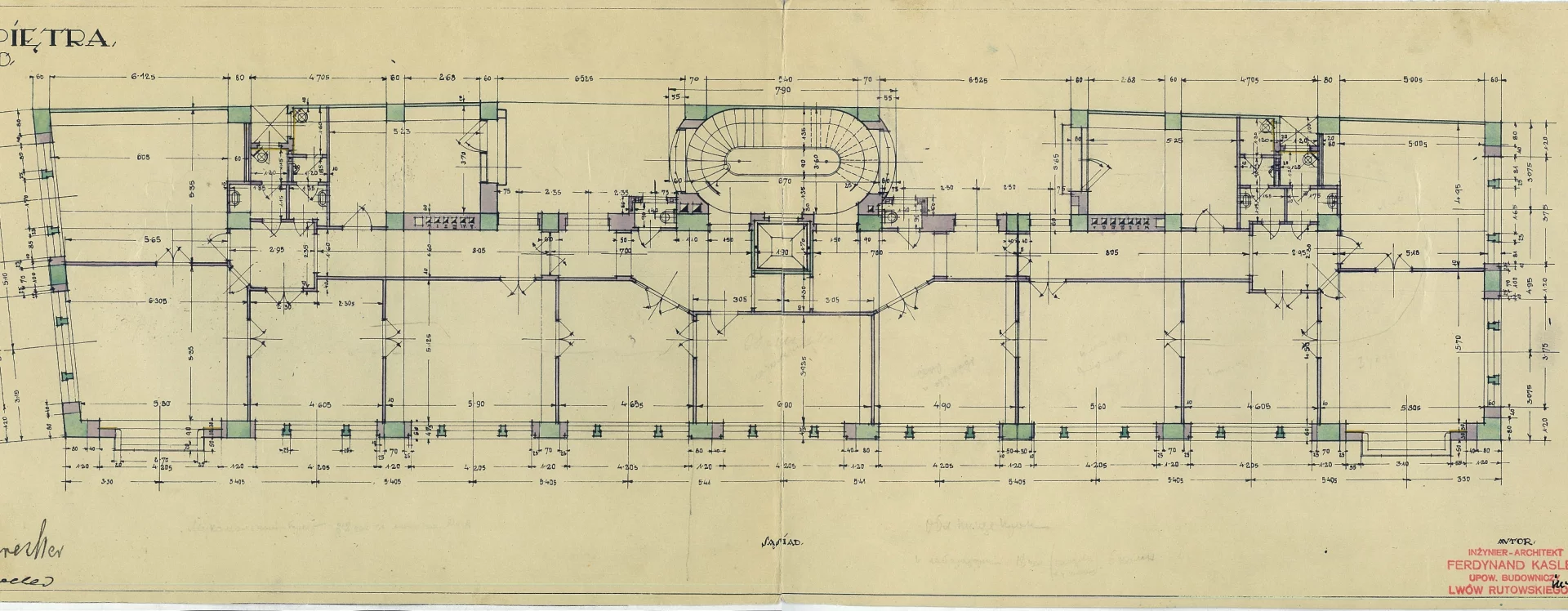
The building on Shevchenka Avenue, 7 (formerly Akademichna Street) was erected for one of the richest Lviv entrepreneurs, Jonas Sprecher, that’s why it is called “Sprecher’s skyscraper.” It is considered one of the most representative in the style of modernism in Lviv. The building was used as an office building, there were shops on the ground floor, and a part of it was rented for high-class apartments.
The simple, plain facade was a perfect surface for neon advertisements; huge glass shop windows on the ground floor, accentuated by horizontal lighting incorporated into the building's canopy, invited customers even after dark. The building seemed to float between heaven and earth since it was plastered with a layer of shiny, bright mica that contrasted with the ground floor’s heavy travertine panelling. Sprecher’s skyscraper attracted corporations and banks, with fashion shops and car showrooms on the ground floor.
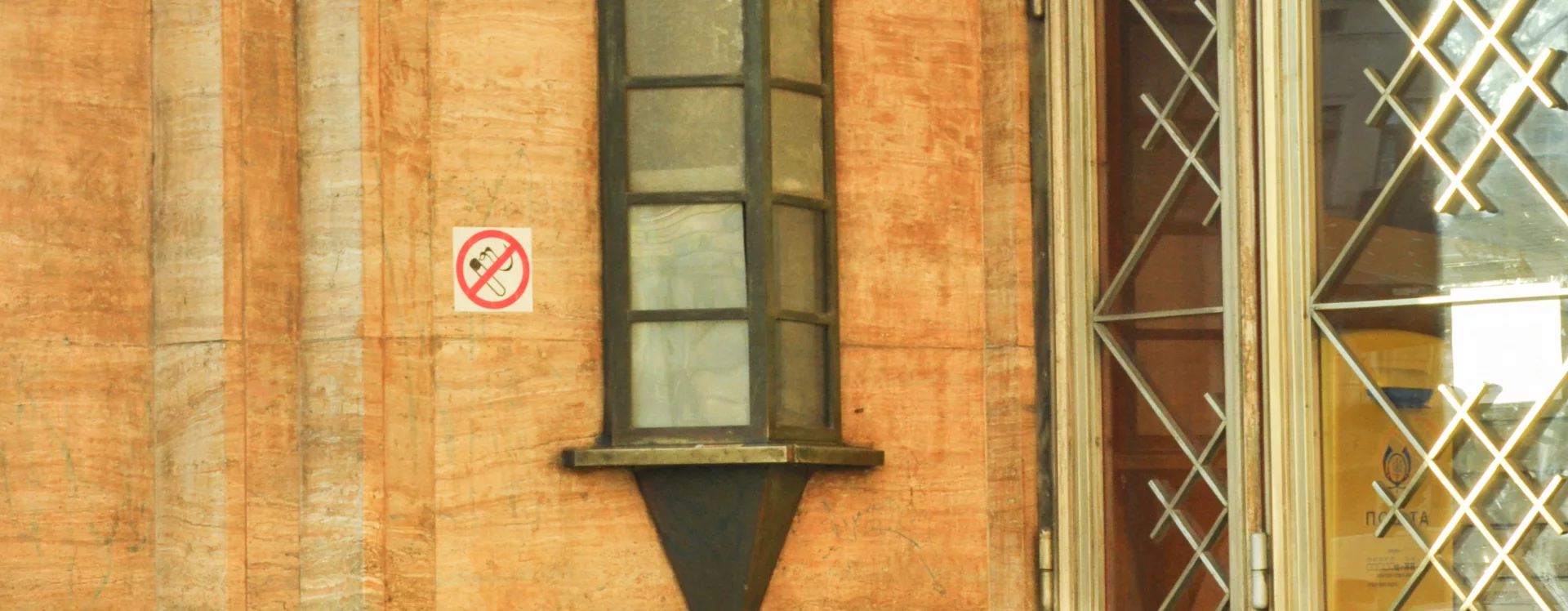
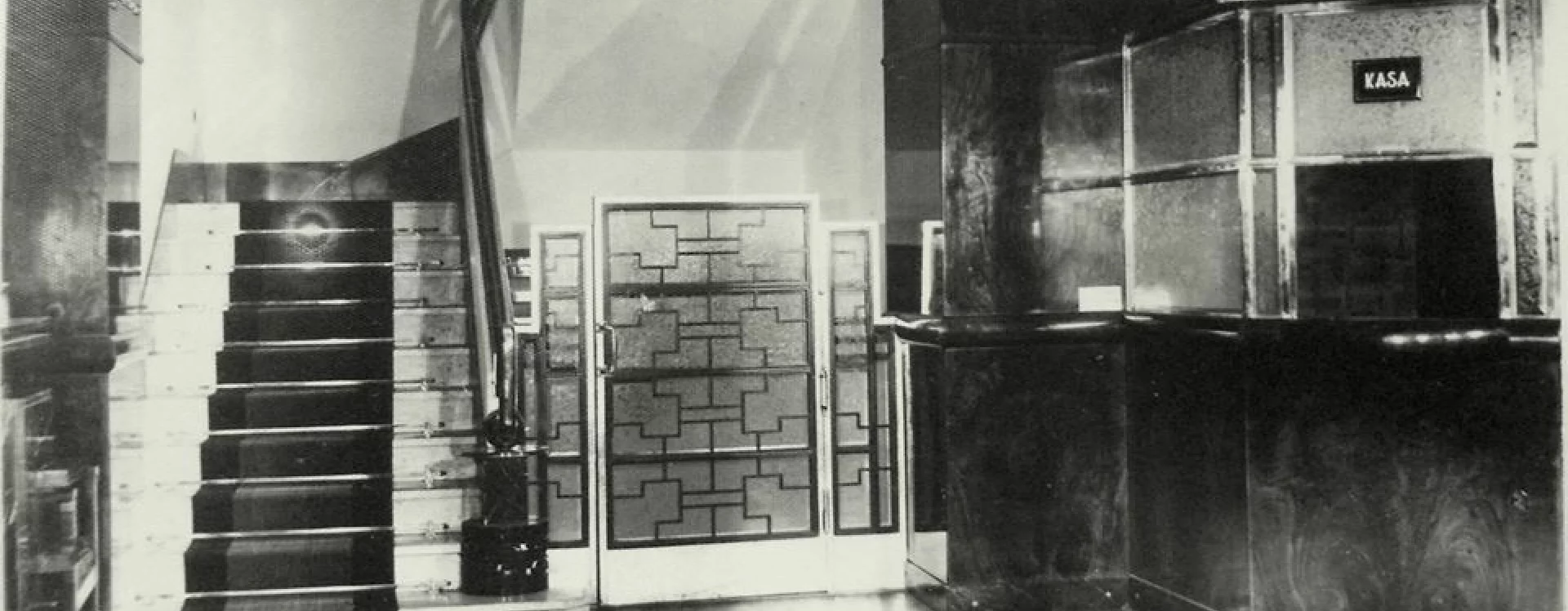
The height of the building is about 30 meters. It has a reinforced concrete frame, filled with brick. Large bay windows are placed vertically along the entire height of the house. The entrance to the stairwell is accentuated with triangular lamps in Art Deco style. The original window joinery and plaster on the facade have been preserved everywhere. The entrance door has original lattices of a geometric pattern. In the hallways, there are doors in a solemn style with glass handles, set in holders made of chromed metal.
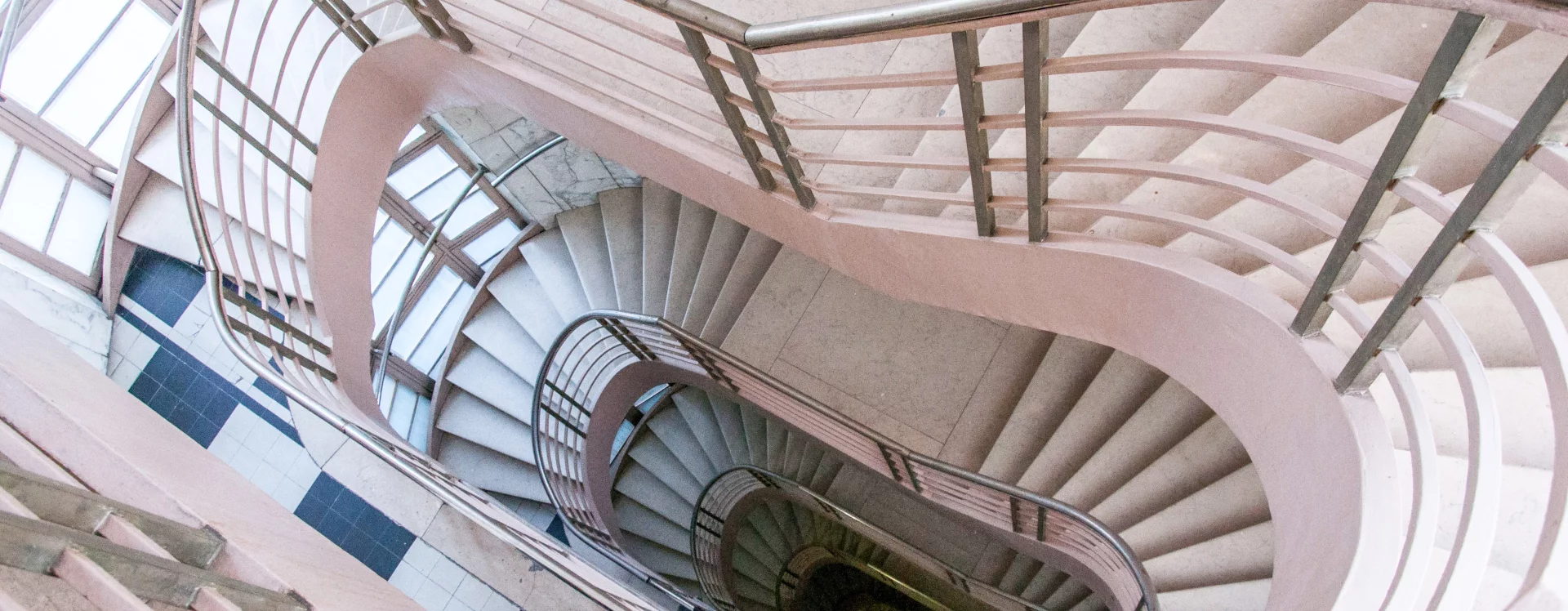
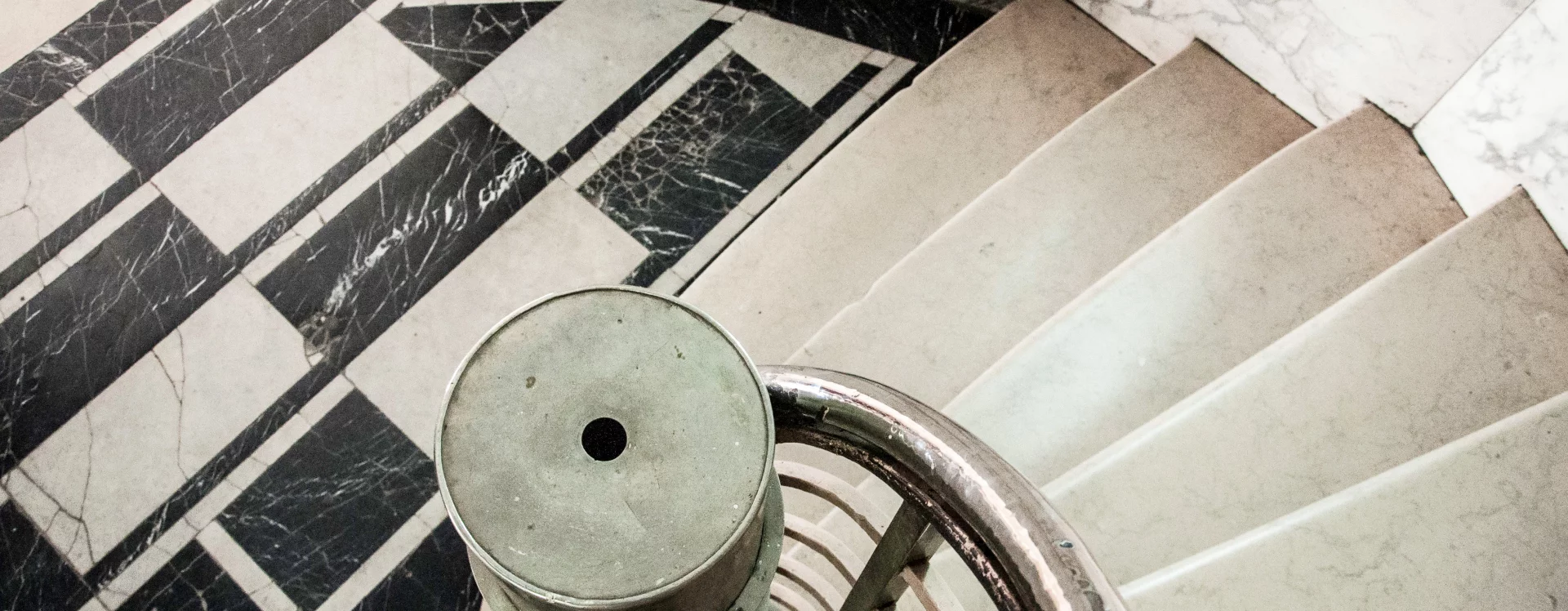
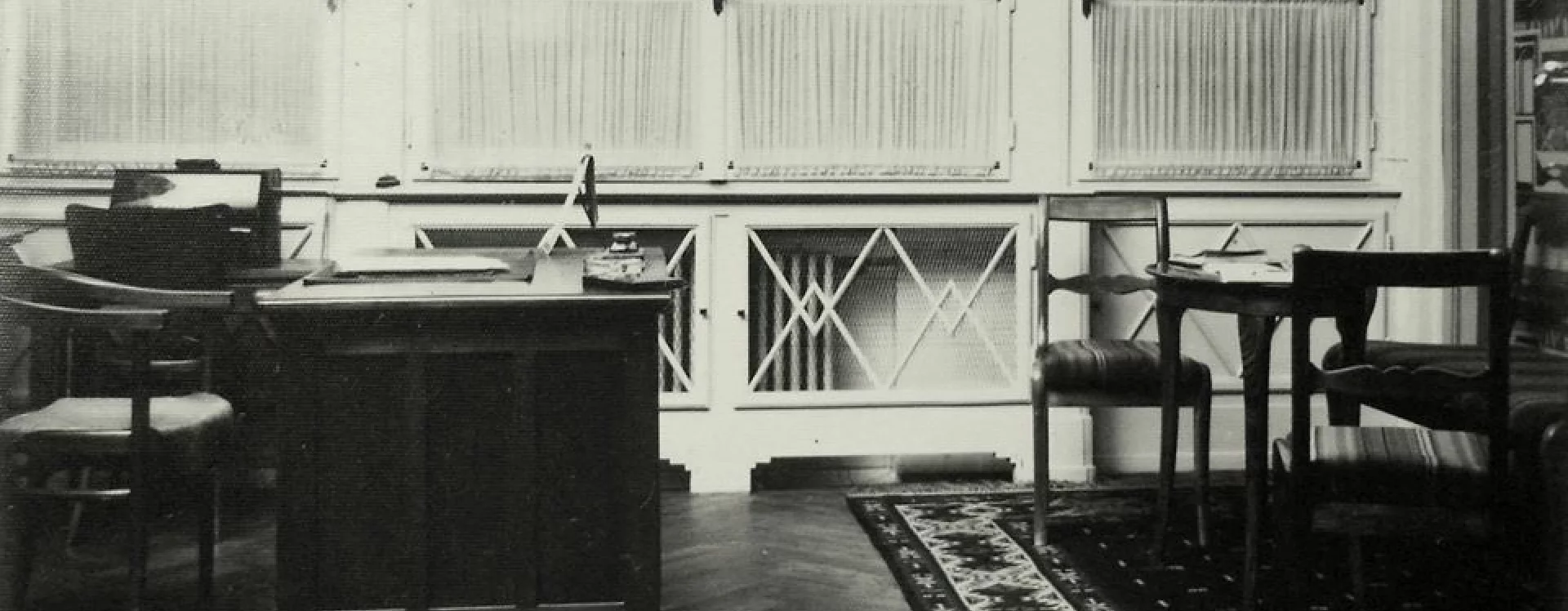
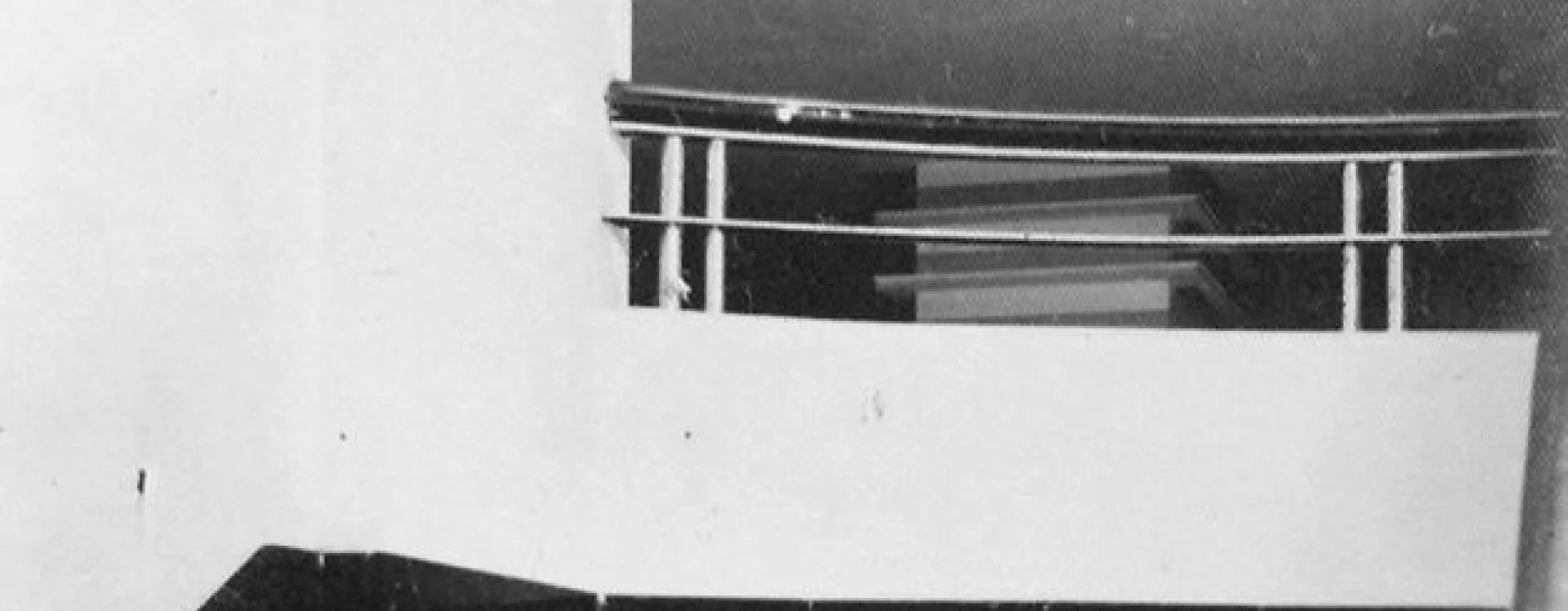
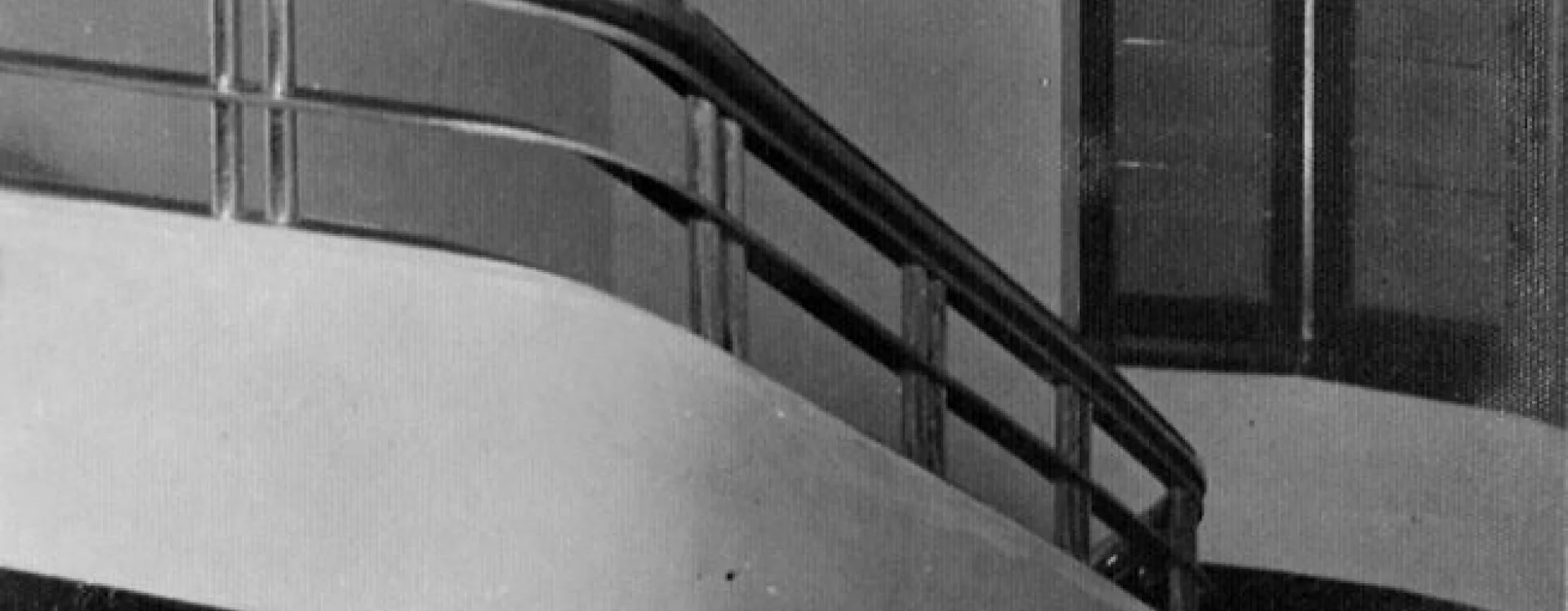
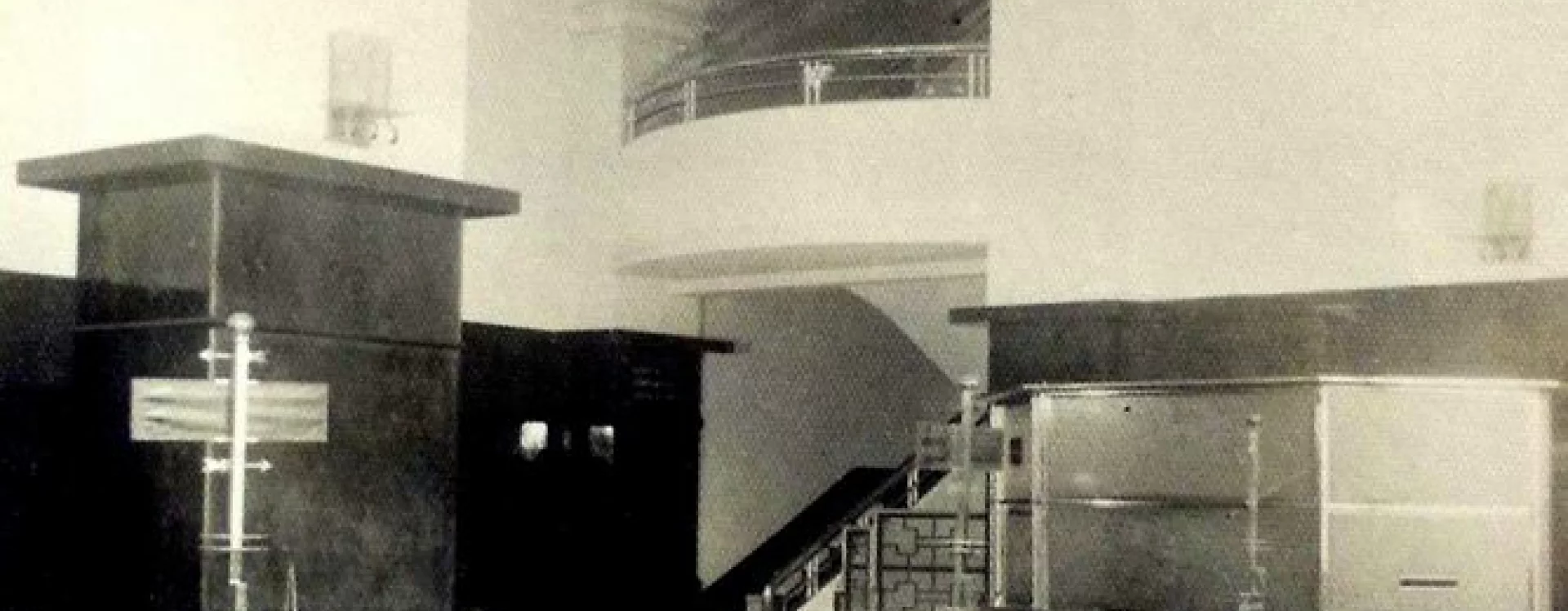
Art Deco ornaments can be traced in the decoration of the doors leading to the office premises of the building, which have latches, crystal-shaped eyelets, a popular technique of Lviv Art Deco. The same shape is repeated on the panels that cover the radiators. The floor in the vestibule is covered with black and white marble tiles. It fits well with the chrome panel behind which the radiator is placed. The staircase balustrade begins with a column on which a lantern had probably been placed. As for the lighting, original ceiling lamps placed in oval recesses have been preserved on the ceilings. The lamp itself extends along the perimeter of the elongated suspended structure in the middle of the recess. It is covered with a matte plafond. The balustrade of the stairs impresses with its expression: here, the rapid movement of the interwar period froze in the elongated, broken, steep turns of the stairs and shiny handrails made of chromed metal. The light enters through the side windows, in which “frosted glass” is still preserved. However, the main source of light was a skylight made of luxfers (glass bricks), which is visible on the ceiling. Now it is painted with oil paint and doesn’t serve its function anymore. The building had two elevators made by the Viennese company Arthur Freisler. In 1968, the smaller elevator located within the staircase was dismantled.
The building was not just a consumerist Mecca, but presented modernist forms and a new world for inspired painters, photographers, and philosophers. Life was bustling around the building, and for many people, it was their dream workplace and the centre of their universe. “I don't like travelling; I've never left Lviv... I follow the principle that home is best,” said the owner of the building, Jonas Sprecher, in an interview with the local newspaper. Neither Sprecher, Kassler, nor anyone working or shopping at the Sprecher skyscraper ever envisioned that their world would disappear someday. Like many other manufacturers and architects, they refused to leave the city and were killed during the Holocaust. After the war, the Soviets nationalized the Sprecher skyscraper: instead of neon advertisements, they put a communist party slogan on the facade. The building became the Trade Union Headquarters, where everyone acted as if the trade unions were playing a role in the totalitarian state. When Ukraine acquired independence, commercial uses returned, and the building was open to the public. After the Russian full-scale invasion of Ukraine, a military organisation moved in: instead of office signs, they hung a portrait of their dead comrade at the main entrance door and banned anyone from entering the building.
Myroslava Liakhovych