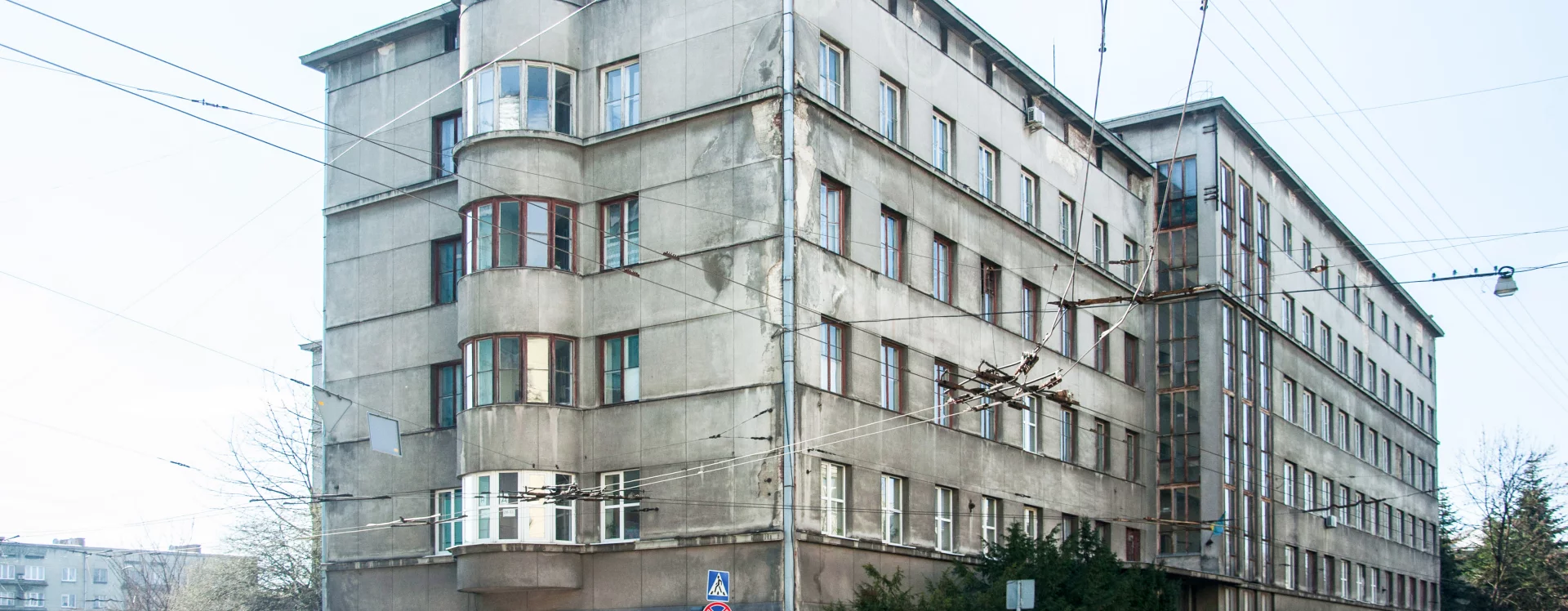
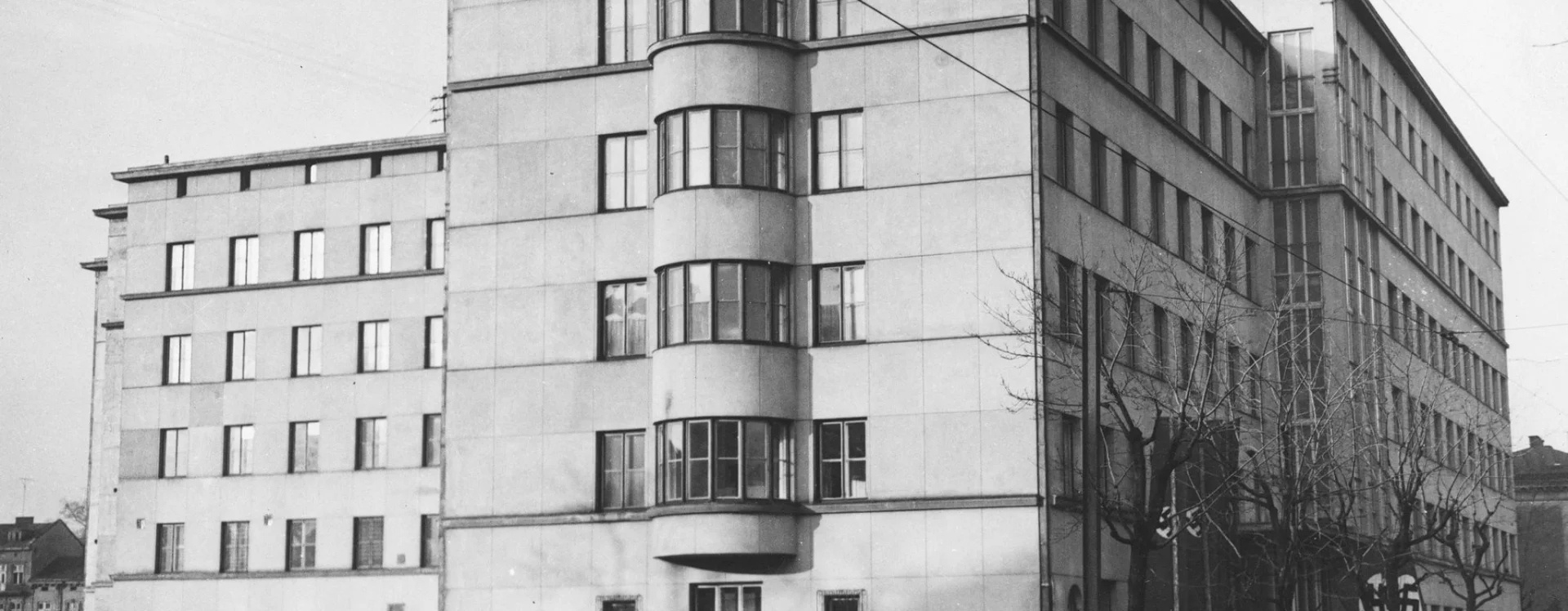
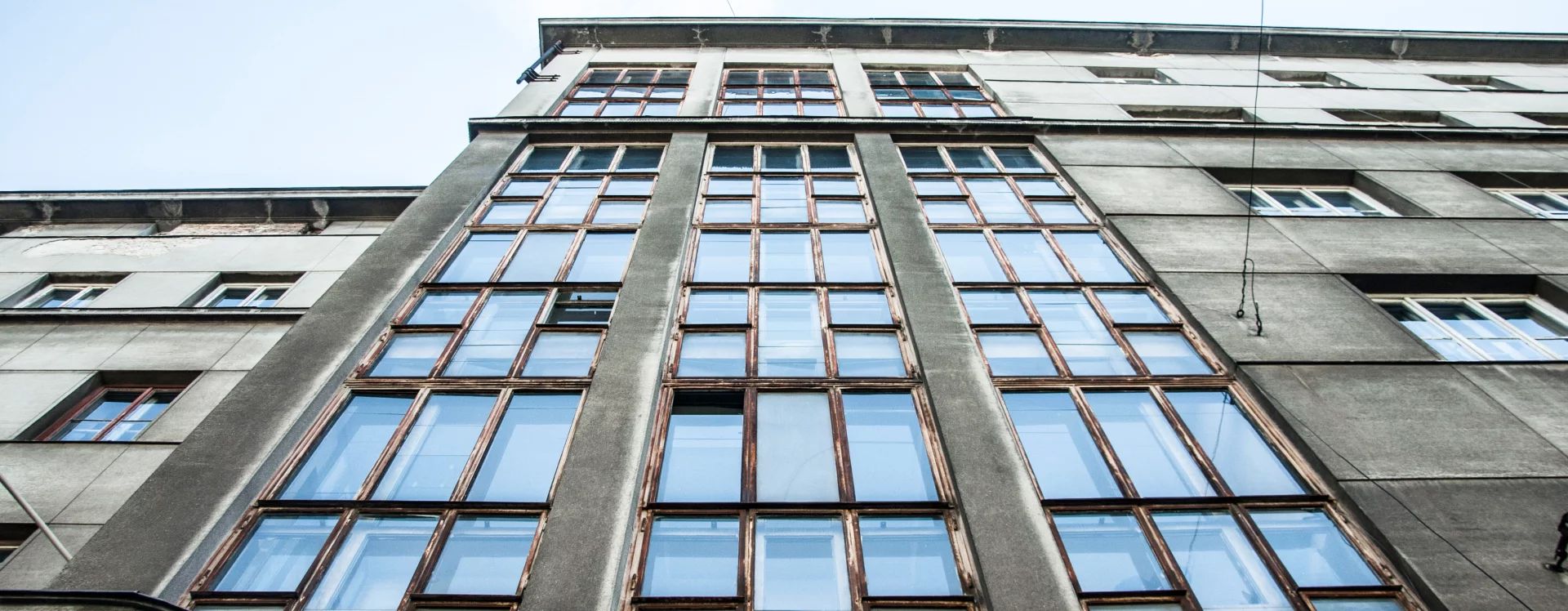
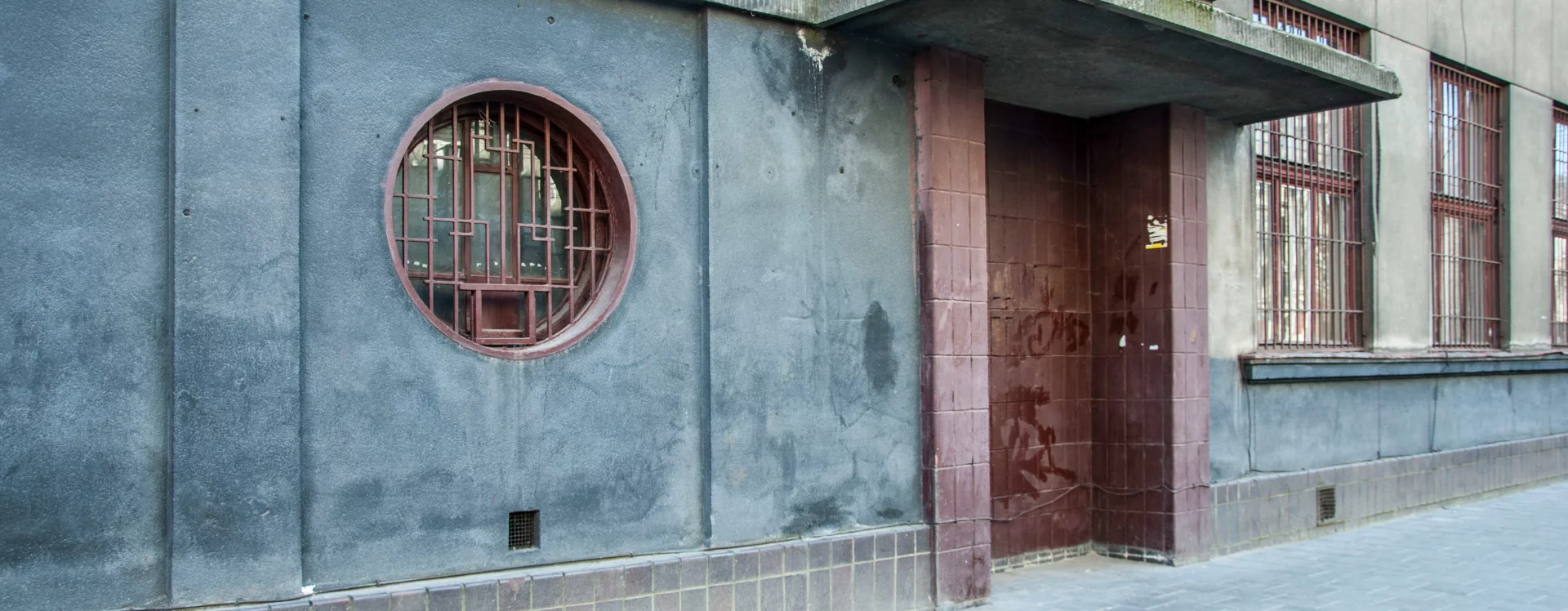

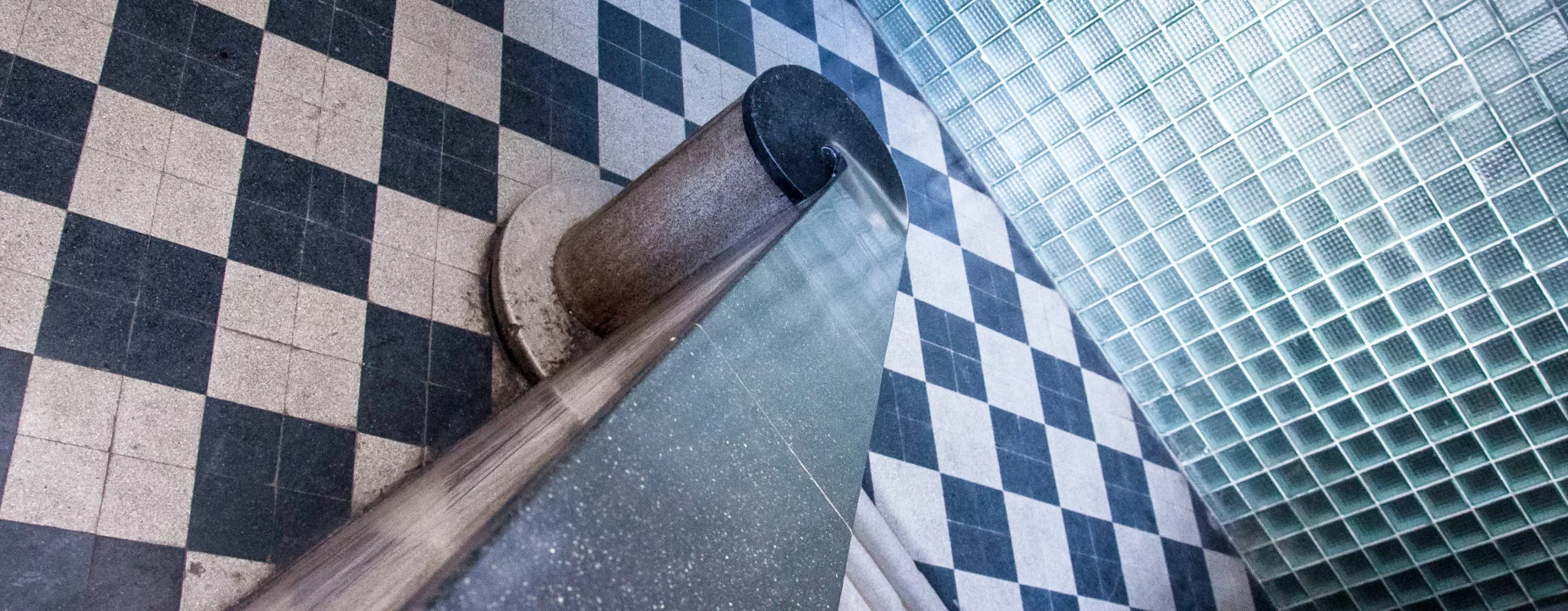
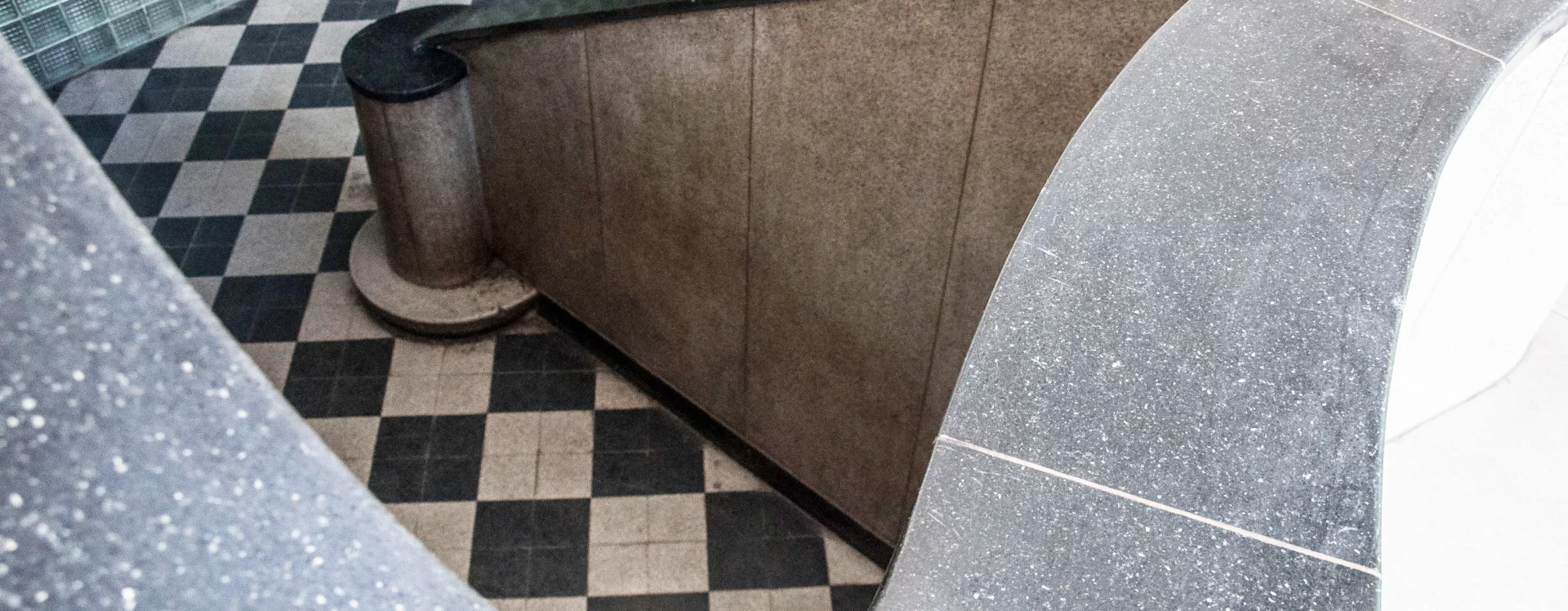
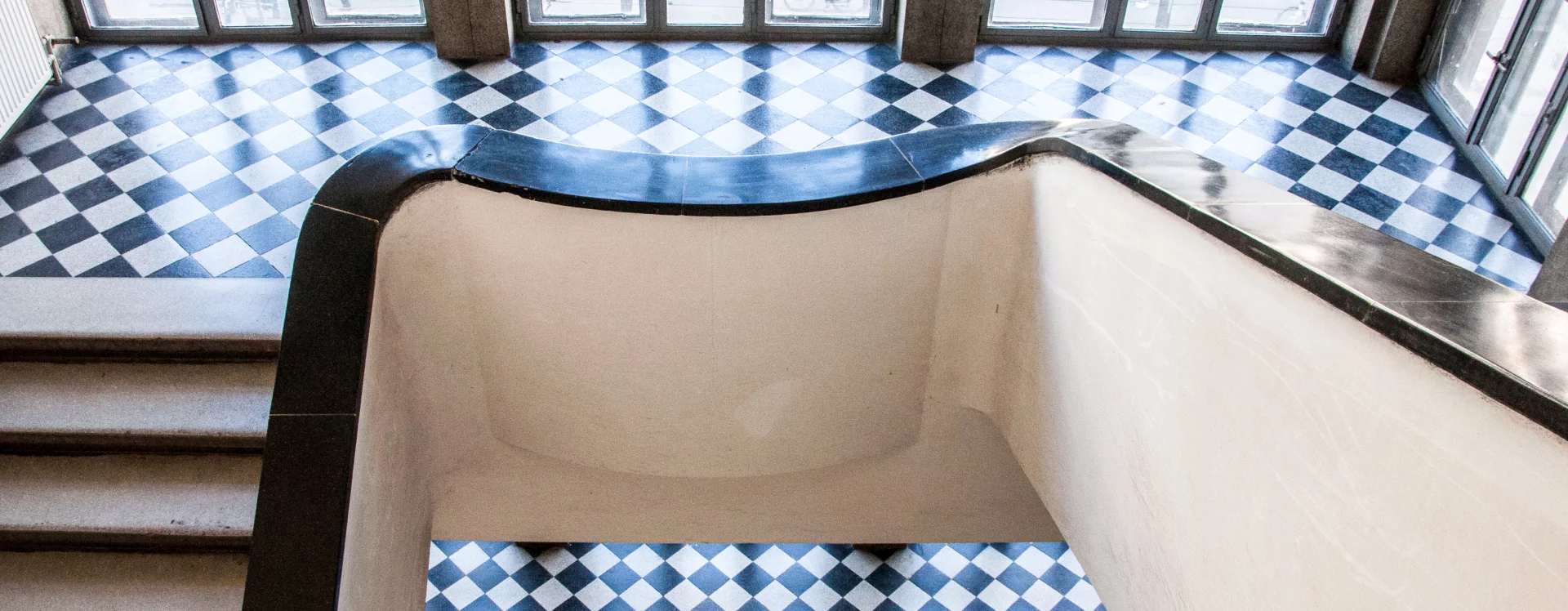
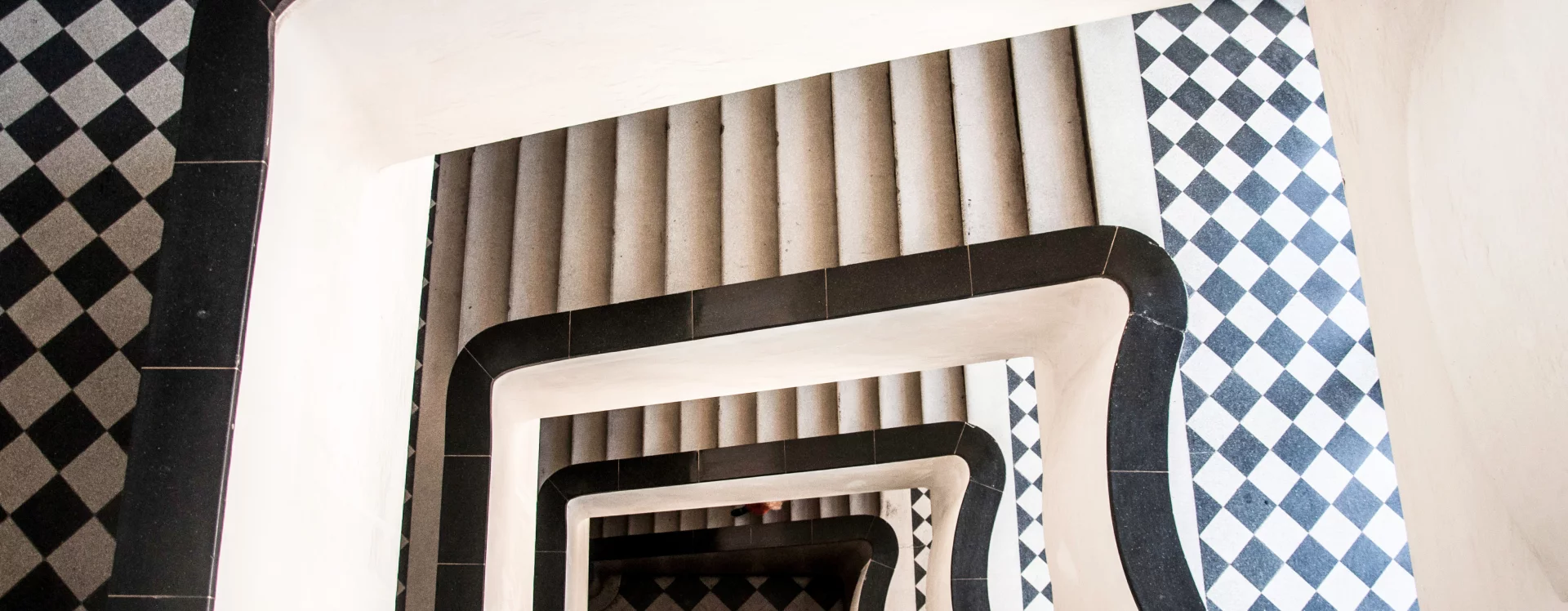
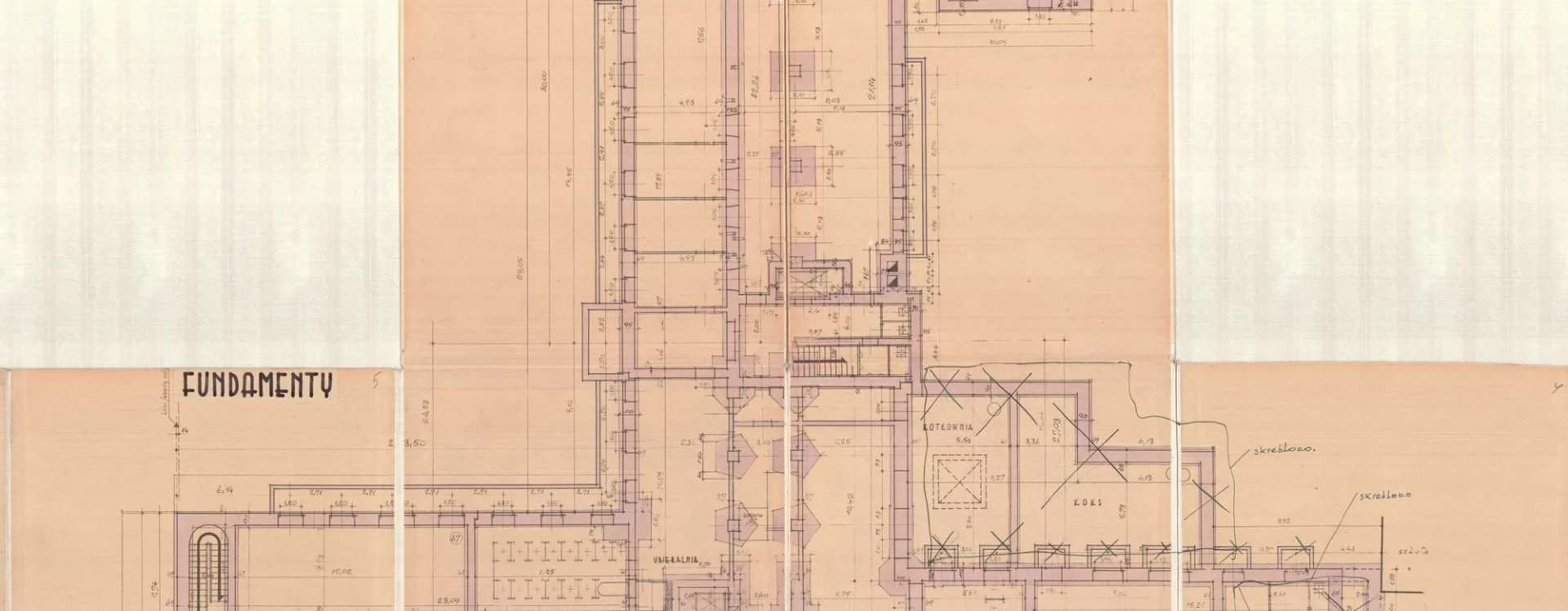
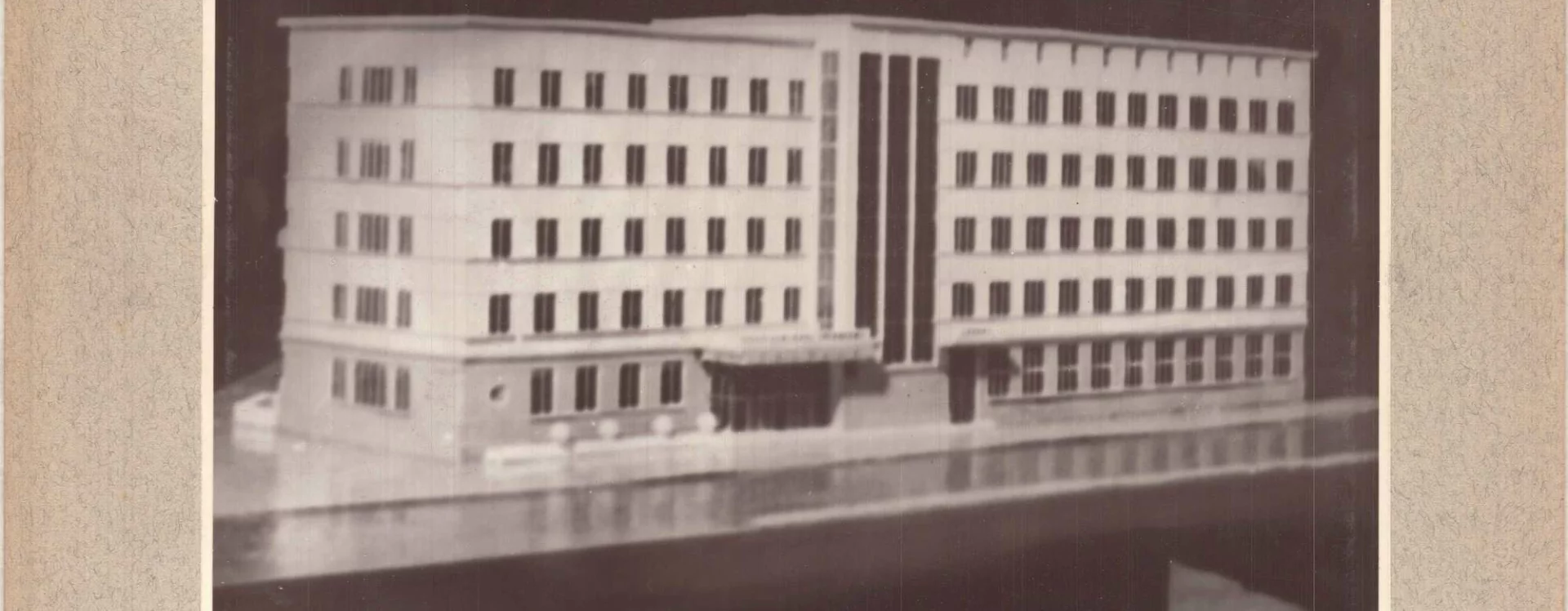
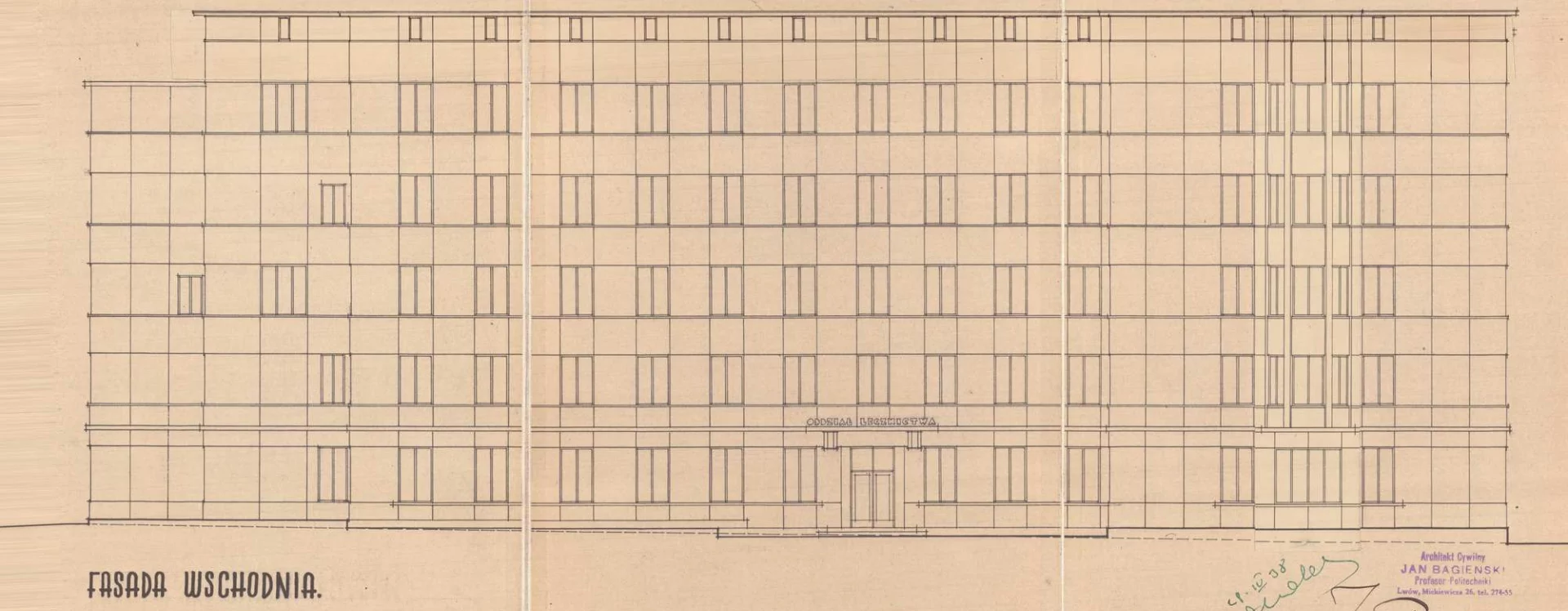
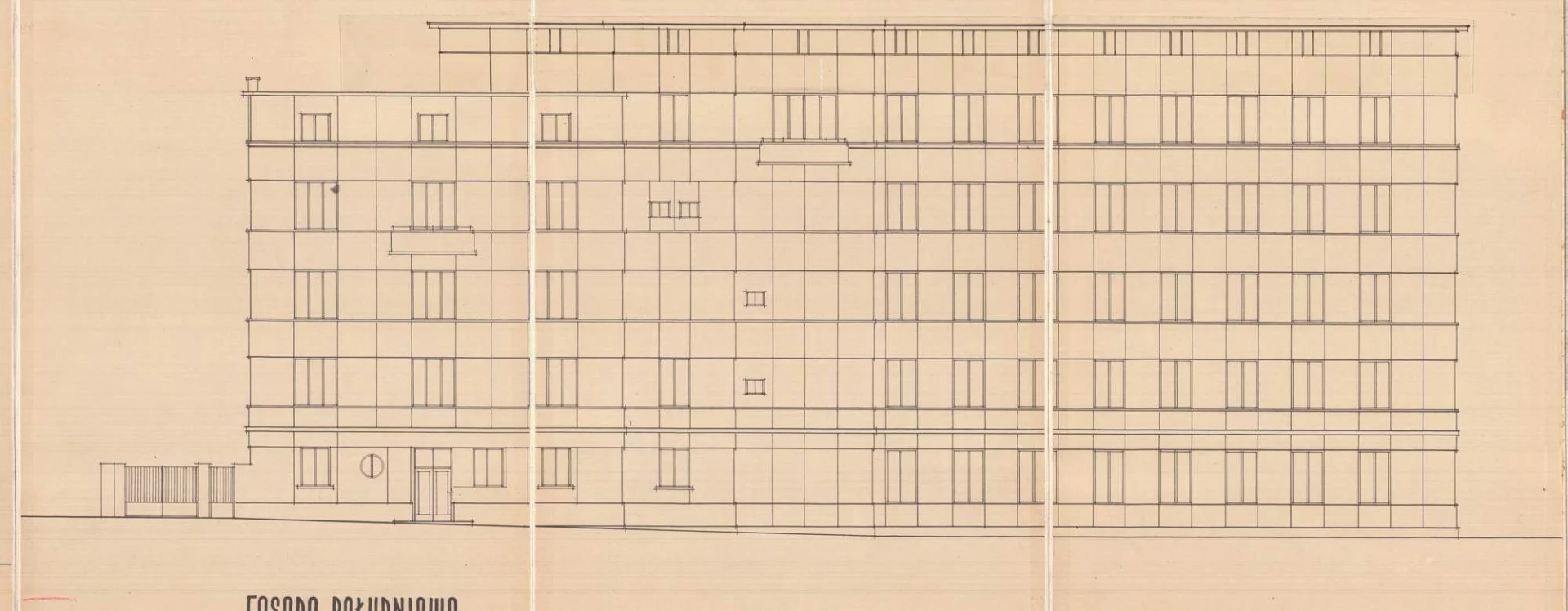
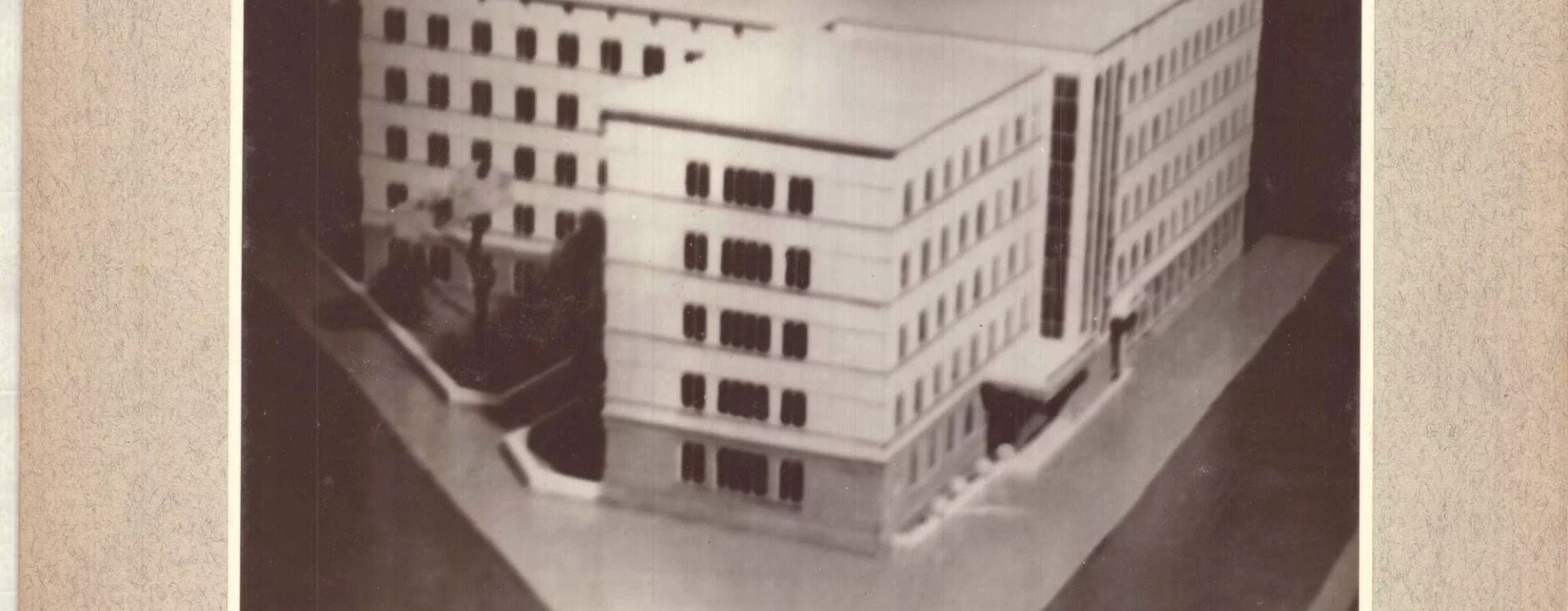
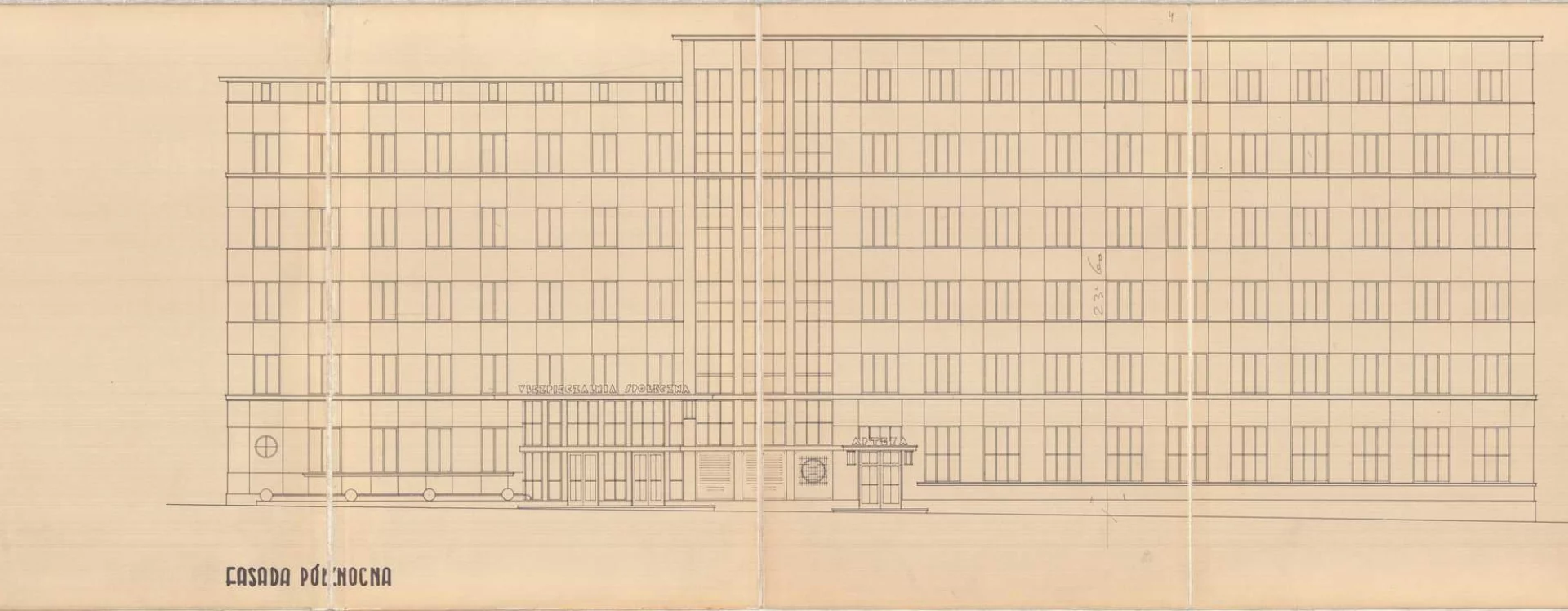
The building of the Social Insurance Institution, as it was called in the interwar period, is a vivid example of functionalism. The facade is divided into three symmetrical parts and its original plaster has been preserved. The fully glazed stairwell looks beautiful and functional: elongated glazing that illuminates the central balustrade of the building; there are porthole windows, and a semicircular risalit protruding from the left side of the building. At that time, it was a real skyscraper: six floors. The house has a wide entrance portal. Authentic doors and handrails are still preserved.
Despite the strict geometry of the facade, the interior of the building received the wavy, streamlined form of the central balustrade. The flight of stairs, cast completely from concrete, ends with railings in the terrazzo technique. The entrance to the building leads to a large vestibule. A spacious stairwell starts from the vestibule. Corridors diverge in the lobby. An elevator was designed in the building. Everything was thought out for the comfort of office workers. The staircase balustrade is well lit by large panoramic windows fronting Zelena Street. The areas between the stairs are laid out with patterns of black and white tiles. The best perspective on the central flight of stairs opens from the bottom or top of the stairs ensemble and creates a moving picture that materializes the speed of time and the whirlwind of events in the first half of the 20th century in Lviv.
As for the style of the building, in the 1930s, especially at the end, public buildings in the Polish state, in particular in Lviv, were constructed only in modernist forms. The young state of Poland wanted to associate itself with a new lifestyle and new architecture. The designer was the famous architect Jan Bageński, and it’s interesting that he himself was a supporter of classical architecture, but changed his views under the influence of fashionable style.
The building has a difficult history. In 1939, in September, the city defense command was settled in it, and during the Second World War, during the Nazi occupation, it housed the Institute for the Fight against Typhus and the famous scientist Rudolf Weigl worked here. He was the one who invented the vaccine against typhus and was the founder of the Institute for the fight against this disease. Rudolph Weigl also rescued many Poles and Jews from extermination by involving them in vaccine experiments and thus issuing them certificates of employees of the institute. Nowadays, the building houses the Research Institute of Epidemiology and Hygiene of the Lviv National Medical University.
Myroslava Liakhovych
Literature
Modernism.lviv-online.com/instytut-vajhlya-fakultet-mikrobiolohiji-meduniversytetu/. Available from: https://modernism.lviv-online.com/instytut-vajhlya-fakultet-mikrobiolohiji-meduniversytetu/.
https://zaxid.net/mi_pamyatayemo_zavzhdi_chuzhiy_rudolf_vayl_n1093539. Available from: https://zaxid.net/mi_pamyatayemo_zavzhdi_chuzhiy_rudolf_vayl_n1093539.
Sources
Státní archiv Lvovské oblasti, Fond 2, sign. 1, karton 3898 / State Archives of Lviv Region, Fund 2, Description 1, Case 3898.