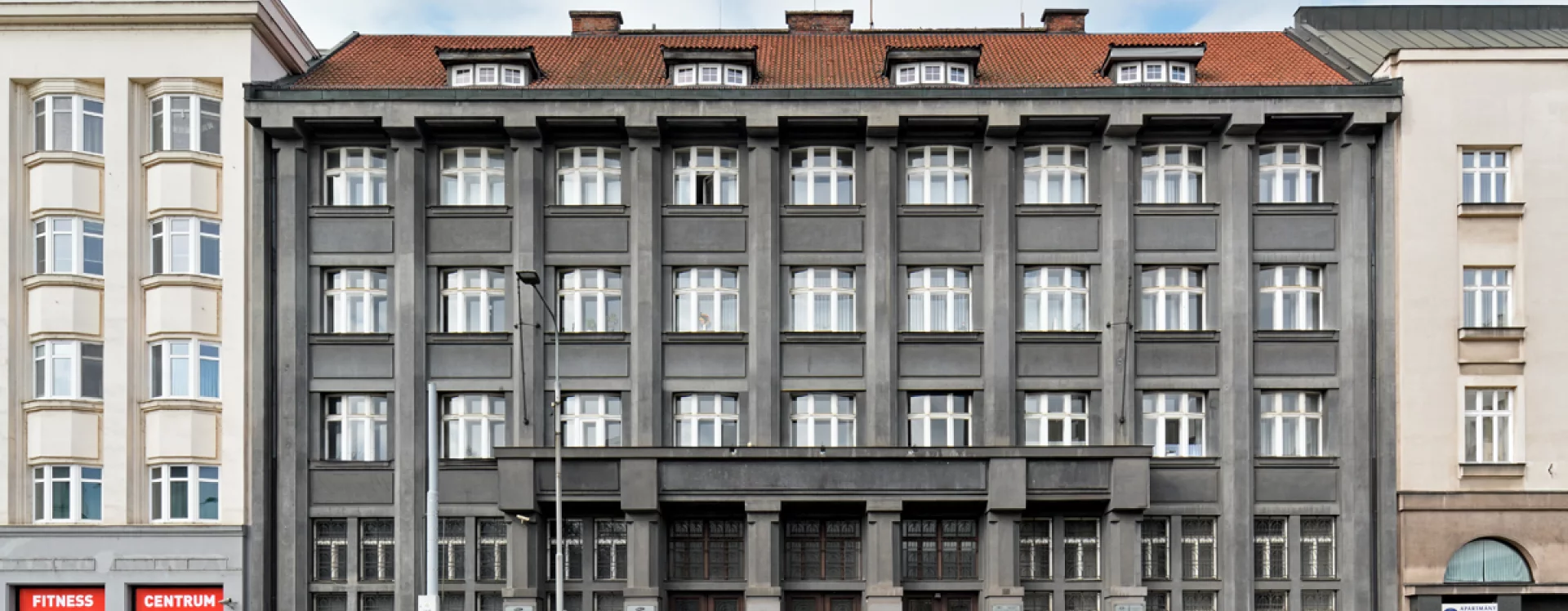
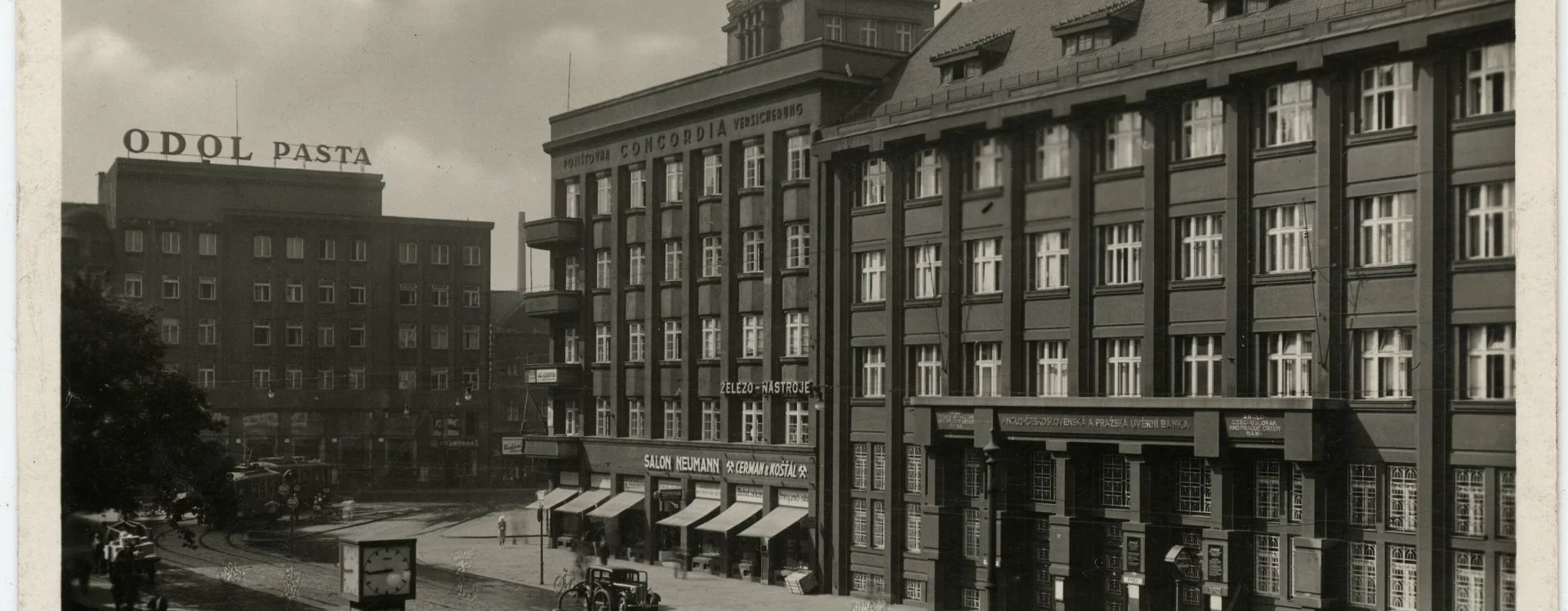
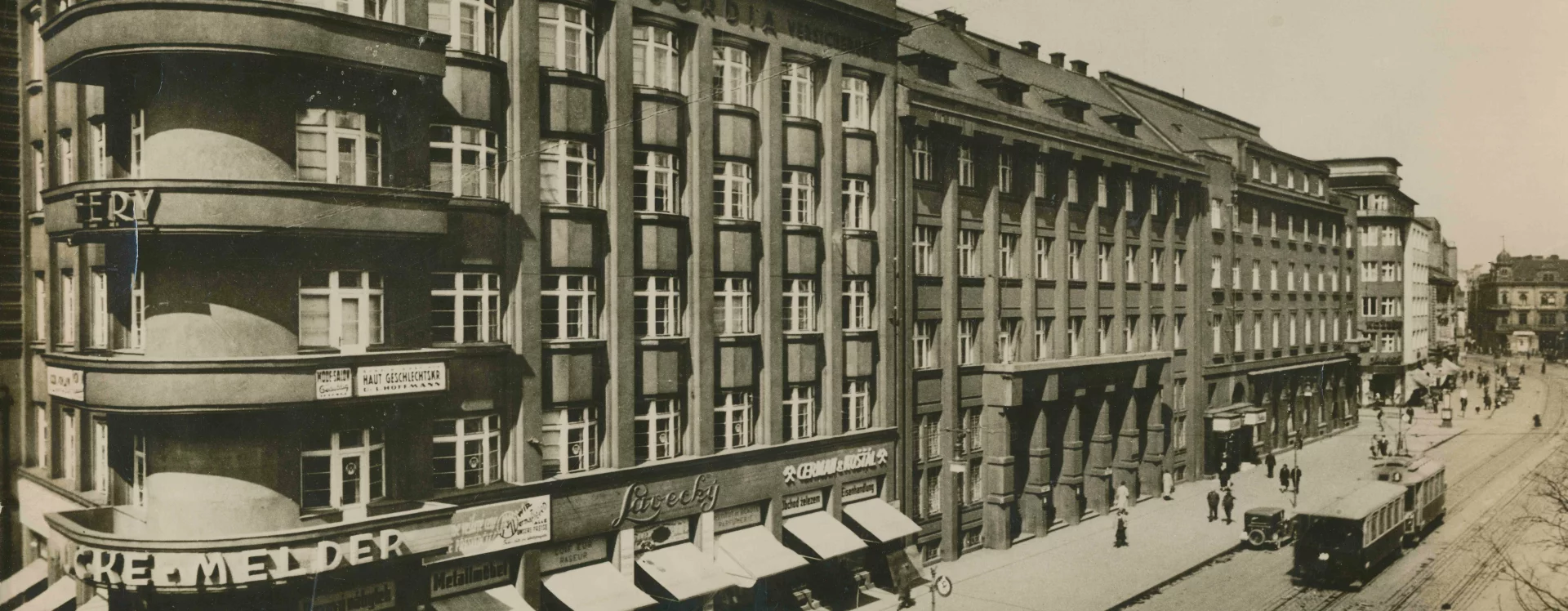
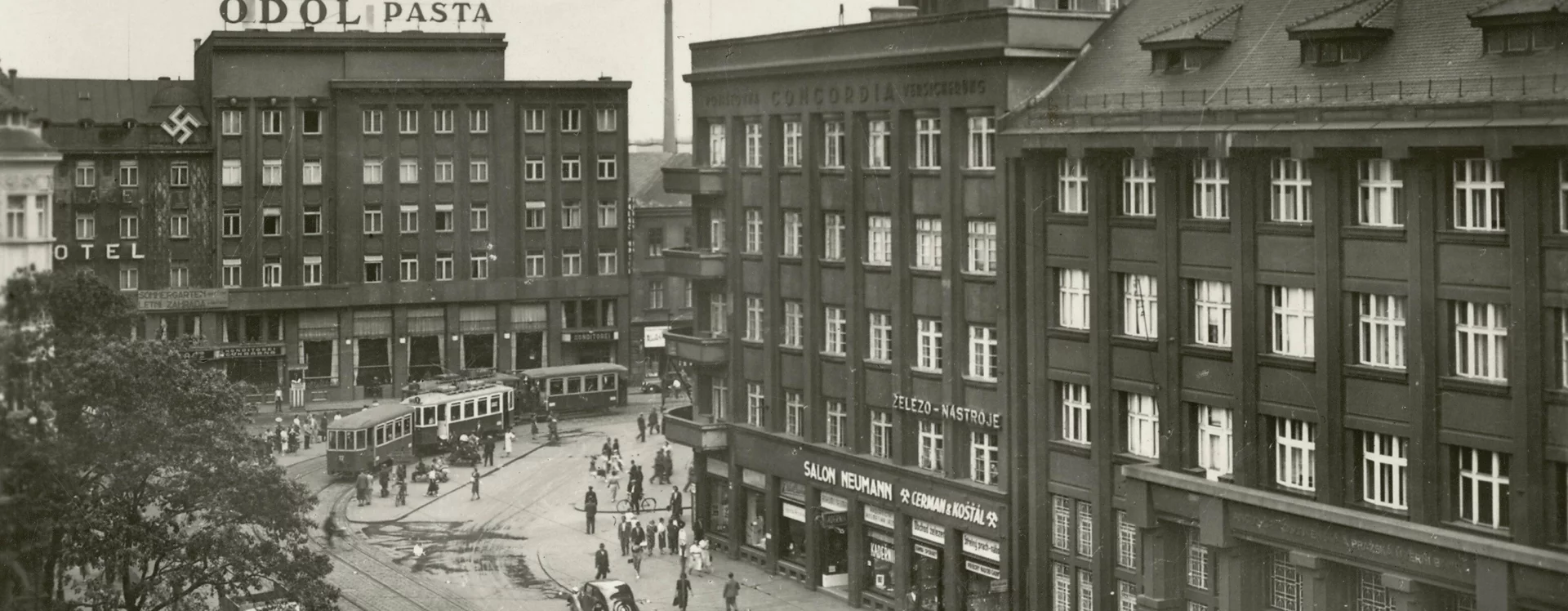
The building of the Anglo-Czechoslovak Bank serves as direct evidence of the development and changes of the banking sector in the Czech lands following the establishment of Czechoslovakia, and the impact these changes had on financial institutions. The original Anglo-Austrian Bank was compelled to transform into the Anglo-Czechoslovak Bank after the dissolution of Austria-Hungary. This change was prompted by the so-called Nostrification Act No. 12/1920 Coll., initiated by the then Czechoslovak Minister of Finance, Alois Rašín. The act required all companies, banks, and trading entities operating within the republic’s territory must establish their registered offices there. Consequently, the newly founded Anglo-Czechoslovak Bank chose Prague as its headquarters and commissioned a new head office designed by the Prague architect Josef Gočár (1880–1945).
At the time, Gočár was developing the national style, also known as rondocubism. His most famous work in this style is the Legiobanka building in Prague. While the Legiobanka Palace is characterised by a combination of rectangular, cylindrical, and circular forms, the designs for the Anglo-Czechoslovak Bank feature rectangular classicising forms. In addition to the bank’s headquarters, Gočár also designed its branch offices, including those in Pardubice and Moravská Ostrava.
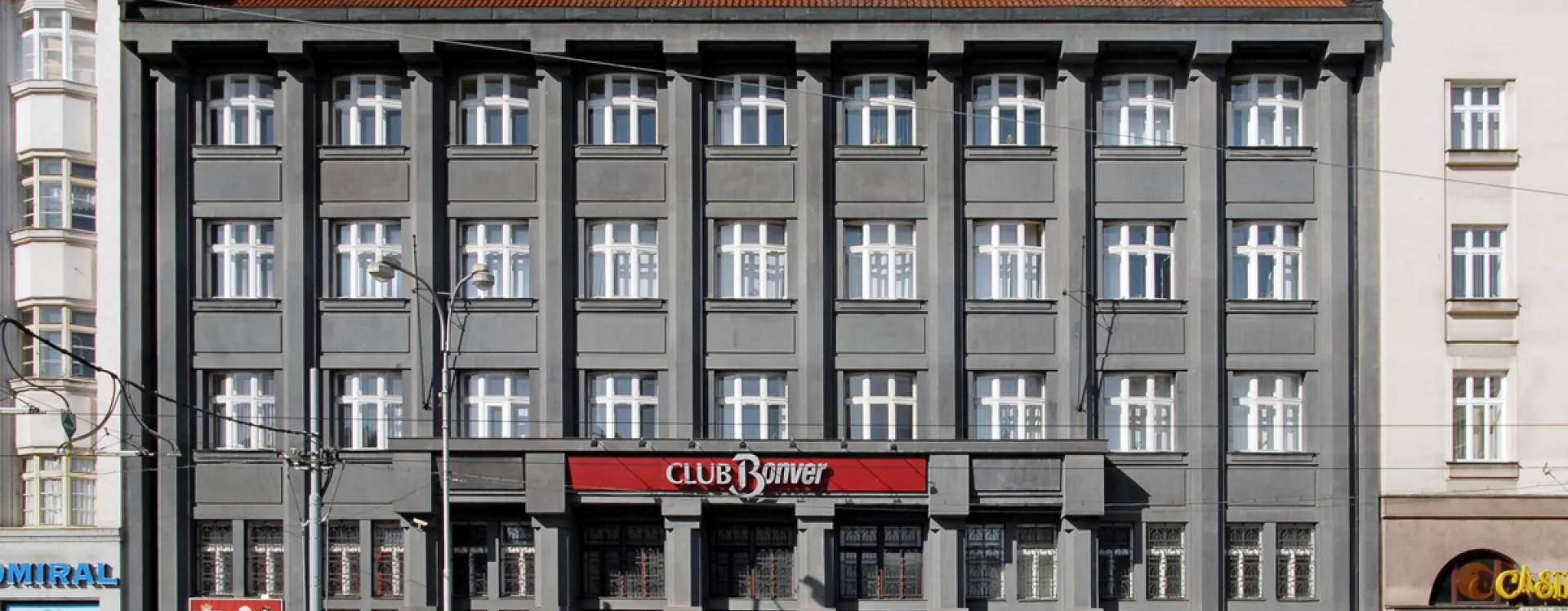
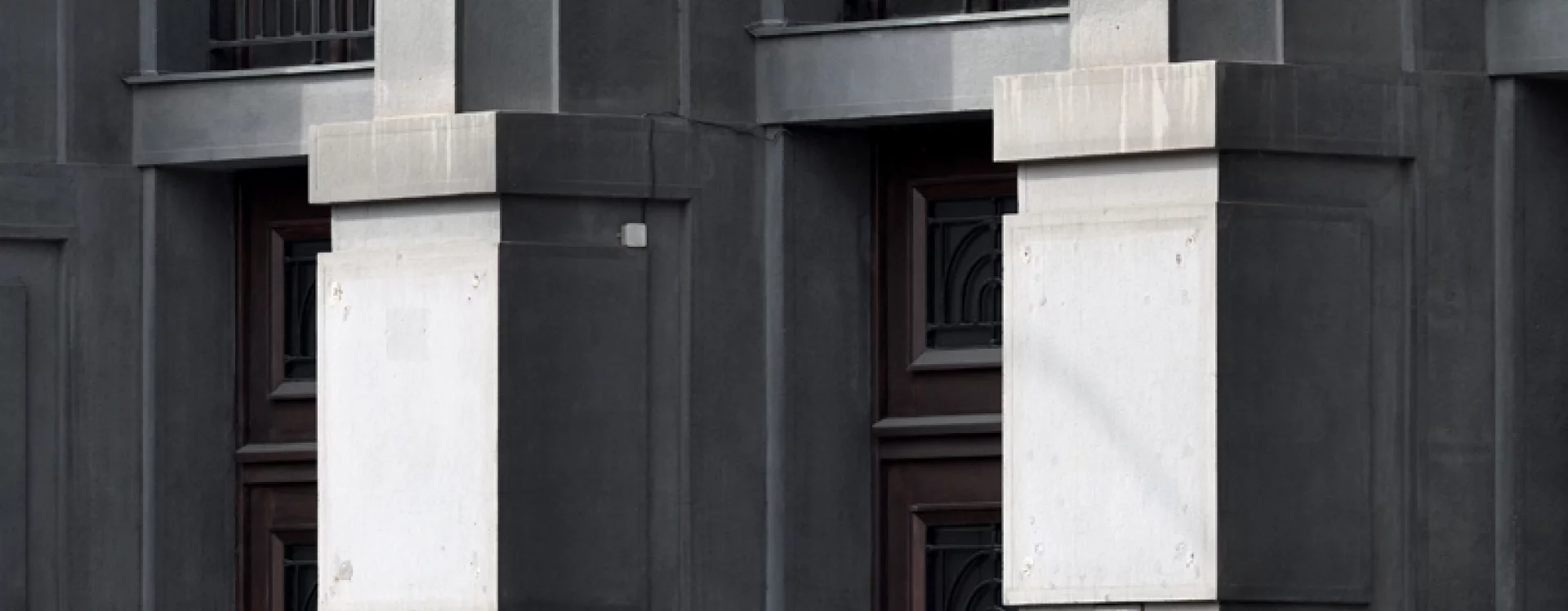
The four-storey palatial building in Nádražní Street was positioned directly opposite what was then the German House. While this building of the local German community, designed in the spirit of Nordic Neo-Renaissance, displayed a historicising architecture referencing an illustrious German past, Gočár opted for an archetypal conception of a monumental palace with tall pillars, conceived in an abstracted, cubistically transformed classicism. In doing so, he gave the structure an expression that allowed it to naturally integrate into the, as yet unbuilt, continuous street frontage on that side of the street.
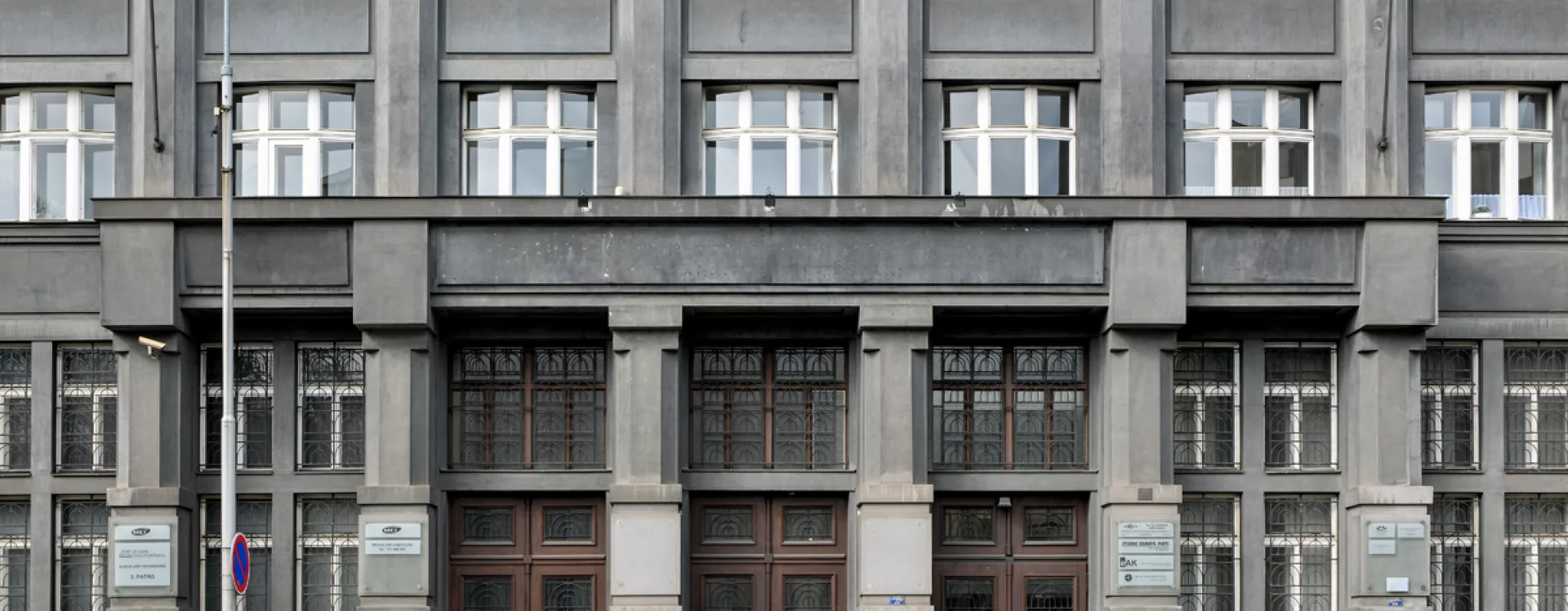
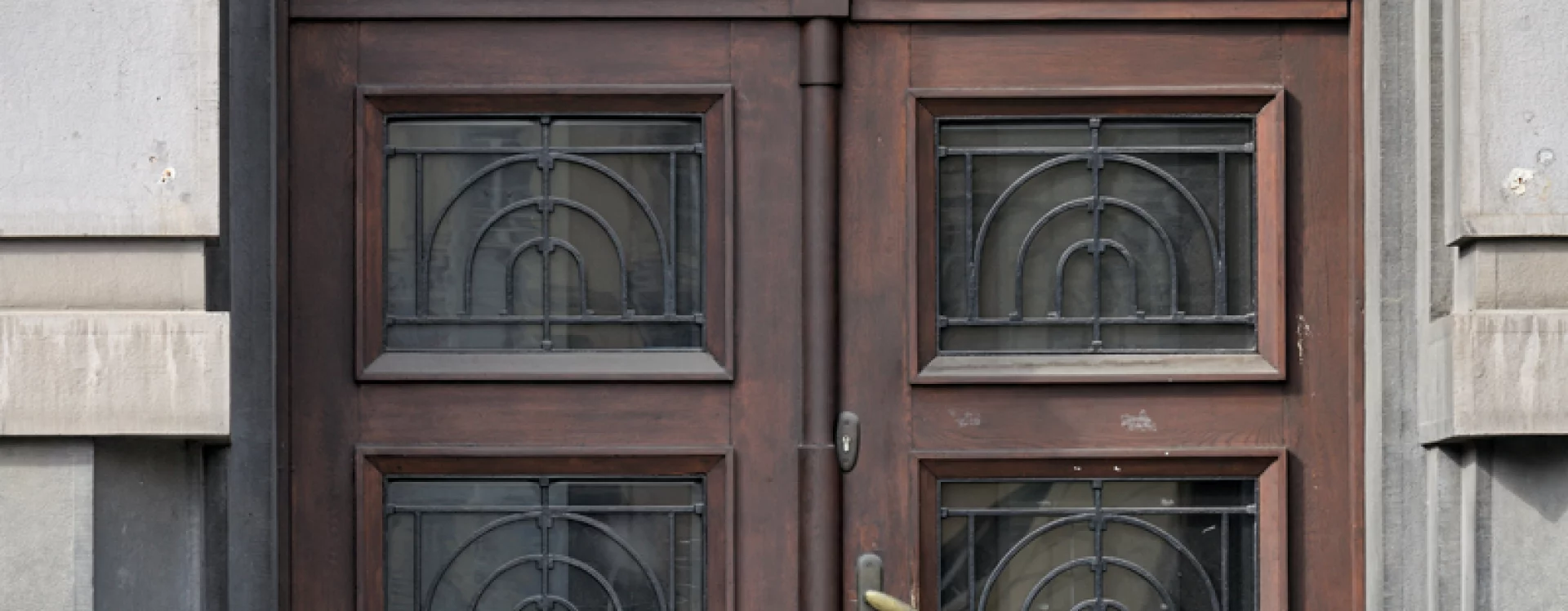
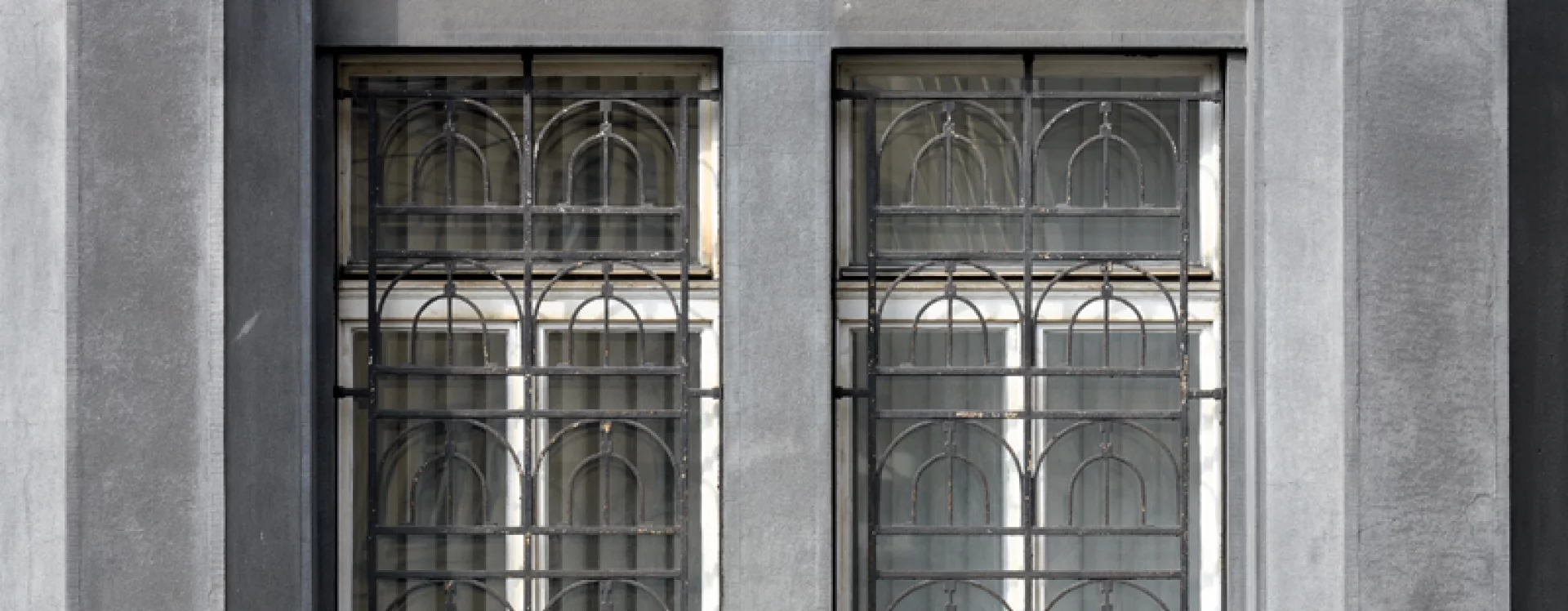
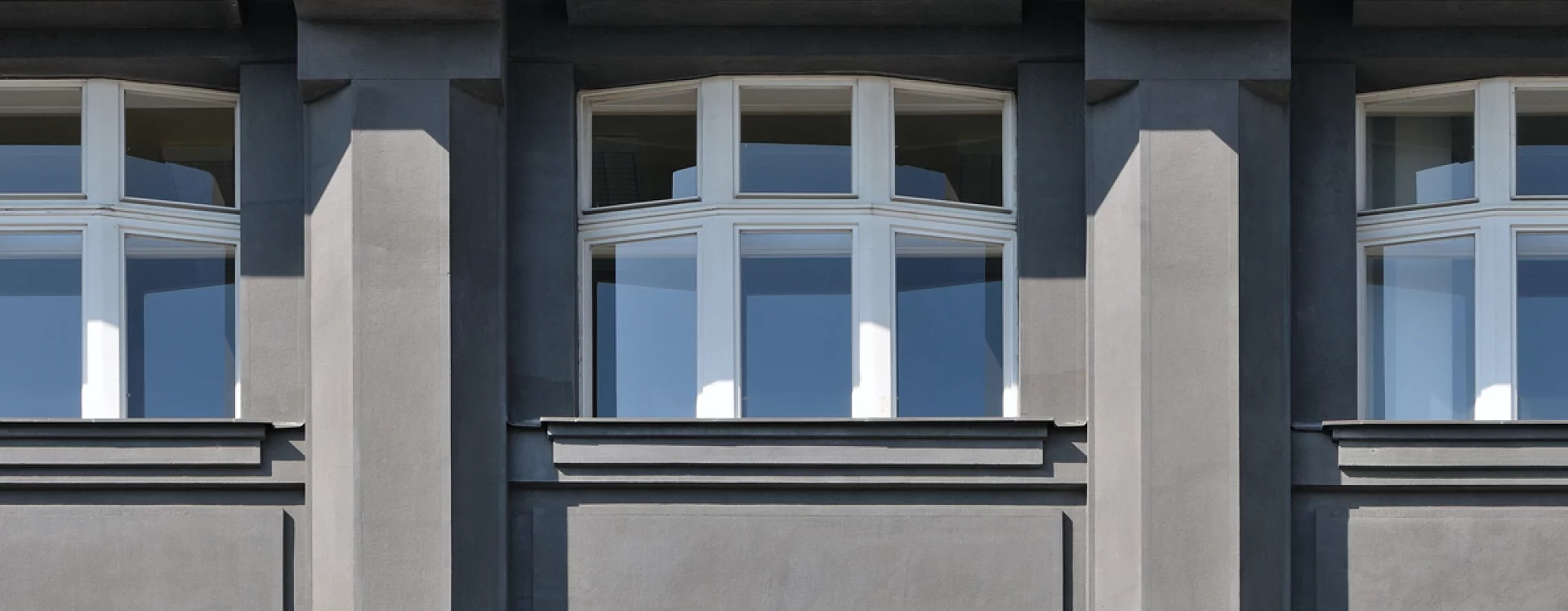
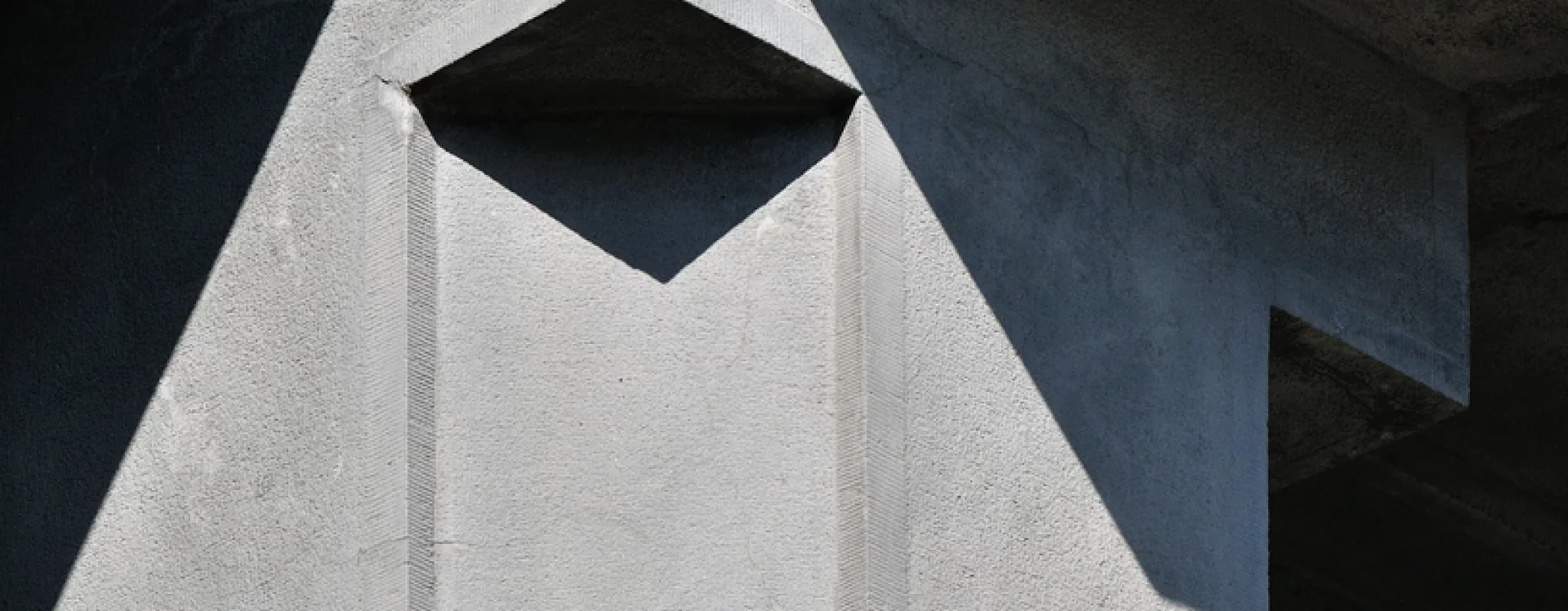
The cubist mode is applied not only in the shaping of the pillars, portico, cornices, and the structural system itself, but also in the design of the windows and dormers. This is evident in the segmental shaping of the casement windows and in the dormers lighting the attic beneath the gabled roof covered with clay tiles. The symmetrical arrangement gives the building a strong classicist accent, and the combination of cubist and classicising features forms a distinctive synthesis. Gočár employed curved forms only in details: they appear in the window grilles of the basement, the ground floor, and the mezzanine, as well as on the entrance doors.
The rendered courtyard façade is modestly designed, combining a symmetrical arrangement with asymmetrical composition. It remains uncertain to what extent the present condition of the rear façade reflects the original architectural scheme, as some heterogeneous elements may indicate utilitarian alterations to the building.
The pillar order of the main façade is reflected in the building’s spatial organisation. The ground floor, widened and divided by pillars into three bays, contains spaces partly based on a pillar structure, allowing for interconnection. The northern section was partially divided by partitions. The tripartite space comprised offices in the front and central bays of the southern part of the ground floor. The entrance was located on the central axis of the front bay, with a rectangular banking hall in the centre and cash desks in the rear bay. The vault was situated in the northern part of the central bay. Surrounding it, offices for the authorised signatory and director were placed in the front bay, changing rooms in the central section, and washrooms and toilets in the rear. The rear bay extended into the courtyard and therefore had a flat roof with skylights that illuminated the cash desks and entire ground floor.
From the first floor upwards, which has a two-bay layout, the building was intended as housing for bank employees. The overall conception is typical of Gočár’s transitional period between the national style and the emerging purist and functionalist expression. The Ostrava bank building shows similarities to the Anglo-Czechoslovak Bank branch in Hradec Králové (1922–1925, Masarykovo Square). However, Gočár’s later realisations in Hradec Králové, such as the school complex designed from 1923 onwards, clearly demonstrate his growing commitment to purism and functionalism.
The Anglo-Czechoslovak Bank building also exemplifies a typical interwar type of mixed-use corporate and administrative building, combining office space on the ground floor and mezzanine with housing for employees on the upper floors. The first floor contained two flats: a four-bedroom flat south of the staircase, and a three-bedroom flat to the north. This combination of work and housing reflected contemporary practice and was supported by legislation promoting construction that combined residential and work functions. This mix was intended to prevent the creation of monotonous urban districts. The residential units were later removed, and the building came to serve exclusively administrative purposes. After 1989, it housed the Czech stock exchange known as RM-SYSTÉM, a securities centre. The building is currently unused and awaiting a new function appropriate to its architectural quality.
MSt
Literature
Zdeněk Lukeš, Pavel Panoch, Daniela Karasová. Josef Gočár. Praha, 2010. p. 104-111.
Tvořit město. Opava a Moravská Ostrava 1850–1950: architektura a urbanismus. Opava, 2017. p. 193-194. ISBN 978-80-87789-46-9.
Jindřich Vybíral. Zrození velkoměsta: Architektura v obraze Moravské Ostravy 1890–1938. Šlapanice, ERA, 2003. p. 92-94. ISBN 80-86517-94-2.
Pavel Zatloukal. Ostrava: Příspěvky k dějinám a současnosti Ostravy a Ostravska 18. Šenov u Ostravy, 1997, p. 173.
Anglo-československá banka. In: Památkový katalog. Available from: https://www.pamatkovykatalog.cz/anglo-ceskoslovenska-banka-13068136 [accessed 14. 9. 2025]
Památka 71. Available from: https://ostravskepamatky.cz/pamatky/71 [accessed 14. 9. 2025]
Sources
Neznámý název, Spisovna stavebního úřadu Moravská Ostrava a Přívoz. k. ú. Moravská Ostrava.. inv. no. složka čp. 1750, Spisovna stavebního úřadu Moravská Ostrava a Přívoz.