The Olomouc-based merchant Josef Ander opened a small shop by the pilgrimage church at Svatý Kopeček in 1889, and from 1906 he ran a business selling haberdashery, toys, and pilgrimage goods directly in Olomouc. His sons gradually became involved in the management of the firm (hence the name Ander & Son) and after the First World War the company expanded beyond Olomouc. In Moravská Ostrava it opened a branch in 1929 on Těšínská Street (now 28. října Avenue). For its premises it purchased the three-storey former municipal savings bank building constructed in 1900–1902 by Alois Mihatsch and Hans Ulrich, standing on the corner of Johannyho Avenue (now Sokolská Avenue) and Těšínská Street. After partial adaptation, mainly of the interiors, the department store officially opened before Christmas 1930. In 1931, the firm of František Kolář and Jan Rubý remodelled the ground floor and mezzanine to their own design.
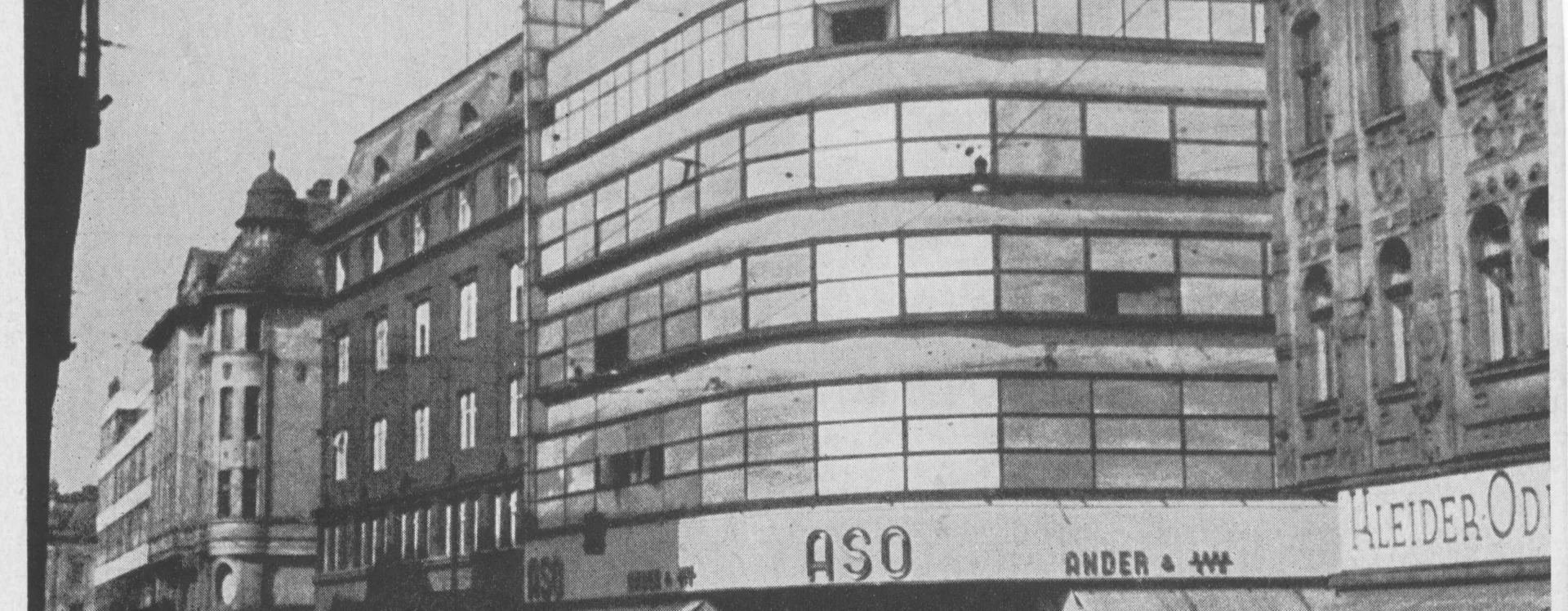
It was not long, however, before ASO needed to expand its retail space, and in 1936 it commissioned the Brno architect Bohumír F. A. Čermák to prepare a project for the rebuilding of the department store. The scheme involved adding another floor, creating a new façade, and fundamentally transforming the interior. Bohumír Čermák, who served as director of ASO’s Technical and Installation Centre, designed most of the company’s department stores, including those in Olomouc, Prague, Brno, Šumperk, Hradec Králové, Plzeň, Znojmo, Bratislava, and Košice, as well as the administrative and warehouse building in Olomouc. The interiors of the Ostrava department store, designed in 1937 by the Prague architect Jan Gillar, were to feature what was then a technical novelty – escalators. During the construction works, which were carried out while the store remained in operation, the building burnt down to its foundations in 1938. It therefore had to be rebuilt in its entirety in 1939, again to a design by Bohumír Čermák.
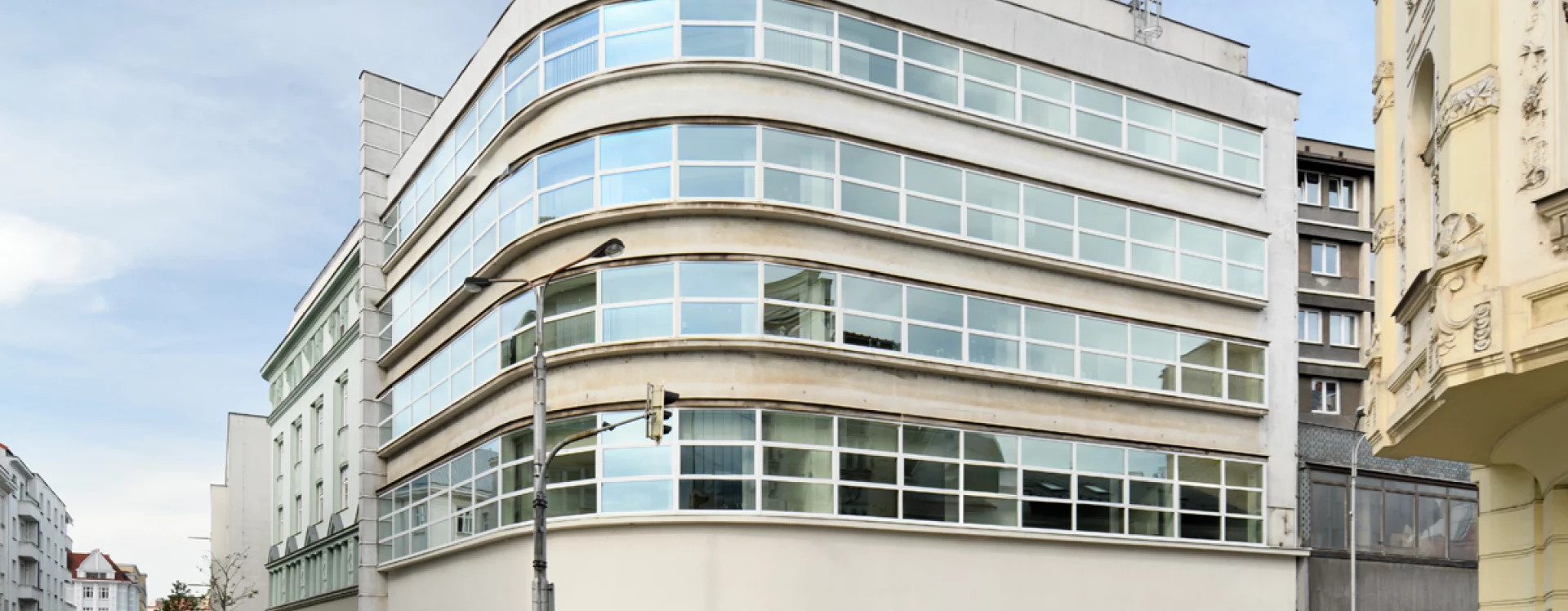
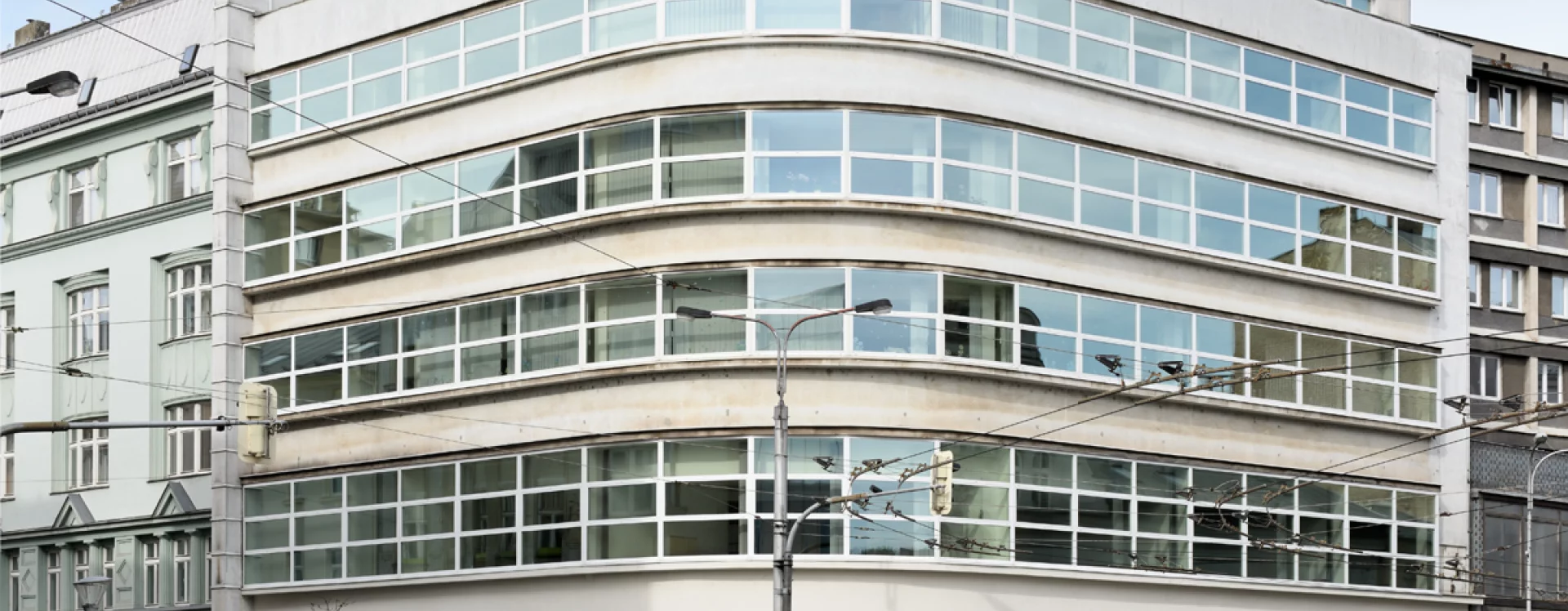
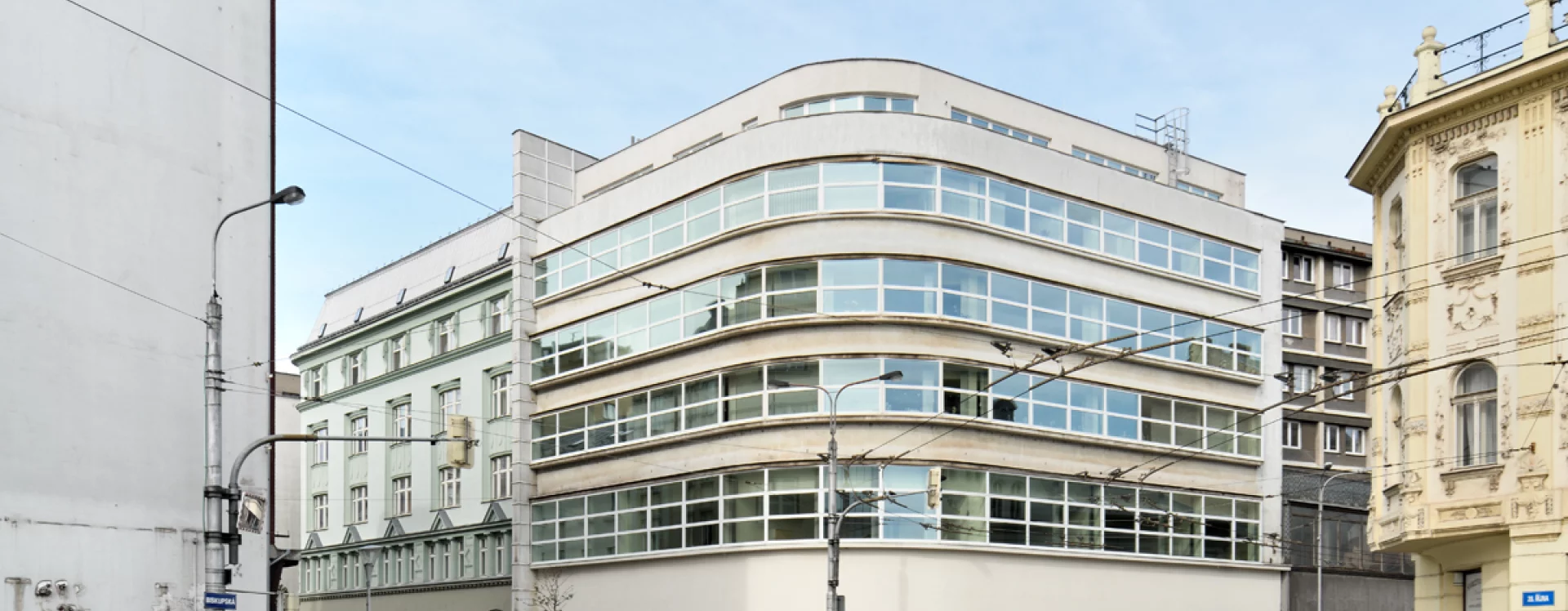
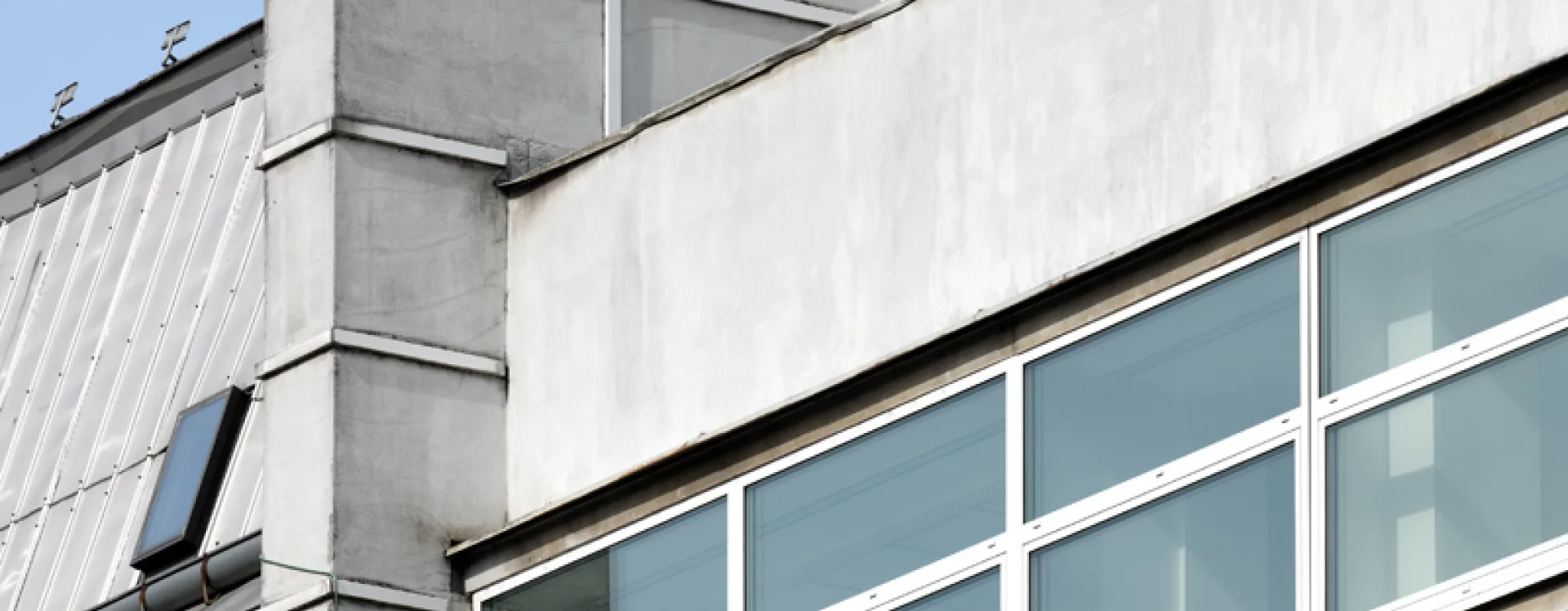
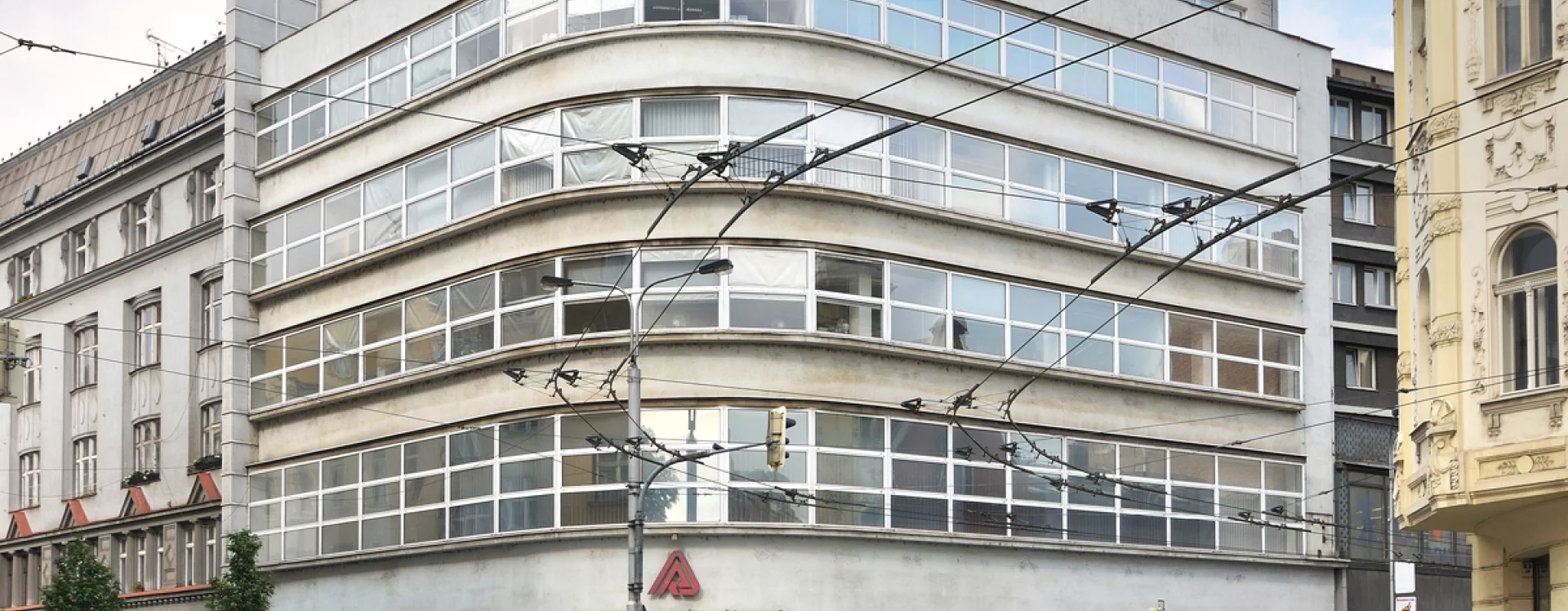
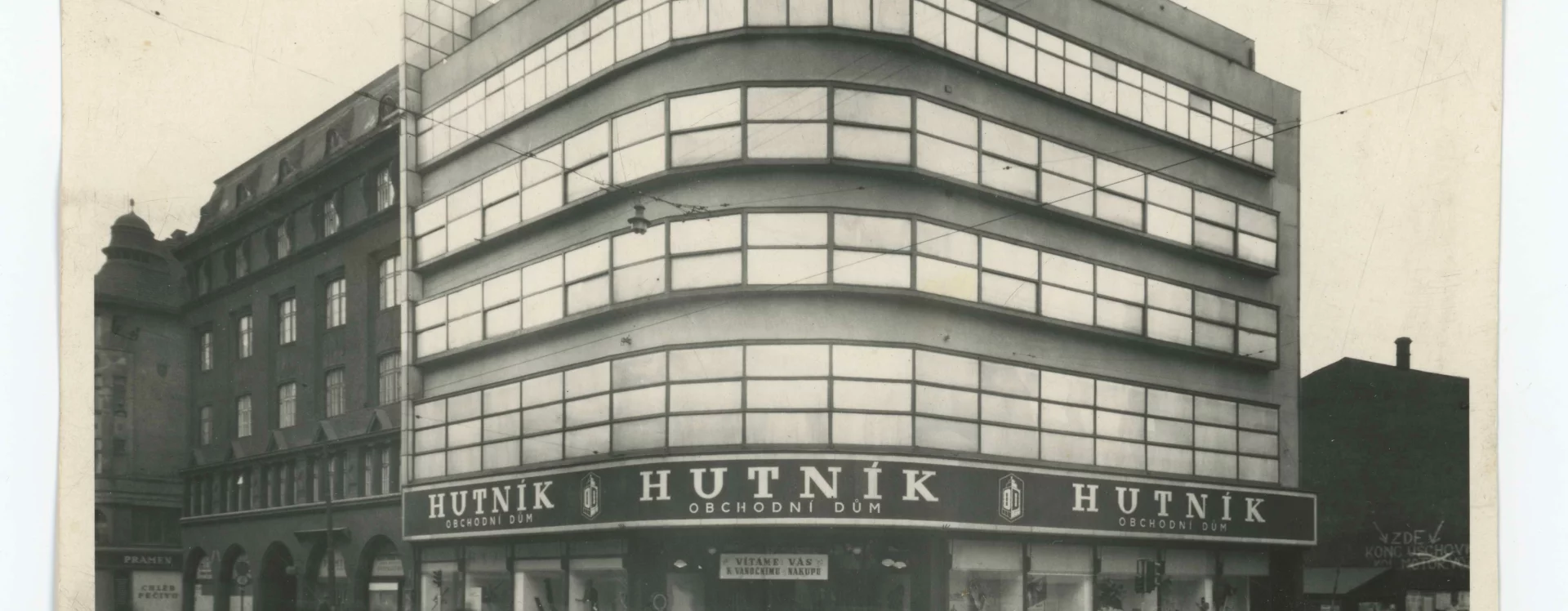
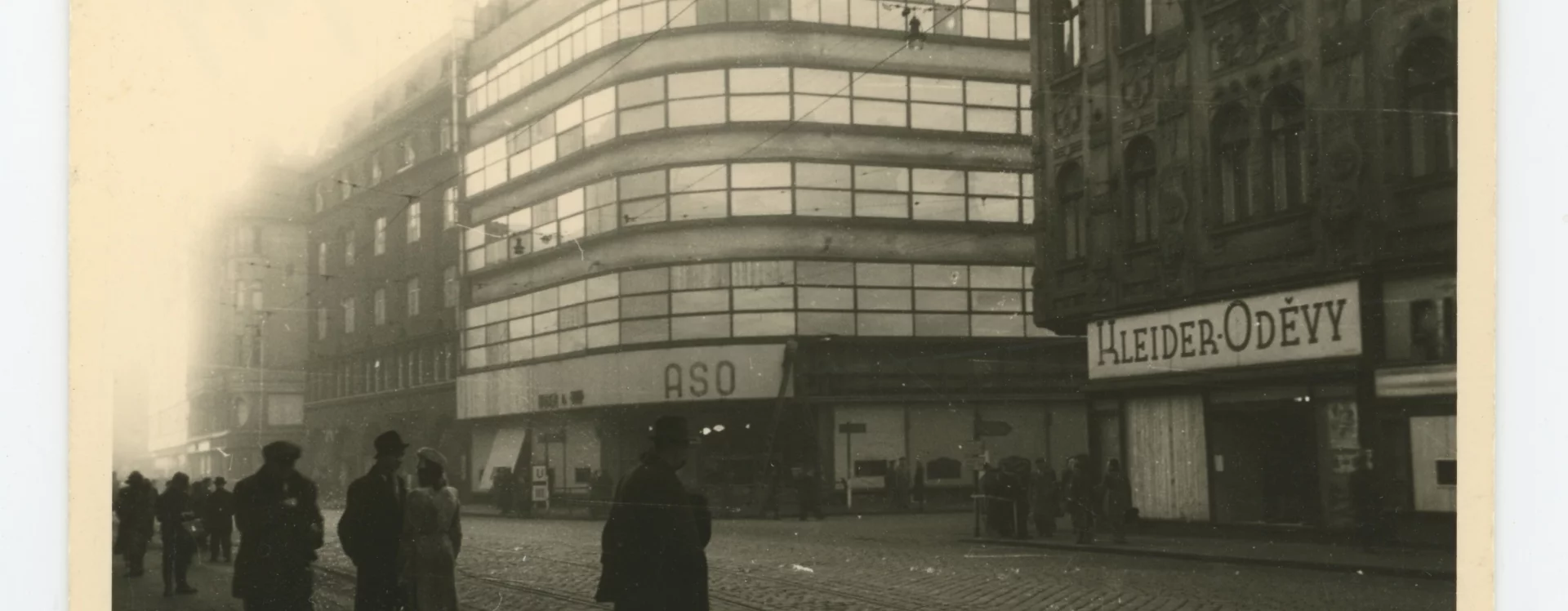
With its strongly rounded corner, the five-storey functionalist building created a landmark at the junction of Johannyho Avenue and Těšínská Street. Its reinforced-concrete structure infilled with brick made it possible to introduce continuous ribbon windows wrapping around the corner, with slightly recessed spandrel panels. The top floor is set back and provided with a terrace, or rather a perimeter gallery. The building is separated from the neighbouring house by a prominent raised gable wall articulated in a rectilinear manner. The main entrance at the corner, originally designed as a deep recessed portal, disappeared in the 1970s, when the ground floor was remodelled as an arcade in response to the increasing traffic in the area. The layout of the retail floors was open, while vertical circulation between the ground floor and the first floor was provided by a three-flight staircase and an escalator. The top floor housed offices and a staff canteen. The interior fittings, produced by František Träger’s furniture factory in Tábor, were made of light-coloured wood, while the lighting was supplied by the Prague firm Franta Anýž.
After 1945, the building served as the Hutník department store and was one of the key department stores in the centre of Ostrava. Between 1979 and 1984, it underwent modernisation and was linked to the neighbouring Prior department store by means of a roof terrace. After 1994, it was converted, rather inappropriately, into offices for the General Health Insurance Company. At present, the ground floor is used for retail premises, while the rest of the building stands empty.
Despite unsuitable alterations and further adaptations brought about by the frequent change of occupants, the building remains a valuable example of late-1930s functionalism.
RR
Literature
Eva Chvalová. Obchodní domy v Moravské Ostravě v období první republiky. In: Ostrava. Příspěvky k dějinám a současnosti Ostravy a Ostravska 22. 2005. p. 119–146.
Průvodce architekturou Ostravy. 2009. p. 160. ISBN 978-80-85034-54-7.
Martin Strakoš. Ostrava industriální a moderní: Velký průvodce po architektuře 1845–1949. Praha, Paseka, 2020. p. 93. ISBN 978-80-7637-123-1.
Tvořit město. Opava a Moravská Ostrava 1850–1950: architektura a urbanismus. Opava, 2017. p. 199. ISBN 978-80-87789-46-9.
Jindřich Vybíral. Zrození velkoměsta: Architektura v obraze Moravské Ostravy 1890–1938. Šlapanice, ERA, 2003. p. 155. ISBN 80-86517-94-2.
Ostravské památky. Available from: https://www.ostravskepamatky.cz/pamatka/show/16 [accessed 17. 11. 2025]
Obchodní dům ASO. Available from: https://www.historickaostrava.cz/obchodni-dum-aso/ [accessed 13. 10. 2025]