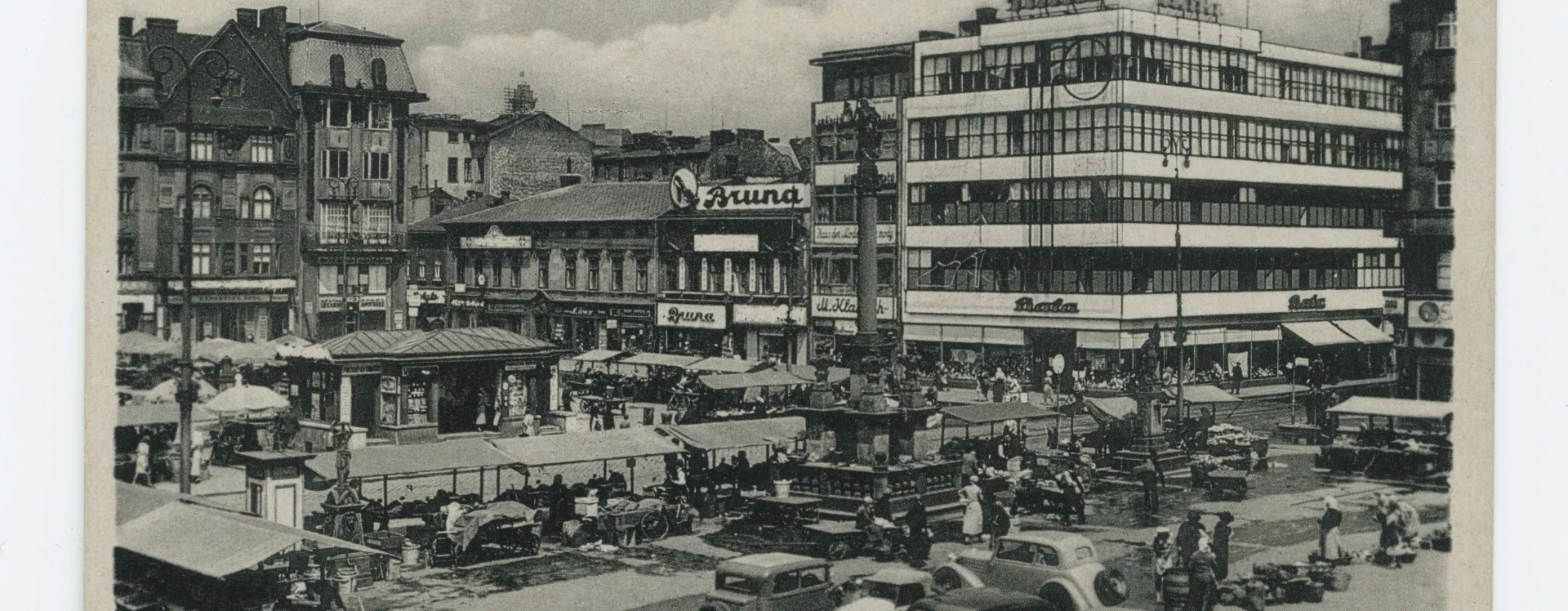
The growth of trade and small business during the period of the First Czechoslovak Republic significantly influenced the building development of the historic centre of Moravská Ostrava and its immediate surroundings. Improving economic conditions, rising consumer demand, and declining construction costs enabled the modernisation of department stores. The Building Promotion Act of 1927 exempted builders from taxes for thirty-five years, encouraging shop owners to modernise their premises or construct entirely new buildings.
The Baťa company decided to build a new department store on Masaryk Square. Baťa operated its own network of retail outlets with shoe-repair workshops in most larger cities under the name Dům služby (Service House). In Moravská Ostrava the store was originally located in a three-storey building (house no. 25) with a historicising façade, whose elongated internal layout reflected the narrow medieval plot on which it stood. In 1926 a mezzanine gallery was inserted into the interior and a new entrance portal was constructed. Three years later the decision was taken to demolish the building and replace it with a completely new and larger structure. In 1929 the company purchased the neighbouring corner house (no. 24) and demolished it as well in order to clear the site.
All Baťa company buildings were designed by the company’s own building department as standardised structures reflecting the corporate architectural style, adjusted only to local conditions. The department typically collaborated with proven architects. In the case of Moravská Ostrava, the project was entrusted to two young Prague architects, František Stalmach and Jan Svoboda, for whom it represented one of their first large projects. The choice was probably influenced in part by Stalmach’s family connection to the owners of the neighbouring corner house that had been acquired for the site. In their design, the architects drew inspiration from the existing Baťa department store in Prague by the architect Ludvík Kysela.
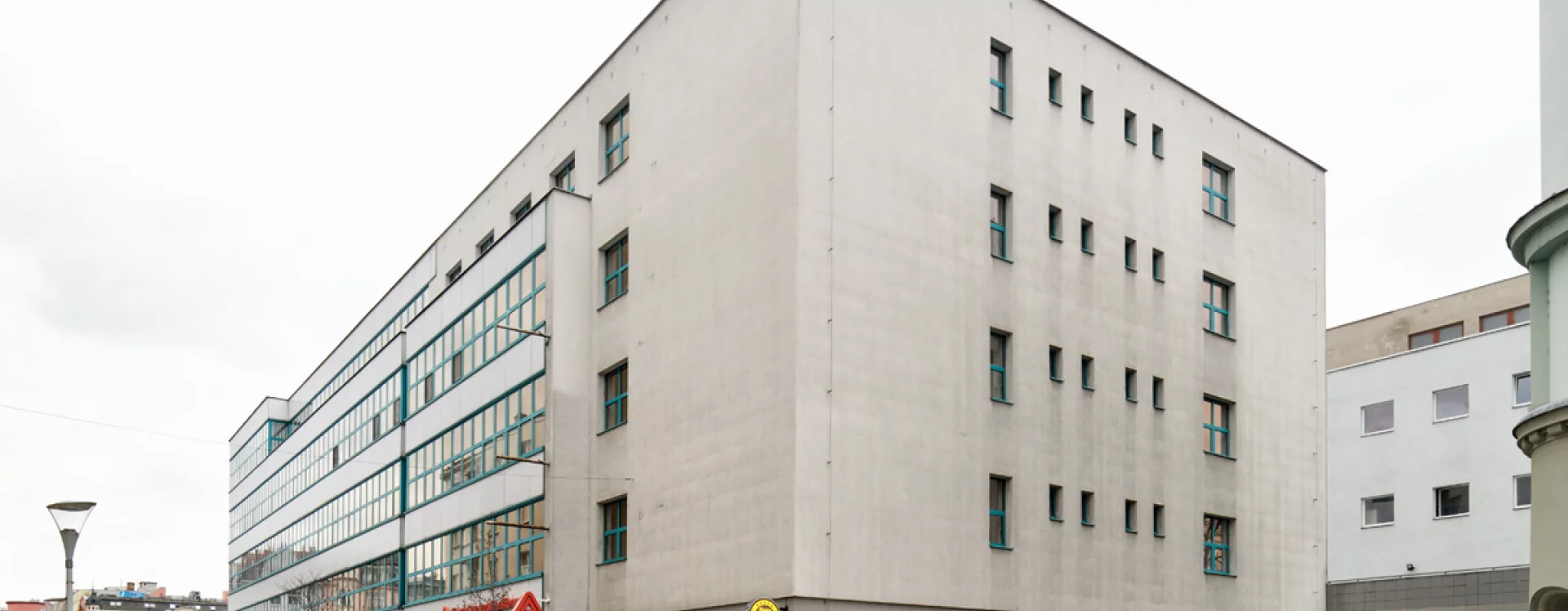
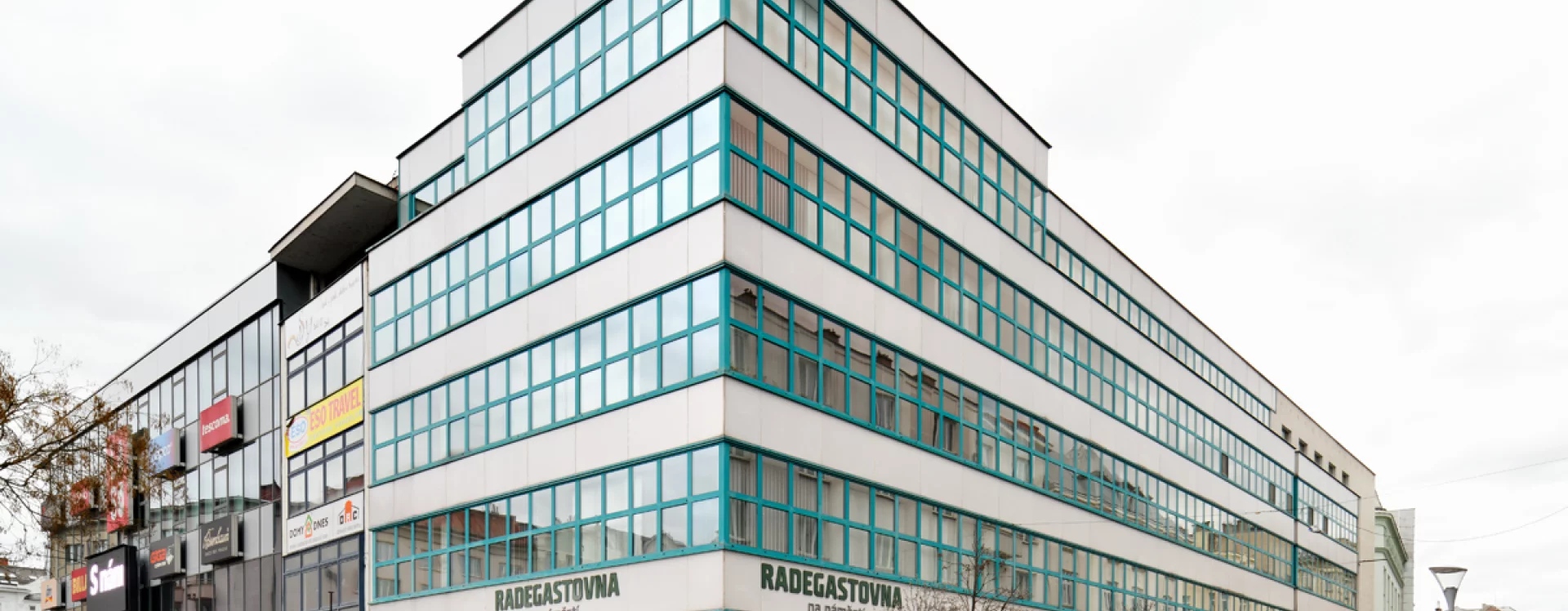
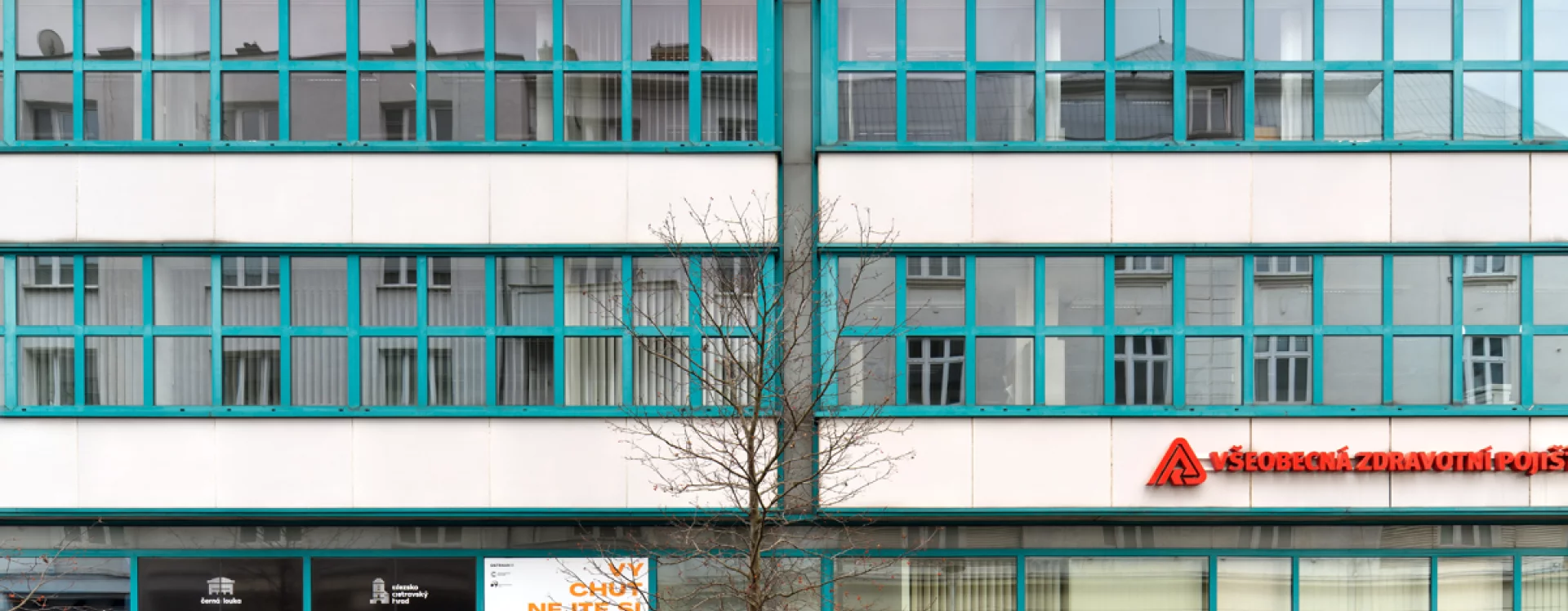
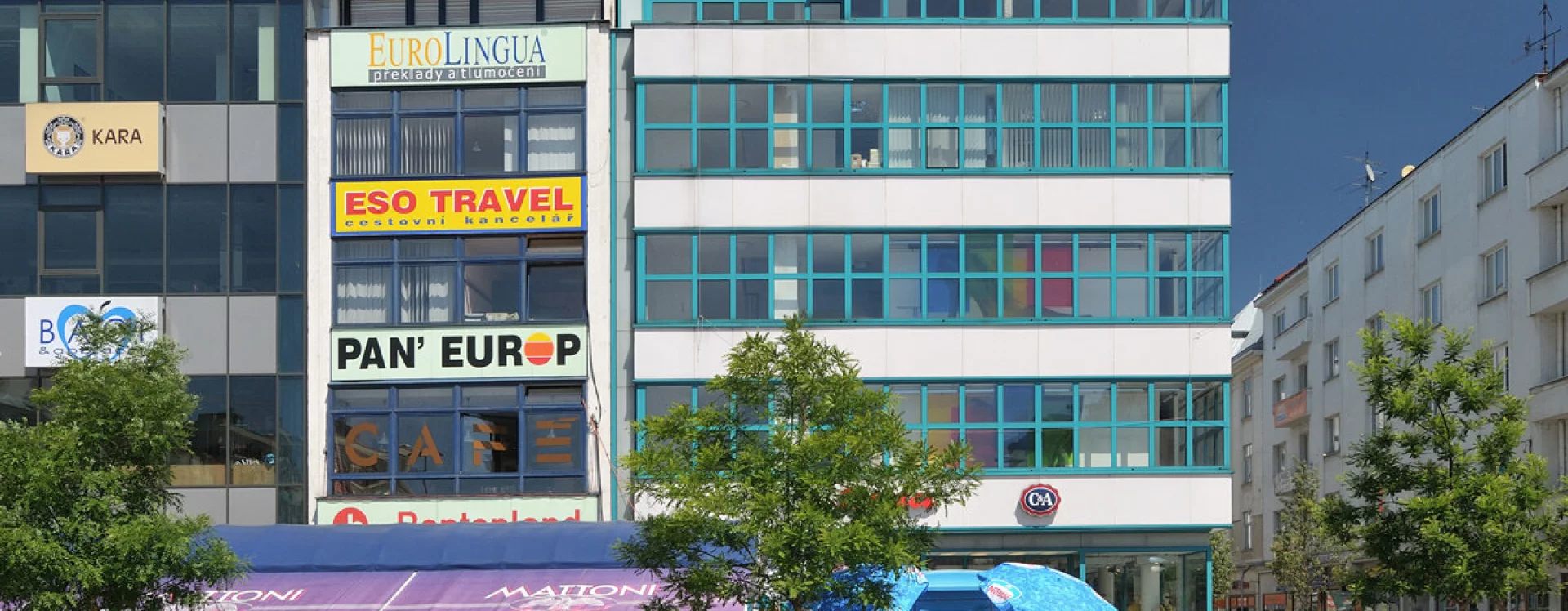
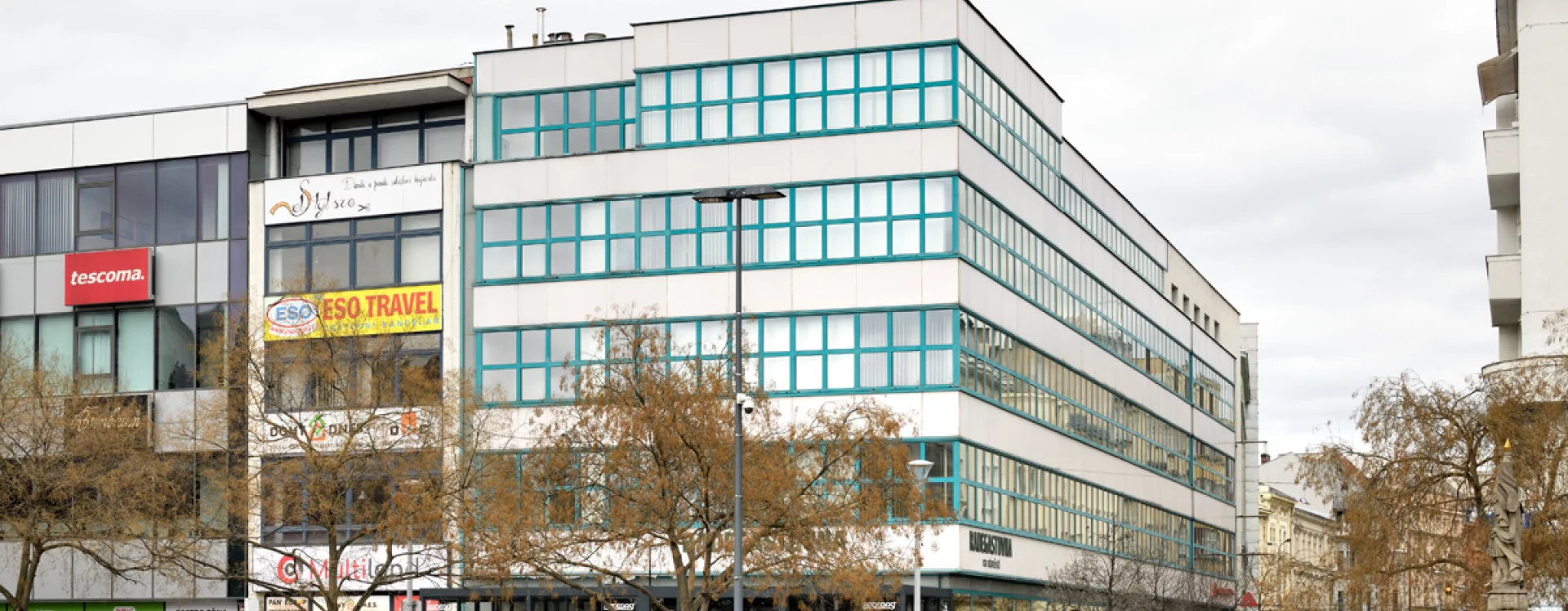
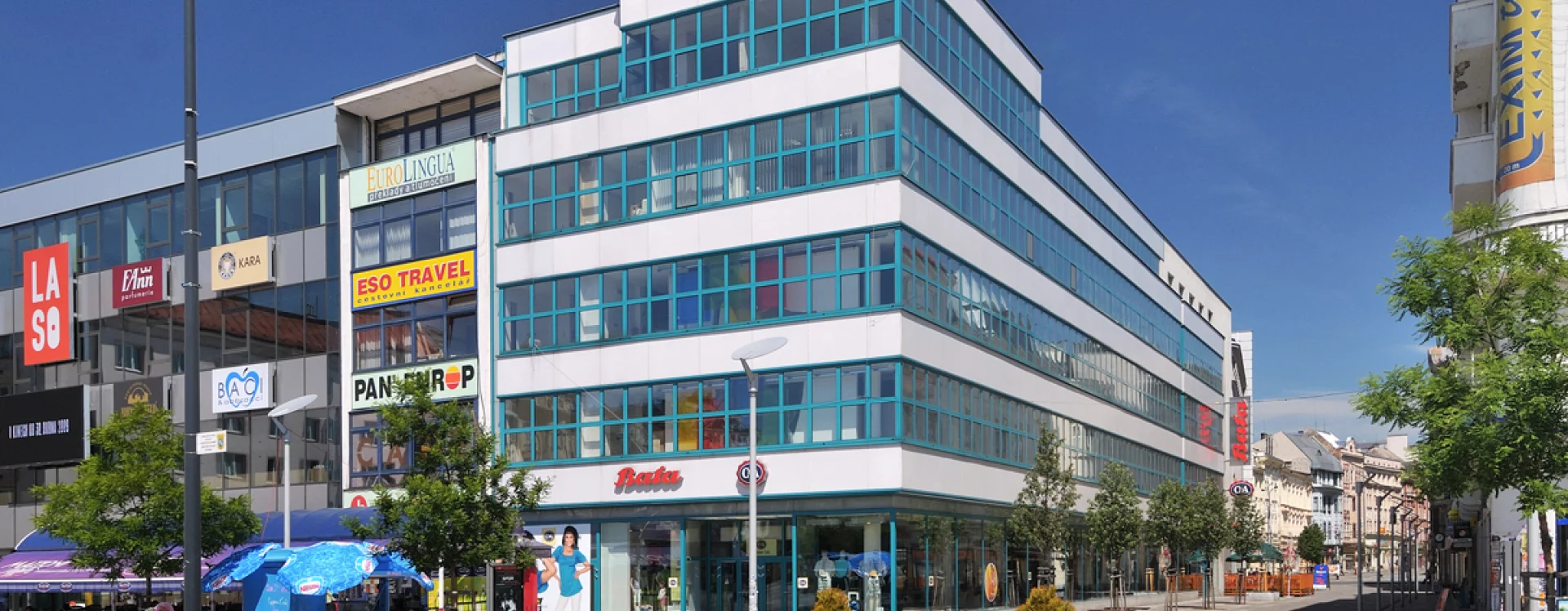
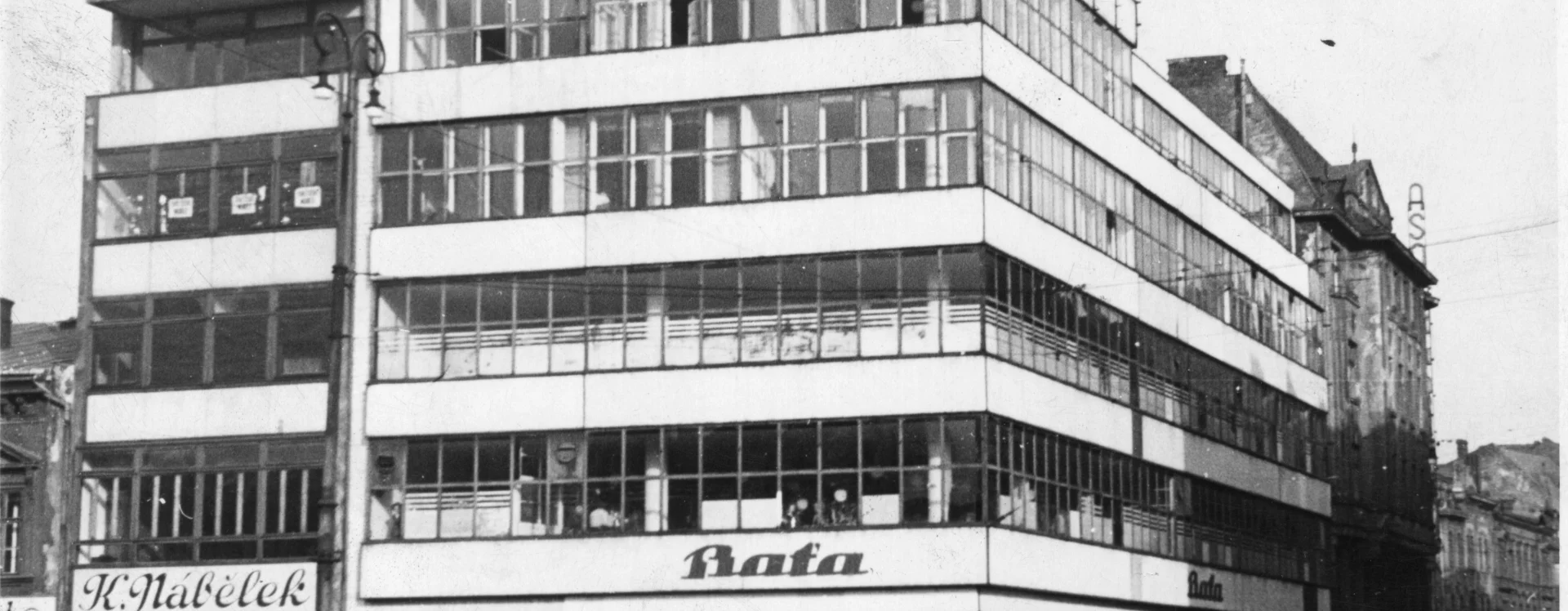
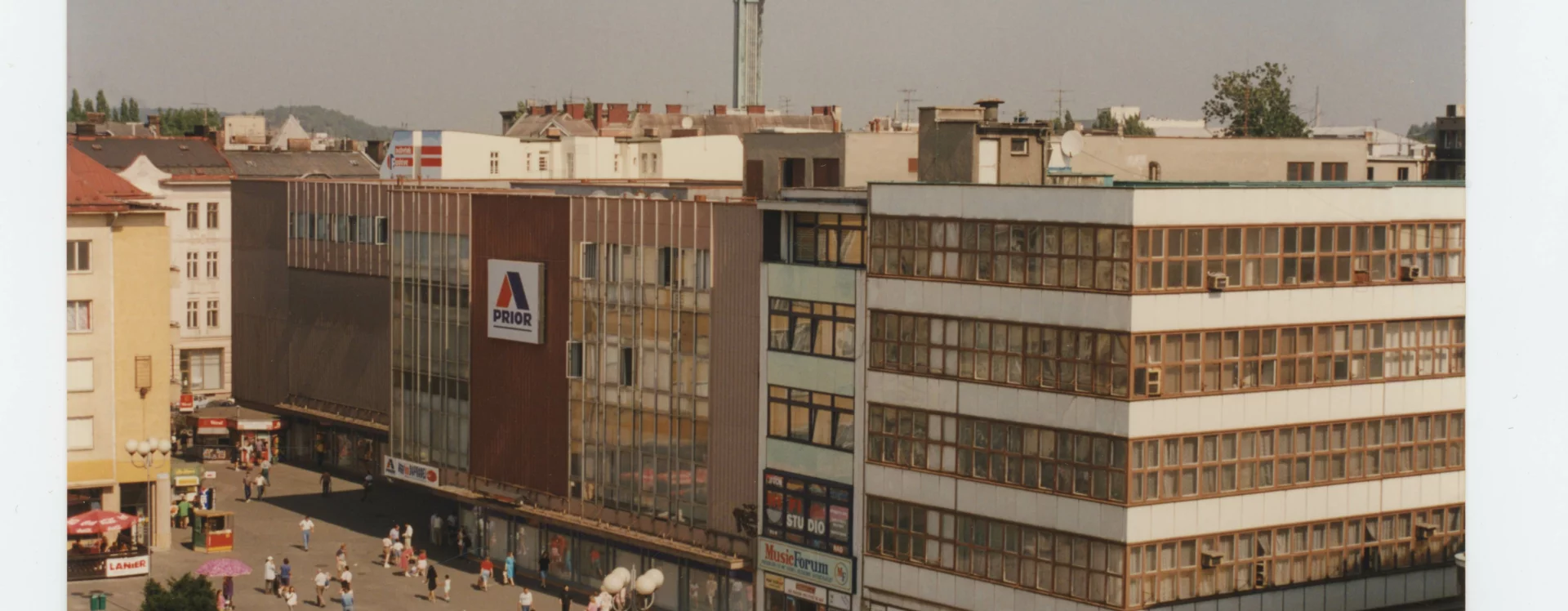
Stalmach and Svoboda, who specialised in the design of savings banks and department stores, created a functionalist building whose unadorned façade contrasted strongly with the predominantly historicising architecture of the surrounding houses on the square, while also introducing a new scale to the space. The five-storey building with a rectangular plan consists of a reinforced-concrete structure with a suspended façade articulated horizontally by bands of windows and infilled spandrel panels. The architects lightened the otherwise compact cubic mass by slightly recessing the ground floor, formed by large glazed shop windows, and by setting back the top floor to create terraces.
The interior was conceived as an open space articulated only by reinforced-concrete columns. Vertical circulation was not organised around a central staircase (as was common in such buildings) but instead relied on a horseshoe-shaped staircase located at the rear of the layout. The ground floor and the first two upper floors were occupied by retail spaces (shoe shop, socks and stockings shop, rubber goods shop, and a shoe-repair workshop), while the fourth floor contained operational facilities and the fifth floor housed two luxury flats.
In 1936 an extension consisting of a residential building with a retail ground floor was planned for the adjoining Zeyerova Street, but this project was never realised. Only in the 1980s was a rear extension constructed at the corner of 28. října Avenue and Zeyerova Street. Between 2002 and 2003 the building underwent reconstruction and interior alterations. Shortly afterwards, however, Baťa vacated the premises. Today the building houses offices of the General Health Insurance Company and a restaurant. Despite these later modifications, the building remains an outstanding example of functionalist architecture in the centre of Ostrava.
RR
Literature
Eva Chvalová. Obchodní domy v Moravské Ostravě v období první republiky. In: Ostrava. Příspěvky k dějinám a současnosti Ostravy a Ostravska 22. 2005. p. . 119–146.
Průvodce architekturou Ostravy. 2009. p. 111. ISBN 978-80-85034-54-7.
Martin Strakoš. Ostrava industriální a moderní: Velký průvodce po architektuře 1845–1949. Praha, Paseka, 2020. p. 82. ISBN 978-80-7637-123-1.
Tvořit město. Opava a Moravská Ostrava 1850–1950: architektura a urbanismus. Opava, 2017. p. 111. ISBN 978-80-87789-46-9.
Jindřich Vybíral. Zrození velkoměsta: Architektura v obraze Moravské Ostravy 1890–1938. Šlapanice, ERA, 2003. p. . 157. ISBN 80-86517-94-2.
OD Baťa. Available from: https://www.ostravskepamatky.cz/pamatka/show/62 [accessed 11. 11. 2025]
Obchodní dům Baťa. Available from: https://pamatkovykatalog.cz/obchodni-dum-bata-13065414 [accessed 11. 11. 2025]