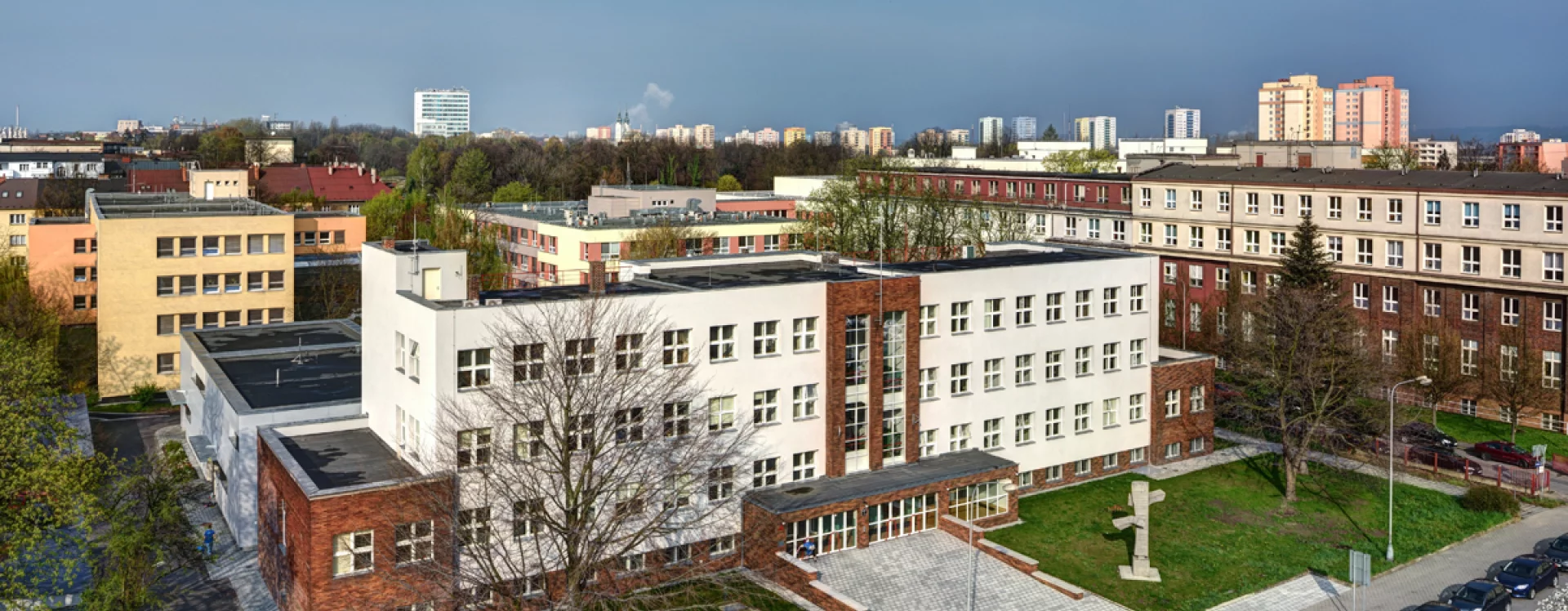
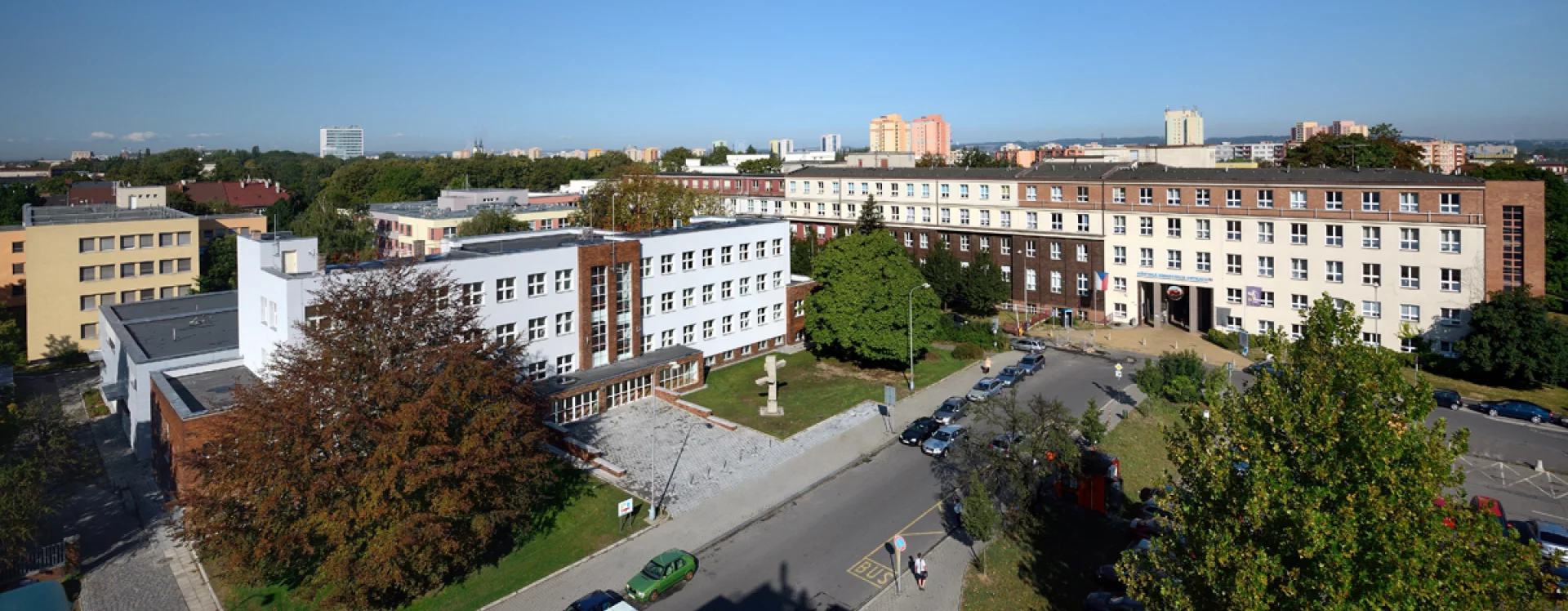
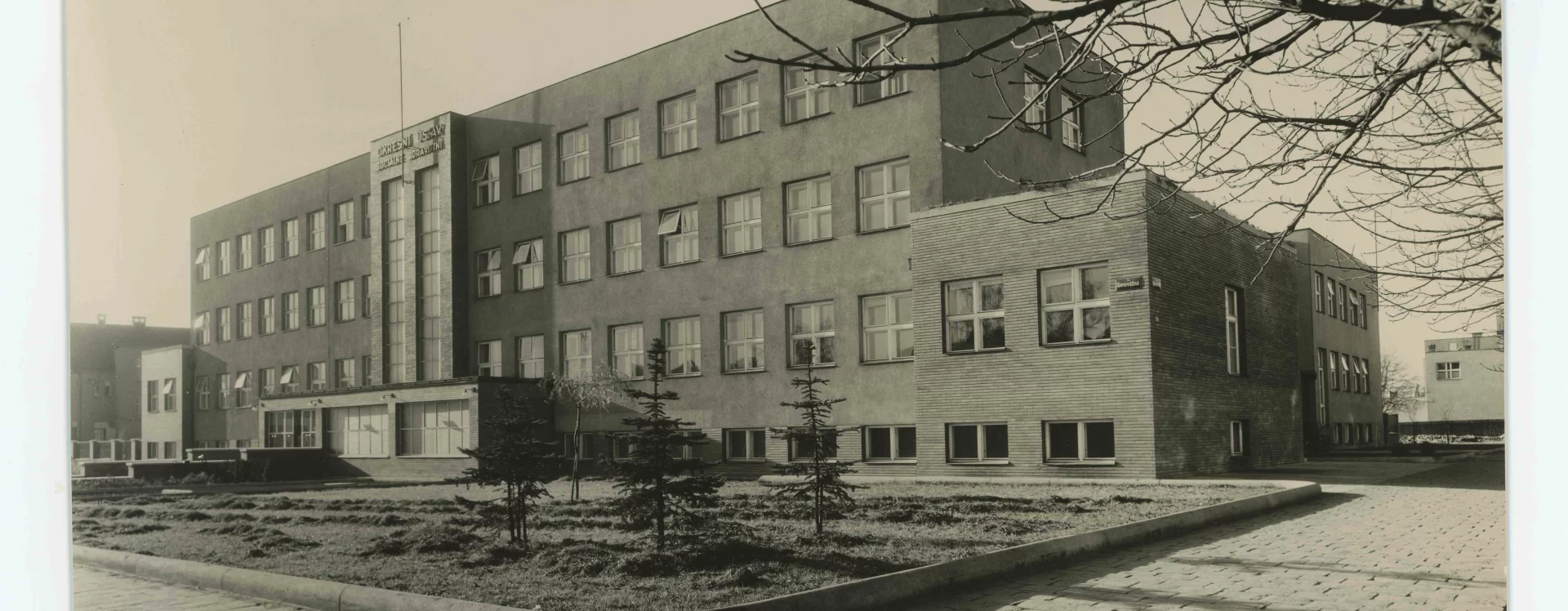
At the end of the 1920s, partly thanks to the efforts of the mayor Jan Prokeš, the need to improve the social and health care system in Ostrava became increasingly urgent. The Commission for Social and Health Care, established in 1929, proposed concentrating the existing associations and organisations under one roof. Initially, the Rothschild Orphanage in Poděbradova Street was considered for this purpose, but it soon proved unsuitable, and the decision was made to erect a completely new building. The selected plot was located in the city centre on a raised plateau in a quiet street but close to a major traffic artery. The land belonged to the city, which donated it to the district office free of charge. The site lay southwest of the municipal hospital and northwest of the old building of the Czechoslovak Red Cross, at the corner of Senovážná and Nemocniční streets. The urban character of this area – bounded to the south by the main thoroughfare of Moravská Ostrava, 28. října Avenue, and to the east by the Frýdlant railway line – was shaped primarily by the hospital complex and the adjacent cemetery (now Dr Milada Horáková Park). To the north stood a brick factory, and in the southeast corner of this area the still scarcely developed Náměstí Republiky was laid out, at the time only sparsely built up with social-housing blocks known as Prokešovec.
In July 1931, the district committee announced an architectural competition, which attracted thirty entries. No first prize was awarded, but the Prague architect Karel Roštík won the second prize and was commissioned to prepare the working drawings and cost estimates. To ensure the highest possible quality, the district committee appointed the Brno architect Jaroslav Stockar-Bernkopf as Roštík’s collaborator, drawing on his experience with healthcare and administrative buildings. Construction began in August 1932 under the direction of the firm of Karel Gajovský and was completed in November 1933; the building was put into use on 1 January 1934.
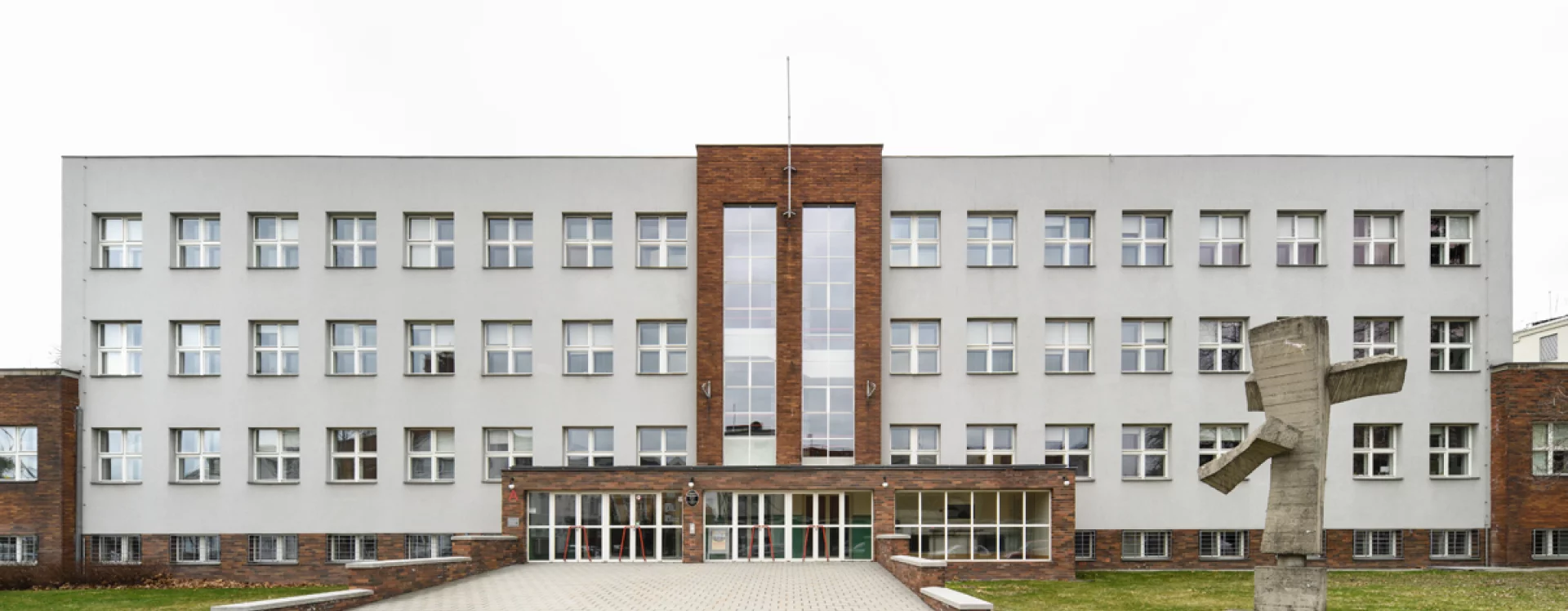
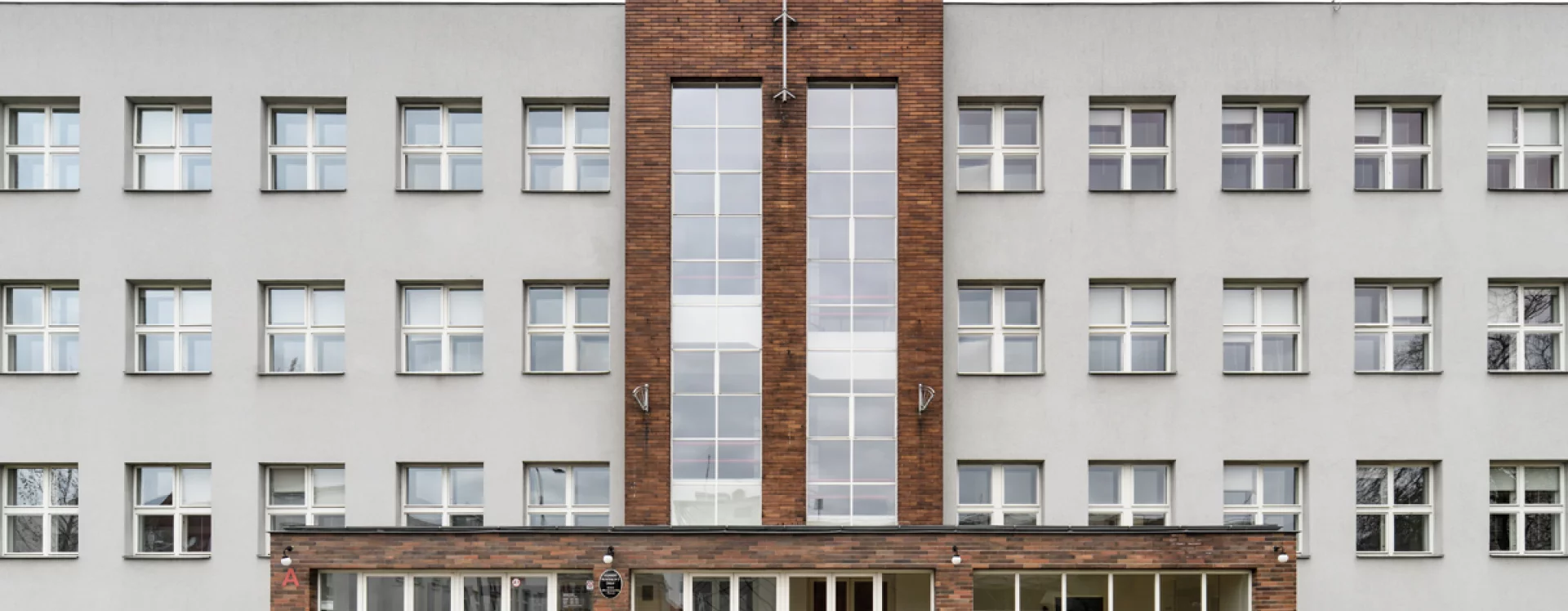
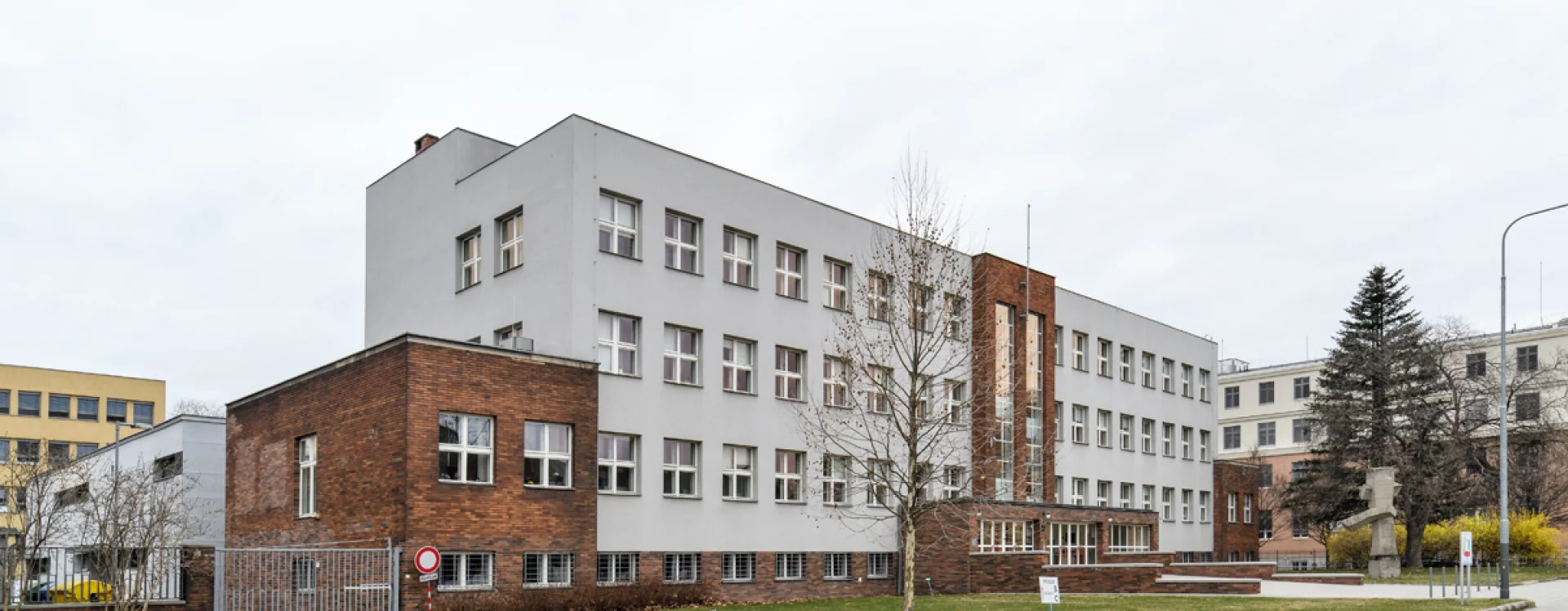
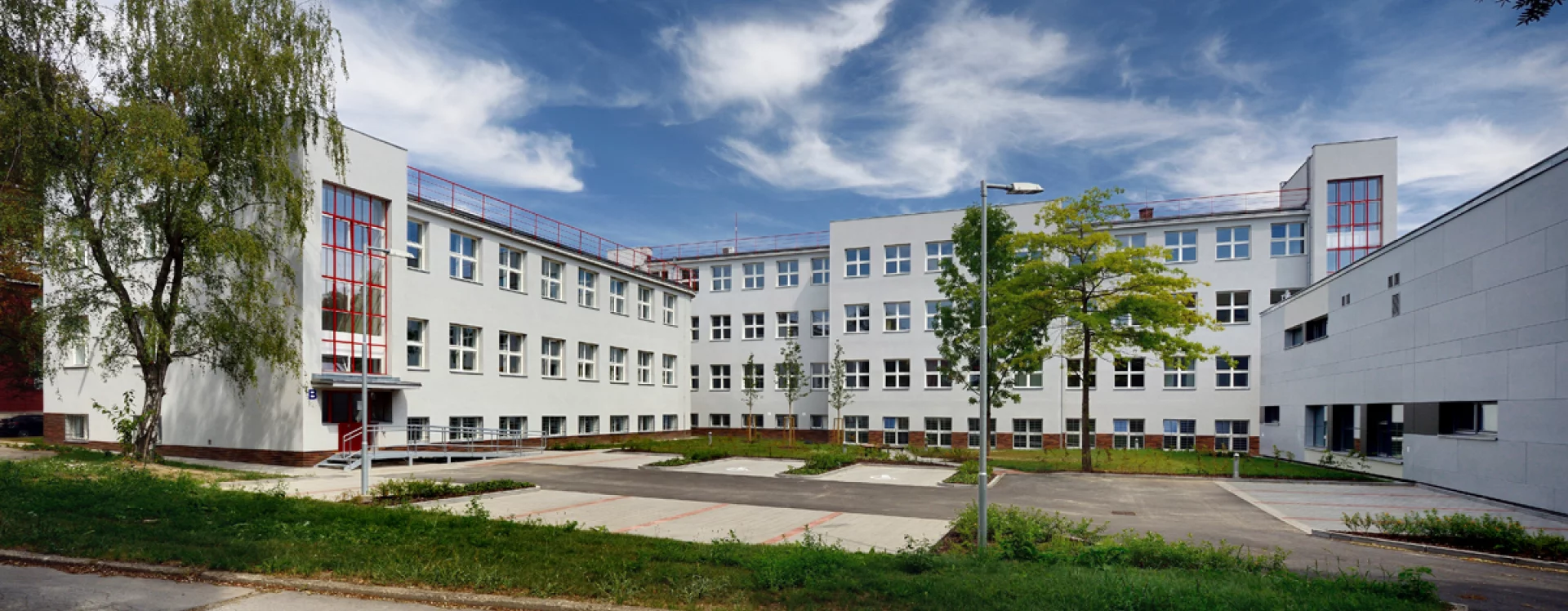
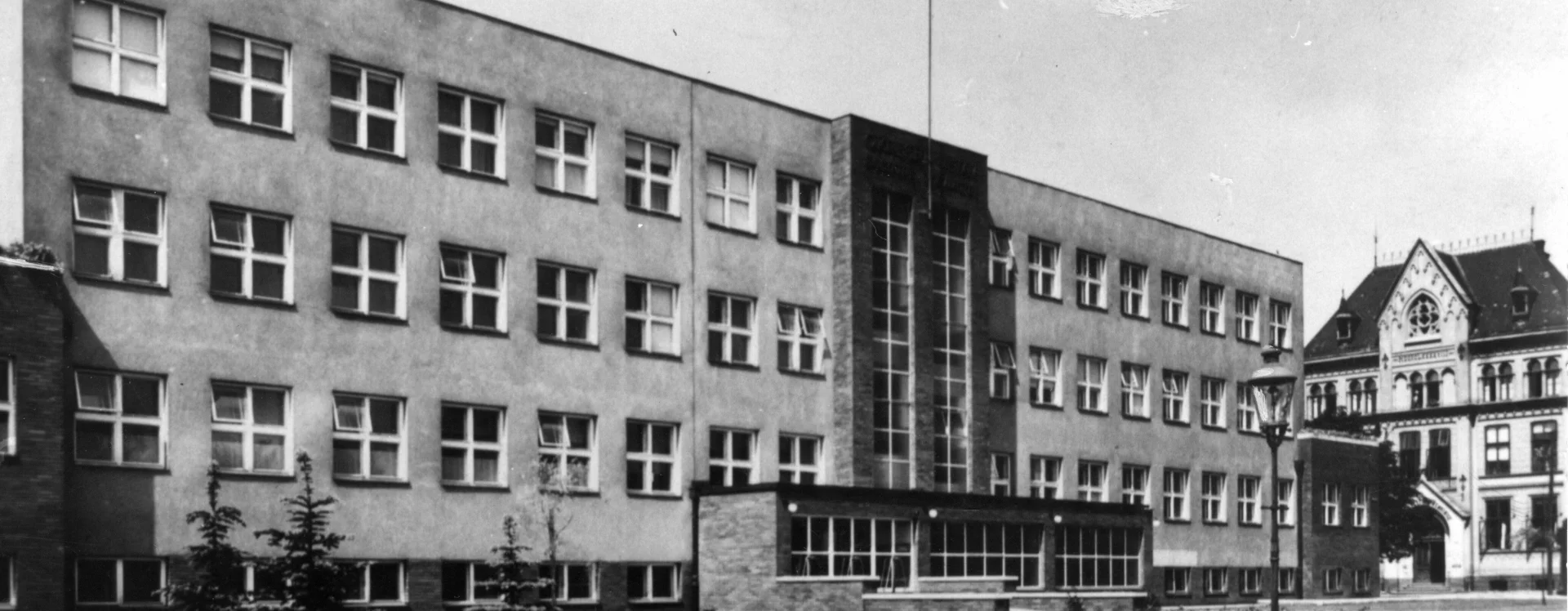
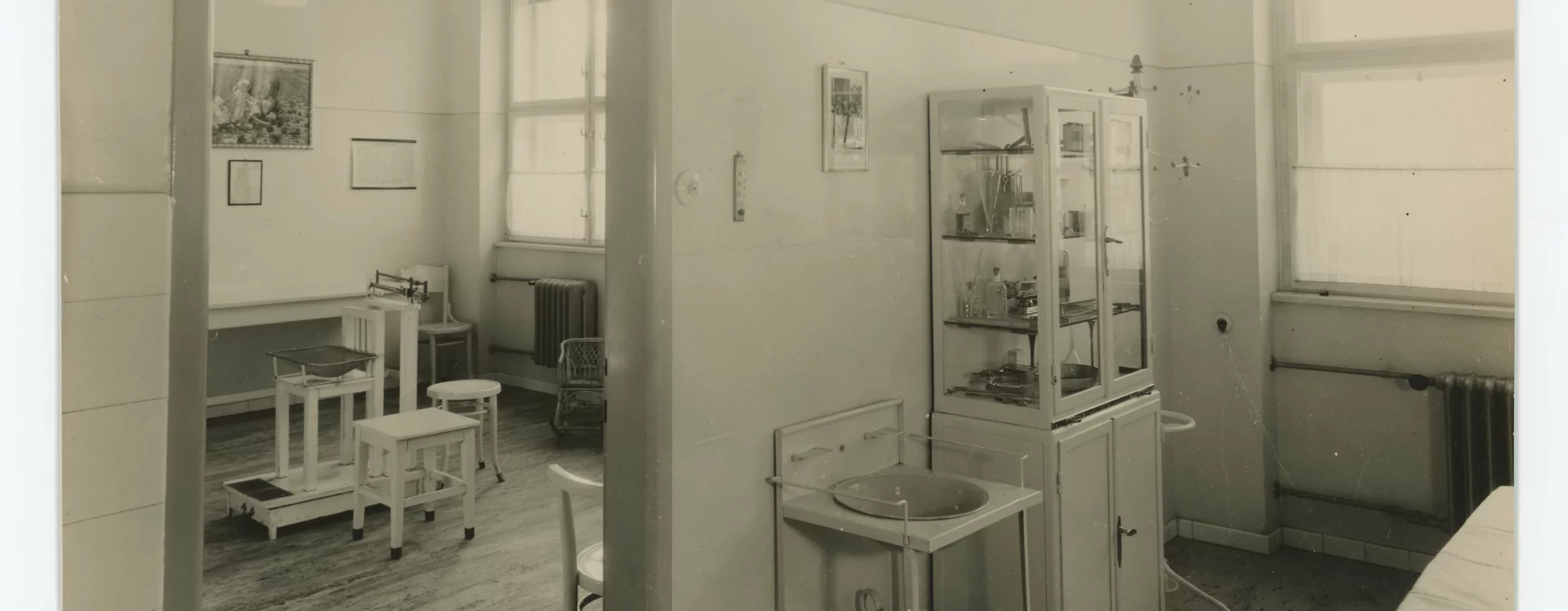
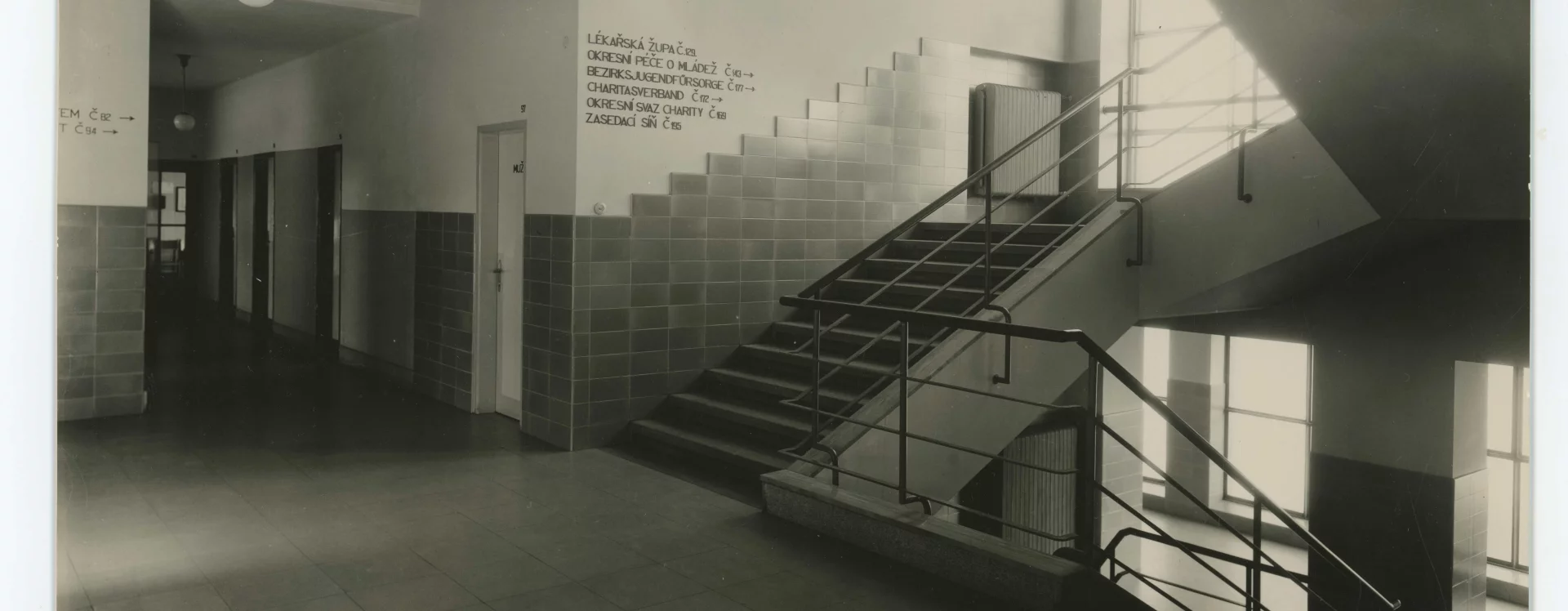
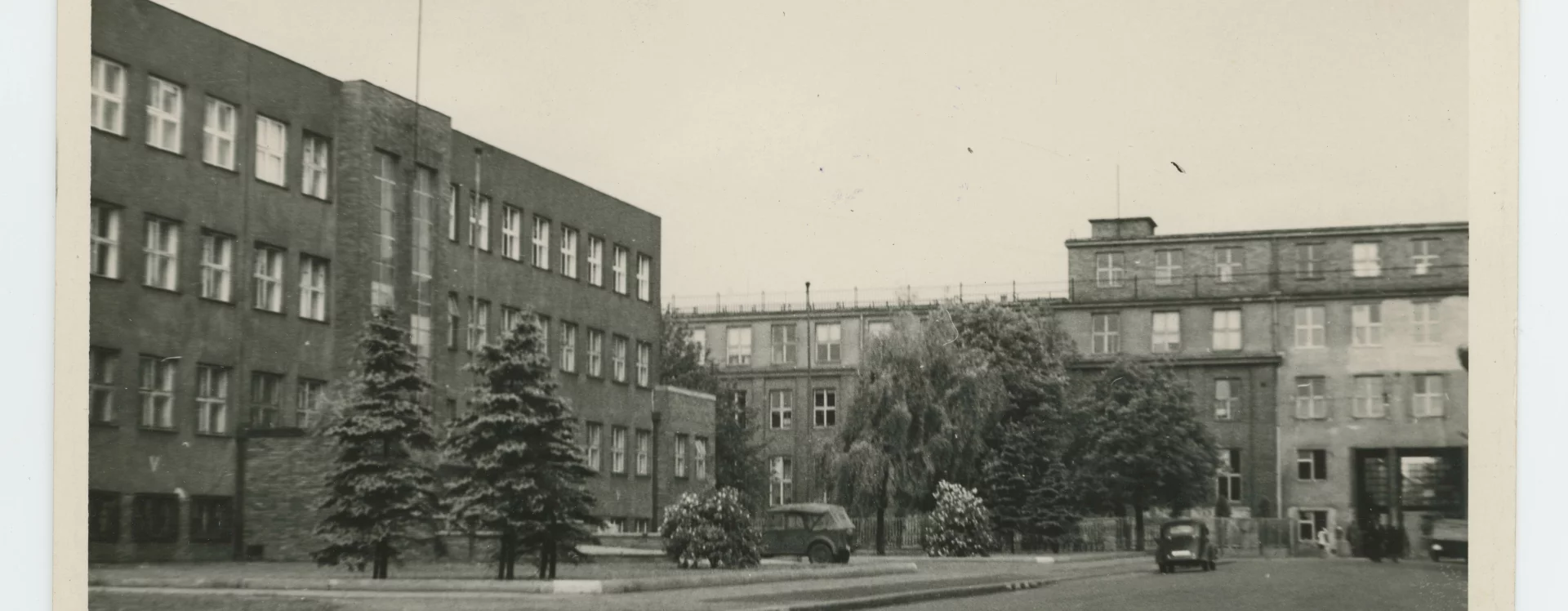
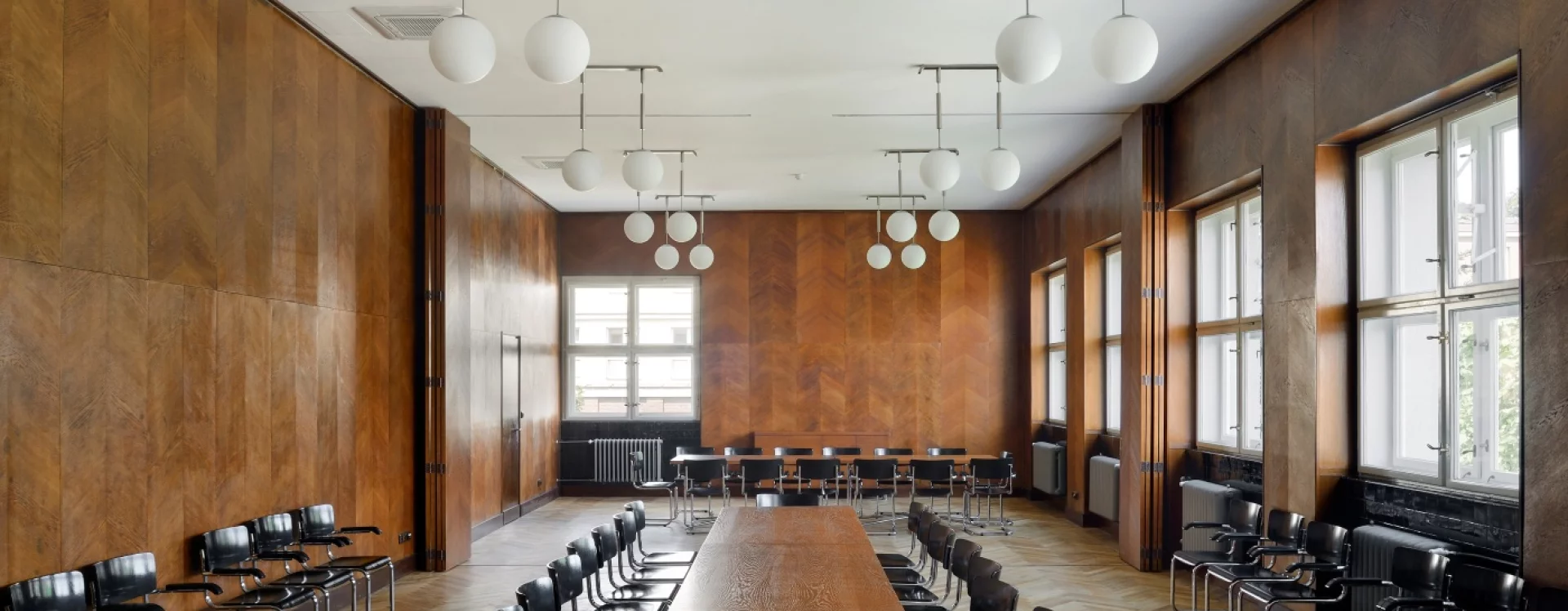
The architects sought to avoid giving the building a “hospital-like” appearance, and therefore worked extensively with masses, materials, textures, and colours. The resulting modernist building, functionalist in its form but classical in its symmetrical composition, has a reinforced-concrete structure filled with brickwork. It comprises two wings: the main three-storey wing along Senovážná Street (now Odboje Street) and a perpendicular two-storey wing along Nemocniční Street with its own entrance. Both wings are also accessible from the courtyard via side staircases. The main wing is articulated by single-storey side risalites and a central glazed stairwell risalit with an advanced entrance volume. The architects enhanced the modelling of the façades by combining grey roughcast render with brick cladding on the risalites. The flat roofs of the wings and risalites served as terraces. The floor plan is symmetrical – organised as a three-tract layout with a central corridor in the main wing and as a two-tract scheme in the side wing. To improve lighting, Roštík and Stockar-Bernkopf opened the corridor on each floor into spacious waiting rooms and day rooms. The third floor of the main wing housed a large assembly hall with wooden panelling, shared by the various institutions, and the director’s flat.
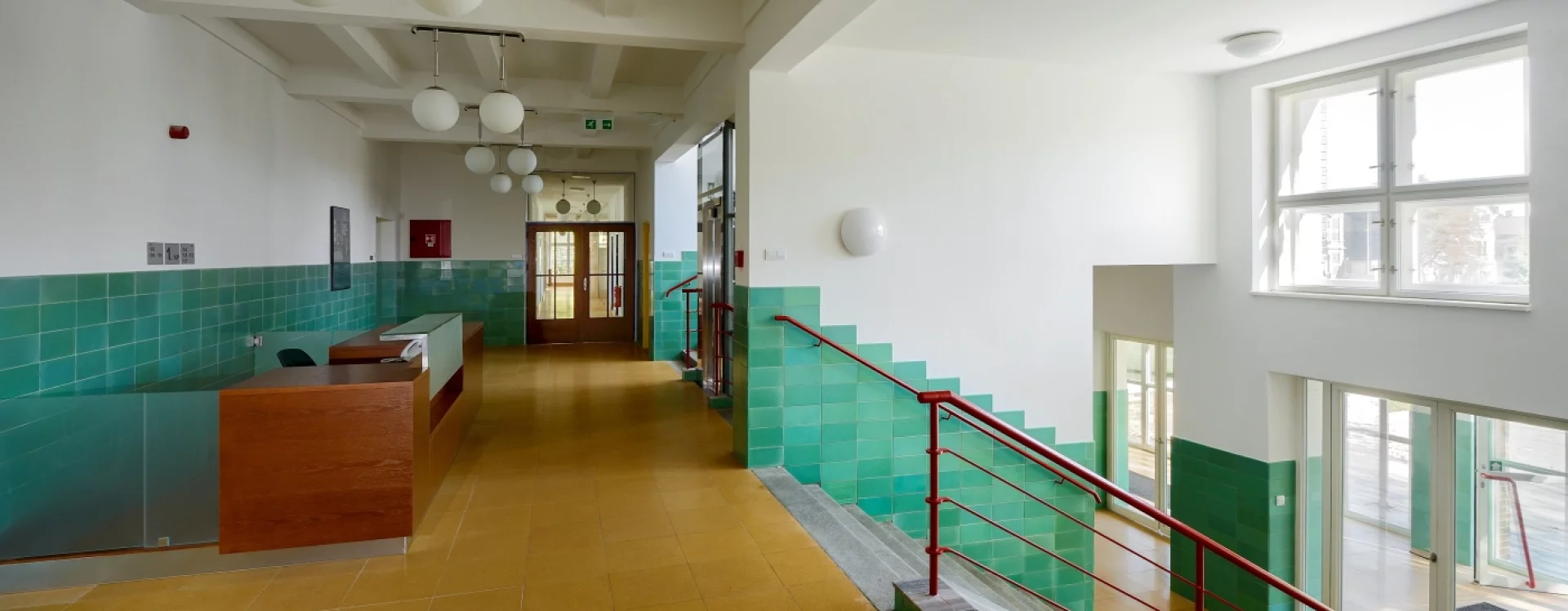
The building accommodated several Czech and German social and healthcare organisations, including the Czechoslovak Red Cross, the Masaryk League against Tuberculosis, the district youth welfare office, and the maternity advisory service. To distinguish the individual offices, the architects assigned specific colours to the doors: red for the Red Cross, blue for the anti-tuberculosis league, and so on. They also introduced a nuanced colour scheme in other elements and materials: ochre floor tiles, green wall tiles in several shades, red tubular handrails, and grey and black terrazzo.
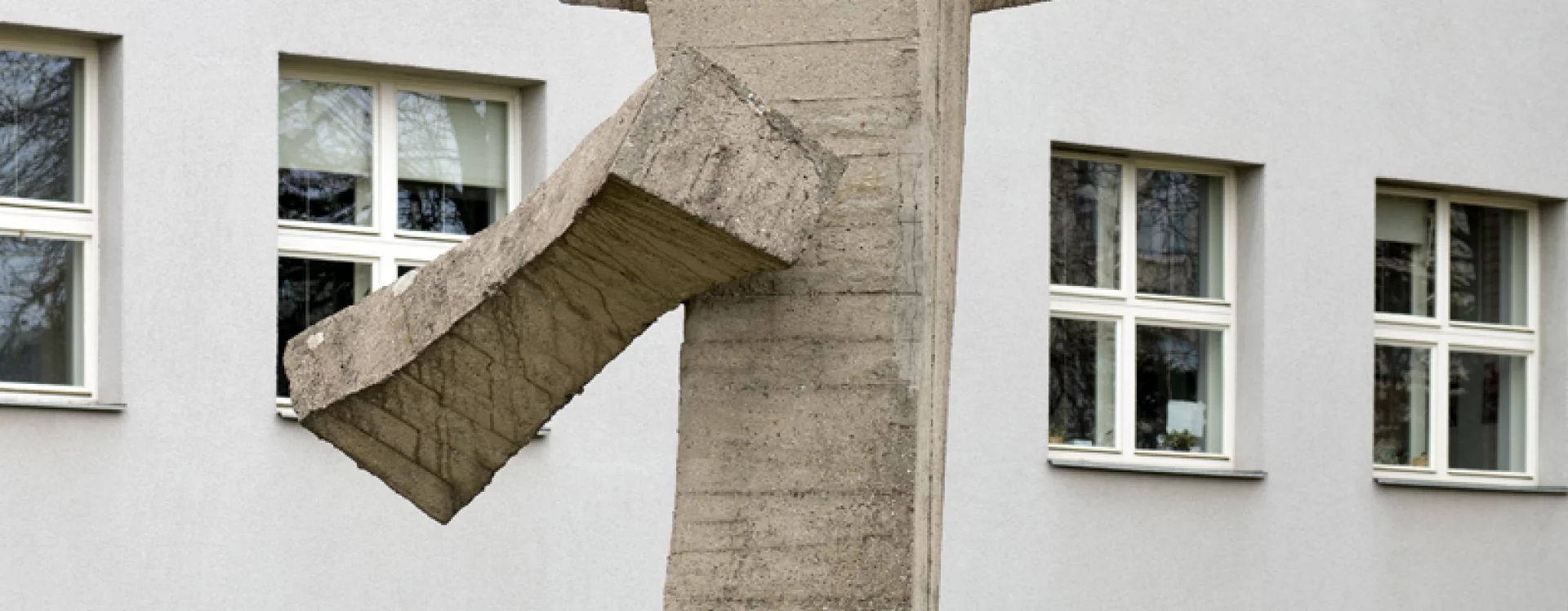
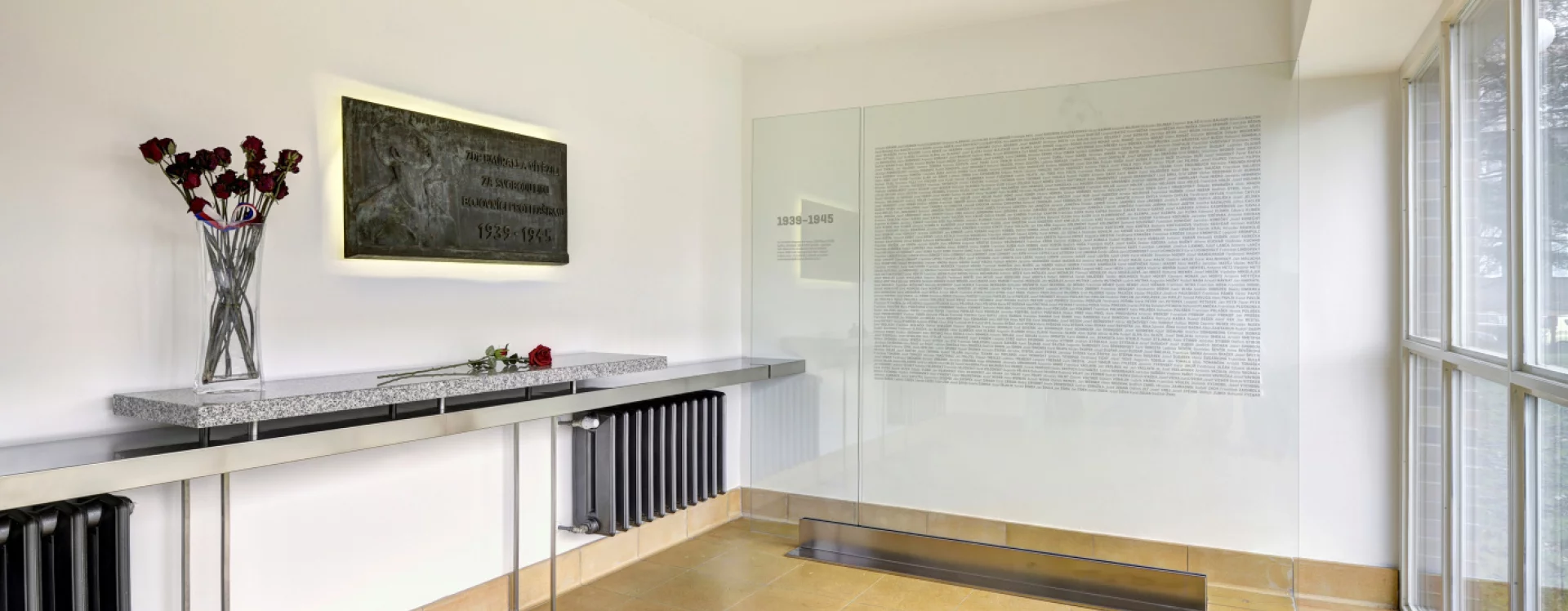
In 1939, the Ostrava Gestapo seized the building and altered parts of the layout for its administrative needs, particularly the director’s flat and the waiting rooms. After 1945, the building was incorporated into the neighbouring hospital. In the 1950s, a single-storey perpendicular wing, originally intended as a temporary structure, was added to the south side of the main tract; it was extended and raised by one storey in the 1970s. In the early 21st century, the hospital vacated the building, and in 2011 it was taken over by the National Heritage Institute, which adapted it for the headquarters of its Ostrava branch. The renovation, carried out between 2013 and 2015 to designs by Michal Šourek and Pavel Hřebecký of MS architekti, reinstated the building’s original appearance, including the restoration of the disturbed layout (with the exception of the flat), the historic colour scheme, and the refurbishment of the wooden wall panelling in the assembly hall. The architects also removed inappropriate interventions from the 1990s, such as plastic window frames in the stairwell risalit and the solid lift shaft, replacing the latter with a glazed shaft. Following the completion of the renovation, the sculpture Směrník by Václav Uruba, rescued from demolition, was installed in front of the building, having been relocated from its original site at the railway station in Havířov.
Literature
Průvodce architekturou Ostravy. 2009. p. 133. ISBN 978-80-85034-54-7.
Martin Strakoš. Odboje 1941/1. Obnova památky moderní architektury. Ostrava, 2016, p. 165–168 ad.
Martin Strakoš, Romana Rosová, Marie Bartošová. Sborník Národního památkového ústavu v Ostravě 2015. Ostrava, 2015. p. 6–28.
Pavel Šopák. Město zítřka. Olomouc a Ostrava 1918–1938: architektura a urbanismus. Opava, 2019. p. 139–140.
Jan Vysloužil. Technická práce na Ostravsku 1926–1936. Moravská Ostrava, 1936. p. 704–713.
Bývalý Okresní sociální a zdravotní ústav. Available from: https://pamatkovykatalog.cz/byvaly-okresni-socialni-a-zdravotni-ustav-13059337 [accessed 9. 11. 2025]
Památka 83. Available from: https://www.ostravskepamatky.cz/pamatka/show/83 [accessed 10. 11. 2025]
Sources
Romana Rosová, Martin Strakoš. Okresní sociálně-zdravotní ústav Moravská Ostrava. archiv NPÚ, ÚOP v Ostravě.
Úřad městského obvodu Moravská Ostrava a Přívoz, spisovna stavebního archivu,. inv. no. složka čp. 1941, spisovna stavebního archivu.
Bez názvu. Archiv města Ostravy, inv. no. kart. 99, Okresní úřad Moravská Ostrava.