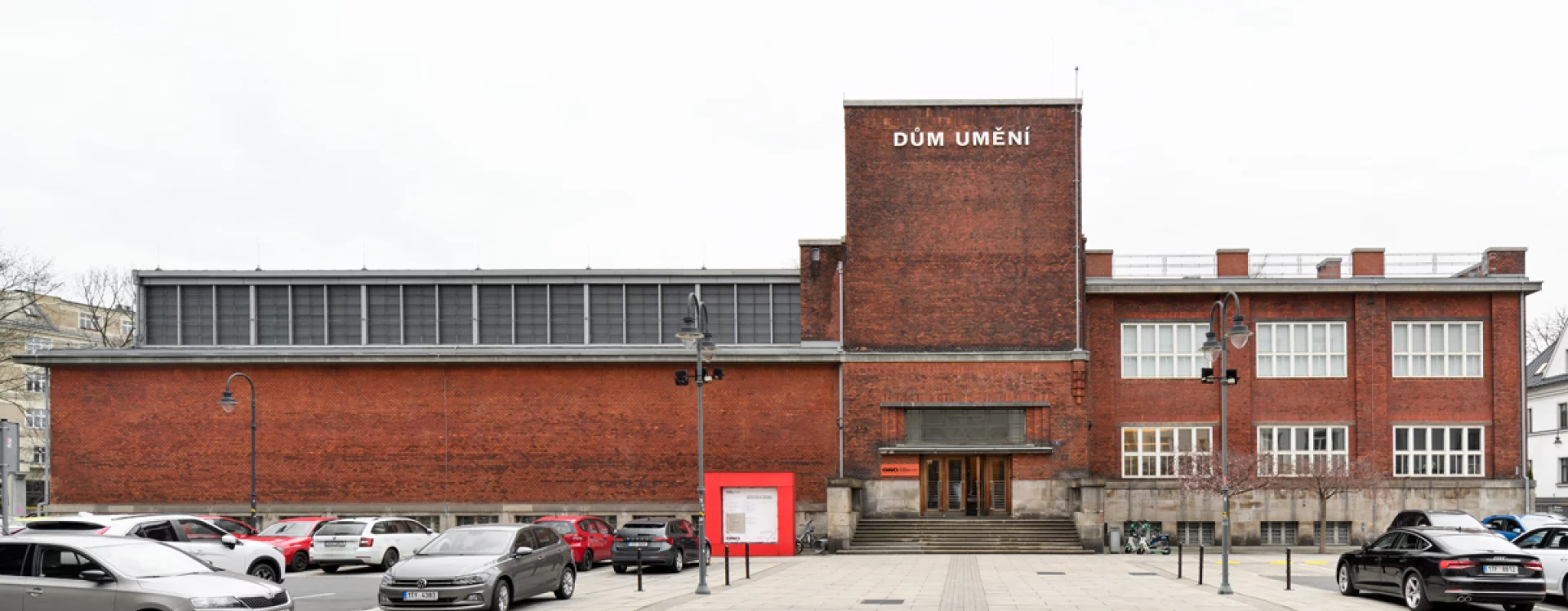
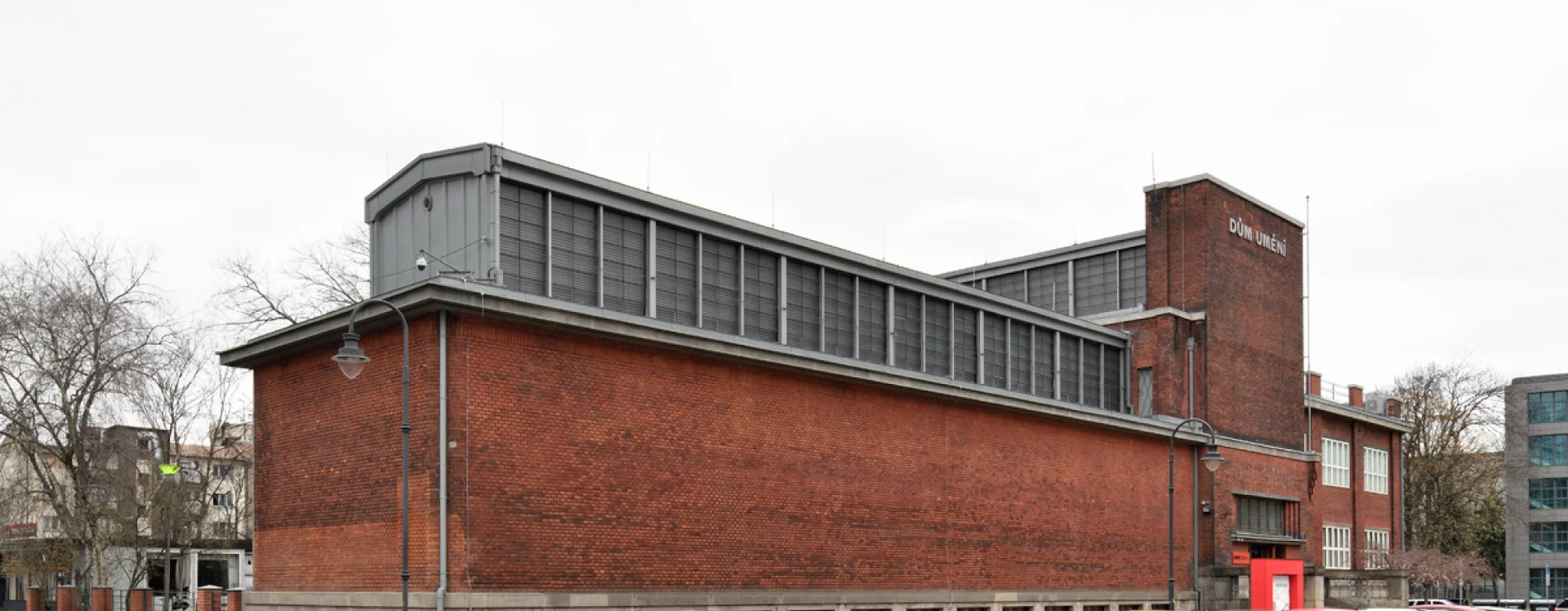
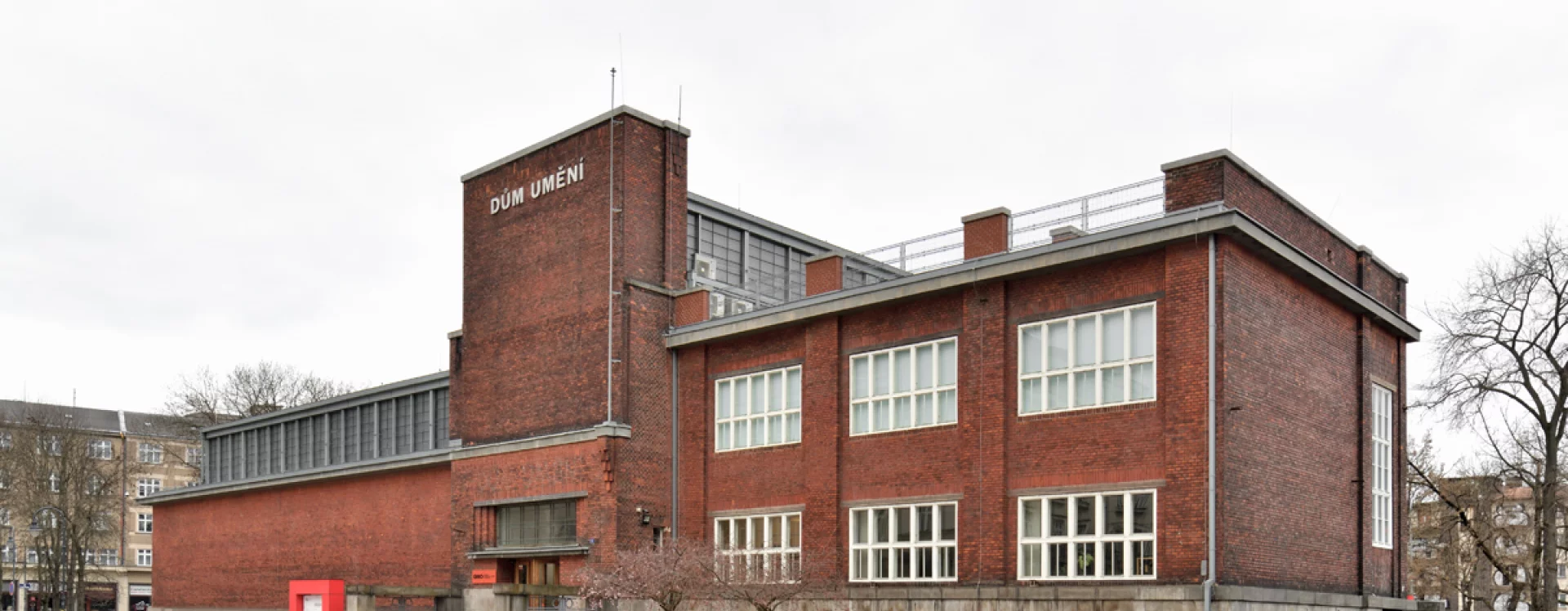
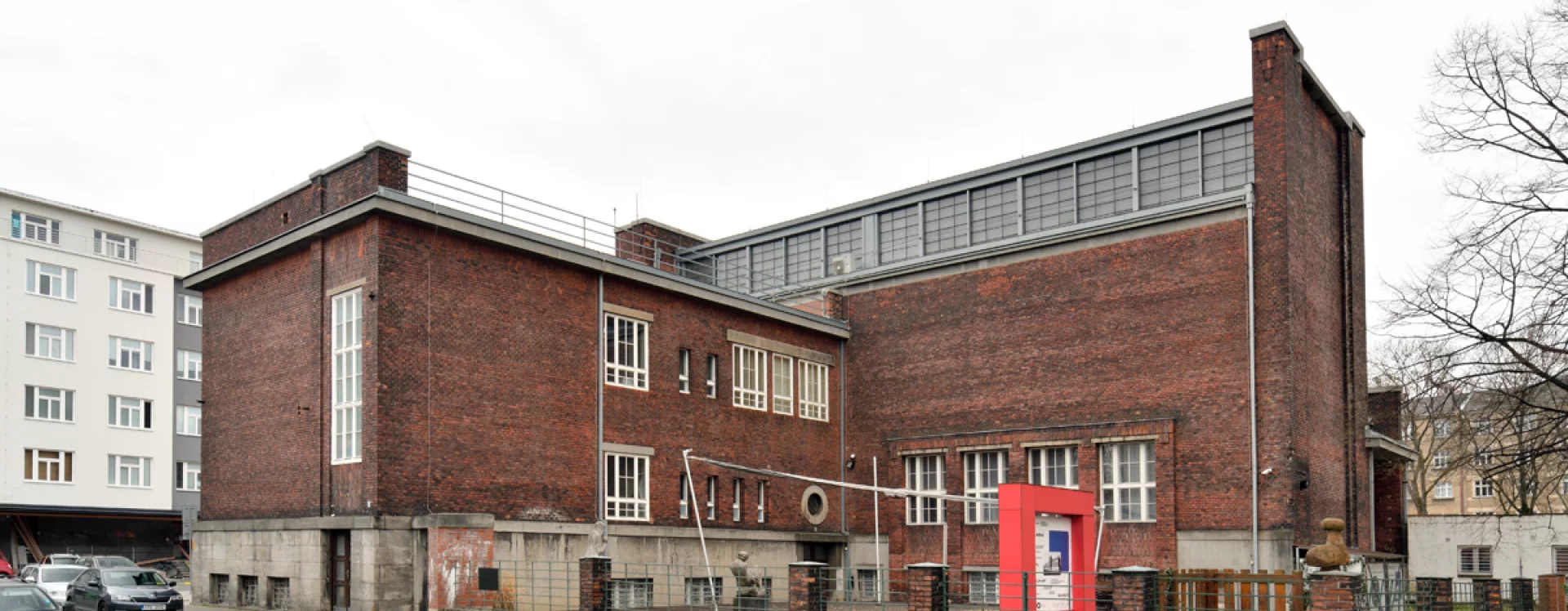
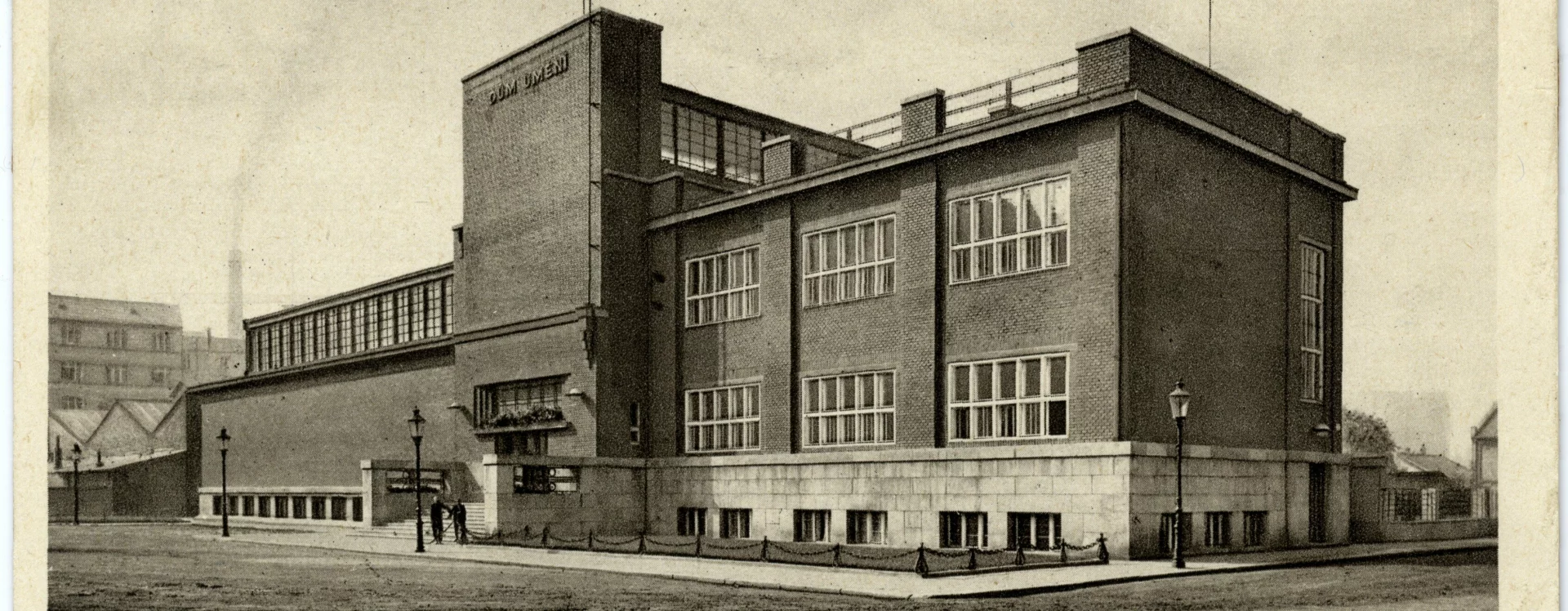
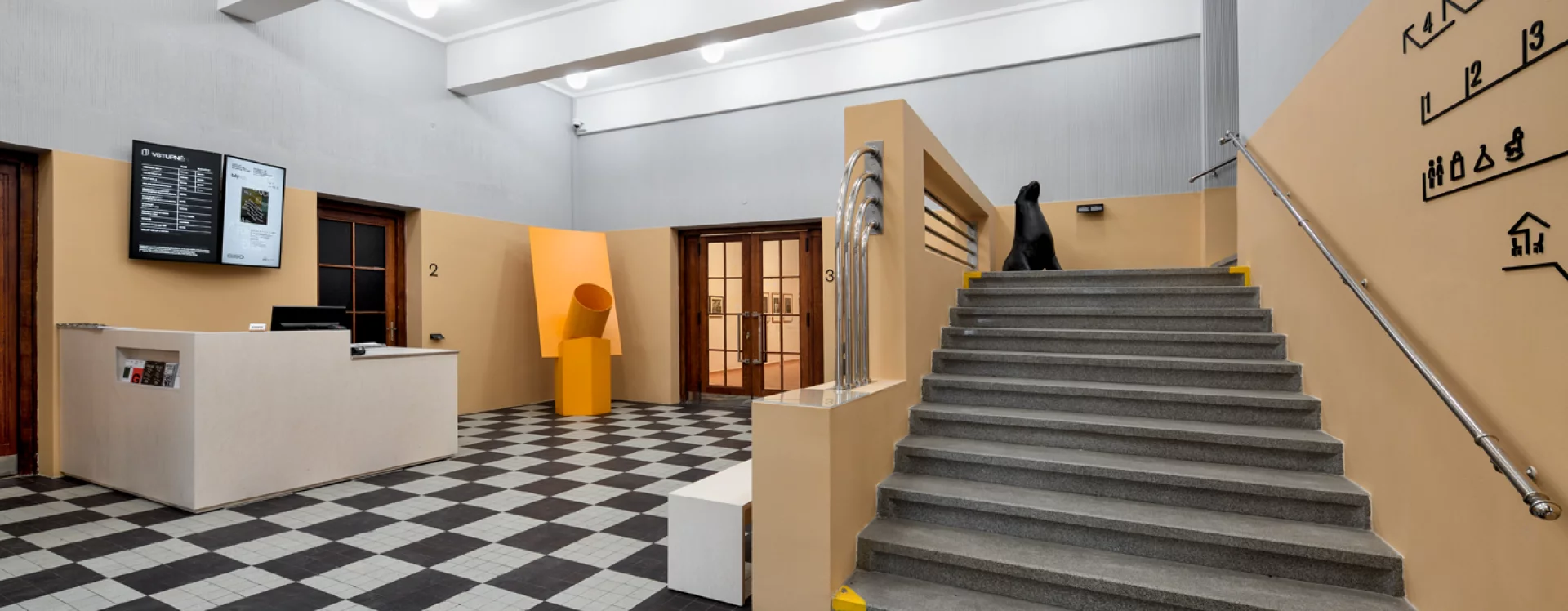
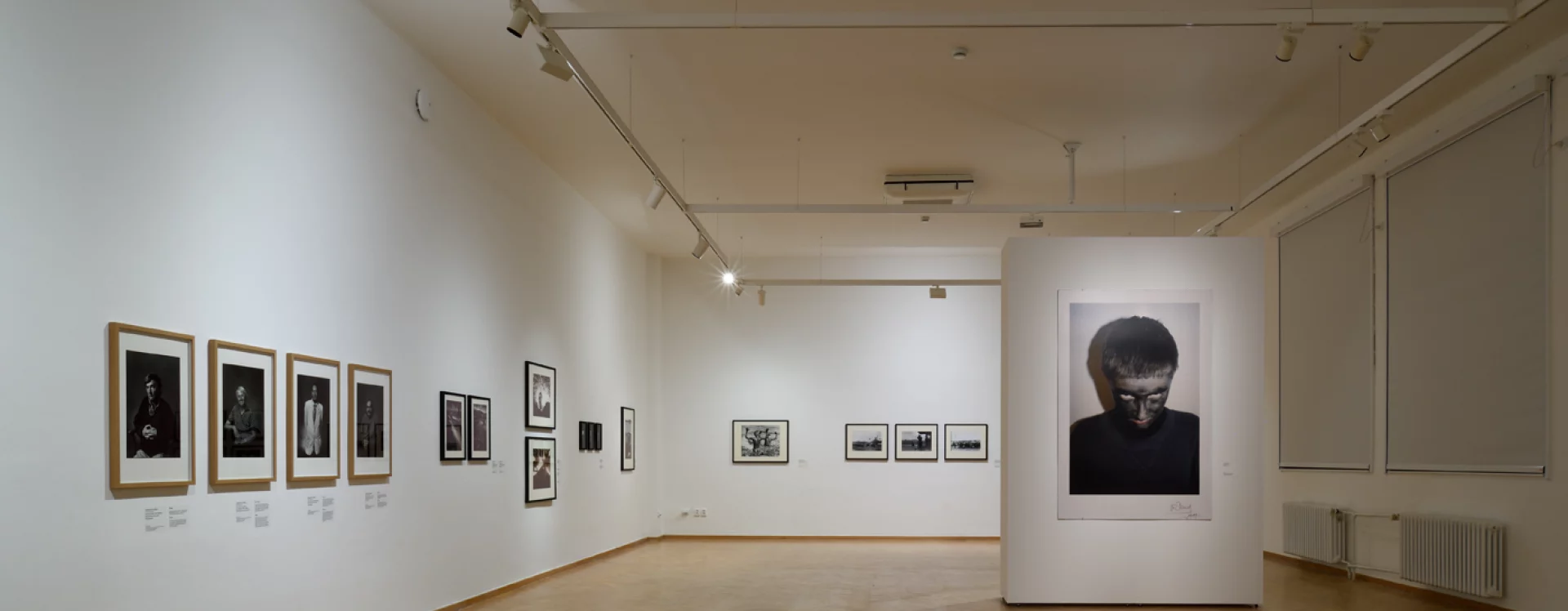
Since 1952, the House of Art has been home to the Gallery of Fine Arts in Ostrava. It is one of the most important examples of purist architecture from the 1920s in the Ostrava region and, more broadly, in the Czech lands. At the time of its construction, it was the most modern exhibition pavilion in Czechoslovakia. In Moravská Ostrava, where architectural production was then largely traditionalist, the building represented the arrival of avant-garde architecture. Its establishment was partly due to the fact that Moravská Ostrava, as a young industrial metropolis, needed to build infrastructure focused on developing various arts disciplines. Concerts had long taken place only in the halls of national houses or on the stage of the municipal theatre, which had been completed as late as 1907. The first exhibitions of contemporary painting, printmaking, and sculpture had to make do with the premises of the fire station or with the commercial spaces of local art enthusiasts.
The initial efforts to create an exhibition building modelled on contemporary Central European cultural centres were led by the Moravská Ostrava builder František Jureček (1868–1925) and other local supporters of the visual arts. Their ambition was to establish a pavilion that would provide facilities for exhibitions and other activities promoting fine art. The foundation of today’s extensive collection of the Gallery of Fine Arts in Ostrava is formed by 113 works that builder František Jureček donated to the House of Art at the end of his life. Its construction was initiated by the Cultural Council for the Greater Ostrava Region, founded in 1921, whose mission was continued by the Society for the Construction and Maintenance of the Exhibition Pavilion in Moravská Ostrava, established on 24 January 1923. The society’s chair was engineer Eduard Šebela, general director of the Vítkovice coal mines; the secretary was Rudolf Tlapák; and other founding members included Alois Sprušil, later administrator of the House of Art, and the then government commissioner and later mayor of the city, Jan Prokeš.
Shortly after its establishment, the society began preparing an architectural competition for the pavilion. In the spring of that year, the jury – whose members included architects Antonín Blažek and Bohuslav Fuchs, and art historian Václav Vilém Štech – had to assess some forty entries. No first prize was awarded; instead, two designs received second prize. One was submitted by the Prague architect Kamil Roškot, the other by two young architects, Vladimír Wallenfels (1895–1962) and František Fiala (1895–1957), both pupils of Professor Jan Kotěra at the Academy of Fine Arts. The brief for the building envisaged exhibition halls, a lecture hall, a library, storage rooms, club rooms, and even spaces for a mining museum.
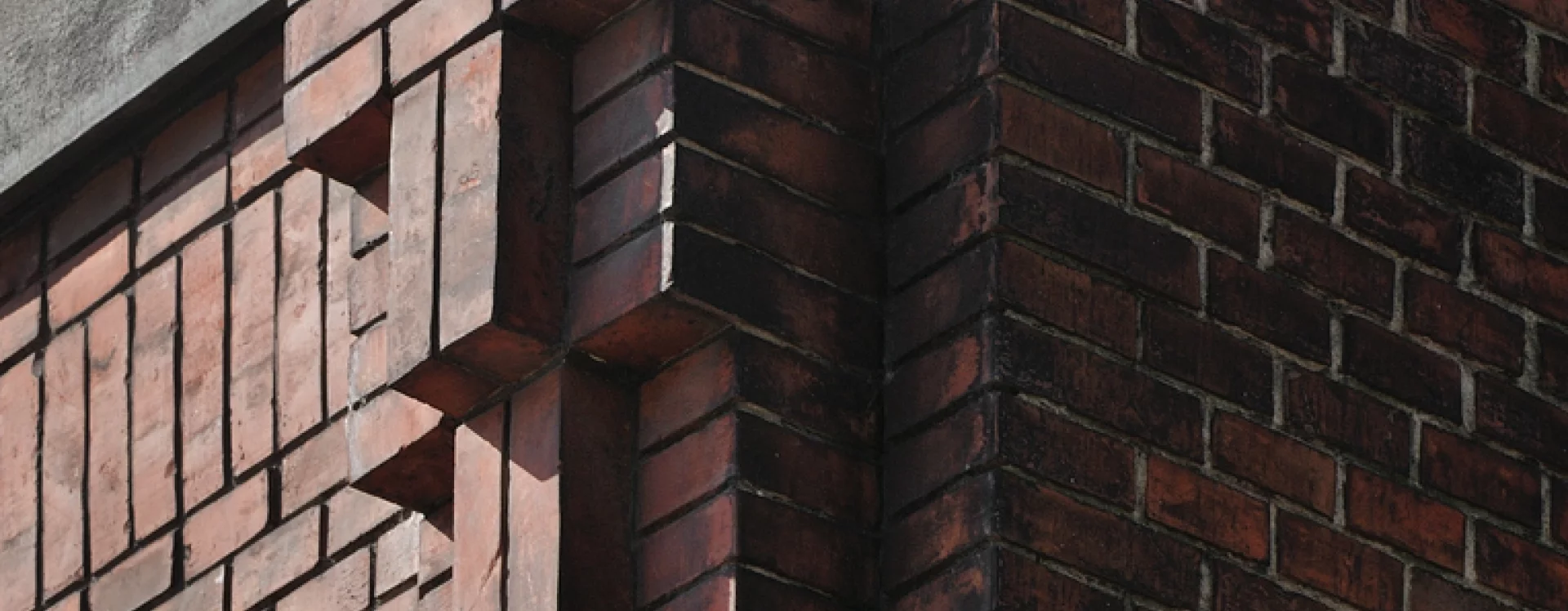
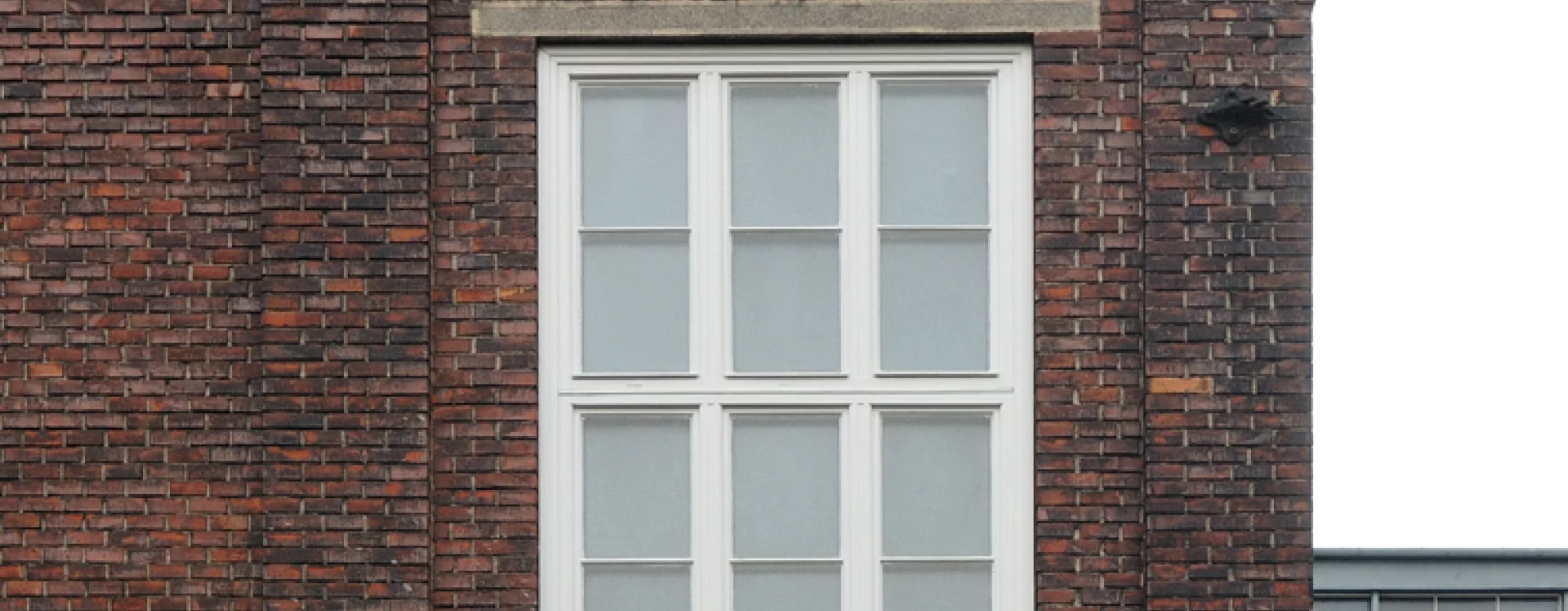
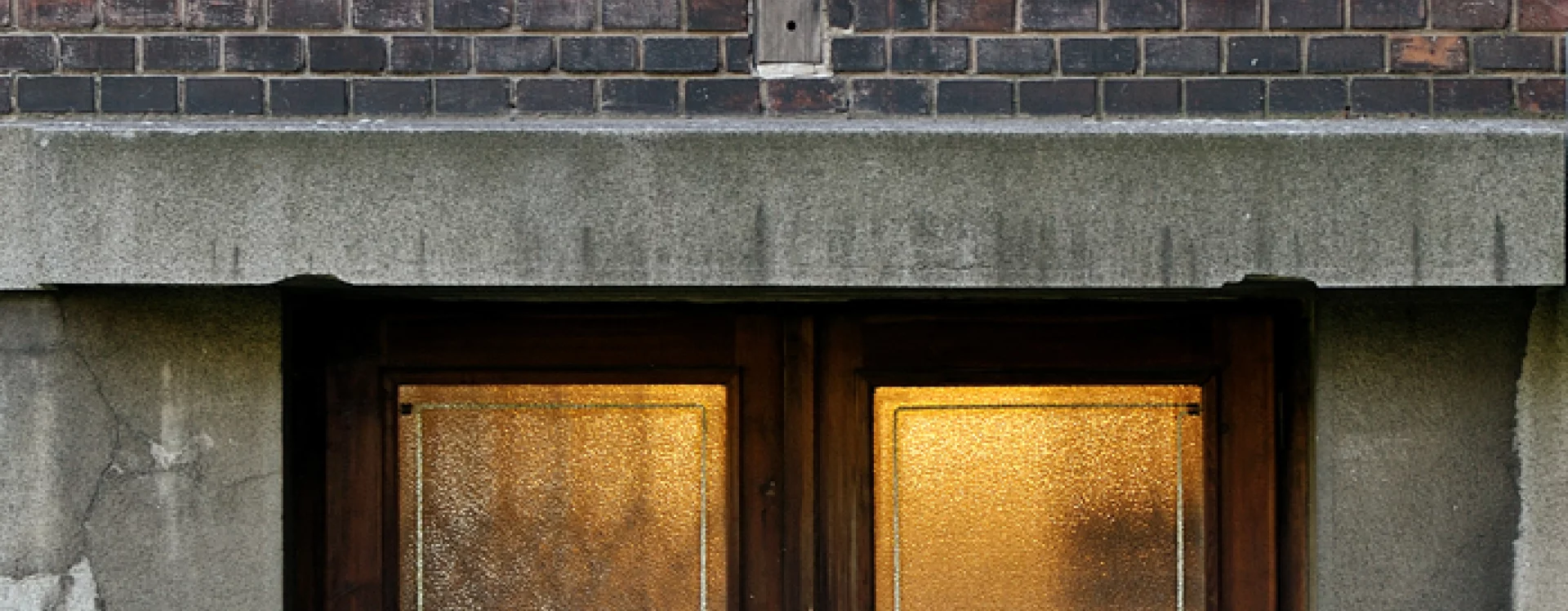
The society ultimately chose the design by Wallenfels and Fiala, conceived as a tribute to their teacher Jan Kotěra. Their main source of inspiration was his most important work, the Municipal Museum in Hradec Králové, completed in 1909, which at the time represented a key achievement of architectural modernism in Central Europe. Its restrained formal language, emphasis on the texture of brickwork, and refined craftsmanship remained a lasting source of inspiration for the emerging generation. The authors of the winning design also drew on broader European influences, especially Dutch architecture, which then excelled in the use of exposed brick. The sober expression of Dutch modernism had itself been an important inspiration for Kotěra. The restrained architectural treatment and emphasis on the aesthetic qualities of exposed brickwork underscored the civilian character of the building, while at the same time articulating its connection with modern artistic expression. The choice of site in a newly developing part of the centre of Moravská Ostrava, on the boundary between residential development and industrial outskirts, symbolically reinforced this intention.
In July 1924, builder Rudolf Kaulich began construction. The building was formally opened on 13 May 1926, together with the opening of the first exhibition. At the ceremony, one of the initiators and a member of the society, Alois Sprušil, declared that “this building… with its unusual, thoroughly original style, its simple architectural treatment, and practical lantern-like top lighting, is the most modern structure in the Ostrava region…”.
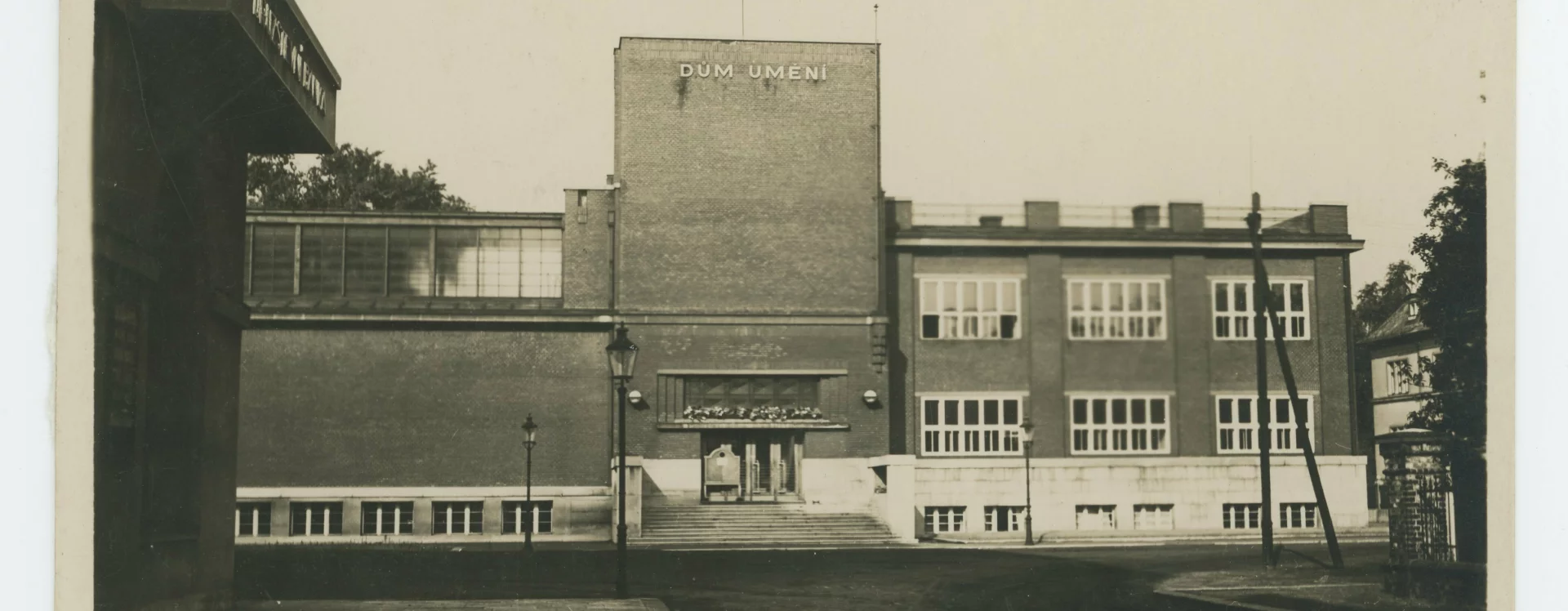
The House of Art is a two-storey building with a basement, built of exposed brick on a T-shaped ground plan, with flat and mono-pitch roofs and distinctive prismatic rooflights above the southern side wing and the central wing. These rooflights provide generous top lighting for the exhibition halls and, at the time, represented a highly advanced solution that reduced the deposition of airborne dust characteristic of Ostrava’s polluted air. The main entrance is located in a raised central risalit aligned with the axis of Umělecká Street, ensuring a clear view of the pavilion not only from that street, but also from nearby Nádražní Street.
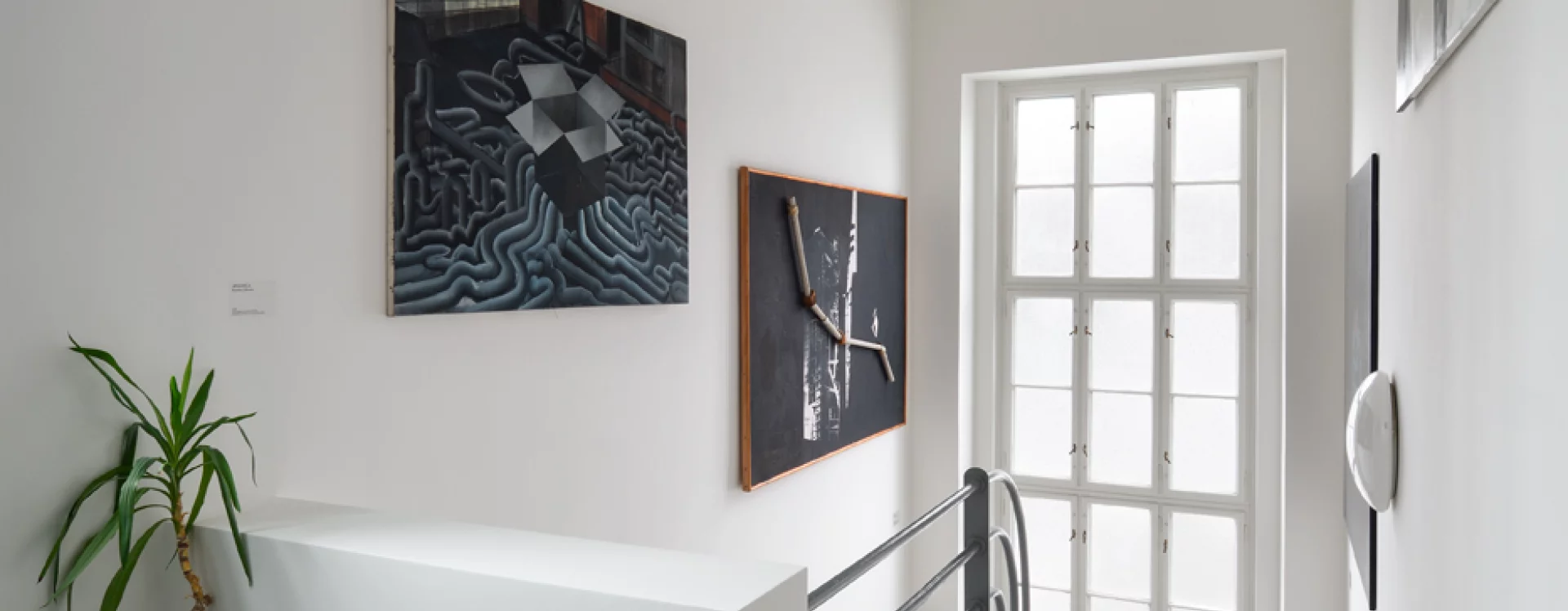
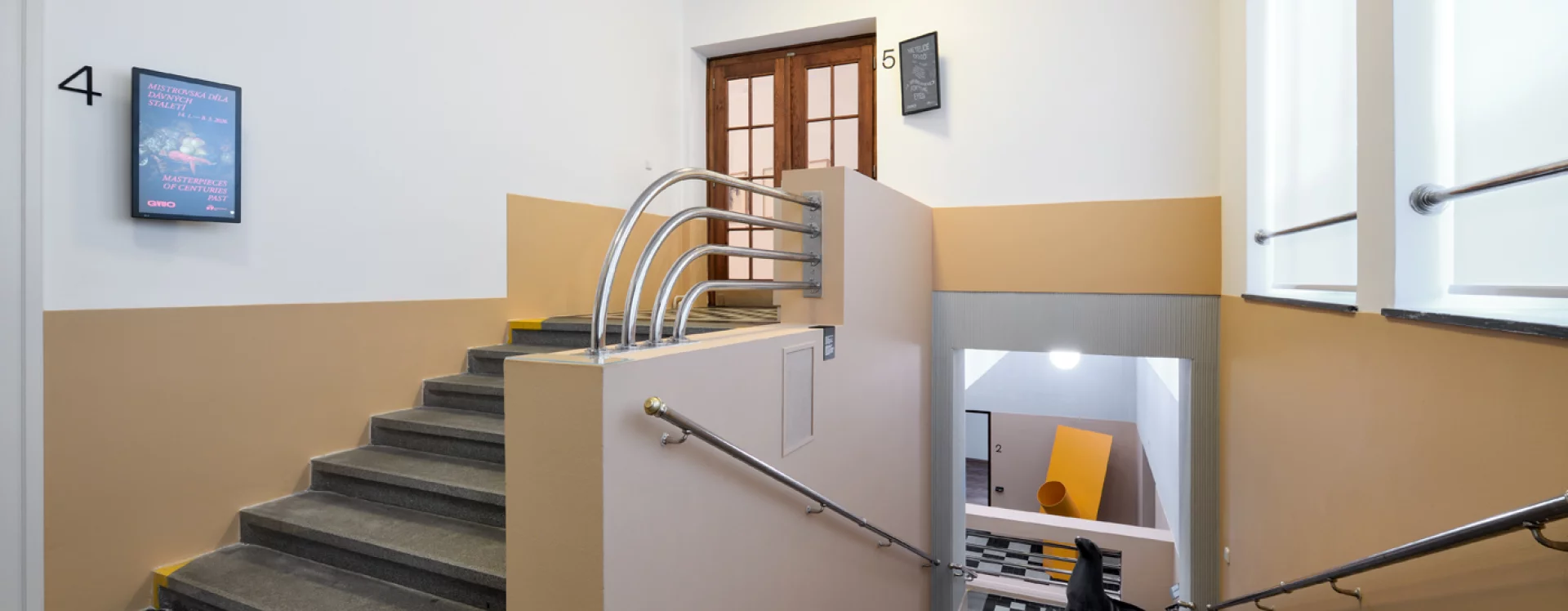
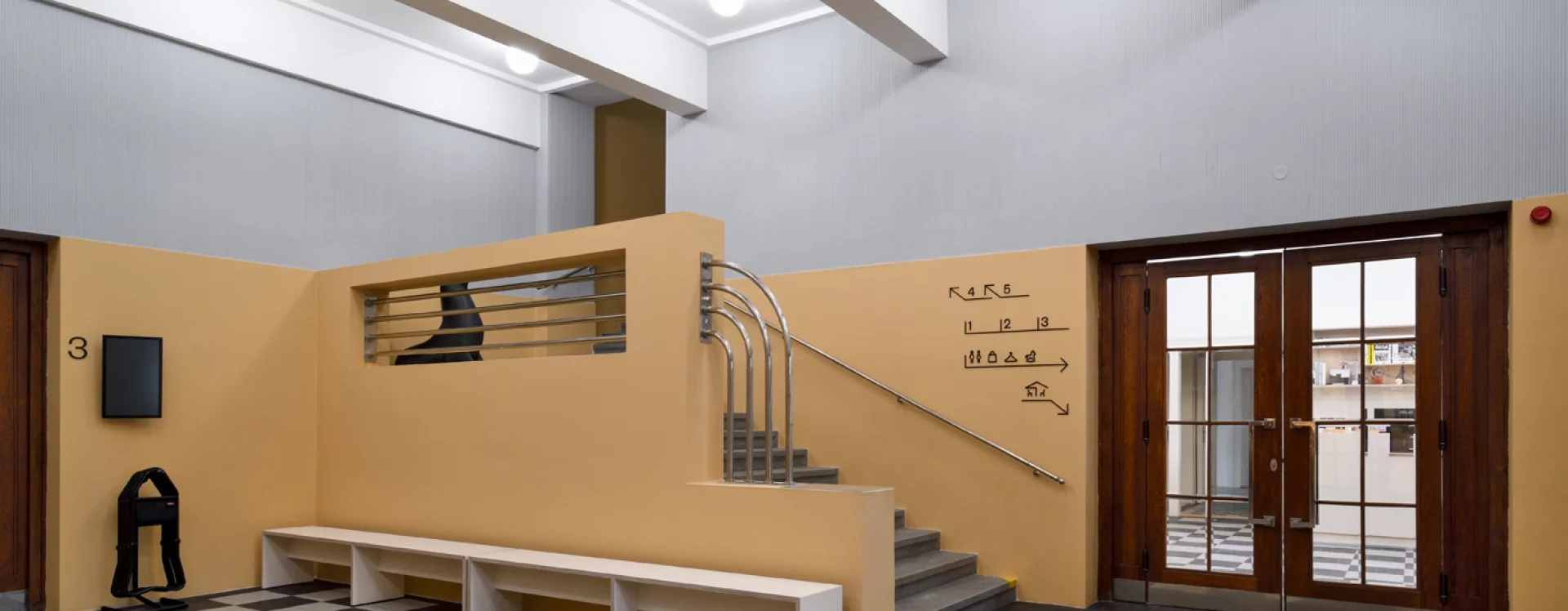
The southern ground-floor wing contains the largest exhibition hall, lit from above by the prismatic rooflight. The same type of top lighting is used in two halls on the first floor of the central wing. On the ground floor of this wing, there are two smaller exhibition spaces with side lighting. The northern hall is currently used for smaller-scale exhibitions, while the south-facing room serves as a lecture hall. The ground floor of the northern wing houses service areas, including a cloakroom, toilets, and a rest room. The first floor of this part of the building originally contained club rooms, later converted into galleries for more intimate exhibitions. The office spaces once located there were moved to a nearby villa at Poděbradova Street 1291/12, which now also houses the library of the Gallery of Fine Arts in Ostrava.
The initiators of the House of Art envisaged it not only as a venue for exhibitions of fine art, but also as a social and educational institution intended to raise the cultural level of the population of Moravská Ostrava, then the largest industrial metropolis of the Czechoslovak Republic. The result is one of the most striking purist works of the 1920s in Moravia and Silesia, and at the same time one of the few institutions of its kind dedicated to making fine art accessible to a wider public.
MSt
Literature
Jiří Jůza, Petr Beránek. 70 let Domu umění v Ostravě (1926 – 1996). Ostrava, Galerie výtvarného umění v Ostravě, 1996. p. 47–53. ISBN 80-85091-42-9.
Martin Jemelka, Gabriela Pelikánová, Romana Rosová, Martin Strakoš, Radomír Seďa. Jan Prokeš: Ostrava na cestě k velkoměstu. Ostrava, Fiducia, 2023. p. 160–169. ISBN 978-80-907934-5-3.
Průvodce architekturou Ostravy. 2009. p. 100-101. ISBN 978-80-85034-54-7.
Martin Strakoš. Ostravské interiéry. Ostrava, Fiducia, 2011. p. 134–137. ISBN 978-80-905106-0-9.
Dům uměni (Ostrava). Available from: https://cs.wikipedia.org/wiki/Dům_umění_(Ostrava) [accessed 14. 9. 2025]
Galerie výtvarného umění v Ostravě,. Available from: https://www.gvuo.cz [accessed 14. 9. 2025]
Dům umění, Jurečkova 9/175. Available from: https://encyklopedie.ostrava.cz/home-mmo/?acc=profil-domu&load=12 ( [accessed 14. 9. 2025]
Galerie výtvarného umění Ostrava – Dům umění. In: Památkový katalog. Available from: https://pamatkovykatalog.cz/galerie-vytvarneho-umeni-13228994 [accessed 14. 9. 2025]
Sources
Neznámý název, Spisovna stavebního úřadu Moravská Ostrava a Přívoz. k. ú. Moravská Ostrava.. inv. no. složka čp. 1750, Spisovna stavebního úřadu Moravská Ostrava a Přívoz.
Materiály o vzniku Domu umění. fond Galerie výtvarného umění v Ostravě.