The commission was awarded by the Private Clerks’ Sickness Insurance Fund to the Prague architects František Stalmach (1903–1985) and Jan Svoboda (1904–1978), both students of Professor Josef Gočár at the Academy in Prague. František Stalmach was a native of Moravská Ostrava, where his father worked as a painter. The Stalmach family owned a house on Masaryk Square, on the site where the Baťa Department Store was later built, designed by Stalmach and Svoboda. After completing their studies, the former classmates established an architectural practice specialising in savings banks, mixed-use buildings, commercial buildings, apartment houses, family houses, and villas. Apart from the above-mentioned Baťa Department Store on Masaryk Square, another Ostrava project was the office and residential building for the Private Clerks’ Sickness Insurance Fund on Sokolská Avenue.
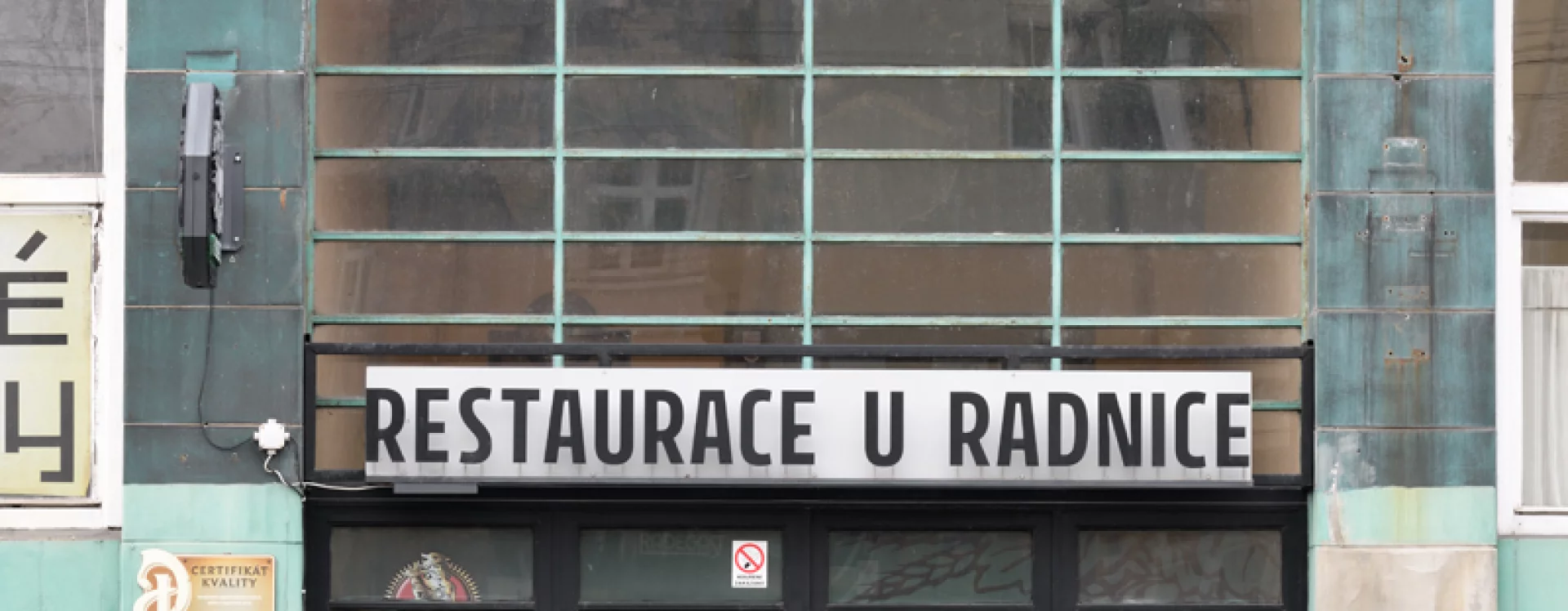
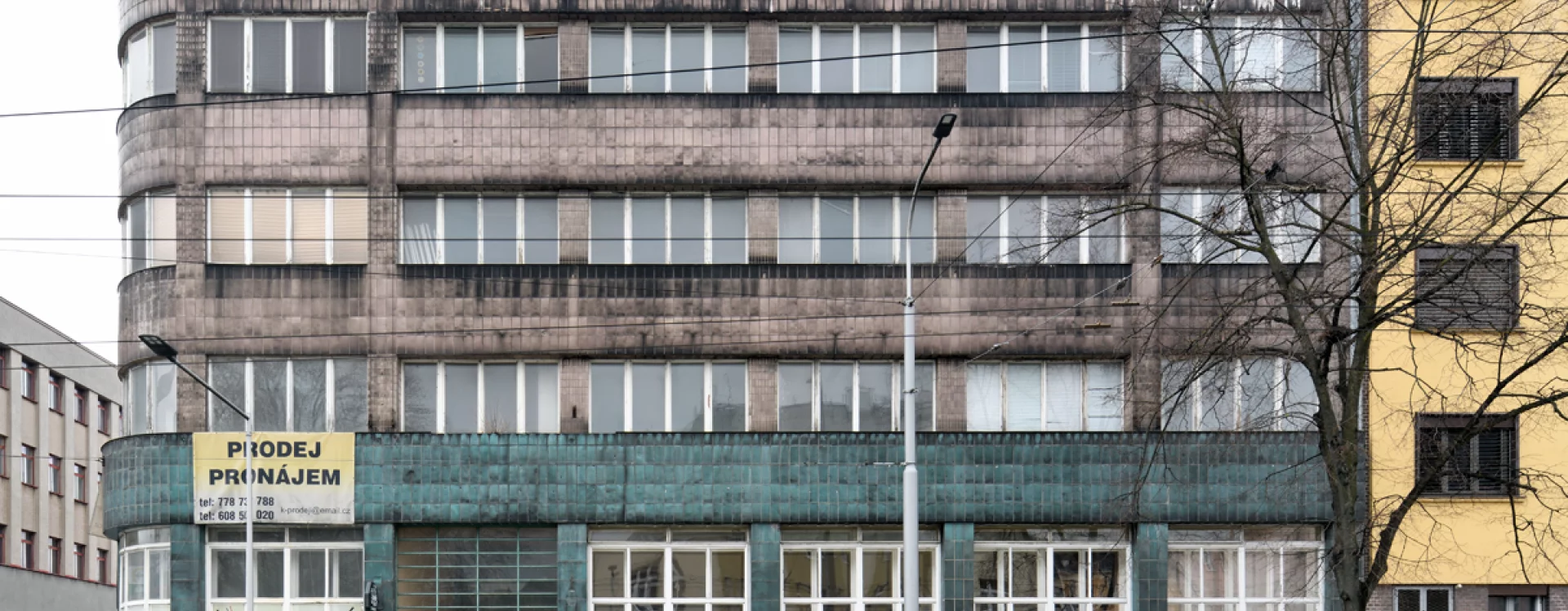
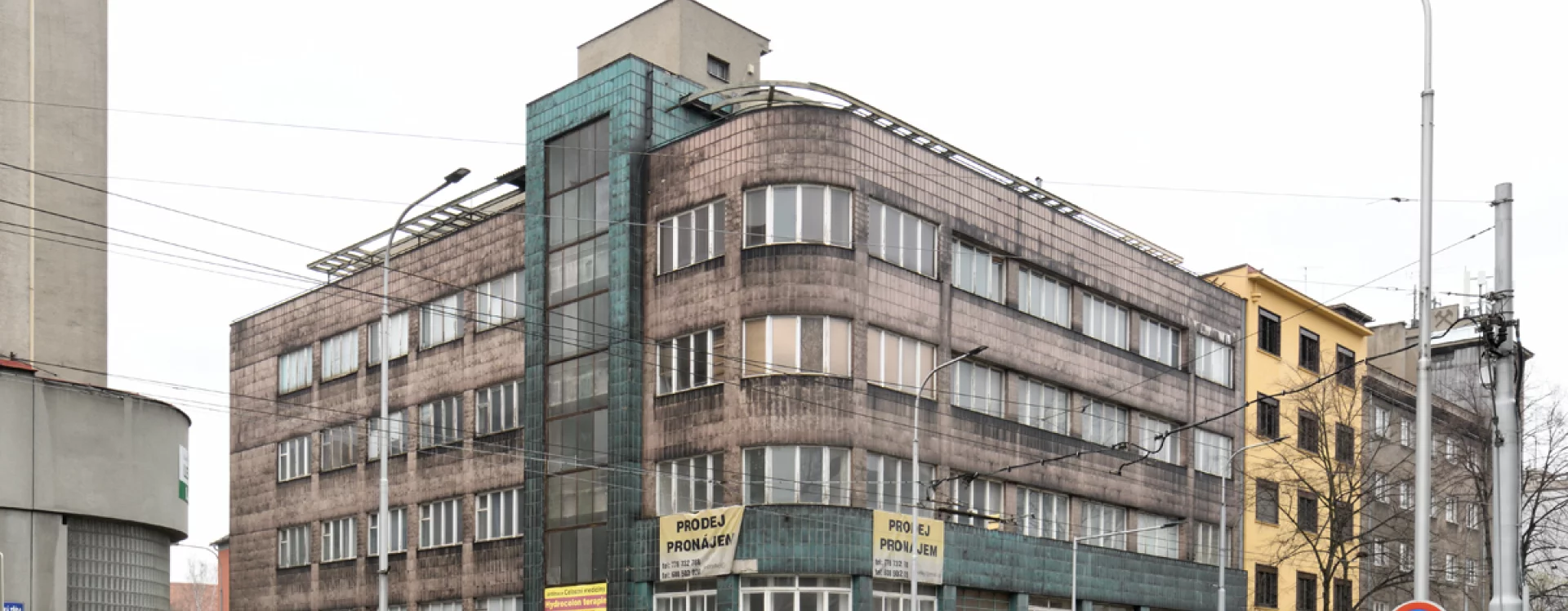
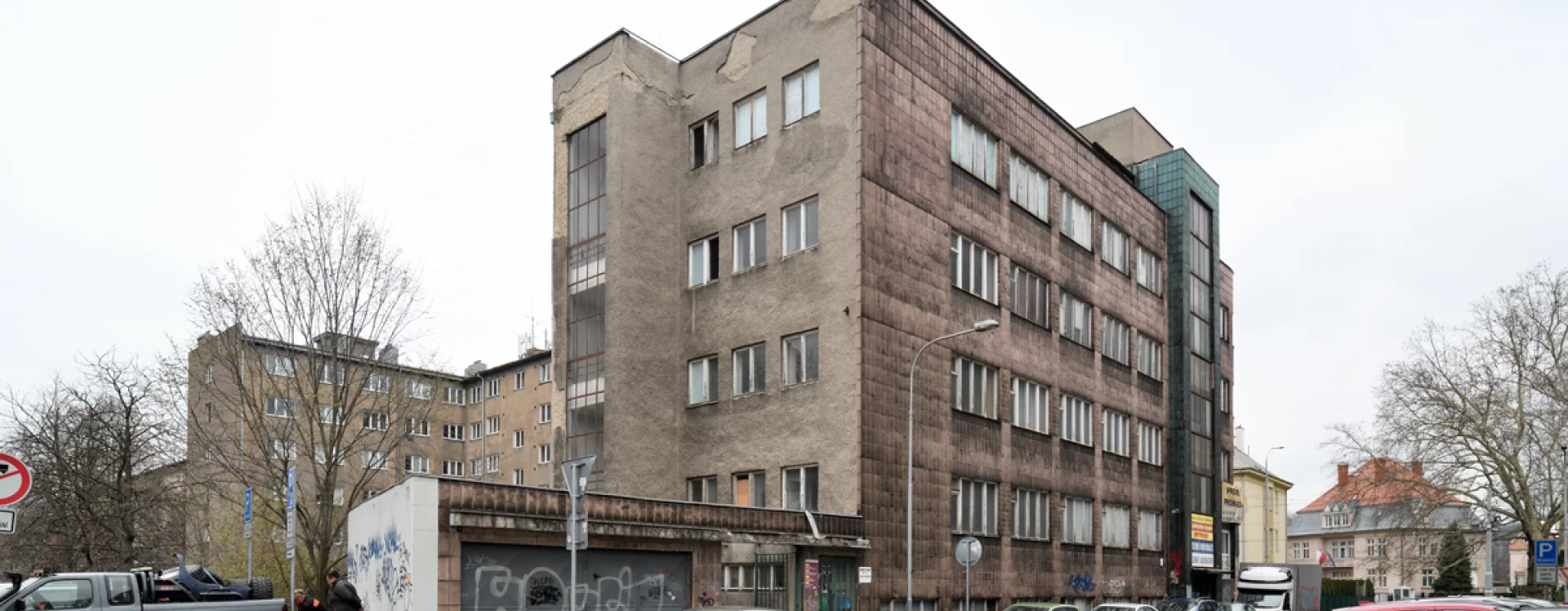
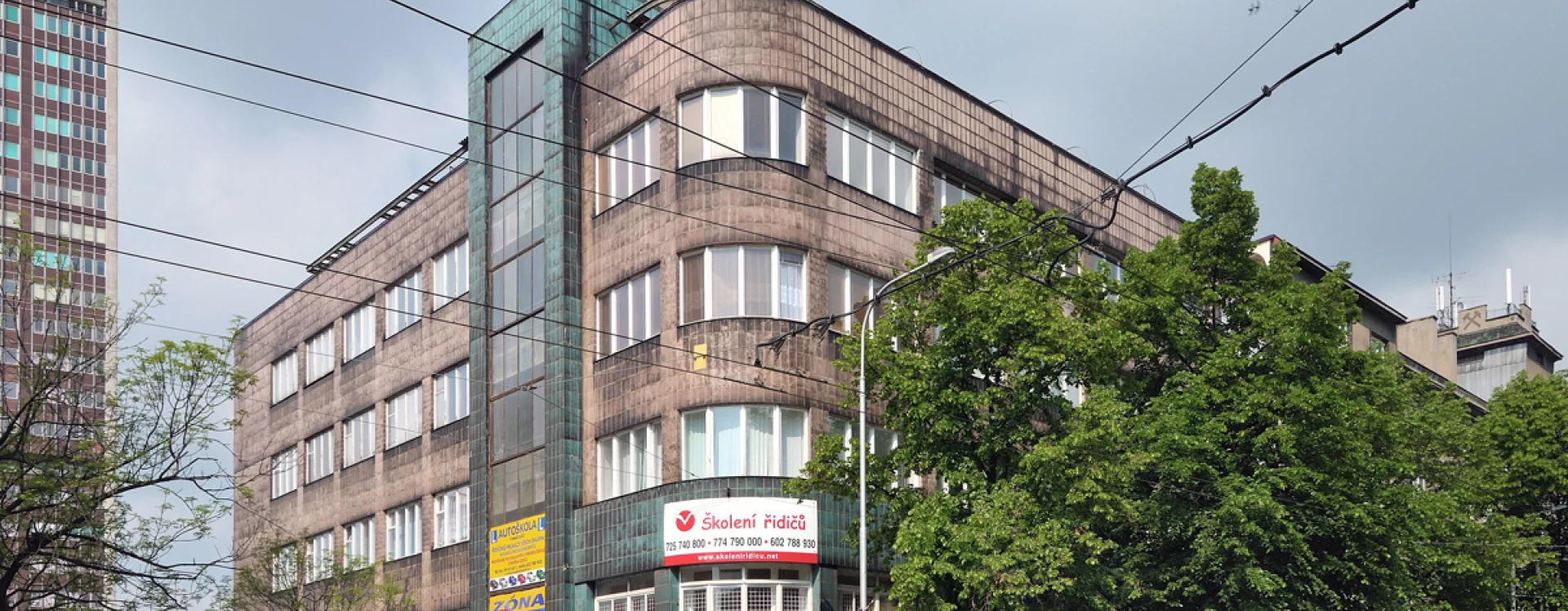
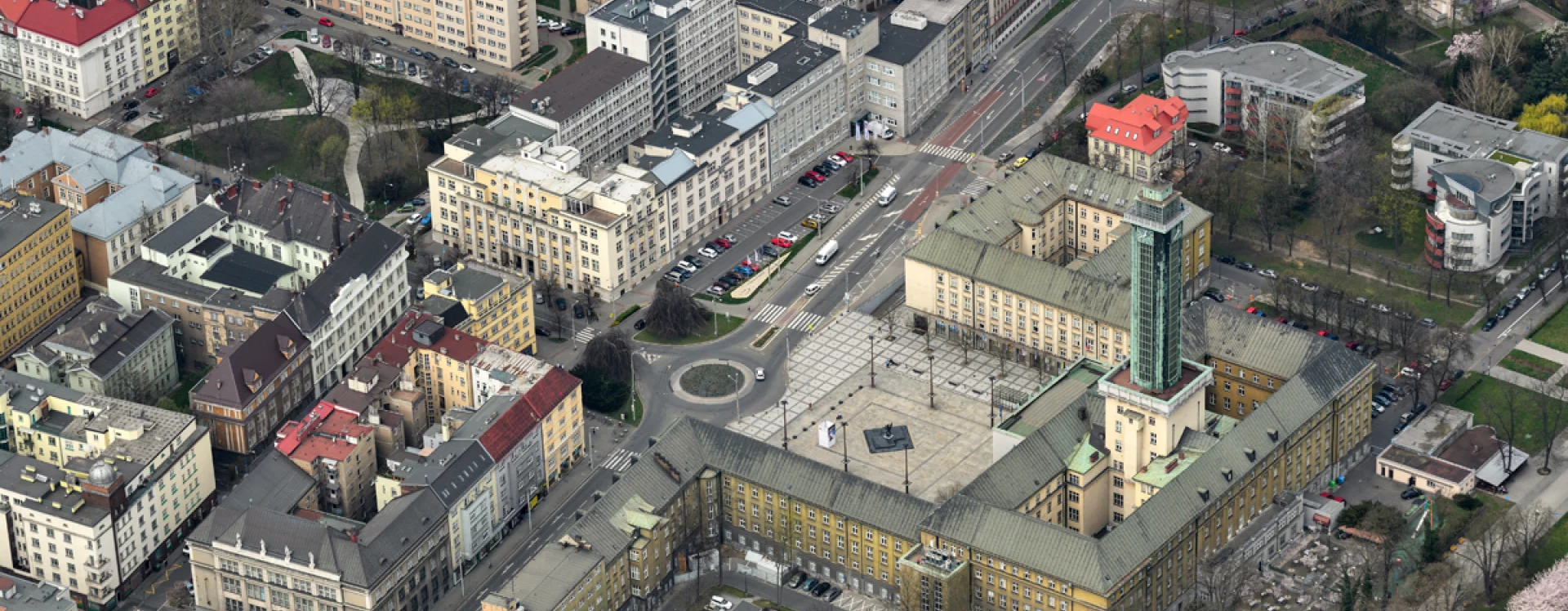
The insurance fund purchased a site on the corner of Sokolská Avenue and Ostrčilova Street, close to the New Town Hall and the newly emerging Prokeš Square. For this rectangular plot, the architects designed a striking five-storey functionalist building with an L-shaped plan, a rounded corner, a flat roof, and a continuous terrace at the level of the top floor. Both street façades were clad in ceramic tiles and fitted with ribbon windows set flush with the surface of the façade. The ceramic cladding is composed of rectangular tiles in three colours. The ground floor facing Sokolská Avenue, up to the vertical line of the stair projection at the beginning of Ostrčilova Street, is faced with green tiles; the remaining parts of the façades are clad in beige, while the piers between the windows are finished with smaller rectangular tiles in an ivory shade. The composition is crowned by the continuous terrace, divided by the projection of the main staircase into two unequal sections. The terrace is completed by a pergola, which lends this functionalist building a sense of lightness and the poetic quality of nautical aesthetics derived from the imagery of ocean liners and seaside resorts.
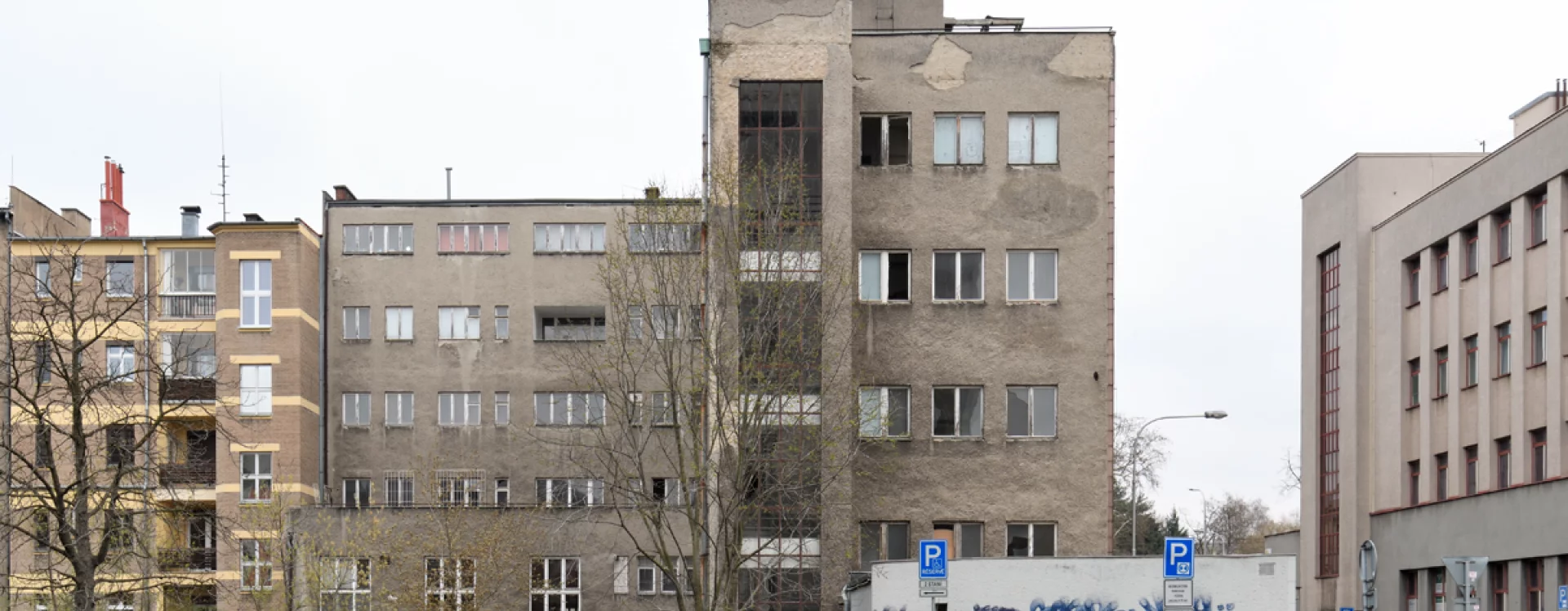
The rear façade of the building, facing a courtyard sunk to basement level, is finished in roughcast plaster. Beside the side entrance there is a garage block: the garage at street level is accessed from the street corridor, while the basement-level garage is entered from the courtyard. The building has a two-bay layout. The ground floor and first floor originally housed doctors’ surgeries, while the upper floors were adapted as flats for employees of the insurance fund. From Sokolská Avenue, an entrance at ground-floor level leads by a staircase up to the raised ground floor, where the waiting room was originally located. An entrance from Ostrčilova Street opens onto a reinforced-concrete staircase with artificial-stone steps and tubular metal railings. This service staircase connects all floors of the building.
Although the building bears the marks of decades of neglect, it remains an outstanding example of functionalist architecture, placing equal emphasis on form, materiality, and the colour scheme of the building as a whole. It is one of the finest functionalist buildings erected in Ostrava in the 1930s. Together with the Baťa Department Store, it stands as a reminder of the work of the Ostrava-born architect František Stalmach, who emigrated with his family to Canada.
MSt
Literature
Architekt XLVIII-11. Praha, Obec architektů, 2002, roč. XLVIII, č. 11. p. 76-–77.
Průvodce architekturou Ostravy. 2009. p. 166, 403, 423. ISBN 978-80-85034-54-7.
Martin Jemelka, Gabriela Pelikánová, Romana Rosová, Martin Strakoš, Radomír Seďa. Jan Prokeš: Ostrava na cestě k velkoměstu. Ostrava, Fiducia, 2023. p. 79. ISBN 978-80-907934-5-3.
Jindřich Vybíral. Zrození velkoměsta: Architektura v obraze Moravské Ostravy 1890–1938. Šlapanice, ERA, 2003. p. 150-151, 153. ISBN 80-86517-94-2.
https://pamatkovykatalog.cz/kancelarsky-a-obytny-dum-s-garazi-13055878. stav k 15.11.2025.
Martin Strakoš. https://www.ostravskepamatky.cz/pamatky/112-Nemocenska-pojistovna-soukromych-uredniku. stav k 15.11.2025.
Sources
Akad. architekti Fr. Stalmach a Jan Svoboda 1930–1936. Praha, 1936, p. 16-19. 16-19.