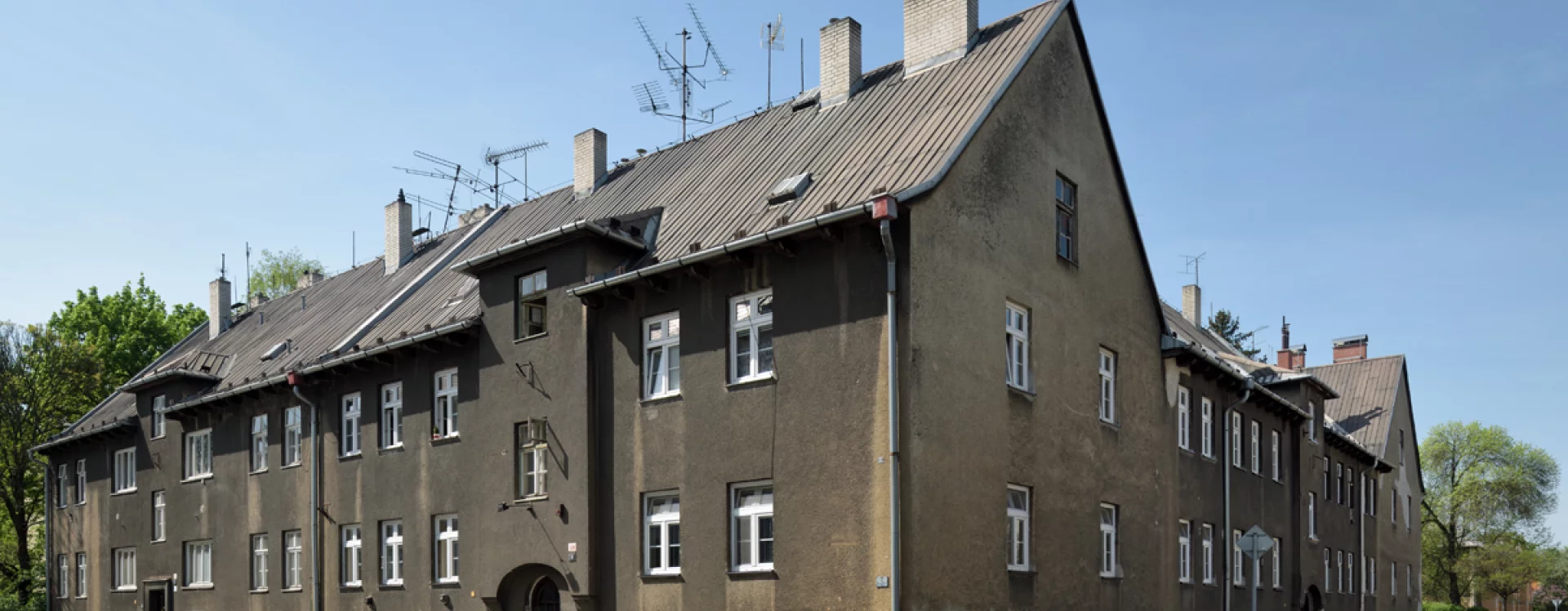
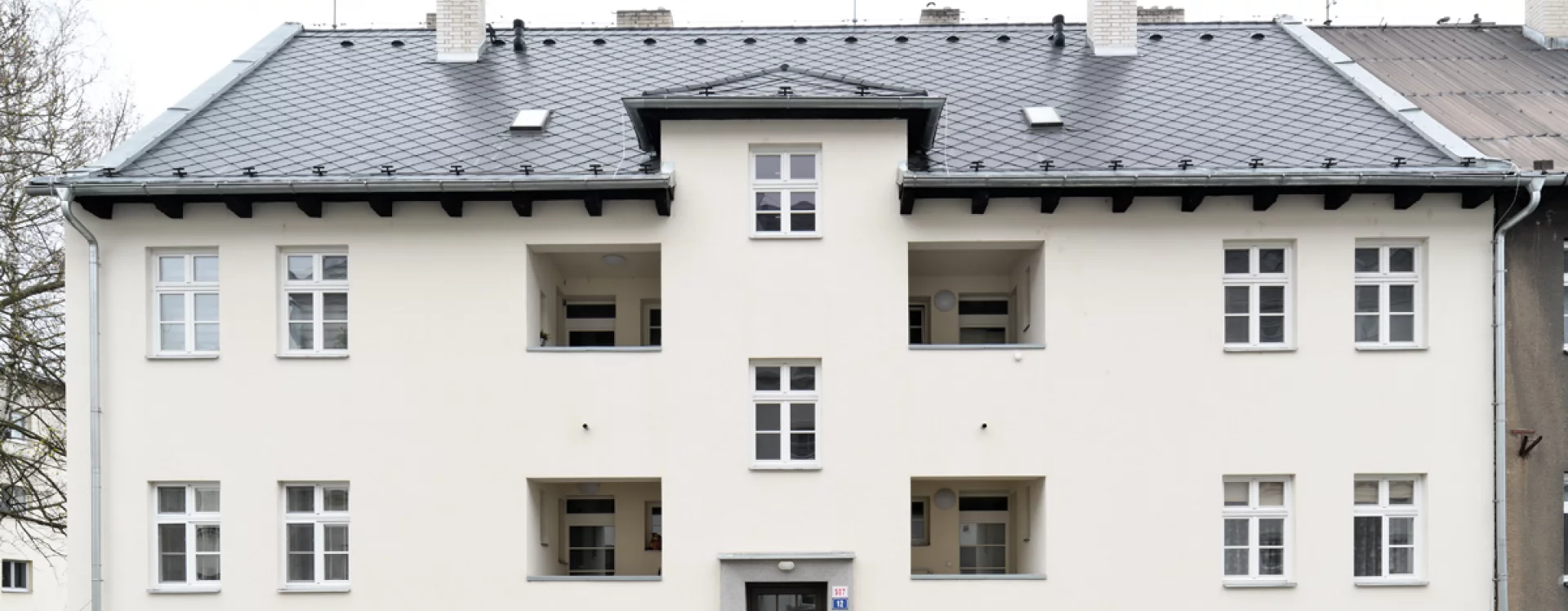
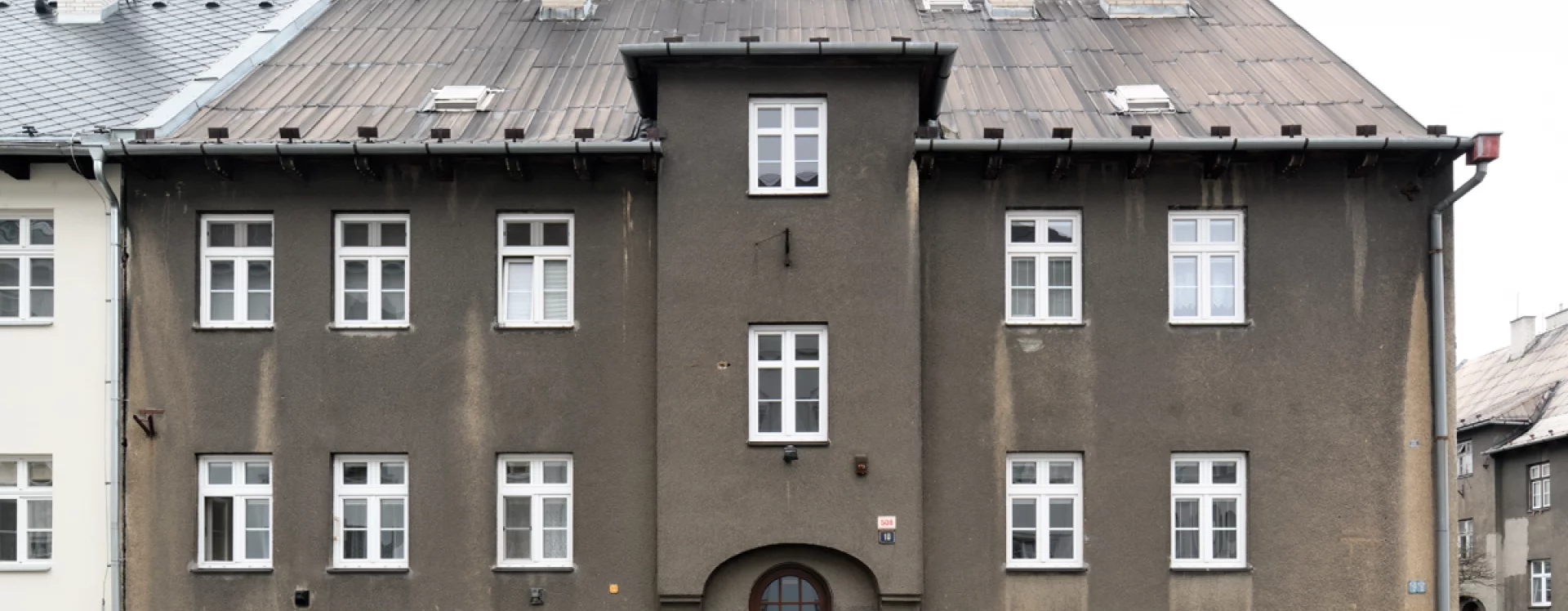
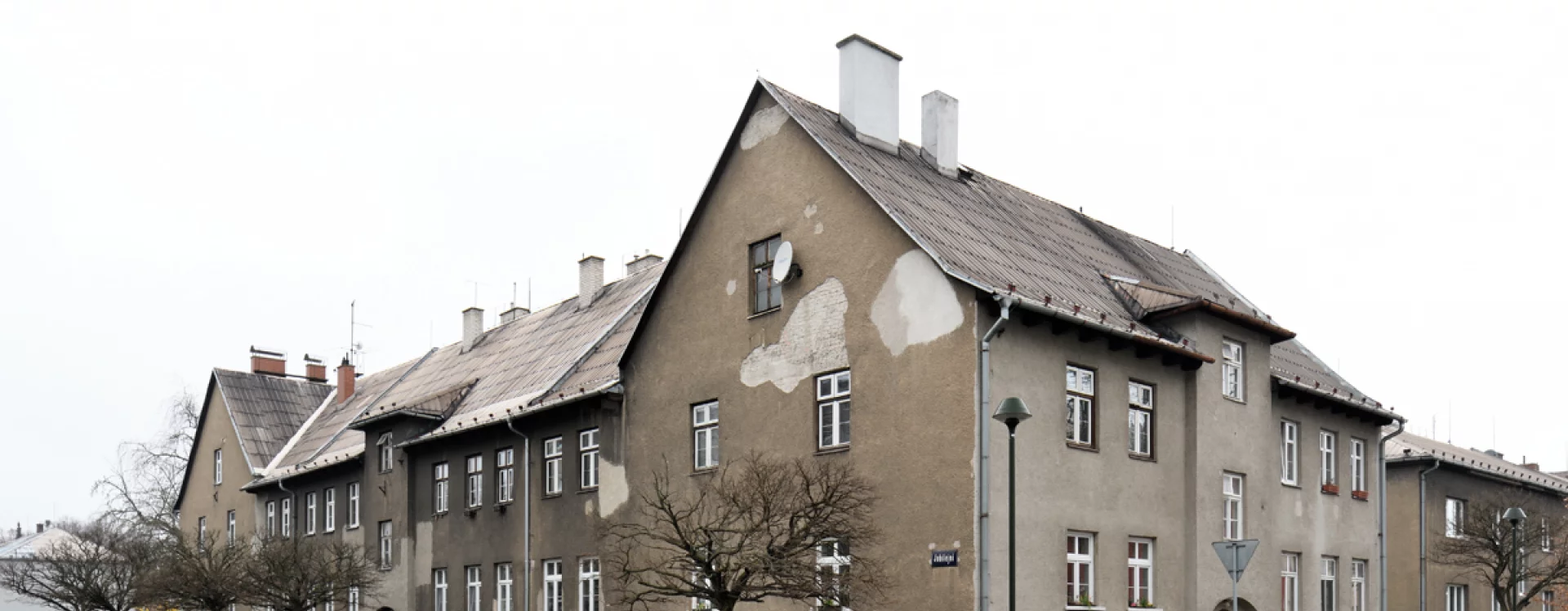
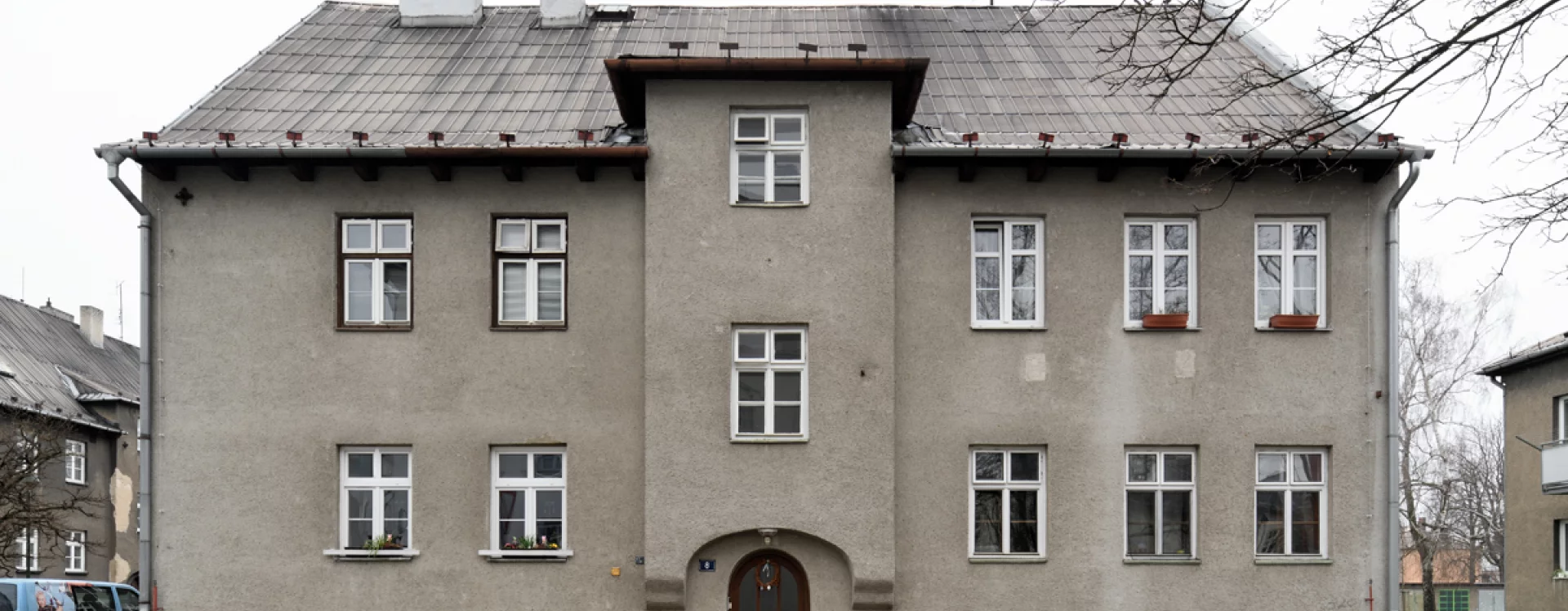
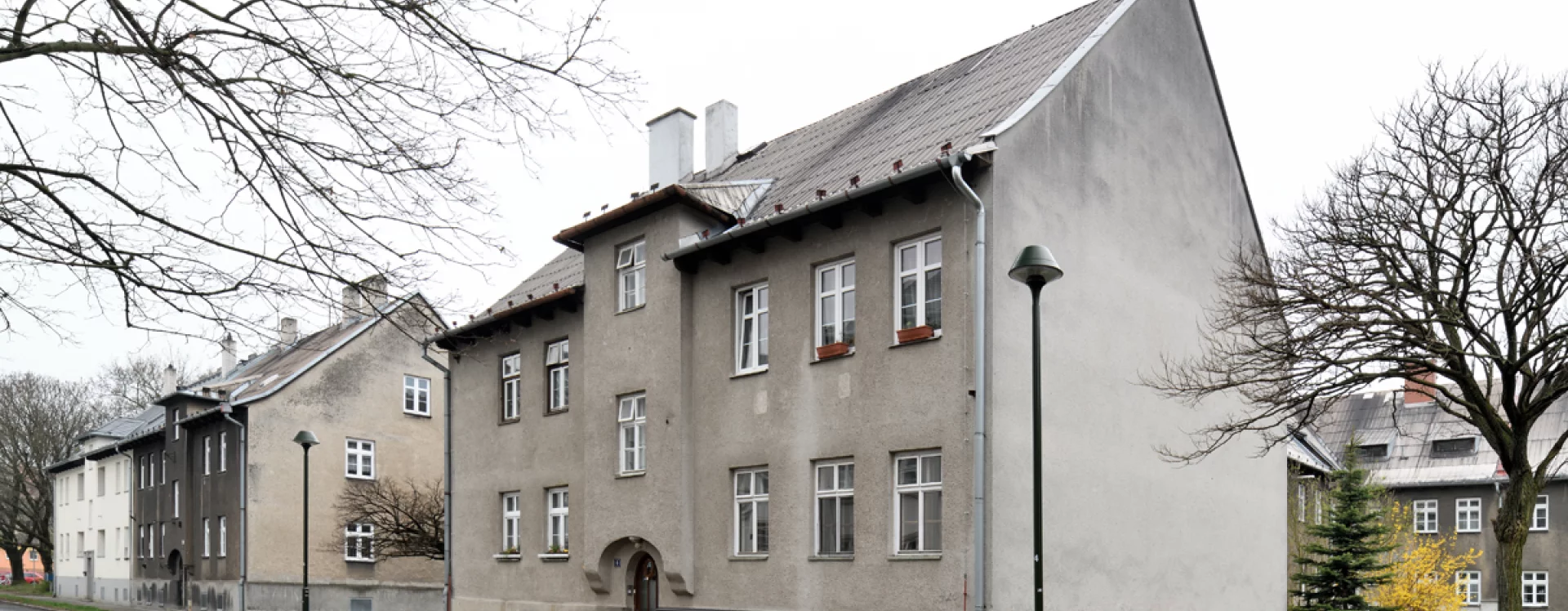
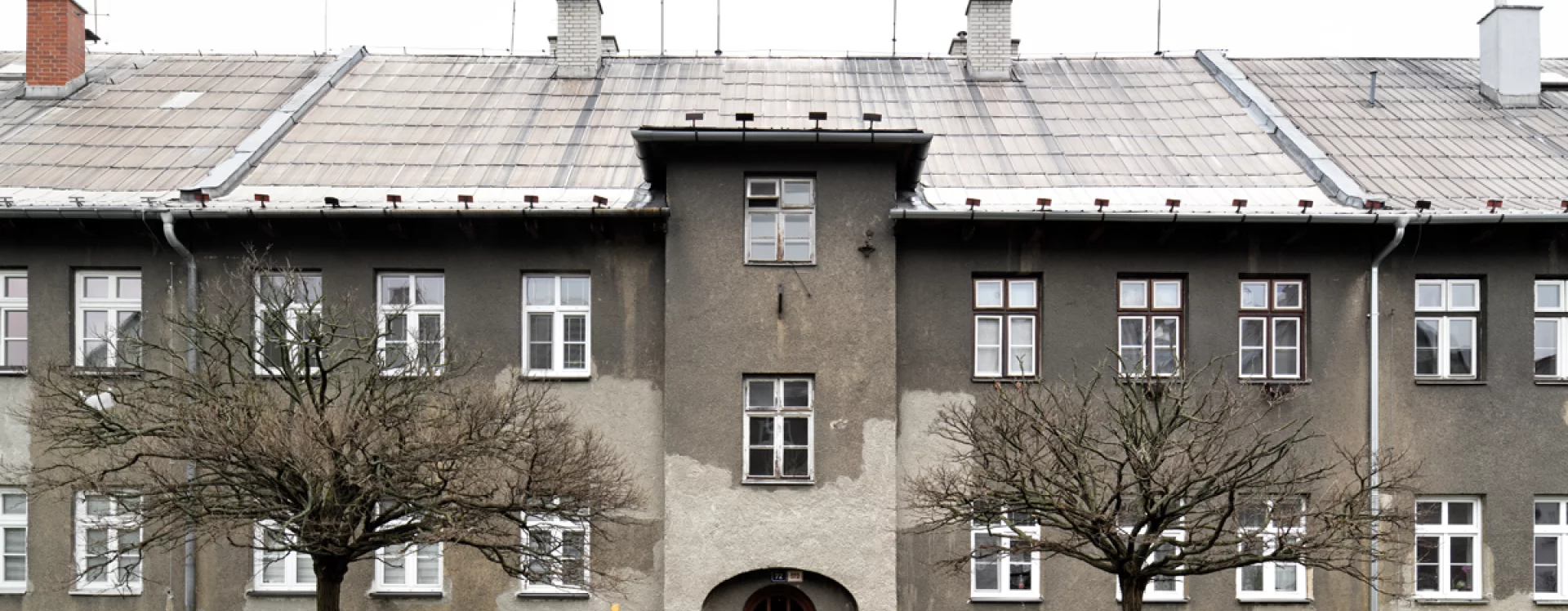
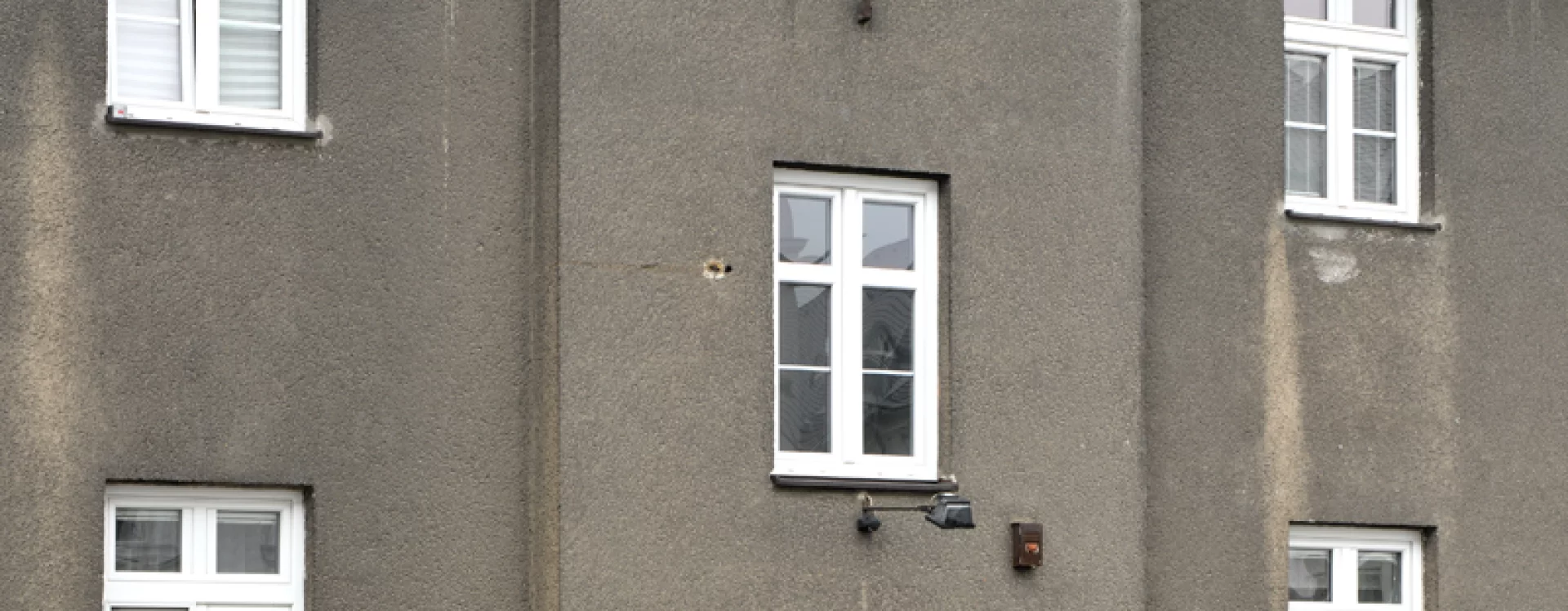
From 1940 onwards, the construction department of the Vítkovice Ironworks began preparing a new concept for the expansion of the Jubilee Colony. This marked a complete departure from the earlier scheme designed by Ernst (Arnošt) Korner. Even the houses built at the turn of the 1930s and 1940s, designed by Alois Pix, still drew on Korner’s concept, although by that time Korner himself had emigrated with his family due to the threat posed by Nazism and his Jewish origin.
The German occupation authorities, together with the new Nazi leadership of the ironworks, required that the fourth phase of the colony be designed in accordance with the architectural and ideological principles of National Socialism. This was reflected in the so-called Heimatstil (Homeland Style), developed from the early 20th century as a counterpoint to modern architecture. The Nazis appropriated this mode and applied it widely in housing estates and workers’ colonies both in Germany and in occupied territories.
Such architecture combined rational urban planning and modern housing layouts with traditional motifs and forms. Buildings were characterised by steep gabled or hipped roofs, triangular gables, small rectangular windows often fitted with shutters, and entrances emphasised by portals and canopies. The block structure featured barrel-vaulted passages and gateways. Façades, often finished in roughcast plaster, were complemented by traditional timber plank doors and barrel-vaulted balconies, while staircase bays were articulated as shallow oriels carried on consoles. These designs were typically produced in large architectural offices as standardised models disseminated across territories under German control.
Within this framework, the residential buildings of the fourth phase appear markedly more conservative than those of the earlier stages of the Jubilee Colony. Several variants prepared in 1940 envisaged between 205 and 252 flats arranged in blocks of terraced two-storey houses. In the end, however, only twelve such houses with pitched roofs were realised between 1941 and 1942, providing a total of 48 flats. Six buildings were constructed north of Jubilejní Street and six to the south, east of Dvouletky Street.
What survives today is only a fragment of the originally planned block development. The initial scheme envisaged a cultural centre opposite the built ensemble, also to be designed in the Heimatstil. Construction, however, was halted due to wartime conditions and the associated ban on building activity. Evidence of this abrupt interruption can be seen in the blind gable walls of houses at Dvouletky Street 515/3, Jubilejní Street 505/75, and Mládeže Street 507/12 and 511/8.
Although architecturally conservative and not among the most accomplished examples of wartime housing in the Protectorate, the flats of this phase were comparatively well equipped. The basement contained a laundry and mangle room, and four storage cellars. Each above-ground floor accommodated two flats. All units included a living kitchen, a room, a small study, a separate kitchen, a pantry, a bathroom, and a toilet. The inclusion of bathrooms in dwellings of this category was still relatively novel and reflects the gradual improvement in living standards over the course of the 20th century.
MSt
Literature
Petr Přendík, Radomír Seďa, Martin Strakoš. Jubilejní kolonie. 90 let dělnické kolonie v Ostravě-Hrabůvce. Ostrava, Montanex , Statutární město Ostrava, 2018. Radomír Seďa, Výstavba Jubilejní kolonie, p. 21–68.
Petr Přendík, Radomír Seďa, Martin Strakoš. Jubilejní kolonie. 90 let dělnické kolonie v Ostravě-Hrabůvce. Ostrava, Montanex , Statutární město Ostrava, 2018. Radomír Seďa, Petr Přendík, Rekonstrukce a modernizace, p. 185–192.
Petr Přendík, Radomír Seďa, Martin Strakoš. Jubilejní kolonie. 90 let dělnické kolonie v Ostravě-Hrabůvce. Ostrava, Montanex , Statutární město Ostrava, 2018. Martin Strakoš, Architektura a památková ochrana Jubilejní kolonie, p. 145–183.
Historie Jubilejní kolonie. Available from: https://www.jubilejnikolonie.cz/historie-jubilejni-kolonie [accessed 14. 11. 2025]
Sources
plánová dokumentace 1920–1942. fond Archiv Vítkovice, a. s., fond Vítkovické horní a hutní těžířstvo, inv. no. 9579a a 1579a, fond Jubilejní kolonie v Hrabůvce.