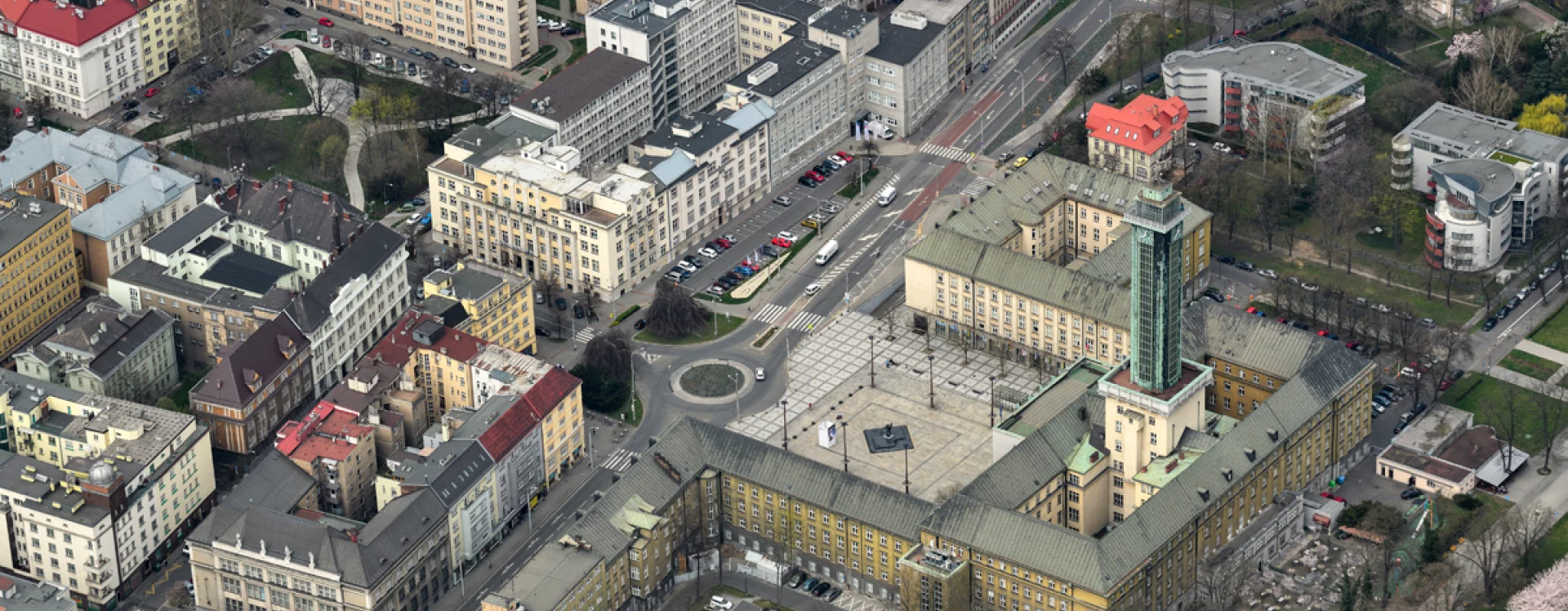
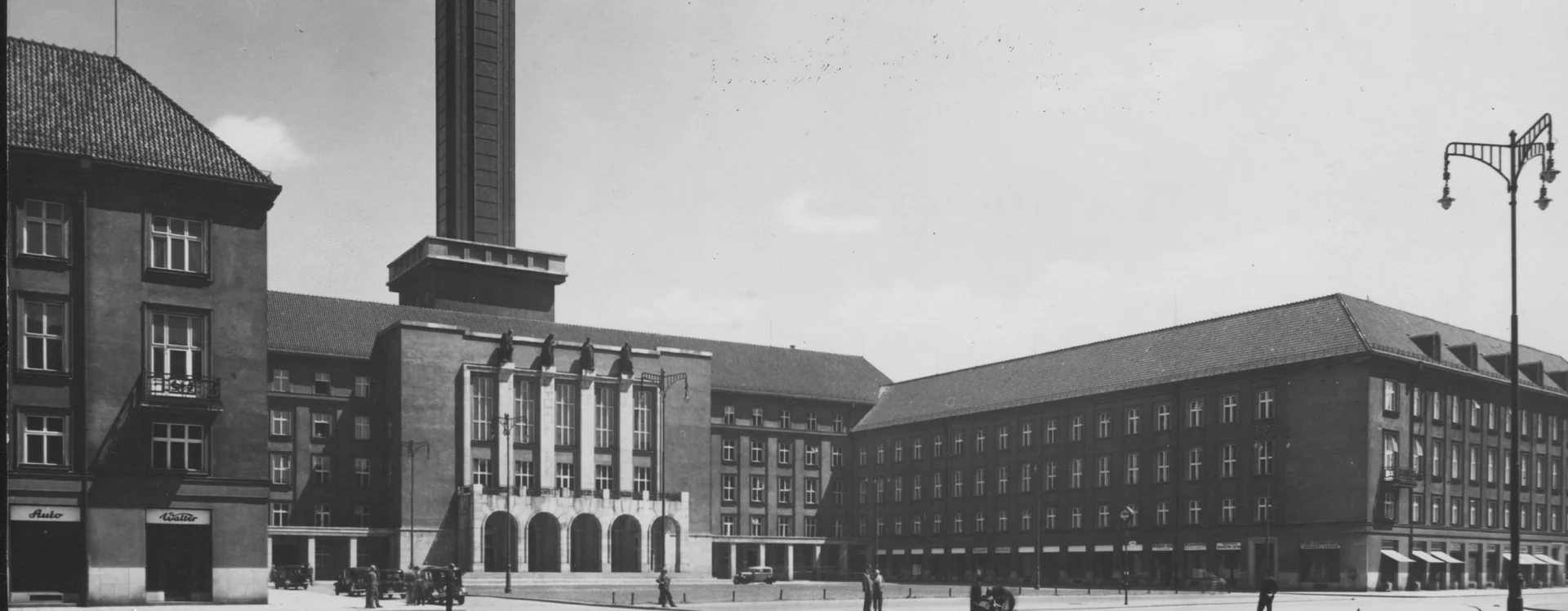
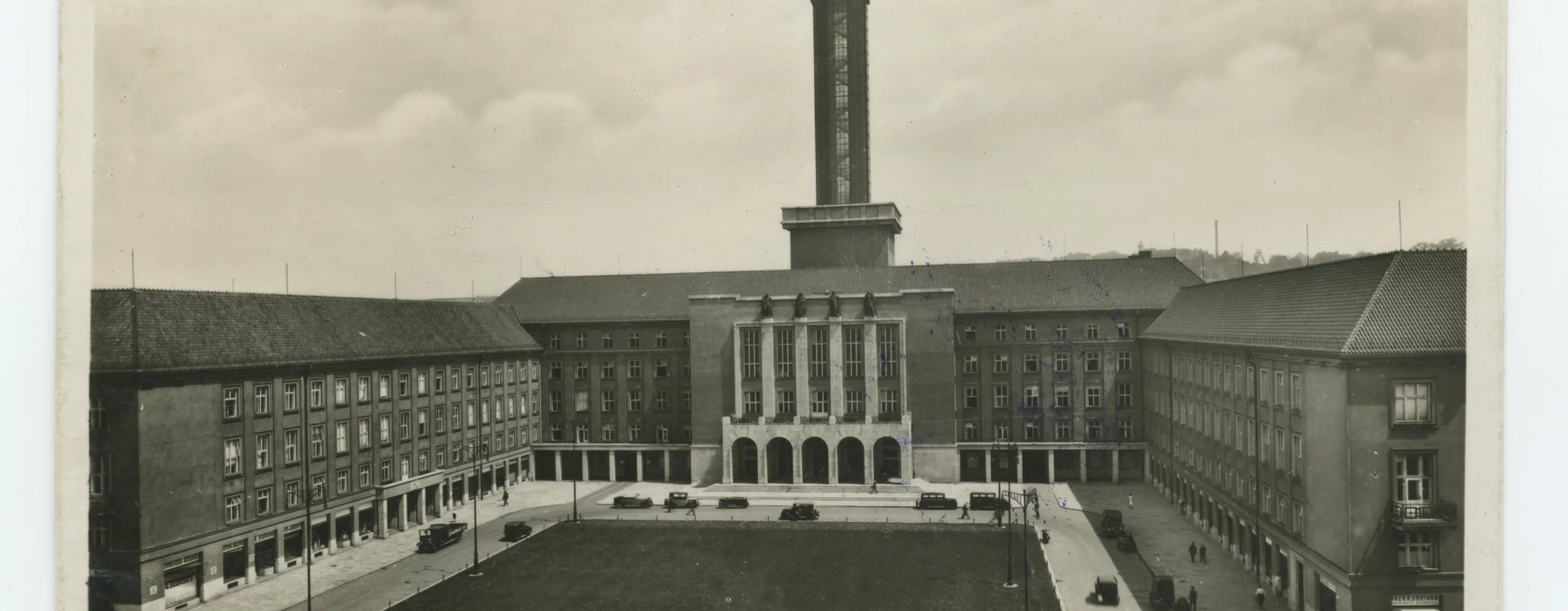
From the Middle Ages until the 1920s, the town hall of Moravská Ostrava stood on the historic square (now Masarykovo Square). As the town grew, the existing building no longer met the needs of the expanding municipality. A crucial impulse for constructing a new town hall was the plan to merge Moravská Ostrava with neighbouring municipalities (Vítkovice, Přívoz, Zábřeh, Mariánské Hory, Hrabůvka, and Nová Ves) to form Greater Ostrava. At the same time, the 1920 Act on the Establishment of regional administrative districts (called “župy”) introduced entirely new territorial administrative units for which the respective centres were expected to provide suitable premises. Moravská Ostrava therefore began planning a new building that could house both the municipal administration and the future district offices. From several possible sites, the city selected the area of the former shooting range (Nová střelnice) near the River Ostravice. Although outside the historic core, it lay close to other offices, institutions and company headquarters, was well connected by public transport, and offered space for creating a dignified public square.
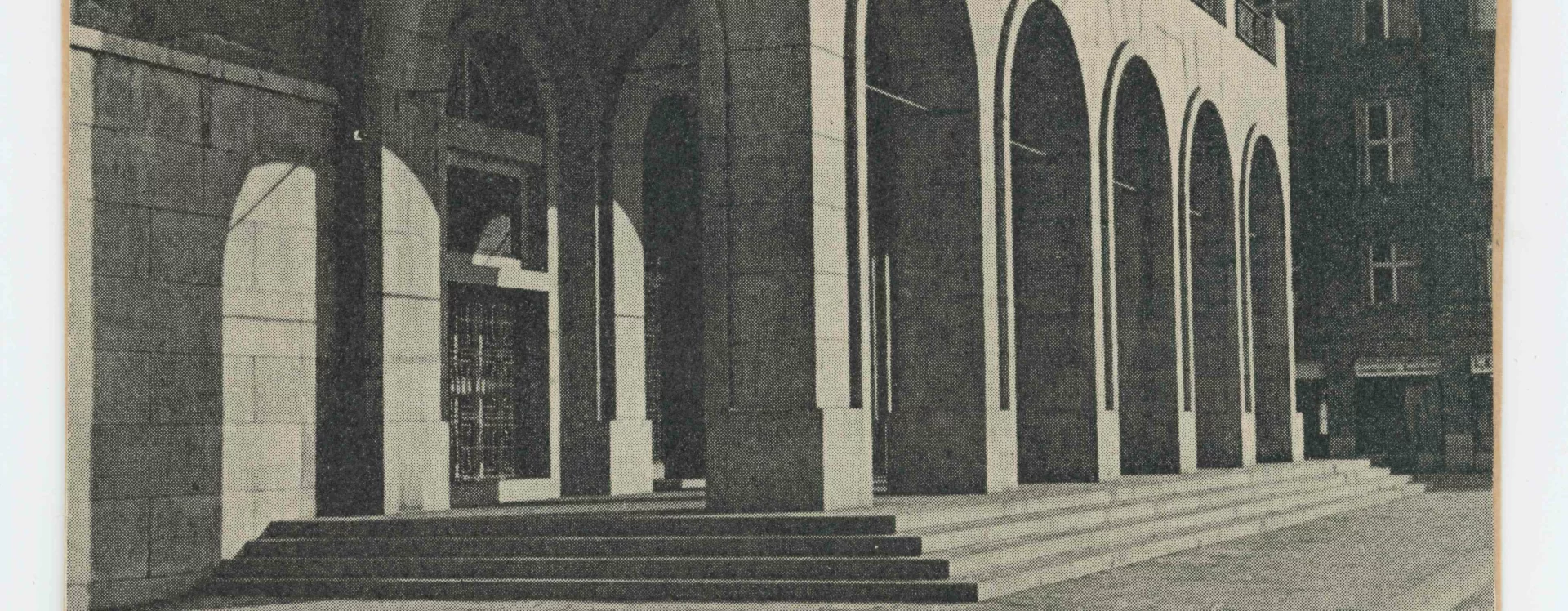
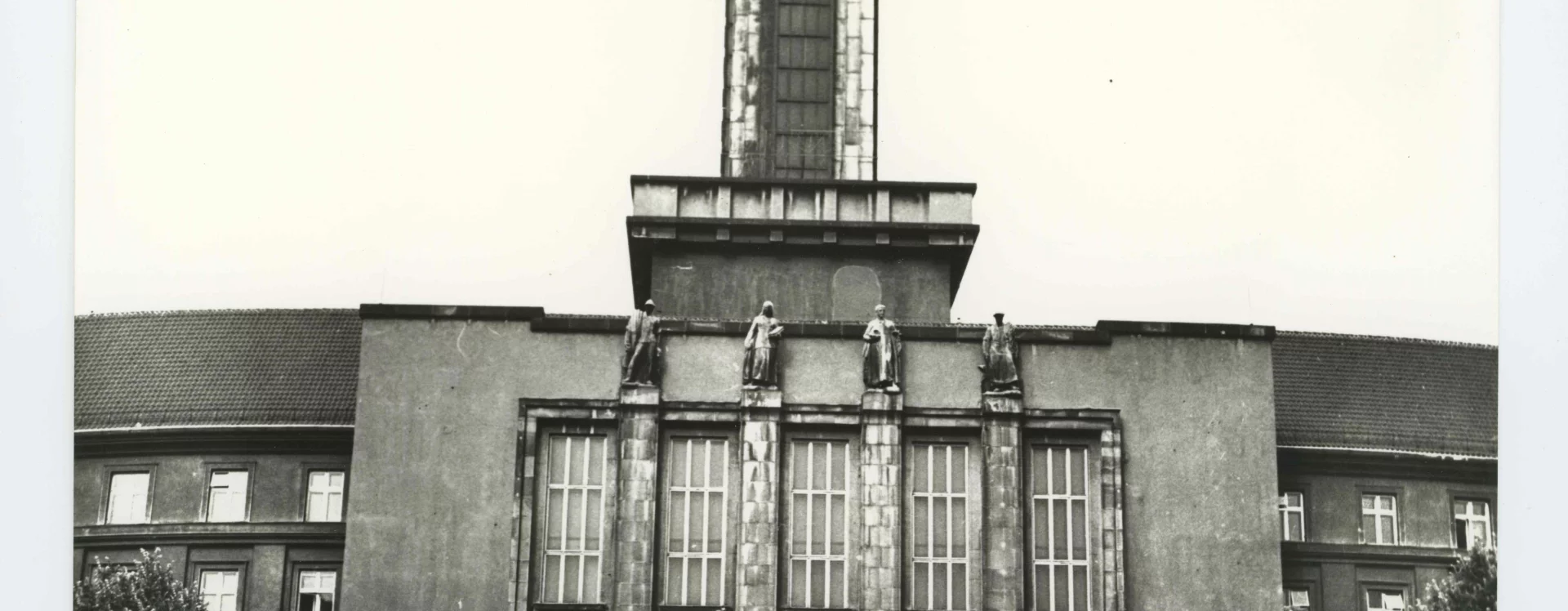
In 1923, the city launched an architectural competition with invited participants Pavel Janák and Josef Sakař from Prague, Vladimír Fischer and Adolf Liebscher Jr. from Brno, and Ernst Korner and the duo František Kolář and Jan Rubý from Moravská Ostrava. The jury – which included local architects Otokar Bém and František Fiala, Professor Karel Kepka of the Brno University of Technology, Municipal Building Office Director Karel Frič, and Mayor Jan Prokeš – selected in 1924 the design by Vladimír Fischer as the winning proposal. Fischer proposed a monumental building in a restrained form of new classicism, including an arcade opening towards the newly planned square. The jury also praised the design by Kolář and Rubý and recommended it for further development, on the condition that they invite either Fischer or Sakař to collaborate. They chose Fischer. The resulting joint design departed significantly from the original competition proposal. The arcade with a terrace on the first floor was omitted, and during construction the tower underwent a fundamental transformation. The initially planned reinforced-concrete tower, articulated with pilasters and adorned with sculpture, was replaced by an 11-metre taller constructivist steel structure, inspired by the lookout tower at the Brno Exhibition Centre designed by Bohumír Čermák.
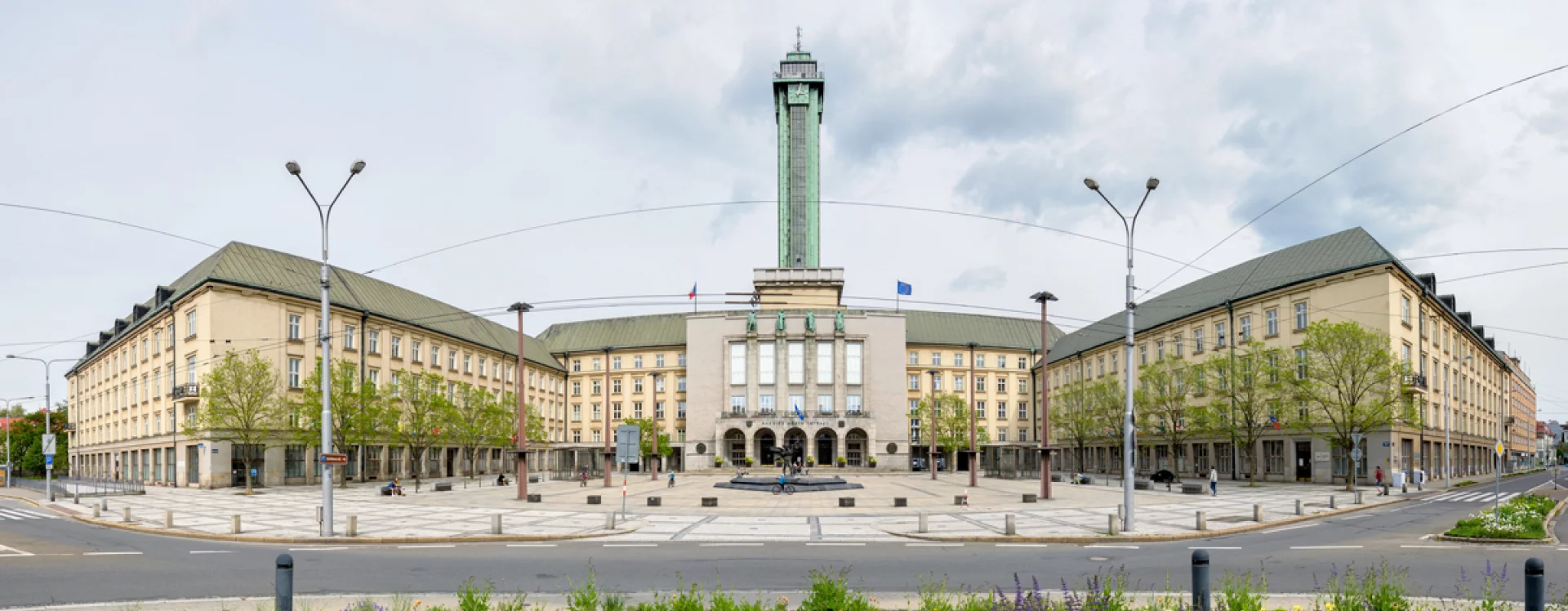
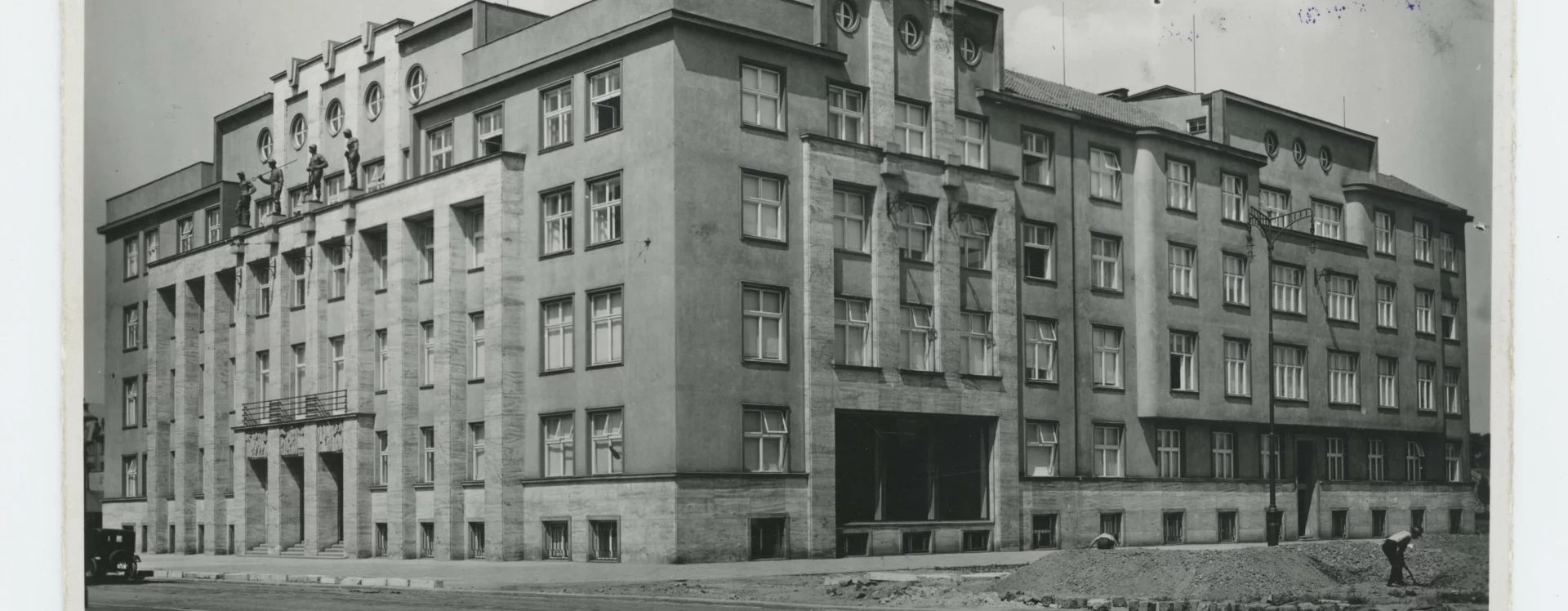
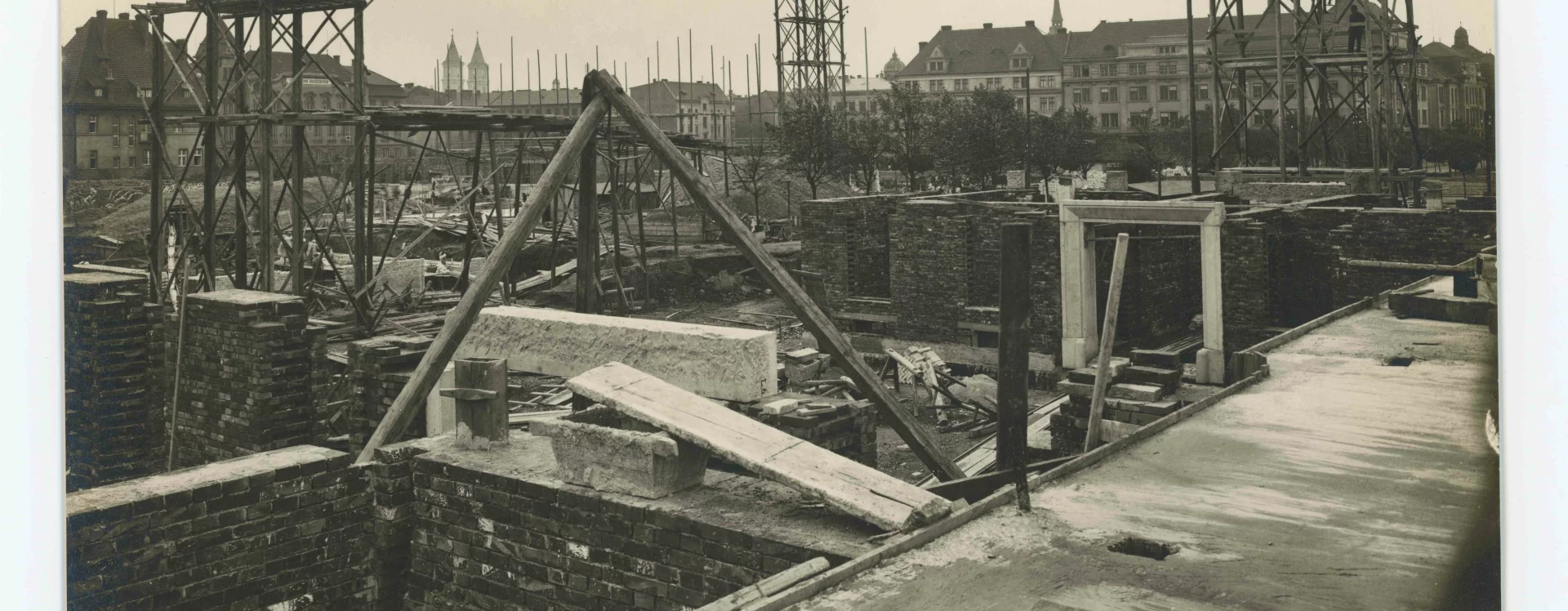
Meanwhile, Greater Ostrava officially came into being on 1 January 1924, and the need for a new town hall became even more pressing. Construction began in April 1925 with the northern wing, originally intended for the not-yet-established district offices. Oversight was entrusted to the young Brno architect Karel Kotas, whom Fischer had selected earlier. Kotas also amended the execution plans. Work on the central and southern wings began in 1926. In the same year, the city launched a competition for the urban design of the square in front of the town hall. Kotas won with a proposal that, unlike other entries, did not emphasise a symmetrical layout but instead highlighted the diagonal axis of Sokolská Street.
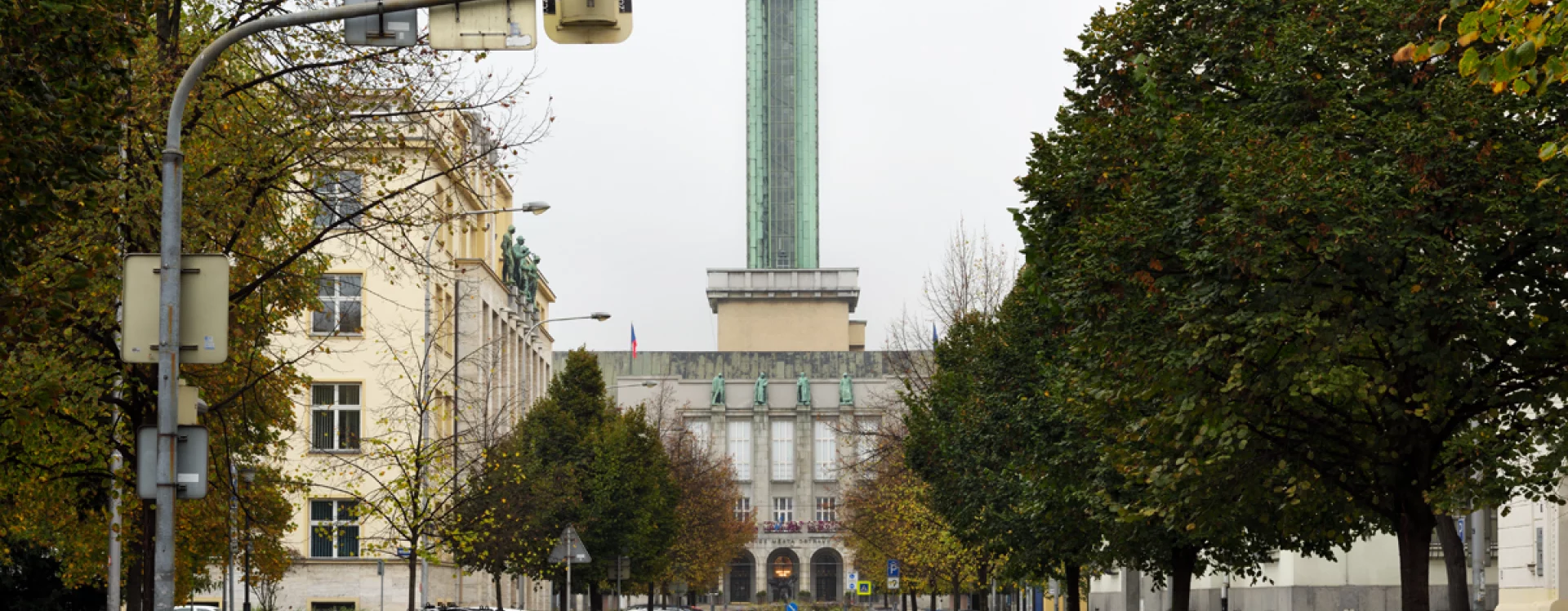
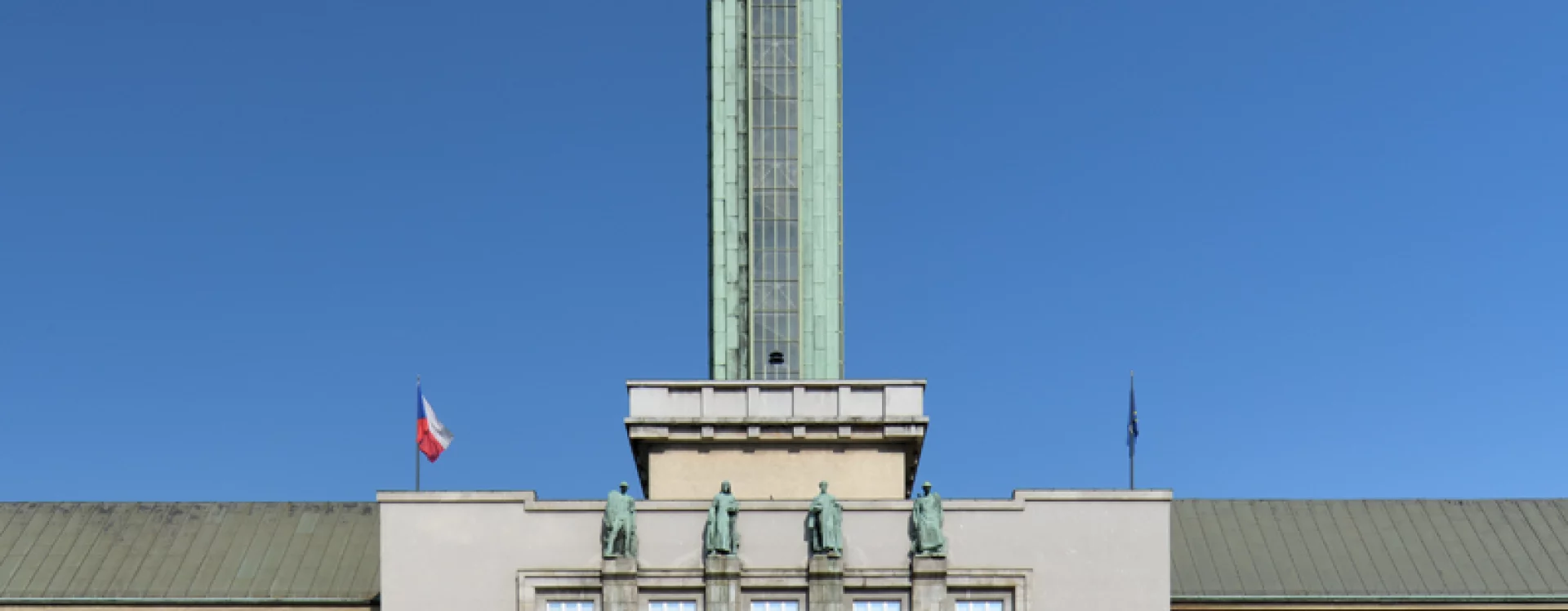
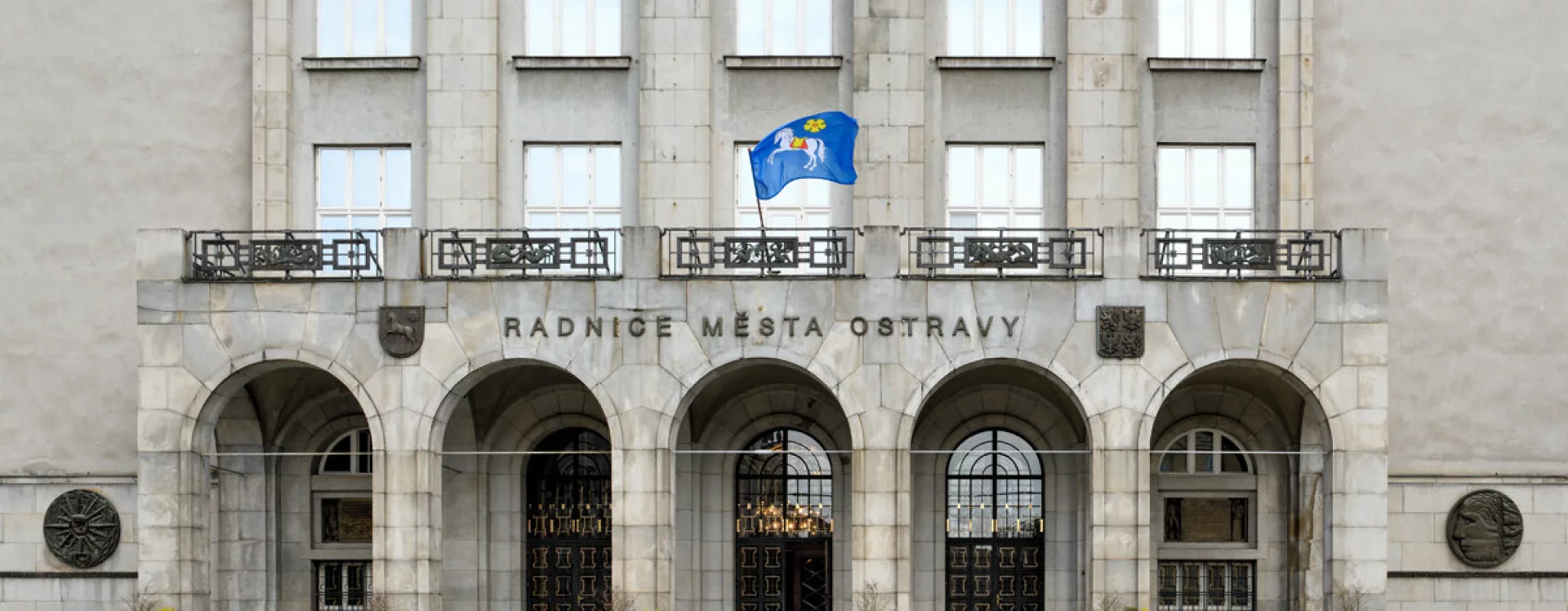
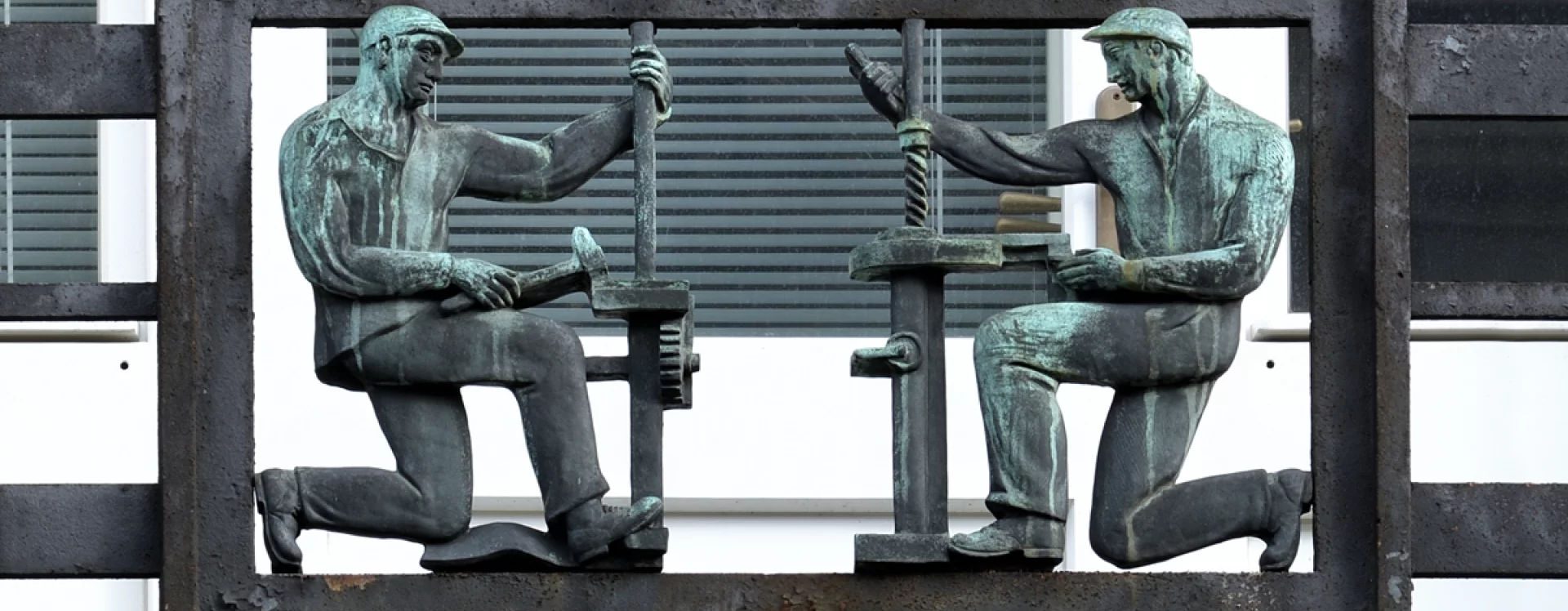
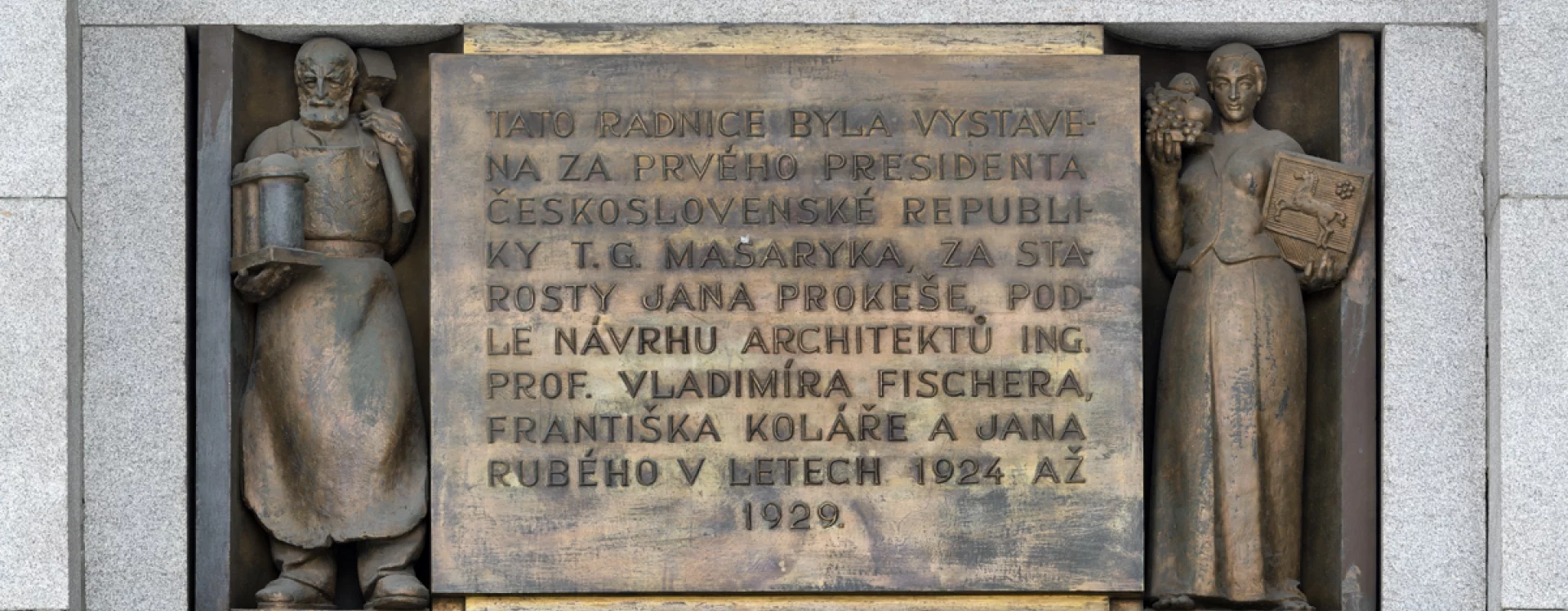
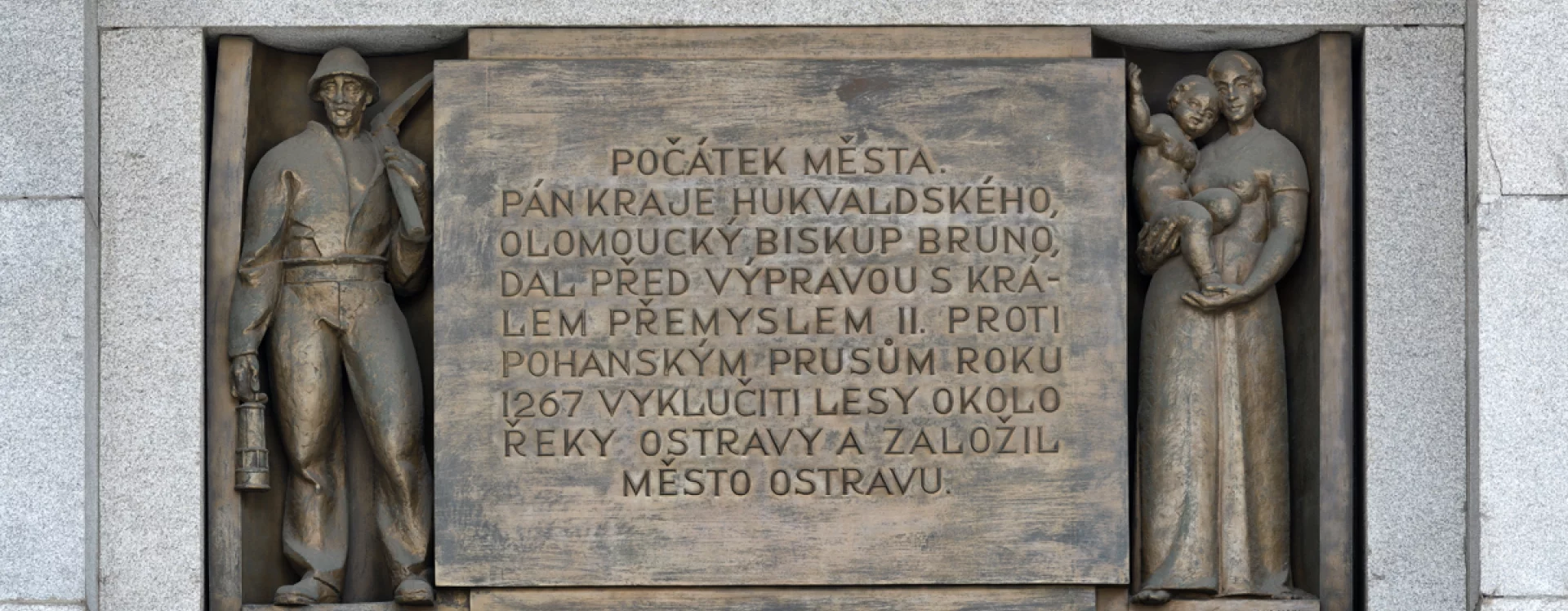
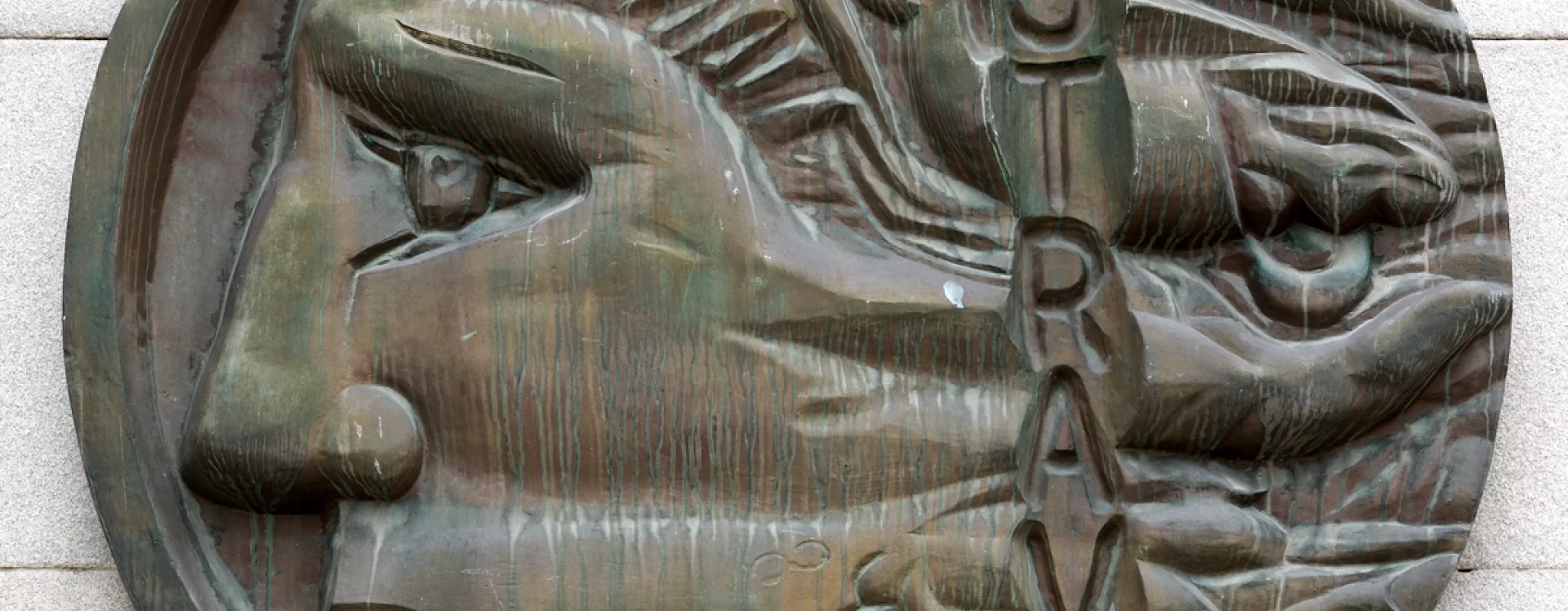
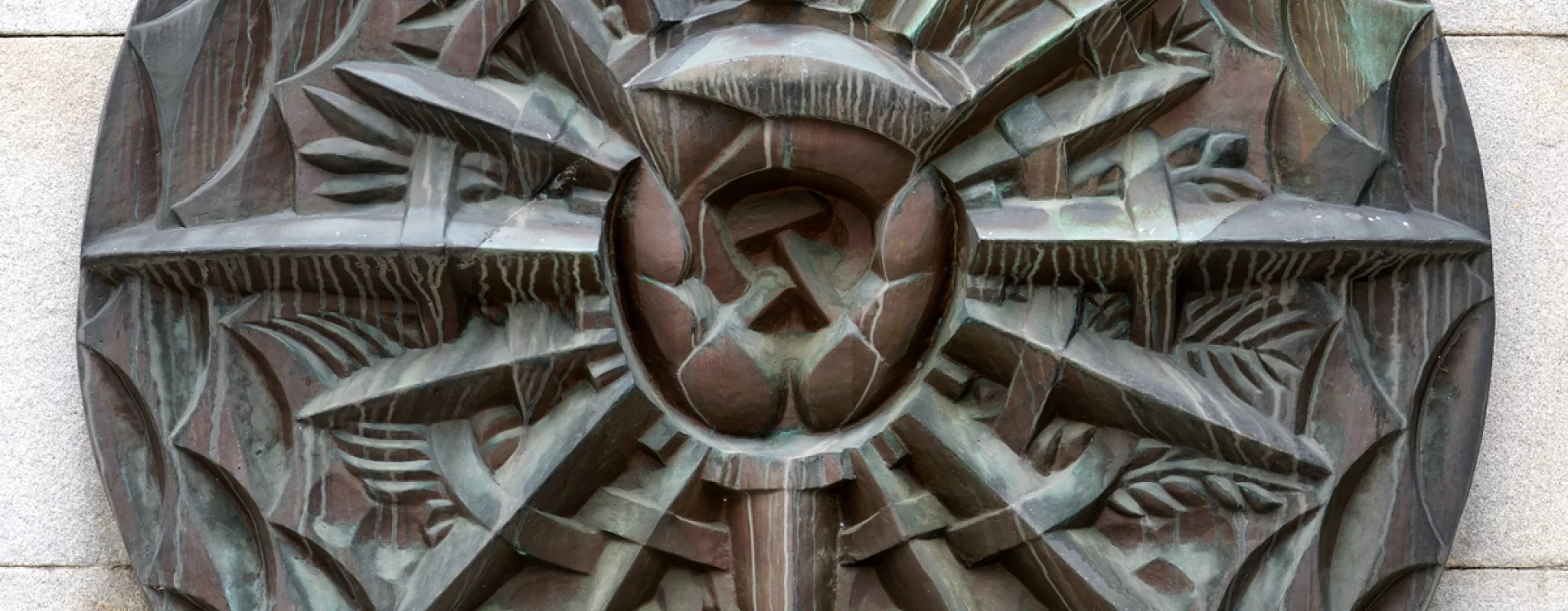
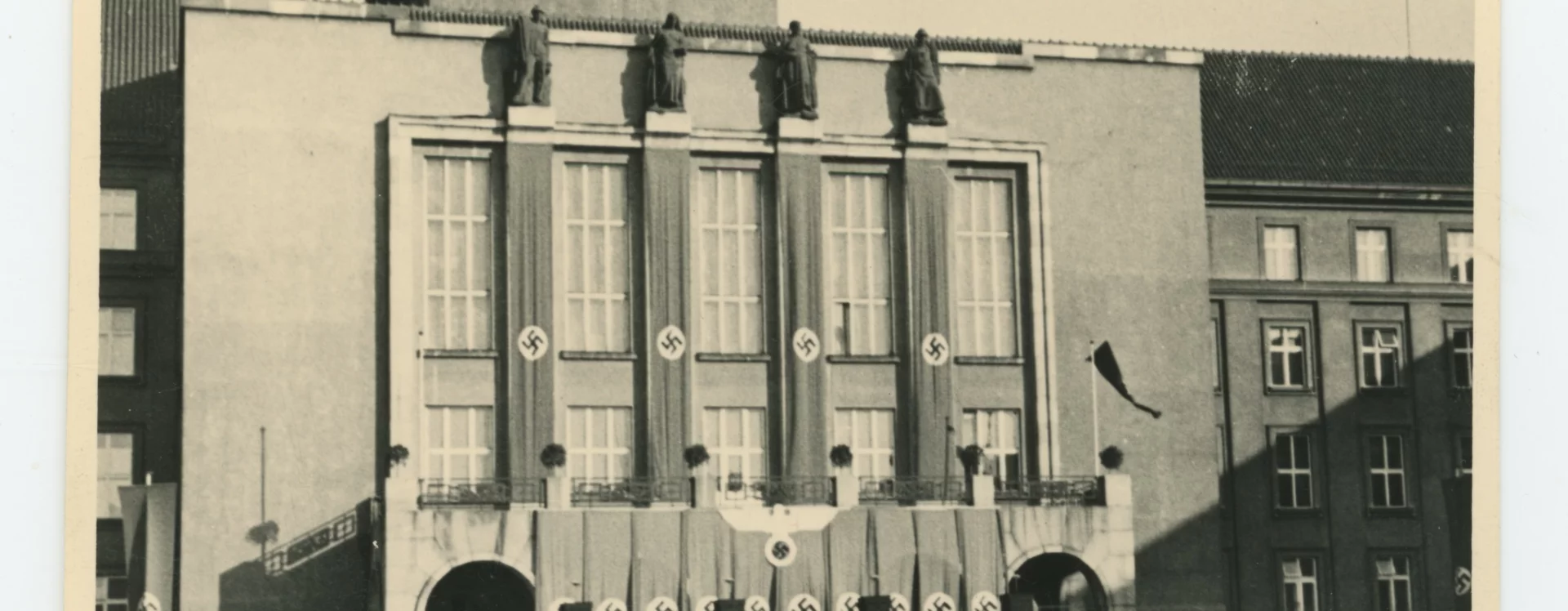
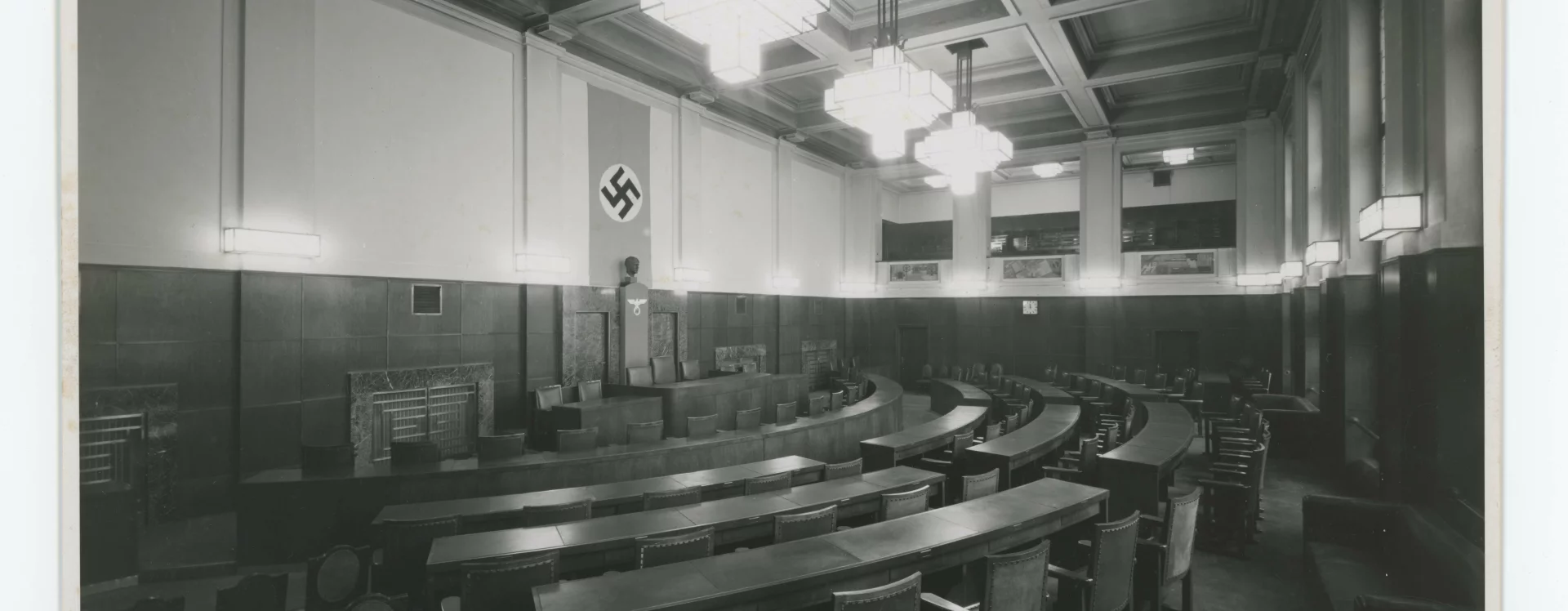
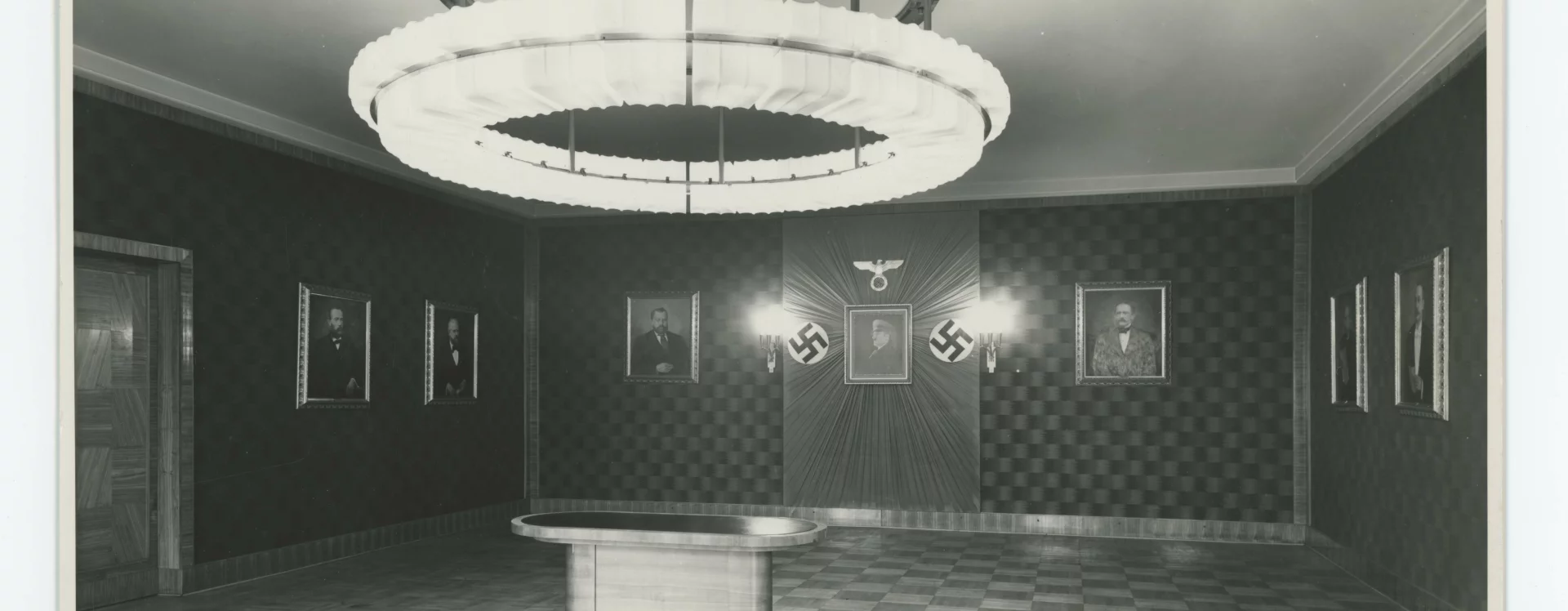
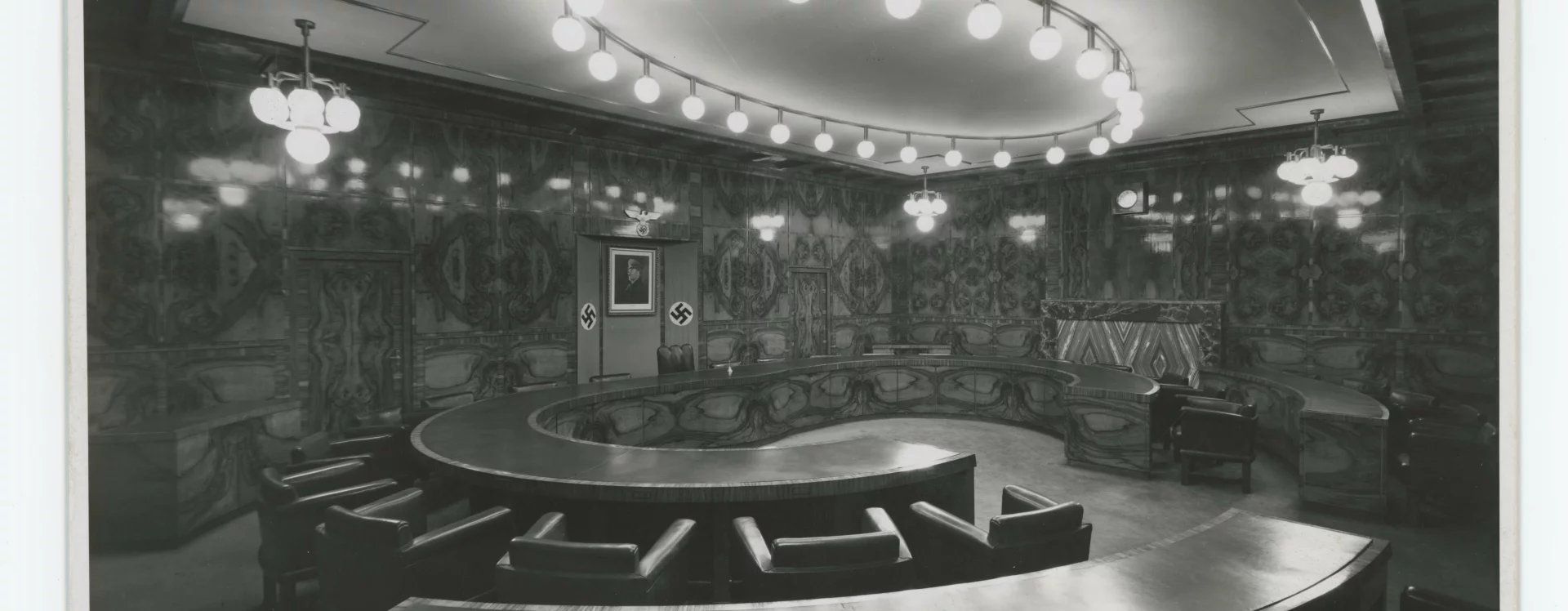
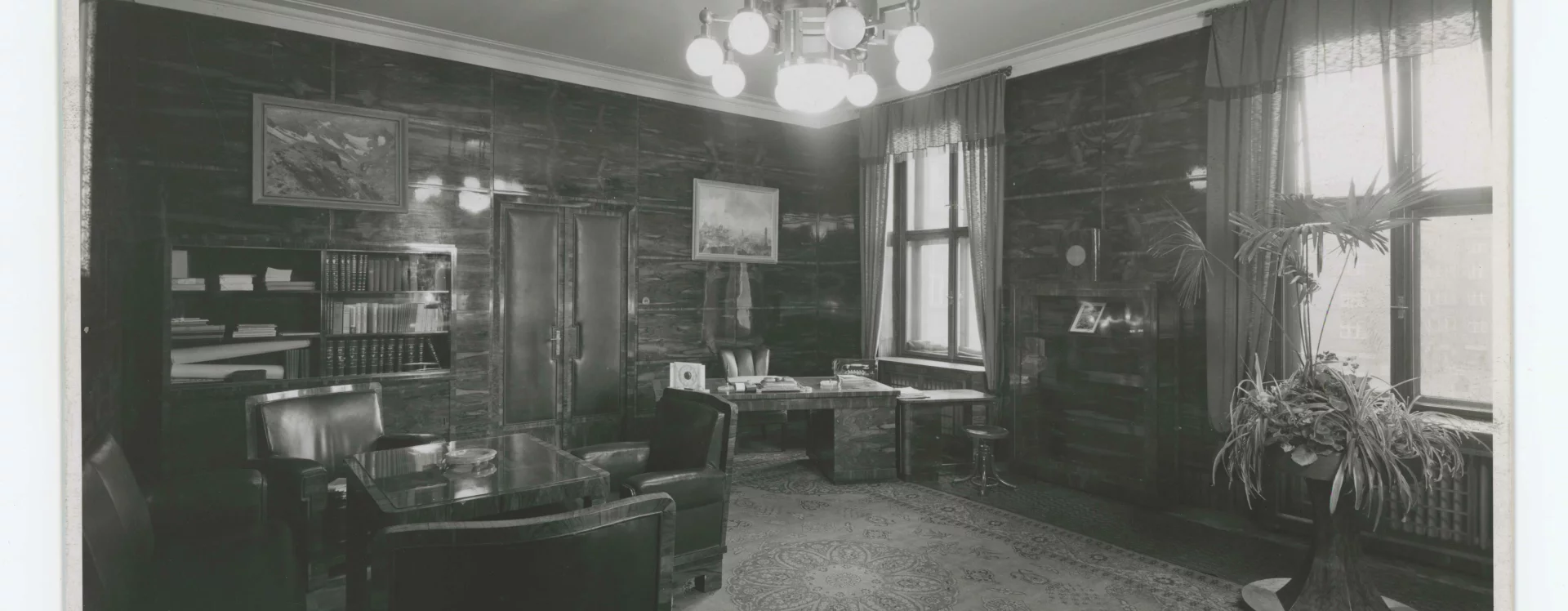
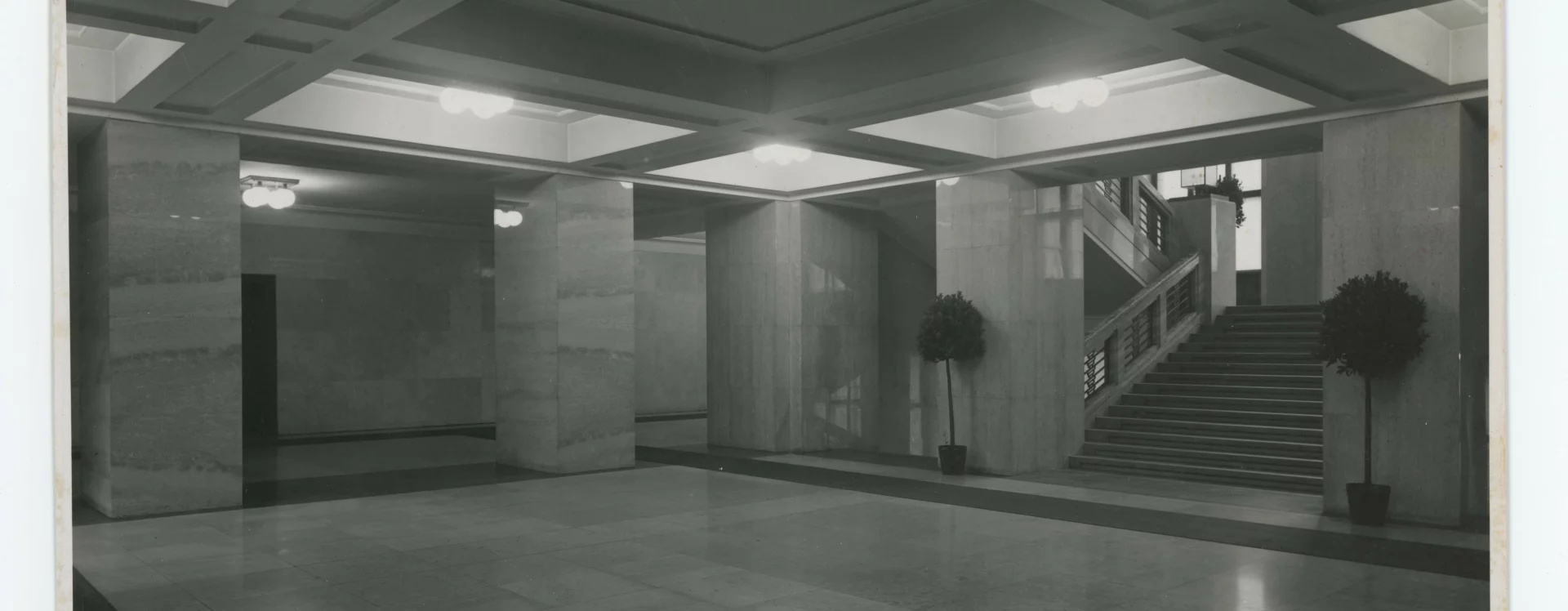
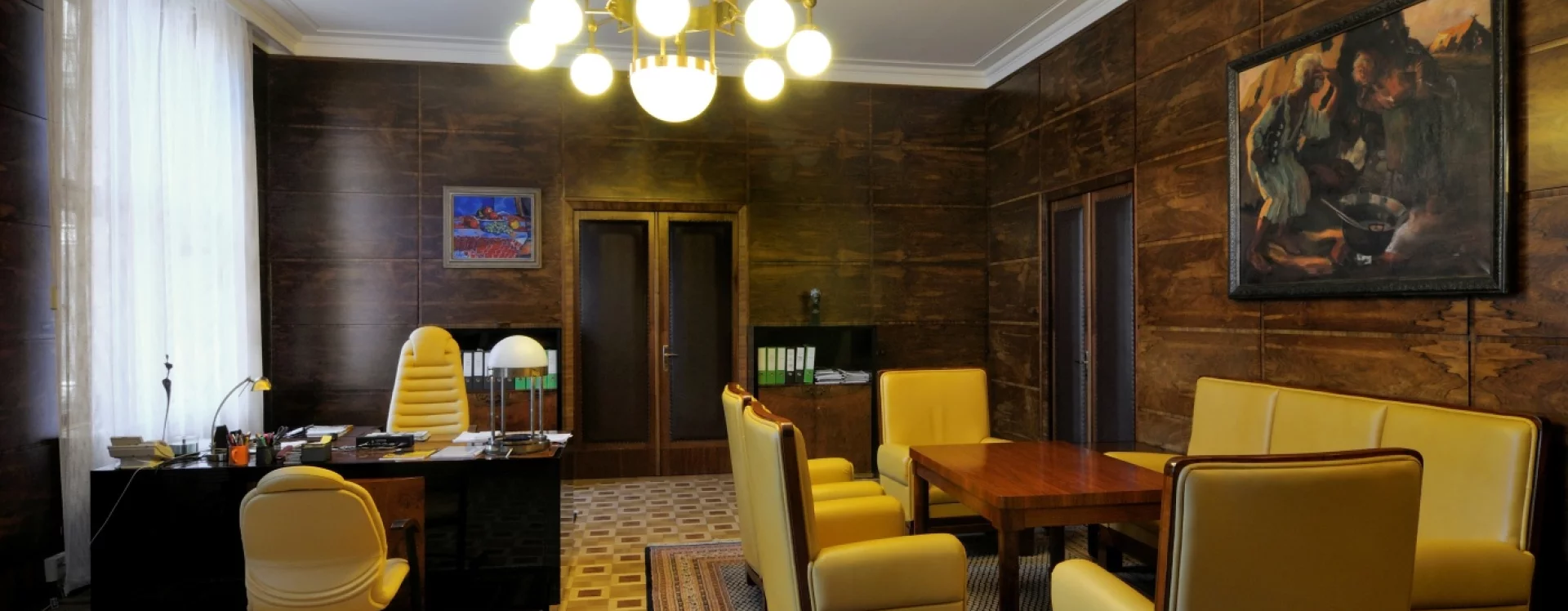
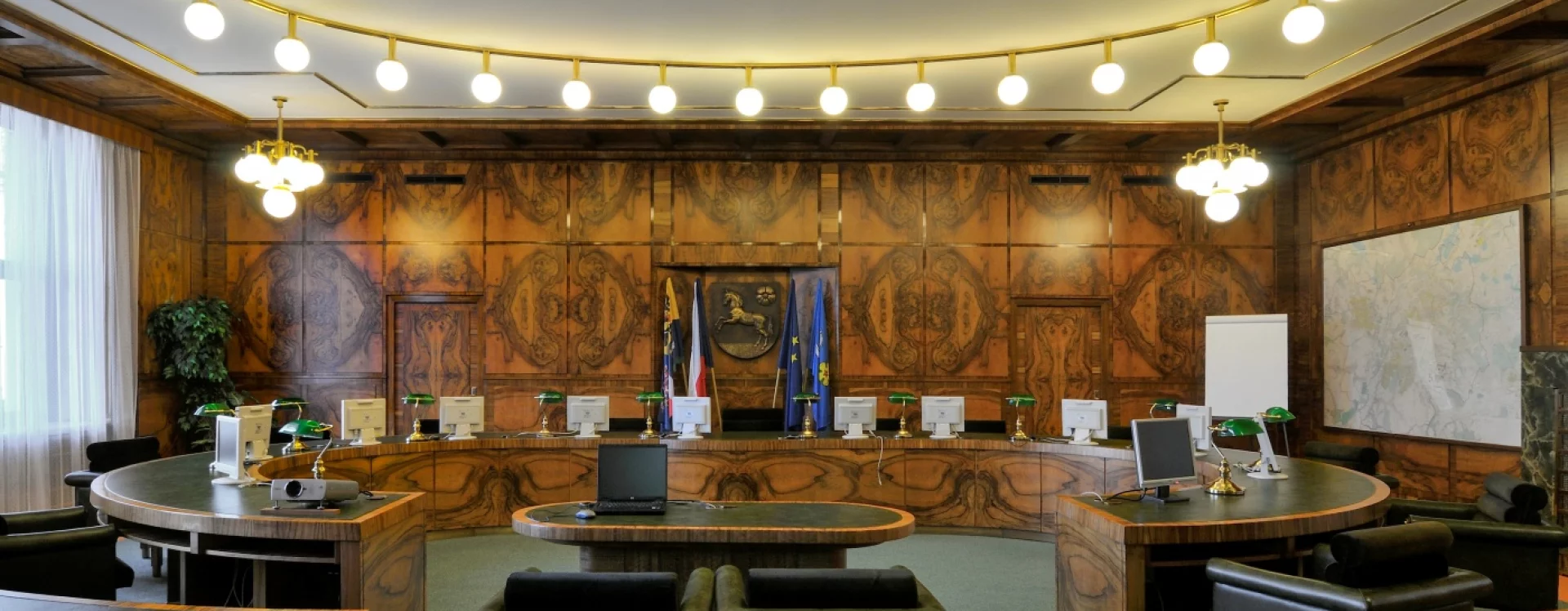
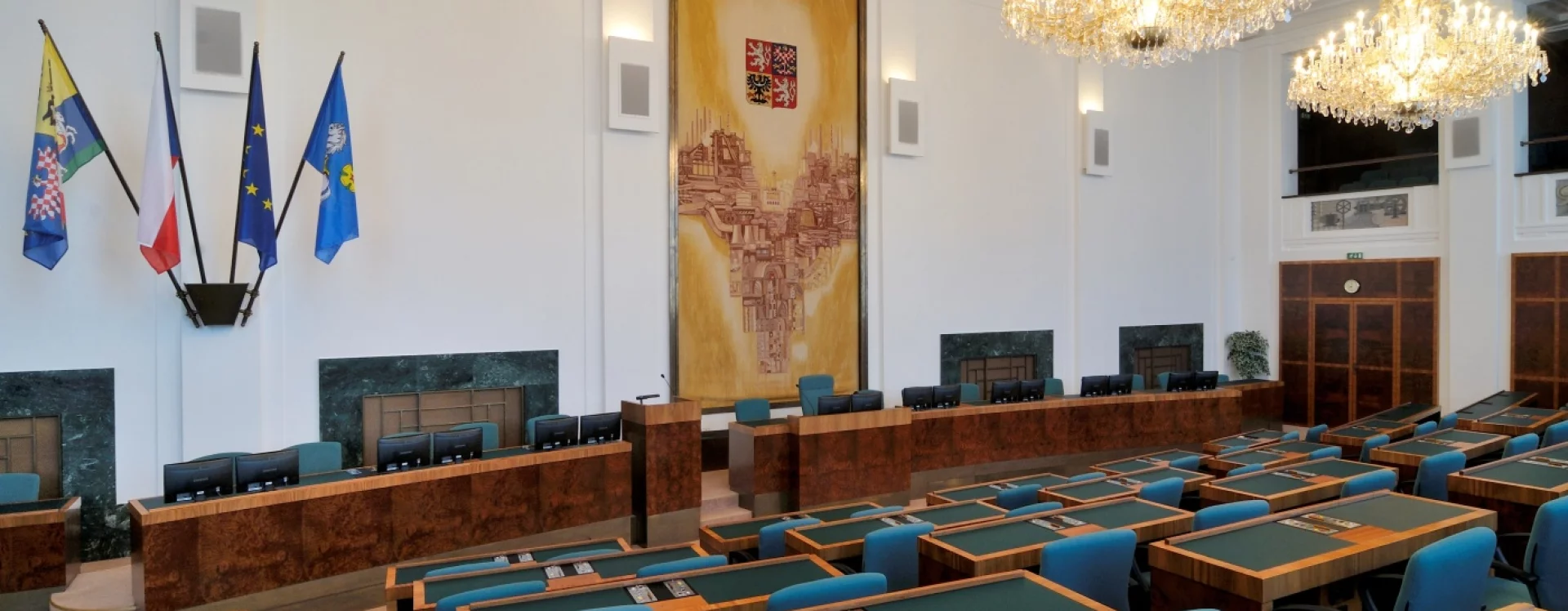
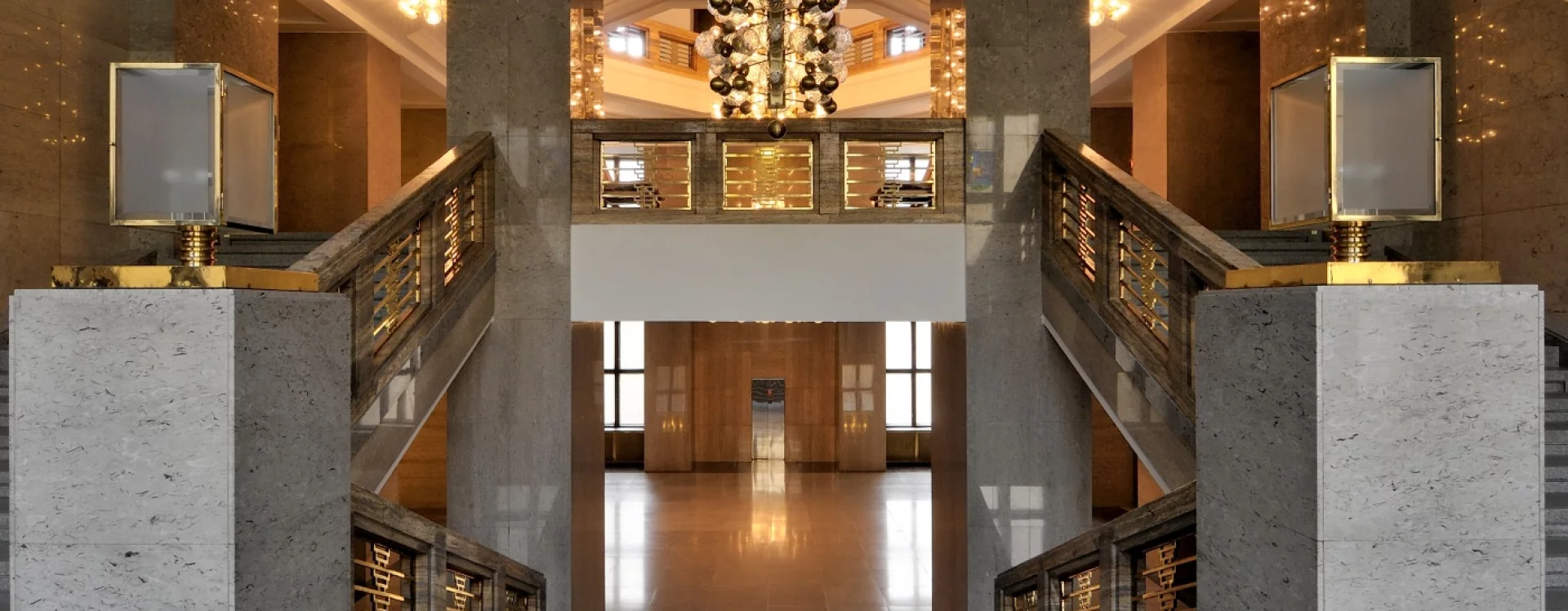
Having proven himself through these tasks, the young architect was also entrusted with designing the town hall interiors. Several alternative drafts survive for the main assembly hall for the municipal council and board, in which he explored the use of a top-lit space. The short sides of the hall contained visitor galleries, while the stage featured an organ. Kotas also designed the mayor’s office, a reception hall, and a restaurant with a terrace overlooking the park. As in his work for the Municipal Savings Bank, he emphasised representative character through the use of high-quality materials: fine woods, marble, travertine, and Silesian granite. Sculptors Josef Axmann and Rudolf Březa added artistic details such as bronze balustrade panels and votive plaques flanking the main entrance. The entrance façade was adorned with bronze sculptures representing mining, metallurgy, commerce, and science by the Brno sculptor Václav H. Mach, cast by Franta Anýž from Prague.
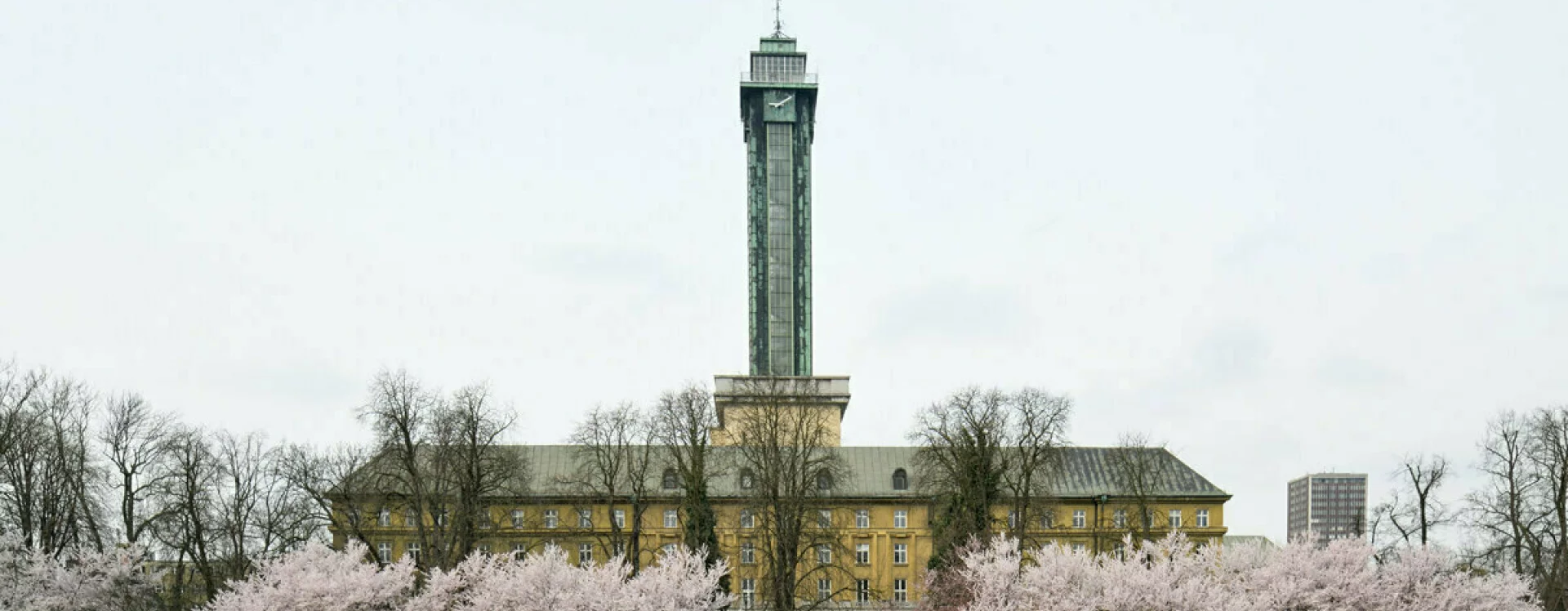
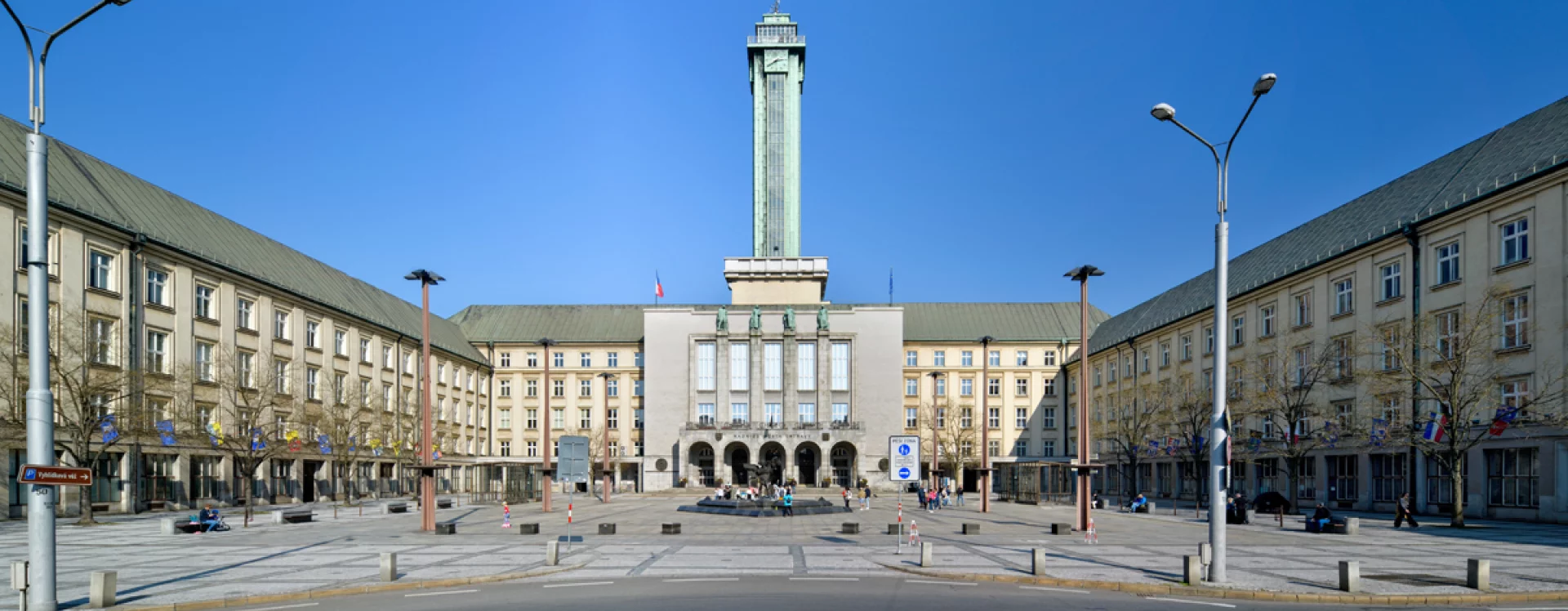
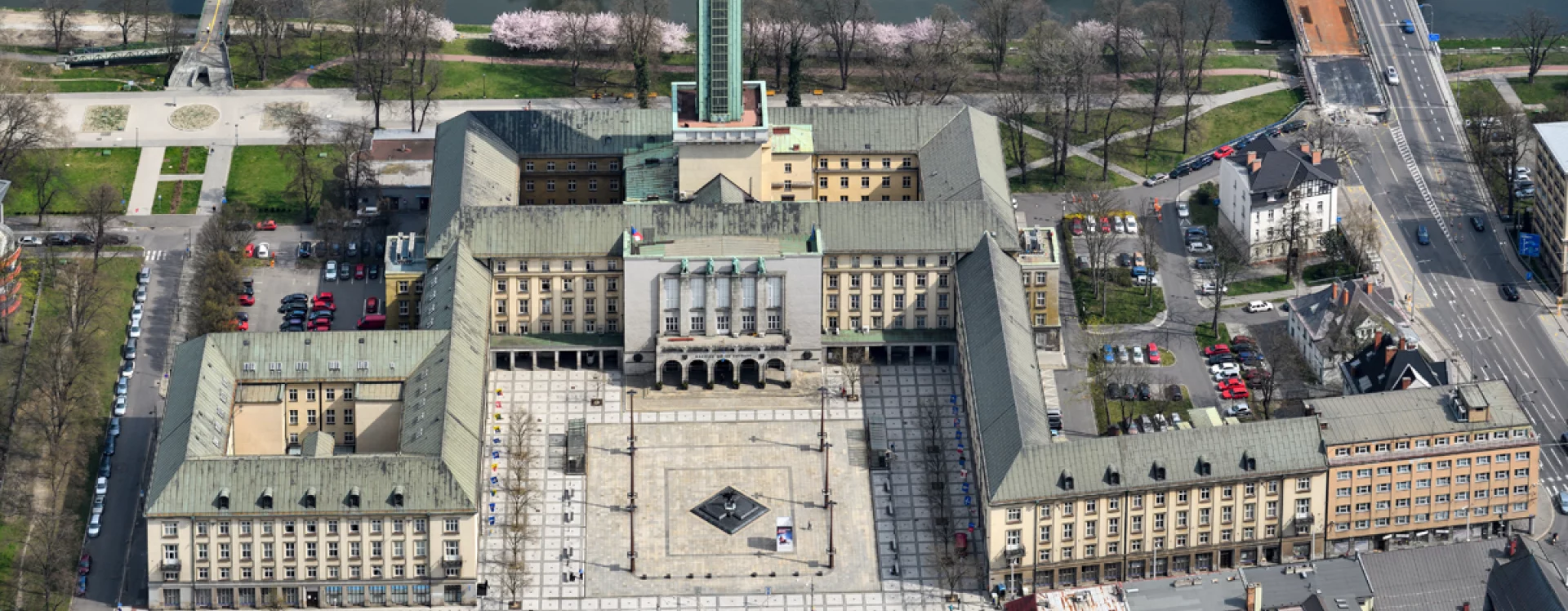
In 1929, construction continued with the steel structure of the tower, clad in copper plates with glazed strips, manufactured by the Vítkovice Mining and Iron Company. The 85.6-metre tower contained a staircase and a high-speed lift leading to a viewing gallery at 72 metres. The town hall was completed in 1930 and ceremonially opened on 28 October, the anniversary of the founding of the independent Czechoslovak Republic.
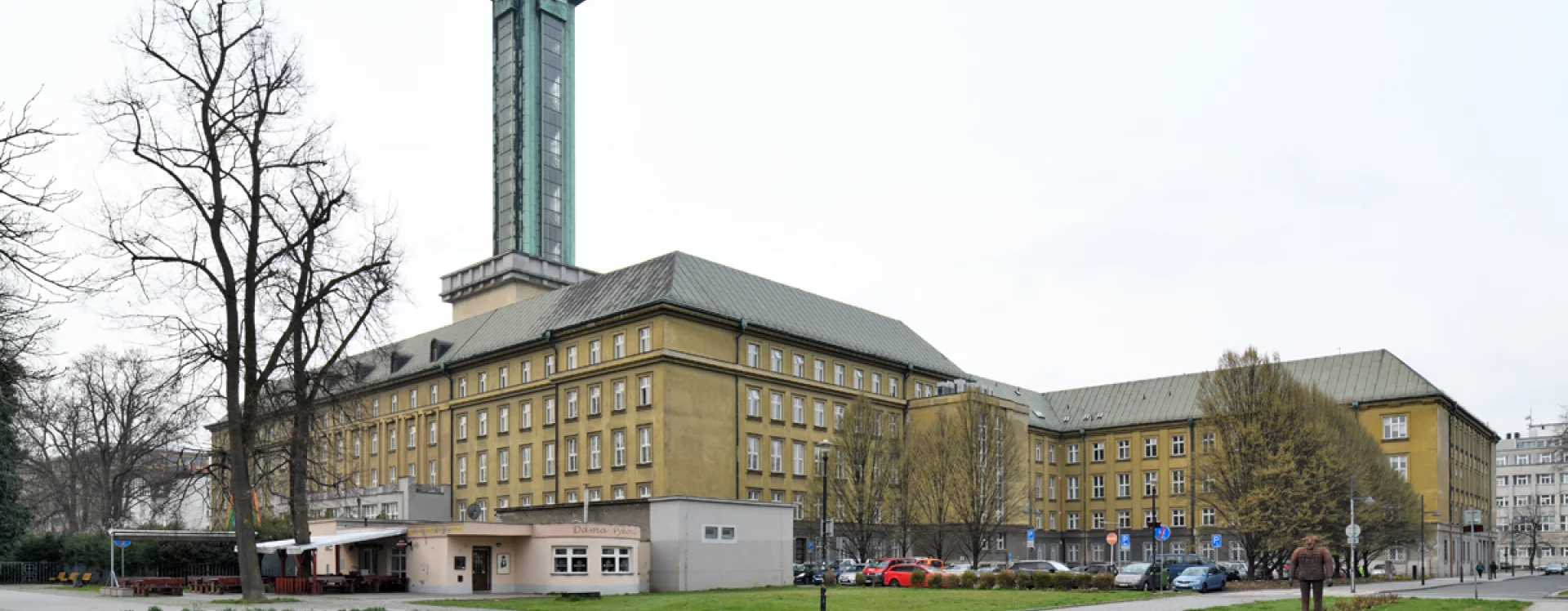
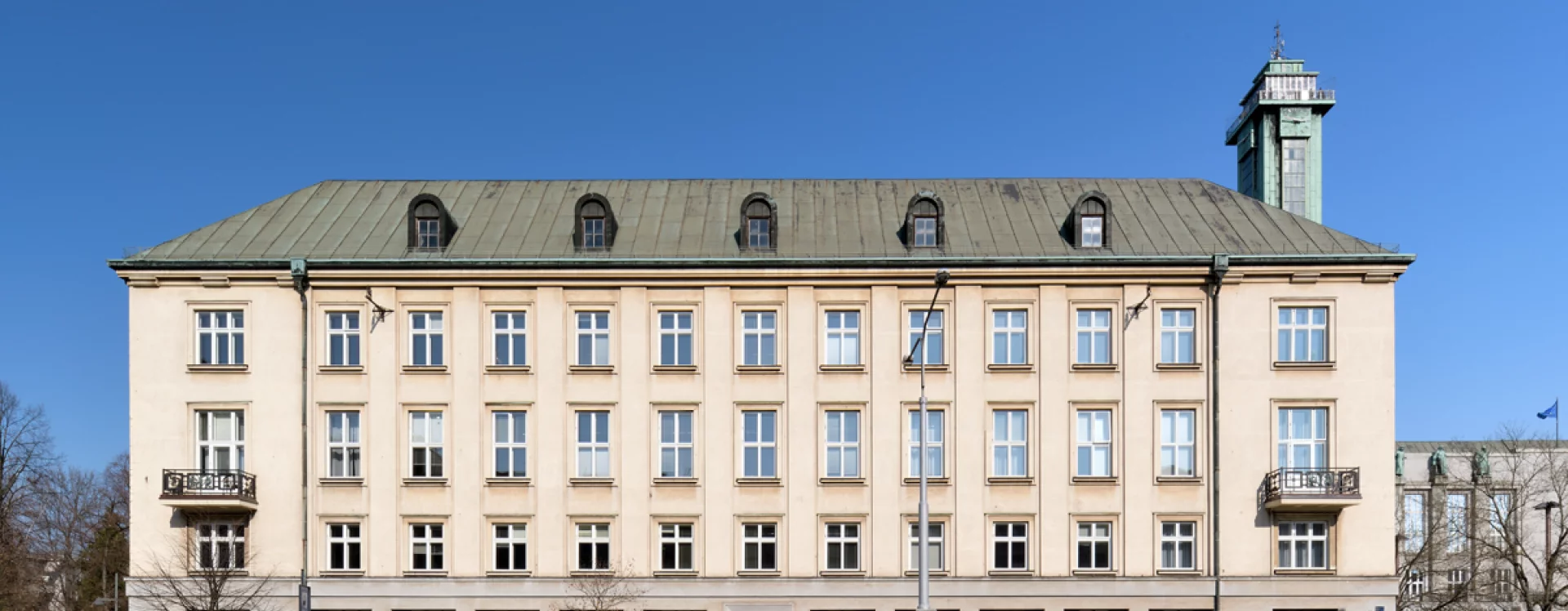
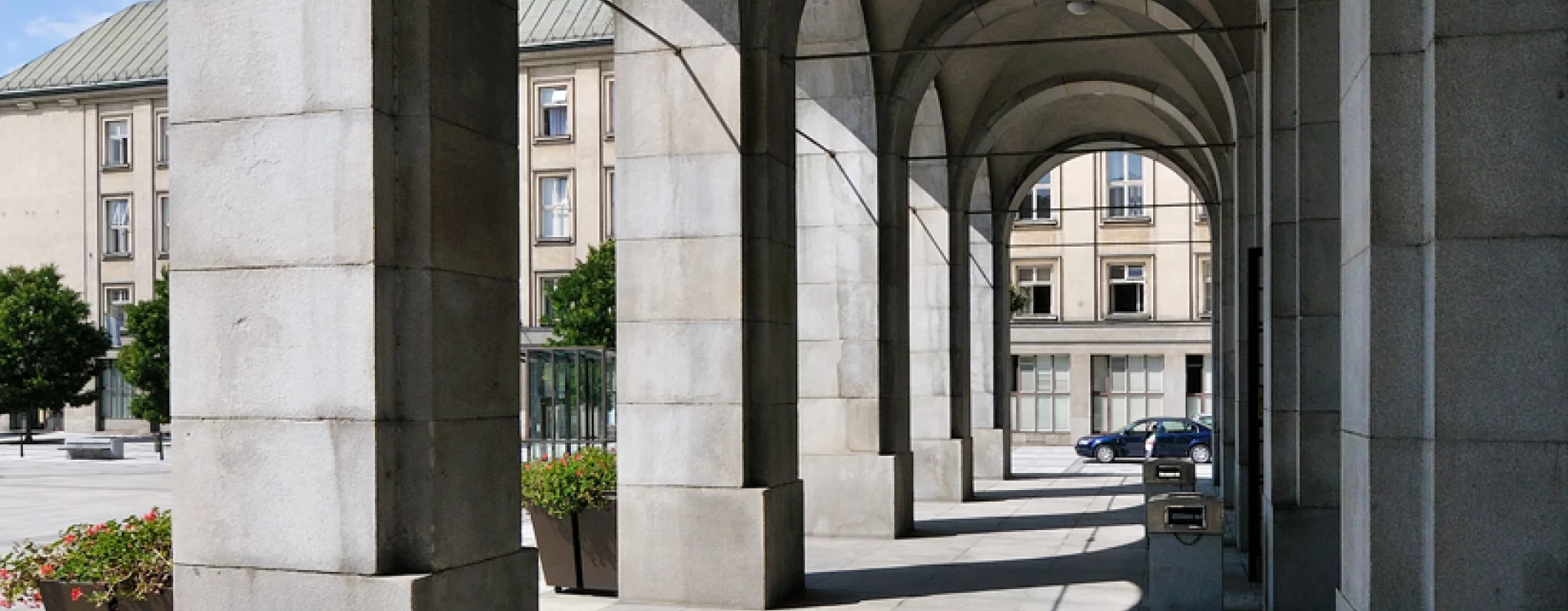
The symmetrical building, enclosing a square named after Mayor Jan Prokeš, consists of four parts, each with its own building number. The wings have a two-tract floor plan with a central corridor providing access to offices and other rooms. The main central wing (today no. 1803) with two courtyards and the dominant tower is fronted by a five-bay stone-clad risalit with an arcaded portico. The risalit is crowned by an attic with four bronze allegorical figures by Václav H. Mach. This wing housed representative rooms, council and board chambers, and the mayor’s offices. Many original interiors have survived, including the central vestibule and the main triple-flight staircase with stone cladding, paving, and brass cubic light fittings designed by Karel Kotas; as well as the mayor’s office and the council chamber. The assembly hall has undergone some alterations – such as the removal of stained-glass windows in the second half of the twentieth century – yet its spatial arrangement, including galleries, remains intact. The paternoster lift has also survived, albeit modified in the 1990s. The northern wing (today no. 1800), structurally independent except for the central heating system, housed the district office with the district governor’s apartment, the cadastral office, the tax office and the revenue authority. The southern wing (today no. 1802) served as administrative offices, and the perpendicular residential wing (today no. 1801) provided apartments for municipal employees.
For its architectural significance, the New Town Hall was declared a cultural monument in 1992 and a national cultural monument in 2024.
Literature
Karel Frič. Technická práce na Ostravsku 1926–1936. Moravská Ostrava, 1936. p. 783–791.
Alois Adamus. Z dějin Moravskoostravské radnice. Moravská Ostrava, 1930.
Renata Skřebská. Oslava všedního dne. Architektonická plastika s atributy práce, dopravy, obchodu a peněžnictví. Ostrava, NPÚ, ÚOP v Ostravě, 2020. p. 150–151. ISBN 978-80-88240-21-1.
Průvodce architekturou Ostravy. 2009. p. 146–147. ISBN 978-80-85034-54-7.
Martin Strakoš. Ostravské interiéry. Ostrava, Fiducia, 2011. p. 36–41. ISBN 978-80-905106-0-9.
Martin Strakoš. Krásná Ostrava. Bulletin okrašlovacího spolku Za krásnou Ostravu 8. 2020. p. 17–22.
Petr Pelčák, Martin Strakoš, Ivan Wahla (edd.). Karel Kotas 1894–1973. Brno, Ostrava, NPÚ, ÚOP v Ostravě, Spolek Obecní dům Brno, 2021. ISBN 978-80-88240-24-2.
Martin Jemelka, Gabriela Pelikánová, Romana Rosová, Martin Strakoš, Radomír Seďa. Jan Prokeš: Ostrava na cestě k velkoměstu. Ostrava, Fiducia, 2023. p. 38–113. ISBN 978-80-907934-5-3.
Jindřich Vybíral. Zrození velkoměsta: Architektura v obraze Moravské Ostravy 1890–1938. Šlapanice, ERA, 2003. p. 104–109. ISBN 80-86517-94-2.
Martin Jemelka, Gabriela Pelikánová, Romana Rosová, Martin Strakoš, Radomír Seďa. Jan Prokeš: Ostrava na cestě k velkoměstu. Ostrava, Fiducia, 2023. p. 114–157. ISBN 978-80-907934-5-3.
Nová radnice. Available from: https://pamatkovykatalog.cz/nova-radnice-13055317 [accessed 21. 10. 2025]
Památka 95. Nová radnice. Available from: https://www.ostravskepamatky.cz/pamatka/show/95 [accessed 21. 10. 2025]