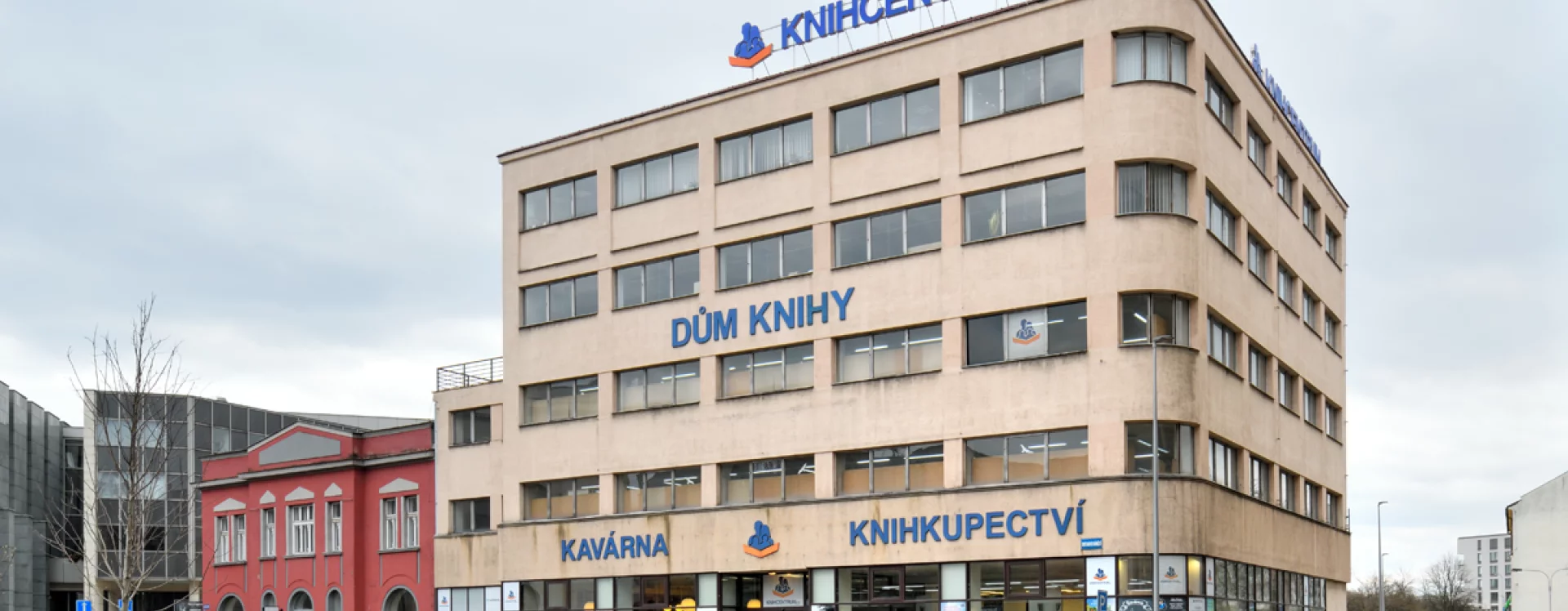
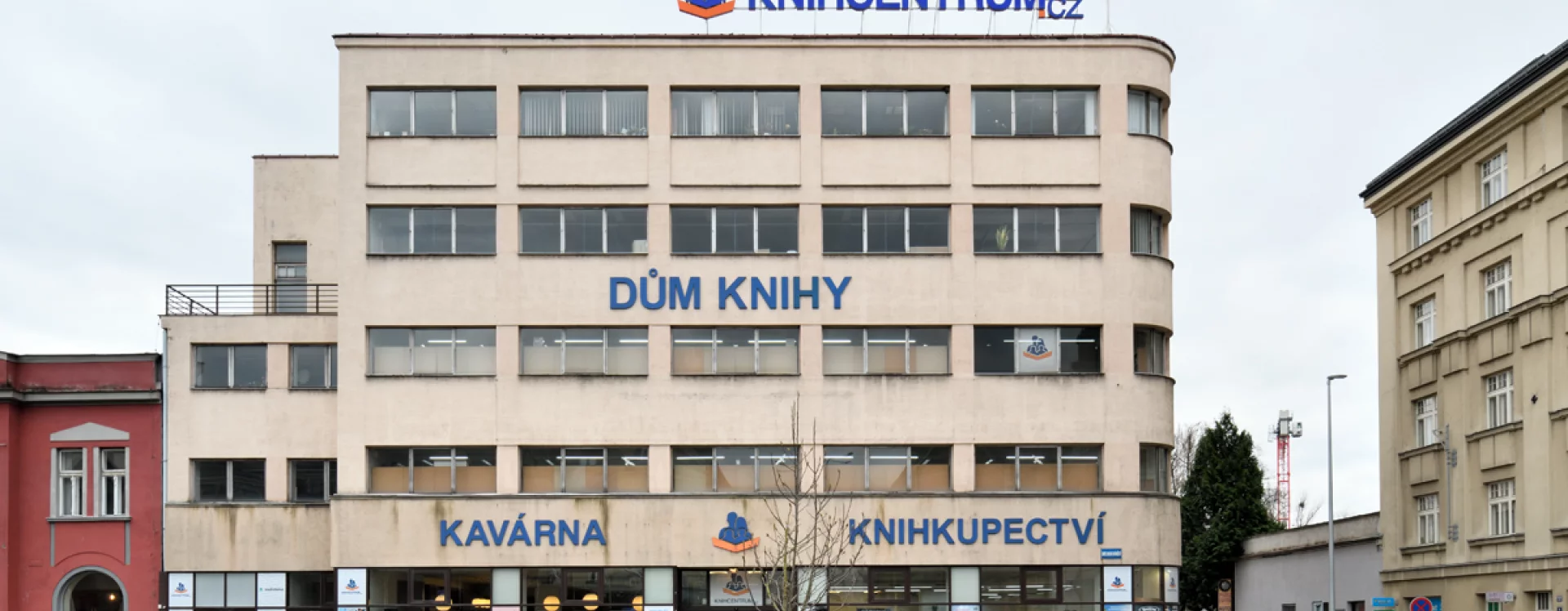
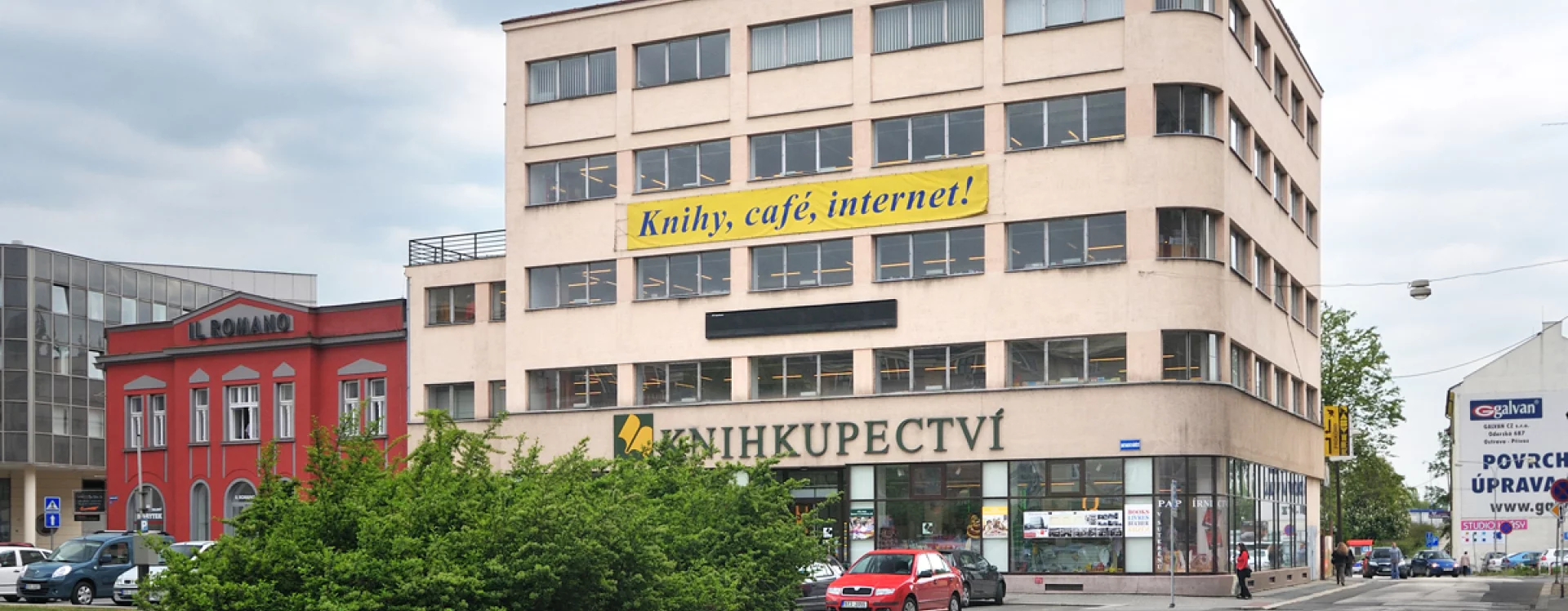
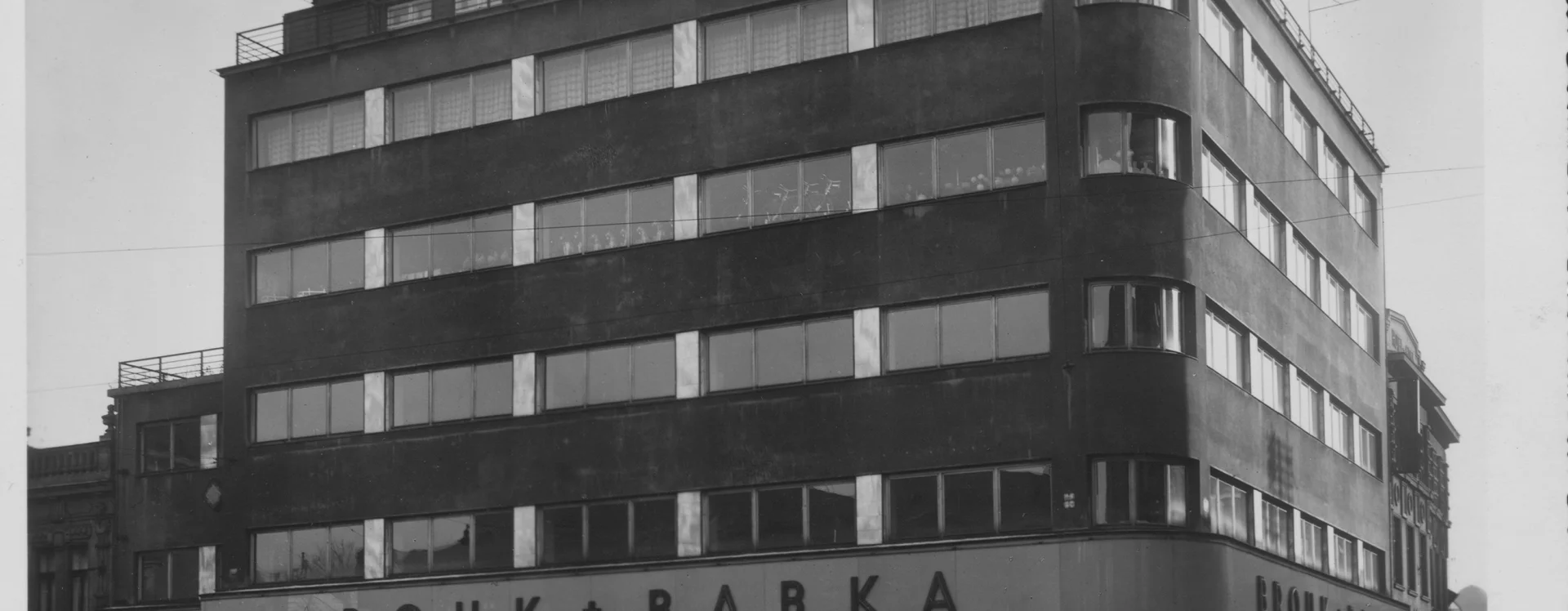
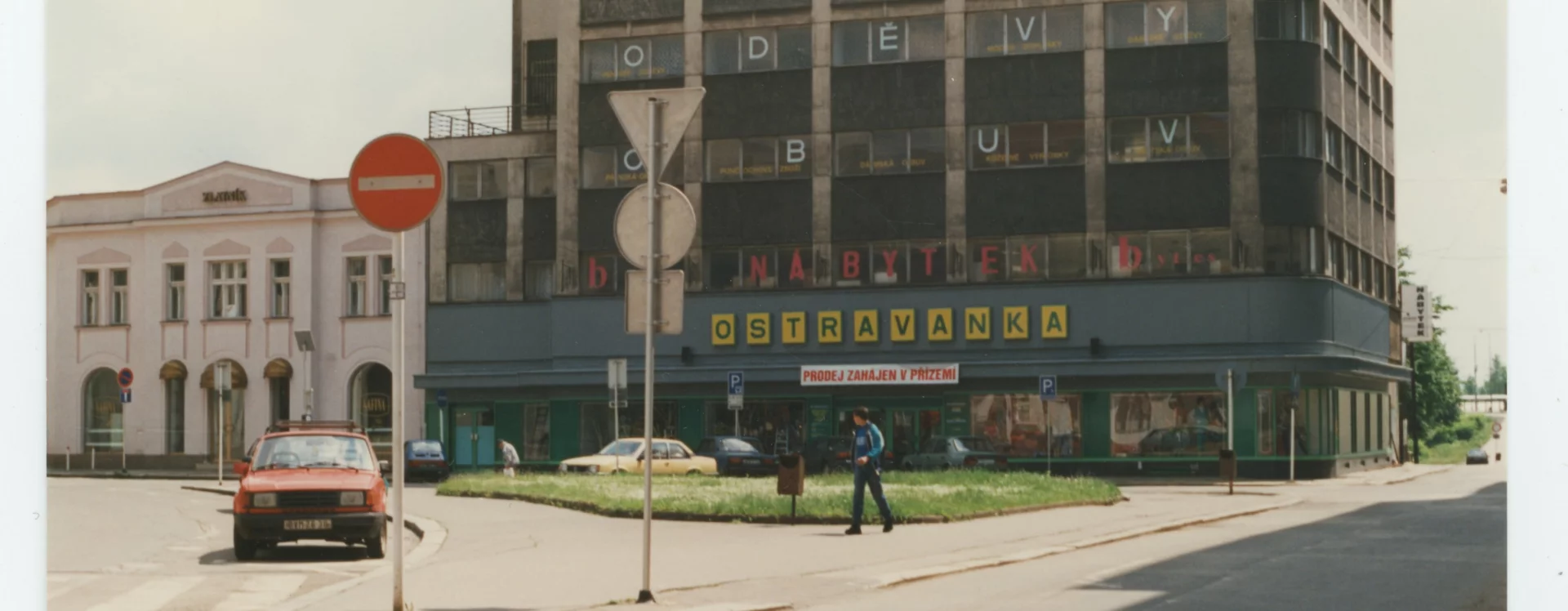
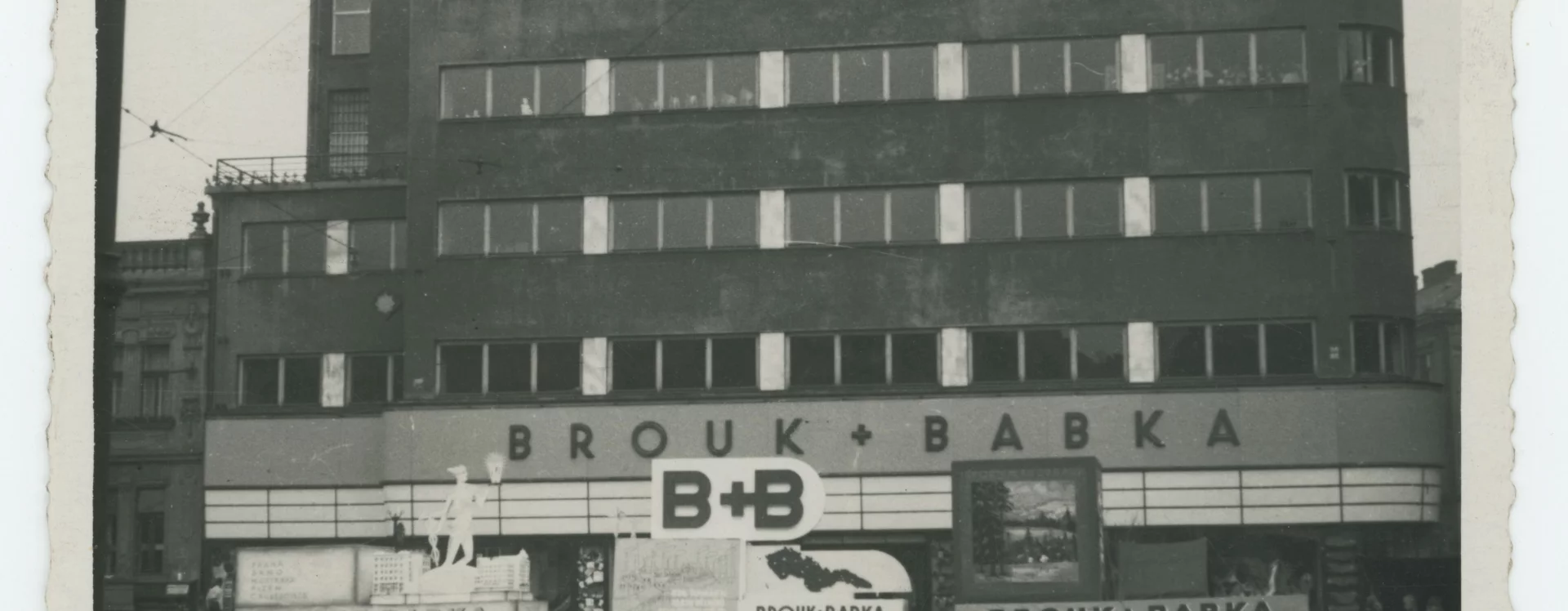
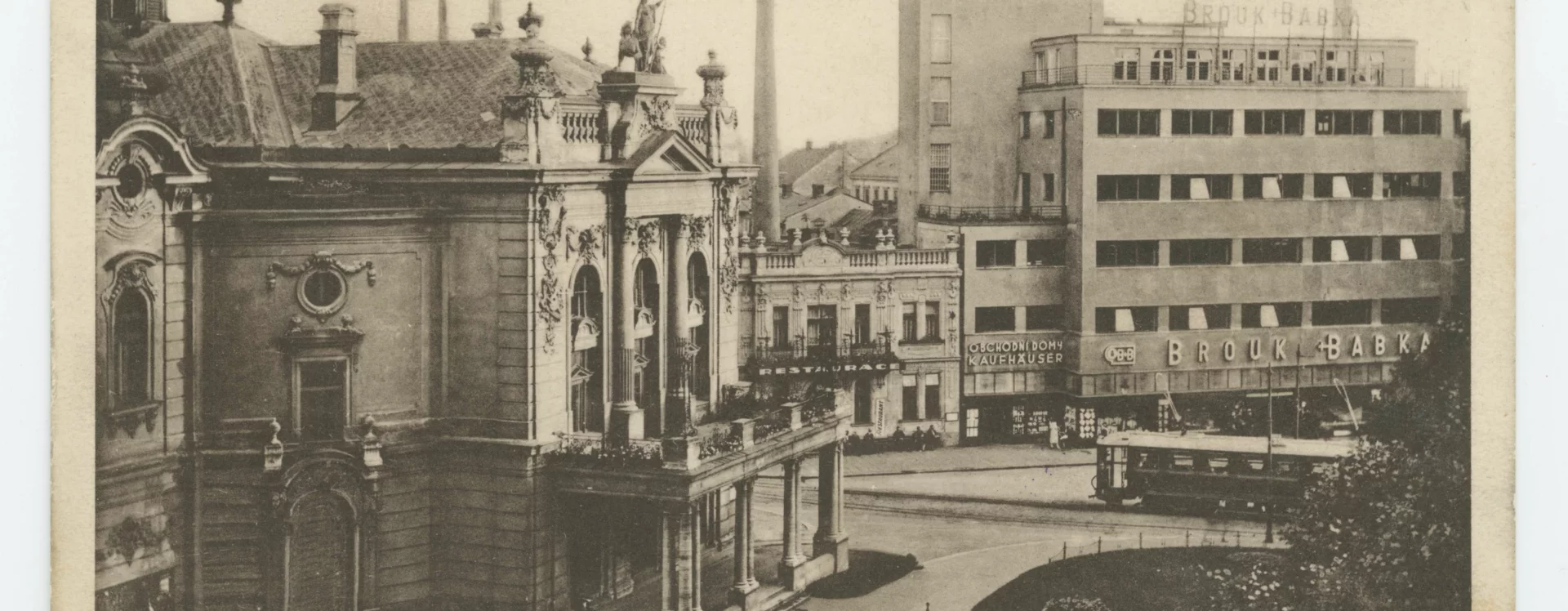
The company Brouk & Babka was founded in 1909 by Jaroslav Brouk and Josef Babka as a business specialising in textile goods. Originally based in Prague, the firm expanded after the First World War to other cities and gradually broadened its range to include books, art objects, electrical appliances, and telephones. The Ostrava branch was established in 1928. For its premises the company purchased several houses in the southern part of what was then Denis Square (today Smetana Square). After their demolition, a striking functionalist palace was erected here according to a design by the architect Karel Kotas, who at the time had already established himself in Ostrava with several important buildings, including the Municipal Savings Bank and the Riunione Adriatica di Sicurtà insurance building.
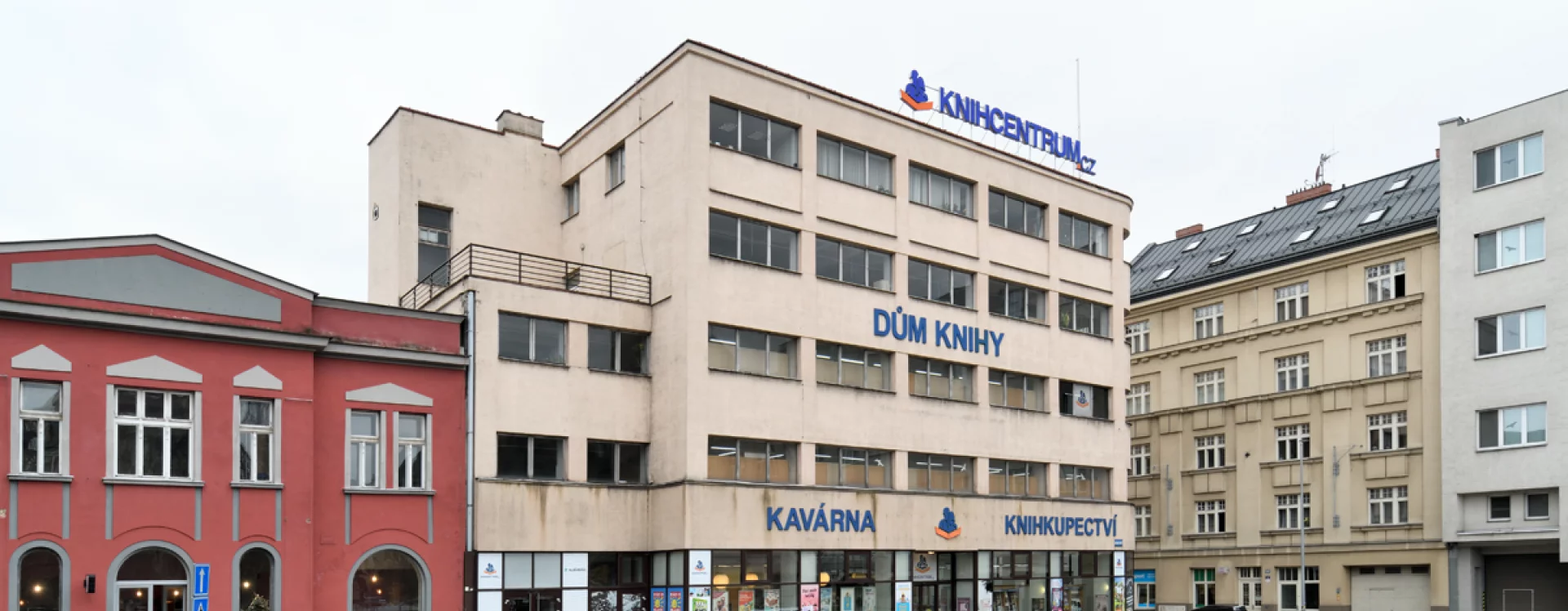
The six-storey building, with a rectangular plan and reinforced-concrete structure, featured a rounded corner responding to its prominent position at the intersection of streets. With its austere architectural expression, it contrasted both with the neighbouring Neo-Baroque municipal theatre and with the industrial complex of the nearby Žofín Ironworks. The ground floor was designed as a glazed portal articulated by prismatic piers. For the upper floors Kotas chose a strongly horizontal composition consisting of narrow ribbon windows separated by slender mullions and alternating with solid parapet panels. From the exterior these panels served as spaces for advertising, while inside they allowed for the display of goods. The top floor was slightly recessed and surrounded by a terrace with tubular railings.
The transition to the neighbouring low building of the municipal baths was resolved –
on the recommendation of the architect Bohumil Hübschmann – by means of a two-storey section set slightly back from the main volume, incorporating a small arcade at ground-floor level and a roof terrace above. As in his other works, Kotas conceived the exterior as a play of colours and materials. The façades were originally intended to be clad in artificial stone, while the top storey and the tower of the service staircase were to be finished in red ceramic tiles. The window piers were to be clad in opaque glass to visually lighten the otherwise robust structure. Neon signage, a novelty at the time, gave the building a distinctly metropolitan character.
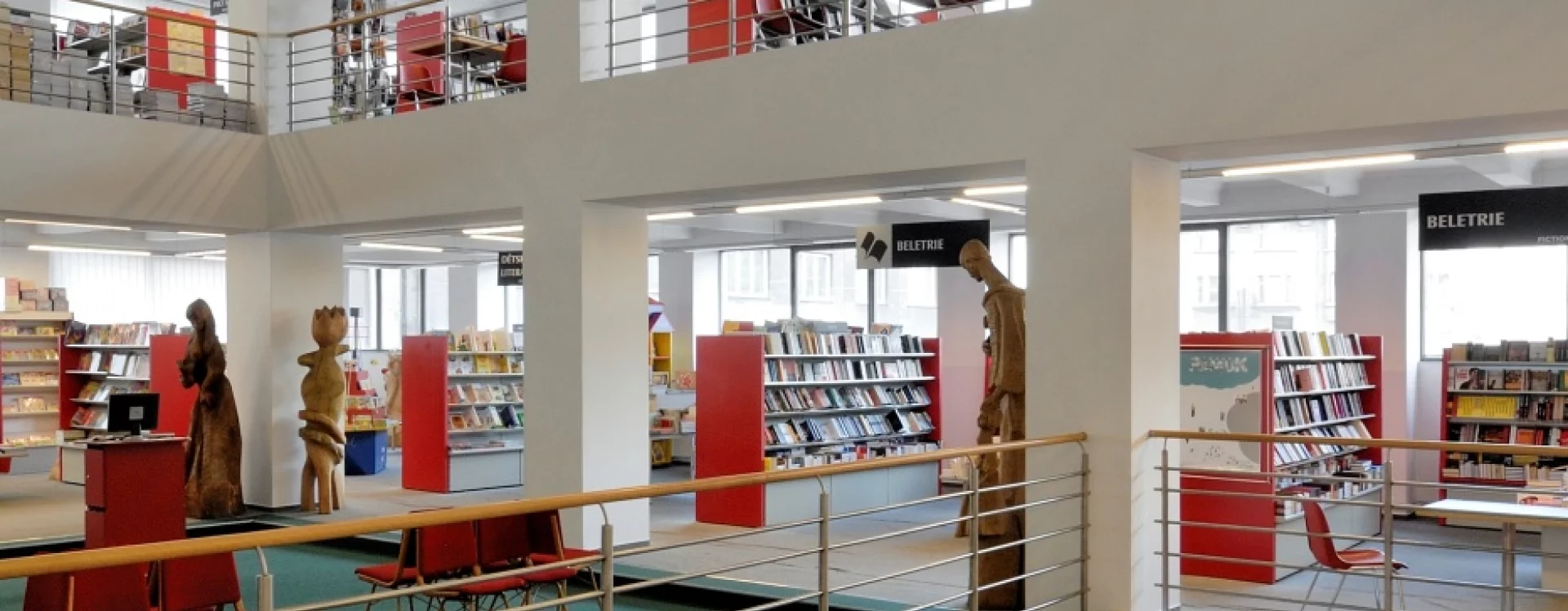
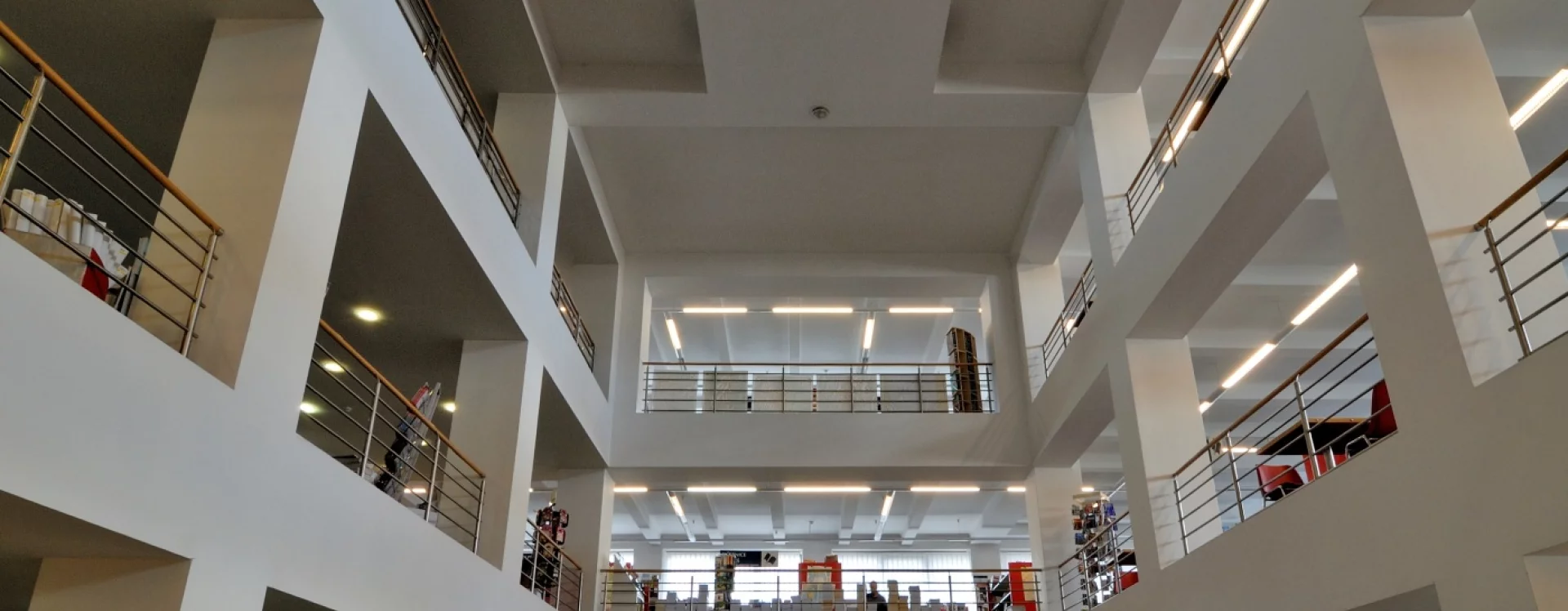
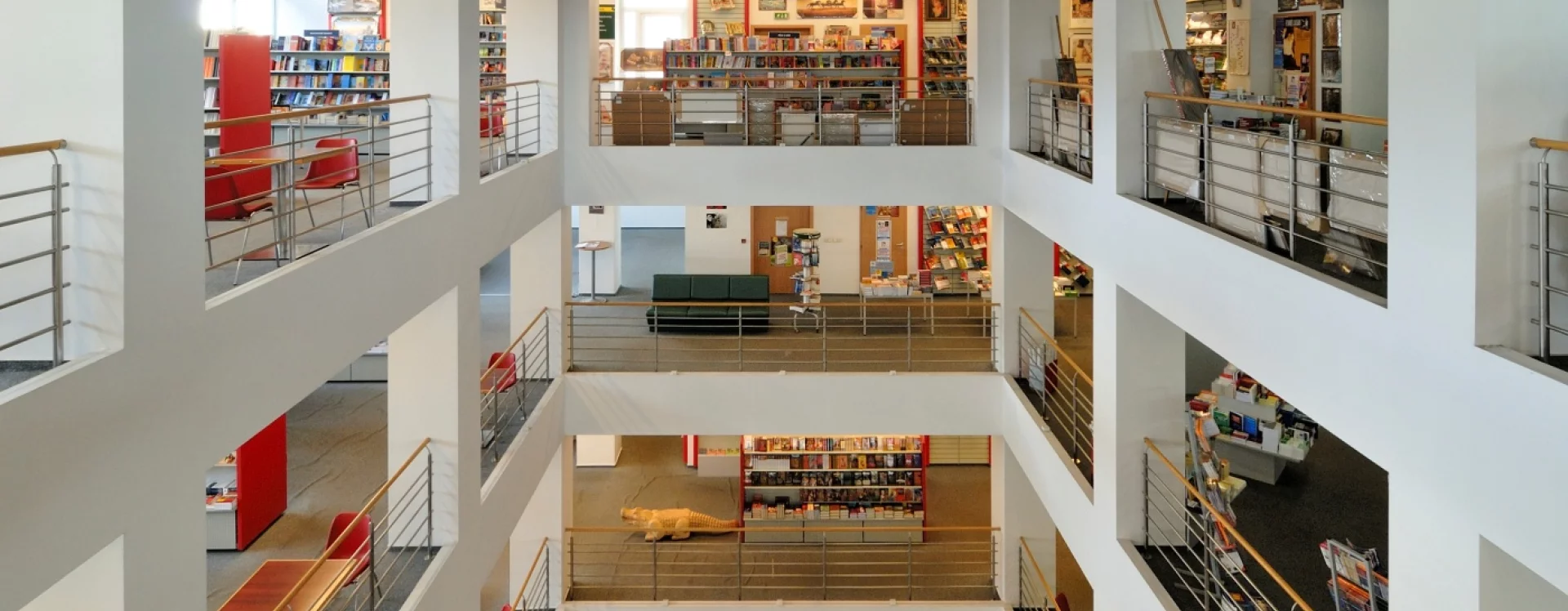
The interior consisted of an open plan articulated by reinforced-concrete columns. Natural lighting was provided by high-set windows and especially by a large rectangular skylight illuminating the central hall, which in the top storey was covered with glass blocks. A pair of three-flight staircases arranged around passenger lifts was placed in the rear part of the building, while the service staircase was located in a staircase risalit on the eastern side. Service facilities were situated in the basement and on the top floor.
The project encountered several difficulties. The massive scale of the building provoked public protests, which criticised its oversized character and the possibility that it might overshadow the municipal theatre as the architectural landmark of the square. The architects Bohumil Hübschmann and Vladimír Fischer were consulted by the building authority to evaluate the project and recommended that it be carried out as designed. Construction was authorised in August 1928, yet further complications soon followed. A disused mill race ran beneath the site, and the foundations therefore had to be constructed using a technically demanding concrete basin, which significantly increased construction costs. Subsequent financial difficulties forced the investor to abandon the more sophisticated and expensive materials originally proposed by Kotas. Instead of artificial stone and ceramic or glass cladding, a hard plaster with a mica admixture was used, and the projecting portal was replaced by shop windows. The building was completed at the end of December 1928 and opened to the public in March of the following year.
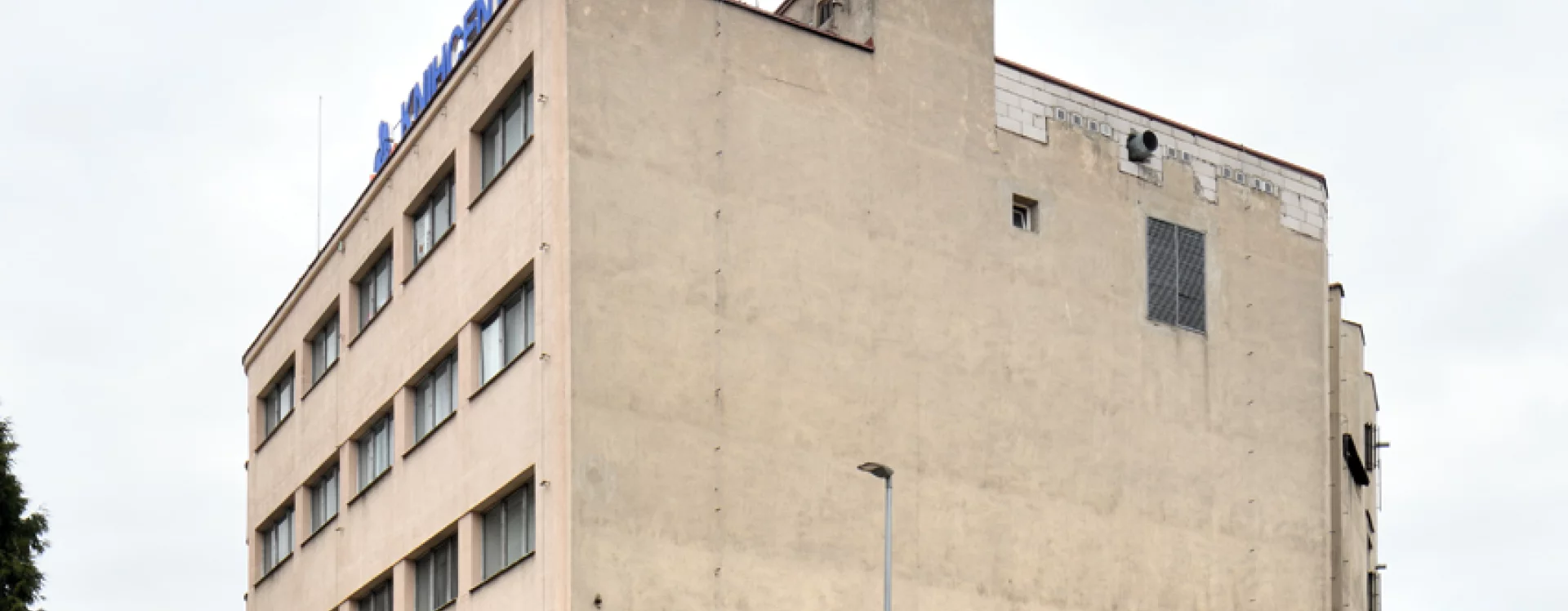
In 1936, when the company expanded the retail spaces, the skylight was covered over and the façade was remodelled with light ceramic tiles. These alterations were designed and carried out by the Ostrava branch of the Nekvasil construction company. The steel-framed portal in the ground floor was designed by the architects František Kolář and Jan Rubý, based on Kotas’s original concept. During the bombing of Ostrava in August 1944, the sixth floor was destroyed. After the war it was removed and never rebuilt. Later utilitarian alterations in the second half of the twentieth century eliminated a number of original elements. The ceramic façade cladding was replaced with cement plaster, the windows were changed, and the internal layout was modified.
In 2001 the company Librex converted the building into the Dům knihy (House of Books) according to a design by the architect Jiří Bobek. During this renovation the skylight between the first and third floors and partly also above the ground floor was partially restored, although the original glazed roof was not reconstructed. Unfortunately, the conversion also resulted in the loss of several authentic elements, including parquet floors and cast-iron radiators. The building was fitted with glass lifts, wooden staircases, and suspended ceilings.
RR
Literature
Naďa Goryczková. Poznámky k historickému vývoji a obnově obchodního domu Brouk a Babka. In: Sborník Státního památkového ústavu v Ostravě 2001. Ostrava, 2002. s. 5–11.
Eva Chvalová. Obchodní domy v Moravské Ostravě v období první republiky. In: Ostrava. Příspěvky k dějinám a současnosti Ostravy a Ostravska 22. 2005. s. 119–146.
Jaroslav B. Svrček. Karel Kotas. In: Horizont 1929. s. 3–6.
Karel Kotas. Obchodní dům. In: Horizont 1929. 1929, č. 23–24. sv. 23–24, s. 22–26.
Průvodce architekturou Ostravy. 2009. s. 156. ISBN 978-80-85034-54-7.
Martin Strakoš. Ostravské interiéry. Ostrava, Fiducia, 2011. s. 212–215. ISBN 978-80-905106-0-9.
Martin Strakoš. Ostrava industriální a moderní: Velký průvodce po architektuře 1845–1949. Praha, Paseka, 2020. s. 78. ISBN 978-80-7637-123-1.
Petr Pelčák, Martin Strakoš, Ivan Wahla (edd.). Karel Kotas 1894–1973. Brno, Ostrava, NPÚ, ÚOP v Ostravě, Spolek Obecní dům Brno, 2021. Karel Kotas: architekt moderní mentality, s. Martin Strakoš. ISBN 978-80-88240-24-2.
Jindřich Vybíral. Zrození velkoměsta: Architektura v obraze Moravské Ostravy 1890–1938. Šlapanice, ERA, 2003. s. 134–141. ISBN 80-86517-94-2.
Jan Galeta. Obchodní dům Brouk a Babka v Moravské Ostravě. Brno, 2010. ISBN Bakalářská práce.
Brouk a Babka. Available from: https://www.ostravskepamatky.cz/pamatka/show/104 [accessed 19. 11. 2025]