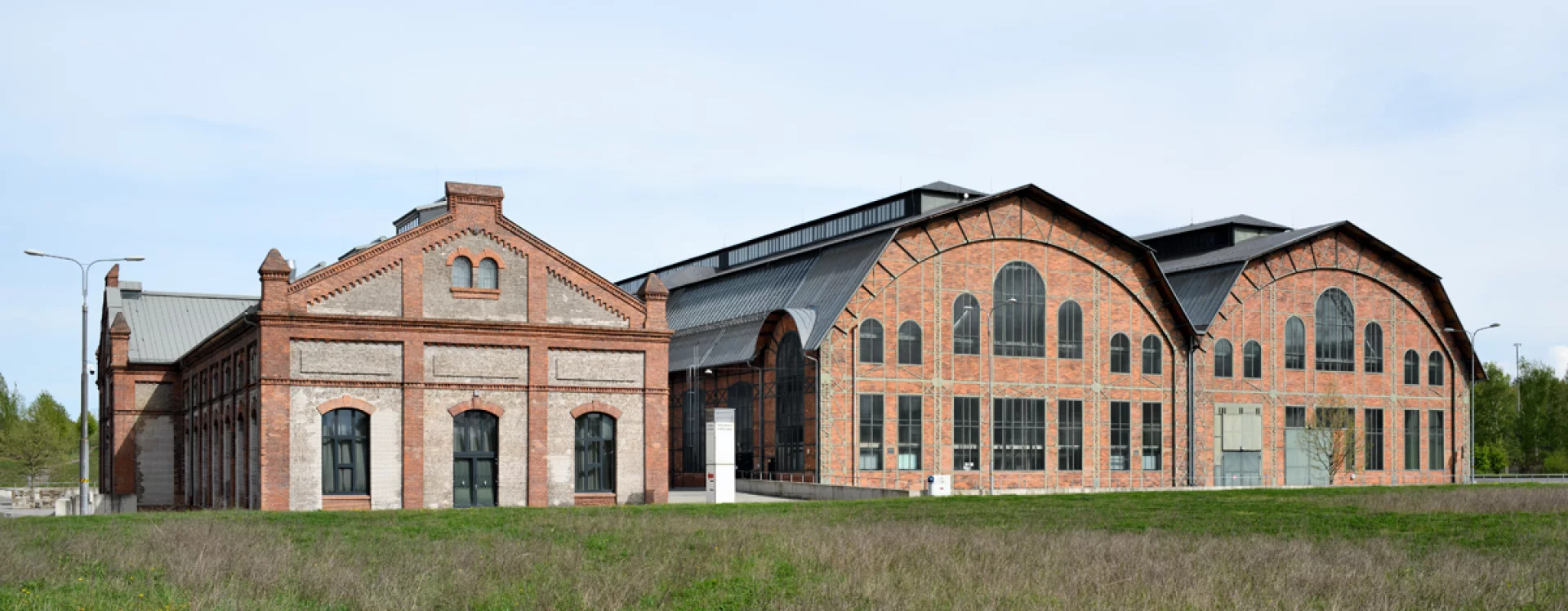
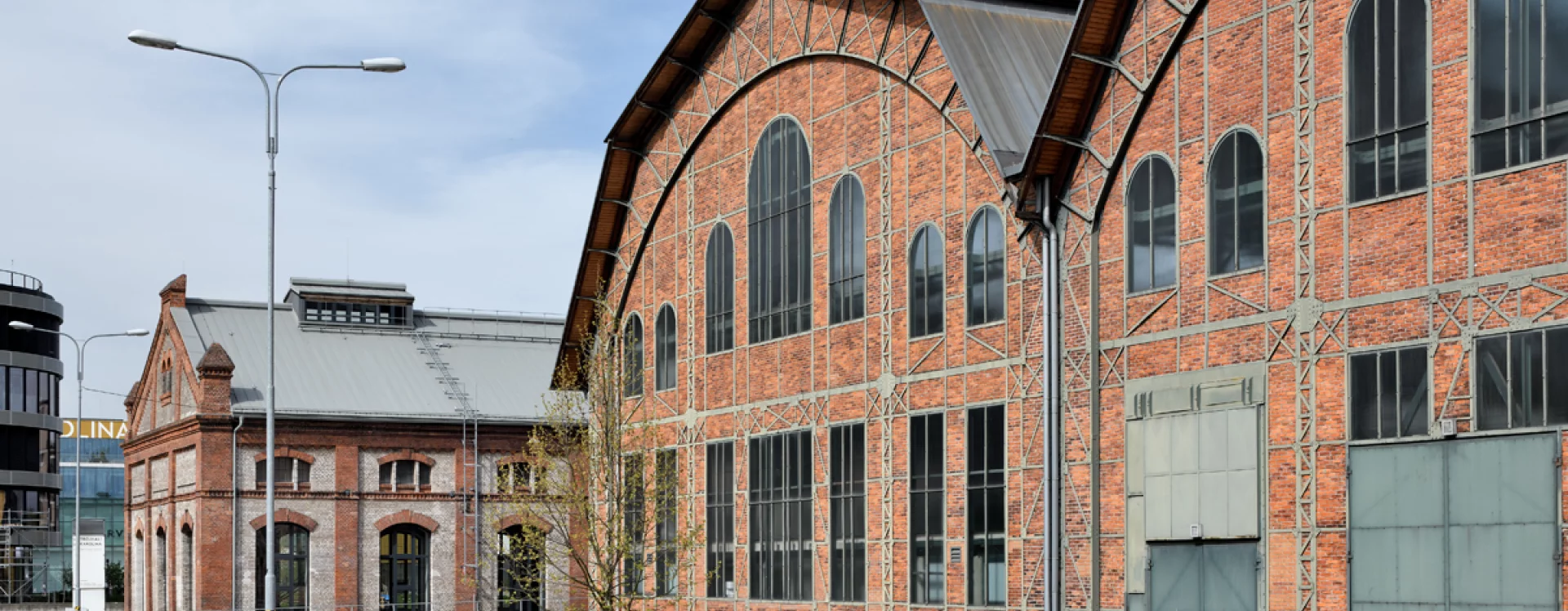
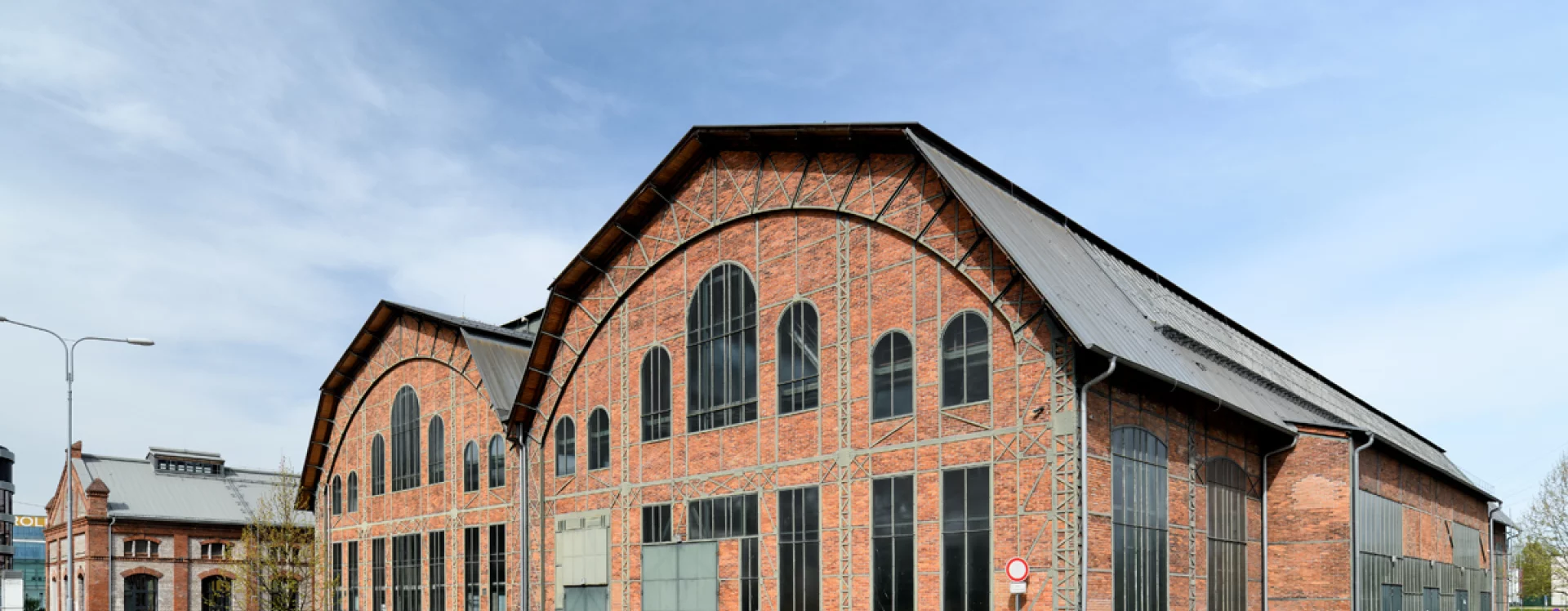
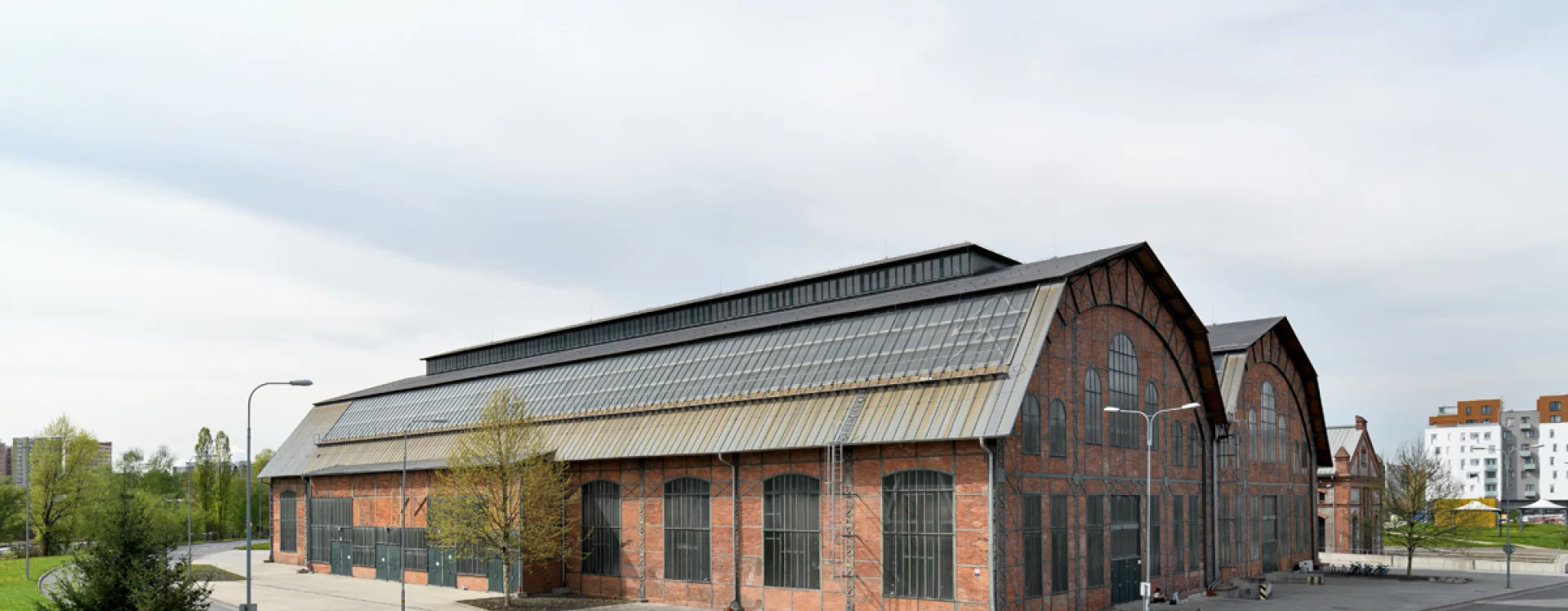
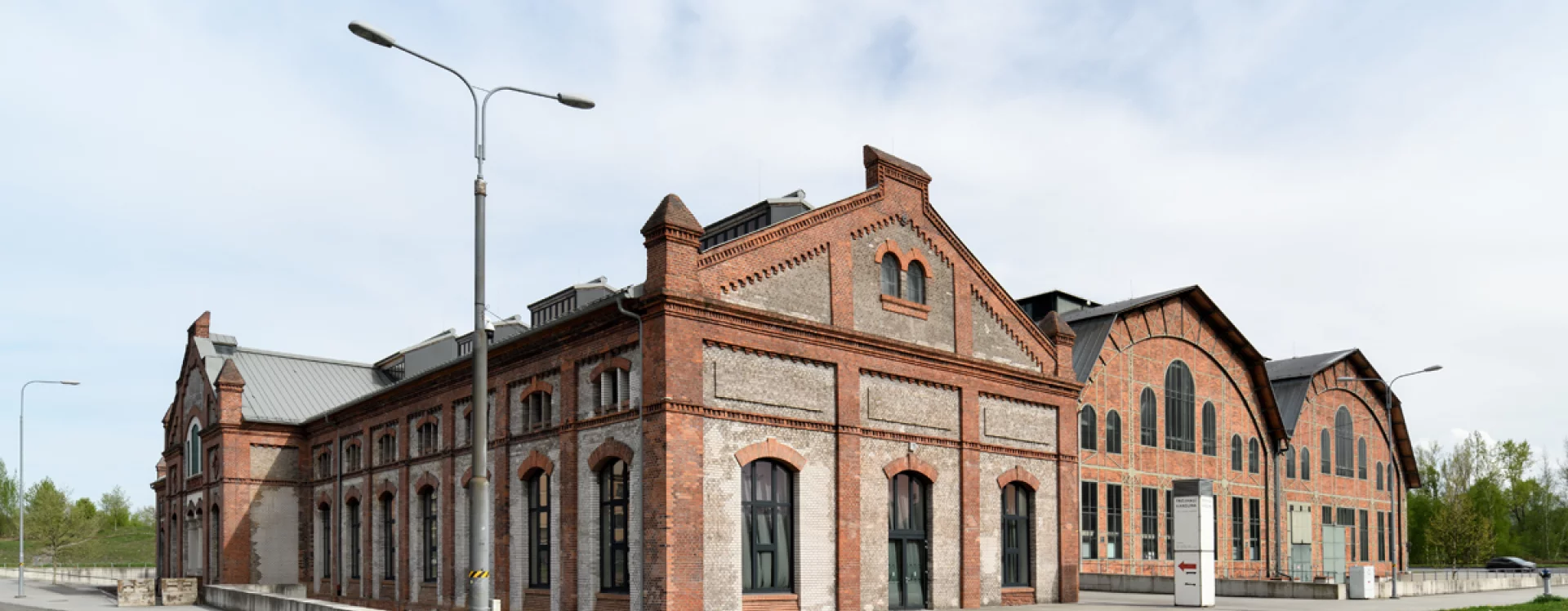
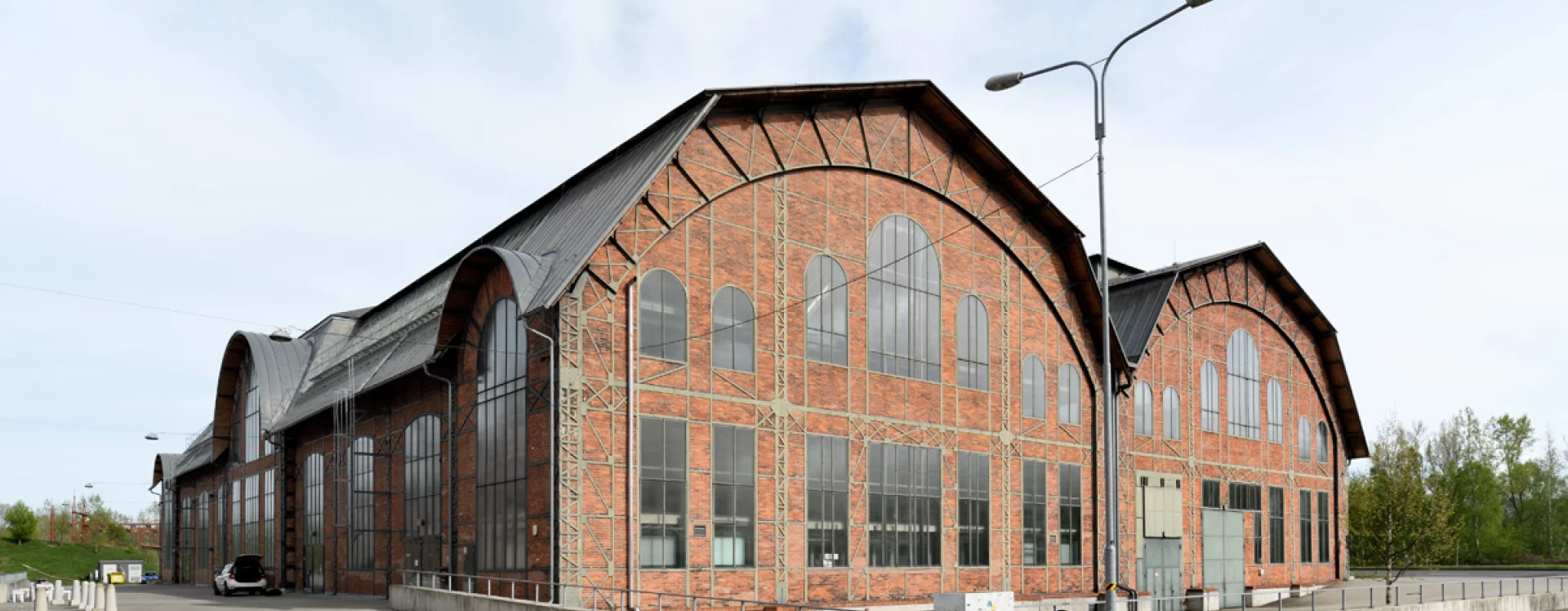
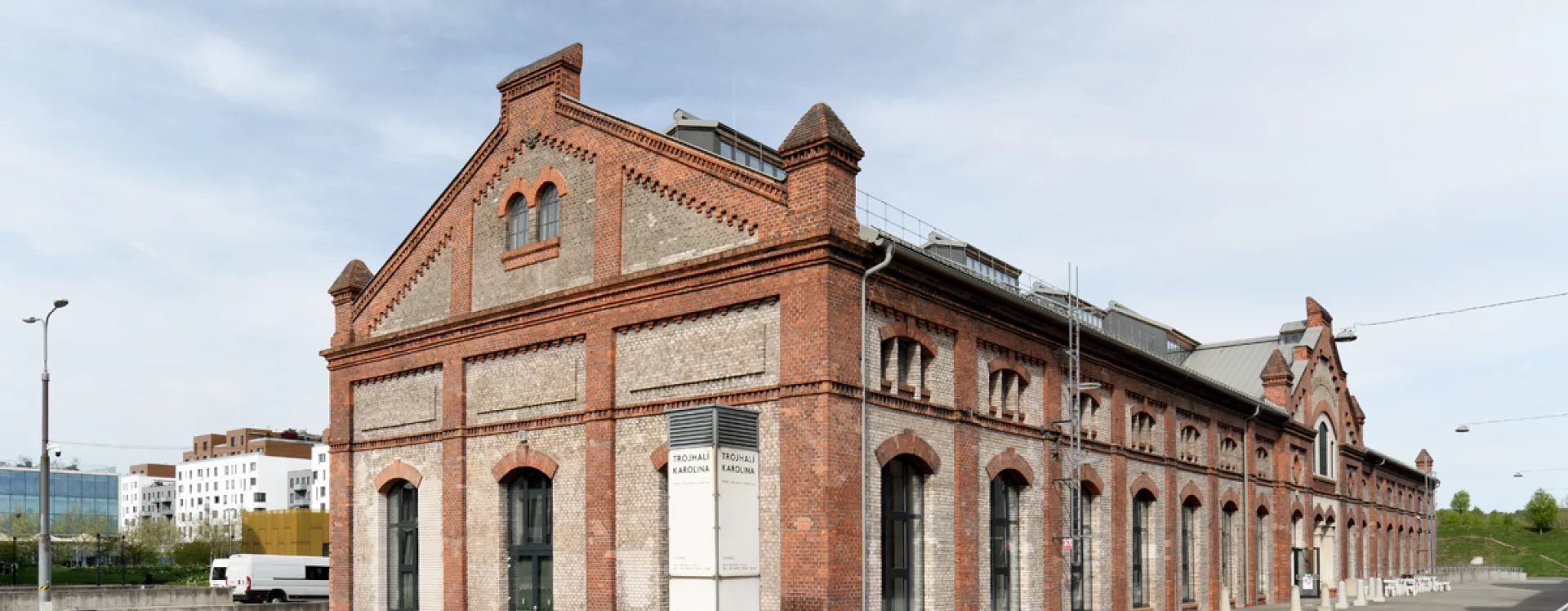
The Trojhalí complex represents one of the most significant public conversions of historic industrial buildings in the centre of Ostrava. The present structure consists of two historic brick halls with metal structural elements, linked by a newly constructed underground section that forms the base and service facilities of the complex. By connecting the single-nave hall of the former power station with the adjacent double-nave hall of the energy centre, the present-day “Triple Hall” complex was created. These industrial structures originated within a large industrial zone that developed in the nineteenth century. On one side stood the Karolina coal mine and coking plant together with other facilities associated with coal processing, extending towards today’s 28. října Avenue. On the other side was the complex of the Žofín Ironworks, which spread from the present Trojhalí site towards the Ostravice River and the area south of Smetana Square.
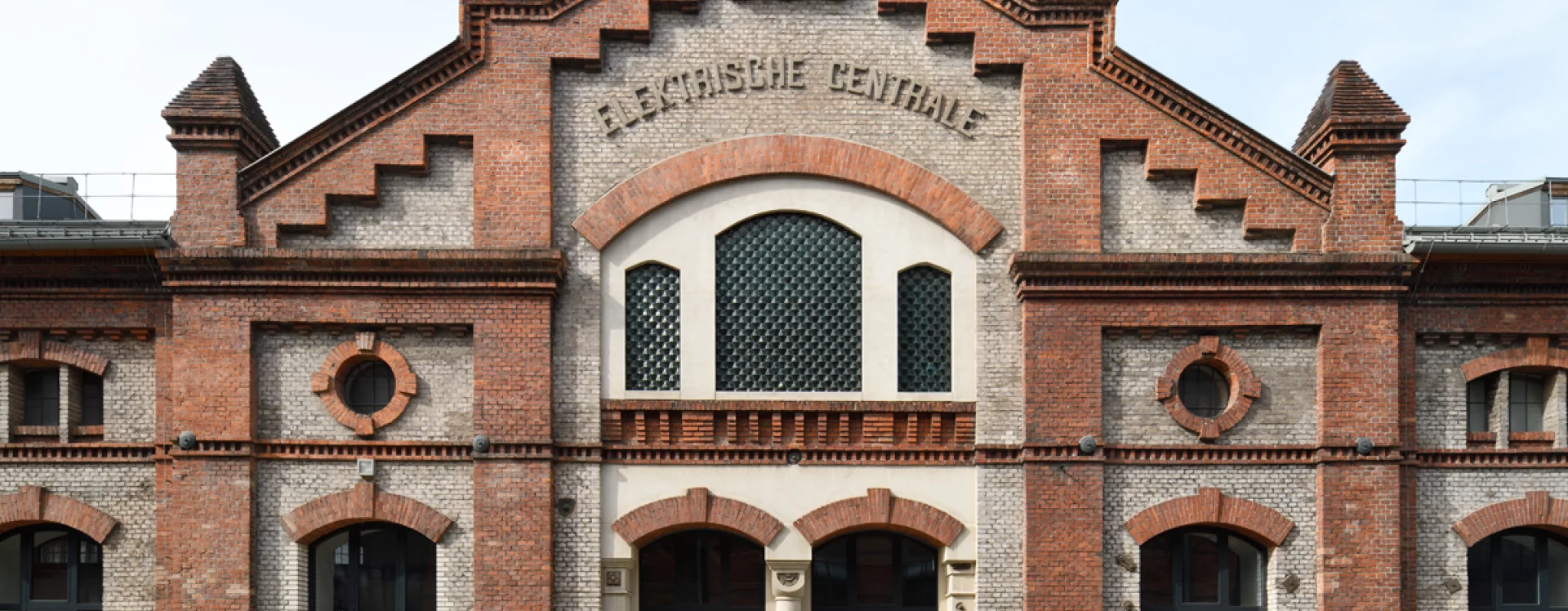
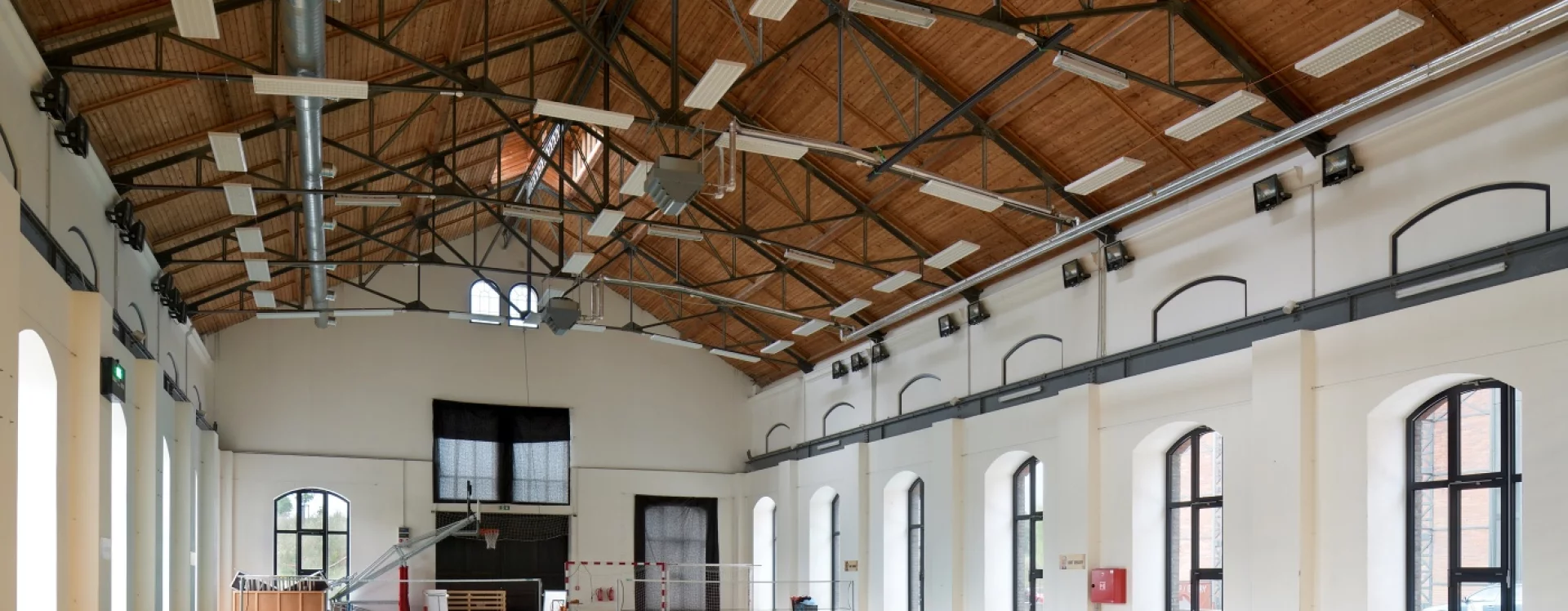
The power station of the Karolina coking plant was constructed in 1905. Rectangular in plan and built of exposed brickwork, it originally housed equipment designed to utilise coke-oven gas. The power station was equipped with six Otto-system gas engines with alternators, each producing 0.44 MW at a voltage of 3,000 V. Today the building forms the northern part of the complex and its main northern façade, facing the pedestrian axis leading towards 28. října Avenue. Architecturally it is a symmetrical composition of red and white exposed brick. The façades are articulated by lesene frames dividing the walls into bays with tall ground-floor windows and smaller openings beneath the cornice. Alternating brick colours emphasise the structure: the wall surfaces are executed in white brickwork, while the lesenes, plinth, and cornice are formed in red brick. The central feature is a risalit with a triangular gable pierced by a thermal window. The building is covered by a pitched roof with skylights, and the interior culminates in an open view of the steel roof structure and roof lights.
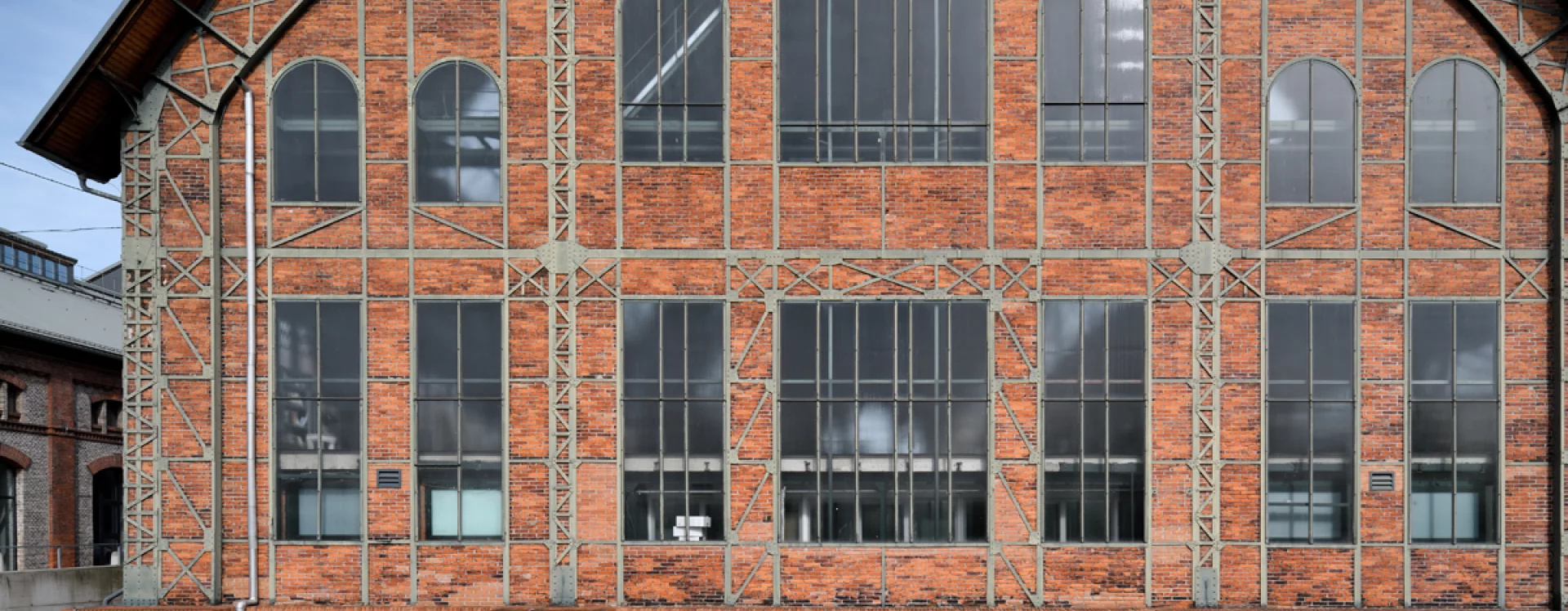
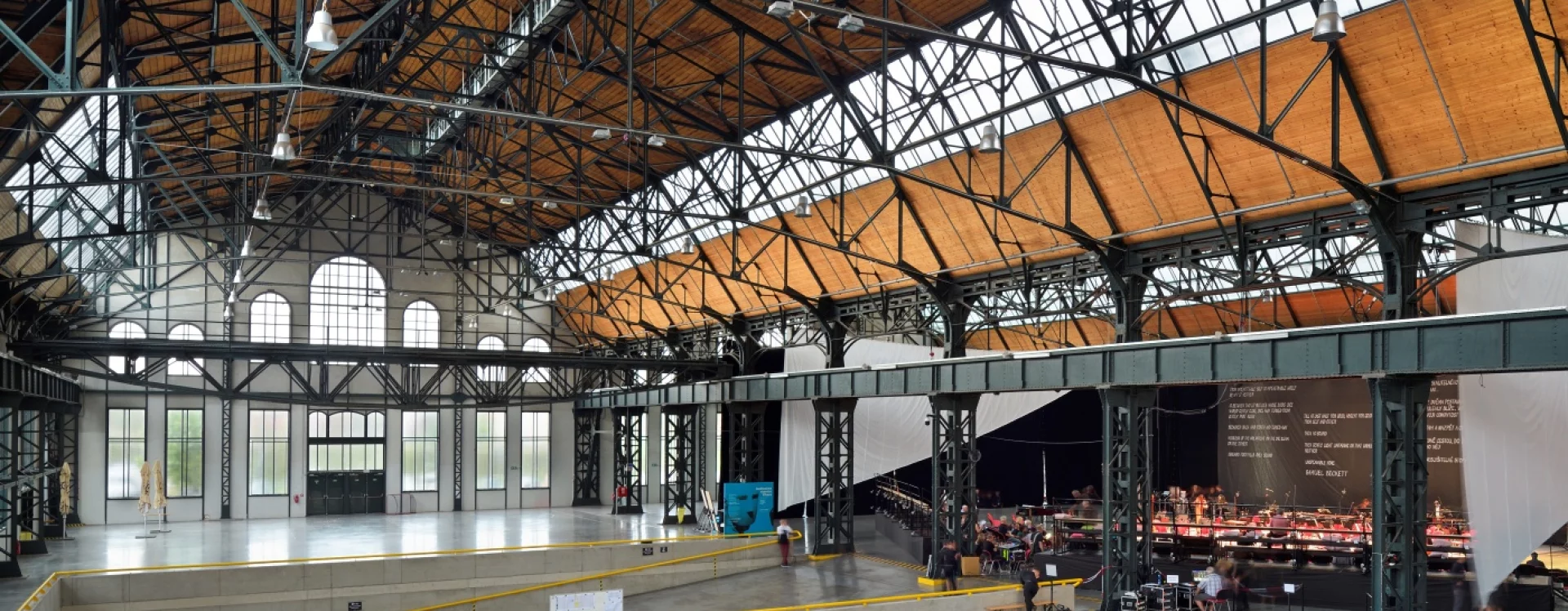
The southern part of the Trojhalí complex is formed by the most prominent structure, historically known as the Double Hall – the building of the Energy Centre III of the Žofín Ironworks. This facility developed in two phases. The first, a single-nave hall, was designed and built in 1907. During the second phase, carried out between 1917 and 1920, a second parallel hall was added, creating the characteristic double-hall arrangement. The building concentrated equipment used for supplying blast air to the blast furnaces of the Žofín Ironworks and for generating electrical power. Gas engines installed here powered blowers and electrical generators with a combined output of approximately 4 MW.
Following the demolition of the Žofín Ironworks in the 1970s and the closure of the Karolina coking plant at the end of the following decade, operations ceased and the halls were left unused after the clearance of the industrial site. During the second half of the 1980s proposals emerged to preserve the two buildings and incorporate them into the planned extension of the city centre. The idea gained concrete form after 2010, when development of the Karolina district was being planned.
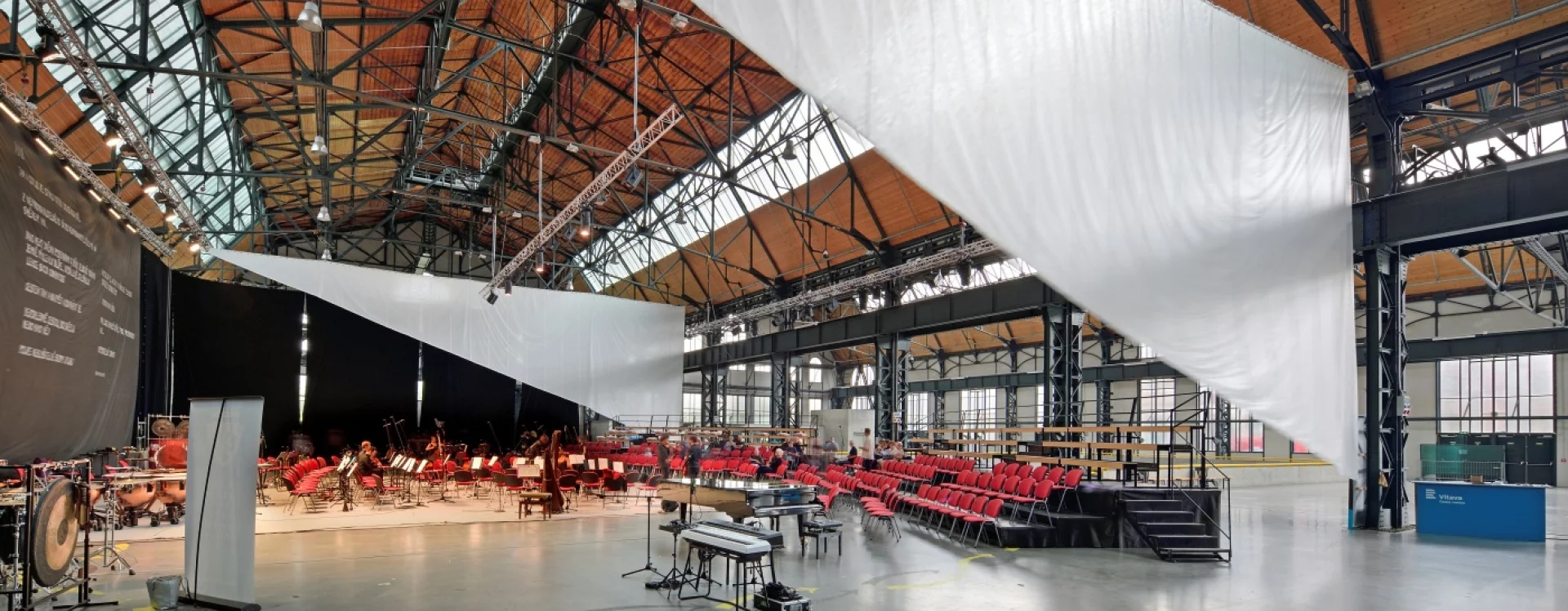
The conversion of the two structures and the creation of the present Trojhalí complex took place between 2012 and 2014. The older power station building was adapted to house sports facilities with two courts. The Double Hall was transformed by architect Josef Pleskot into what he described as a “covered square”. The service facilities of both buildings were inserted into the basement level. The basement spaces of the halls used to serve as technical infrastructure for the industrial operation. After reconstruction they now contain sanitary facilities, provide functional connections between the buildings, and accommodate the main entrances.
The Double Hall itself was divided into two parts: the southern hall with a level concrete floor and the northern hall, where a ramp in the central section connects the ground floor with the basement. Both the basement conversion and the connecting structure between the halls were designed by Josef Pleskot and AP Atelier. By linking the historic buildings through this new intervention, a new architectural entity was created while preserving the individual character of the original industrial structures. At the same time, the project established a functional unity that enables their contemporary use. In terms of its scale and architectural approach, the conversion represents one of the defining transformations of historic industrial architecture in the centre of Ostrava.
Literature
Miloš Matěj. Průmyslové dědictví města Ostravy. Ostrava, NPÚ, ÚOP v Ostravě, 2019. p. 282-291. ISBN 978-80-8824-16-7.
Průvodce architekturou Ostravy. 2009. p. 55. ISBN 978-80-85034-54-7.
Miloš Matěj, Irena Korbelářová, Ludvík Tejzr. Kulturní dědictví Vítkovických železáren. Ostrava, 2019. p. 169-171.
Martin Juřica. https://encyklopedie.ostrava.cz/home-mmo/?acc=profil-domu&load=95. stav k 30. 10. 2025.
Martin Juřica. https://encyklopedie.ostrava.cz/home-mmo/?acc=profil-domu&load=95. stav k 30. 10. 2025.