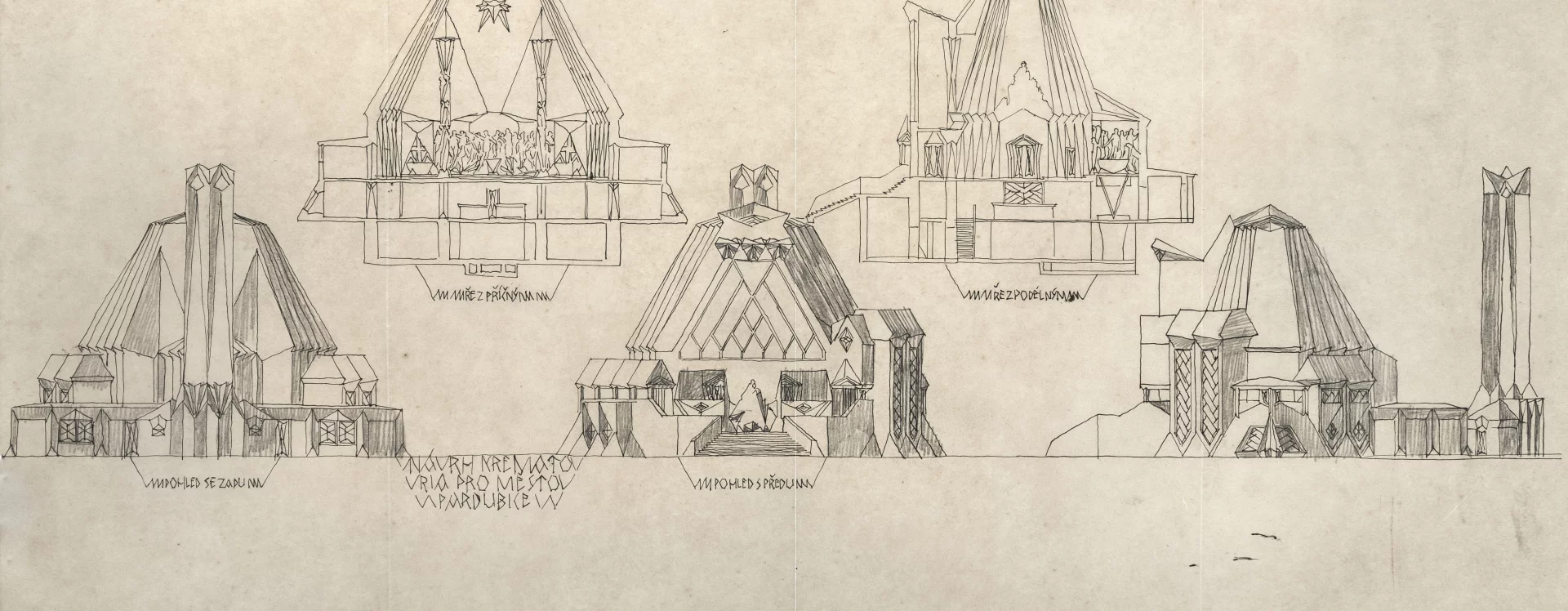
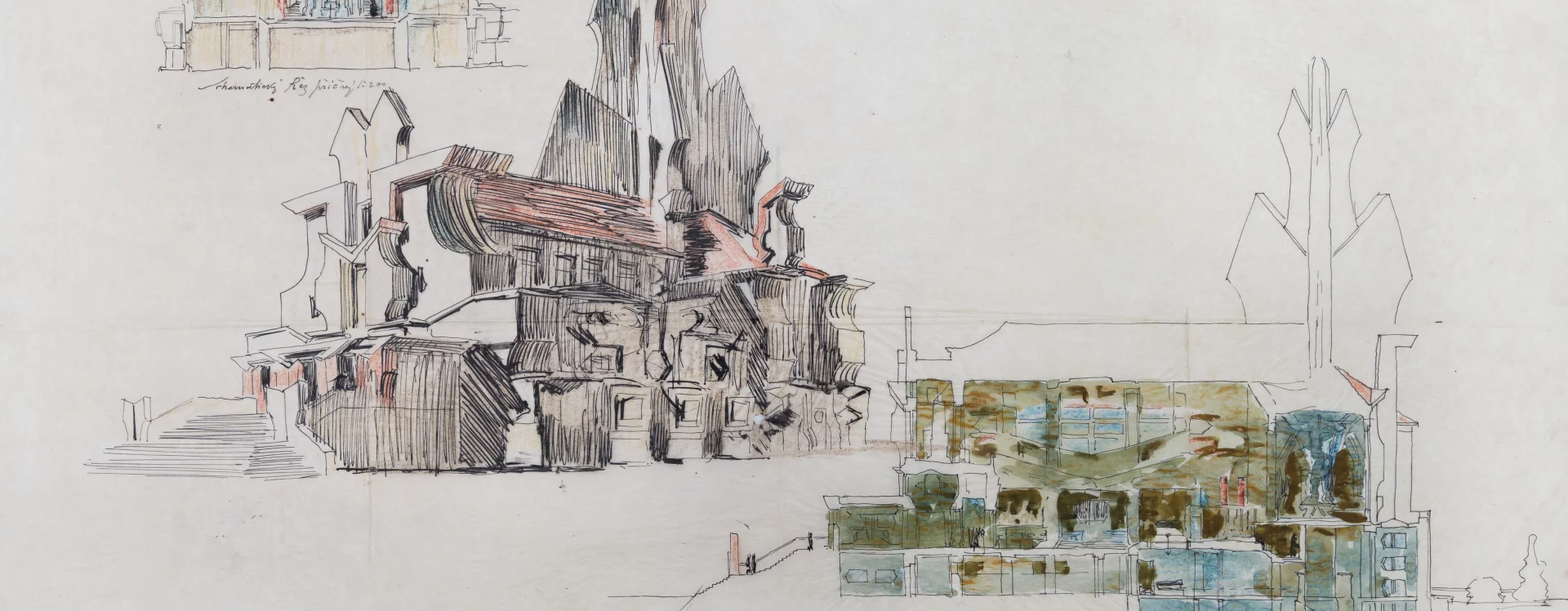
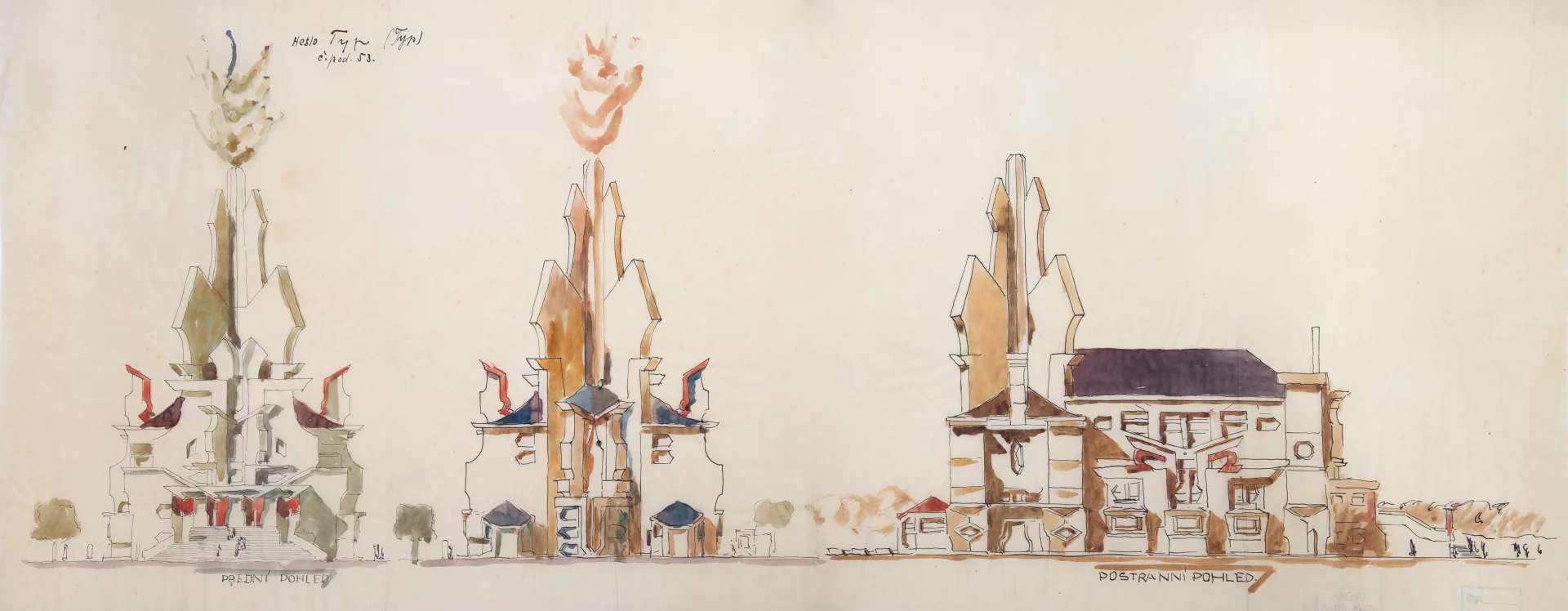
The issue of cremating the dead became a pressing concern in modern society at the turn of the 19th and 20th centuries, a topic discussed in the pages of periodicals of the time and in public debate. The Prague association “KREMATORIUM” emphasized the need to address these issues practically. Despite many twists and turns in the capital, it ultimately found supporters for the construction of a crematorium in Pardubice, where in 1903 the local council succeeded in enacting optional cremation, even though Austrian laws did not permit it.
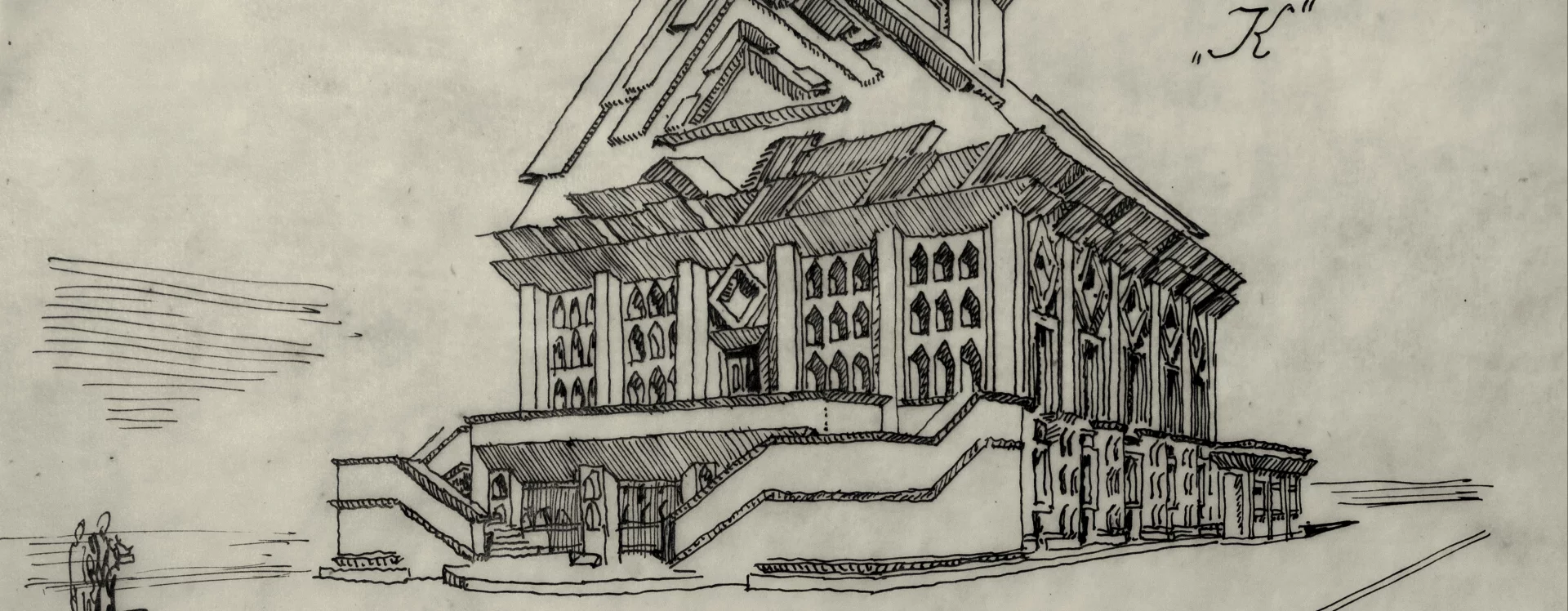
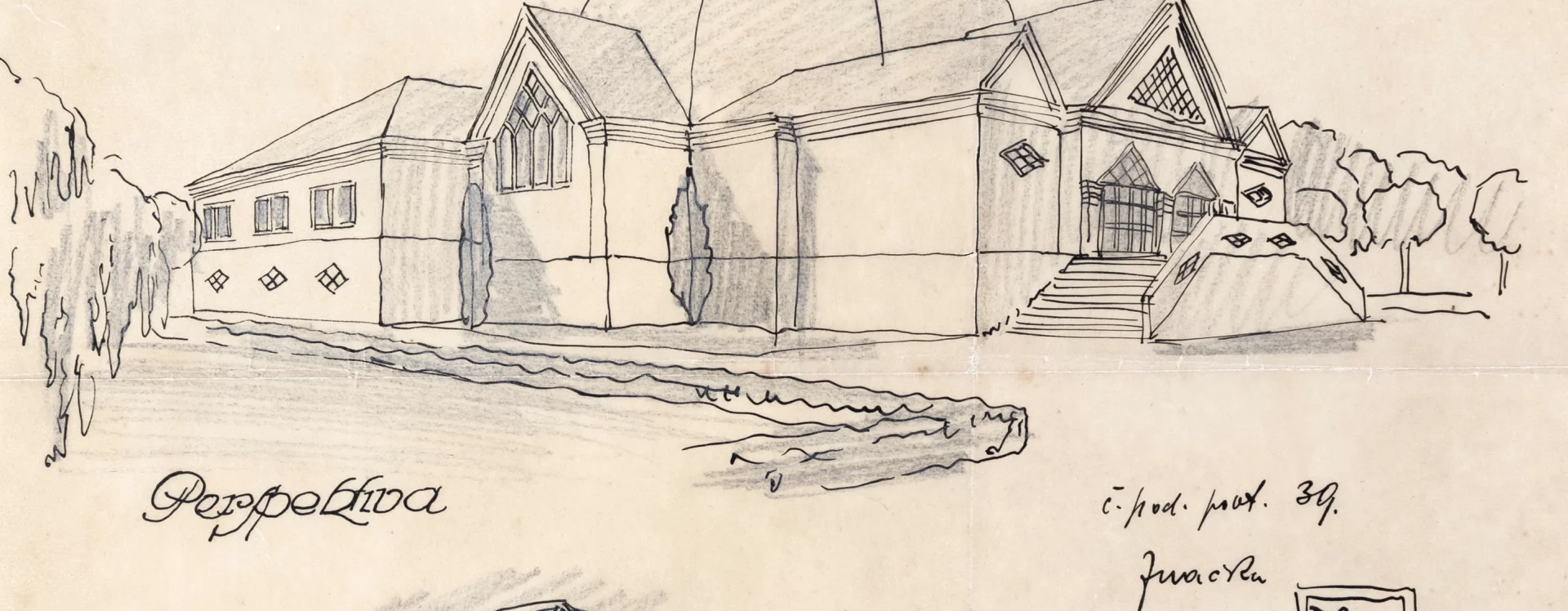
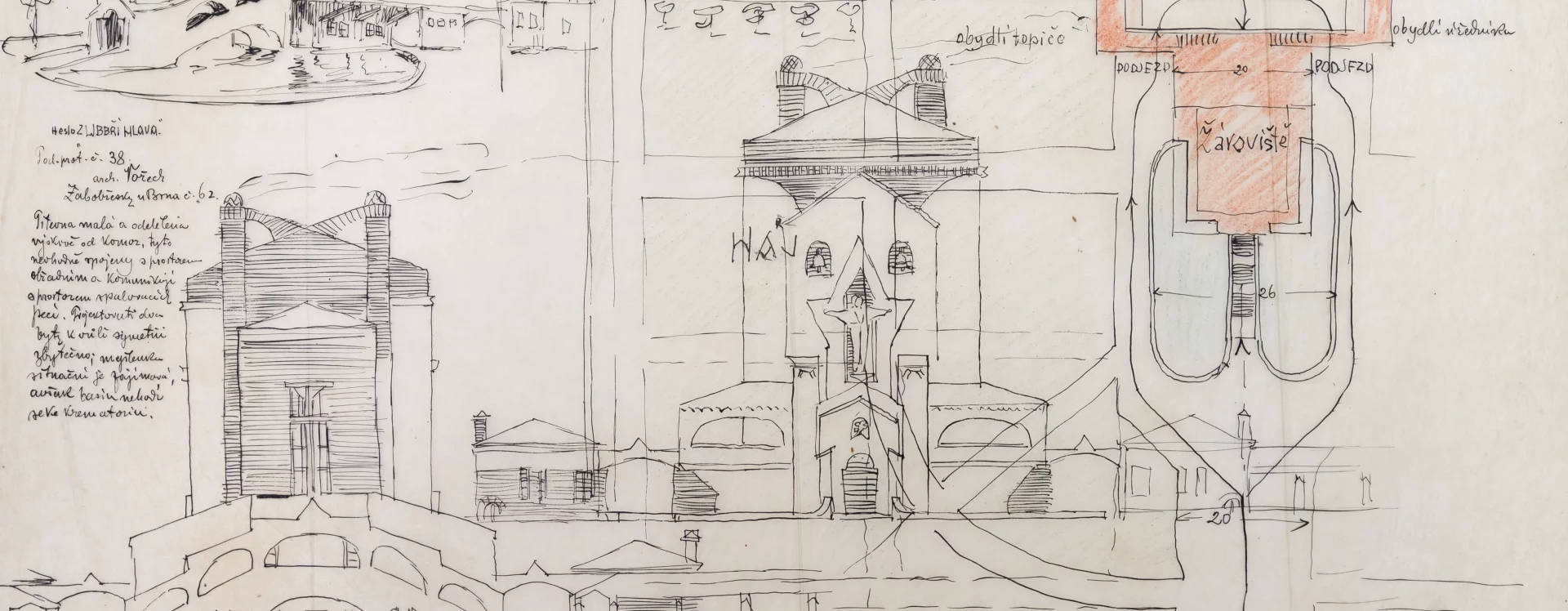
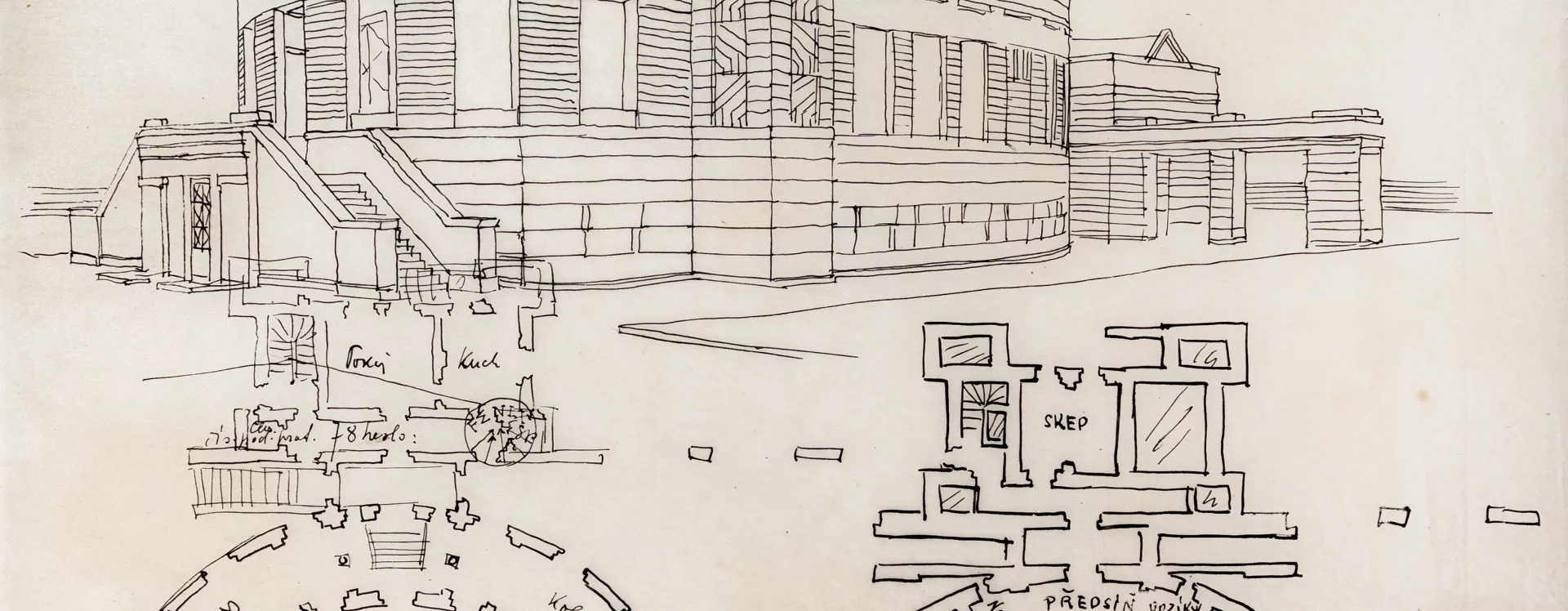
It was not until the establishment of Czechoslovakia, at the end of 1918, that the city administration announced a major public architectural competition, in which eighty-one architects submitted ninety-five designs. The jury included architects Josef Gočár, Ladislav Machoň, and Theodor Petřík, as well as local government representatives Karel Kotten, František Vambera, and others. Despite the large number of proposals, the jury did not select a winning plan in 1919; instead, it awarded second prize to Pavel Janák for a project named K, while third prize went to Oldřich Polák from Louny, Václav Škára from Brno, and Bedřich Feuerstein’s proto-purist project. Worth mentioning are the Cubist design by Otakar Novotný—which the jury did not award but was of very high quality—and the Cubo-Expressionist manifesto by Jiří Kroha. In the same year, the so-called “Lex Kvapil” was approved, which legalized the cremation of the deceased.
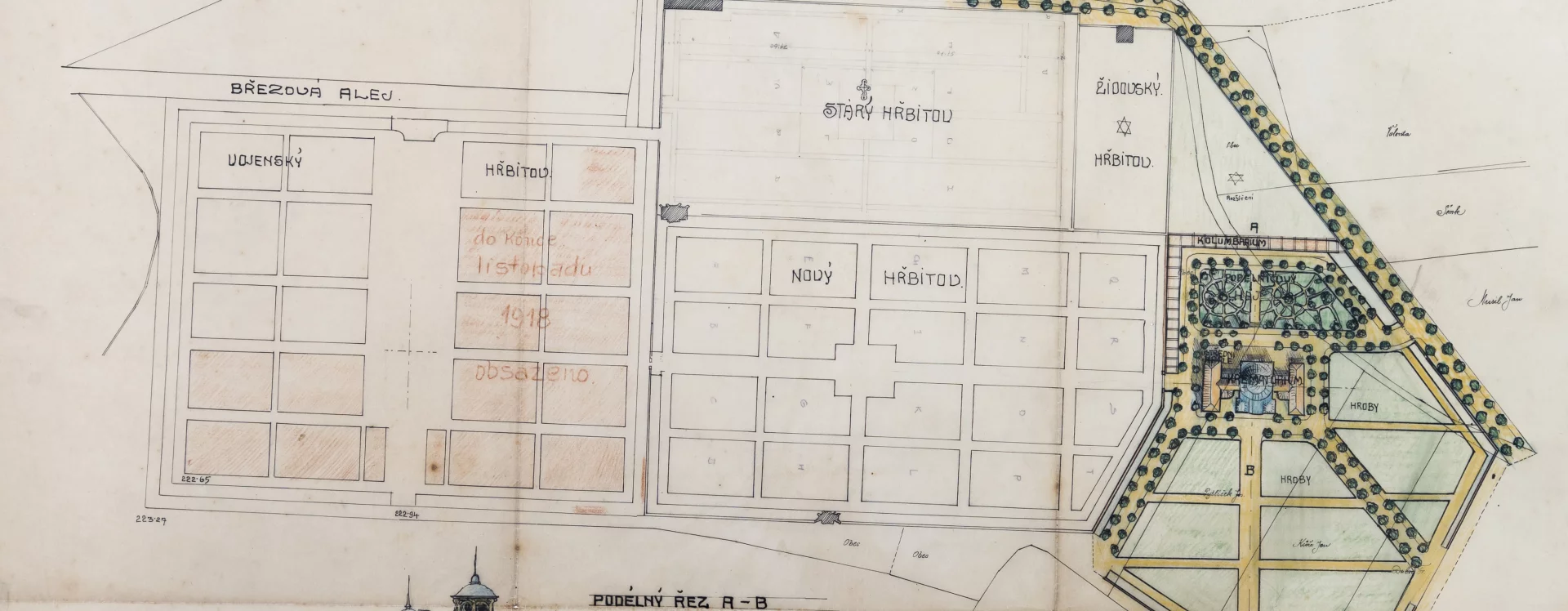
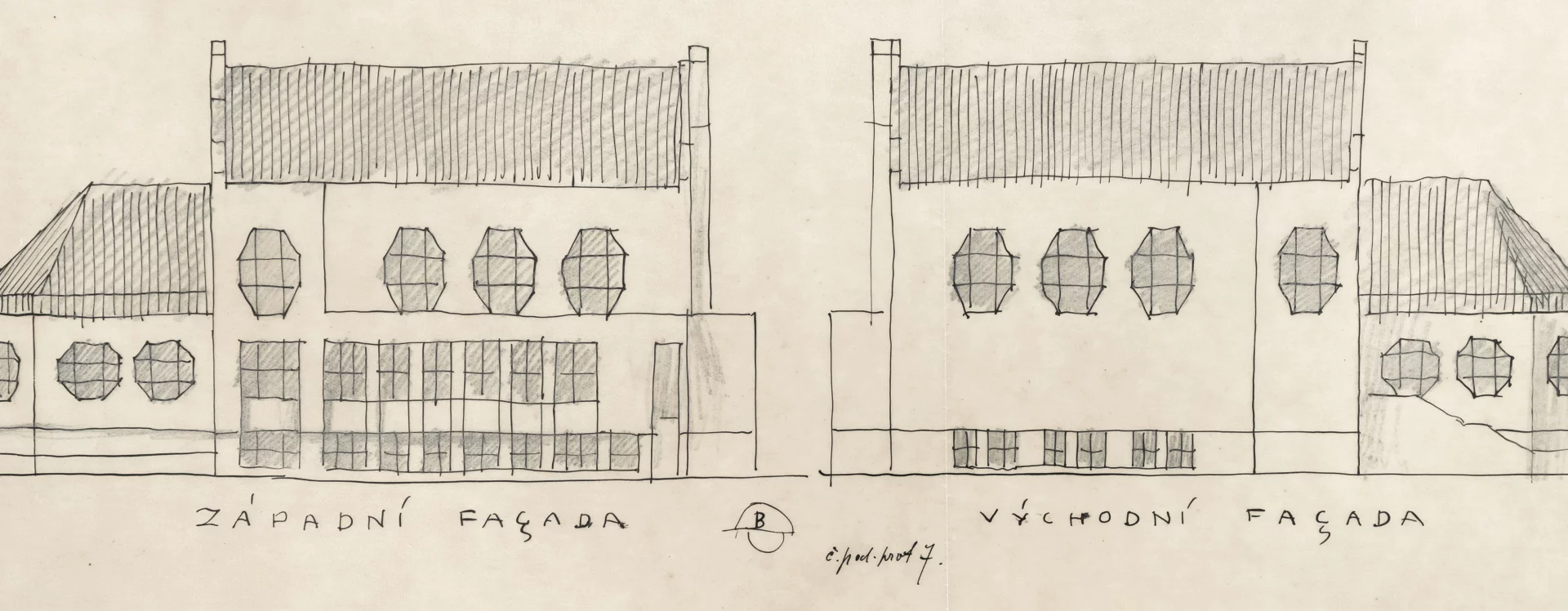
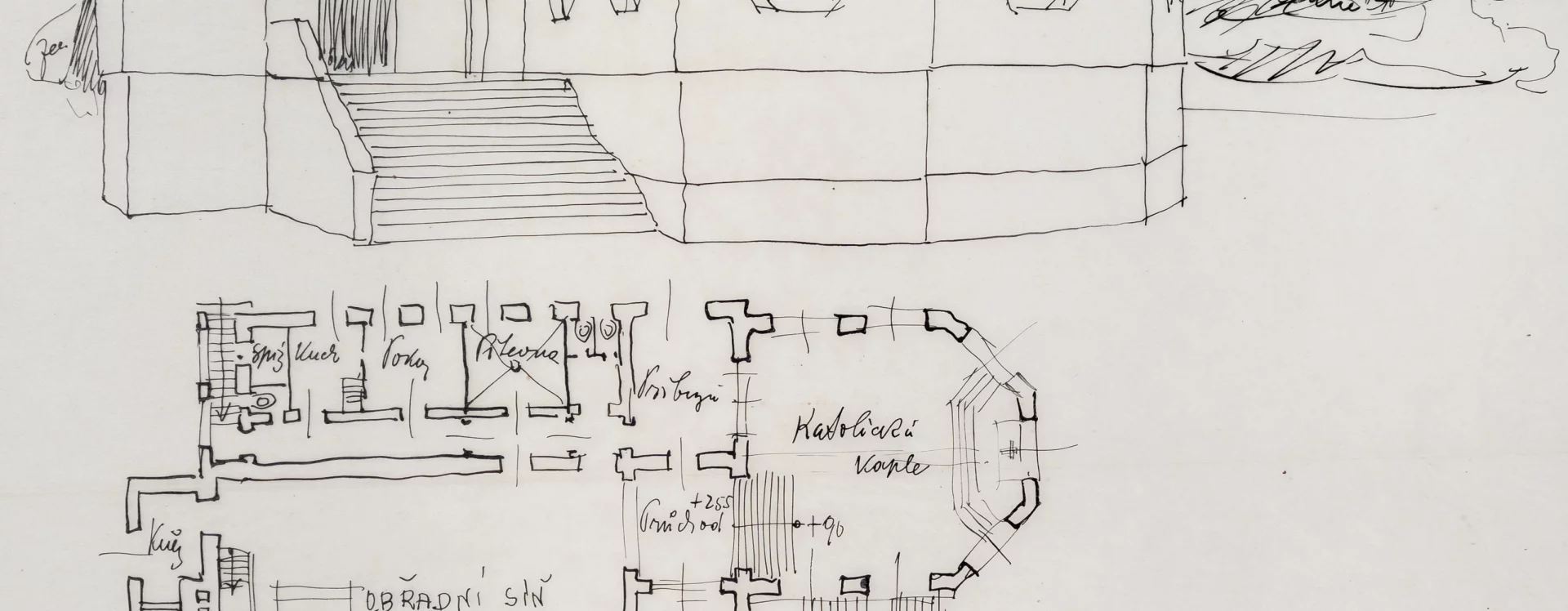
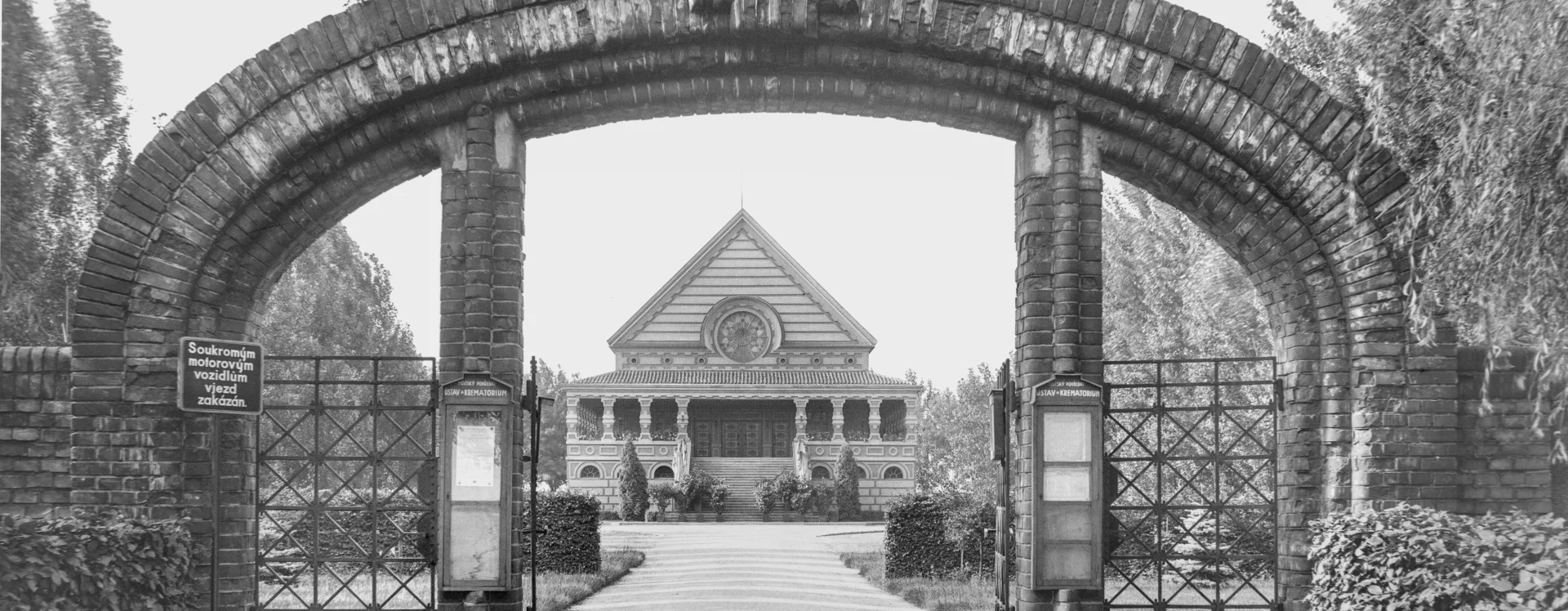
In 1921, the city commissioned Janák to develop the final plan, which was based on his competition entry. The developer selected a site for the crematorium on the western side of the municipal cemetery. Janák envisioned a ceremonial entrance gate, landscaping, and a scattering meadow, which the association did not construct until after 1924. The construction firm Krupař and Kohout built the crematorium between 1922 and 1923. The grand opening took place on September 28, 1923. Although the original cost estimate was 940,000 CZK, the construction ultimately cost 1.9 million CZK, including the installation of the furnace and the building’s equipment. Pavel Janák set his fee at 40,200 CZK.
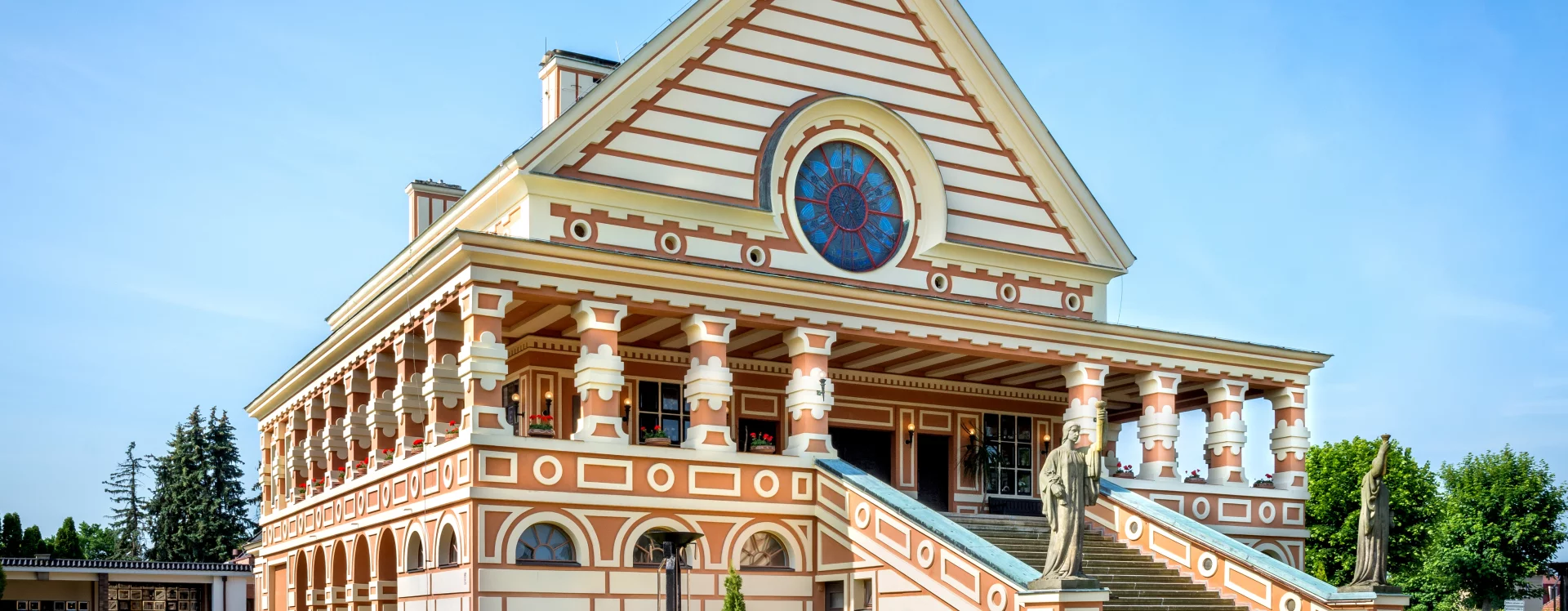
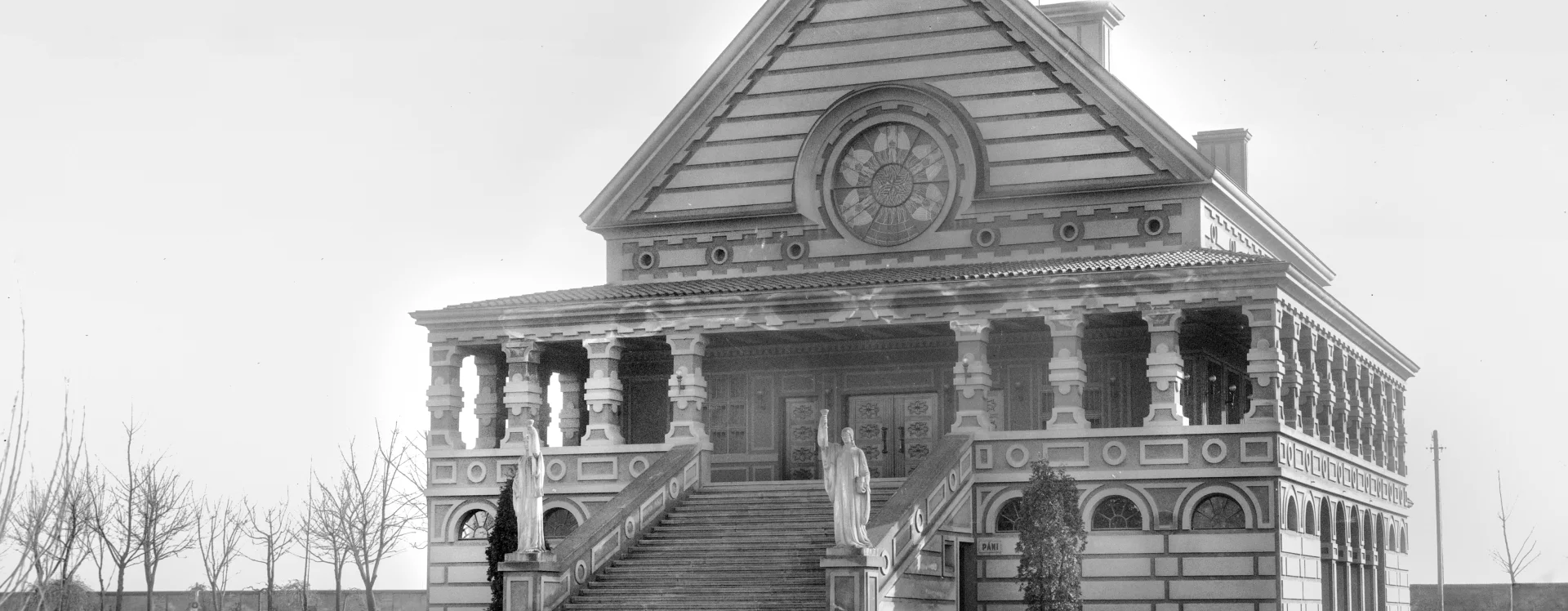
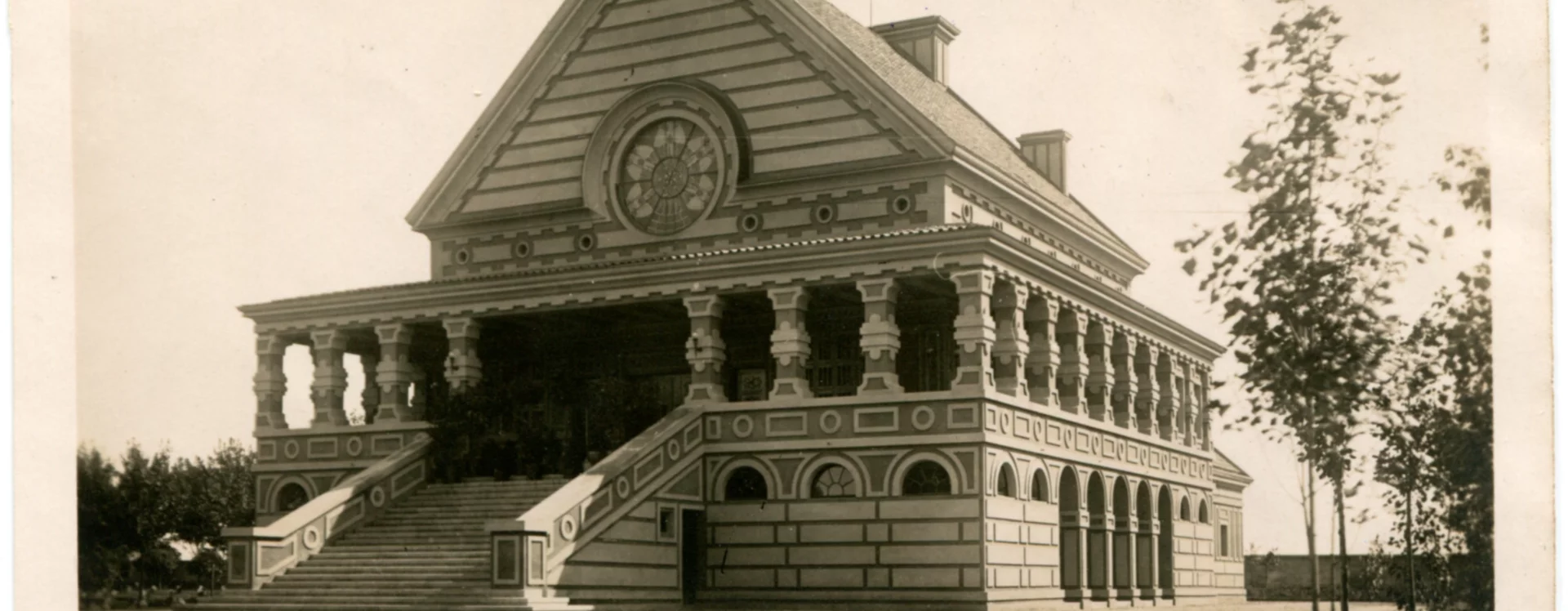
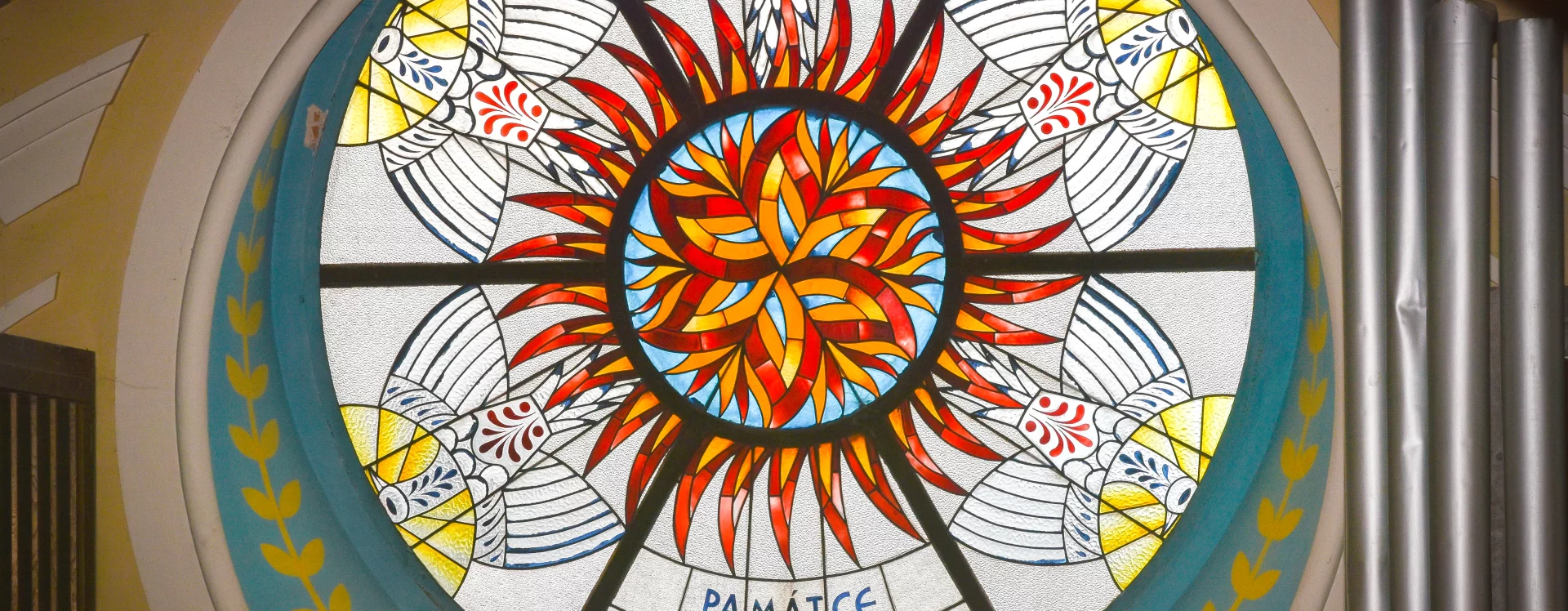
Pavel Janák’s first design resembled the final realization primarily in the layout and material design of the crematorium. Janák’s main source of inspiration was the traditional layout of an ancient temple with a large entrance staircase, a colonnaded portico, and a massive tympanum. In his designs from 1919 and 1921, the architect envisioned a raised ground floor complemented by a long row of semi-recessed niches. The original facade decoration still suggested inspiration from pre-war Cubism, while the realized design from 1922 clearly declares the architect’s inclination toward the Czech National Style, which he codified together with architect Josef Gočár. Another source of inspiration is folk architecture, elements of which appear in the interior as well as on the arched features of the facade. The red-and-white color scheme of the cladding also underscores the national and cheerful motif of this otherwise somber building, which was positively received by the local public. The architect decorated the balustrade of the main “cathedral-like” staircase with motifs of circles, squares, and rectangles, and similarly worked on the design of the basement’s lunette windows. He supplemented the main colonnade of the arcaded gallery with a hidden columbarium. The final source of inspiration was the architecture of German crematoriums, particularly Peter Behrens’s design in Haagen from 1906 to 1907. The central motif of this project is, in fact, a Renaissance-style facade with a rosette in the main front. Following the example of Behrens’s building, Janák incorporated a rose window with stained glass (a large flaming rosette from which doves take flight) into the gable and further enhanced the decorative church motif with two statues of light-bearers by Karel Lenhart, which the builder installed near the staircase as late as January 1926. He supplemented the building, which features a gabled roof with artfully concealed chimneys in the rear wing, with two small buildings for support facilities and an attendant’s apartment.
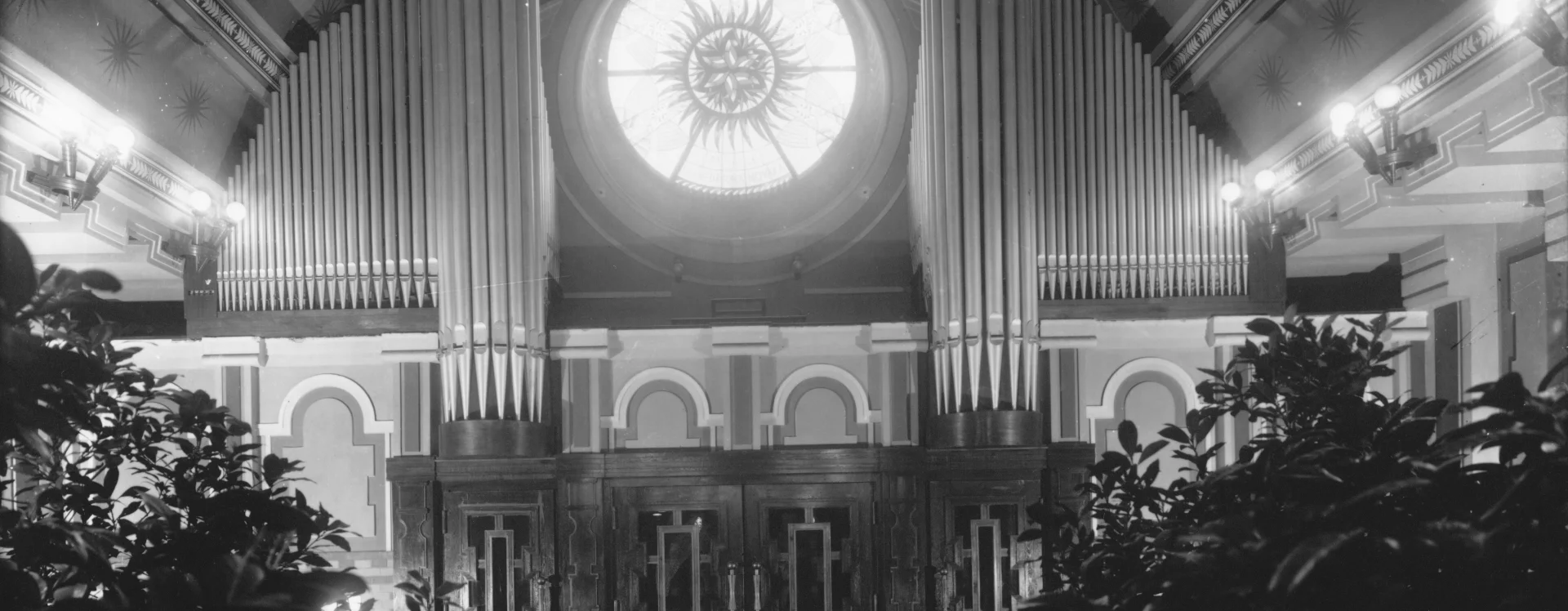
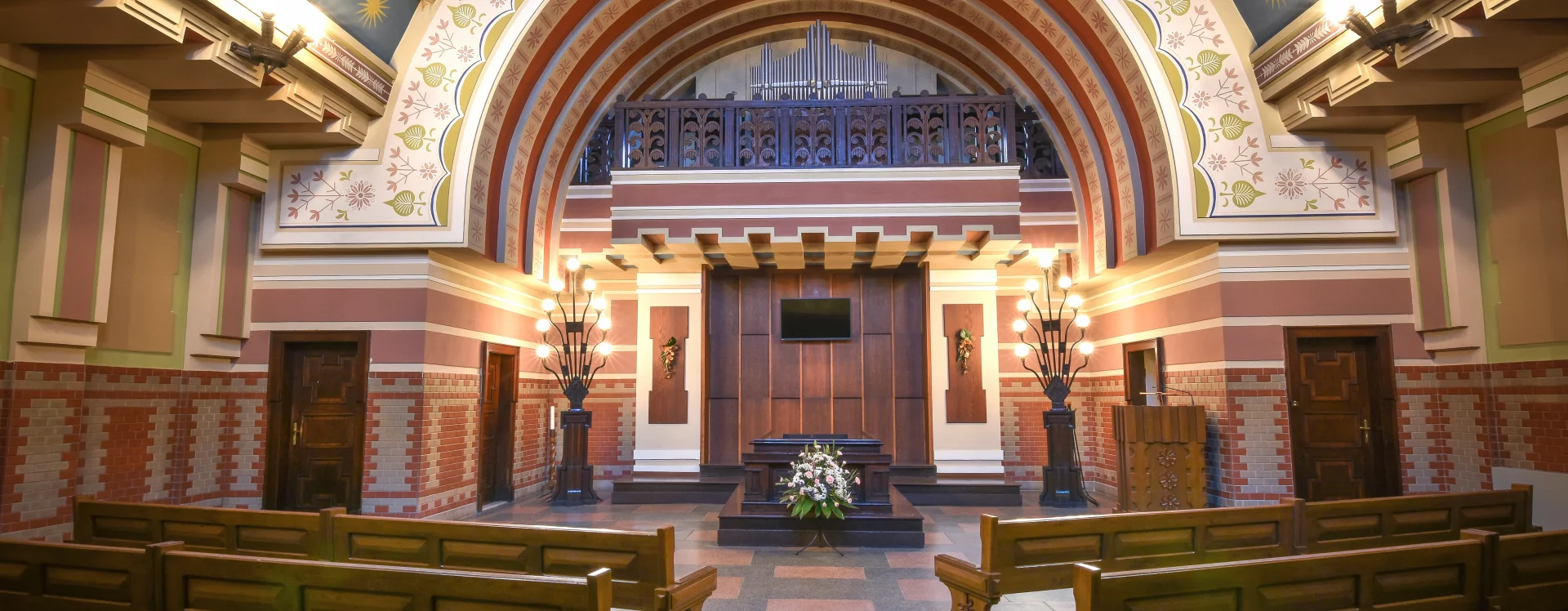
In the semi-sunken basement, Janák placed two furnaces, a mortuary, an urn storage room, a warehouse, and service areas. The architect divided the raised ground floor of the front section into the main ceremonial hall, from which access led to the priests’ facilities, a room for the bereaved to say their goodbyes, offices, and a staircase to the balcony on the first floor of the ceremonial hall. He planned to place an organ on the balcony.
The interior painting of the ceremonial hall was originally to be designed by Pavel Janák, but he ultimately decided to recommend another artist: "However, an interior as significant as the crematorium’s ceremonial hall had to be approached with the utmost artistic expertise, so I asked Prof. F. Kysela, who is our foremost artist in this field, to design the decorative painting." Kysela ultimately created a decorative painting for a fee of 3,000 CZK, which combined national motifs (linden branches, flowers) with mystical symbols (the sun, stars). On the main arch above the catafalque, he painted the inscription “I am alive, and you shall live.” He was also responsible for the design of the stained-glass window in the rose window.
Janák also recommended collaborating with textile artist Marie Teinitzerová, who created a textile curtain for the niche measuring 1.58 m in width and 2.53 m in height. It was a two-piece, hand-woven woolen fabric in dark purple with a gray hem at the bottom. Teinitzerová used motifs of silver stars on it. Influenced by folk aesthetics, the architect then designed other interior furnishings, such as benches, light fixtures, and a catafalque.
Pavel Janák’s extraordinary architectural manifesto of the National Style was declared a cultural monument in 1958 and received the status of a national cultural monument in 2010. It was also made famous by Juraj Herz’s cult film The Cremator from 1968, which was filmed on the premises. In the second half of the 20th century, the owner carried out a series of structural modifications. In 1995, he moved the technological equipment to a new annex in the rear wing. Between 2004 and 2010, the new operator, Služby města Pardubic, restored the facade and a number of artistic details in the interior during a general renovation.
MB
Literature
BARTOŠ, Štěpán, LUKEŠ, Zdeněk, PANOCH, Pavel. Kaleidoskop tvarů: století moderní architektury v Pardubickém kraji. Pardubice, Helios, 2006. ISBN 80-85211-19-.
BEKERA, Matěj, IVANEGA, Jan, SCHIEBELOVÁ, Veronika. Cesta k modernímu městu: Pardubice 1882–1945. Východočeské muzeum v Pardubicích, 2024. p. 172-177. ISBN 978-80-87151-65-5.
Marie Benešová. Pavel Janák. Praha, 1959.
HNÍDKOVÁ, Vendula, VYBÍRAL, Jindřich. Národní styl, kultura a politika. V Praze, Vysoká škola uměleckoprůmyslová, 2013. p. 39. ISBN 978-80-86863-62-7.
Vendula Hnídková. Architekt Pavel Janák a idea kremační. In: Jiří Roháček (ed.), Epigraphica & Sepulcralia III. Praha, 2011.
Norbert Kiesling. Pavel Janák. Řevnice: Arbor vitae, 2011.
Česká republika. Moderní Architektura / Čechy 1922–1927. Praha, 2014. p. 305.
LIPUS, Radovan, VÁVRA, David. Šumná města. Brno, Petrov, 2002. p. 291. ISBN 80-7227-125-3.
https://pamatkovykatalog.cz/krematorium-15982803.
Sources
K soutěži na stavbu krematoria v Pardubicích, Stavitel I, 1920, č. 1., s. 5–7..
Magistrát města Pardubice, Stavební archiv, Zelené Předměstí, složka čp. 990.
Národní technické muzeum, Archiv architektury a stavitelství, Pavel Janák 85, 085/dsk.054, Krematorium Pardubice (1921–1923).
Národní technické muzeum, Archiv architektury a stavitelství, Pavel Janák 85, Písemnosti a plány k projektům č. 54, karton č. 83..
Soutěže vyřízené a vypsané, Stavitel I, 1919, č. 11, s. 22..
Státní okresní archiv Pardubice, Stavební agenda města Pardubice, soutěž na krematorium Pardubice..