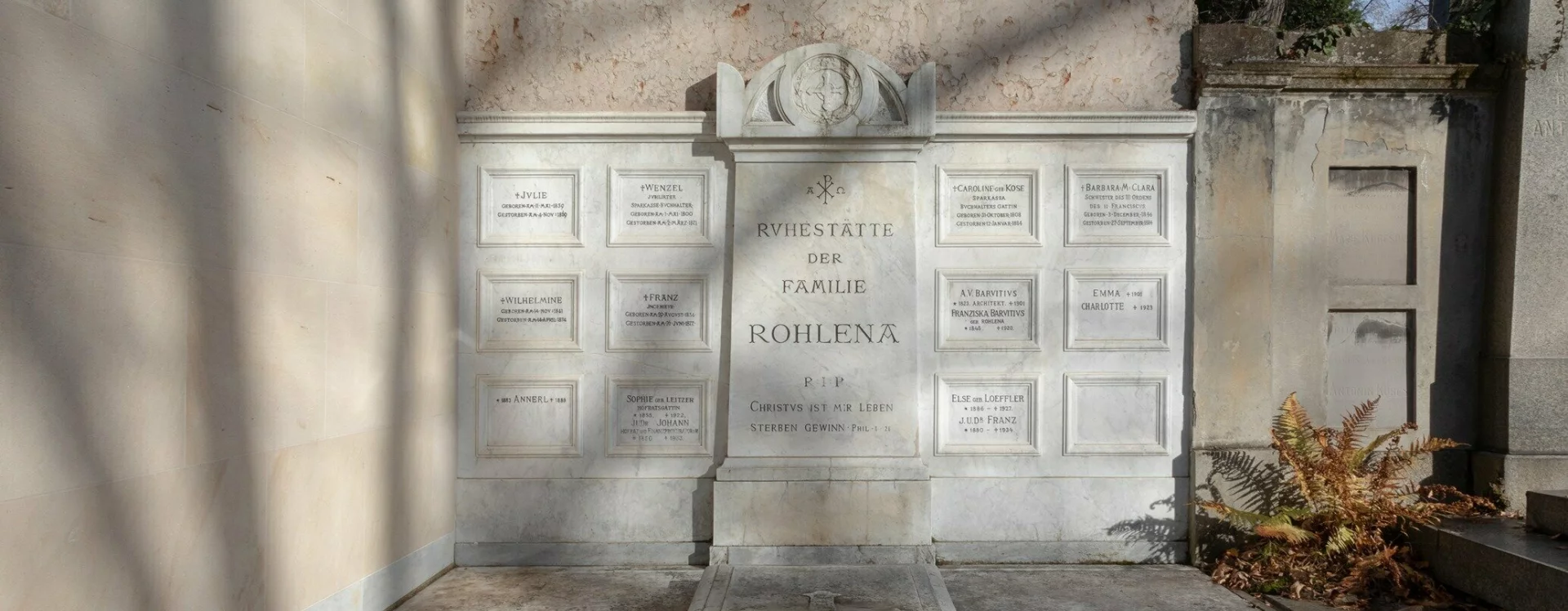
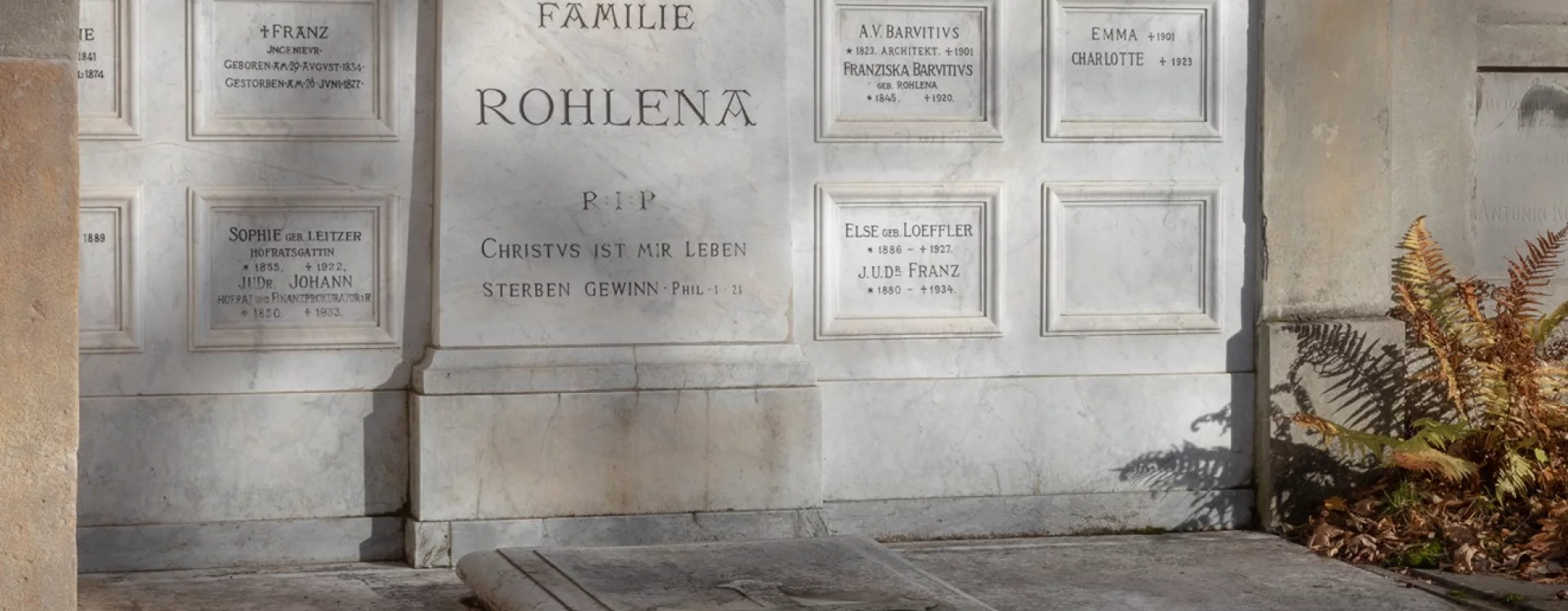
This by Czech standards atypical crypt (in terms of form and choice of materials) was built for the family of Antonín Barvitius's future wife. The architect was evidently given great freedom, perhaps even in terms of budget. The Rohlena family, who owned the U Havíře building (no. 398) in Prague's Old Town, were engaged in finance (Wenzel Rohlena was the chief accountant at the Czech Savings Bank), state administration, and the legal profession. Notably, Franz Rohlena was made a knight of the Russian Orders of St. Stanislaus and St. Anna for his services. Wenzel's daughters distinguished themselves by their religiosity and charity, with Barbora Clara becoming a member of the Third Order of St. Francis, the Tertiaries. The Rohlenas were close friends with the Barvitius and Ullmann families, as evidenced by paintings Viktor Barvitius made in the 1860s depicting Terezie Ullmannová, née Barvitius, with her friend Franziska Rohlena, who married Antonín Barvitius in December 1883. Over the following years, the Rohlena sisters commissioned several liturgical items for Prague churches from the Christian Academy (one as a gift for the pope himself). As evidenced by references in Method magazine, most of these items were based on designs by Antonín Barvitius.
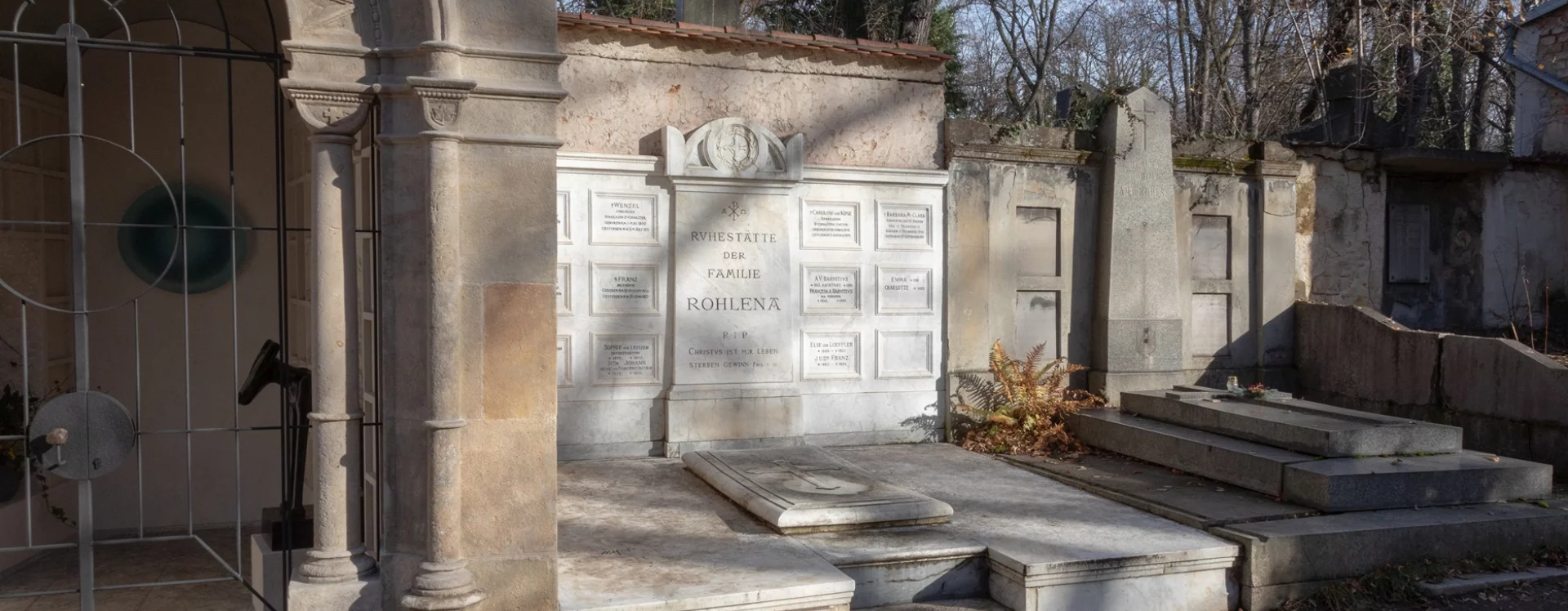
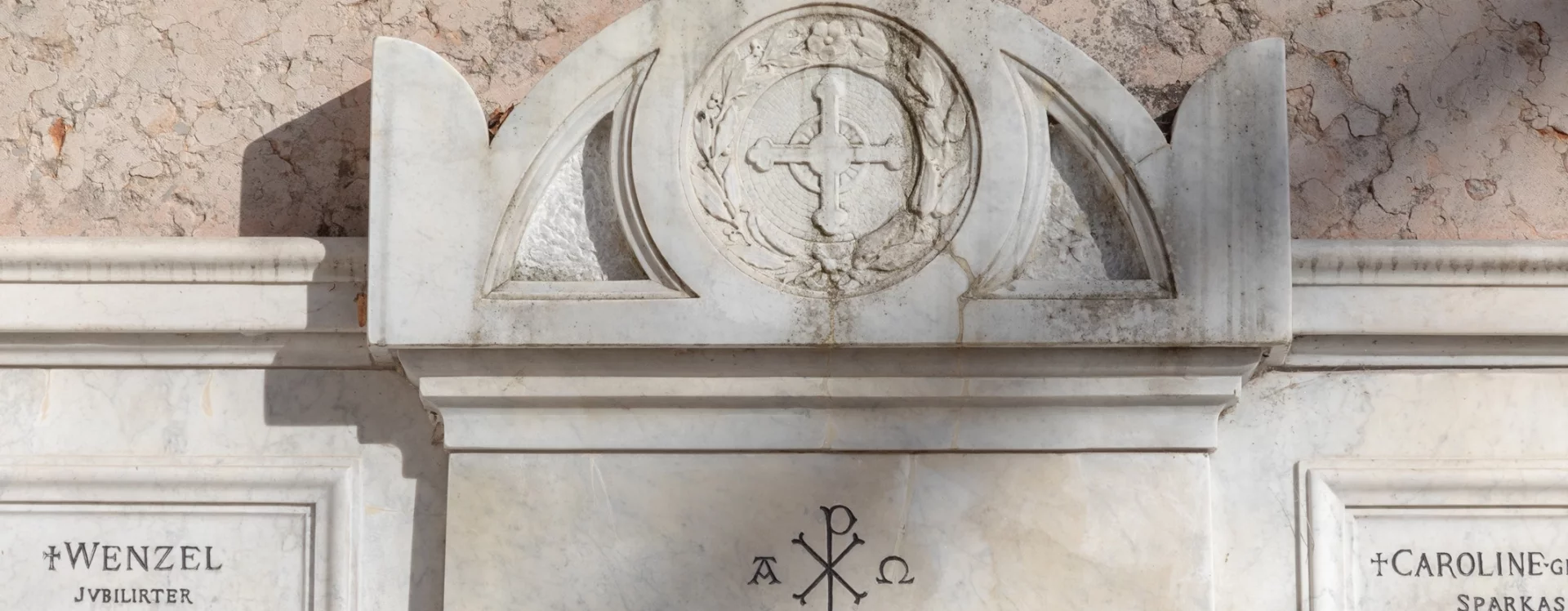
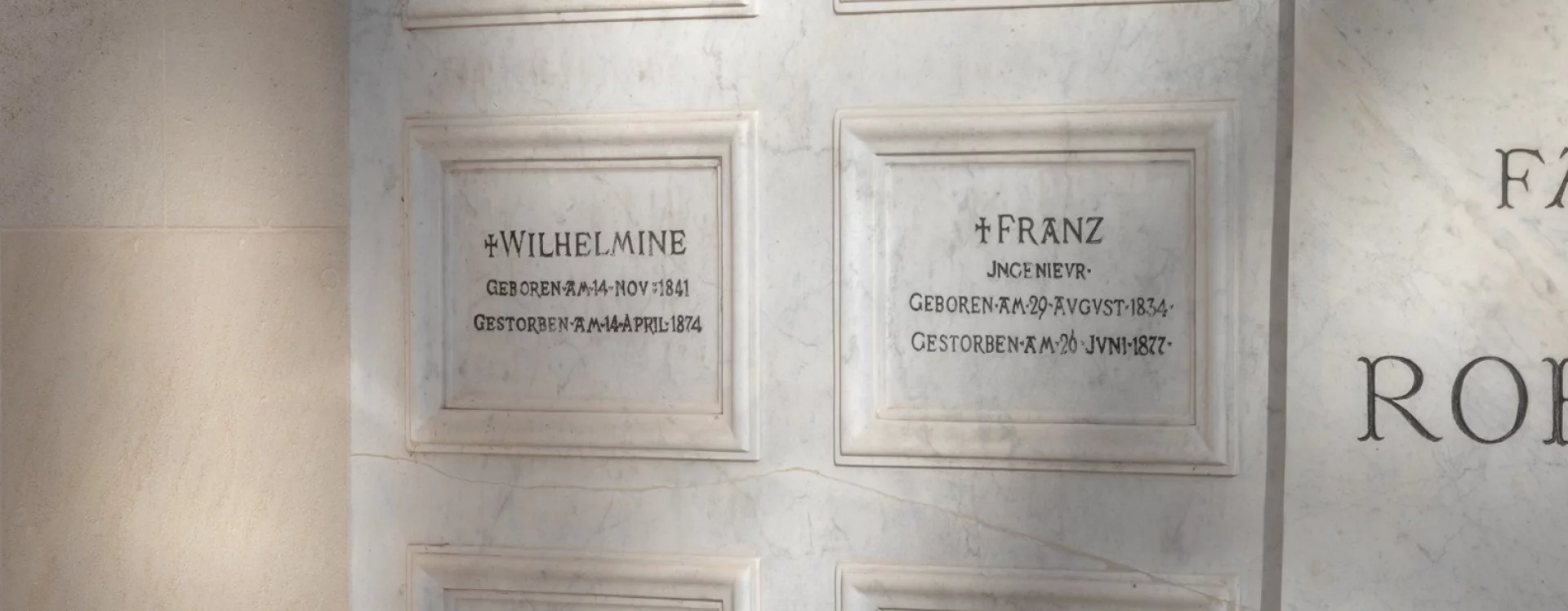
In September 1876, the same magazine responded to the poor quality of contemporary funerary architecture by praising the Rohlena family crypt. The magazine noted that – as with his most important funerary work, the Lanna-Schebek tomb – Barvitius's design of the interior space drew inspiration from the early Christian catacombs, where coffins were placed in niches, thus preventing their damage during later burials: "Holes are made in the wall in the manner of ovens, and it is into these that the coffin is inserted. Each deceased has one such oven as a dwelling." In place of niches, the Rohlena crypt uses three levels of two-inch thick slabs of Carrara marble. The crypt itself was apparently realized by Barvitius's frequent collaborator, the Italian stonemason Giovanni Ciani. On this matter, the magazine writes: "It stands out above the rest, among other things in that it has been executed with extraordinary simplicity using Carrara marble." According to the surviving plans, the clover cross on the dazzlingly white crypt's tympanum above the Christogram was originally supposed to be accompanied by colored decorative elements. The harmoniously composed arrangement features a quote from Paul and Timothy's epistle to the Philippians (1:21): "Christus ist mir Leben, Sterben ist mein Gewinn."–"For to me to live is Christ, and to die is gain."
The crypt was originally envisioned for Vyšehrad, apparently next to the Kose family crypt, as part of Barvitius's master plan for that cemetery. Barvitius even came up with a "non-Catholic" variant. At Olšany it stands somehow "outside of time and space," much like the aforementioned Lanna-Schebek tomb. Besides the Italian influences found in much of Barvitius's work thanks to the many years he spent on the Apennine Peninsula, its design also echoes the Neoclassical work of Karl Friedrich Schinkel.