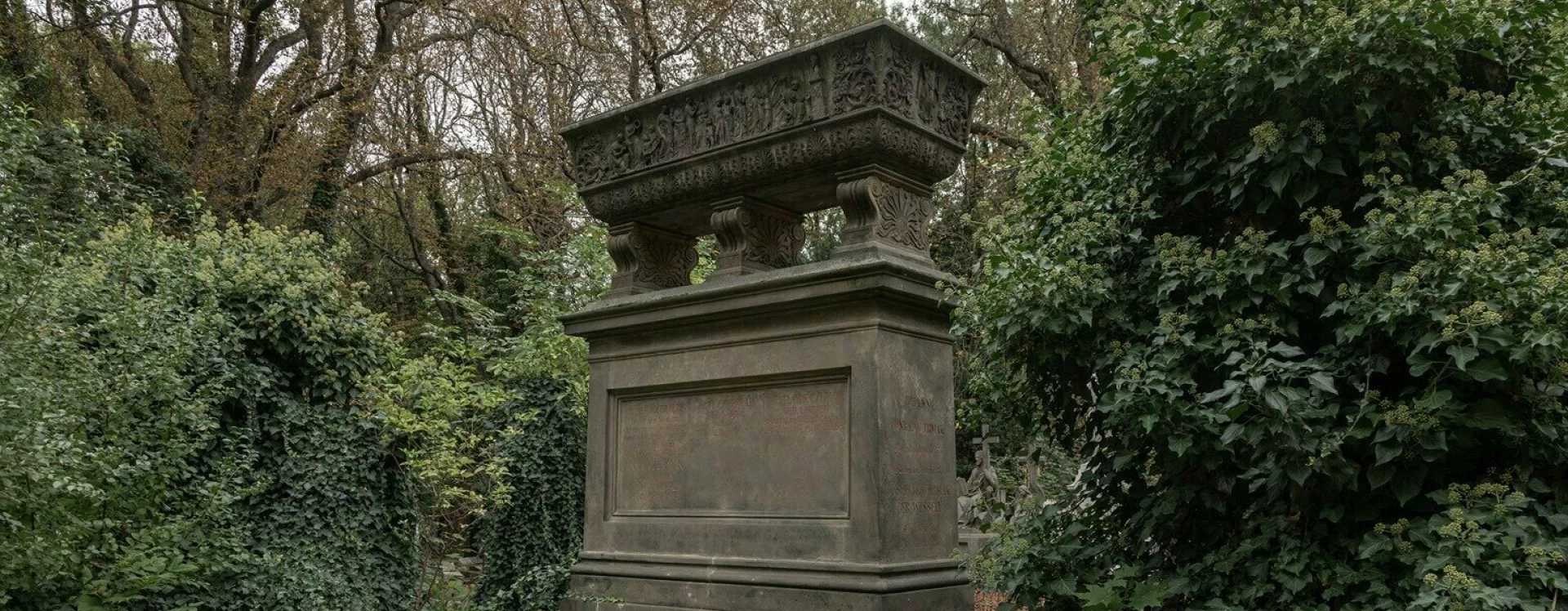
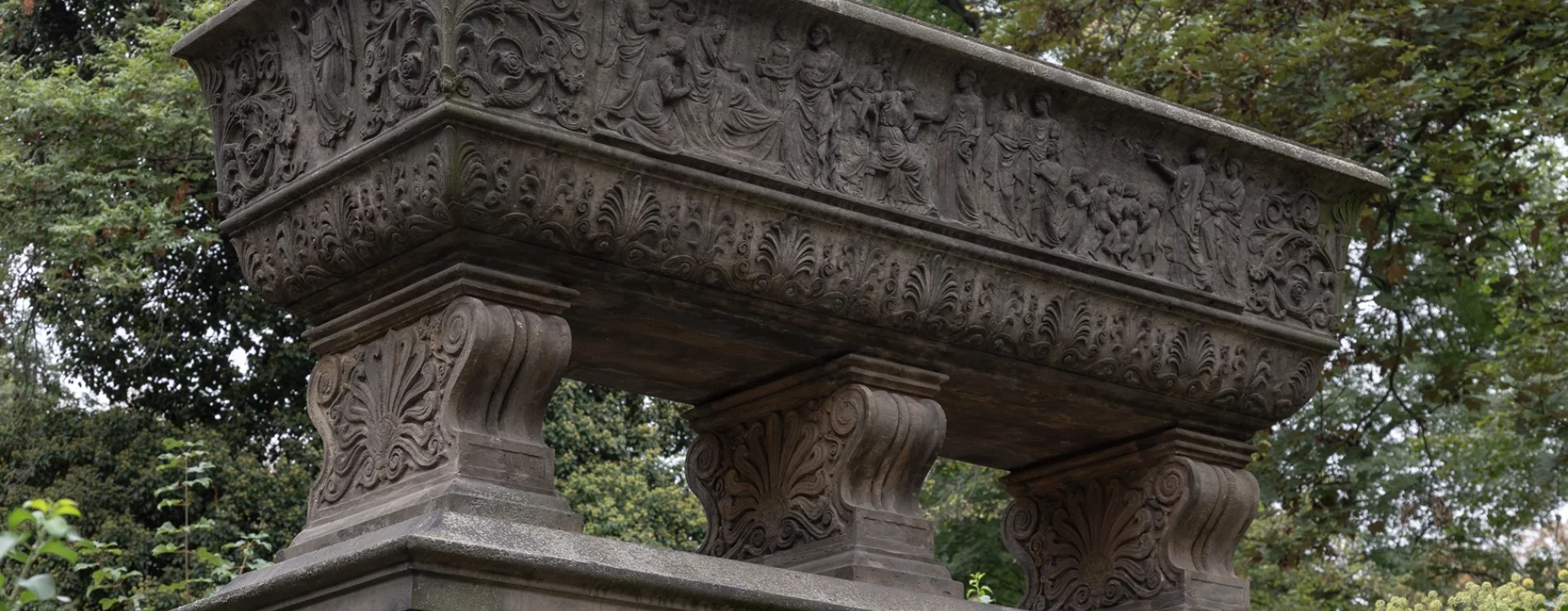
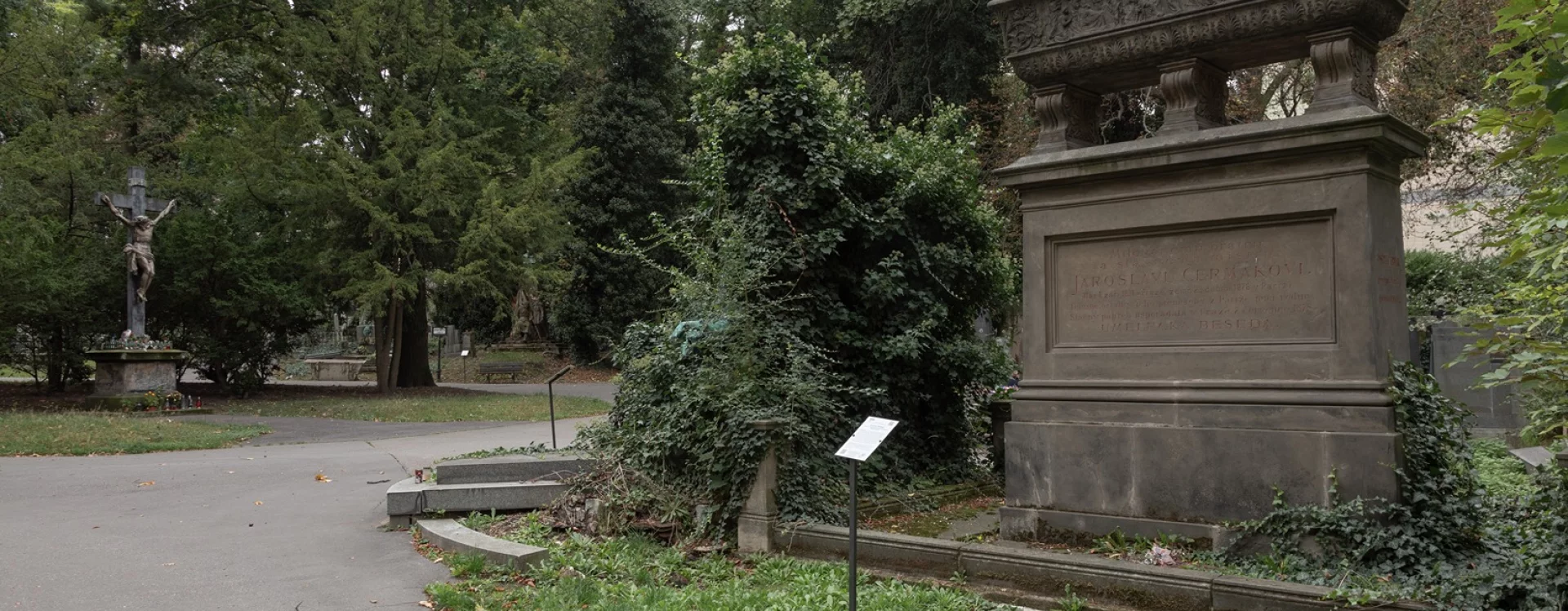
The architect Johann Gottfried Gutensohn brought several new ideas to Bohemia from Germany. In the field of funerary architecture, the Olšany cemeteries are home to a surviving example of a truly monumental grave marker. Working in collaboration with the era's most prominent sculptor in Bohemia, Josef Max, Gutensohn designed an unprecedented stone sarcophagus inspired by classical (more specifically, Roman) models. Boasting ample decorative reliefs, it sits atop three solid legs on a massive plinth that serves as an inscription panel for the names of the deceased.
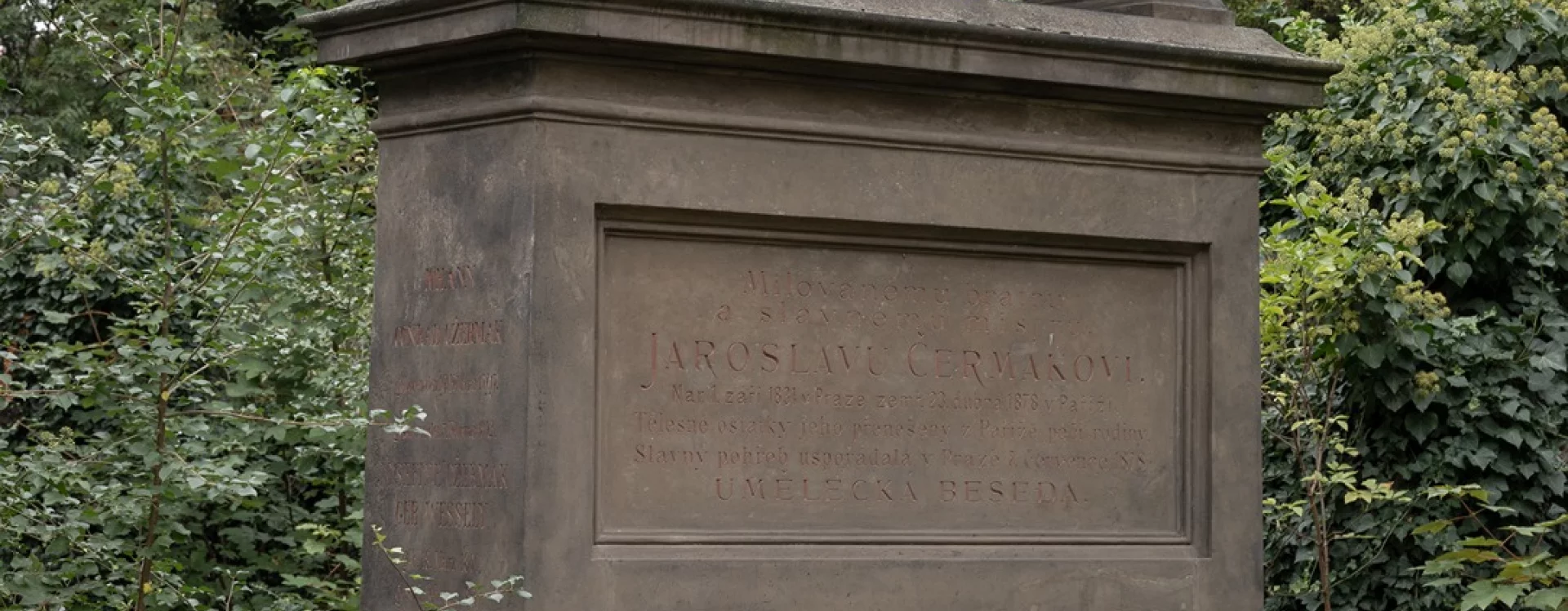
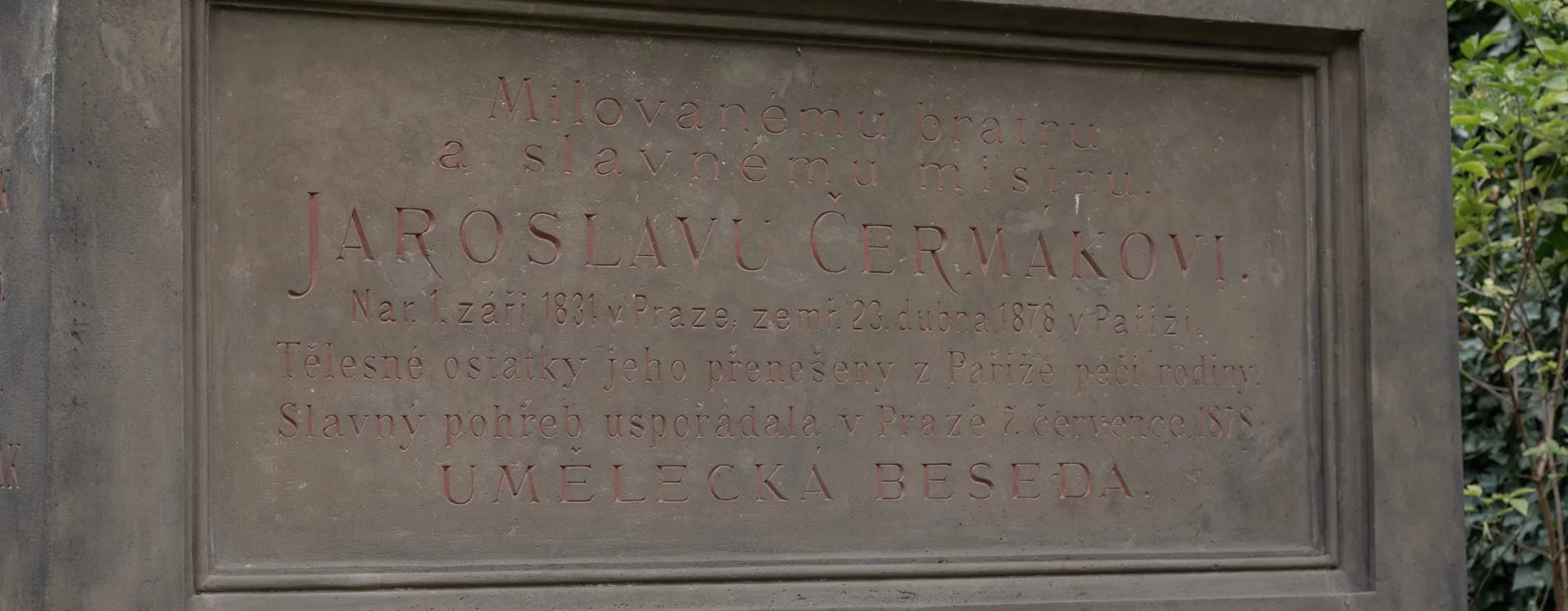
The monument was originally erected for the well-regarded doctors, patriots, and patrons of Czech art Jan and Josef Čermák, but it is primarily associated with Jan's son and Josef's grandson, the painter Jaroslav Čermák, who was buried here later. A talented artist, Jaroslav Čermák attended the Prague Academy when he was just thirteen years old. Although he achieved European renown and spent most his life abroad (in Munich, Brussels, and especially France), he was a great patriot his entire life and remained in contact with his home country. He died and was buried in Paris, but his family had his remains returned to Bohemia, where the Umělecká Beseda organized a grand funeral in his honor.
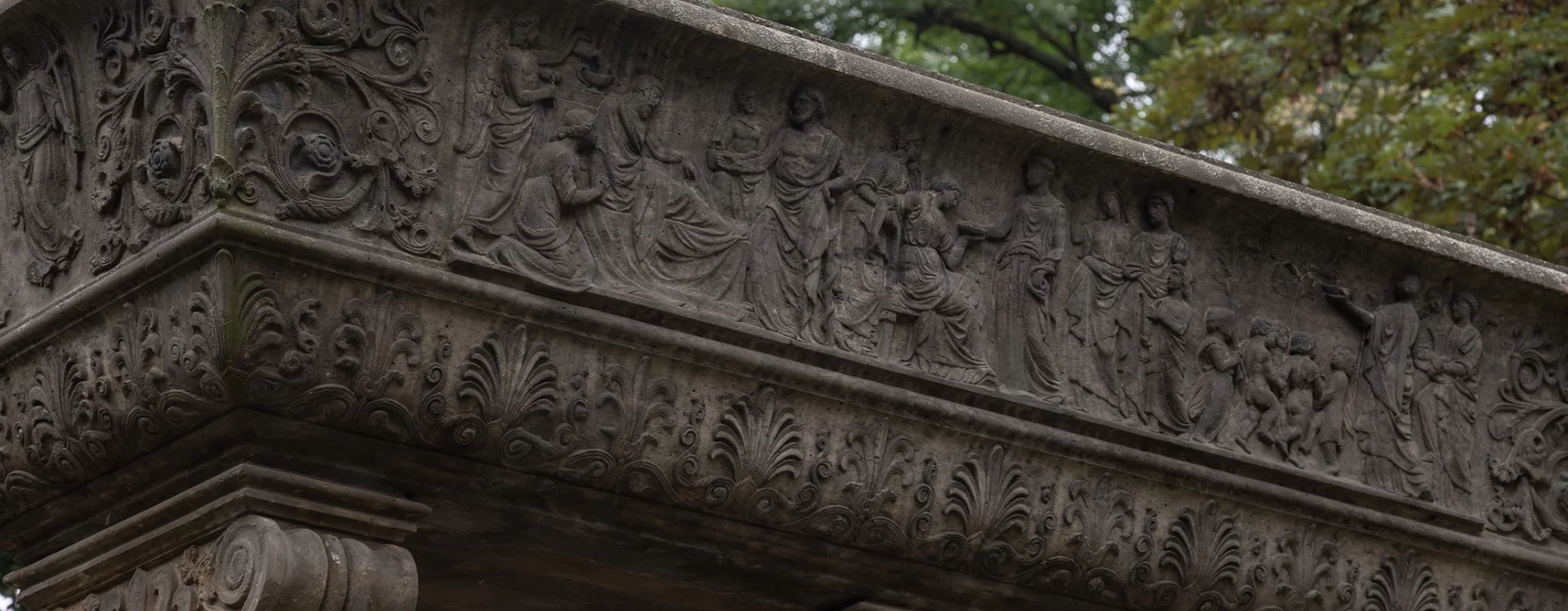
The monument was carved from what is probably Nehvizdy sandstone, Max's favorite stone. Thanks to the characteristics of this material, even very fine details have been preserved in the reliefs, which depict a memorial service in honor of the deceased: an angel kneels and waters a wreath by a monument with a bust on a plinth with the serpent-entwined Rod of Asclepius (representing medicine), while a procession – men, women, and children in Greek dress – brings further floral gifts. On the shorter sides of the sarcophagus, this classical scene is rounded out by the figures of angels: one with hands folded in prayer; the other with a wreath and a cross – symbols of faith and of the triumph over death. This figural scene is harmoniously complemented by the use of acanthus leaves, palmettes, and acroteria.
The Olšany cemeteries are home to the largest number of works by Josef and Emanuel Max, who in addition to funerary works also created sculptures of saints for Charles Bridge and allegorical figures of professions and regions for the Kranner Fountain in Prague, including a bronze equestrian statue of Emperor Francis I, to whom the fountain is dedicated. Their bronze monument to Marshall Radetzky is today located in the Lapidarium of the National Museum.
It is sometimes speculated that Gutensohn may also have designed the nearby grave monument of the Stejskal family (also 1843), which similarly features sculptural decoration by Josef Max. It is nevertheless most likely the work of the architect Antonín Barvitius. On the other hand, Gutensohn definitely designed the gravestone of Johannes Mraczek at Prague's Church of St. Giles (with a relief of a blessing angel and a bust by Ludwig Schwanthaler). Gutensohn's largest works in Bohemia are the town hall in Děčín and the Neobyzantine Church of the Assumption in Mariánské Lázně, the latter of which was built on an unusual octagonal ground plan, again with sculptural decoration by Josef Max.