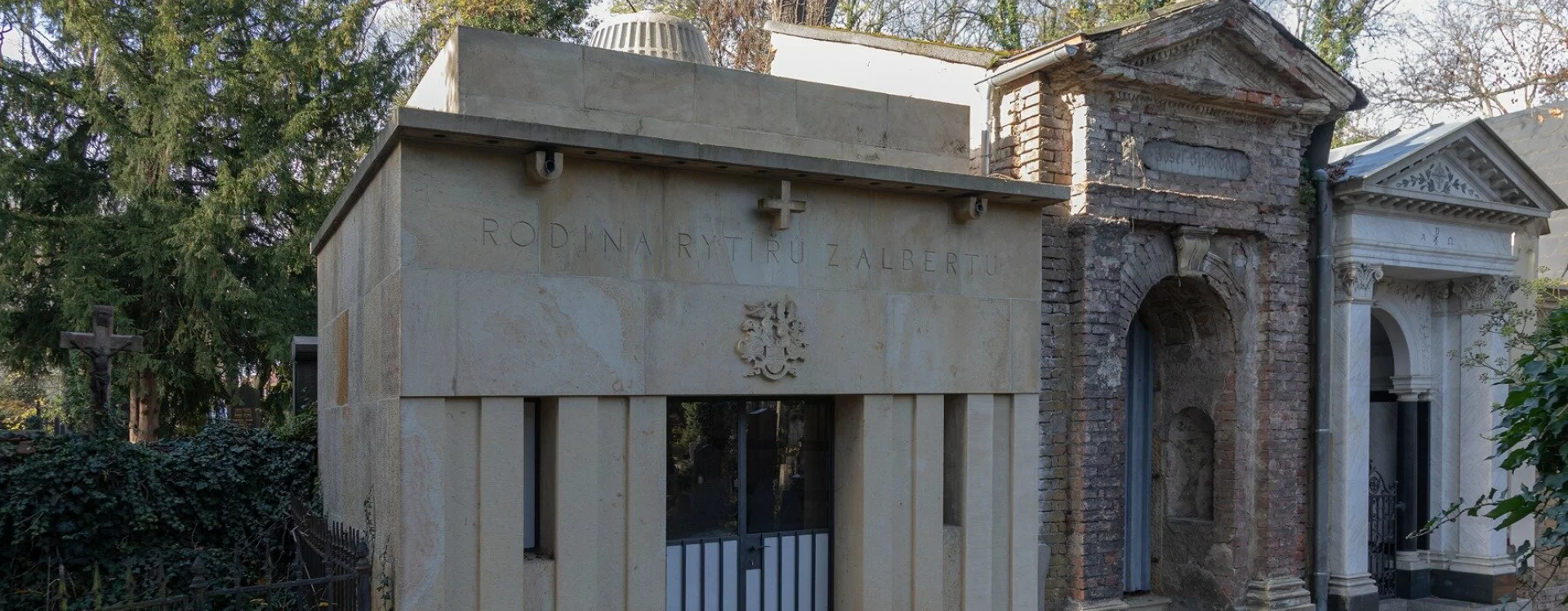
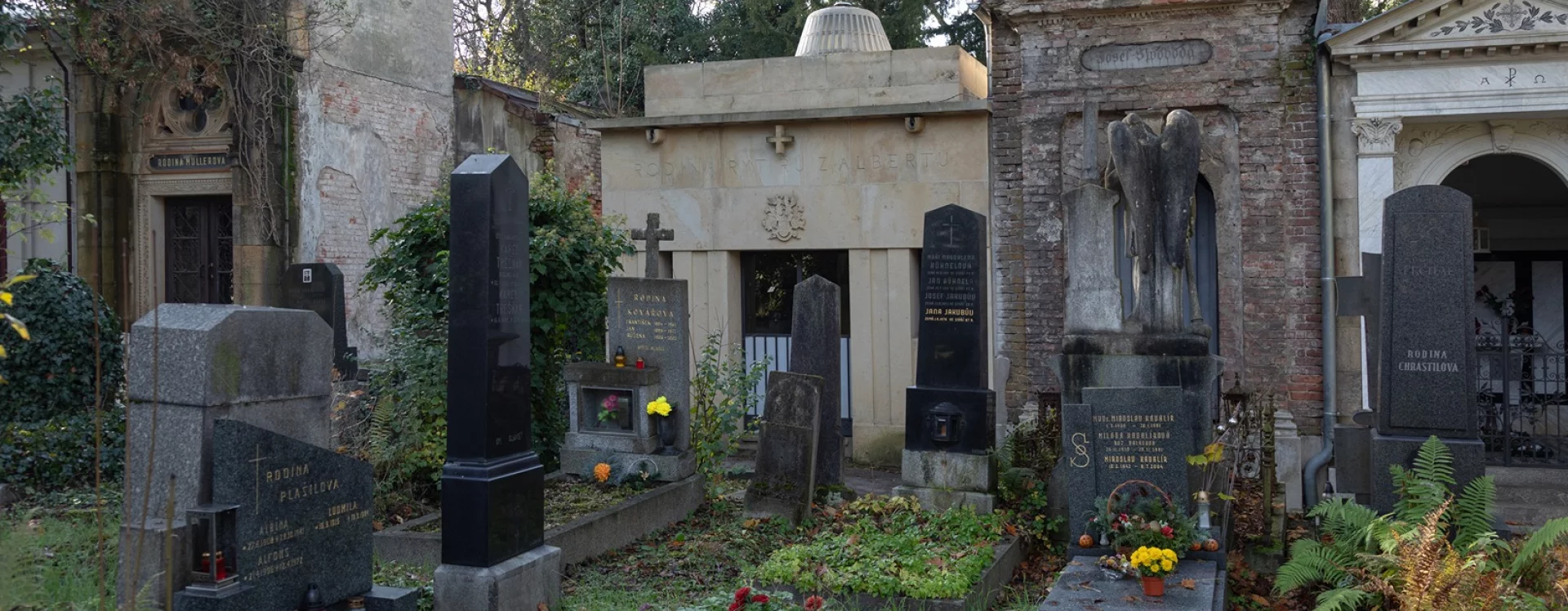
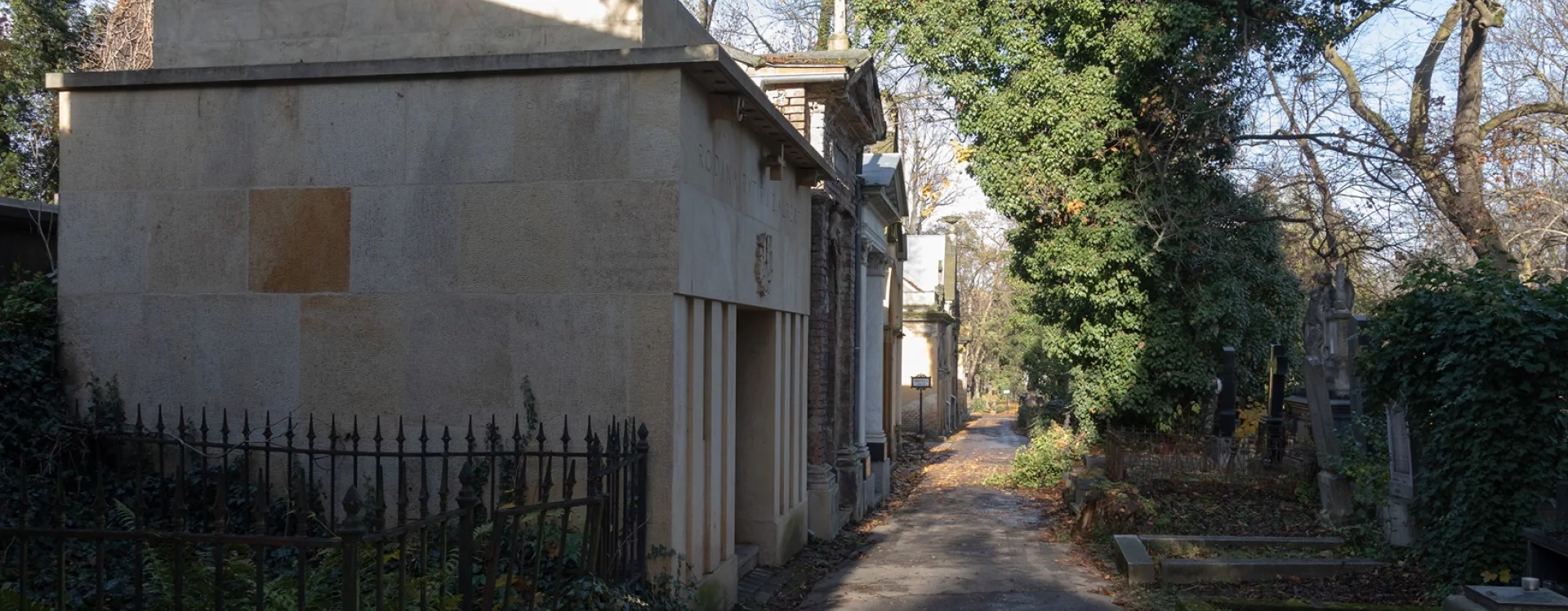
The chapel tomb of the Knights of Albert and Barons Dobrzenský is the youngest structure of this type at the Olšany cemeteries. It was built in 1941 in the style of lyrical Functionalism according to plans by František M. Černý. The original family burial site, founded in 1885 by Maria von Albert, consisted of an underground space with burial chambers topped by a raised ledger stone and decorated with an obelisk produced by the stonemasonry company of Otto Sandtner. In 1936, the gravestie was purchased by Josefina Baroness Dobrzenská, the wife of Rudolf von Albert, who had a modern chapel tomb built in its place. At the same time, the descendants of the family members buried here renounced their use of the burial site in favor of her family.
The architect František Maria Černý (1903‒1978) is known to the broader public mainly as the author of the modern roof and steeples of the Gothic monastery at Na Slovanech, built as part of the building's reconstruction after it was seriously damaged during an air raid in 1945. Černý's oeuvre is remarkably varied: he designed residential buildings, the tram depot on Prague's Plzeňská Street, and the hospital in Kolín, but his plans for the tomb are an outlier in his portfolio.
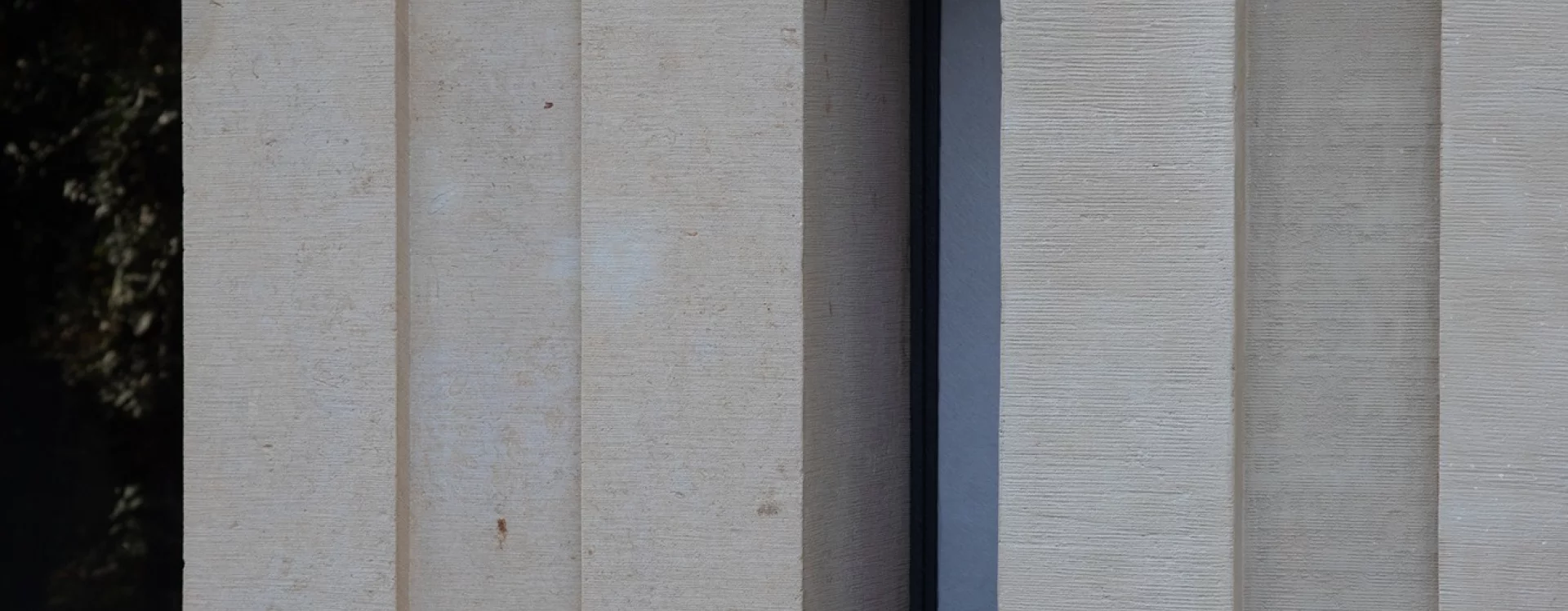
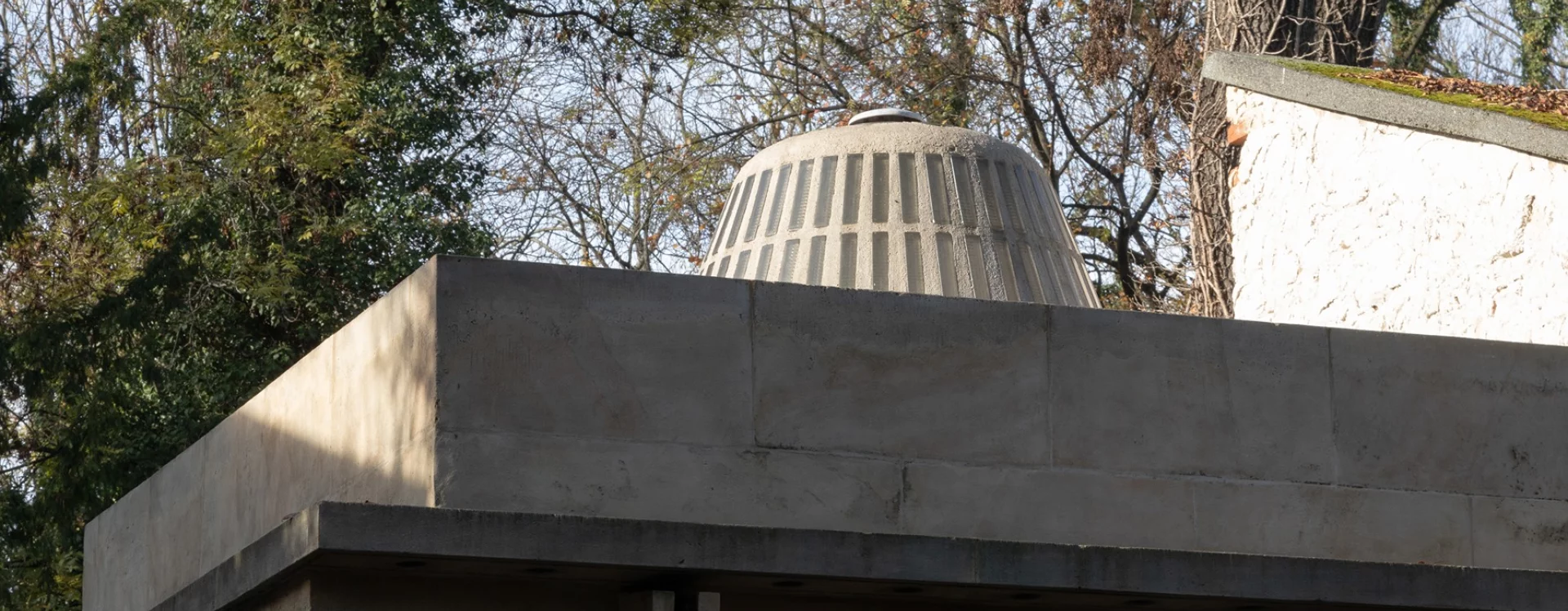
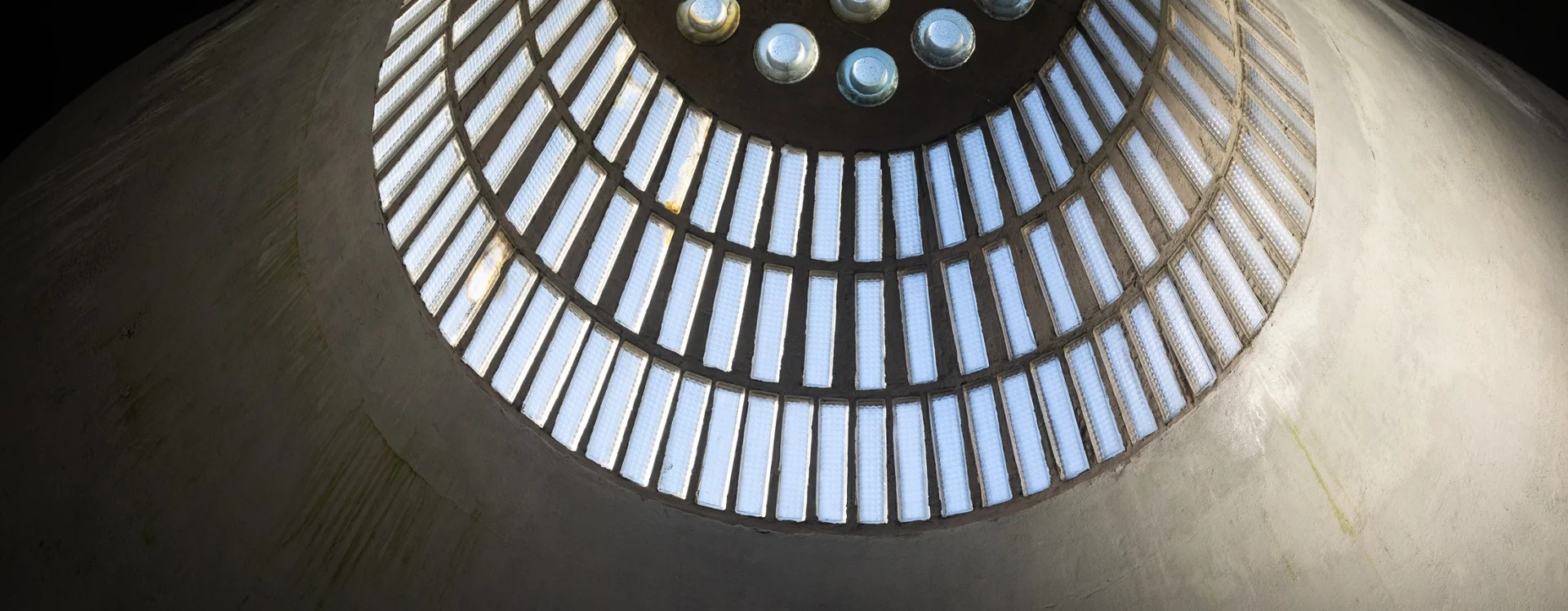
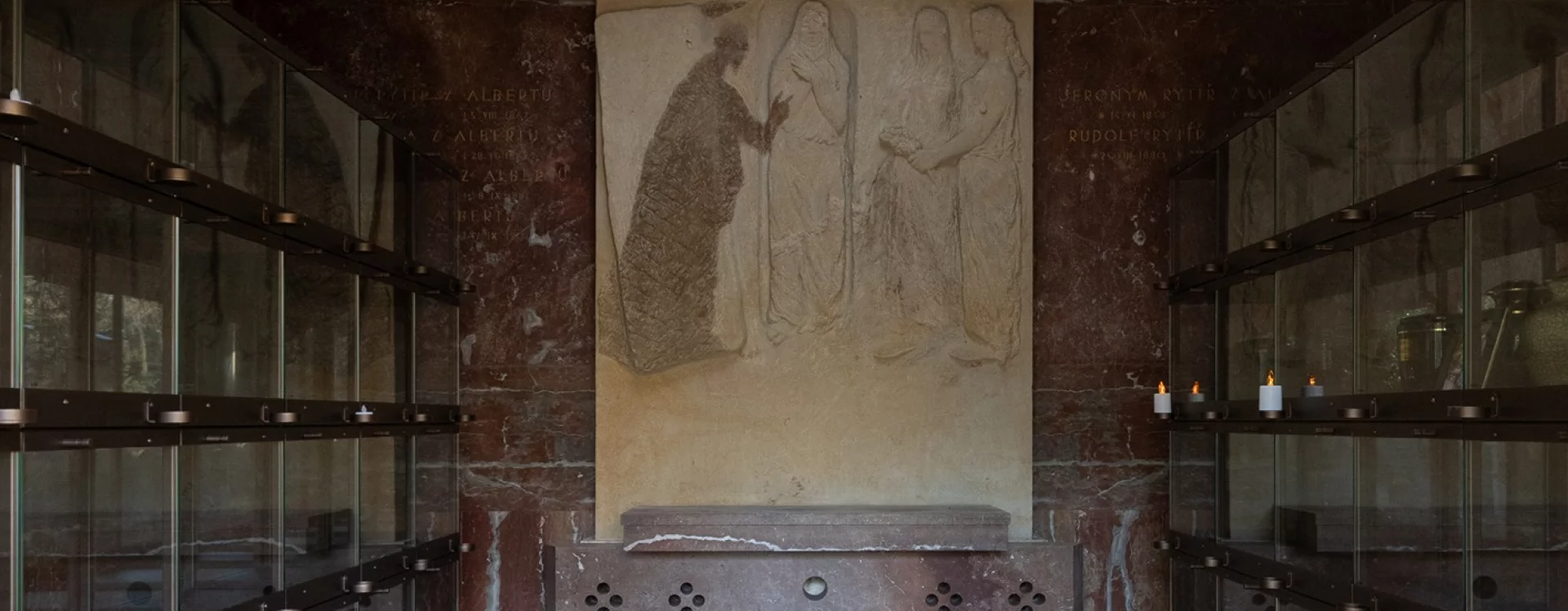
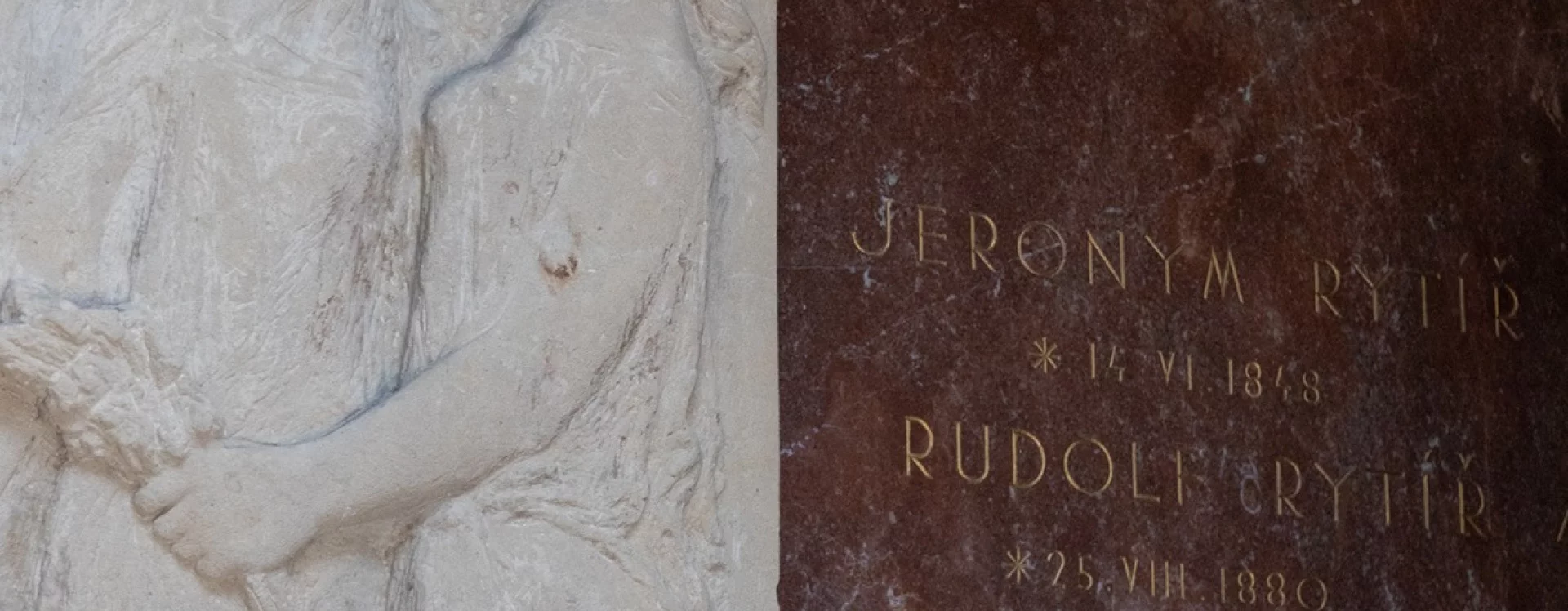
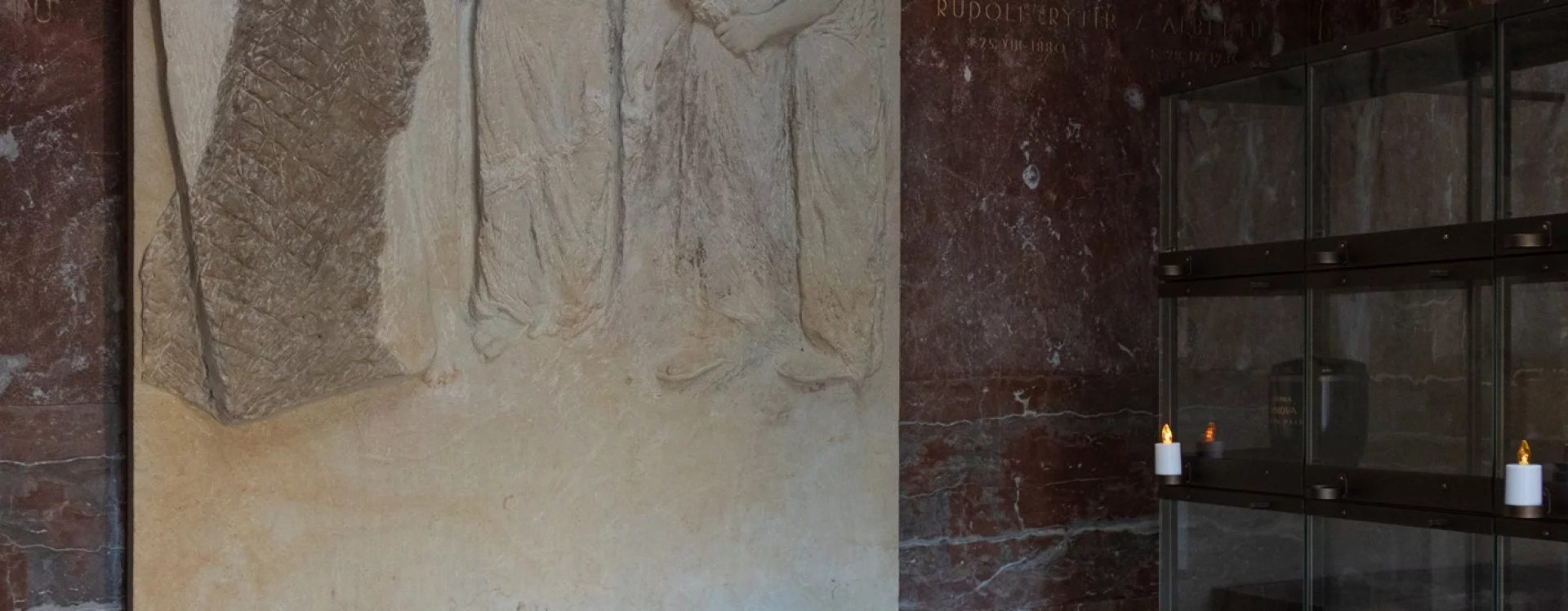
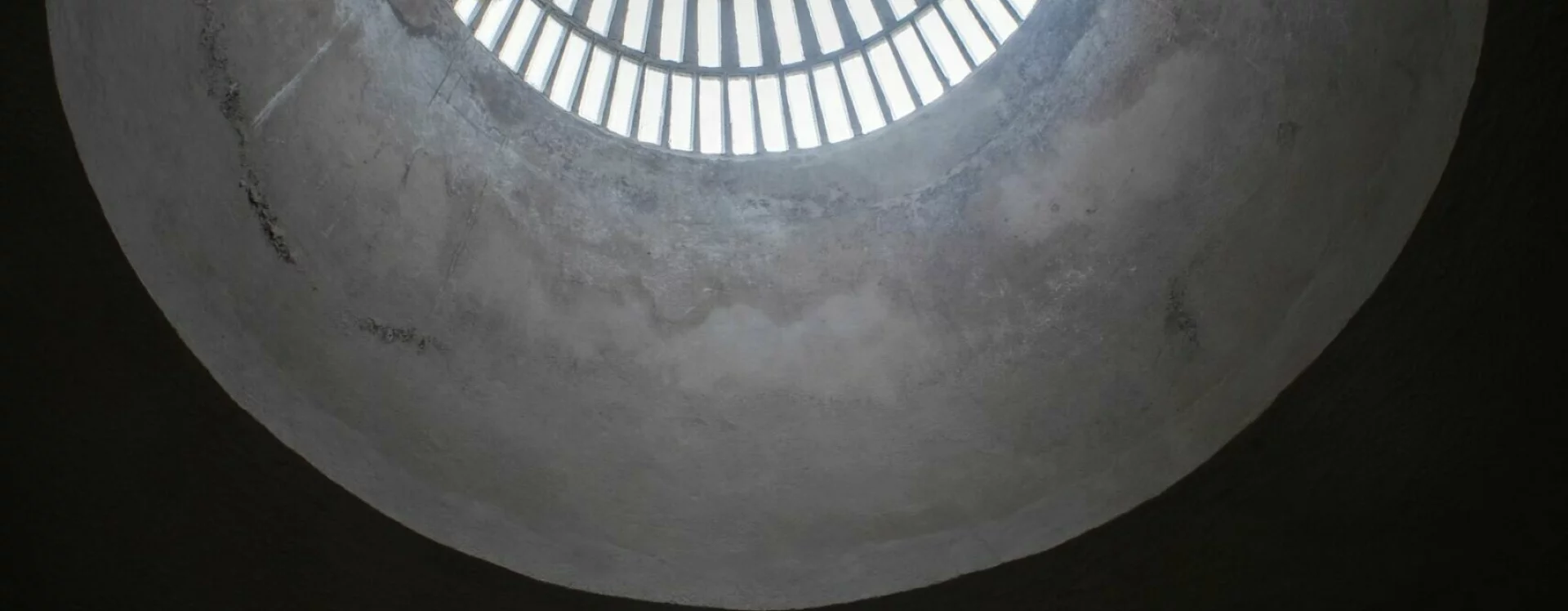
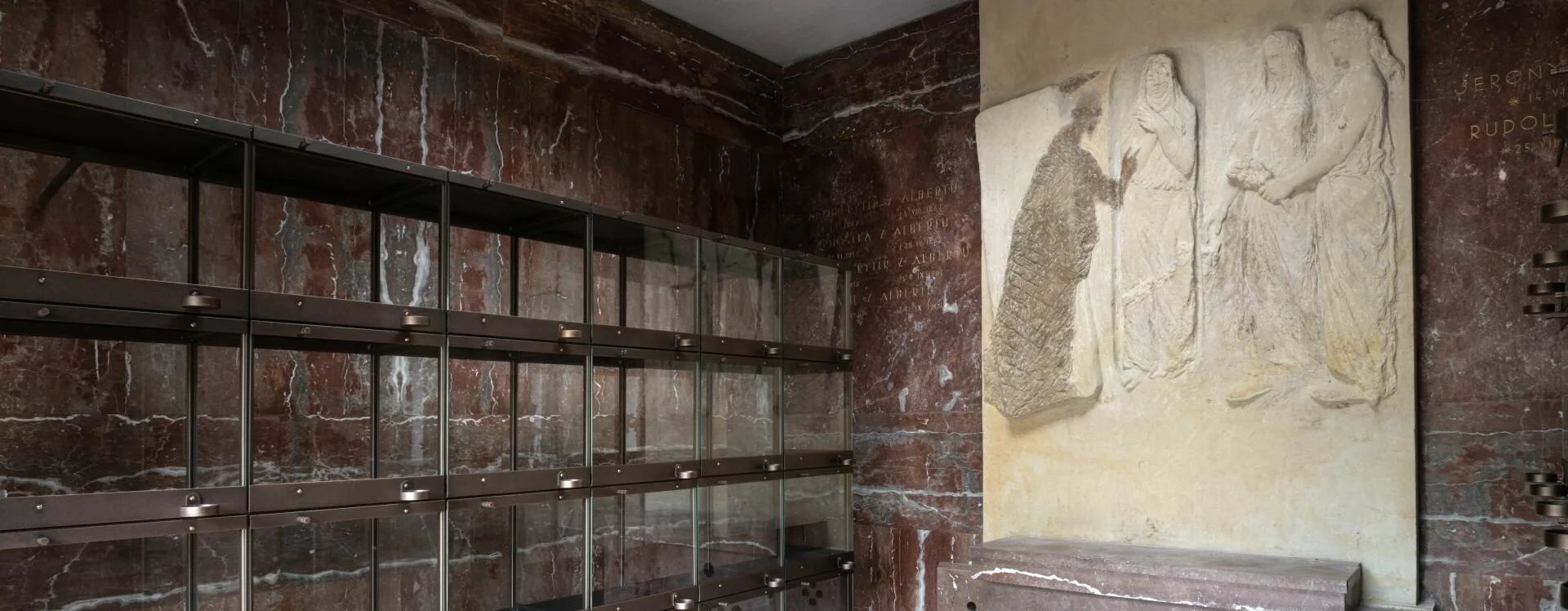
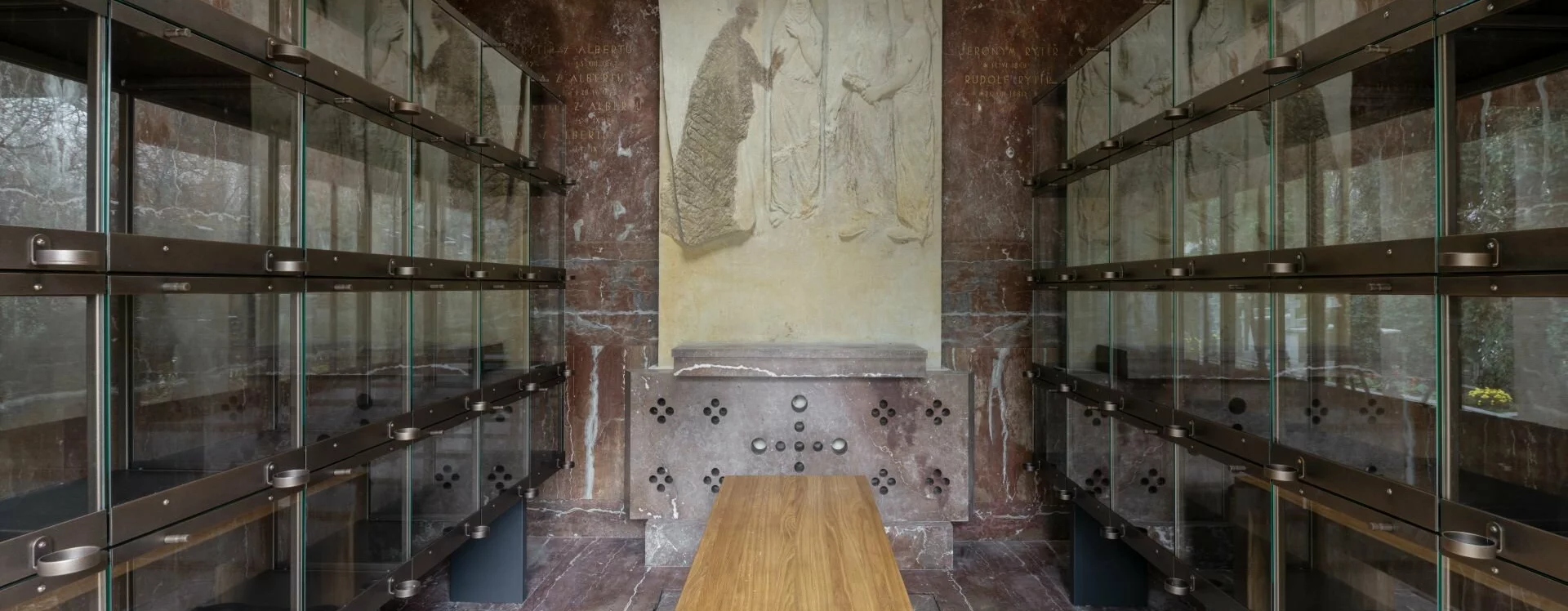
The mausoleum's exterior is of a rather unassuming character. Constructed on a square ground plan, the building's visual impression is founded primarily on the conspicuous interplay of horizontally and vertically arranged slabs of Hořice sandstone. The main facade is adorned only by a Greek cross bearing the family motto Perseverantia et consilio (Perseverance and wisdom). The originally intended inscription Familie Ritter von Albert was later changed into the Czech Rodina rytířů z Albertu, as can be seen in a 1945 photograph taken by the famous photographer Josef Sudek when he was documenting the then newly built memorial. With its simple design, the chapel's interior makes a great impression mainly thanks to the combination of materials: the walls are clad in slabs of pink Slivenec marble, which dominates the central altar with its sandstone relief. Working with a fresh touch, sculptor Josef Wagner here created a little more than hinted-at image of Christ bringing Lazarus back to life. This motif is highly popular in the funerary arts, for it expresses the deceased's hope for resurrection and eternal life. Panels on either side of the relief contain the names of the family members who were buried here between 1867 and 1934. Adding to the chapel's unique atmosphere is the natural daylight entering through the conical skylight with glass blocks – a dominant exterior feature of the tomb.
In 2022–2025, the tomb underwent a highly sensitive renovation, during which it was converted into a columbarium with forty-eight new glass niches. With a view to preserving the interior's visual purity and great aesthetic value, any decoration of the individual niches is limited to the urns placed therein.
Vladislava Holzapfelová, 2025
The architect František Maria Černý (1903‒1978) is known to the broader public mainly as the author of the modern roof and steeples of the Gothic monastery at Na Slovanech, built as part of the building's reconstruction after it was seriously damaged during an air raid in 1945. Černý's oeuvre is remarkably varied: he designed residential buildings, the tram depot on Prague's Plzeňská Street, and the hospital in Kolín, but his plans for the tomb are an outlier in his portfolio.
The mausoleum's exterior is of a rather unassuming character. Constructed on a square ground plan, the building's visual impression is founded primarily on the conspicuous interplay of horizontally and vertically arranged slabs of Hořice sandstone. The main facade is adorned only by a Greek cross bearing the family motto Perseverantia et consilio (Perseverance and wisdom). The originally intended inscription Familie Ritter von Albert was later changed into the Czech Rodina rytířů z Albertu, as can be seen in a 1945 photograph taken by the famous photographer Josef Sudek when he was documenting the then newly built memorial. With its simple design, the chapel's interior makes a great impression mainly thanks to the combination of materials: the walls are clad in slabs of pink Slivenec marble, which dominates the central altar with its sandstone relief. Working with a fresh touch, sculptor Josef Wagner here created a little more than hinted-at image of Christ bringing Lazarus back to life. This motif is highly popular in the funerary arts, for it expresses the deceased's hope for resurrection and eternal life. Panels on either side of the relief contain the names of the family members who were buried here between 1867 and 1934. Adding to the chapel's unique atmosphere is the natural daylight entering through the conical skylight with glass blocks – a dominant exterior feature of the tomb.
In 2022–2025, the tomb underwent a highly sensitive renovation, during which it was converted into a columbarium with forty-eight new glass niches. With a view to preserving the interior's visual purity and great aesthetic value, any decoration of the individual niches is limited to the urns placed therein.
Vladislava Holzapfelová, 2025
Literature
Petr Němec. Osoby Nového zákona. Cheb, 2009, s. 115.
Rostislav Švácha. Od moderny k funkcionalismu. Praha, 1985, s. 298.