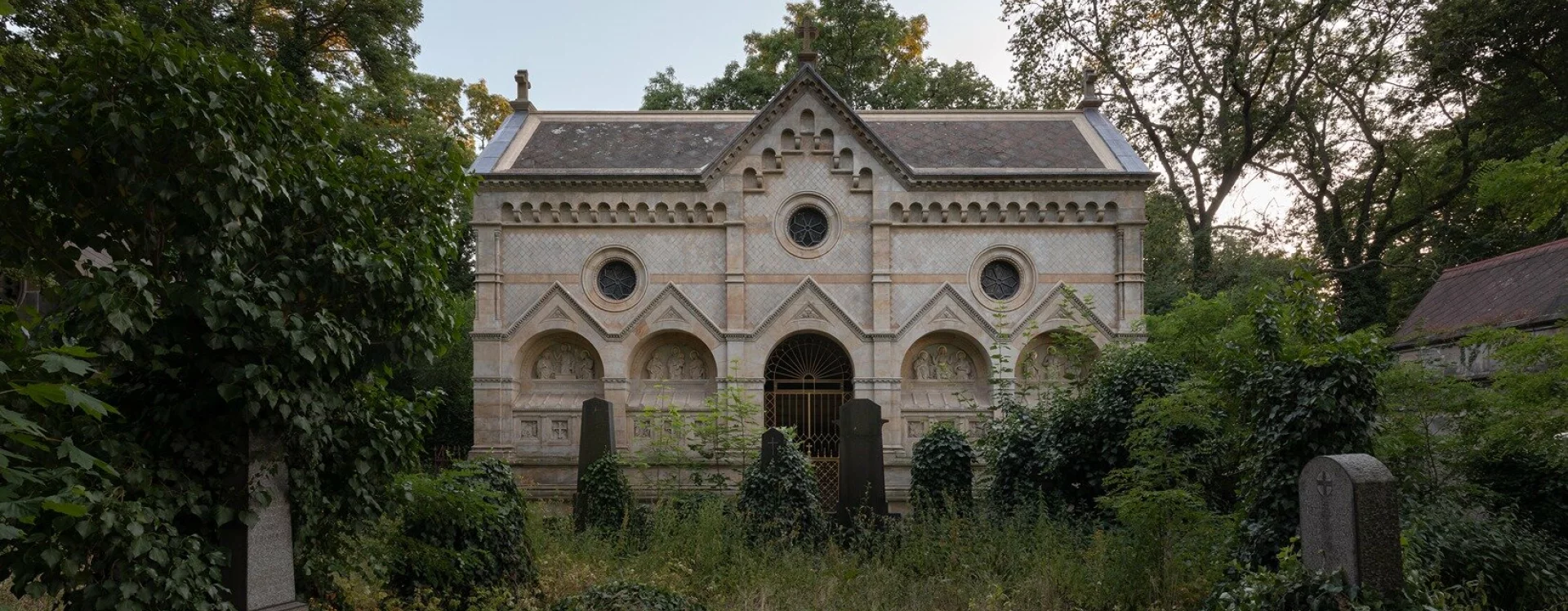
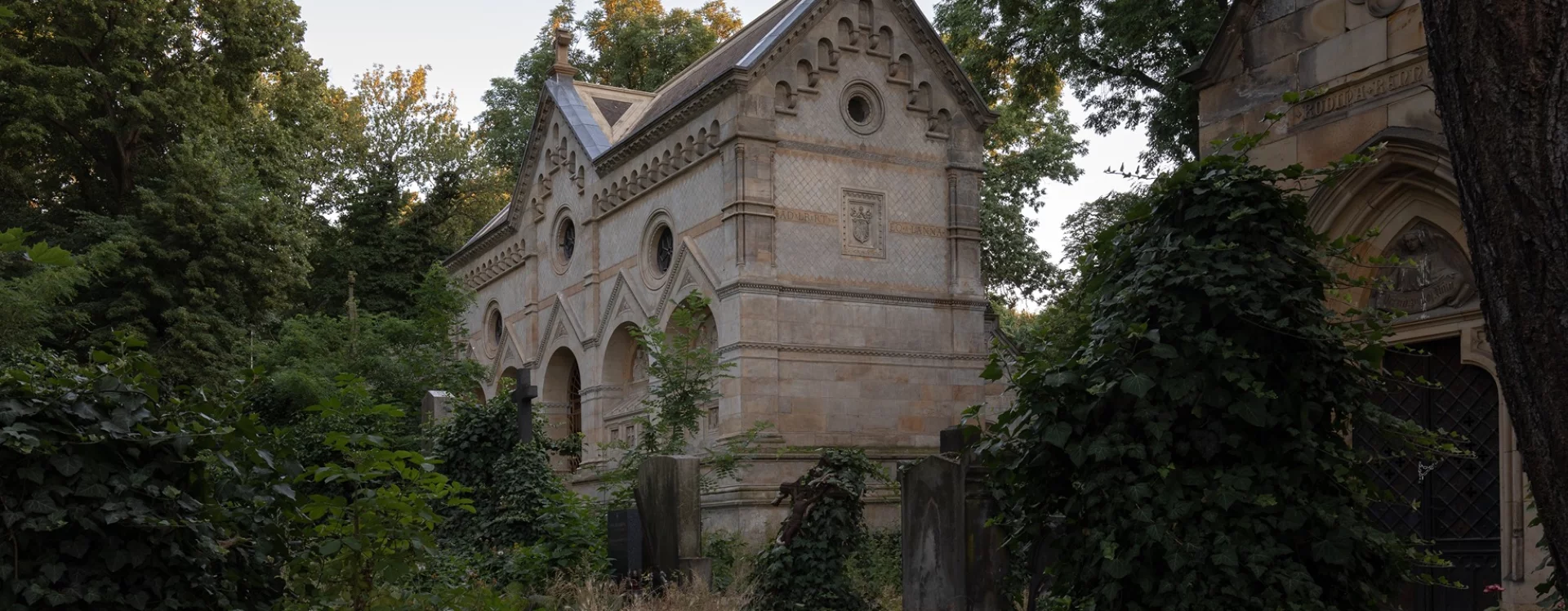
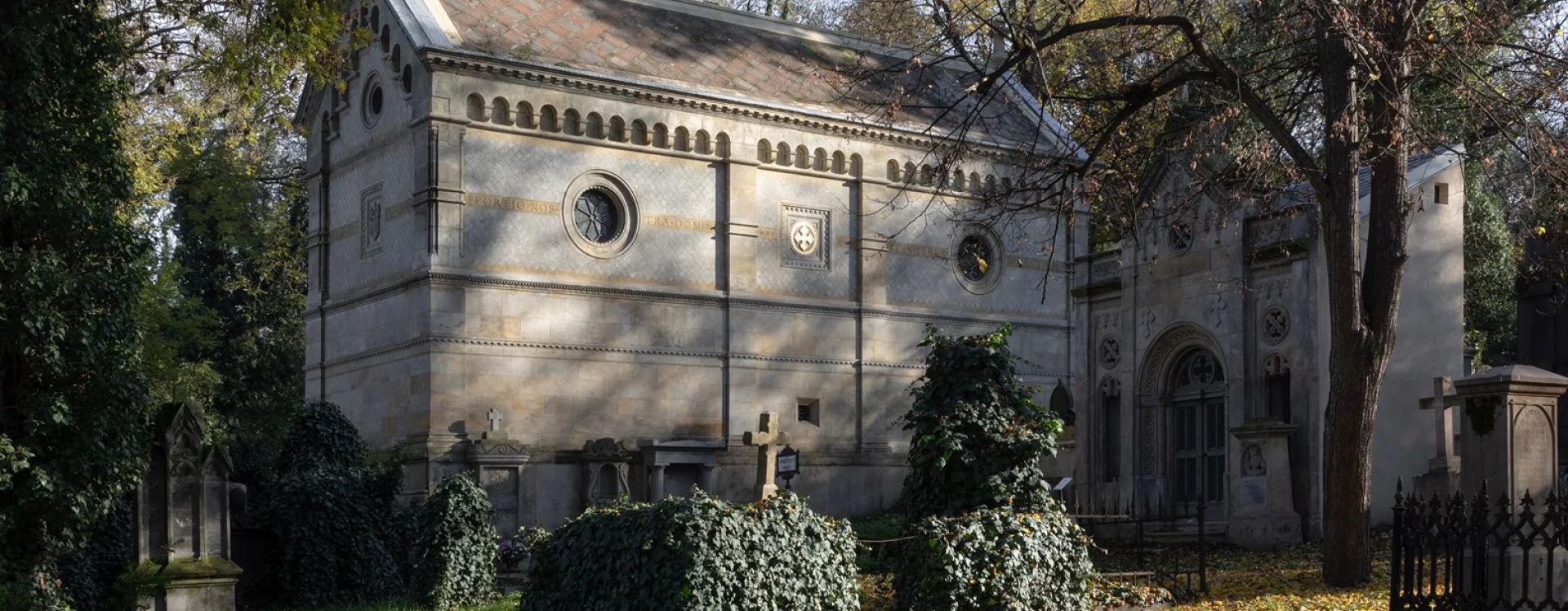
The largest chapel tomb at the Olšany Cemeteries, made with the involvement of numerous leading artists of the era, reflects the ambitions and status of two prominent industrial families. Adalbert (Vojtěch) Lanna Sr., the scion of an old Austrian family involved in the Vltava river trade (the Lahners), was active in numerous branches of business: rail transport, metalworks, coalmining, and (steam) shipping. His funeral in January 1866 reflected the grandeur of his legacy. The procession included a hundred miners carrying torches, music, boatsmen, railway workers, students – and also his friend in business, Johann Adolf II, Prince of Schwarzenberg. The deceased was temporarily interred in the crypt of the Zdekauer family, but in the fall of 1866 his son entered into negotiations with the aim of purchasing a site on which to erect a tomb for the Lanna family and that of Lanna’s partner, Johann Schebek. The final purchase price was 600 gulden. The task of drafting the tomb’s plans went to Antonín Barvitius, who had recently returned from Italy. Barvitius was presumably recommended through contacts facilitated by his brother-in-law Ignác Ullmann, probably in the hope that this prestigious undertaking would provide him with future commissions. Ullmann had previously designed the elder Lanna’s Prague palais, a Neoromanesque building across from today’s Masaryk Station. Around the same time that Barvitius was working on the tomb, he and Ullmann were involved in two other projects for the same clients: the Lanna Villa in Bubeneč and the Schebek Palace in central Prague.
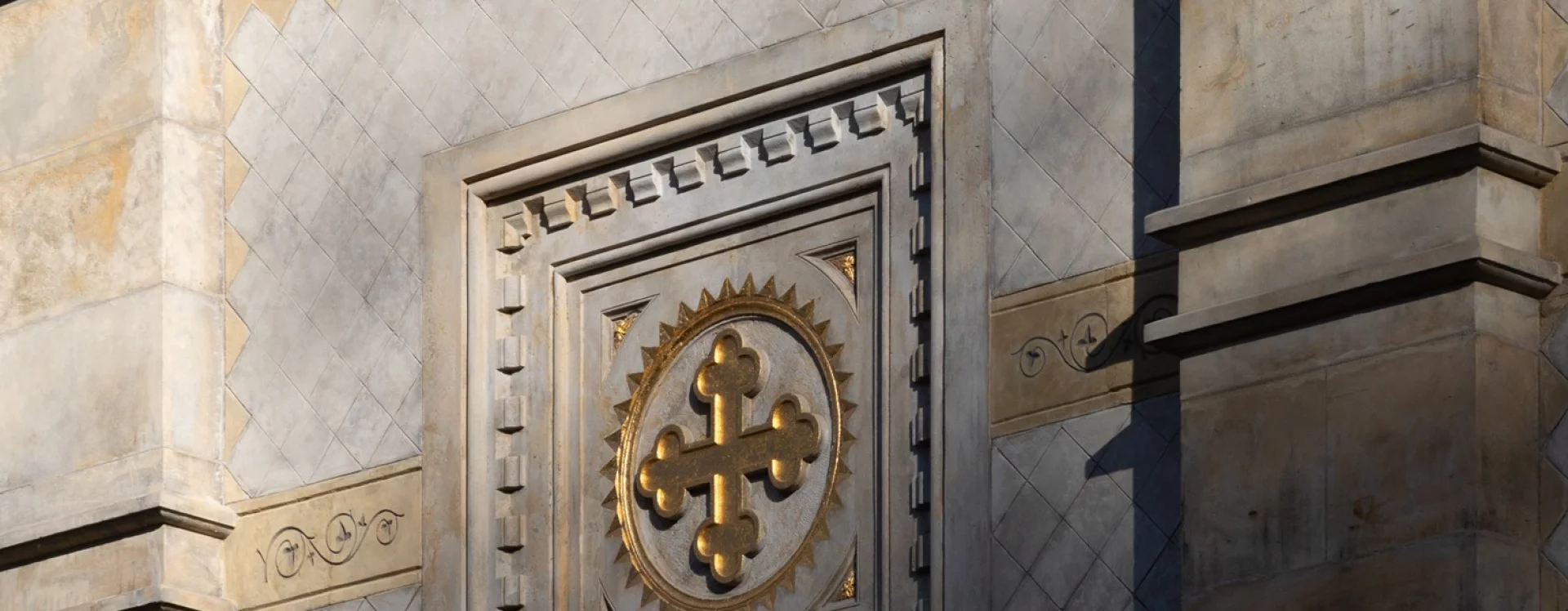
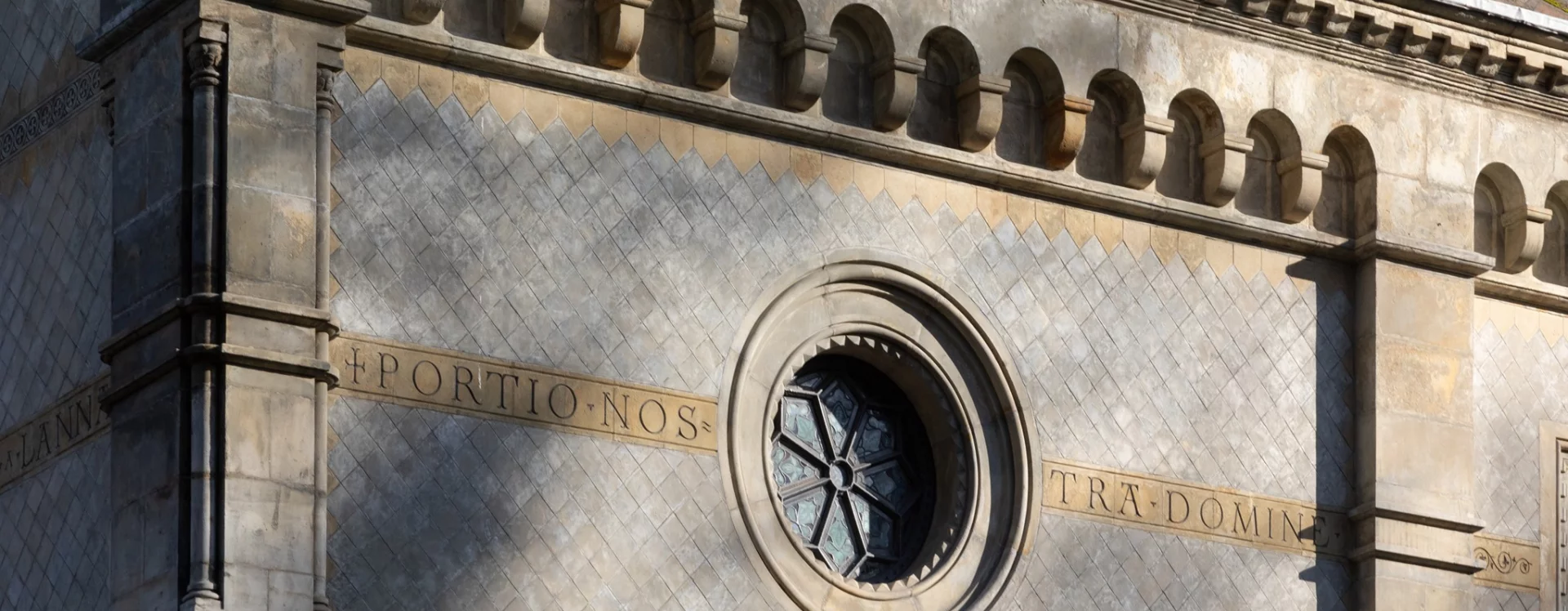
The building permit for the grand chapel tomb was issued in May 1868, and construction was completed in 1873. It is a strictly symmetrical and absolutely unique dual tomb design, divided into three parts both above and below ground. From the central space, one can enter the two families’ chapels on either side and descend to underground crypts inspired by the early Christian catacombs. Stylistically, the tomb is a synthesis of a number of different influences (much like the Rundbogenstil then popular in the German-speaking countries). According to Pavel Kalina, it exists “outside of time.” Its basic design is Neoromanesque, augmented by early Christian and Renaissance influences. The details work with Italian designs, and an eventually unrealized plan envisioned illuminating the interior via semicircular openings with decorative grillwork.
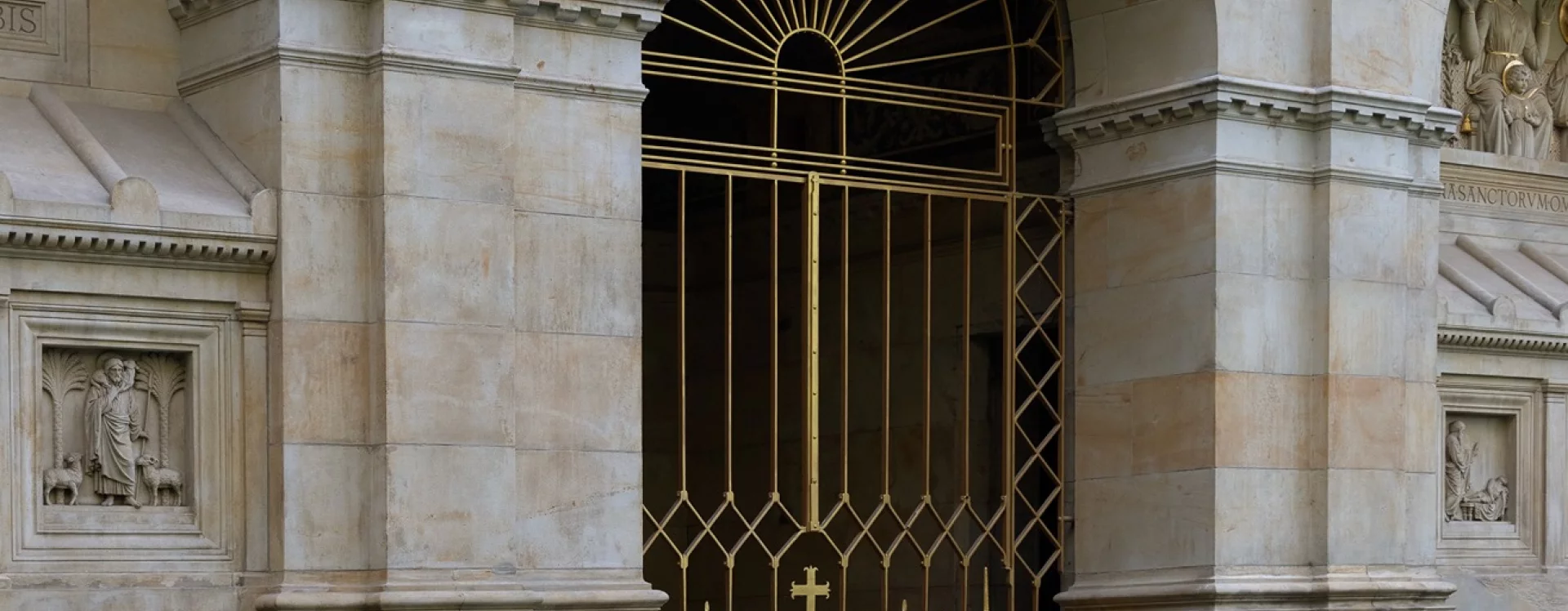
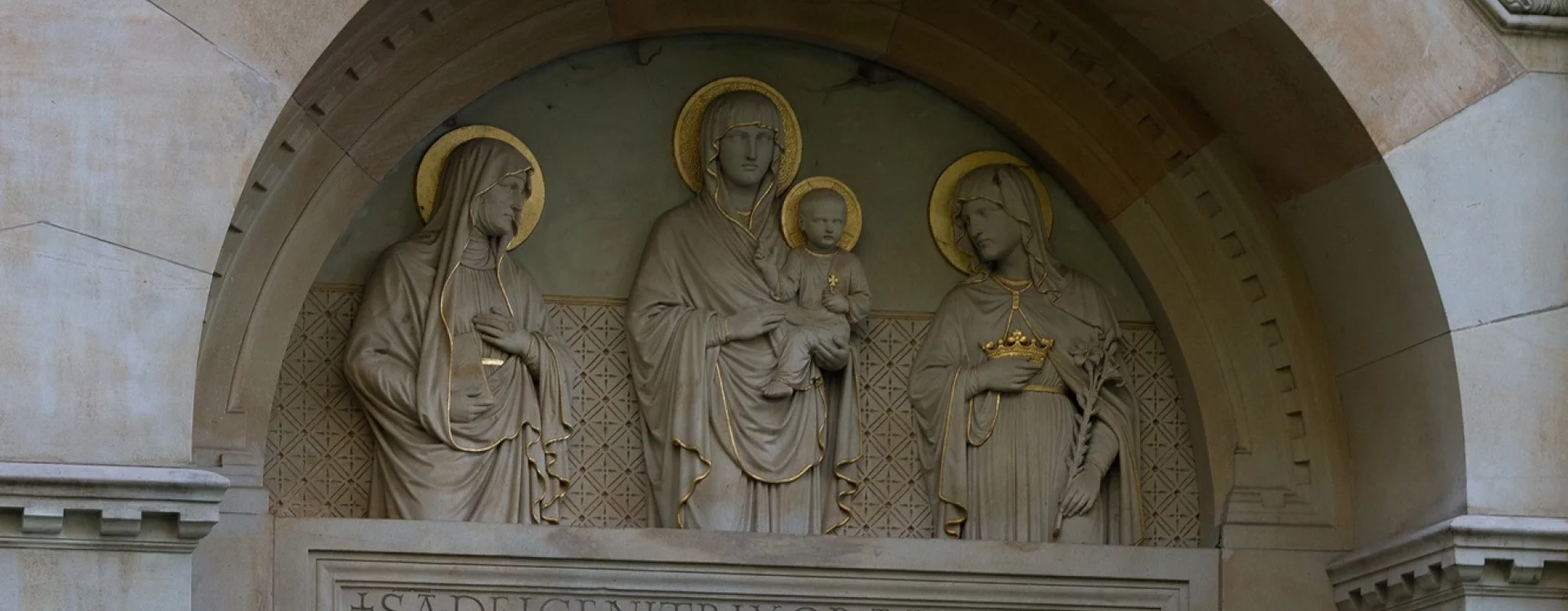
Instead of these openings, the architect designed four sculpturally decorated lunettes, models for two of which were created by Václav Levý. One scene depicted Saint John of Nepomuk (the baptismal patron of Johann Schebek), Christ the Resurrected, and Saint Joseph; the other had the Virgin Mary with Baby Jesus, Saint Ludmila, and Saint Agnes of Bohemia (at the time, beatified). After Levý’s death, these designs were shows at an exhibition at the Umělecká Beseda and apparently also, in November 1874, at the Saint Wenceslas Savings Bank along with Barvitius’s plans for the tomb. The remaining two lunettes – one with Saint Joseph (the patron of carpenters) alongside the Virgin Mary with the Christ child; the other with Saint Anne, Saint Adalbert (the baptismal patron of Adalbert Lanna), Christ, and Saint Matthew (the patron of builders) – was designed F. J. Heidelberg. Their final execution was done by Ludvík Šimek, who also did the eight minor reliefs beneath the lunettes depicting Old Testament scenes as typological precursors of events from the New Testament: Moses bringing forth water from the rock – the Samaritan woman at the well; Moses and the bronze serpent – Christ the Good Shepherd; the prophet Elisha raising the Shunammite woman’s son – the raising of Jairus’s daughter; Jonah and the whale – a foreshadowing of the Resurrection of Christ. In the sculptural decoration, which thanks to a restoration project is once again subtly polychrome, art historians have identified the influence of the High Renaissance Italian sculptor Andrea Sansovino (according to K. B. Mádl), the Nazarenes (Marie Černá), or the sarcophagi from the garden wall of the Basilica of Santa Maria Novella in Florence (Pavel Kalina).
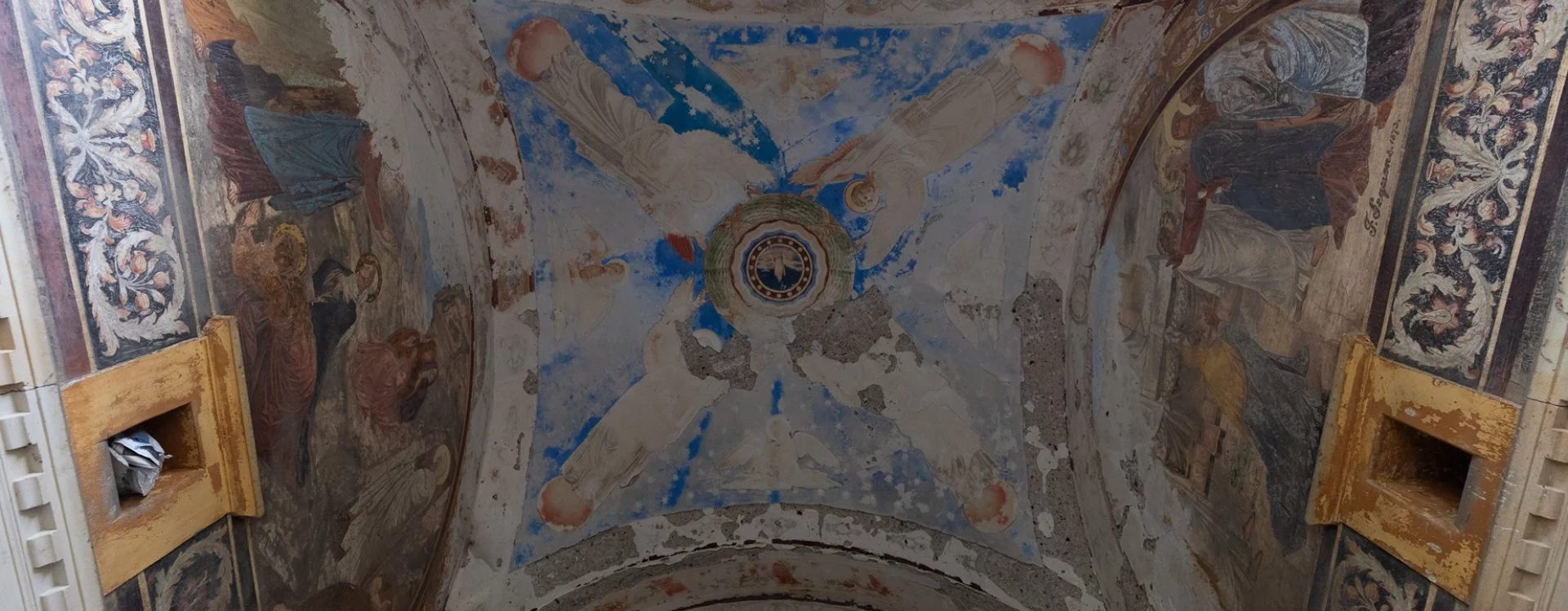
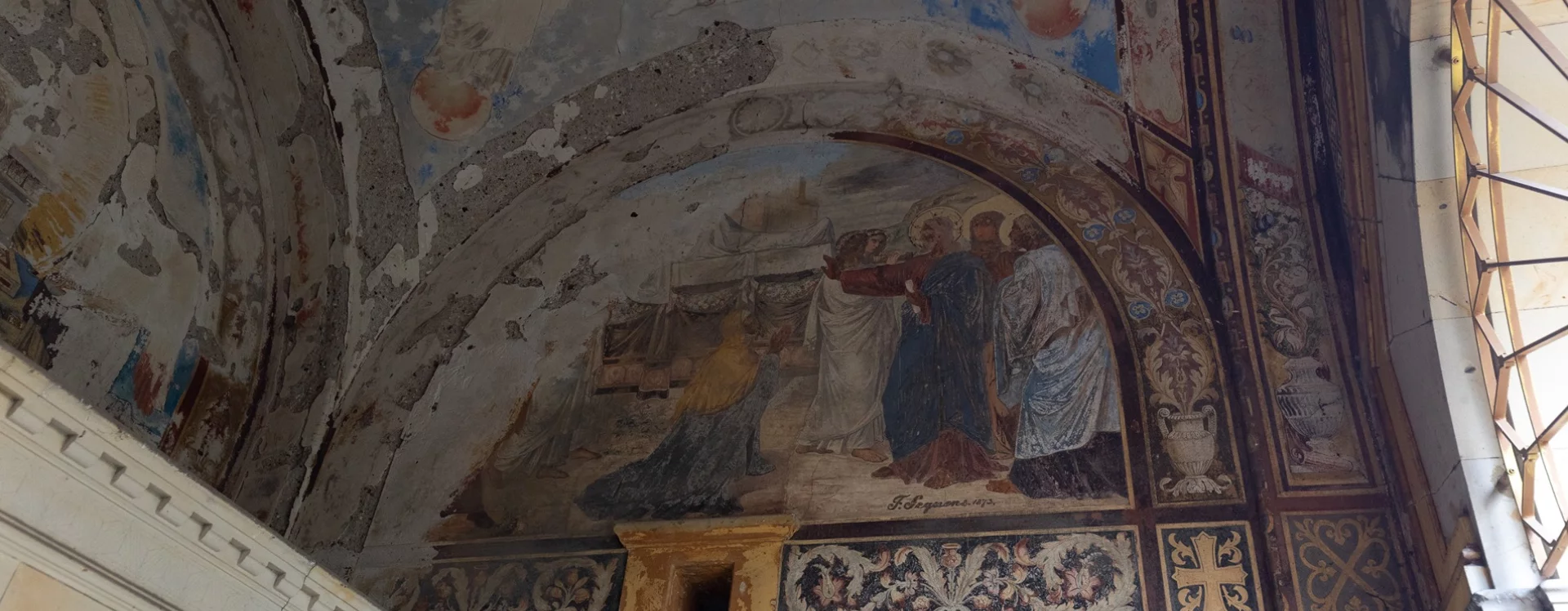
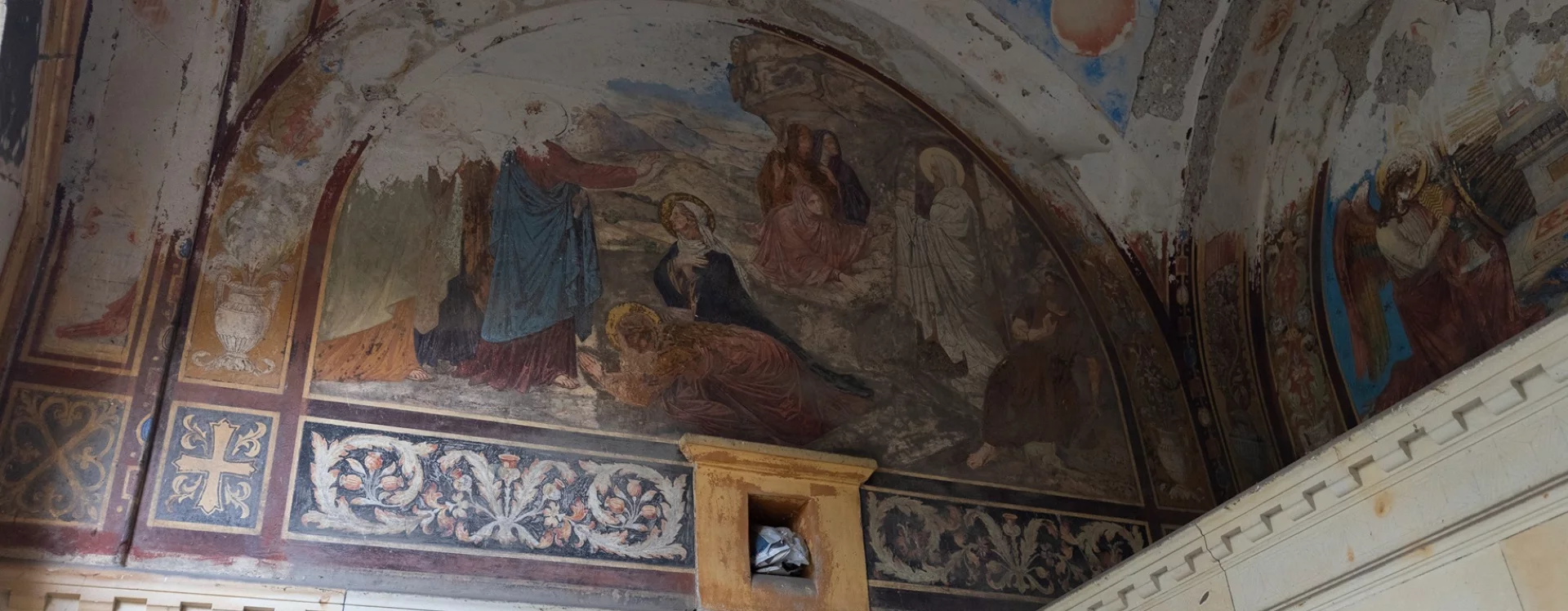
The interior paintings, which “for strategic reasons” Barvitius originally wanted to entrust to Matyáš Trenkwald, were done by František Sequens. On the vaulted ceiling of the central chapel is a depiction of four angels with the right hand of God. The motifs on the lateral lunettes (the raising of the son of the widow in Nain and the resurrection of Lazarus), which correspond with the exterior decoration, undoubtedly reflect the clients’ hope for resurrection following the second coming of Christ. According a January 1874 letter by Sequens, the expenses for the fresco-seco painting amounted to 3,200 gulden, plus another 100 gulden for painting the small figures in the “catacombs.” The interior of the central chapel was to be dominated by an ultimately unrealized cross with figures of the Virgin Mary and John the Baptist made from Nehvizdy stone by Ludvík Šimek. Some of the sculptural decoration may have been done by Eduard Tom Bureš. Helping out during the drafting process in Ullmann’s office was the son of Barvitius’s sister, Bedřich Münzberger.
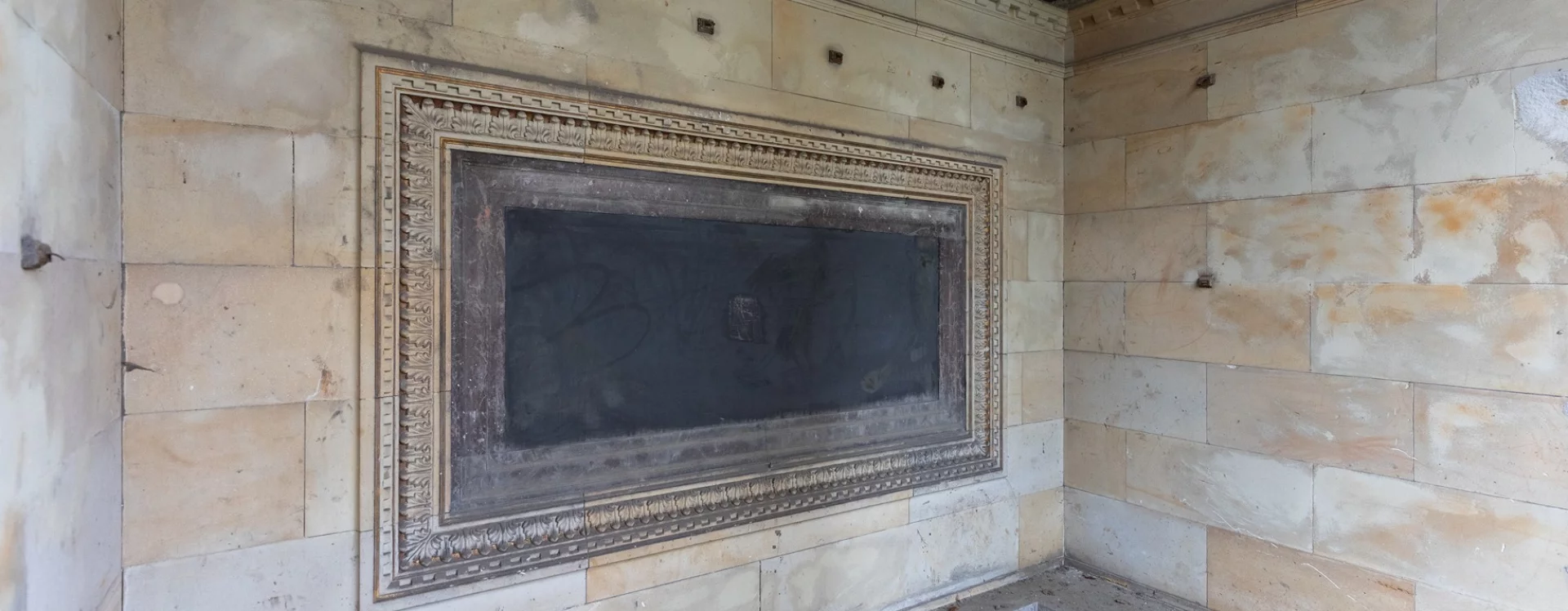
The tomb contains the remains of around forty members of the Lanna and Schebek families, including those of its initiators, Johannes and Marie Schebek (†1883) and Adalbert Lanna Jr. The last burial in the tomb was that of Marie Huberta Freiin von Lanna, a.k.a. Pooty, who died of appendicitis on a visit to Prague in 1933 at the age of 22. Historical developments meant that her mother Augusta, a.k.a. Asta (†1960), the widow of Adalbert Franz Lanna, could not be buried here. After the communist takeover in 1948, she and her sister-in-law tried to save the building by offering it to the state for the burial of important individuals in exchange for its maintenance – but without success. The family emigrated to Austria, and its grave was plundered. The exterior was not renovated until the twenty-first century, but the badly damaged interior is still awaiting restoration.