In the nineteenth century, the Olšany Cemeteries underwent rapid expansion, among other things due to the growing population of Prague’s inner suburbs as a result of industrialization. In the early twentieth century, Olšany expanded across Jana Želivského Street, where Cemetery X (the Catholic Cemetery) was founded in 1910. After 1917, funerals were held at the 2nd Municipal Cemetery, which has seen the erection of numerous remarkable funerary monuments over the years. These include the “Russian” (i.e., Orthodox) cemetery with the Chapel of the Dormition of the Most Holy Mother of God, plus several military memorials: a Honorary Military Cemetery dedicated to the victims of the First World War, symbolic memorials to soldiers killed in faraway lands, an ossuary designed by Břetislav Svoboda, and cemeteries for soldiers from the Commonwealth countries and the Soviet Union. Somewhat less well known is the cemetery for Muslims which was founded in 2004 on the eastern edge of this part of the Olšany complex.
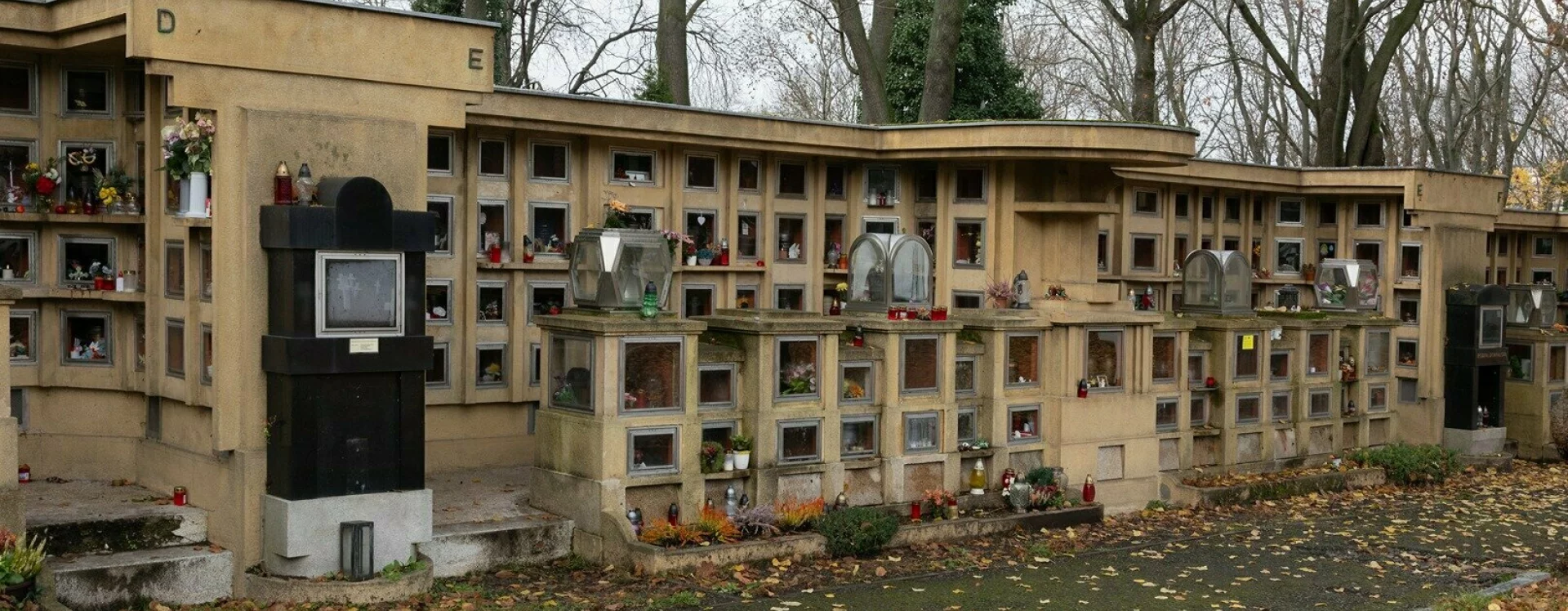
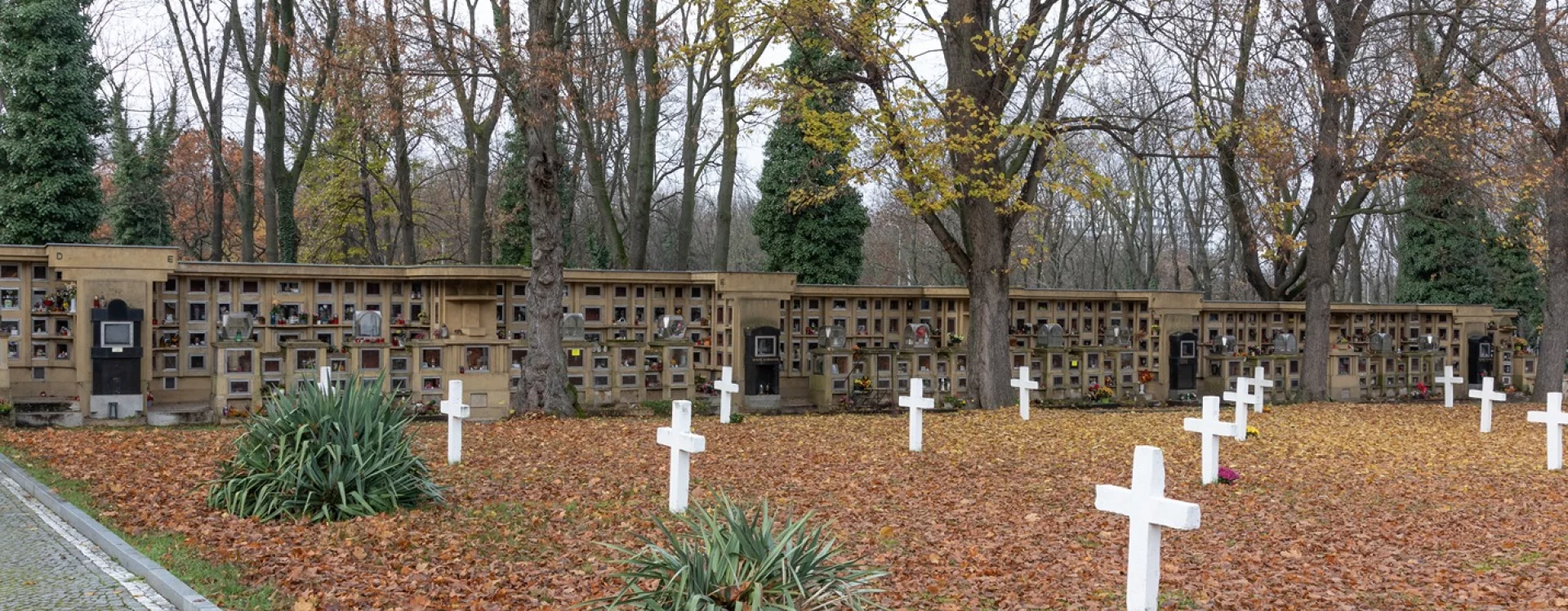
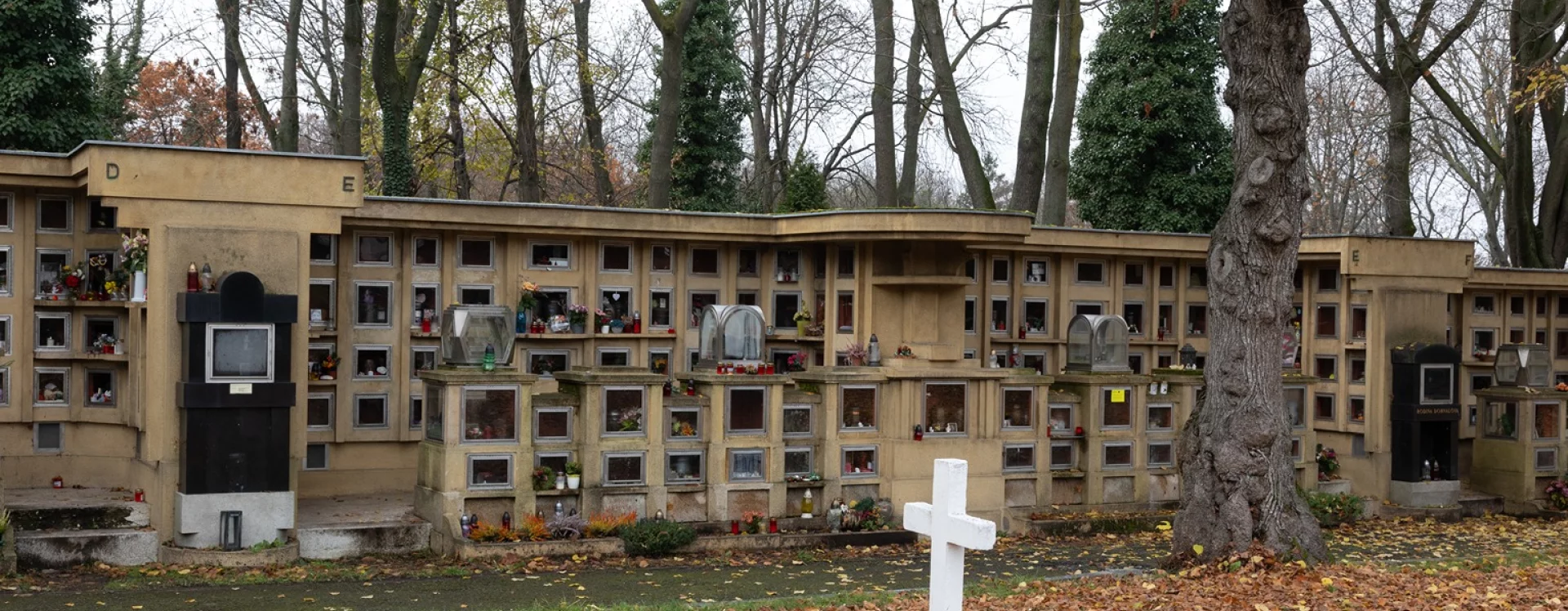
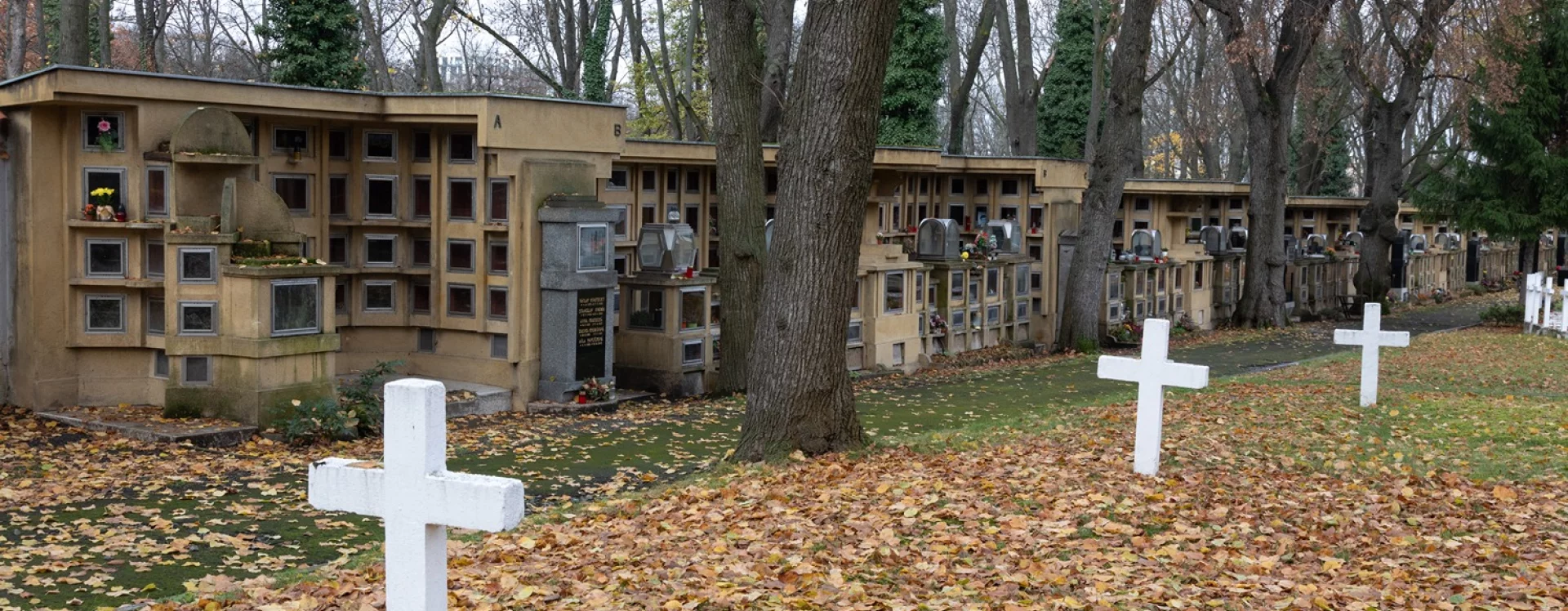
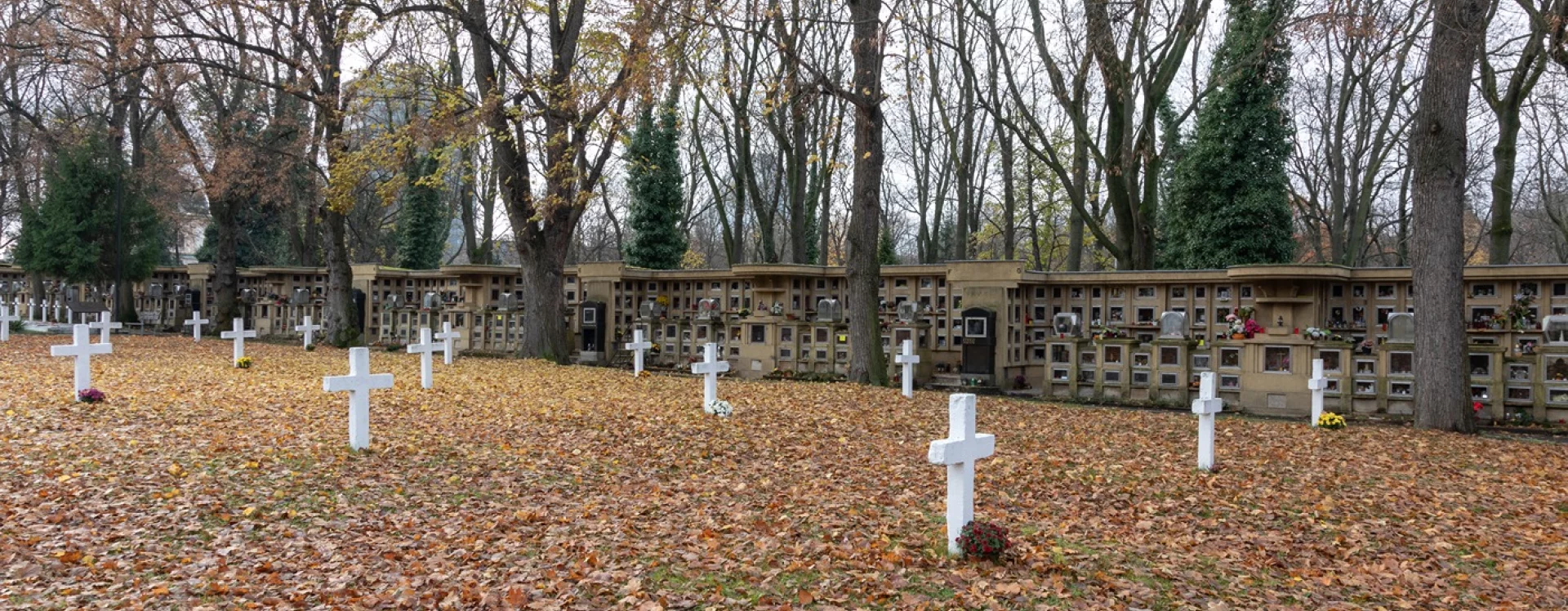
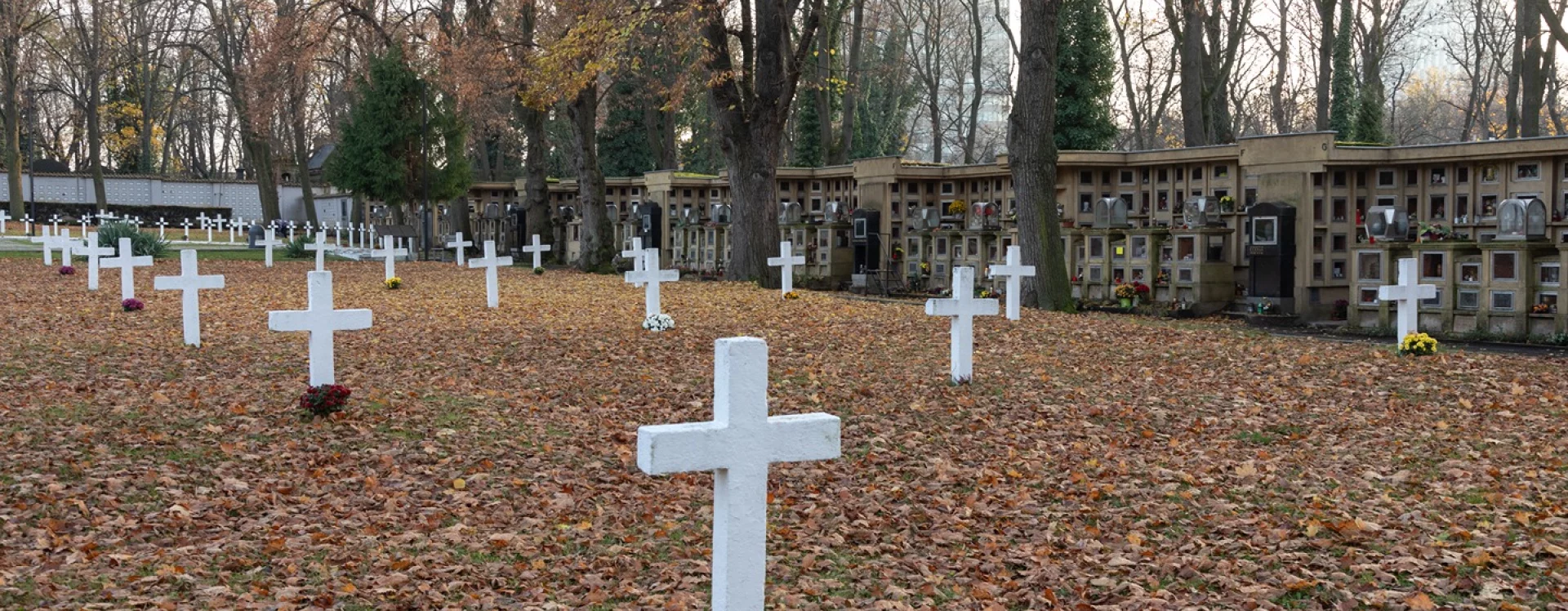
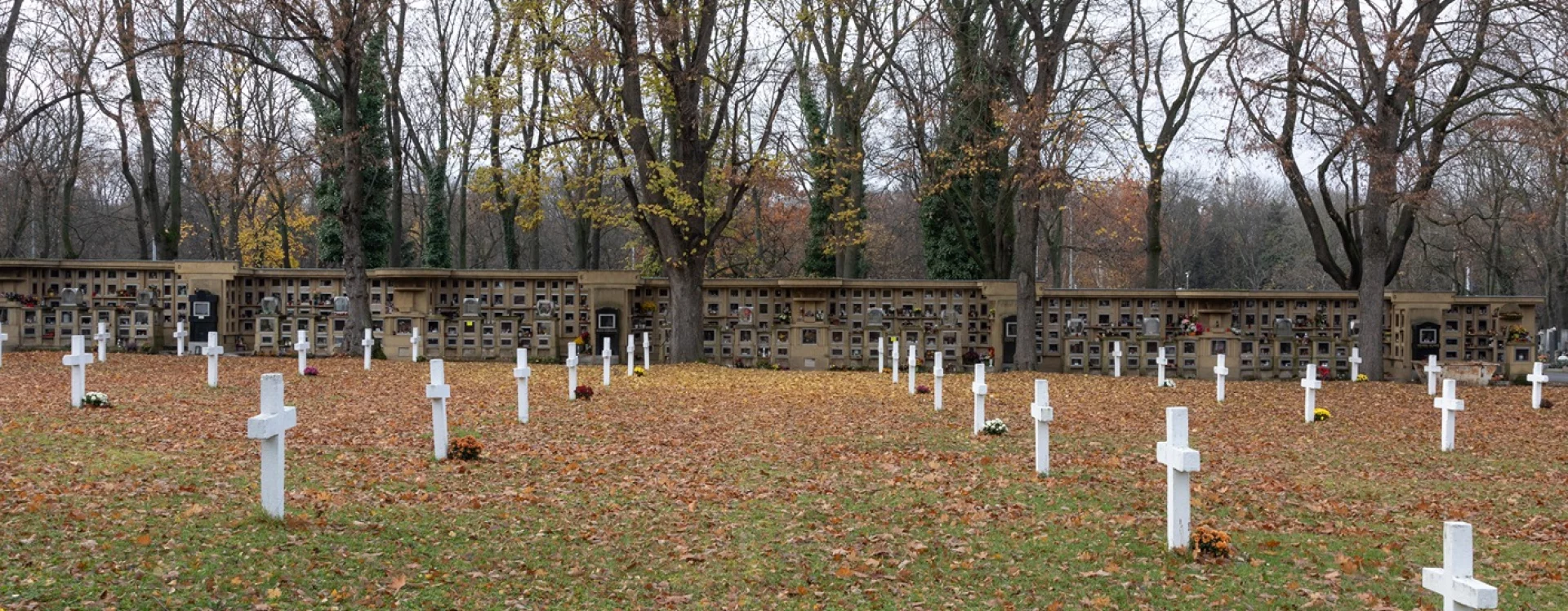
A very unique work of architecture can be found along the wall between Cemetery X and the 2nd Municipal Cemetery: a columbarium in the style of interwar decorativism from around the middle of the 1920s. A similar structure, something of its pendant, can be found on the other side of Jana Želivského Street along the wall of Olšany’s 1st Municipal Cemetery.
The legalization of cremation in Czechoslovakia in 1919 introduced new ideas and new challenges to the field of funerary architecture. Architects had to address new issues such as the construction of crematoria, urn graves, scatter fields, and columbaria. The origins of the word “columbarium” reach back to ancient Rome, where the cremation of the dead was a normal form of burial rite. The Romans placed urns with the ashes of their dead into rows of compartments in a wall that reminded them of pigeonholes (columba is the Latin word for pigeon).
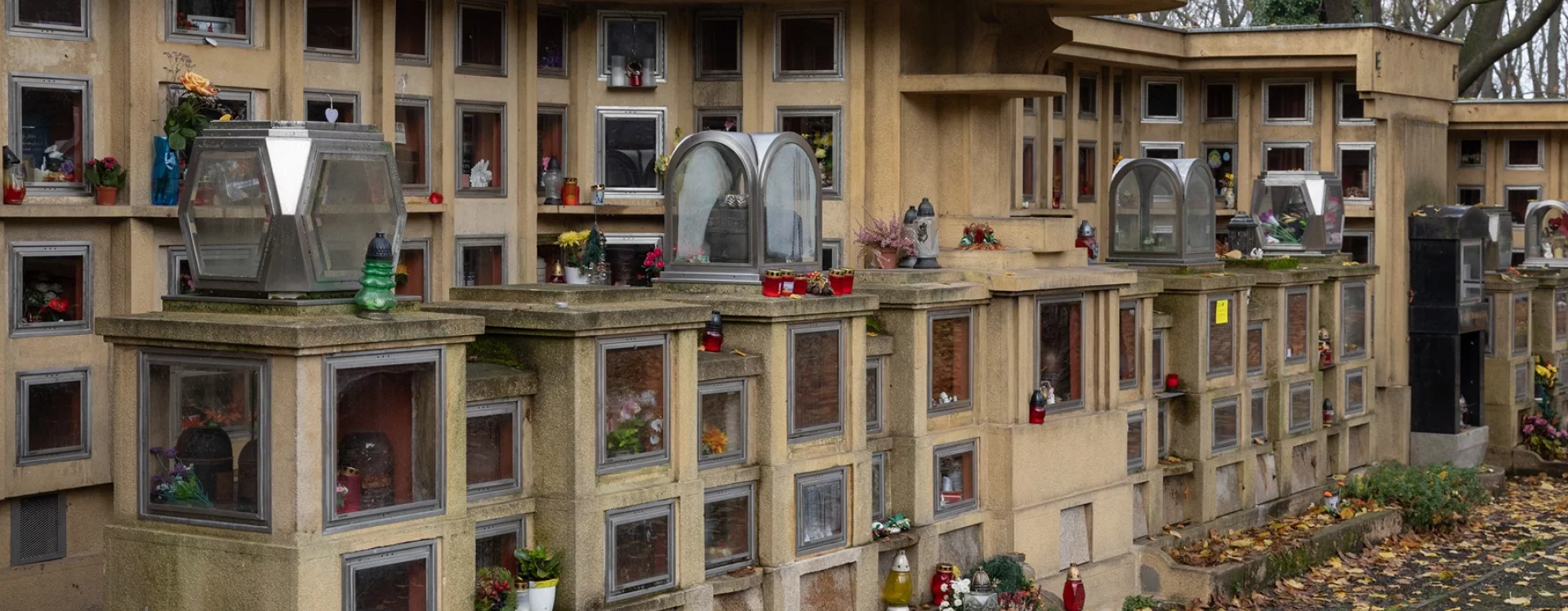
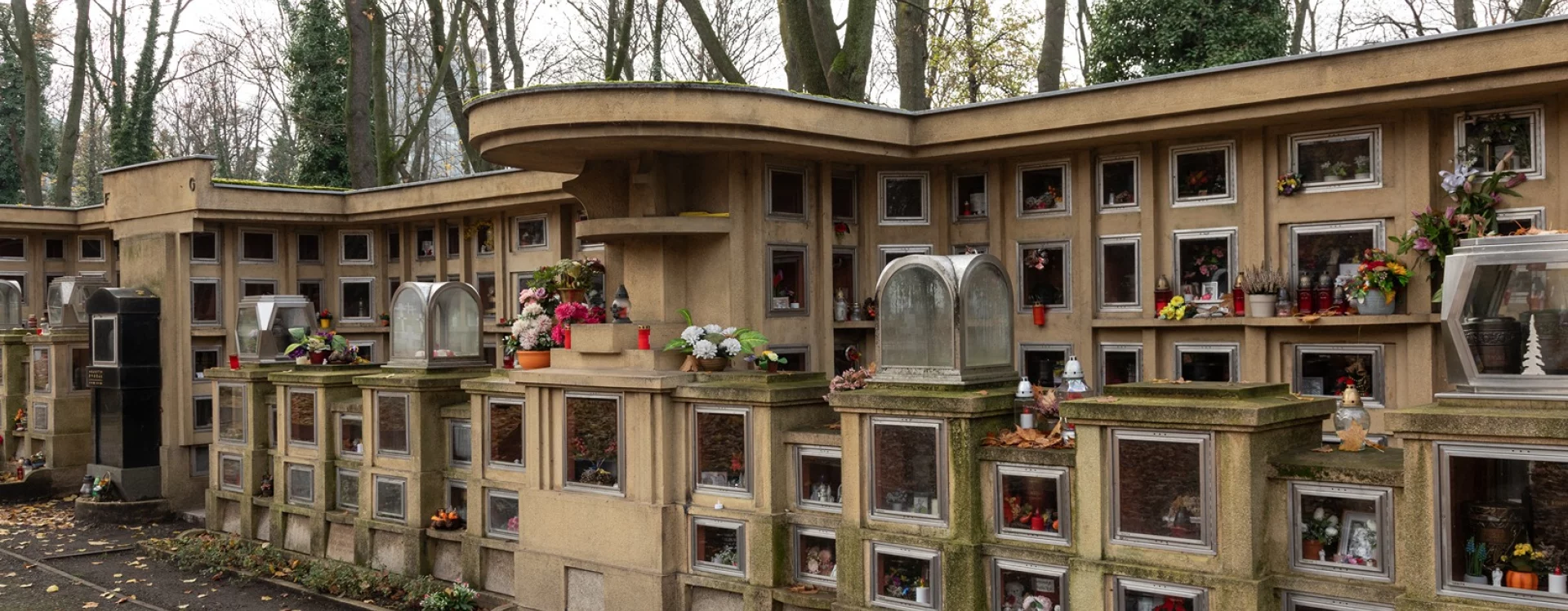
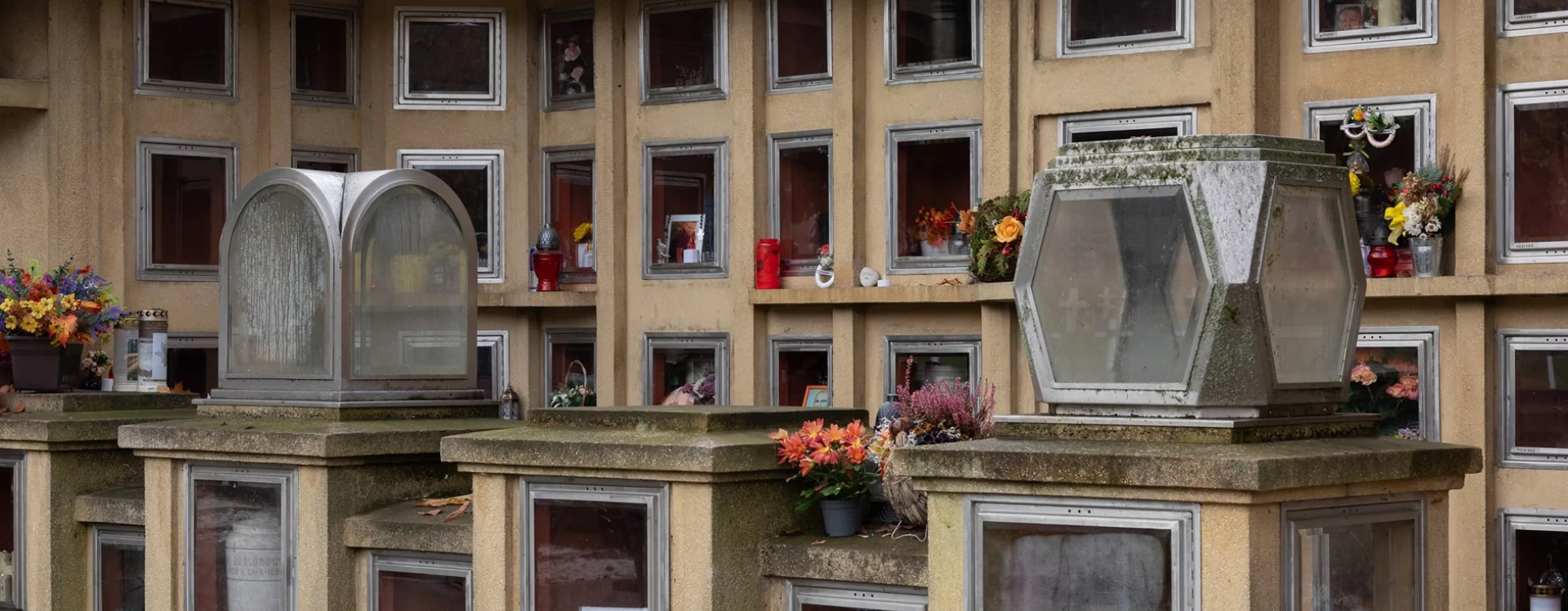
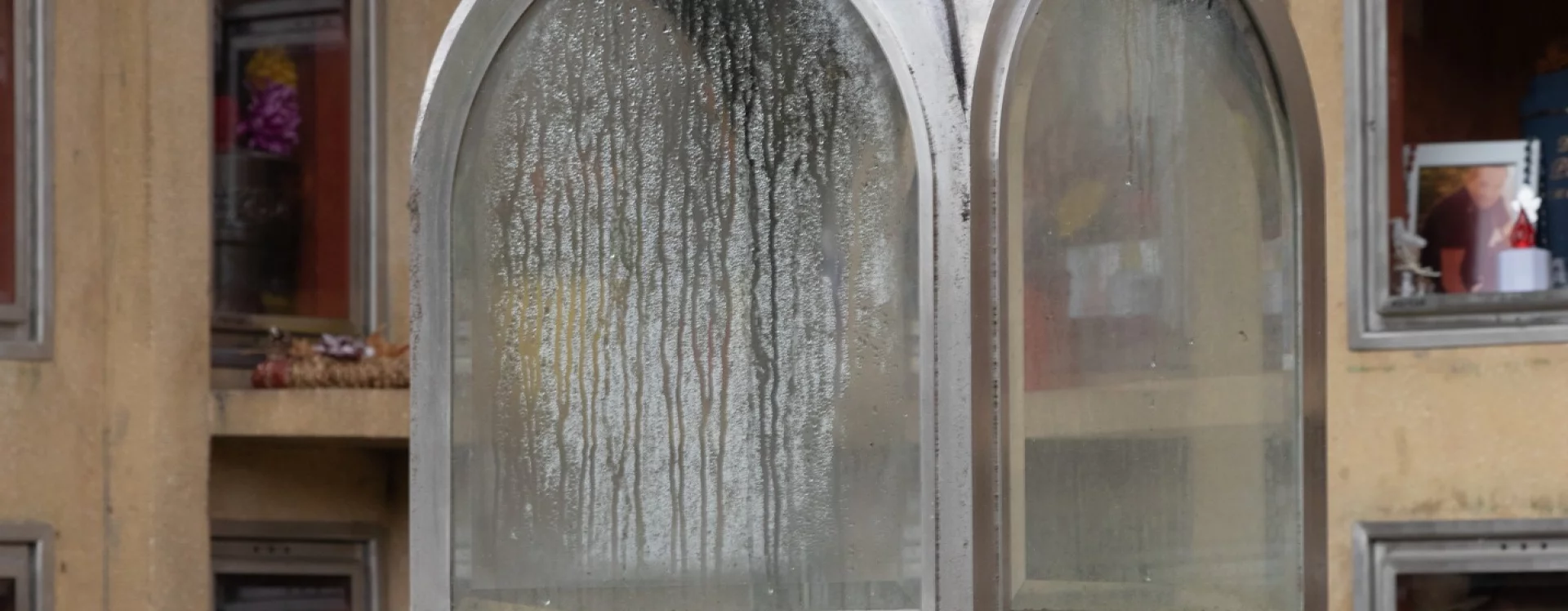
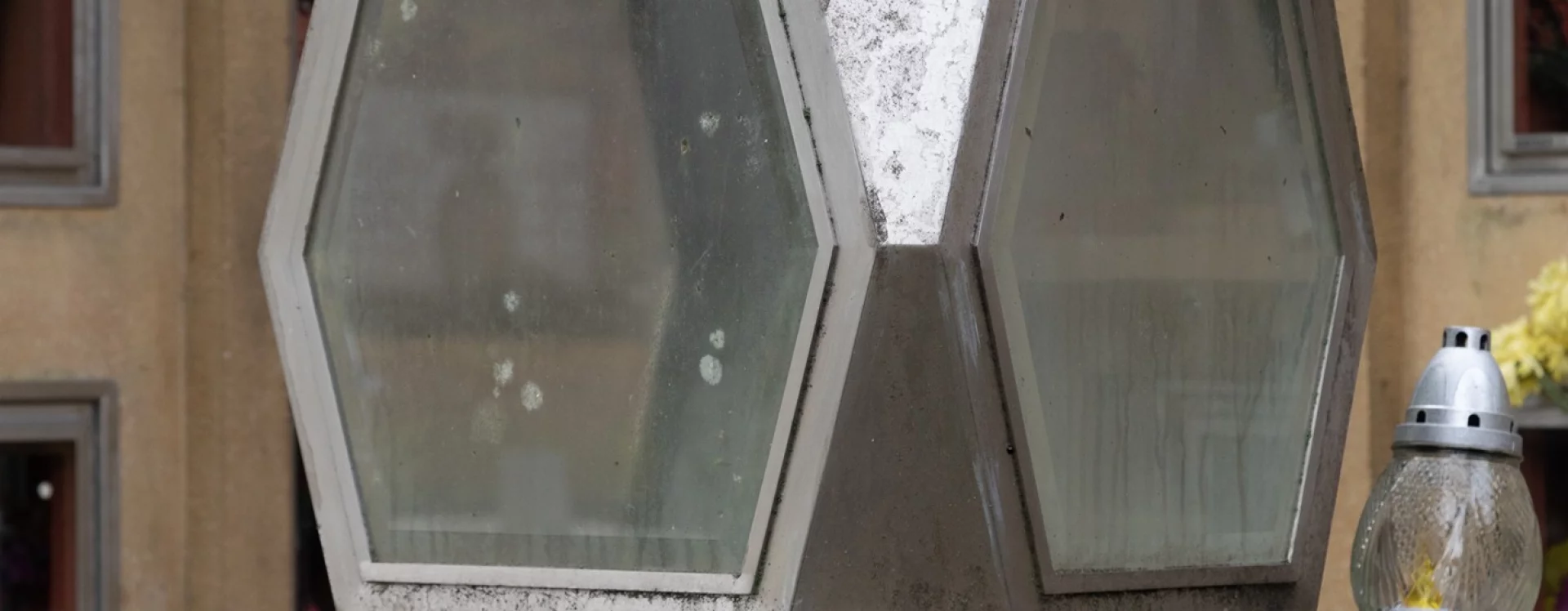
The columbarium at the 2nd Municipal Cemetery, which according to a restoration report from the year 2014 may have been produced by the firm of the sculptor Karel Novák (1871–1955), consists of several rows of glass compartments, ordered into sections labeled A to H. In terms of composition, it interacts with the surrounding cemetery quite dynamically through the use of alternating curved and rectangular niches. Another dynamic element is the arrangement of compartments in such a way that one can enter each of the sections. The group of polished black granite urn gravestones in front of the columbarium was made by the Holvek company, then headquartered on Fochova (today Vinohradská) Street. On the far southern end of the columbarium wall is a memorial plaque from a group of Czech athletes dedicated to the Japanese runner Kinue Hitomi (1907–1931), whose achievements helped to change the public perception of women in sports not just in her home country, but throughout the world. When she participated in the Third Women’s World Games in Prague in 1930, she won the sympathy of the general public, including President Masaryk.