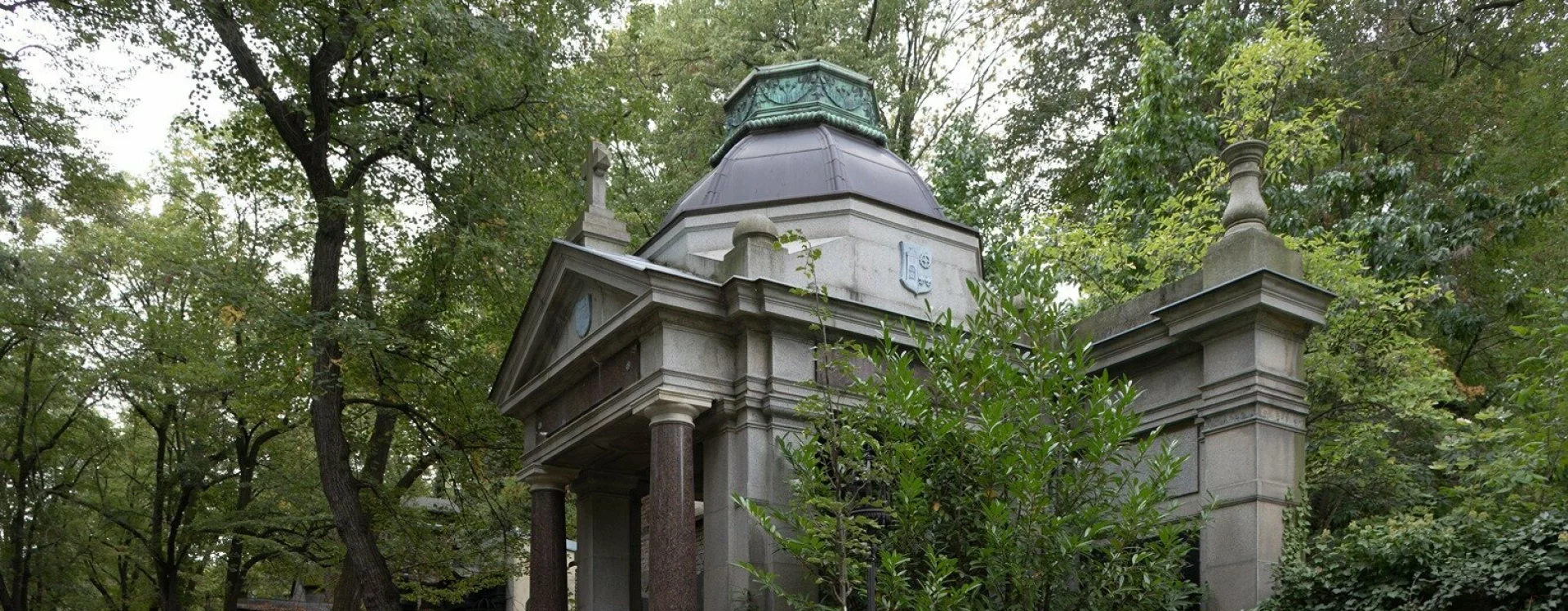
This tomb, one of the most distinctive Neorenaissance works at Olšany, is a remarkable example of the desire for posthumous representation – here expressed among other things in the decision to hire the most prestigious professionals for its design and construction. It was commissioned in 1895 by Franz von Waldek, a prominent entrepreneur raised into the nobility in 1887 who was active among other things in sugar refineries, ironworks, and banking.
With the vision of building a grandiose family tomb, von Waldek approached the renowned architectural firm of Fellner & Helmer, which primarily designed theater buildings and which around the turn of the twentieth century was active not just in Austria-Hungary but also far beyond its borders. In the Czech lands, the company built today's State Opera in Prague, the Mahen Theatre in Brno, and the Grandhotel Pupp in Karlovy Vary, among others. The tomb was realized by the leading stonemasonry company of Pupp & Škarka, under the supervision of master builder Josef Blecha.
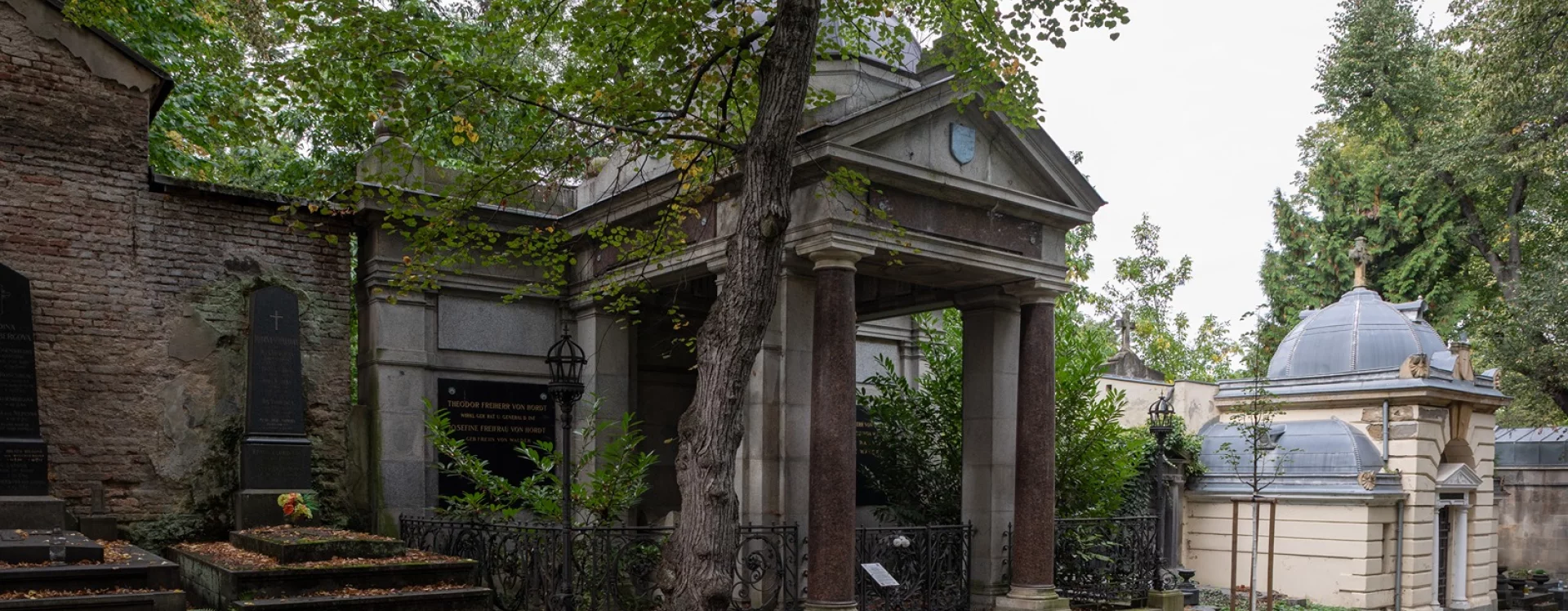
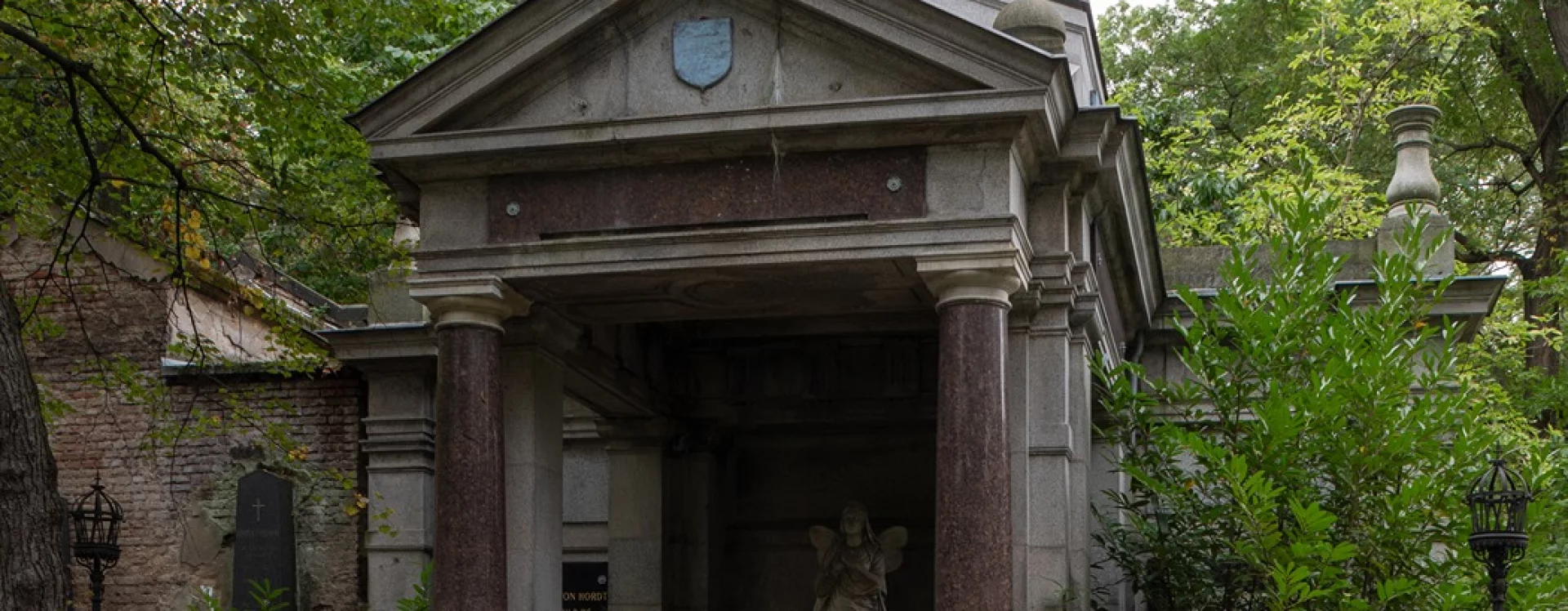
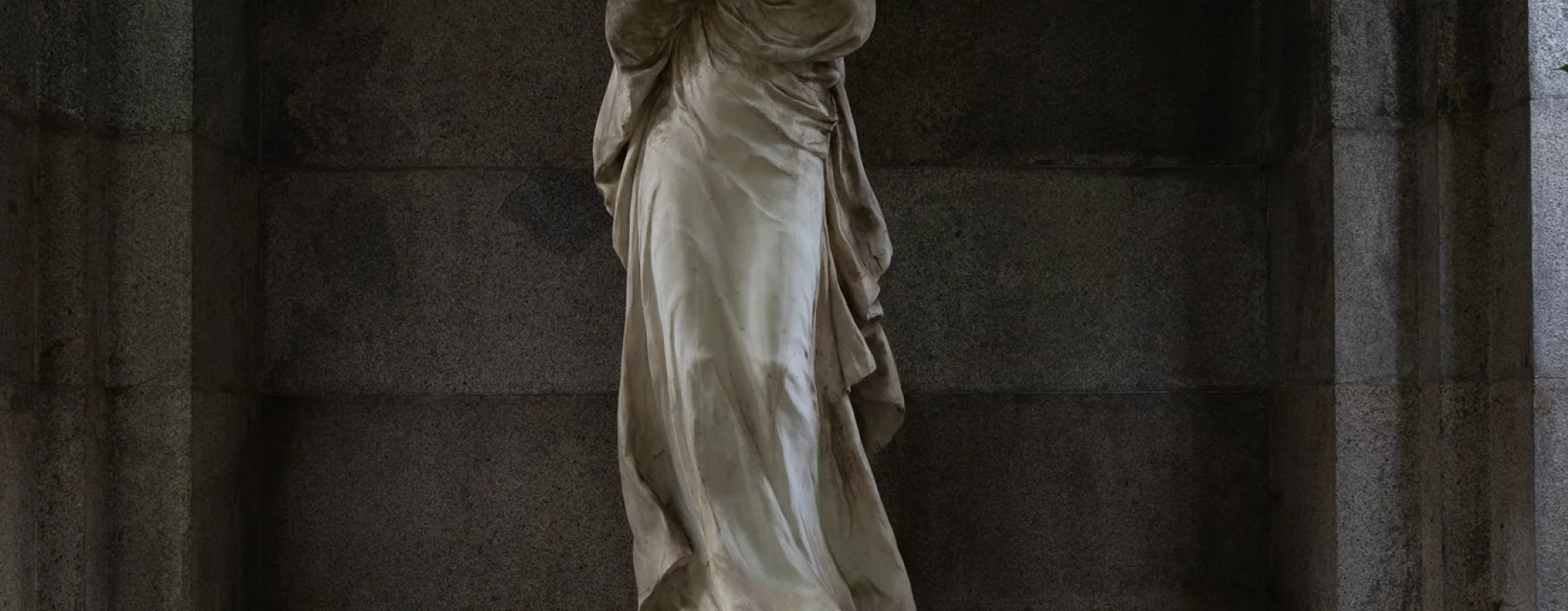
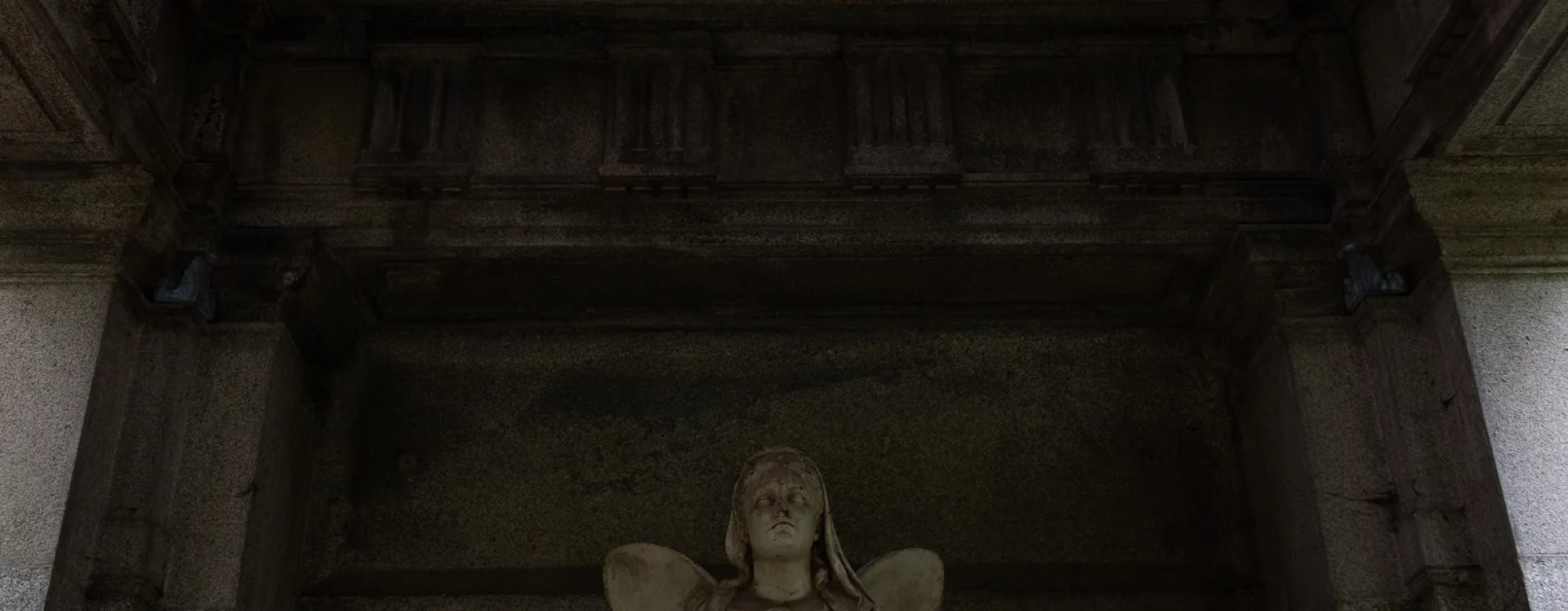
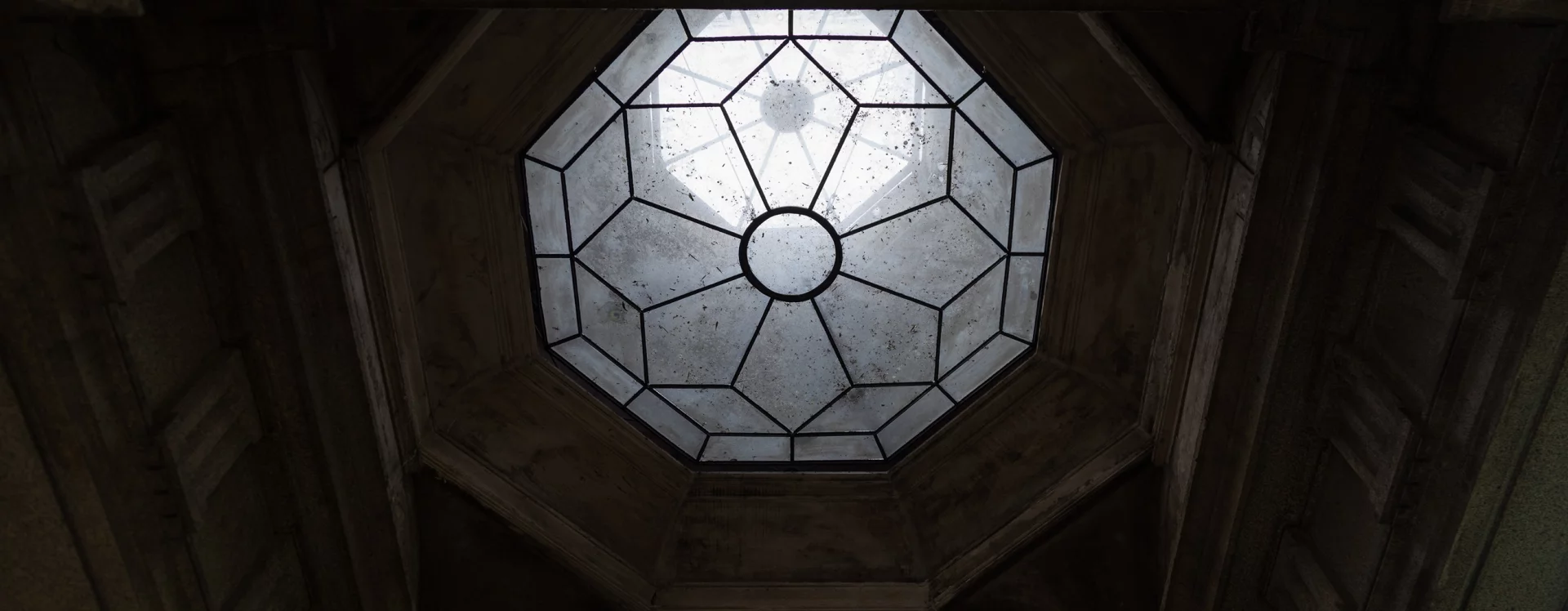
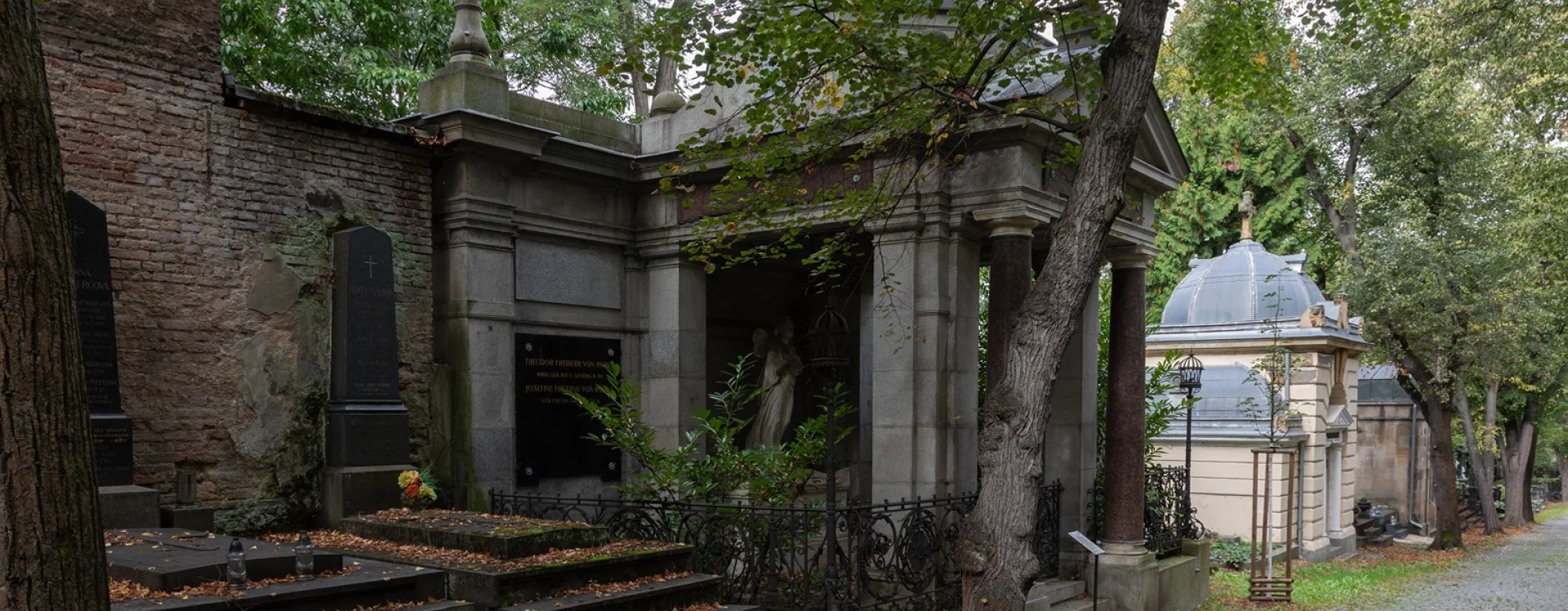
The triple-bay open chapel tomb consists of a central shrine, which communicates with the surrounding cemetery via a facade featuring a pair of granite columns supporting an entablature and a triangular pediment with a symbol of the cross. The tomb's lateral wings consist of walls with pilasters and inscription panels. The entire plot is enclosed by an iron fence with tall lanterns. Architecturally interesting is the copper roof crowned by a roof lantern that channels light through a stained-glass skylight directly into the center of the shrine. Inside, the central motif is a female allegorical figure of Psyche, a symbol of the departing soul with butterfly wings, which seems to rise heavenward above a sarcophagus adorned with garlands. The entire arrangement evokes not only a theatrical but also a spiritual atmosphere. The white marble sculptural decoration is by Caspar Clemens Zumbusch, a leading sculptor and among other things the author of a monument to Maria Theresa in Vienna. Zumbusch previously collaborated with Fellner & Helmer on Vienna's Volkstheater, which explains this otherwise unique cooperation in Prague and the fact that the Olšany statue is his only known work on Czech soil. The tomb is further adorned with numerous decorative metal elements crafted by the company of Richard Schorcht, who, as a member of the committee for the completion of the National Theatre, was actively involved in artistic decisions regarding its decoration. His contribution to the Waldek family tomb consists of the roof lantern with a poppy motif (a symbol of eternal sleep) and the fence decorated with scrollwork, inverted torches (symbols of death), laurel wreaths containing the letter IHS (a reference to salvation through Christ), and the letter "W" (for Waldek). The tomb is one of the Fellner & Helmer company's few surviving funerary structures and a perfect example of the collaboration of many exceptional figures from the field of art in the late nineteenth century.
Vladislava Holzapfelová, 2025
With the vision of building a grandiose family tomb, von Waldek approached the renowned architectural firm of Fellner & Helmer, which primarily designed theater buildings and which around the turn of the twentieth century was active not just in Austria-Hungary but also far beyond its borders. In the Czech lands, the company built today's State Opera in Prague, the Mahen Theatre in Brno, and the Grandhotel Pupp in Karlovy Vary, among others. The tomb was realized by the leading stonemasonry company of Pupp & Škarka, under the supervision of master builder Josef Blecha.
The triple-bay open chapel tomb consists of a central shrine, which communicates with the surrounding cemetery via a facade featuring a pair of granite columns supporting an entablature and a triangular pediment with a symbol of the cross. The tomb's lateral wings consist of walls with pilasters and inscription panels. The entire plot is enclosed by an iron fence with tall lanterns. Architecturally interesting is the copper roof crowned by a roof lantern that channels light through a stained-glass skylight directly into the center of the shrine. Inside, the central motif is a female allegorical figure of Psyche, a symbol of the departing soul with butterfly wings, which seems to rise heavenward above a sarcophagus adorned with garlands. The entire arrangement evokes not only a theatrical but also a spiritual atmosphere. The white marble sculptural decoration is by Caspar Clemens Zumbusch, a leading sculptor and among other things the author of a monument to Maria Theresa in Vienna. Zumbusch previously collaborated with Fellner & Helmer on Vienna's Volkstheater, which explains this otherwise unique cooperation in Prague and the fact that the Olšany statue is his only known work on Czech soil. The tomb is further adorned with numerous decorative metal elements crafted by the company of Richard Schorcht, who, as a member of the committee for the completion of the National Theatre, was actively involved in artistic decisions regarding its decoration. His contribution to the Waldek family tomb consists of the roof lantern with a poppy motif (a symbol of eternal sleep) and the fence decorated with scrollwork, inverted torches (symbols of death), laurel wreaths containing the letter IHS (a reference to salvation through Christ), and the letter "W" (for Waldek). The tomb is one of the Fellner & Helmer company's few surviving funerary structures and a perfect example of the collaboration of many exceptional figures from the field of art in the late nineteenth century.
Vladislava Holzapfelová, 2025
Literature
Igor Kovačević (ed.). Beyond Everydayness: Theatre Architecture in Central Europe. Praha, 2010, s. 176-181.
Kateřina Bečková (ed.). Fellner a Helmer a divadelní architektura v českých zemích. Praha, 2013.
Dana Linhartová. Architektonická činnost ateliéru Fellner & Helmer v českých zemích. Praha, 2017, s. 143.
Jana Tischerová. Pražské hřbitovy, pohřebiště a sepulkrální památky. Praha, 2023, s. 38.