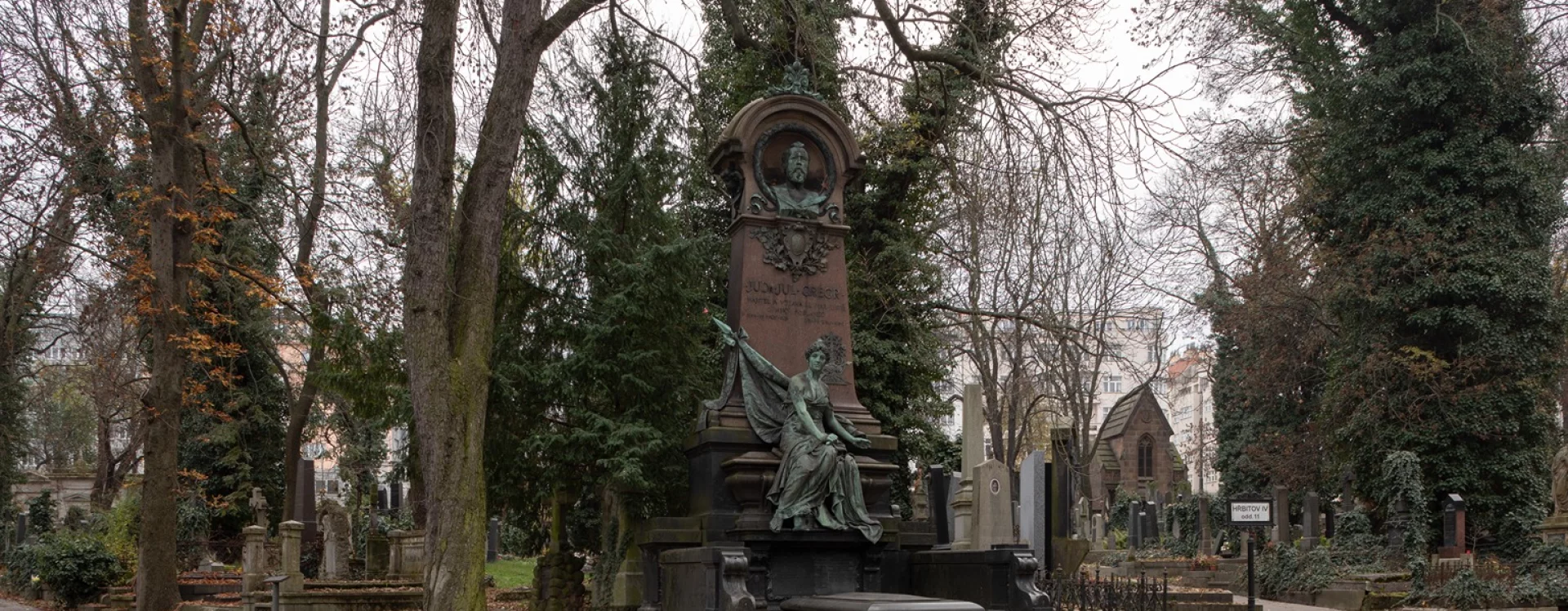
Julius Grégr (1831–1896), a prominent Czech journalist and politician, member of the Bohemian Diet and the Imperial Council, and co-founder of the Young Czech Party, significantly influenced Czech journalism, imbuing it with the fighting spirit of the Czech National Revival. With substantial help from his brother Eduard, in 1861 he founded and began publishing the radical patriotic newspaper Národní listy, which – as the Young Czechs’ media arm – was frequently at odds with the Austrian authorities. Like other courageous newspaper publishers, Grégr was imprisoned for his views. When he died in late 1896, his final resting place had already been decided: the “Young Czechs’ Plot” at Olšany, where the elite of the National Liberal Party (the Young Czechs) was buried. Before Grégr, Karel Sladkovský and Josef Barák had been interred here as well.
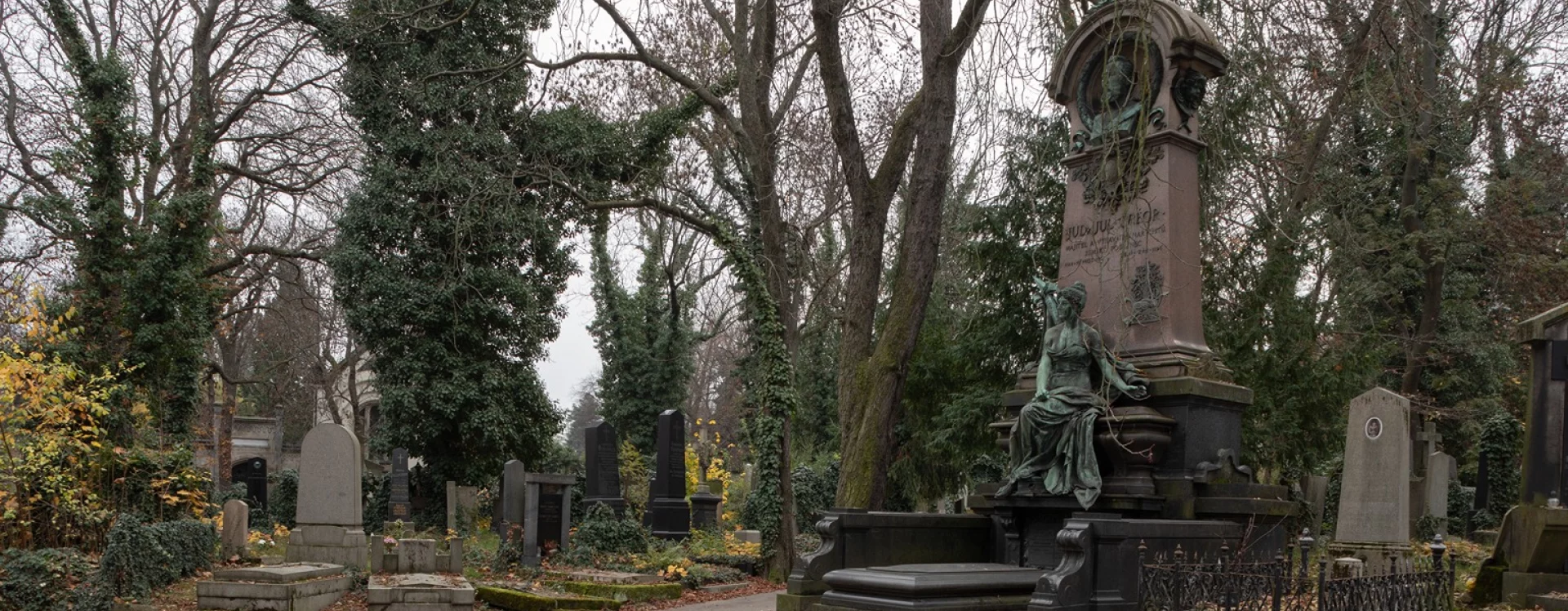
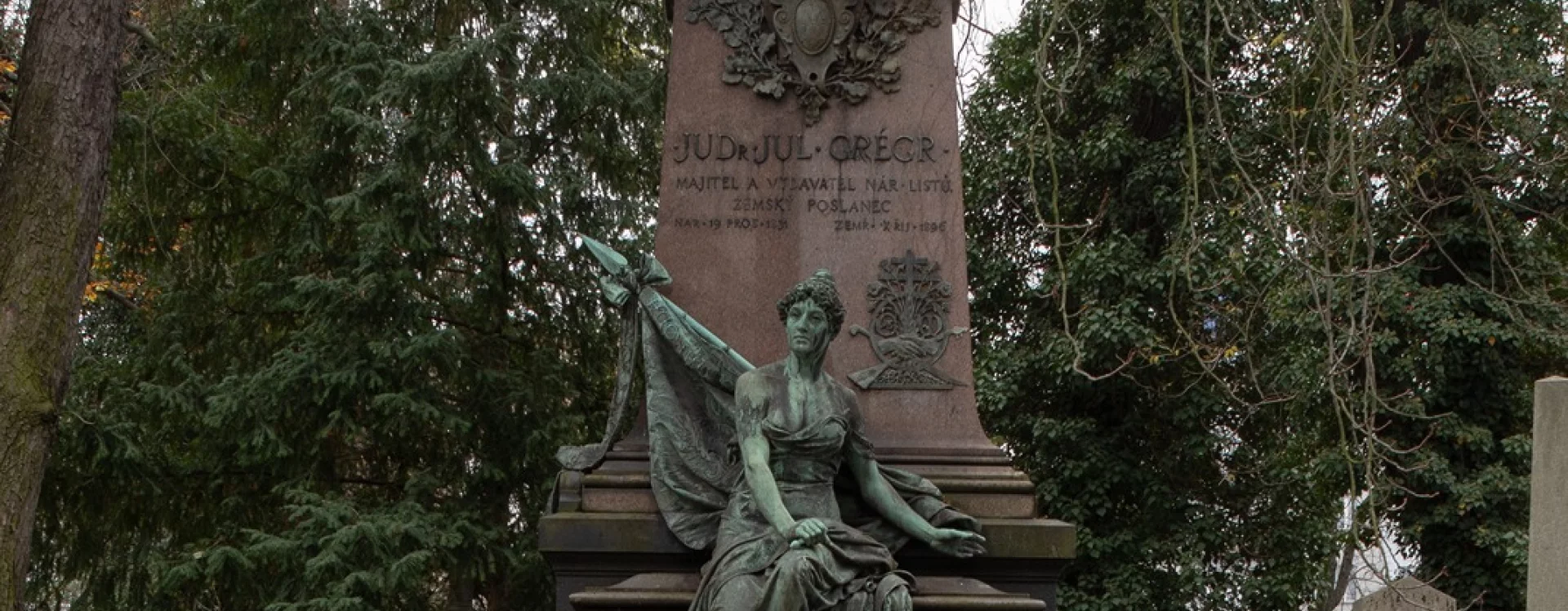
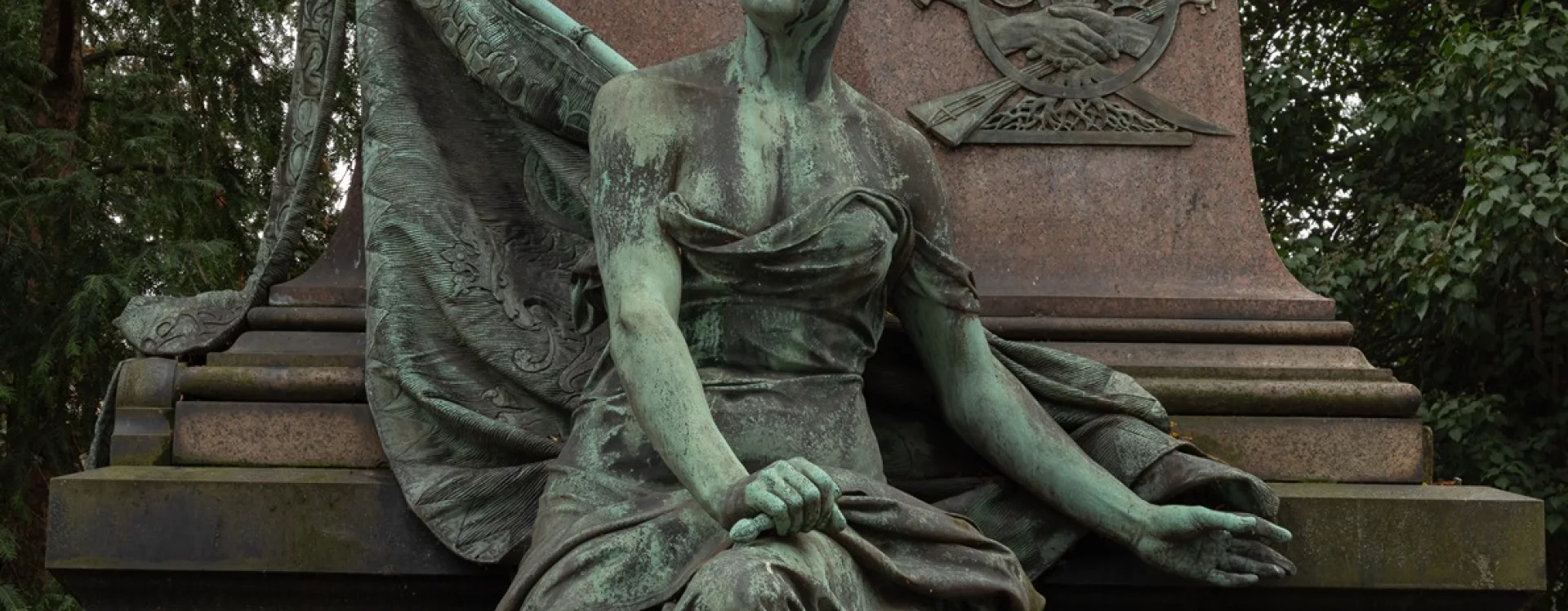
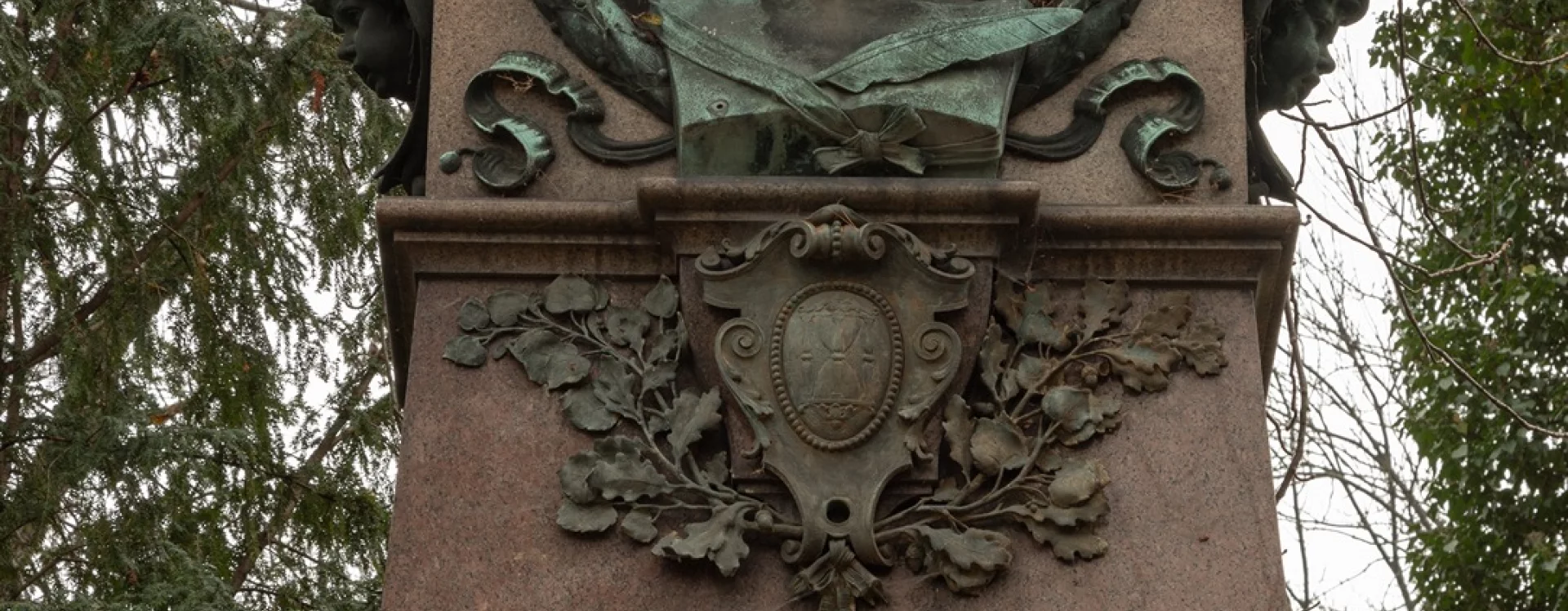
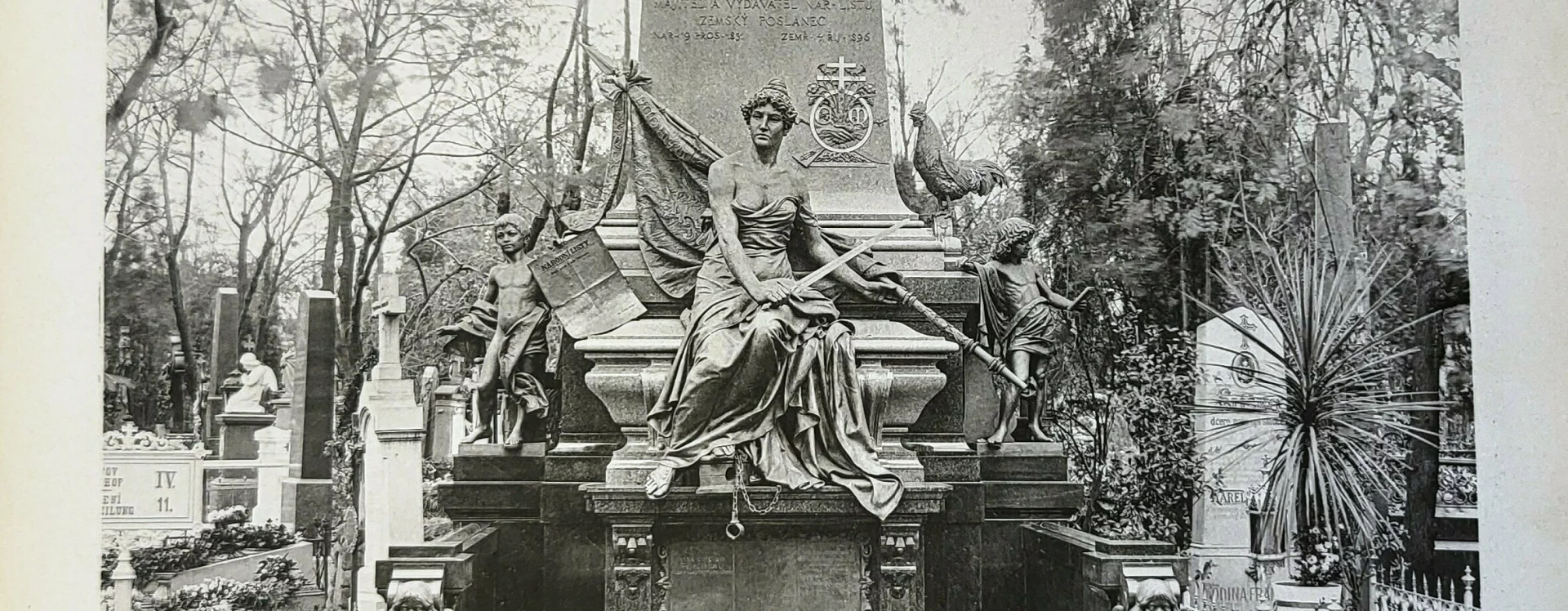
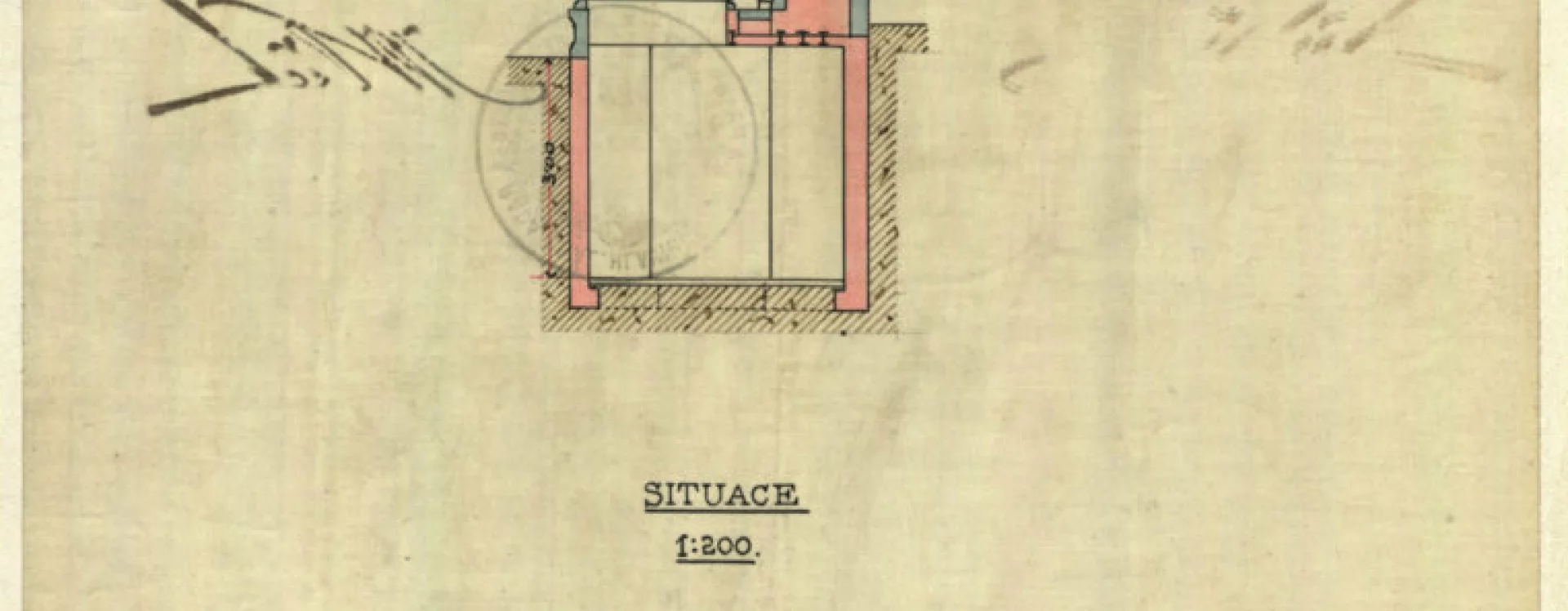
Grégr’s truly monumental granite and syenite memorial, designed by Rudolf Kříženecký, is divided into three parts: a massive pedestal with steps flanking the ledger, a central part with an allegorical sculpture, and a tall stele with Grégr’s name beneath a portrait bust. The sculptural decoration by Bohuslav Schnirch depicts Grégr’s contributions to the Czech nation alongside symbols of the national revival. The central figure of Čechie sitting on the catafalque guards a banner with a lion motif. One leg touches a pillory with shackles, a reference to the time Grégr spent in prison for criticizing the Habsburg regime. Figures of the geniuses on both sides of the stele were accompanied by symbols of the ideals of education and enlightenment that Grégr so steadfastly promoted and which were central to the Young Czech movement’s beliefs (a printing press with newspapers on the left and a podium with books on the right). Near the top of the monument is a bust of Grégr with a laurel wreath and a feather on which a bird once perched – a symbol of the human soul. Other motifs symbolizing the afterlife include a cartouche with an hourglass and a poppyhead (an attribute of the god of dreams Hypnos and a symbol of eternal sleep) on top of the stele. The shield with clasped hands, a lute, and a sword symbolizes Slavic unity. The original design also envisioned a rooster, an ancient symbol of vigilance and the dawn of a new day, standing on the stele’s right foot. Unfortunately, the two geniuses, both birds, and other minor decorative elements (angels’ heads and the rosettes originally on the stair risers) have been stolen – a sad indictment of how today’s society treats the graves of the deceased. Another grave at Olšany from which the bronze decoration has been stolen is the one that Rudolf Kříženecký erected for his family.
Literature
Náhrobek Dr. Julia Grérga na hřbitovech Olšanských. Architektonický obzor, II. 1903, č. 2. 1903, s. 8.
Vladimír Forst (ed.). Lexikon české literatury sv. 1 (A-G). Praha, 1985, s. 381.
Alois Vanoušek ‒ Vojtěch Grametbauer. Olšany, jaké neznáme. Praha, 2004, s. 61.
Kateřina Kuthanová (a kol.). Metamorfózy politiky, Pražské pomníky 19. století. Praha, 2013, s. 308.