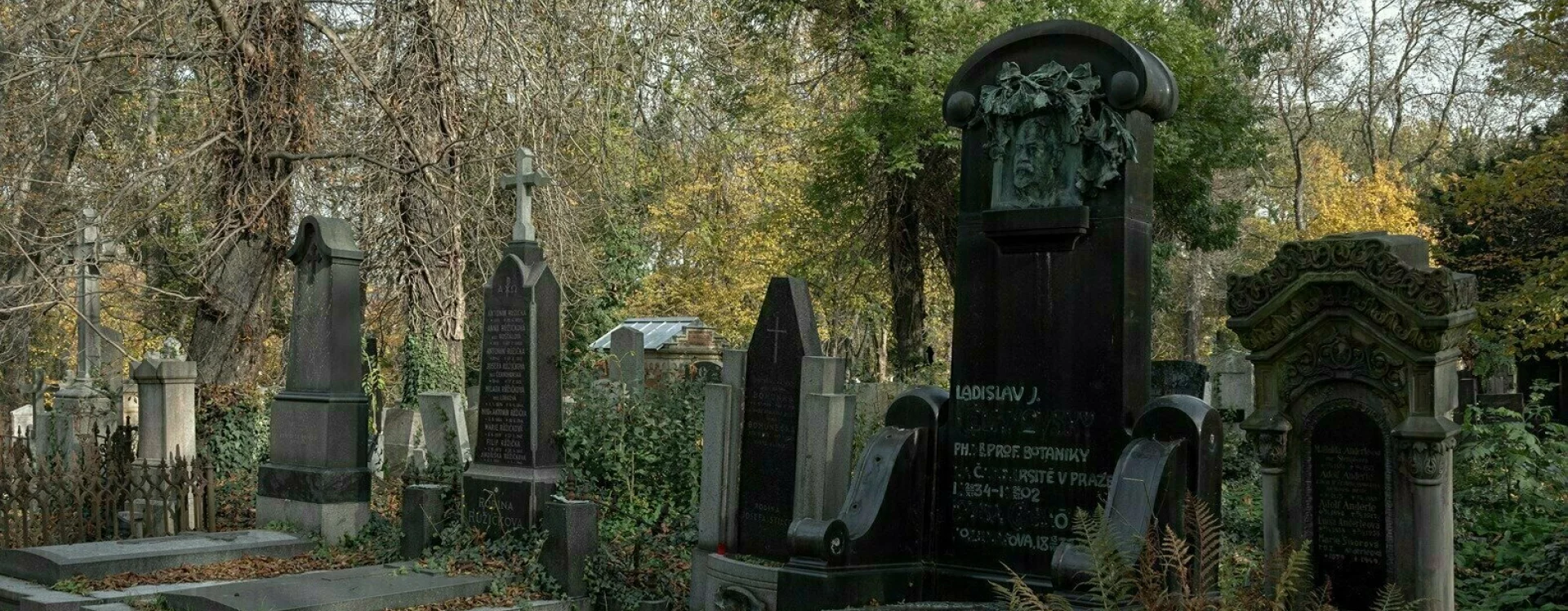
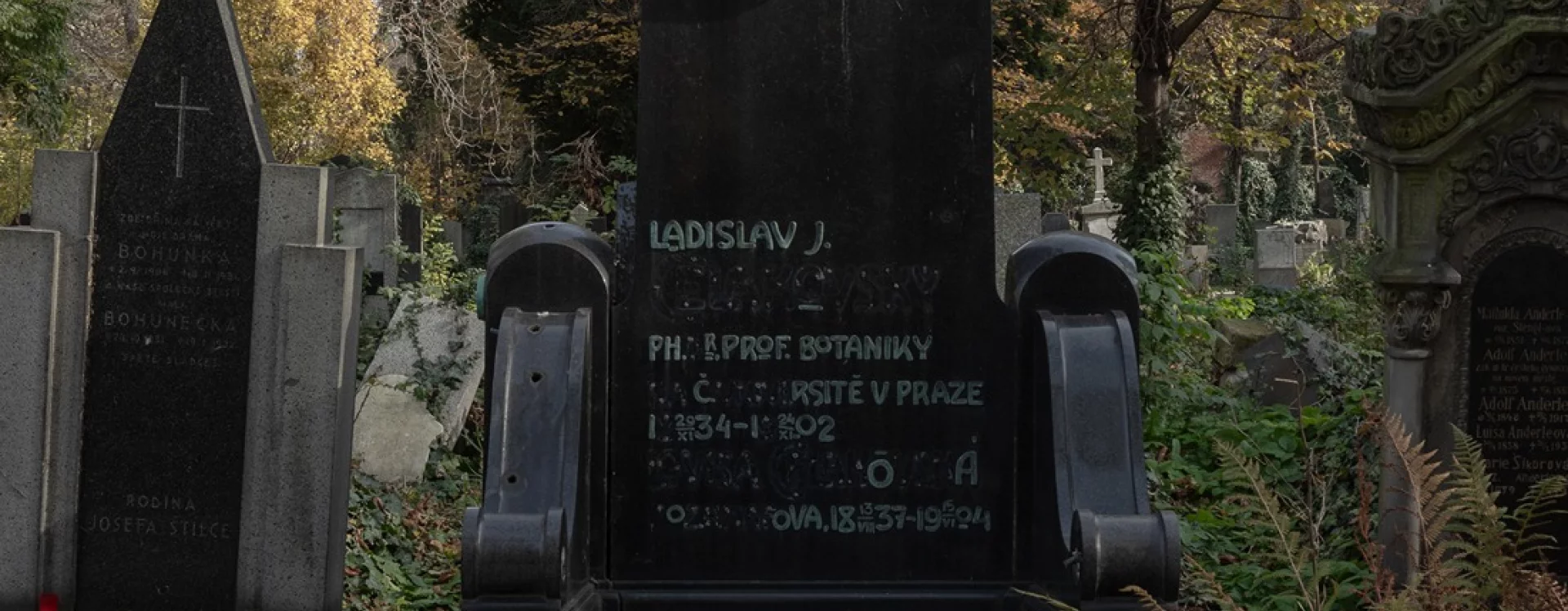
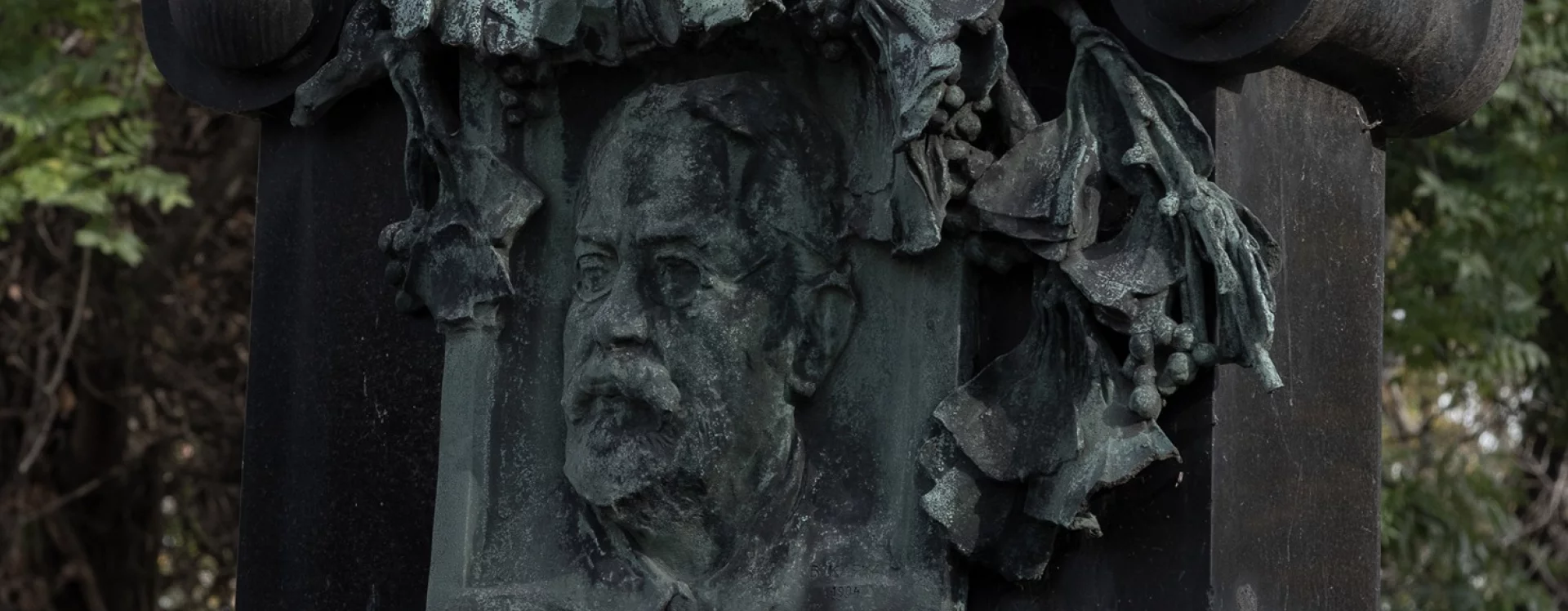
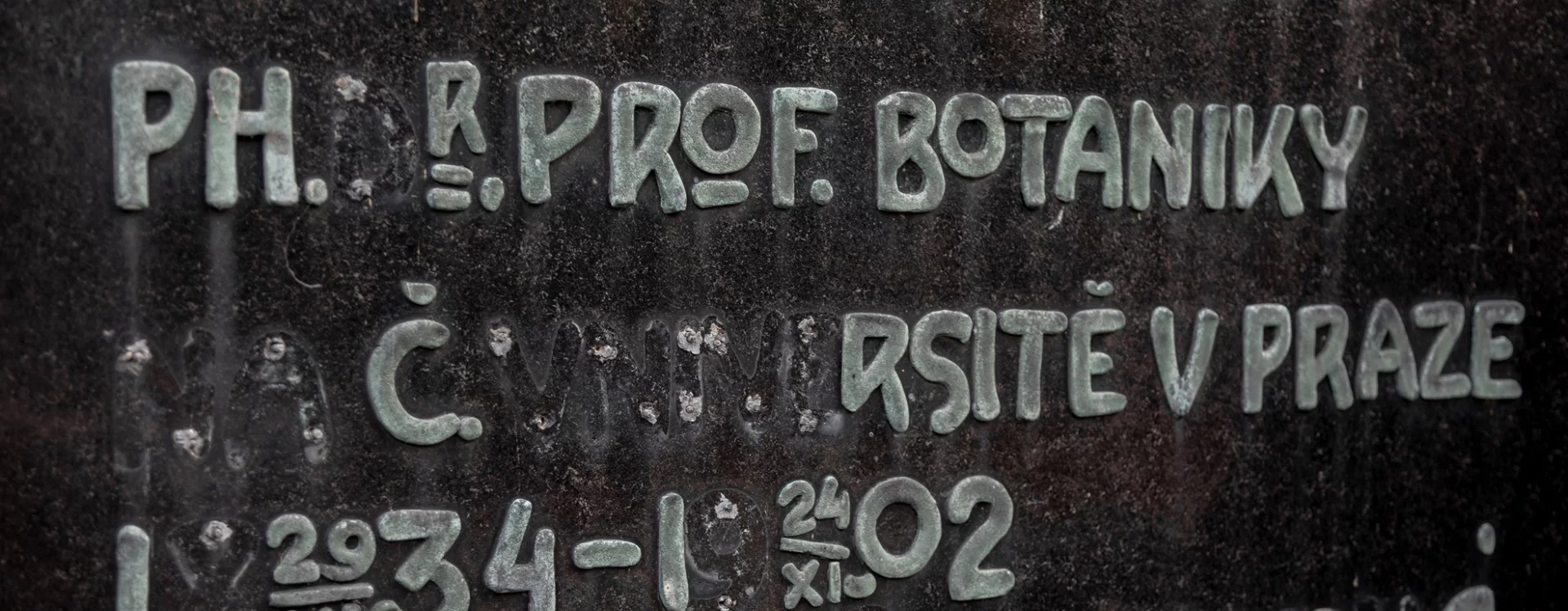
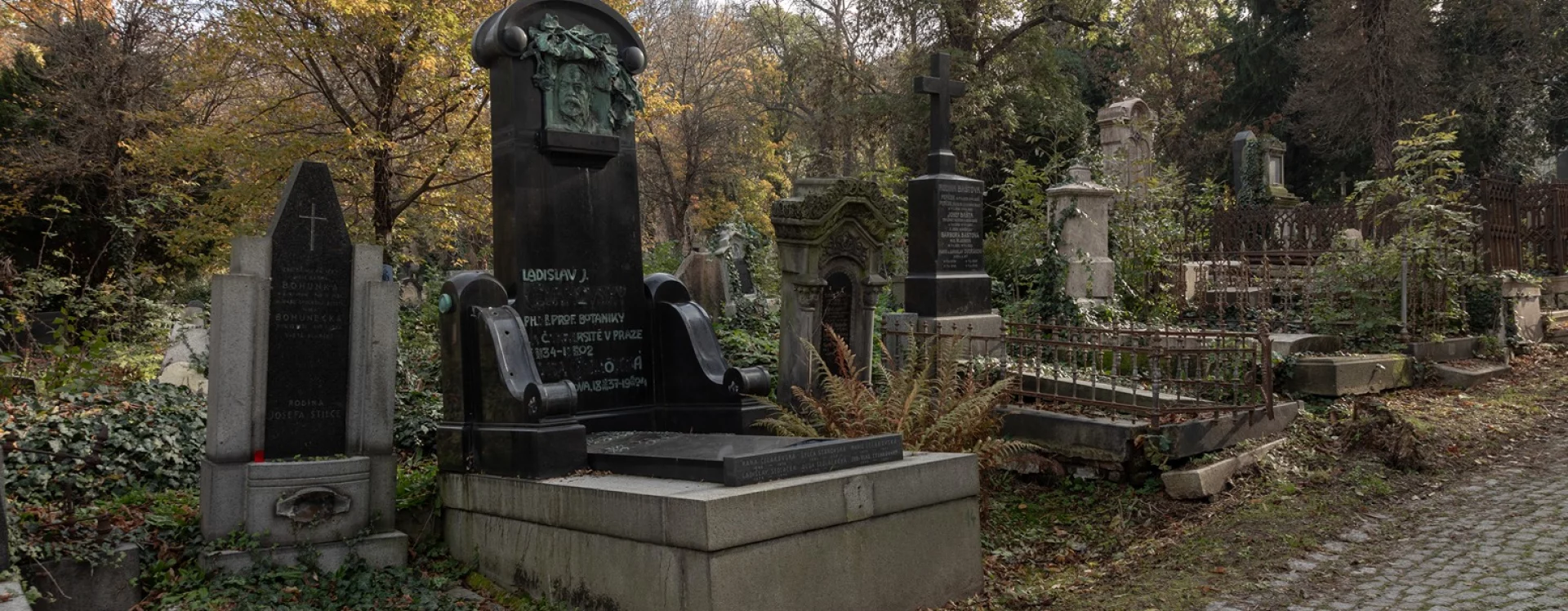
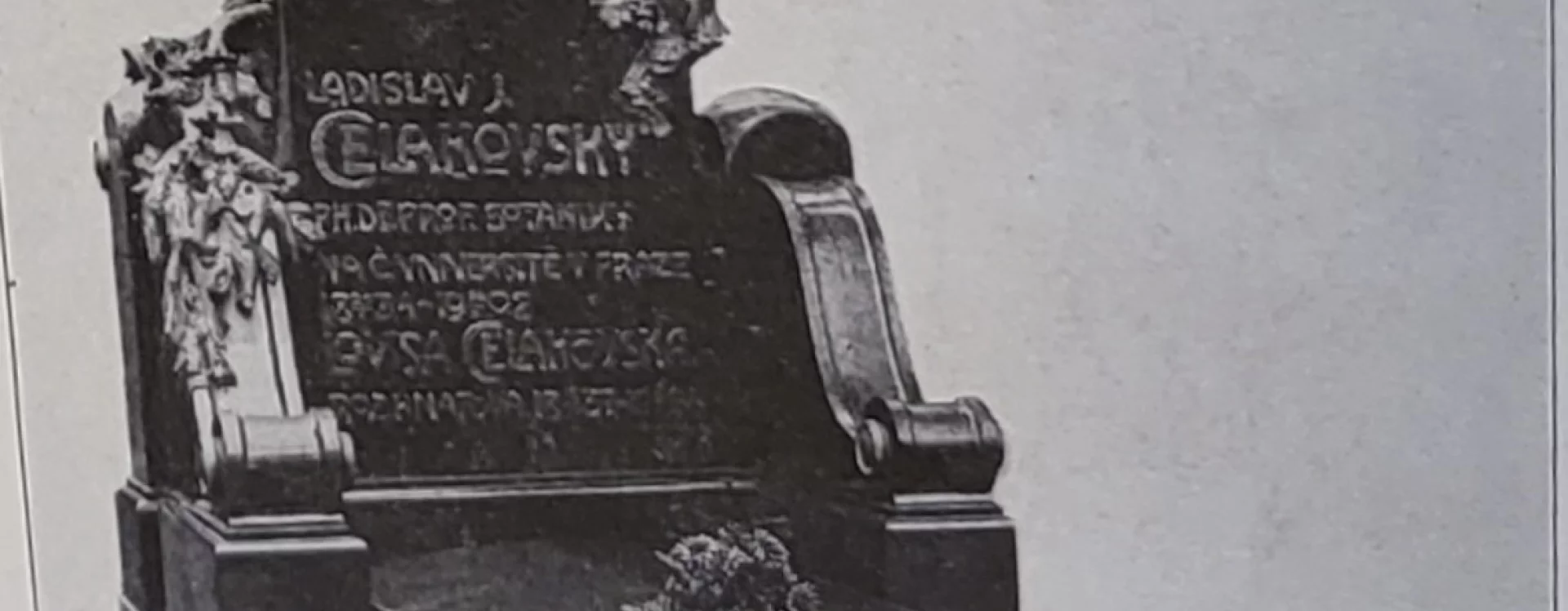
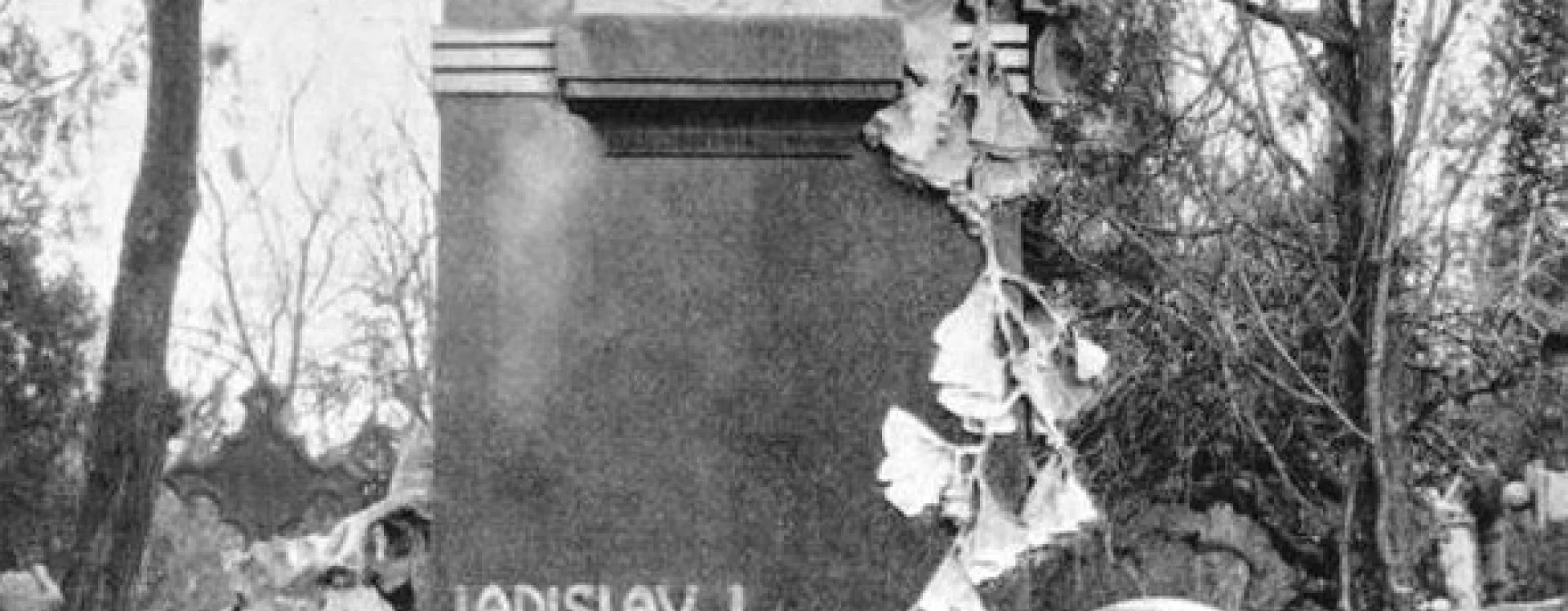
Architect Antonín Cechner designed this Art Nouveau gravestone made of black Swedish granite for his older friend Ladislav Čelakovský, a botanist of international renown. The bronze floral ornamentation is not merely decorative: the ginkgo biloba leaves that frame the relief of Čelakovský's likeness are a reminder that he was the one who included this tree among prehistoric gymnosperms. Čelakovský studied the morphology and evolution of plants, was involved in the classification of species, and among other things compiled the first scientific catalogue of plants in the Czech lands. He was the first to inform Czech readers about Darwin's theory of evolution and wrote numerous articles for magazines such as Živa and Vesmír. He also promoted the construction of the Na Slupi botanical gardens for the Czech section of Prague's university.
But Čelakovský was more than a just a narrowly focused scientist: he also translated poetry, including several plays by Shakespeare. His work in the natural sciences and his broader interests resulted from the influence of Jan Evangelista Purkyně, who took him under his wing following the death of his father, the poet František Ladislav Čelakovský. The close relationship between the gravestone's architect and the deceased is documented among other things by the fact that Čelakovský was a witness at Cechner's wedding to Zdenka Kvapilová, the sister of poet and playwright Jaroslav Kvapil.
Although the gravestone's design is rather conservative from today's perspective, upon its completion the press described it as modern. Within the context of Cechner's usual historicist approach, the design for Čelakovský's grave monument was truly progressive. Its volumetric arrangement consists of a dominant vertical stele flanked by symmetrical, undulating Art Nouveau wings. The floral reliefs are of a fundamental semantic and aesthetic significance. The work's overall traditional air reflects Cechner's professional focus. Thanks to the fact that his first experiences included work as an assistant to Josef Mocker during the completion of St. Vitus Cathedral, Cechner had a profound knowledge of medieval construction techniques. He also worked as a restorer and cataloguer of monuments and taught at the stonemasonry school in Hořice, where we can find one of his most impressive works, a lavish, richly decorated Neorenaissance cemetery gate.
In 1904, the sculptor Bohumil Kafka contributed floral décor to works by three architects at Olšany – we can thus compare his work on this monument to the decorations he did for Jan Kotěra (a gravestone for Professor Maydl) and Emanuel Pelant (for Pravoslav Veselý).