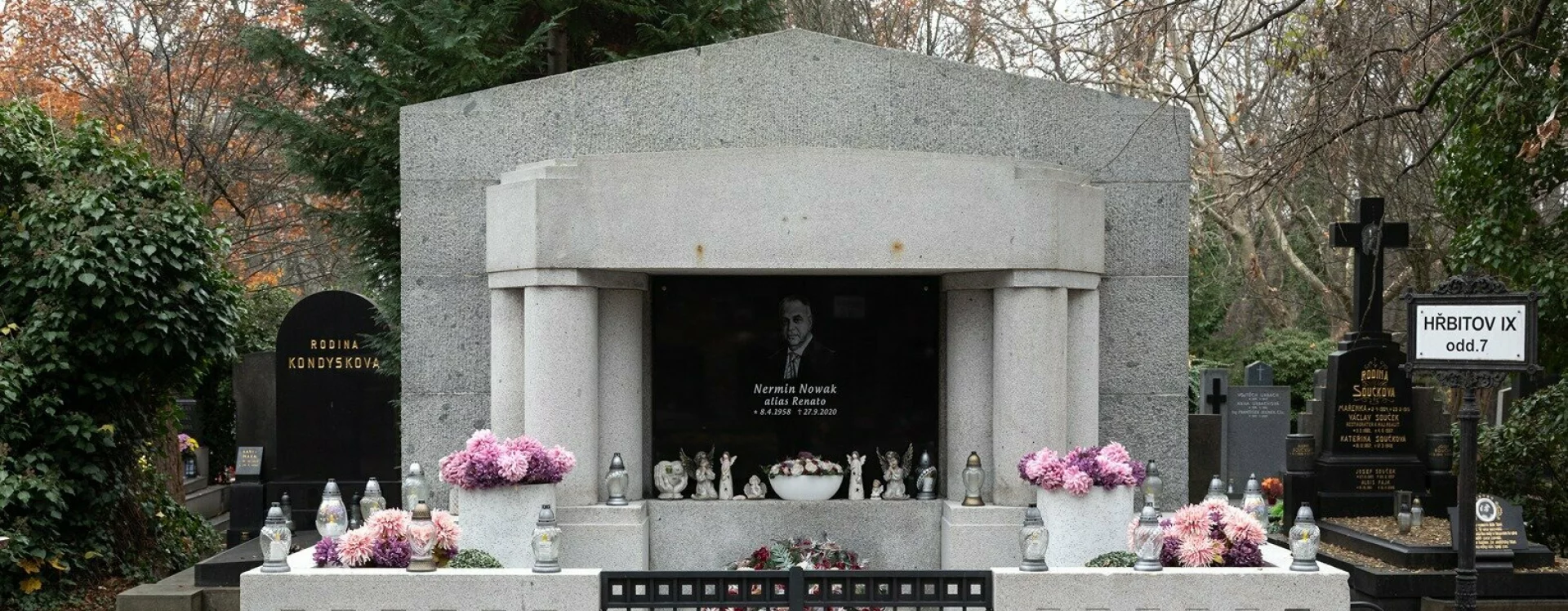
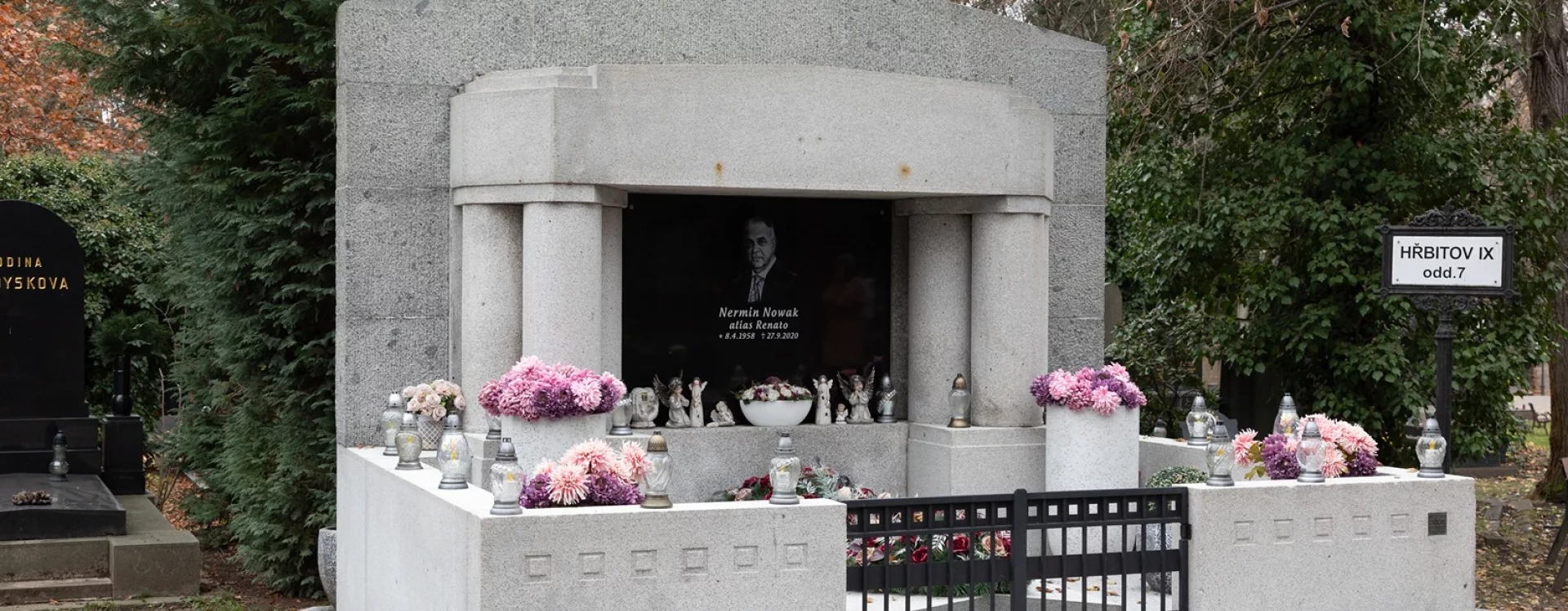
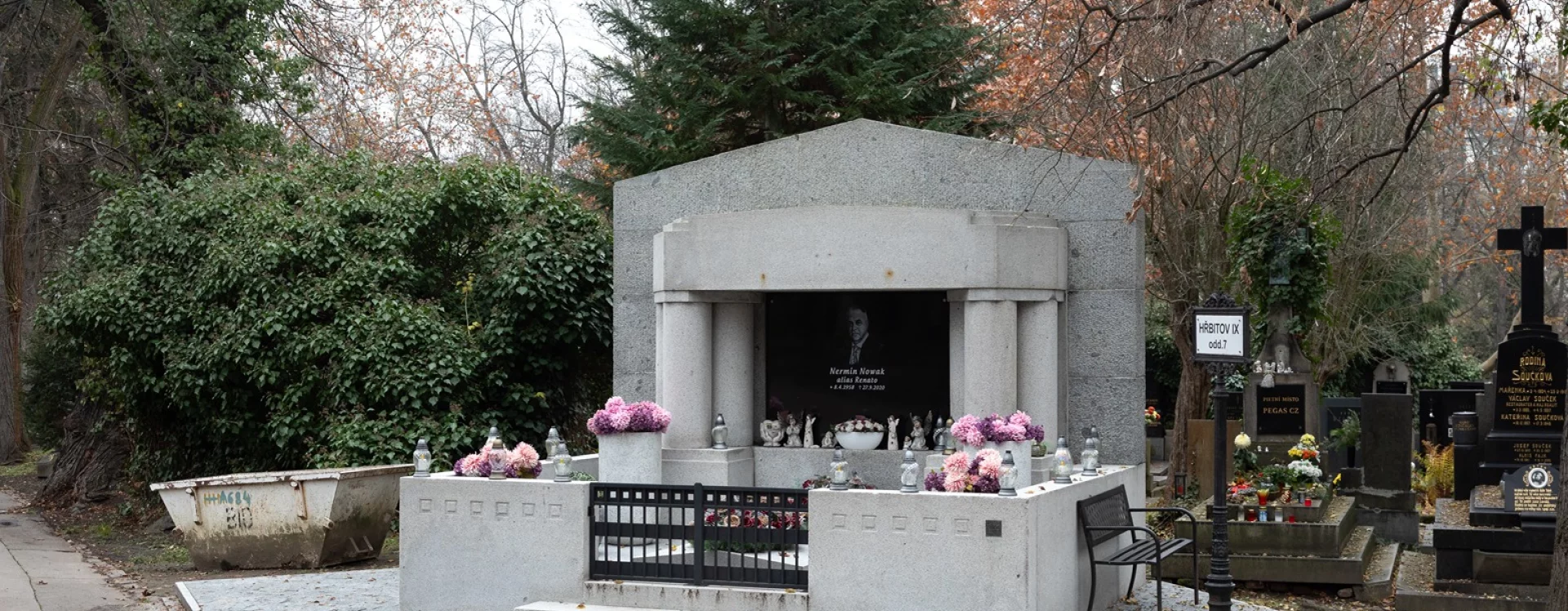
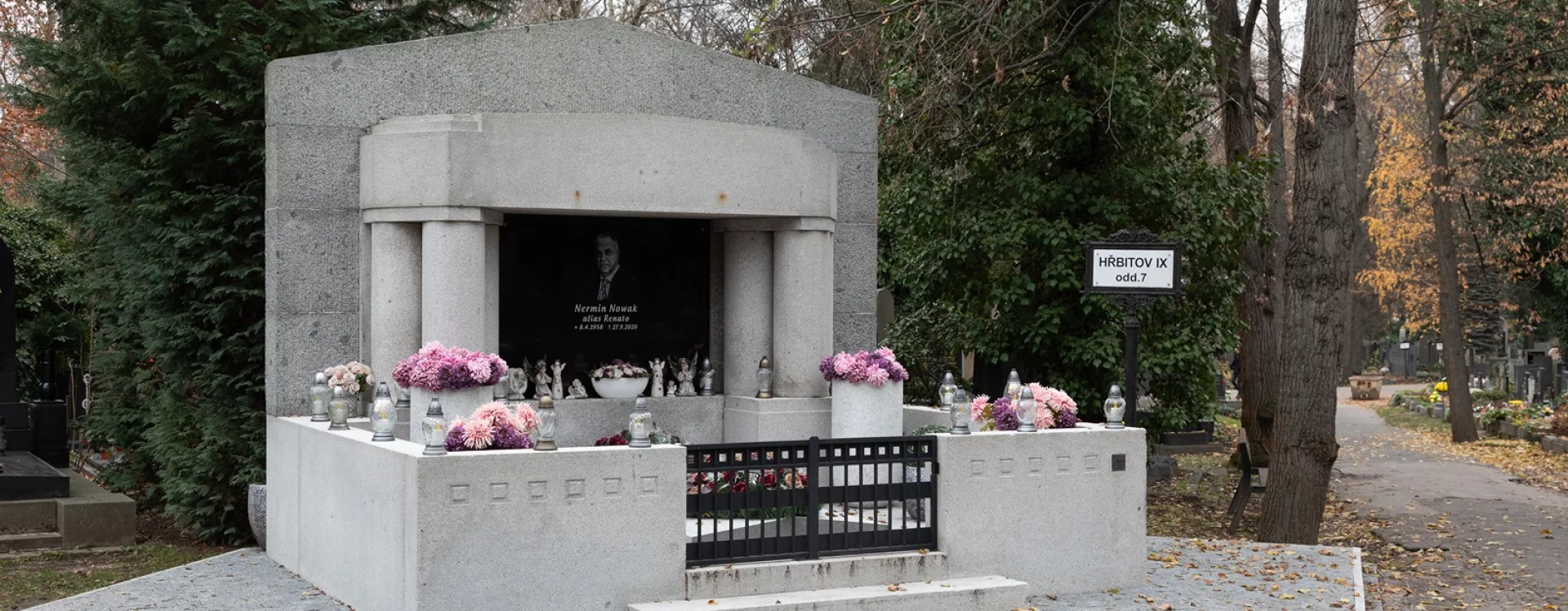
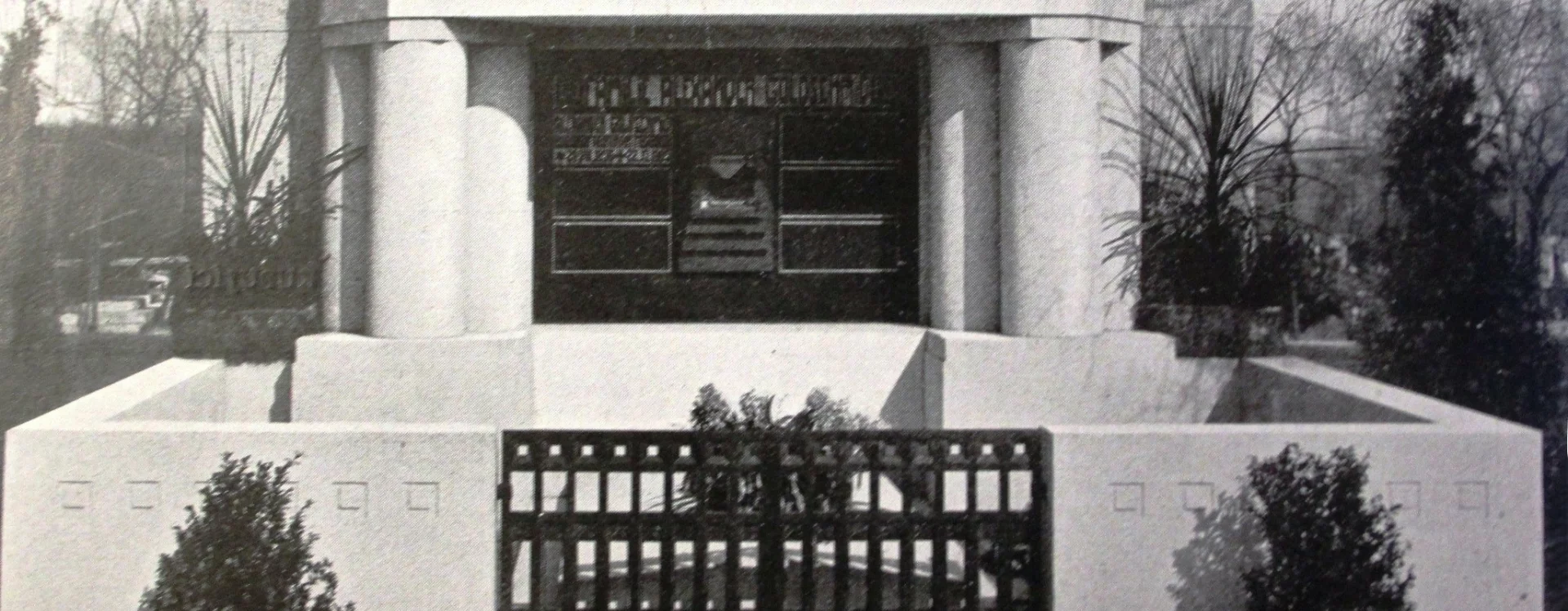
This grand monument in a pretty corner location was designed by the architect Josef Zasche in 1906 for the family of Alexandr Goldschmidt. Its original appearance can be seen in a photograph published in Český svět magazine (1907) soon after its completion. Surprisingly from today’s perspective, the photograph was published (along with a work by Jan Kotěra) in an unsigned article, probably written by the editorial board, that assessed contemporary modernist works at Olšany quite negatively.
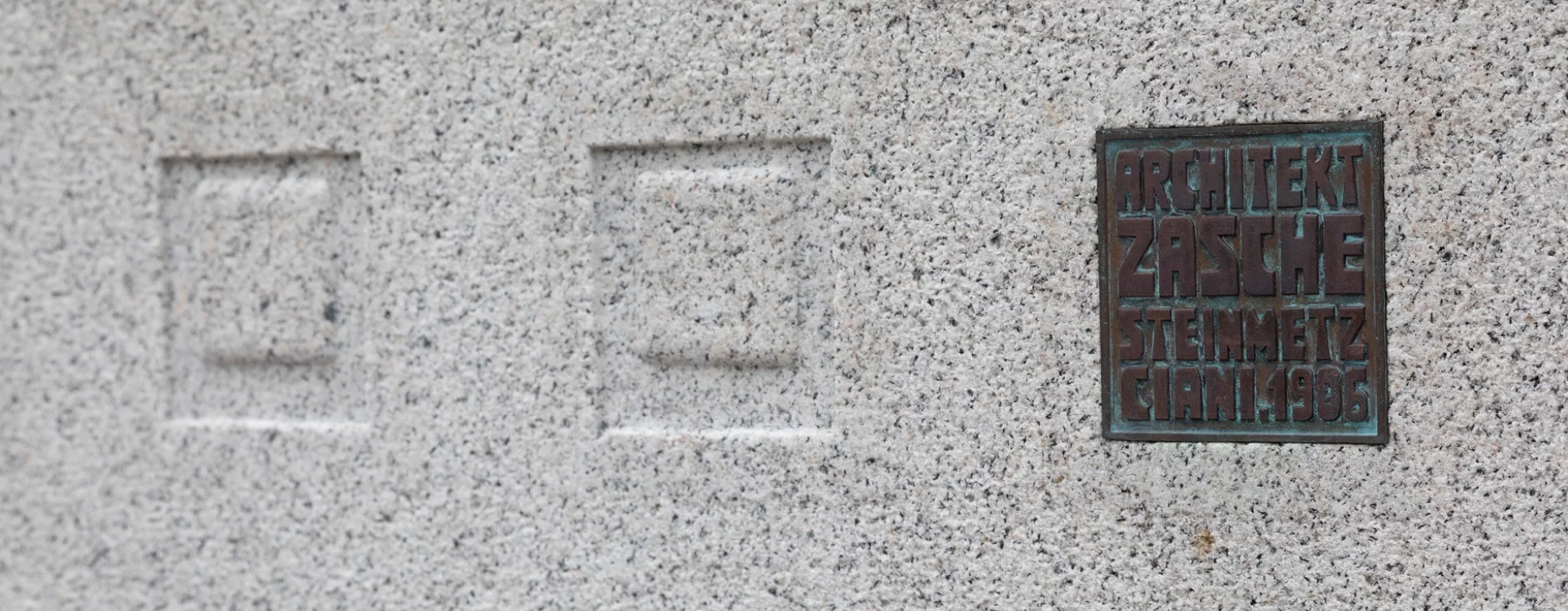
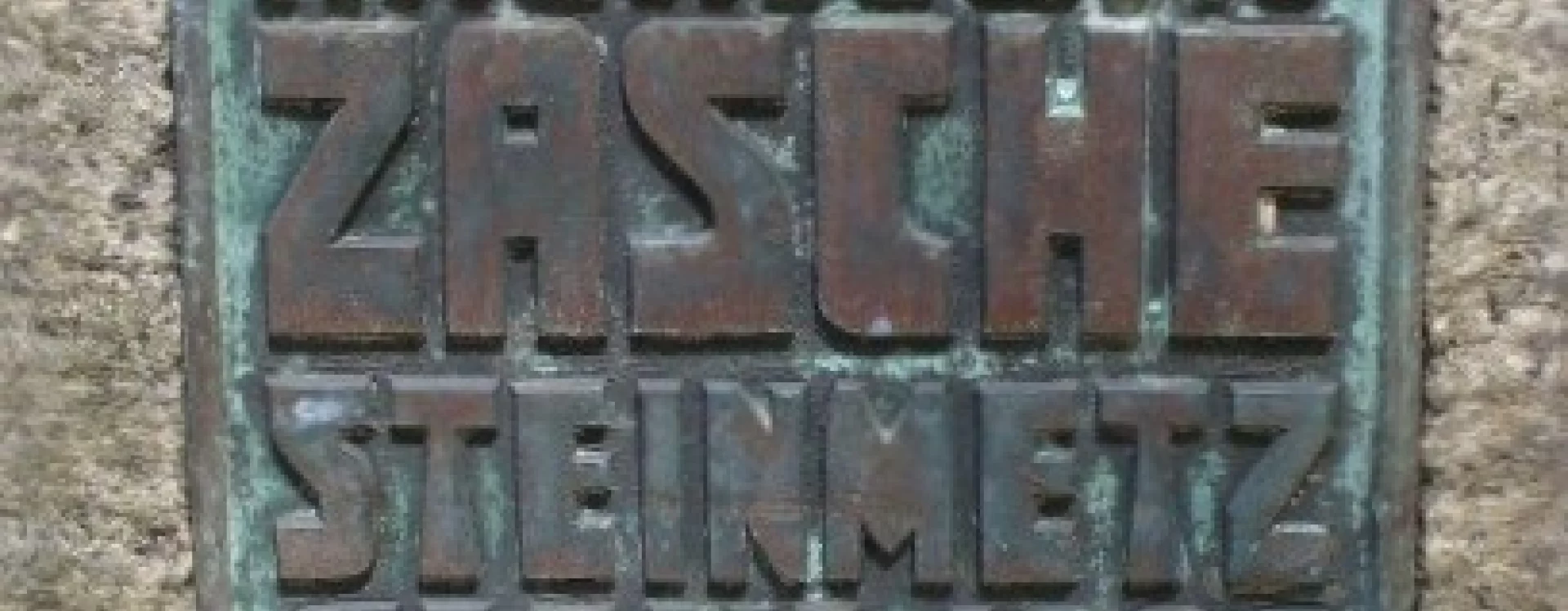
A beautiful bronze sign with the inscription Architekt Zasche, Steinmetz Ciani 1906 has survived in one of the decorative squares on the front of the stone wall enclosing the grave plot. (The typographically distinctive metal plaque was put in place along with the original dating shortly after completion.) As early as September 1911, however, the site belonged to someone else, for that month the religious structures department at the Building Office of the Royal City of Prague writes that “the crypt for the attorney Josef Libich has been completed and two plans submitted.” Minor alterations were done for the new owner by the stonemasonry company of Jan Rada & Son, Machine Working of Mrákotín Granite, Prague-Žižkov.
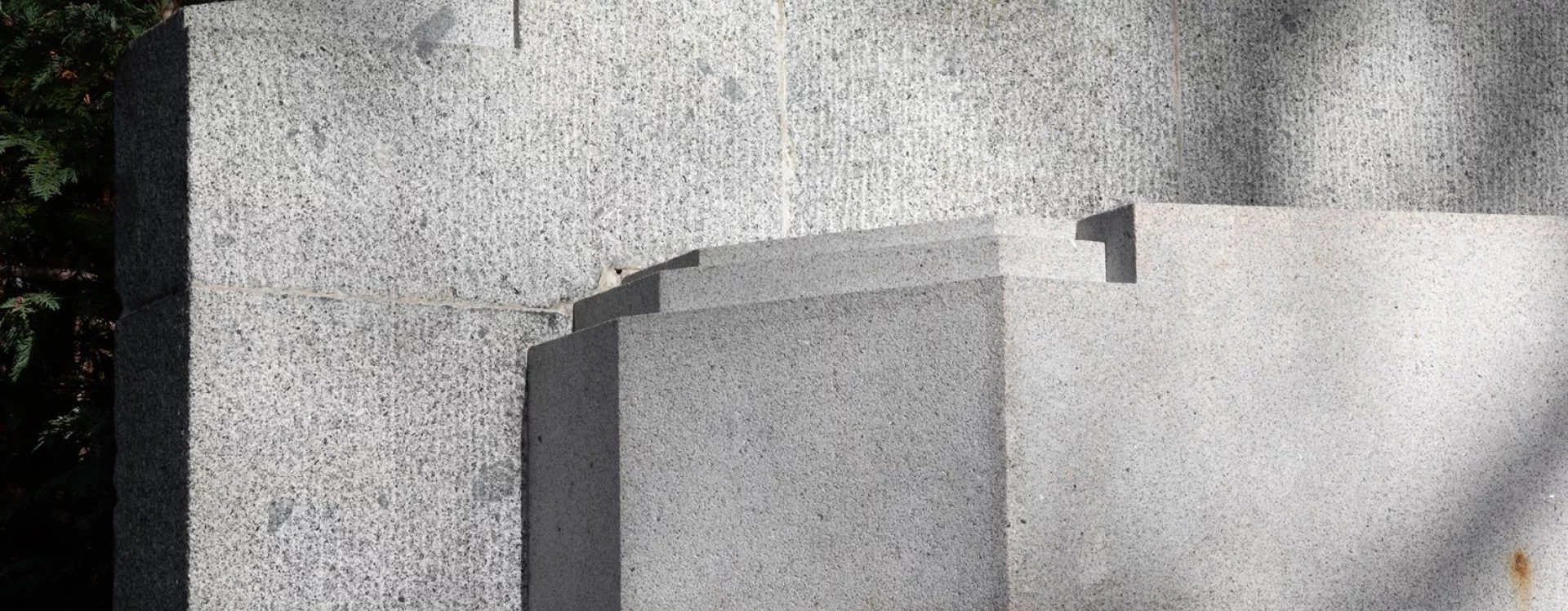
The monumental Neoclassical crypt consists of a stele with a classical aedicula and a distinctive wall bounding the grave plot. The architrave rests on two sets of three clustered columns. All of the monument’s elements are carved from two types of stone: the rear from diorite or syenite, the front part from light granite. Except for the rear wall, the stone has been bush-hammered to give the surface a haptic texture.
After long being ignored and abandoned, in 2018 the monument underwent a complete, high-quality renovation during which the long-lost geometric metal gate that lent the grave plot an air of quiet intimacy was replaced.
The author of the design, the Prague German architect Josef Zasche, created most of his funerary works for the New Jewish Cemetery. Zasche’s connections to the Jewish community are suggested by the surname of the first client of the Olšany monument and by the high degree of assimilation of this community in the Czech lands. Zasche was faithful to Neoclassical tendencies in modern architecture, and he usually drew on this style for his grave monuments. In 1911, Styl magazine published a nearly identical volumetric composition of Zasche’s grave monument for the Glaser family at the New Jewish Cemetery (35–0–36), the drafting of which, if we accept the cemetery’s records and not the year 1908 printed beneath the photograph, would have been done at the same time as the Goldschmidt monument. Zasche used a similar symmetrically closed classical design for several of his funerary works, one example being the dark stone grave monument of Carl Thorch, done at the Jewish cemetery in 1907–1908, and he took a similar approach to other works there over the following years as well.
Two other monuments at Olšany were designed by Zasche as well: one for the Meder and Pohl families (1908, not confirmed by plans) and the other for Karel Strzizka, director of the Czech Savings Bank (1915).