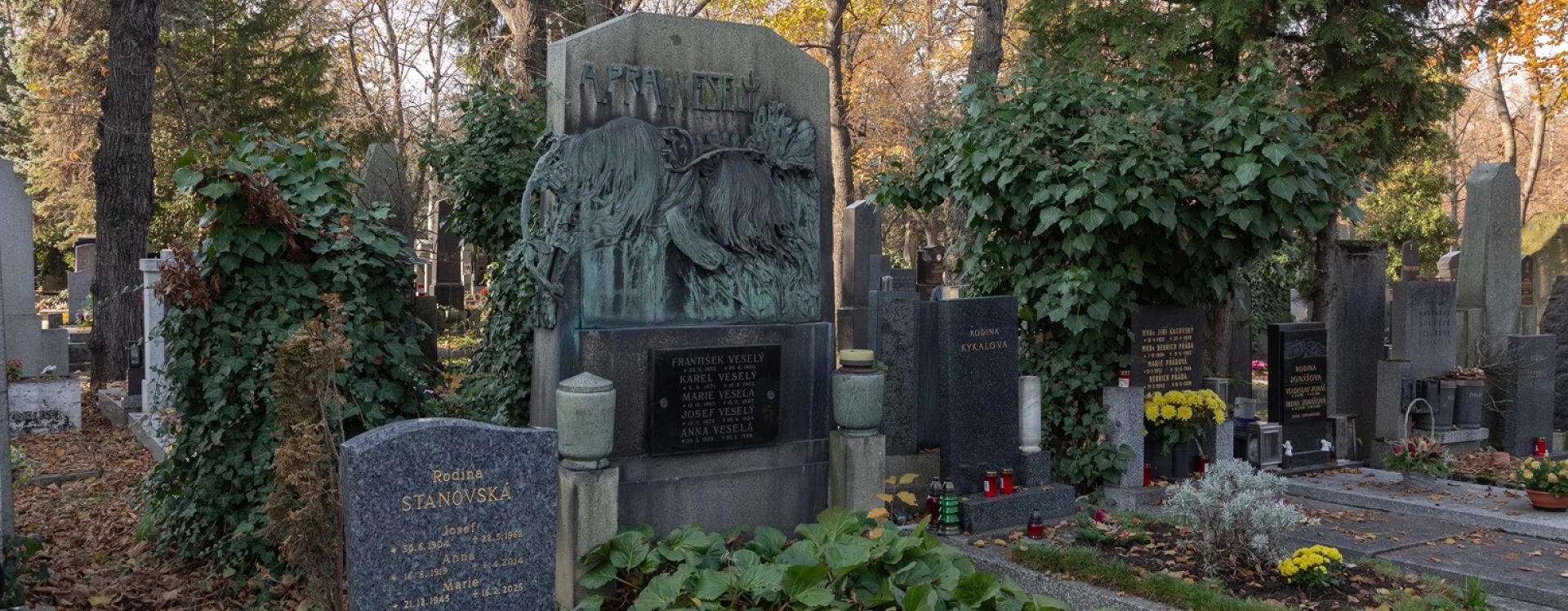
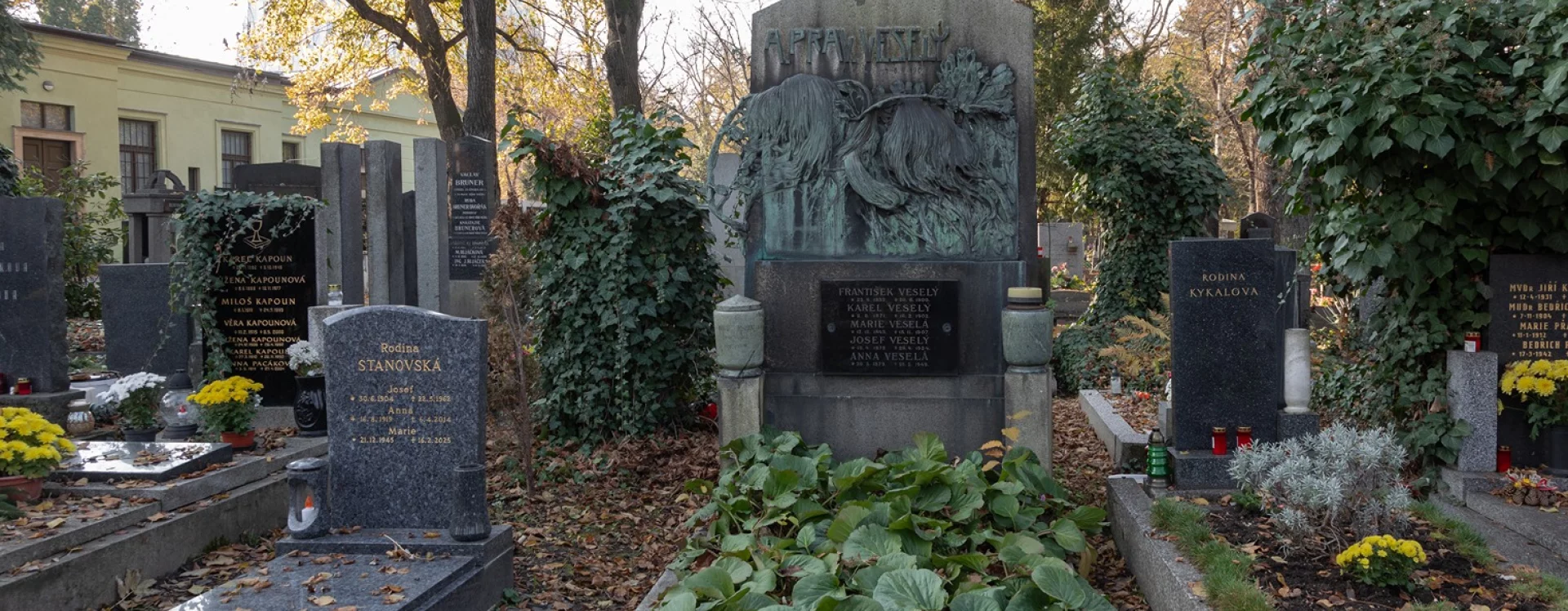
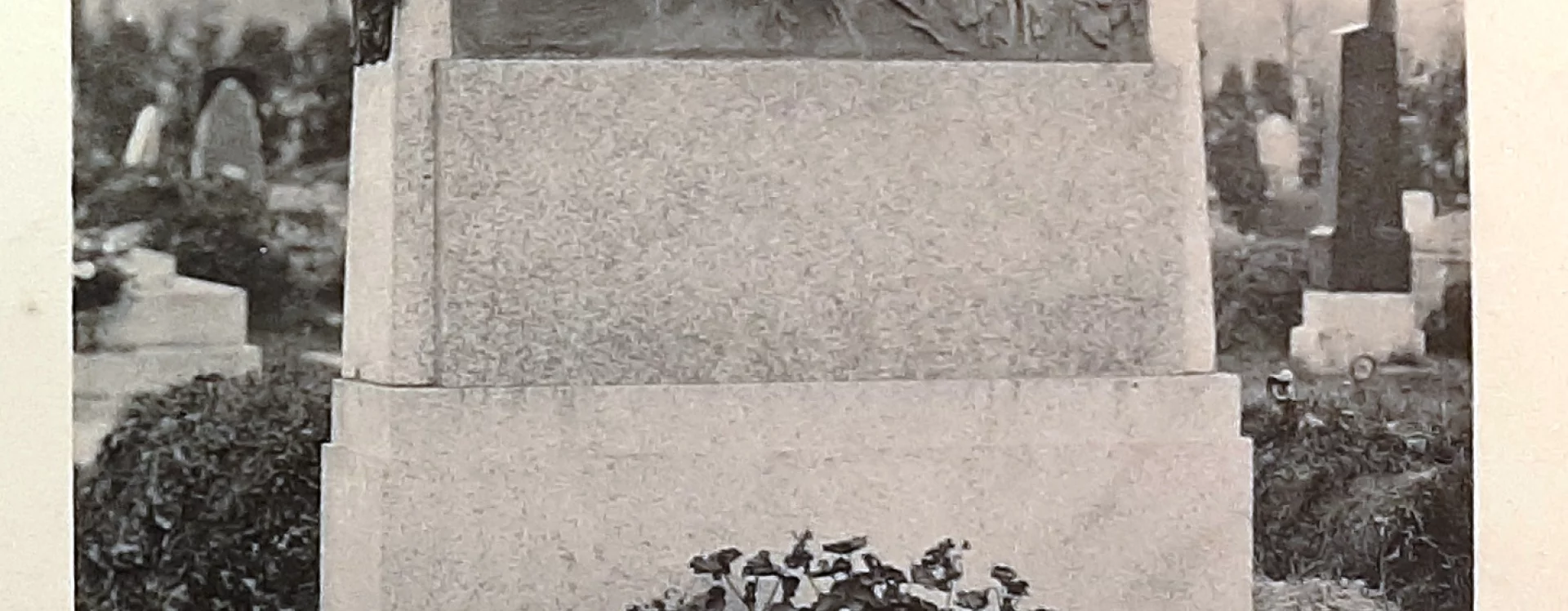
The Art Nouveau grave marker is one of several distinctive works at Olšany dedicated to a prematurely deceased individual whose untimely departure inspired the client to commission a grand design.
The grave is the burial site of the typographer, journalist, and writer Antonín Pravoslav Veselý, a representative of leftist socialist politics in the late nineteenth century. Veselý was active in the Workingmen’s Political Club in Prague and edited several magazines: Základ, Omladina, and Pokrokové listy. He later joined the Czechoslovak Social Democratic Party and edited the party newspaper, Právo lidu. In 1894, he was sentenced to seven months in prison as part of the Omladina Trial. During his incarceration he contracted tuberculosis, and he died from the consequences of the disease at age thirty.
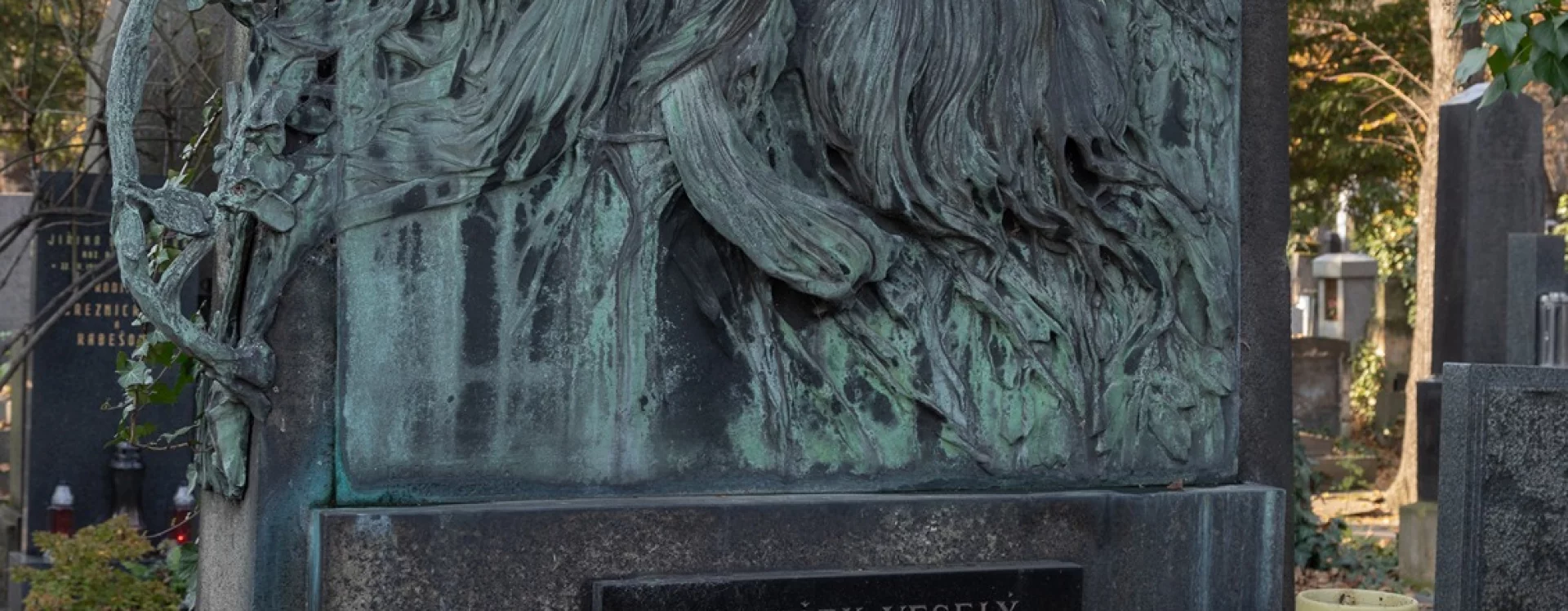
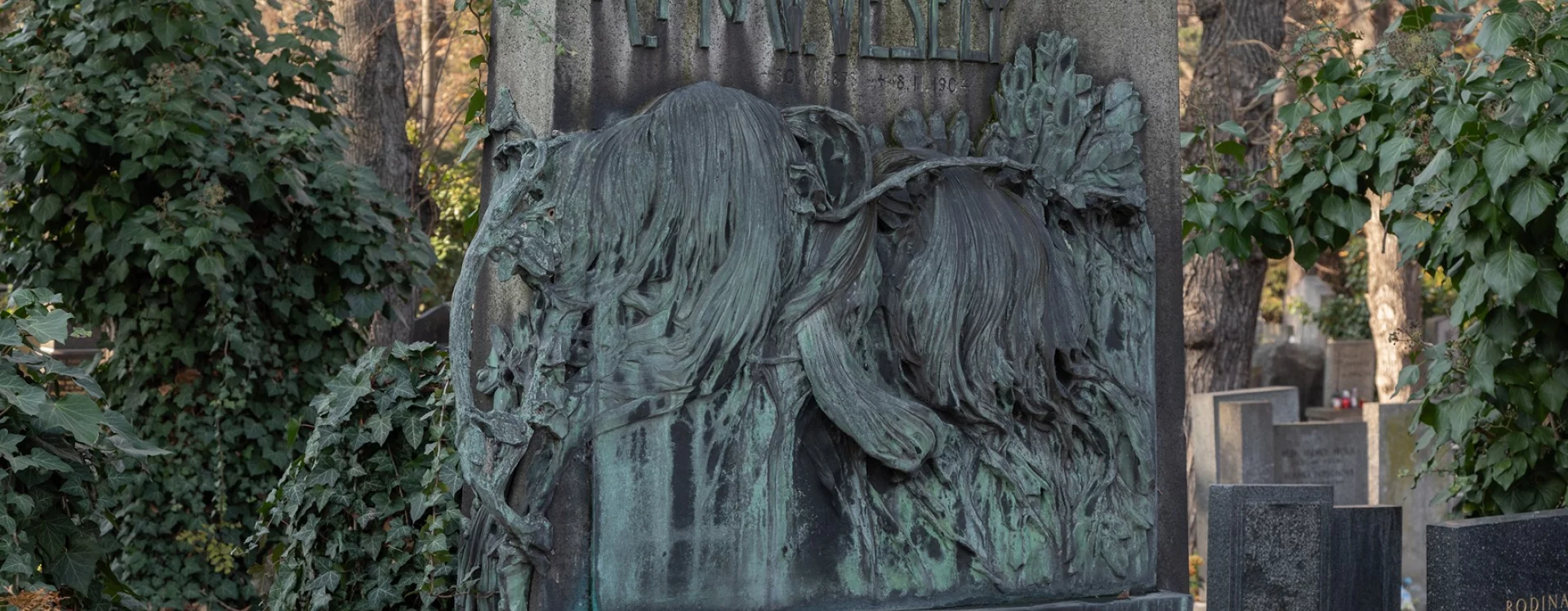
Emanuel Pelant (1871–1954), a student of Jan Kotěra, designed a monument consisting of three stone blocks stacked on top of one another. The upper, narrowest part of the stele is distinctly beveled at the top corners. The bronze Art Nouveau decoration by the sculptor Bohumil Kafka is signed at the lower left. The plant motif – a symbol of ruin and withering away – extends beyond the left edge of the stone stele and seems to break out of its frame.
The sophisticated choice of large stylized Art Nouveau lettering announcing the name of the deceased may well be a reference to Veselý’s work as a typographer. A black plaque bearing the names of other family members was later placed at the lower part of the stele. The addition of the two columns with urns is one of several alterations whose exact dating remains unknown.
The work of sculptor Bohumil Kafka can be found at several Olšany graves, including those of Ladislav Josef Čelakovský, Karel Maydl, Antonín Frič, and the Votoček family. But the largest collection of Kafka’s funerary works can be found at Vyšehrad Cemetery, including sculptural decoration for the grave of Josef Kaizl in the cemetery’s arcades (1907–1908, with Josef Gočár) and several works done in collaboration with architects Jan Kotěra or (again) Emanuel Pelant. At Olšany in 1905, Pelant also designed an Art Nouveau crypt for the Cirkl family.