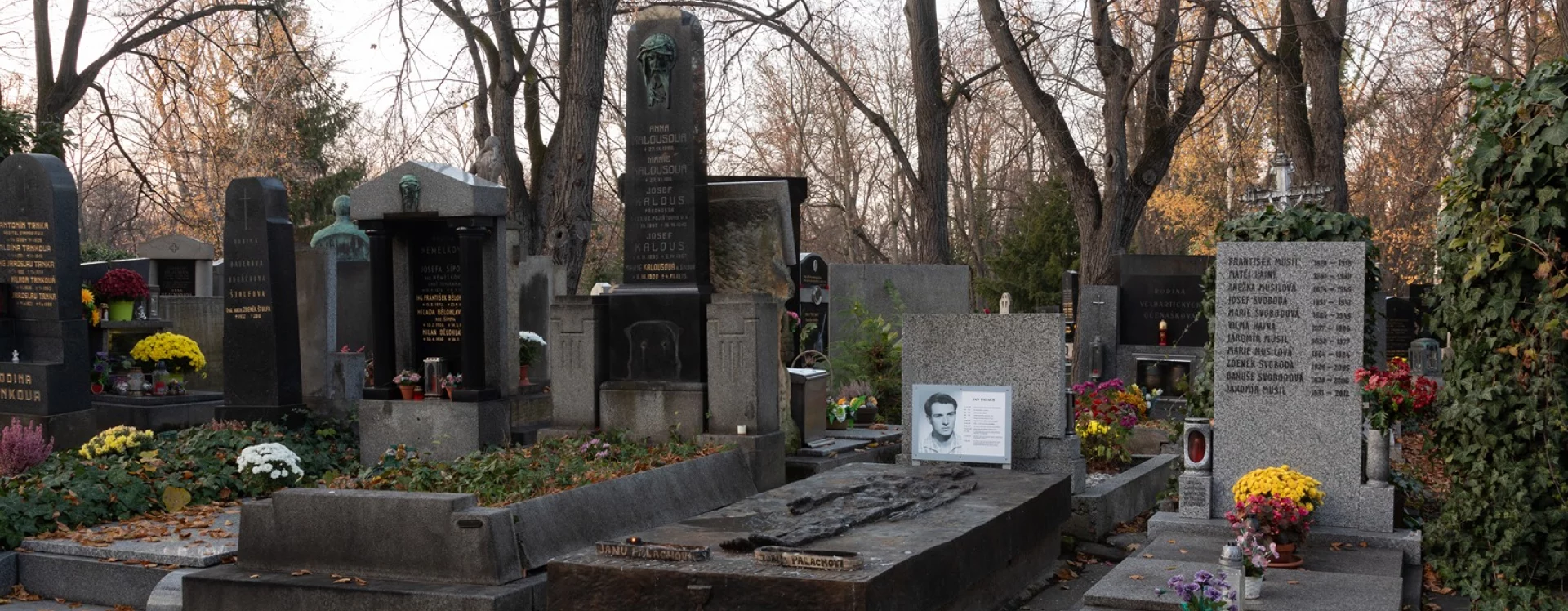
With his sacrifice, Jan Palach sought to awaken Czechoslovak society, which had already resigned itself to the country's occupation by Warsaw Pact troops. His act, in which he described himself as "Torch No. 1," was a demonstration of one individual's immense determination and courage to act in the name of freedom for his homeland and nation. Palach died from severe burns on 19 January 1969, three days after carrying out his act of self-immolation on Prague's Wenceslas Square. His funeral on 25 January became a national day of mourning and a public protest against totalitarianism.
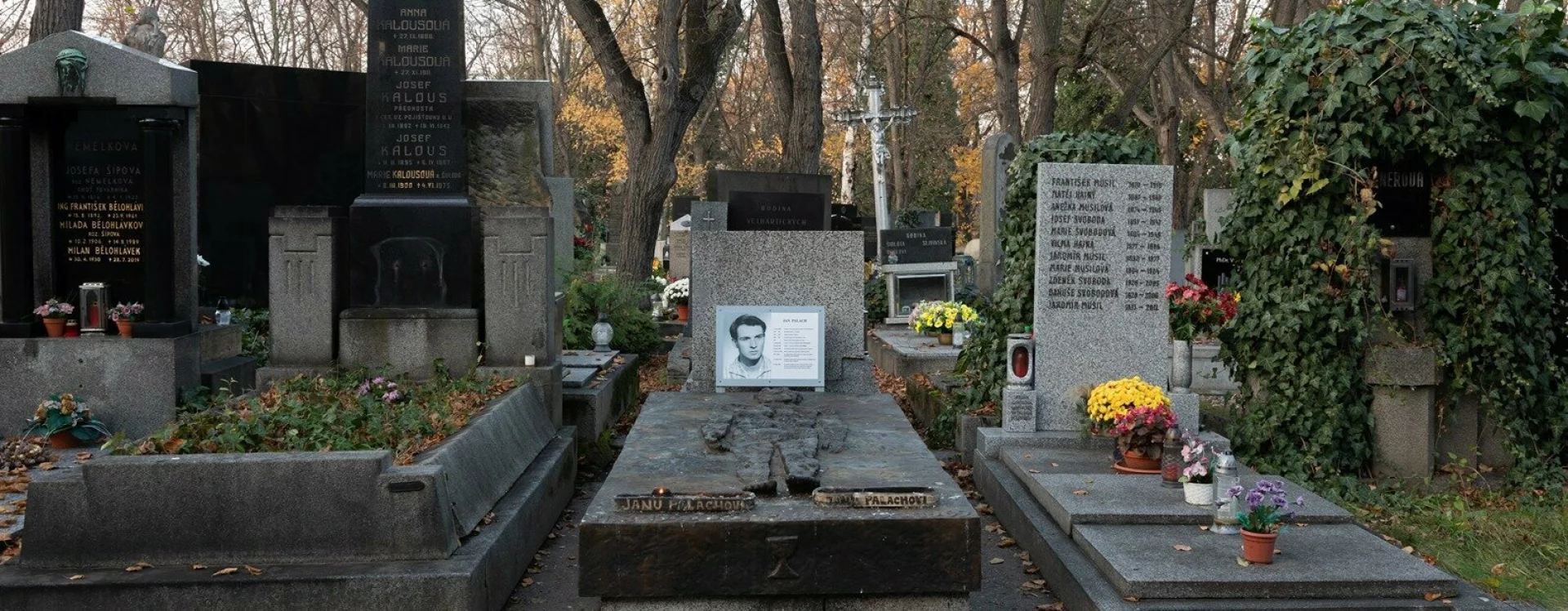
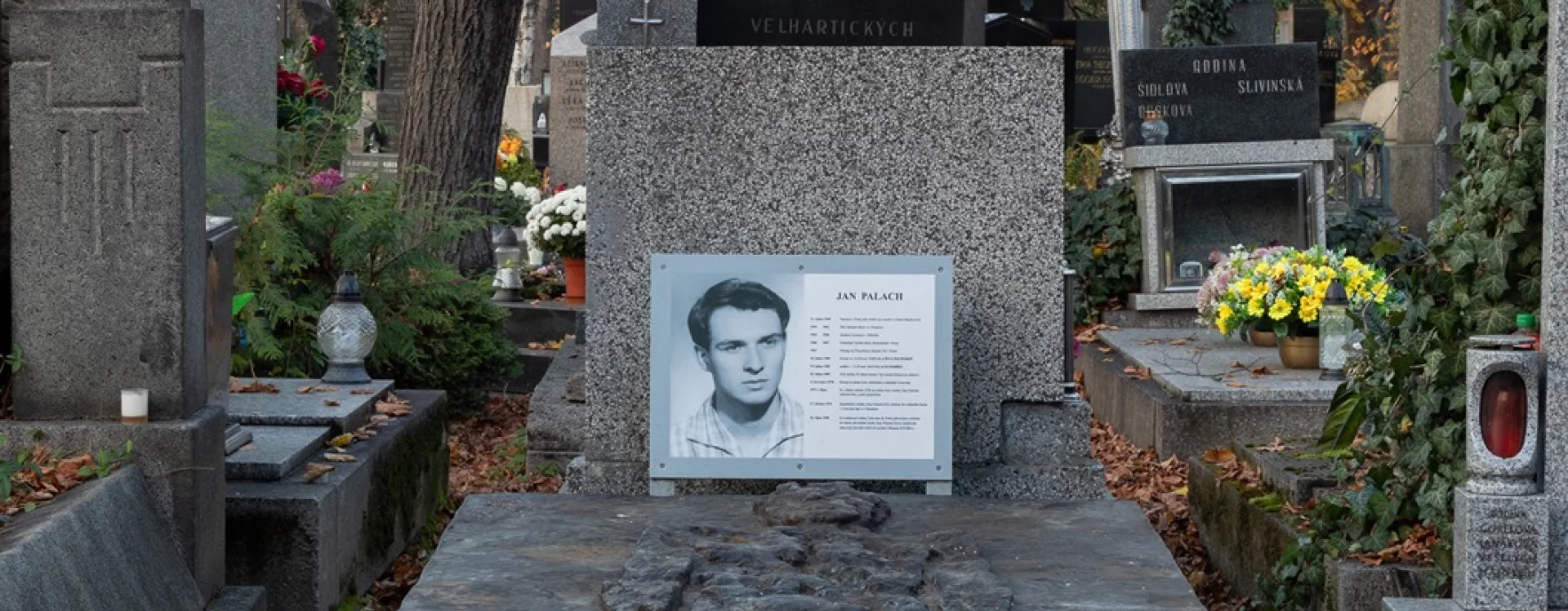
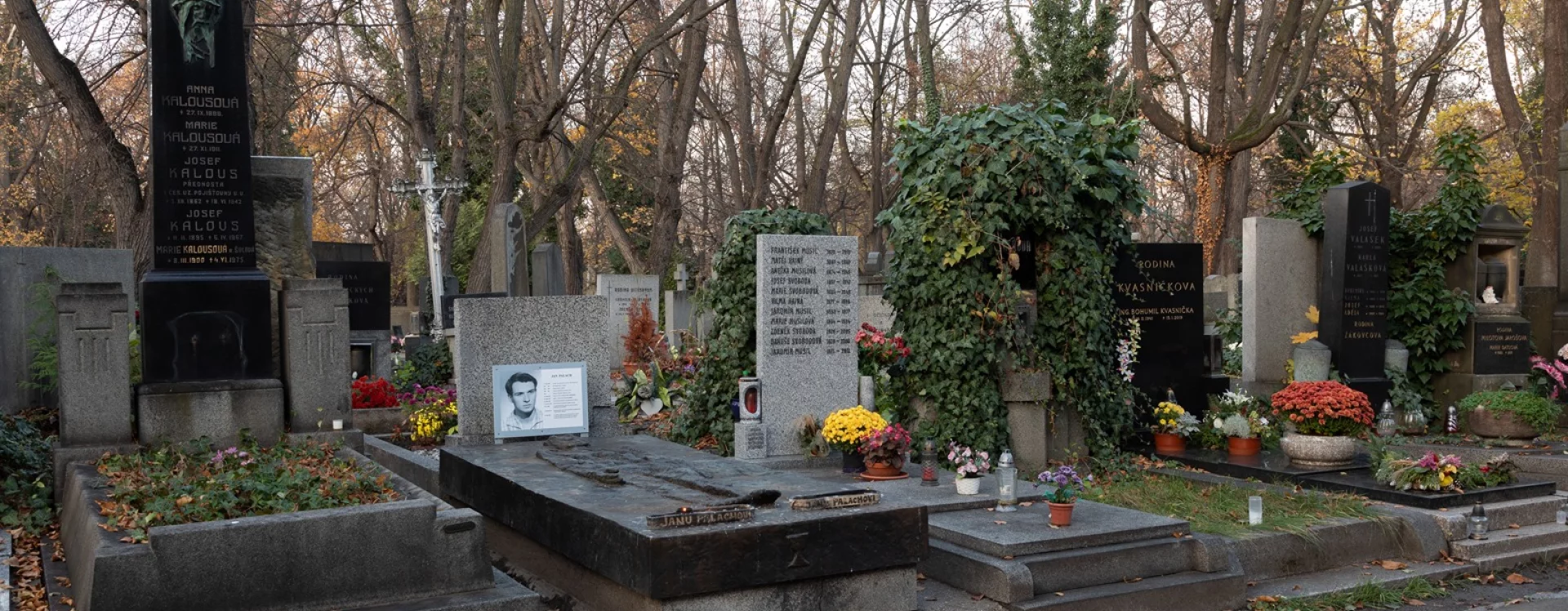
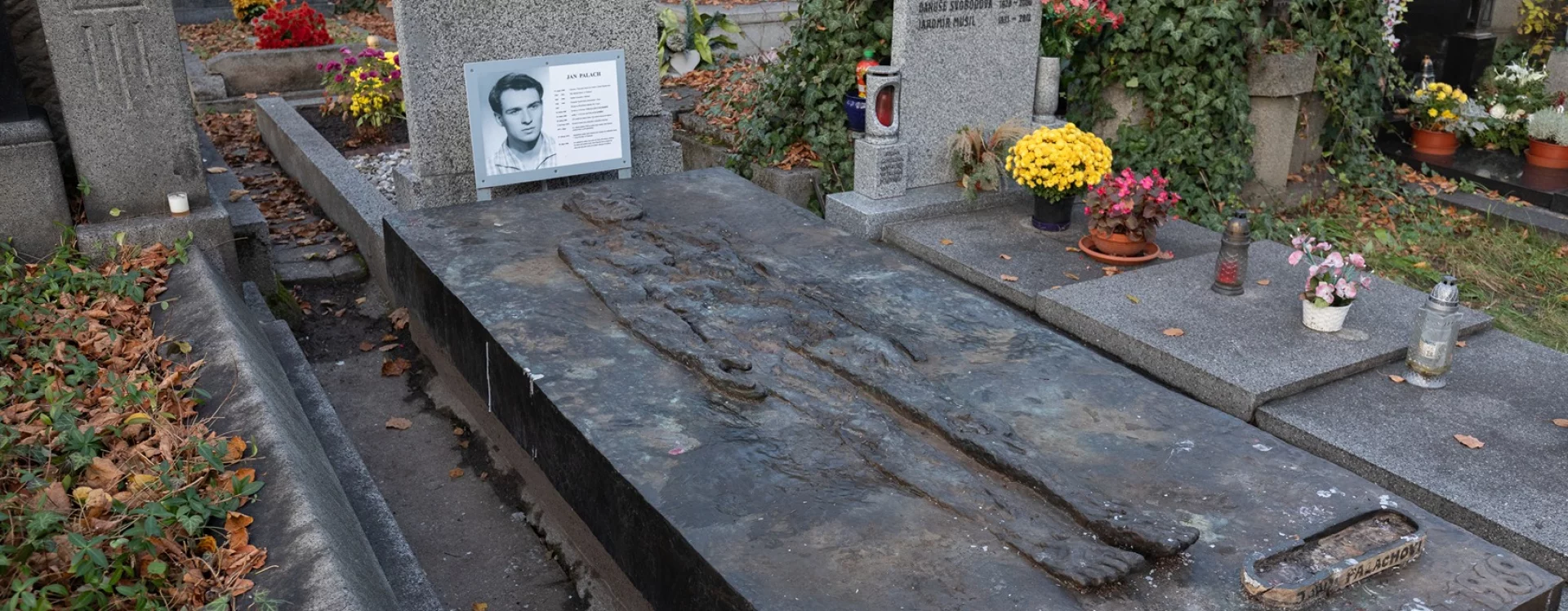
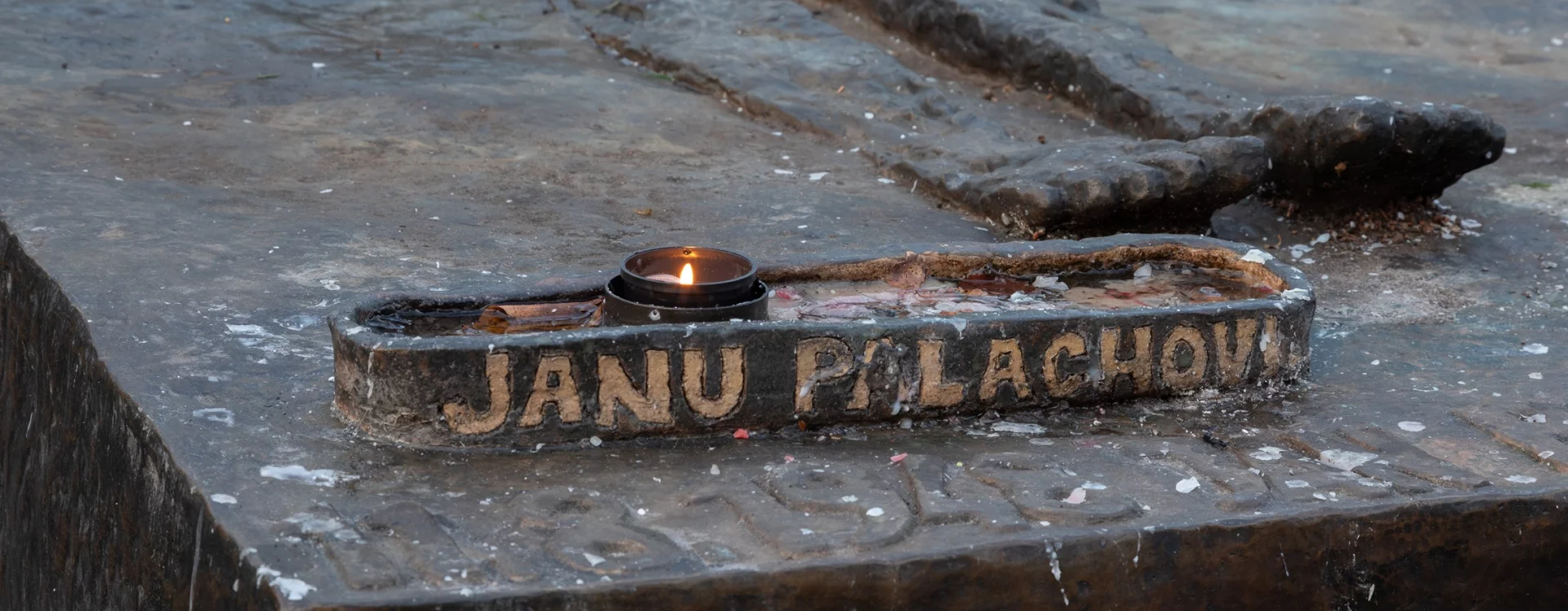
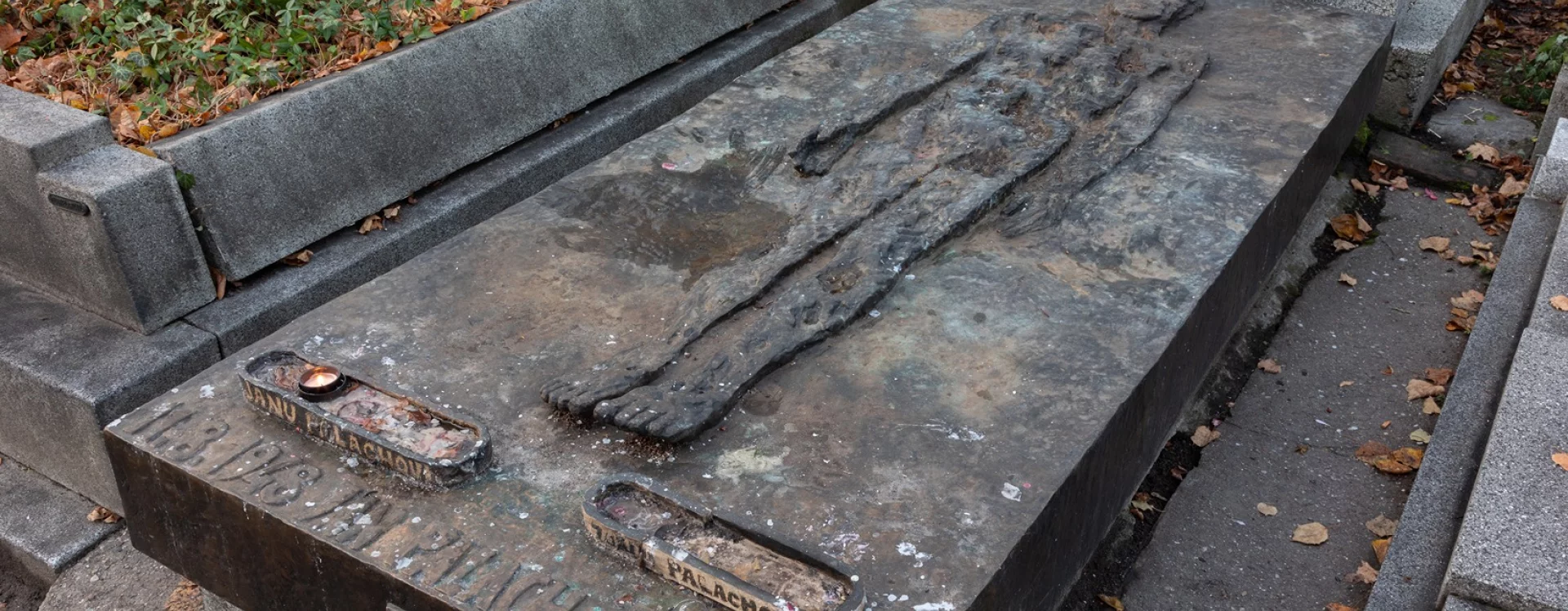
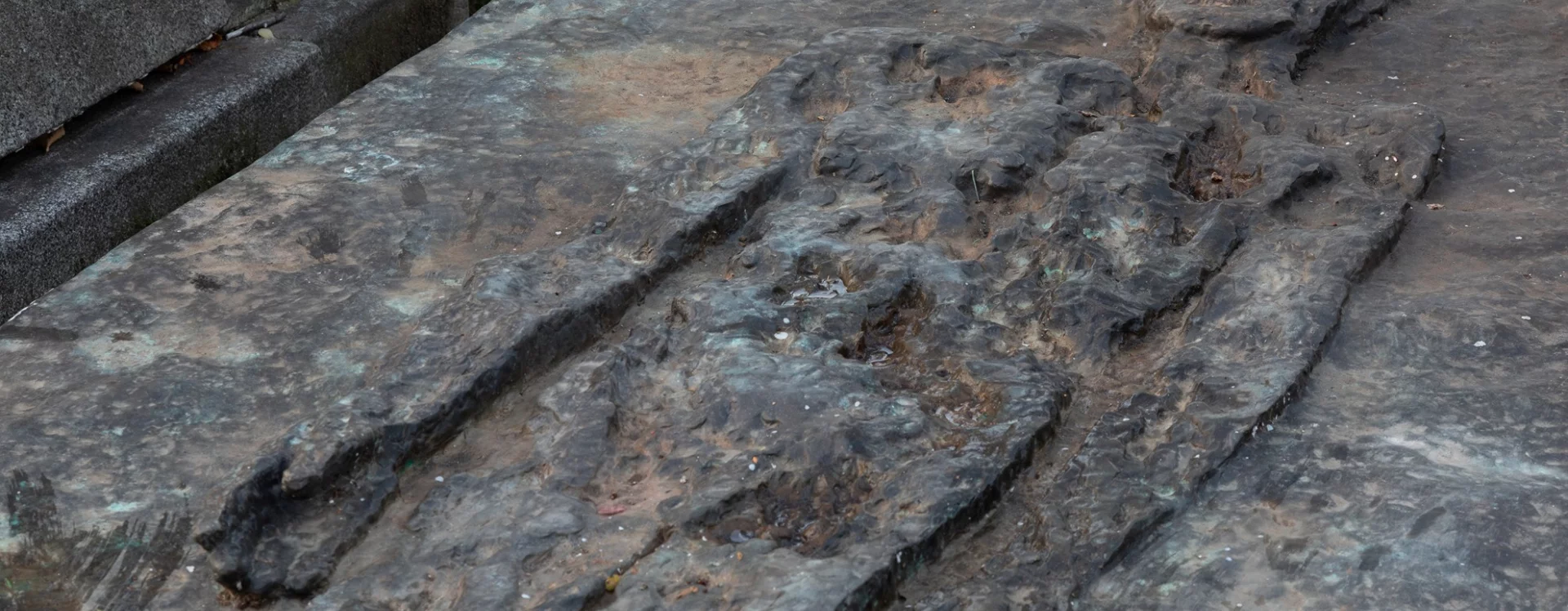
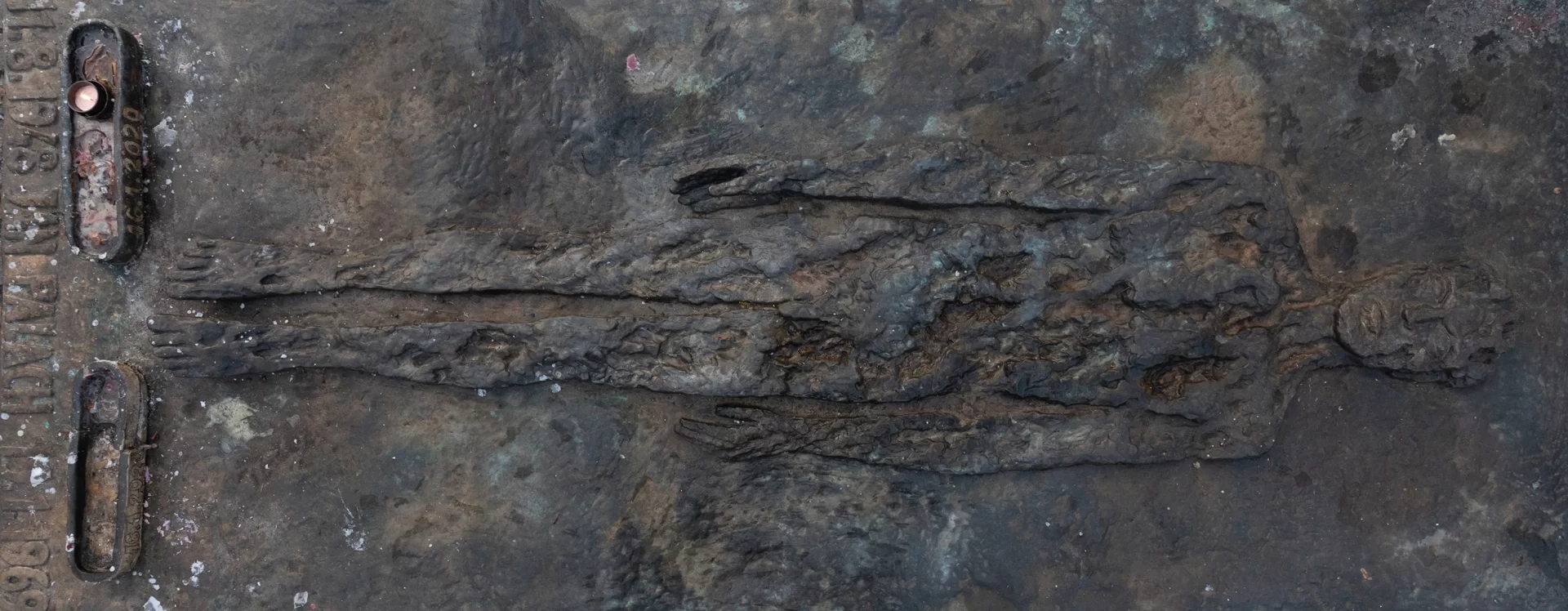
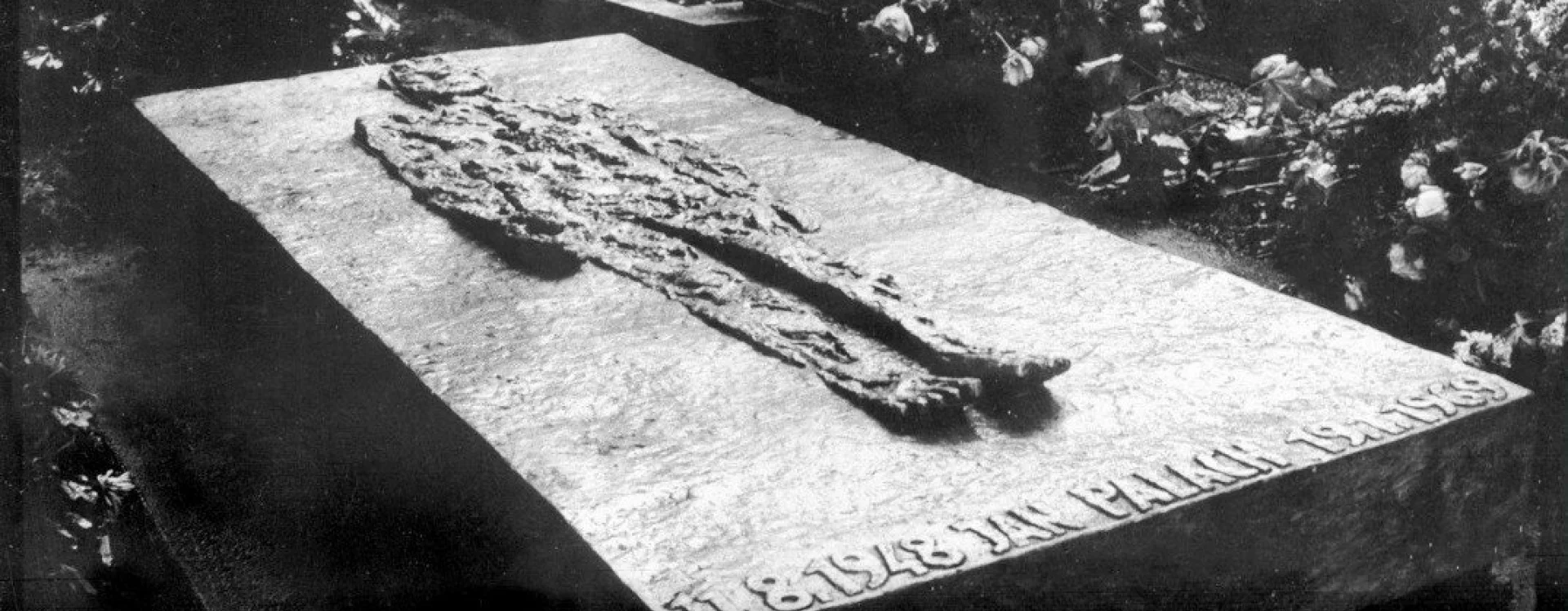
Palach's grave, created the following year, is a simple work of architecture designed by Ivo Loos (1934–2009) and Jindřich Malátek (1931–1990). As active critics of the regime, neither architect was allowed to achieve any greater artistic success, and yet they both worked on important Brutalist projects (Transgas, the post office in Košíře). Palach's grave has the form of an elevated rectangular ledger, a kind of "bed" on which rests a bronze relief of a reclining figure. The relief is by the sculptor Olbram Zoubek (1926–2017), who also cast Palach's death mask. Zoubek's figure depicts a nude male body with a highly naturalistically furrowed surface. The seemingly lifeless figure lies in resignation, yet its eyes are open and the right hand is slightly raised, as if intensely communicating with visitors. The image of the chalice is a reference to Palach's Protestant faith.
The grave immediately became a popular pilgrimage site, visits to which were a covert expression of opposition to the occupation and regime. For this reason, only three weeks after its installation, in July 1970 State Security had the bronze relief removed and subsequently melted down. Following extreme pressure and harassment from the secret police, Jan's mother was forced to consent to the exhumation and cremation of her son's remains, which were then placed in an urn garden in the family's hometown of Všetaty. At the destroyed grave site, a new grave marker appeared with the name of Marie Jedličková. In this way, the secret police managed to erase Palach's grave from the surface of the earth, but they could not erase his message. The situation changed after the Velvet Revolution: his grave was restored in October 1990, his remains returned to their original resting place, and Olbram Zoubek once again cast the bronze relief, whose model he had preserved in his studio for more than twenty years. In 2019, Palach's grave was declared a national cultural monument, as was the grave of Jan Zajíc, who burned himself to death on 25 February 1969 as "Torch No. 2." Despite Zajíc's wish to be buried in Prague like his predecessor, the secret police transported his remains to his native Vítkov in Moravia. Zoubek drafted plans for Zajíc's grave as well, but the communist regime did not permit its realization in this form. Like Palach's grave, its central motif was to be a horizontal slab with the relief of a reclining figure, here placed upon a sandstone sarcophagus supported by four bronze spheres. The spheres in particular were a thorn in the side of the regime, which saw them as symbols of imprisonment and thus as a veiled critique of socialism. This originally intended form of the grave was finally realized in 1990. The remains of both heroes have thus finally found rest.
Vladislava Holzapfelová, 2025
Palach's grave, created the following year, is a simple work of architecture designed by Ivo Loos (1934–2009) and Jindřich Malátek (1931–1990). As active critics of the regime, neither architect was allowed to achieve any greater artistic success, and yet they both worked on important Brutalist projects (Transgas, the post office in Košíře). Palach's grave has the form of an elevated rectangular ledger, a kind of "bed" on which rests a bronze relief of a reclining figure. The relief is by the sculptor Olbram Zoubek (1926–2017), who also cast Palach's death mask. Zoubek's figure depicts a nude male body with a highly naturalistically furrowed surface. The seemingly lifeless figure lies in resignation, yet its eyes are open and the right hand is slightly raised, as if intensely communicating with visitors. The image of the chalice is a reference to Palach's Protestant faith.
The grave immediately became a popular pilgrimage site, visits to which were a covert expression of opposition to the occupation and regime. For this reason, only three weeks after its installation, in July 1970 State Security had the bronze relief removed and subsequently melted down. Following extreme pressure and harassment from the secret police, Jan's mother was forced to consent to the exhumation and cremation of her son's remains, which were then placed in an urn garden in the family's hometown of Všetaty. At the destroyed grave site, a new grave marker appeared with the name of Marie Jedličková. In this way, the secret police managed to erase Palach's grave from the surface of the earth, but they could not erase his message. The situation changed after the Velvet Revolution: his grave was restored in October 1990, his remains returned to their original resting place, and Olbram Zoubek once again cast the bronze relief, whose model he had preserved in his studio for more than twenty years. In 2019, Palach's grave was declared a national cultural monument, as was the grave of Jan Zajíc, who burned himself to death on 25 February 1969 as "Torch No. 2." Despite Zajíc's wish to be buried in Prague like his predecessor, the secret police transported his remains to his native Vítkov in Moravia. Zoubek drafted plans for Zajíc's grave as well, but the communist regime did not permit its realization in this form. Like Palach's grave, its central motif was to be a horizontal slab with the relief of a reclining figure, here placed upon a sandstone sarcophagus supported by four bronze spheres. The spheres in particular were a thorn in the side of the regime, which saw them as symbols of imprisonment and thus as a veiled critique of socialism. This originally intended form of the grave was finally realized in 1990. The remains of both heroes have thus finally found rest.
Vladislava Holzapfelová, 2025
Literature
Petr Blažek, Patrik Eichler, Jakub Jareš (a kol.). Jan Palach´69. Praha, 2009.
Dora Čechová. Život a sochy Olbrama Zoubka. Praha, 2013.
Jan Baláček‒Matyáš Kracík. Nově prohlášené národní kulturní památky na území hl. města Prahy v roce 2019, Staletá Praha, XXXVI/2020. 2020, s. 165.