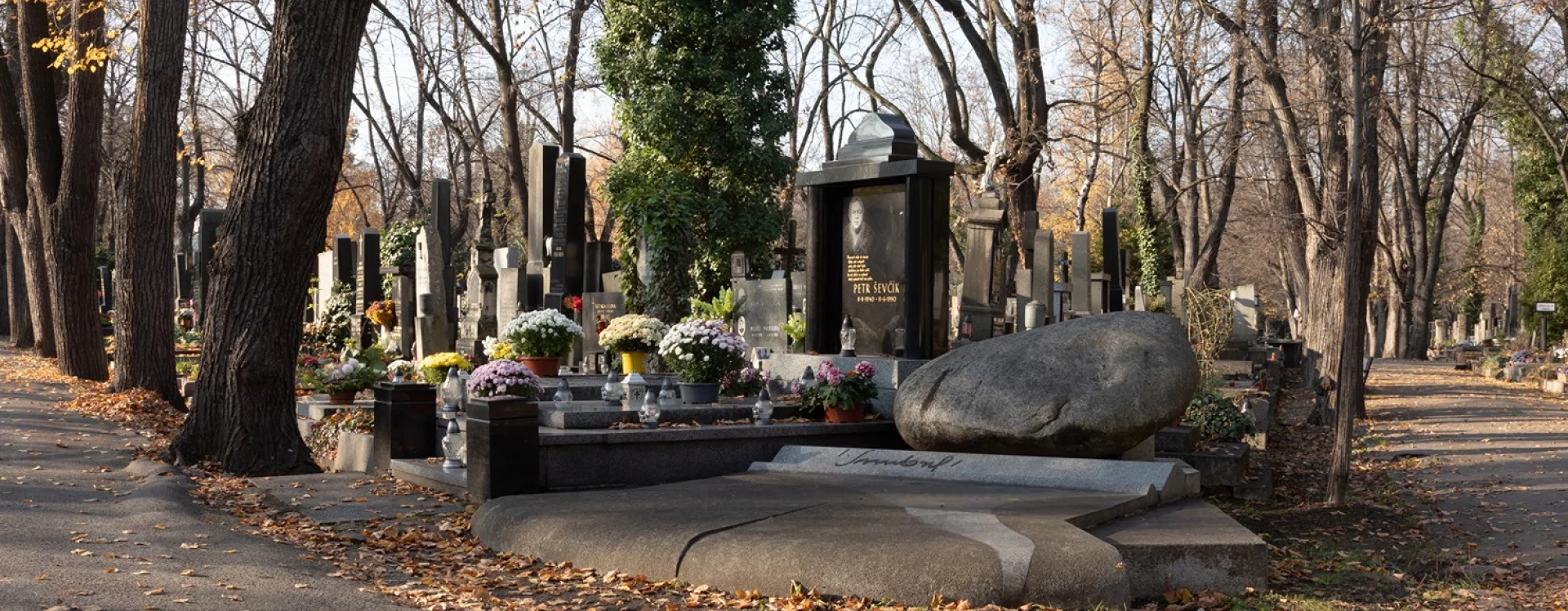
Sitting beneath a mature maple tree on a dominant corner parcel is one of the few high-quality funerary works from the early 1990s.
The grave belongs to Josef Smrkovský, a leftist politician who was both scorned and celebrated during his life. A baker by trade, in the 1930s Smrkovský was a member of the Communist Youth Union, and during the German occupation he was active in the communist resistance and was a leading figure of the May Uprising. After the war, he was a member of the National Assembly, but he was imprisoned in the 1950s. As a leading representative of the Czechoslovak Communist Party’s reform wing, he opposed the Soviet occupation and was taken to the Soviet Union. Upon his return, he tried to counter the proponents of pro-Soviet Normalization. In the 1950s and 1960s, he published the books White Mountain and Today, Subversives in Czech Villages Shall Reap No Wheat, On the Tasks and Activities of State Farms, and The May Uprising in Prague 1945. The definitive fall of this “tribunal of the people,” as Smrkovský was called in 1968, came in March 1970, when he was expelled from the Czechoslovak Communist Party.
Smrkovský continued to be punished symbolically even after his death in 1974, and the Normalization regime denied him his posthumous peace: shortly after his funeral service, the urn with his remains disappeared from the family crypt at Olšany. It was discovered “by chance” in the bathroom of a Vienna-bound express train at the České Velenice border crossing. At the time, Smrkovský’s son-in-law was accused of trying to smuggle the urn to the West. The cemetery subsequently refused to take it back, arguing that it couldn’t guard the grave. A request to scatter Smrkovský’s remains was denied as well, and a letter from his relatives to President Gustáv Husák went unanswered. The urn with Smrkovský’s ashes was finally given a dignified burial in the family grave at Olšany in April 1991.
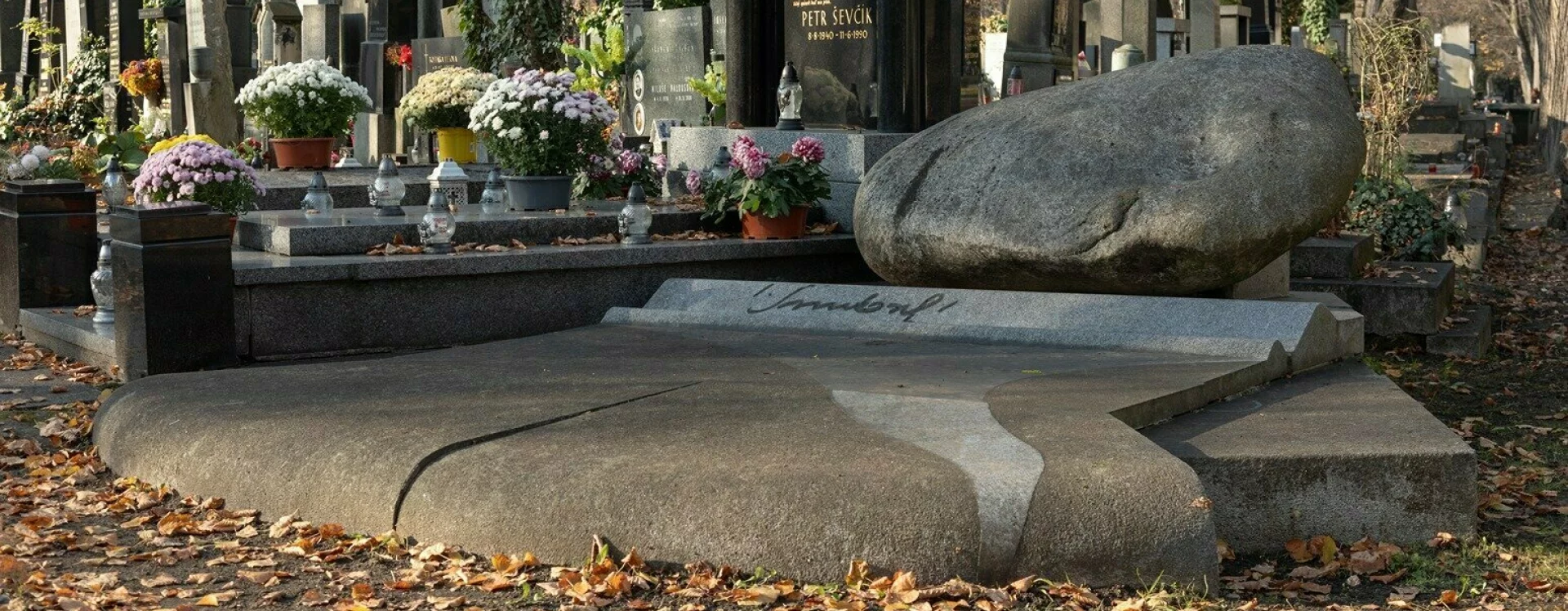
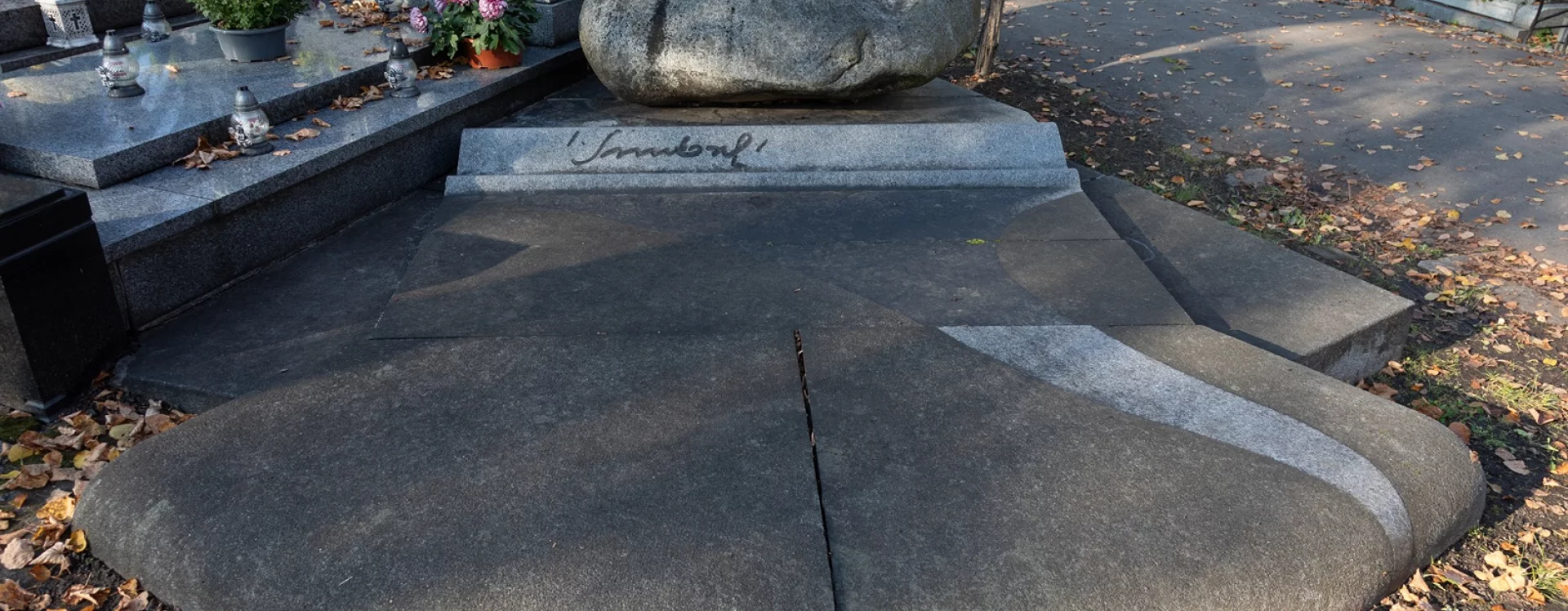
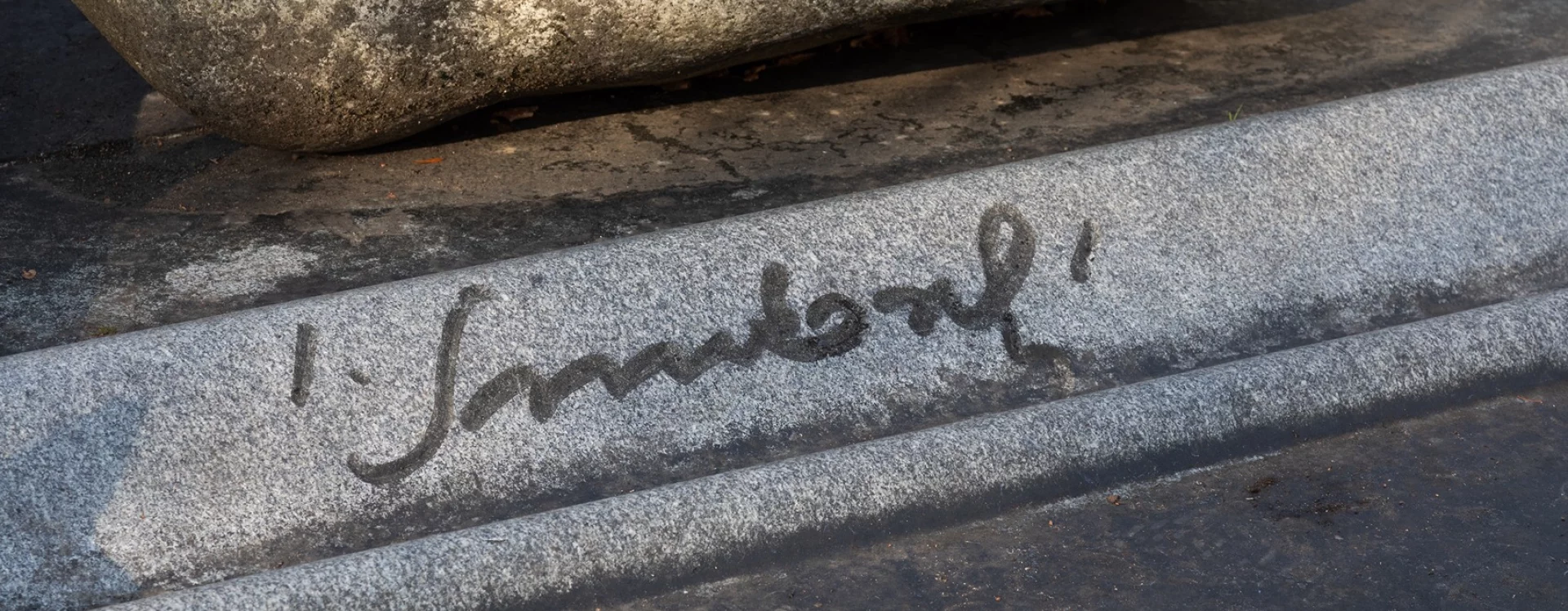
The monument was designed by Miloš Parma, founder and president of the newly founded architectural drafting association A.D.O., who was asked by the Czechoslovak Federal Assembly to create a final resting place for this representative of the Prague Spring. Parma’s design was inspired by the metaphor of a river representing the flow of life. Its source in the mountains is symbolized by a giant water-smoothed rock at the head of the grave. There follow the difficulties of life – the main horizontal slab with two small arches signifying weirs and locks. The course of life leads to the earth, just like the large curved stone. The figurative flow of life spans the full breadth of the grave marker until it slowly fades away. This idea is accompanied by a relief of Smrkovský’s signature. Parma chose to work with gray granite; the flat area in front of the boulder is honed, with a polished surface for the river. Parma’s signature can be seen on the edge of the grave slab.
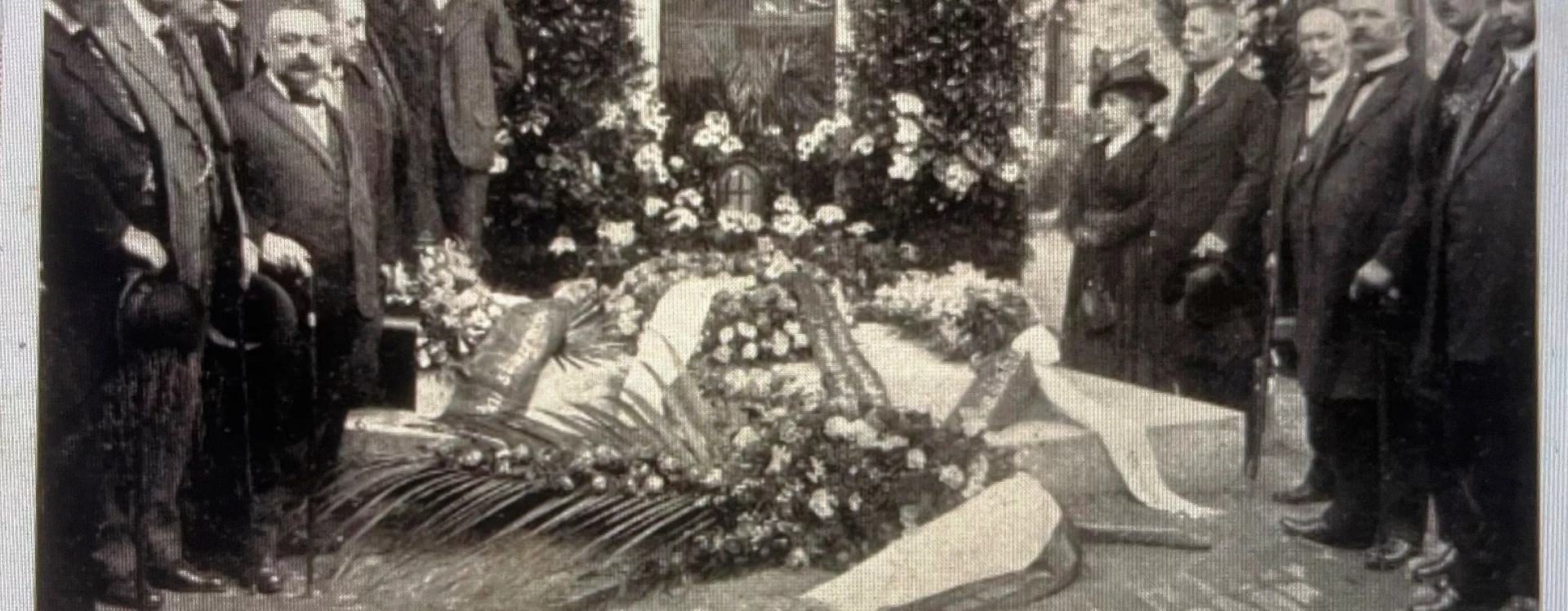
Few people today know that in 1916 this grave plot was originally the site of a lavish crypt designed by Josef Fanta and built by the stonemason Ferdinand Palouš, with a metal relief titled The Thinker by the sculptor Čeněk Vosmík. This valuable modernist work was commissioned by the Union of Czech Private Clerks for its founder and organizer, the provincial government official František Hašourek.