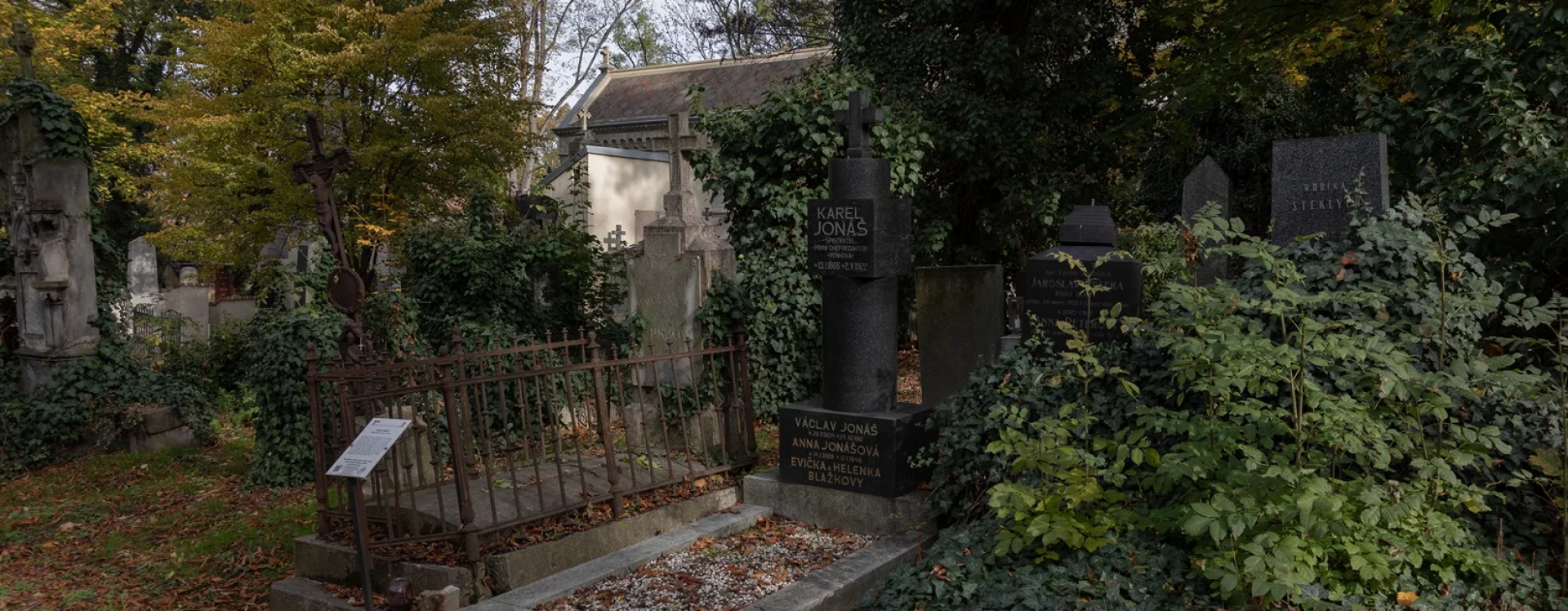
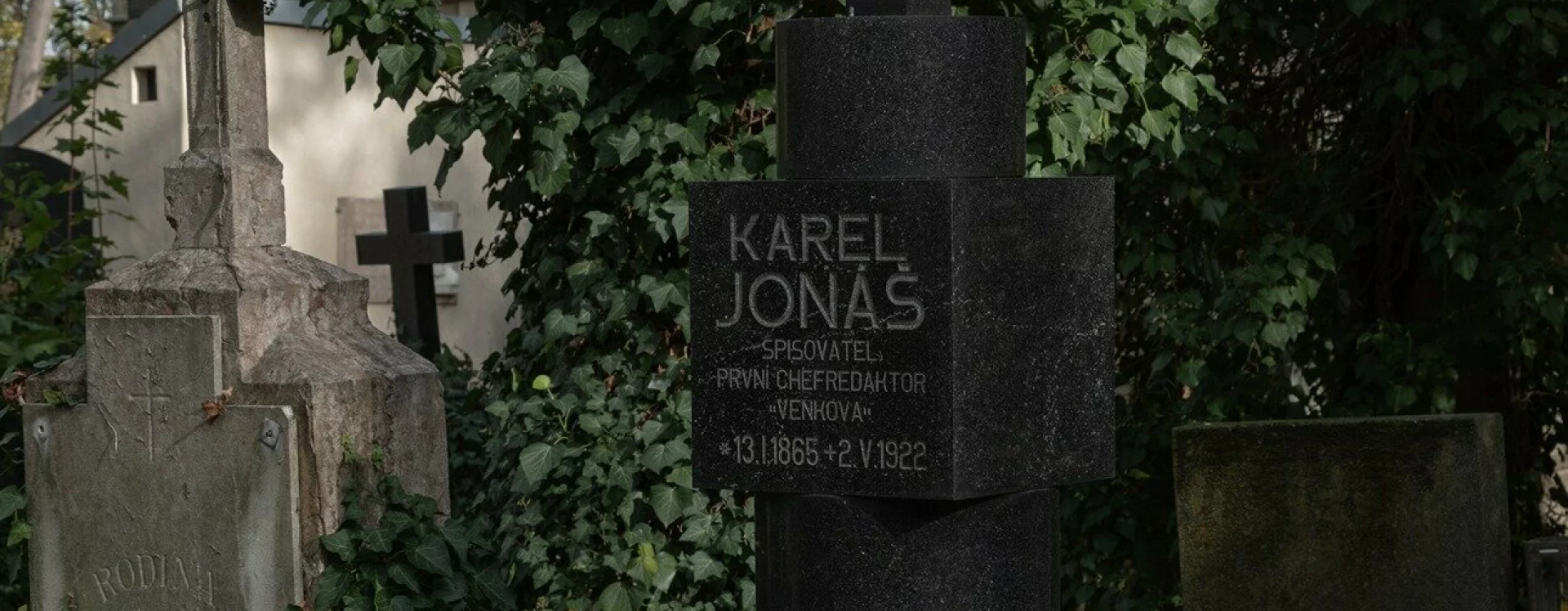
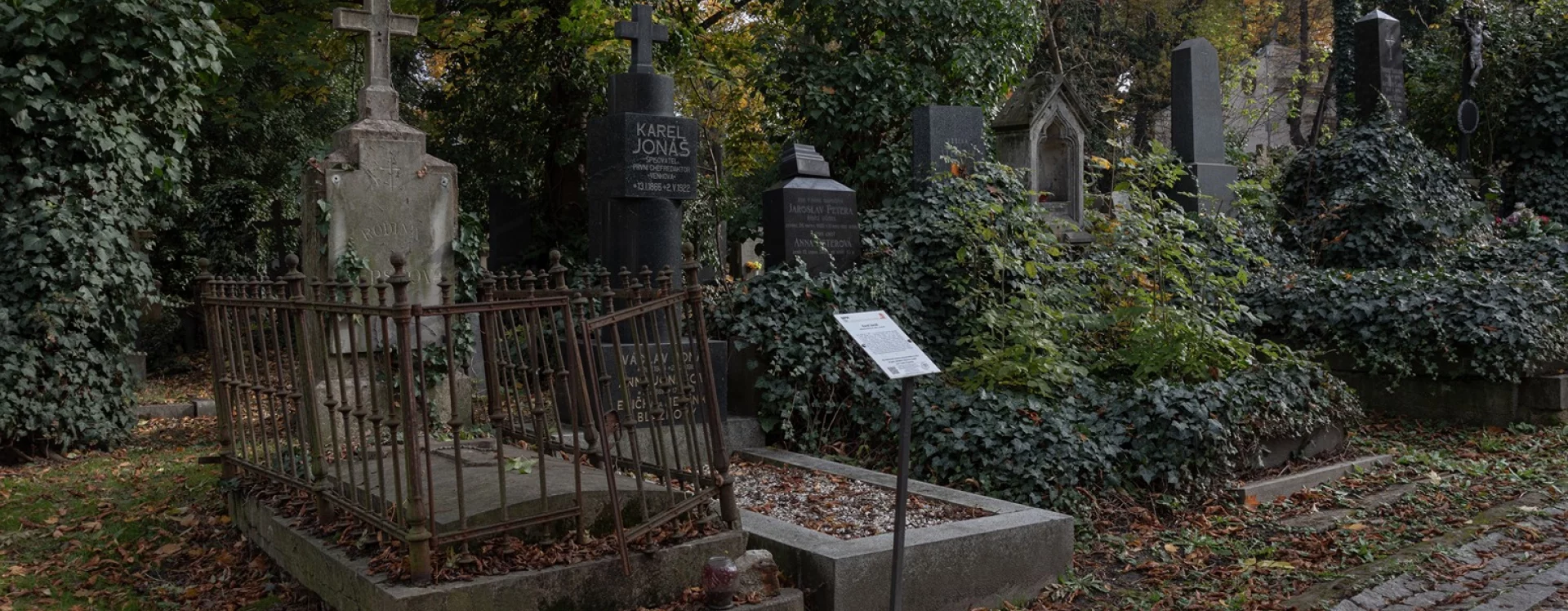
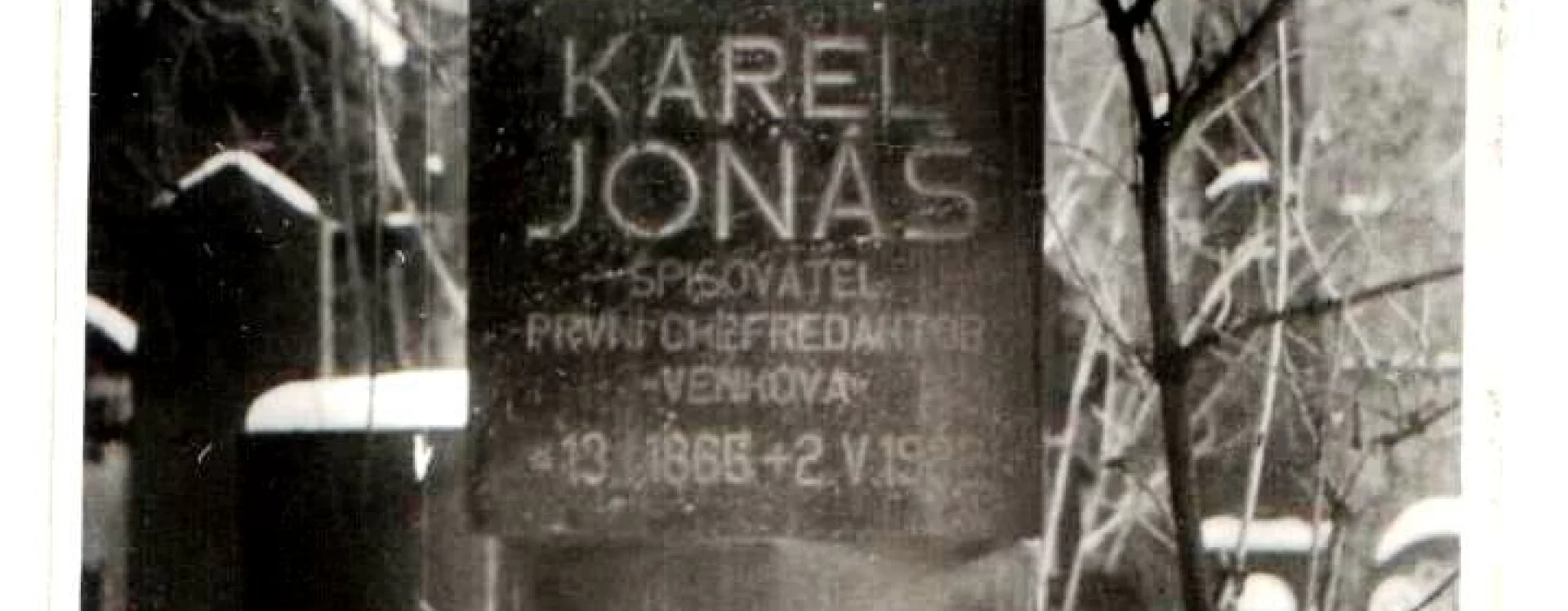
This geometrically conceived vertical gravestone was installed among the much older funerary works of Cemetery III – one of Olšany’s oldest sections – in the first years of Czechoslovak independence.
It belongs to the journalist, author, playwright, politician, and editor-in-chief of Venkov magazine Karel Jonáš. After the founding of Czechoslovakia, this author of three collections of poetry, ten novels, and numerous plays was actively involved in the Revolutionary National Assembly as a representative of the Republican Party of the Czechoslovak Countryside, known as the Agrarians. When Jonáš died prematurely at the age of fifty-seven, his funeral on 5 May 1922 was attended by the First Republic’s entire elite, including chairman of the Agrarian Party Antonín Švehla, government ministers, chairman of the Chamber of Deputies František Tomášek, and chairman of the Senate Karel Prášek. The art world was represented by the directors of numerous theaters, including the National Theatre, whose choir sang the national anthem over Jonáš’s grave.
The volumetric design of this columnar grave marker is the work of the architect and builder Bohumil Sláma (1887–1961), who later gained fame as the author of the Functionalist Czechoslovak Radio building in Vinohrady, the airport hangars in Ruzyně (jointly with Ferdinand Hruška and Eduard Hnilička), and postal offices in Vršovice, Střešovice, and Kladno. He also designed the modernist Catholic Church of the Sacred Heart in Hradec Králové.
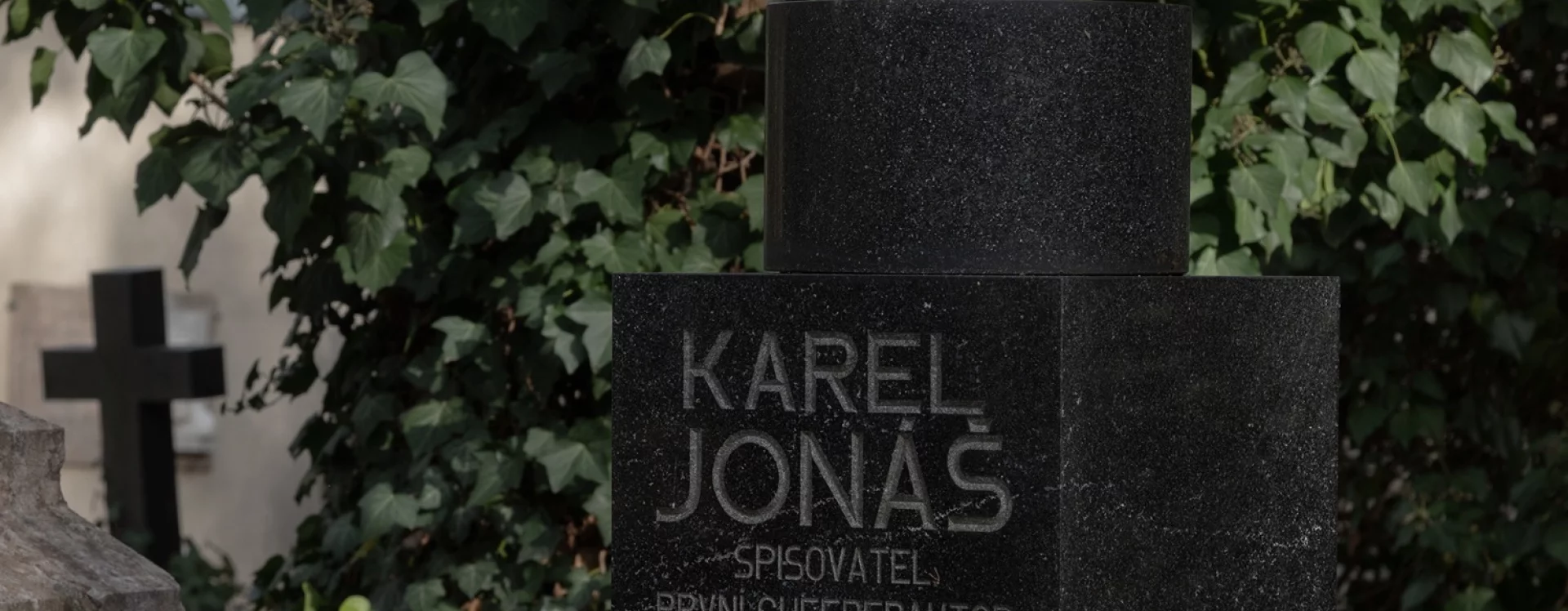
Sláma was also active in the field of funerary architecture. Shortly before designing Jonáš’s gravestone, he and Bedřich Feuerstein were working on a task of far greater size and social significance – the crematorium in Nymburk (1924). One of the first strictly Purist works of architecture, the crematorium was based on a composition of basic geometric forms. The pylon on Jonáš’s monument shows a similar approach to the use of geometric bodies, though on a smaller scale. The marble column, which alternates between a square, rectangular, and cylindrical profile, forms the pedestal for a bronze bust of the deceased.
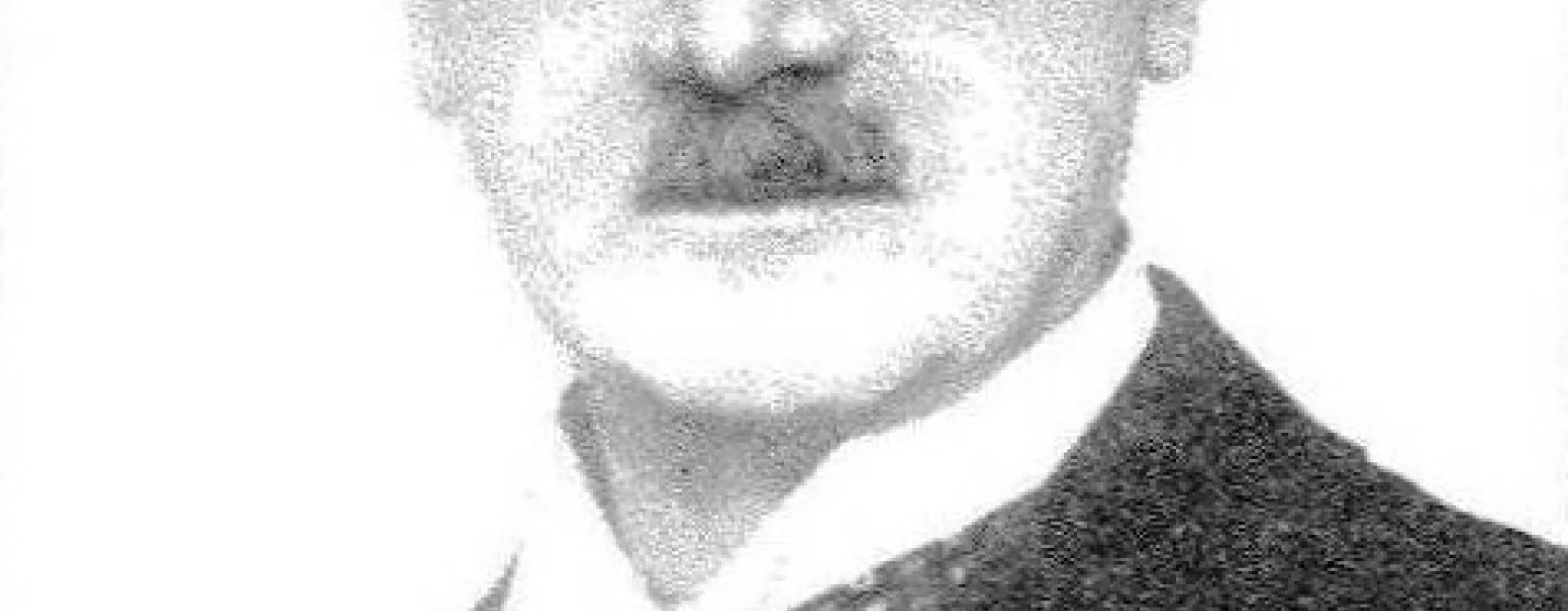
This portrait of Jonáš, which unfortunately is known only from photographs, was the work of Karla Vobišová Žáková (1887–1961). Žáková, who among other things earned an award from the Academy of Sciences and the Arts for her monument commemorating Eliška Krásnohorská, is often called the first female professional Czech artist. A member and chairwoman of the Circle of Women Artists, she focused on the human figure and portraits. Her works can be found at the Vinohrady Cemetery, and her grave at Vyšehrad features a small work of hers titled Sochařka (The Sculptress, 1950).
The new gravestone at Olšany was not unveiled until May 1927, again in the presence of leading figures from the country’s political and cultural life. Architect Bohumil Sláma also drafted plans for a columbarium later constructed at the cemetery in Holešovice.
Jonáš’s grave also holds the remains of his wife Anna (1869–1948). The abandoned grave was adopted in 2015 and renovated, with a stone cross placed on top of the pylon in place of the stolen bust.