Sladkovský was a radical-minded politician and journalist who spent all his life promoting Czech national interests. The Habsburg regime sentenced him to death for his involvement in the 1848 revolution, but the sentence was later reduced to twenty years in prison. Pardoned and rehabilitated in 1857, he again threw himself actively into public life. He wrote for Národní listy, was elected to the Bohemian Diet, and became the chairman of the Young Czech Party. He gave the keynote speech at the laying of the cornerstone for the National Theatre. The many years spent in prison nevertheless left their mark on his health, and Sladkovský died on 4 March 1880 a few months short of his 57th birthday. Three days after his death, a grand funeral was held at Olšany that according to period accounts was attended by some 60,000 people and thus literally became a national anti-Habsburg demonstration. The eulogy was delivered by Eduard Grégr, who described the deceased as a national martyr – a characterization that among other things came to influence the monument's design. In September of that year, the Beseda Sladkovský was founded, headed by Josef Barák, with the goal of erecting a dignified grave using funds from a public collection. The artistic competition was won by the sculptor Josef Václav Myslbek, who chose to partner with Antonín Wiehl on the architectural design. Both artists had ample experience with funerary commissions, having previously collaborated on a sarcophagus for Václav Švagrovský.
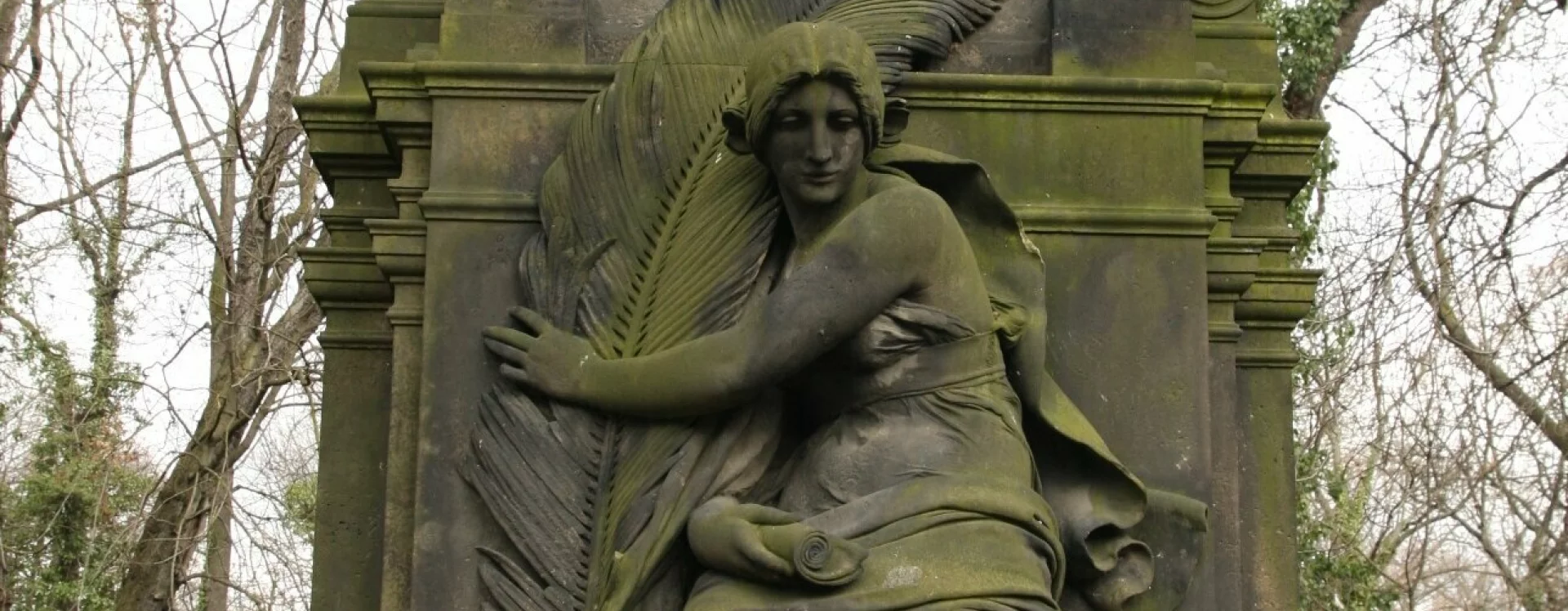
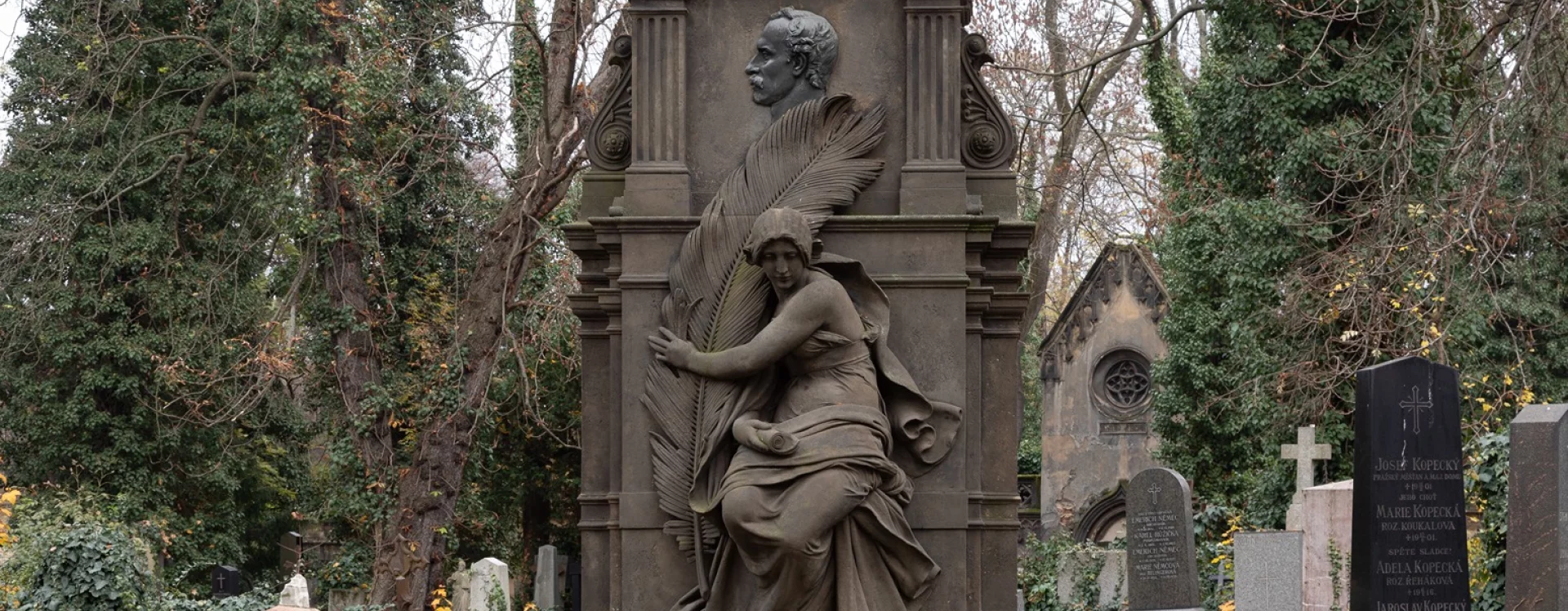
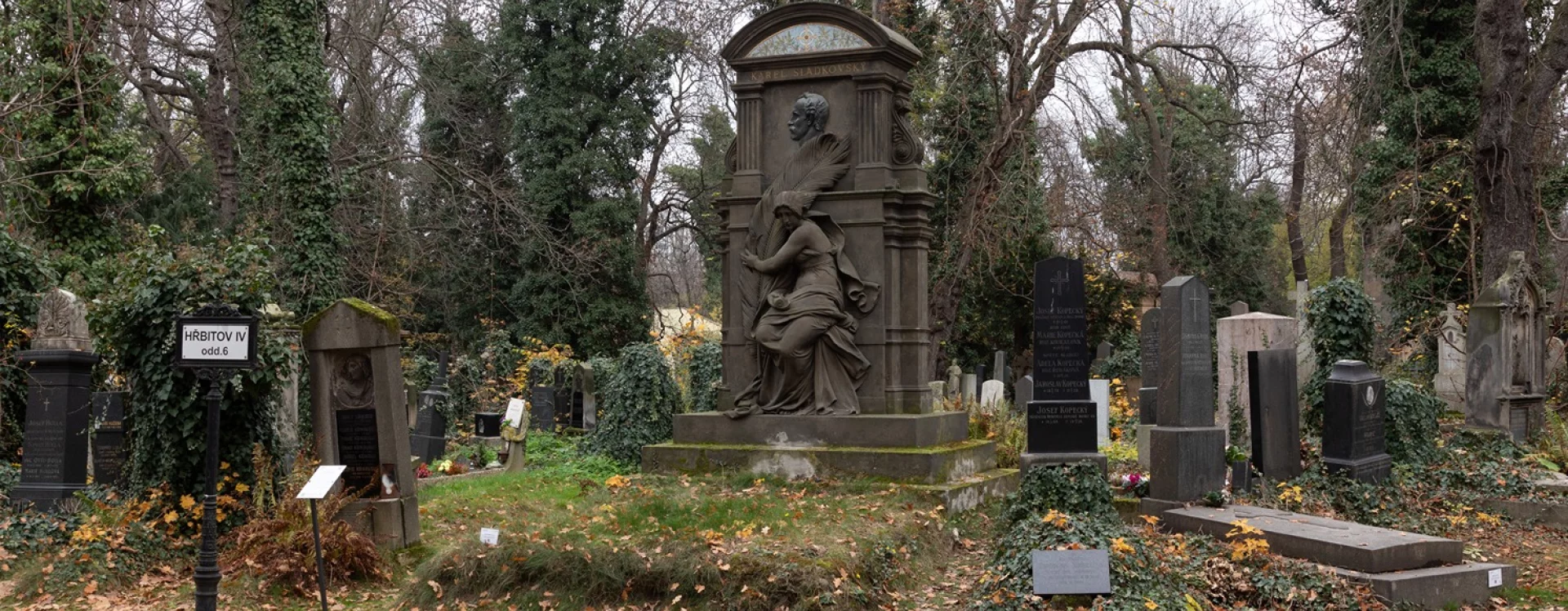
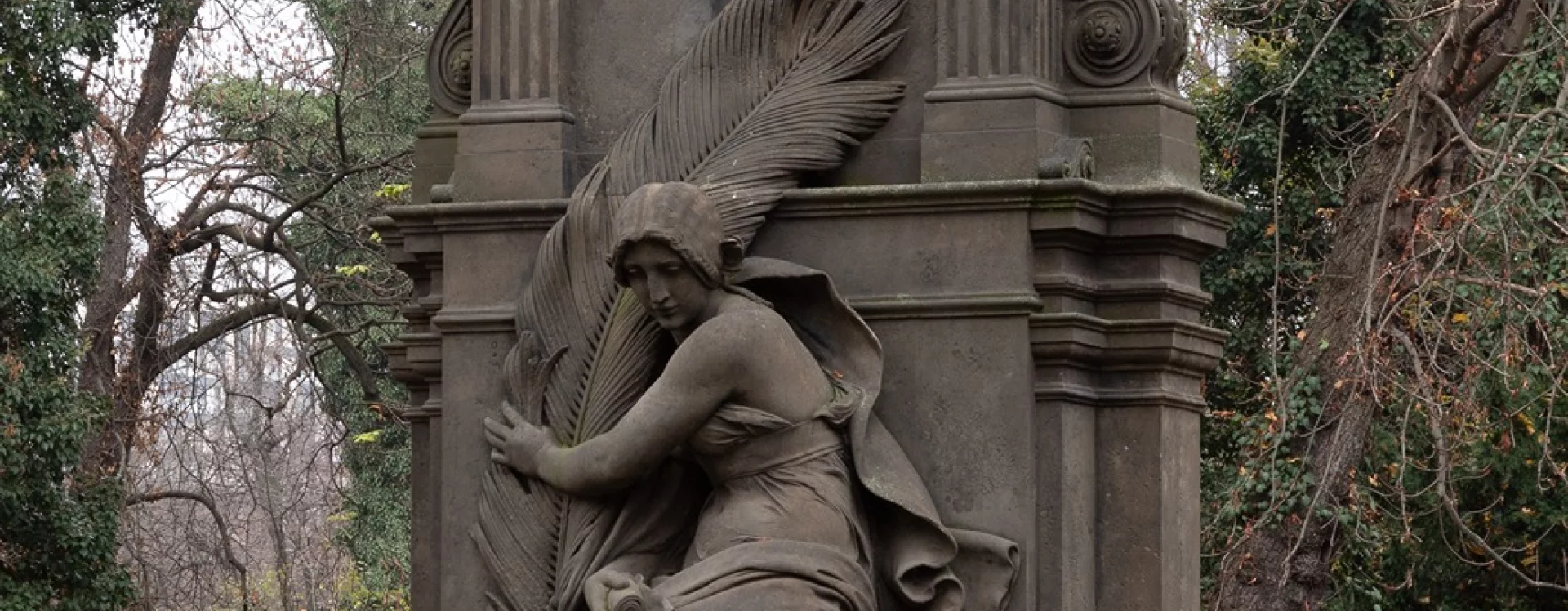
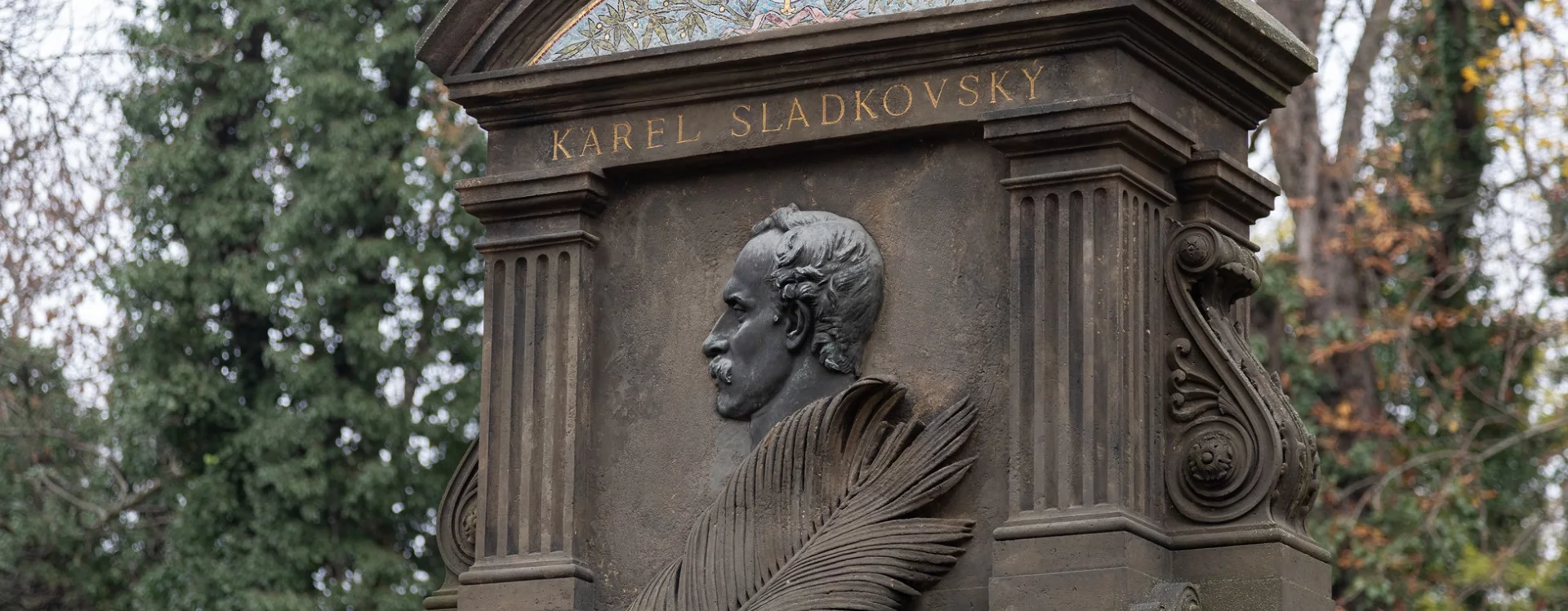
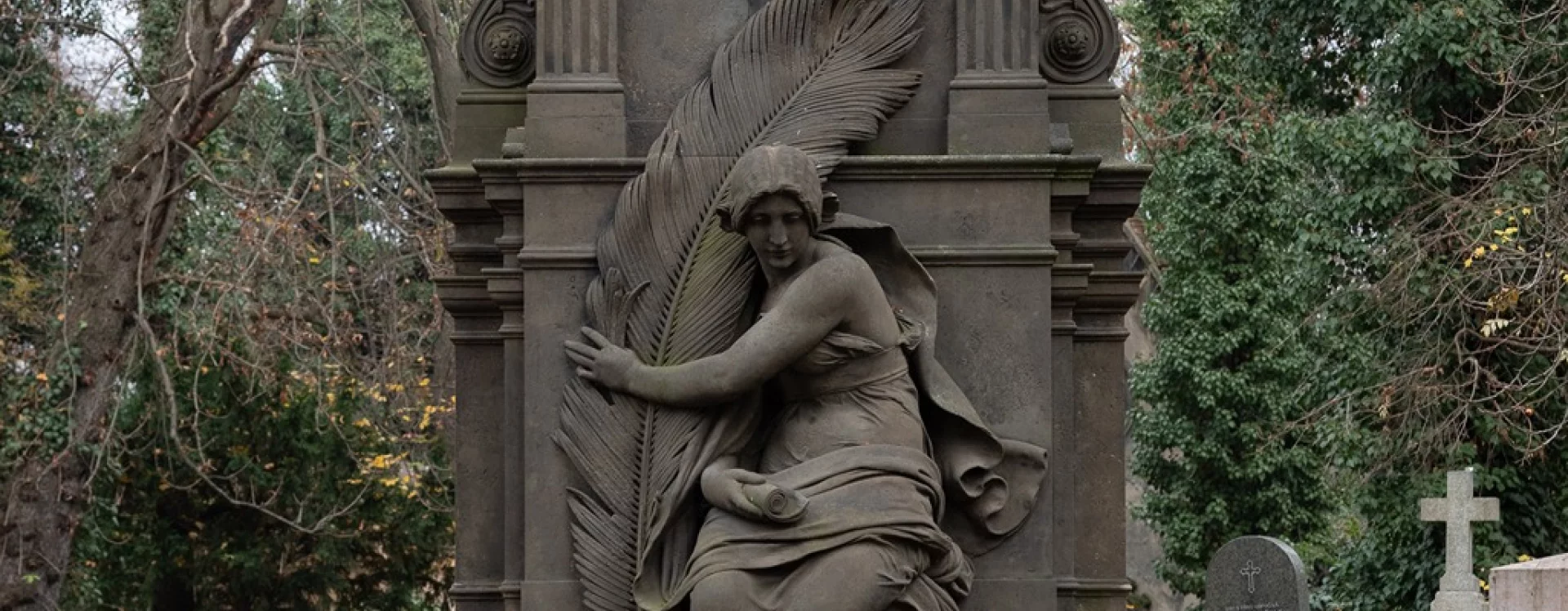
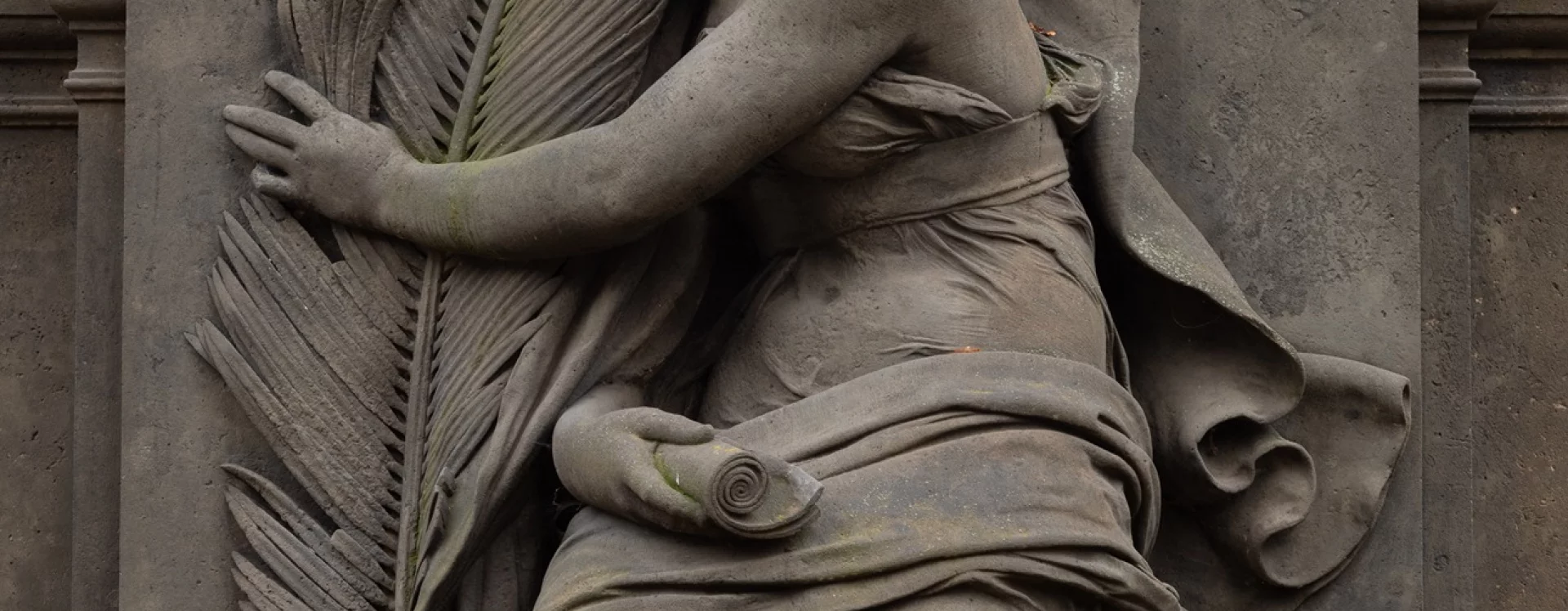
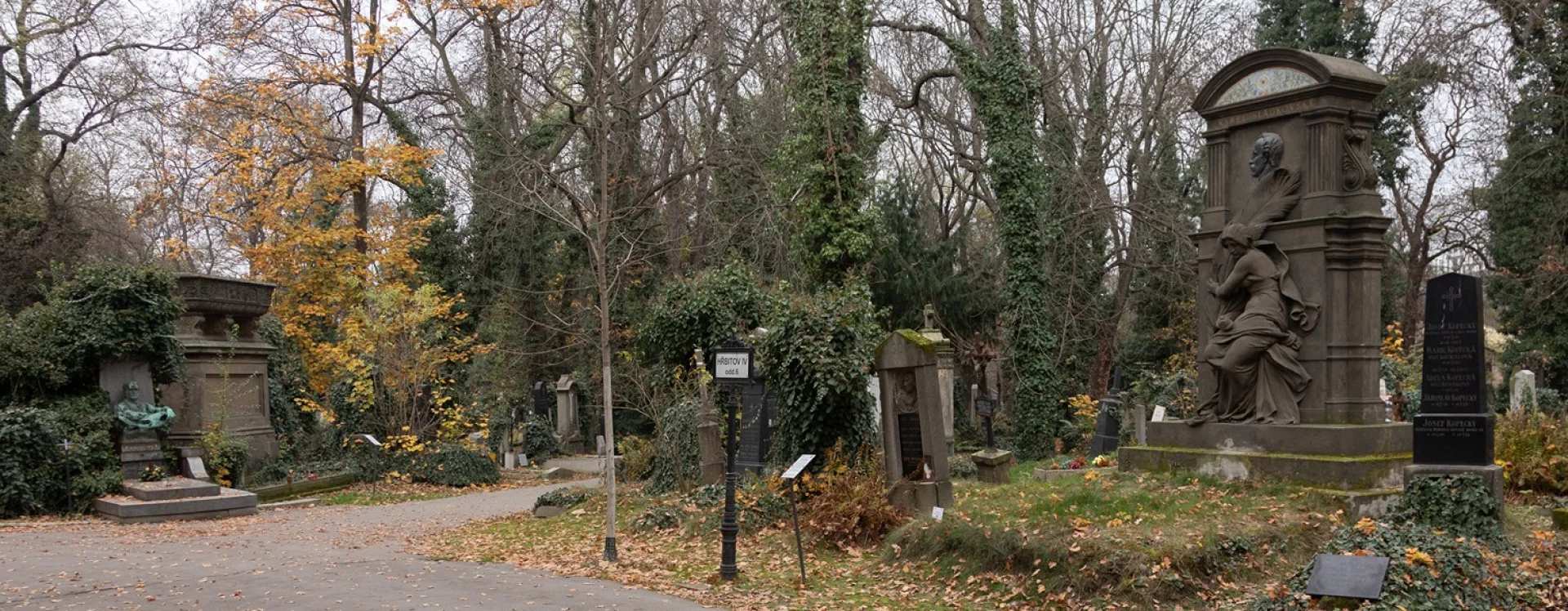
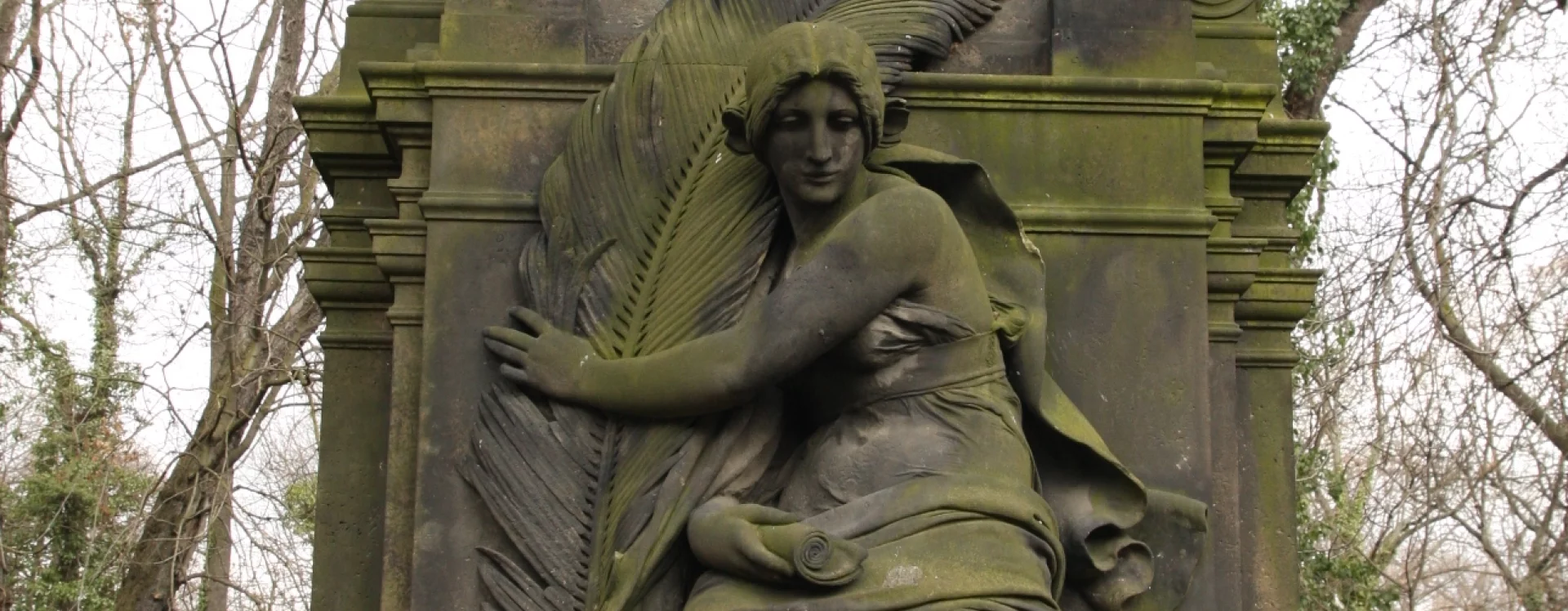
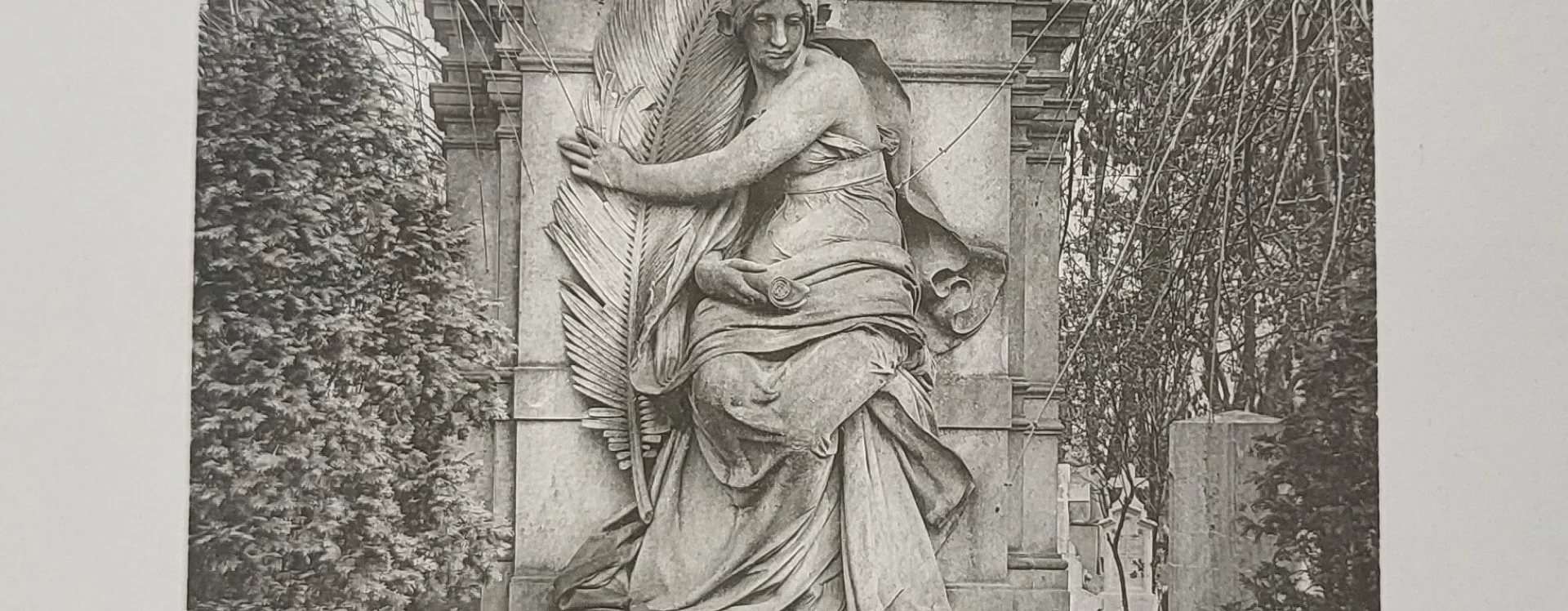
Carved from Hořice sandstone, Sladkovský's Neorenaissance monument consists of a monumental stele on a stepped pedestal, crowned by a mosaic-decorated arch. The politician's portrait, done in profile, is flanked by architectural elements in the form of two pilasters and volutes with plant motifs. Underneath this bronze likeness is a stone allegorical figure representing his homeland. Done in a classical style, the figure grasps attributes of the deceased: in the left hand it holds a palm frond, a symbol of triumph over death and, in early Christianity, of martyrdom; in the right hand it holds a scroll representative of wisdom and literature. The mosaic that originally decorated the arch at the top of the stele was produced by Innsbruck's Albert Neuhauser company, which in the nineteenth century contributed decorative elements for numerous other large architectural commissions in Bohemia. Unfortunately, the mosaic quickly began to peel off, as recorded in an 1892 complaint by Sladkovský's family: "(The mosaic stones are falling off), thus disfiguring this beautiful memorial." The mosaic was completely renovated in 2017, and today it should almost perfectly reflect its original form, with a golden Greek cross against a sky-blue background, surrounded by laurels with a crimson ribbon. On the rear of the stele is a dedication to the deceased: "To the brave defender of the rights of the Czech people, Beseda Sladkovský, 1884."
Vladislava Holzapfelová, 2025
Literature
Jan Ježek. Naše hroby, stručné životopisy spisovatelů a umělců českých, jichž těla na hřbitovech pražských odpočívají. Praha, 1881, p. s. 42‒43..
Zdeněk Wirth. Antonín Wiehl a česká renesance. Praha, 1921, p. s. 23..
Vojtěch Volavka. Soupis díla J. V. Myslbeka. Praha, 1929, p. s. 37..
V. V. Štěch. J. V. Myslbek. Praha, 1952, p. s. 24..
Taťána Petrasová ‒ Helena Lorenzová (ed.). Fenomén smrti v české kultuře v 19. století, Sborník příspěvků z 20. ročníku sympozia k problematice 19. století. Praha, 2001, p. s. 103..
Alois Vanoušek ‒ Vojtěch Grametbauer. Olšany, jaké neznáme. Praha, 2004, p. s. 53‒54..
Petr Vlček (ed.). Encyklopedie architektů, stavitelů, zedníků a kameníků v Čechách. Praha, 2004, p. s. 712..
Jiří Roháček (ed.). Epigraphica et sepulcralia X., Sborník 17. mezinárodního zasedání k problematice sepulkrálních památek. Praha, 2021, p. s. 395-397..