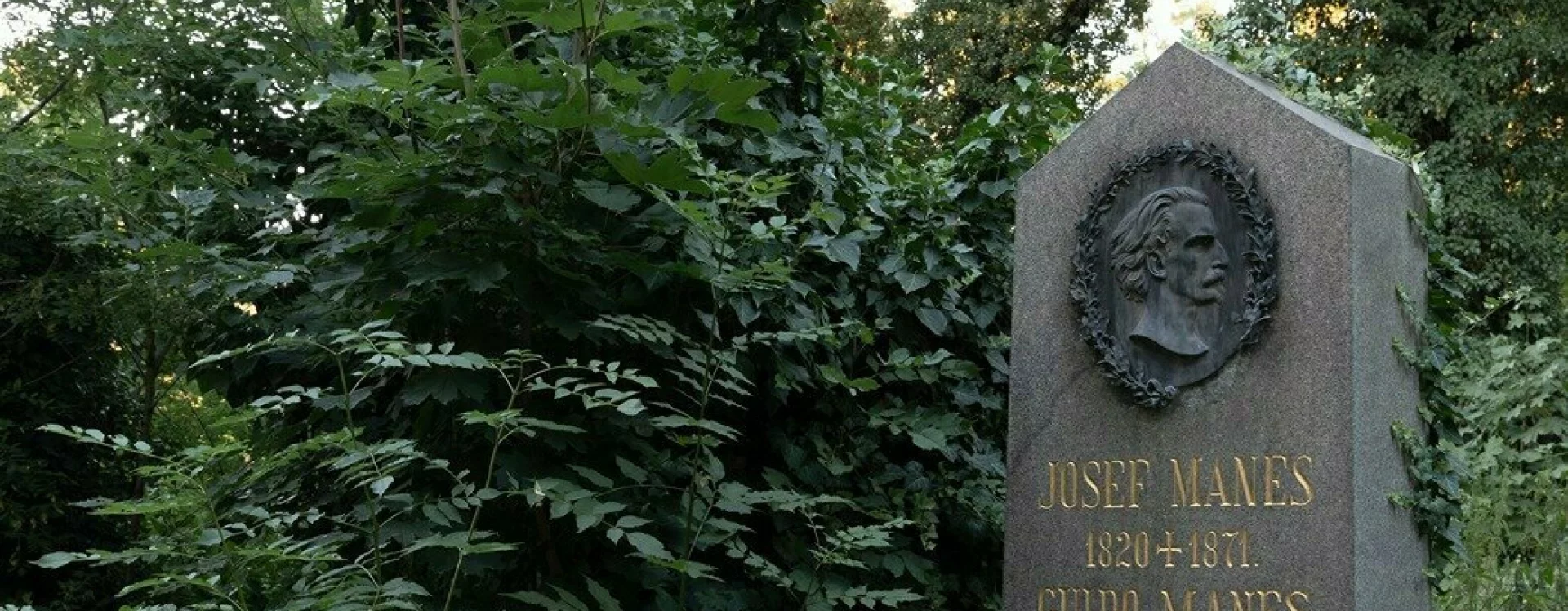
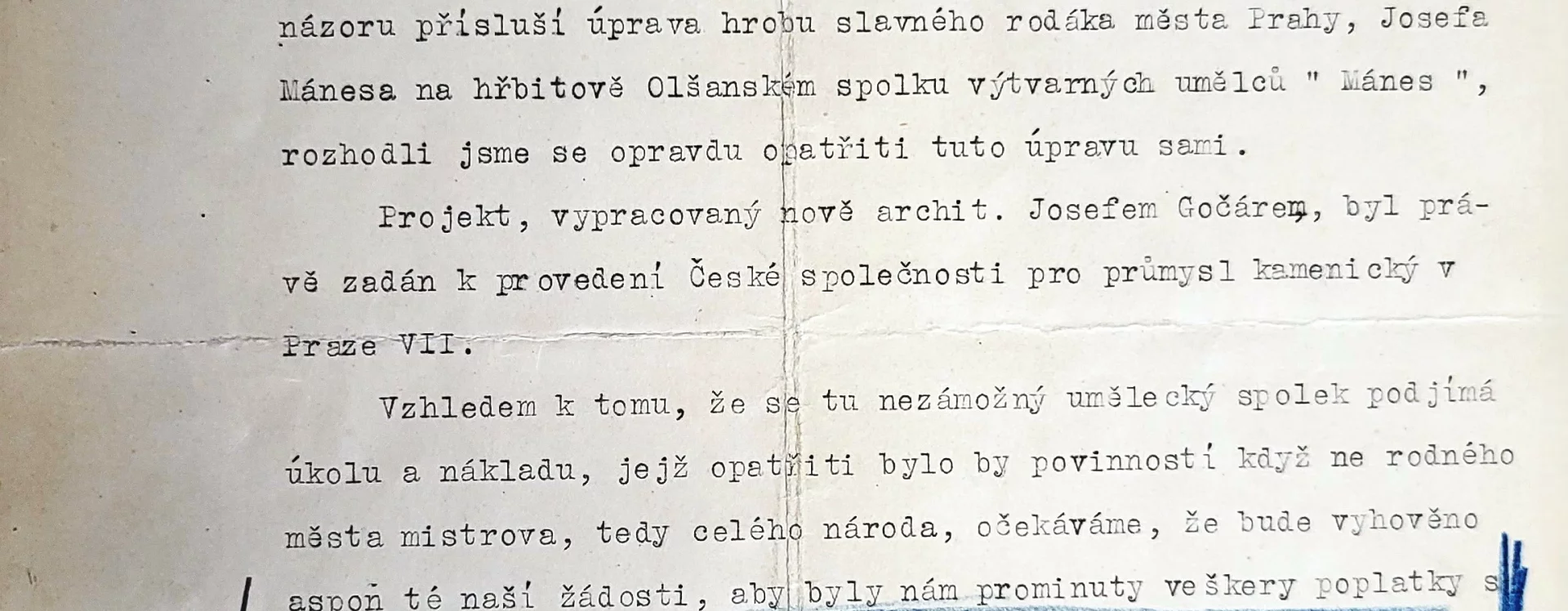
When celebrating the centenary of the birth of Josef Mánes, the members of the Mánes Association of Fine Artists began to take the first steps toward renovating the gravesite of their namesake. They envisioned building a frame around his grave, for the Mánes siblings' gravesite had remained unadorned. Due to complications with the irregular sloping terrain, however, the project was not completed until two years later, when the architect Josef Gočár undertook its realization.
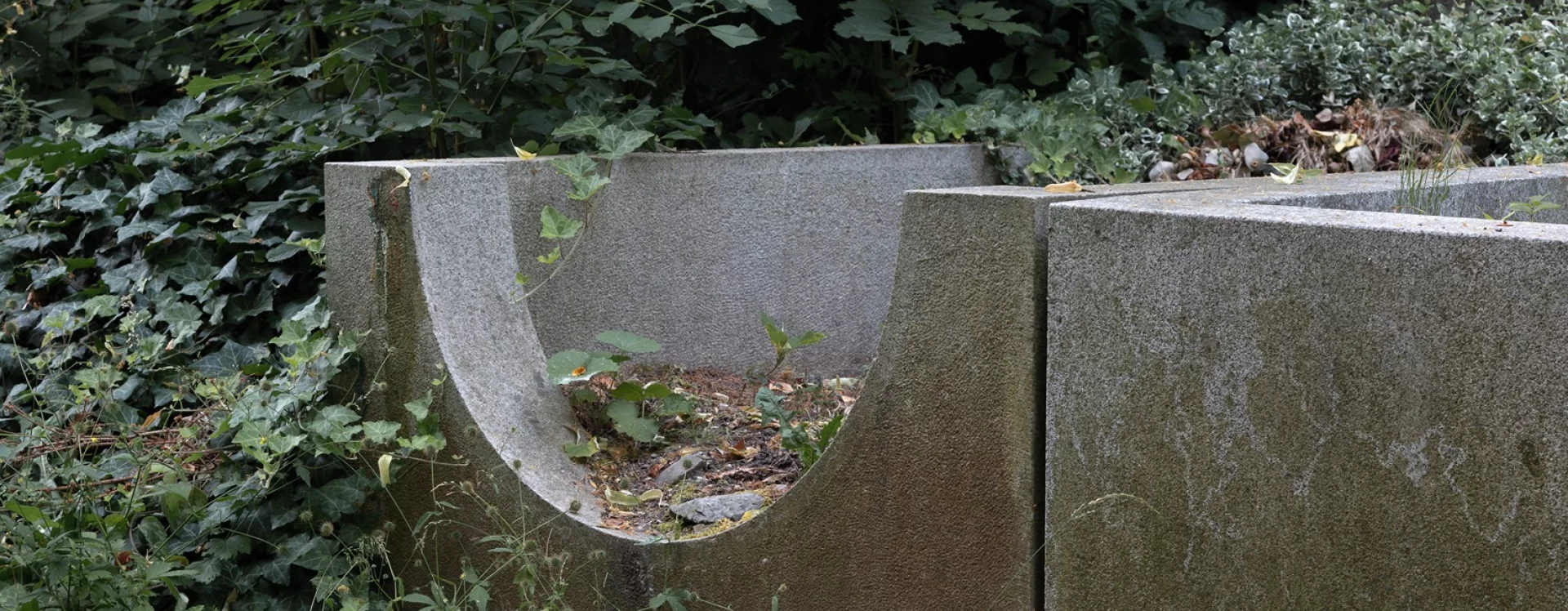
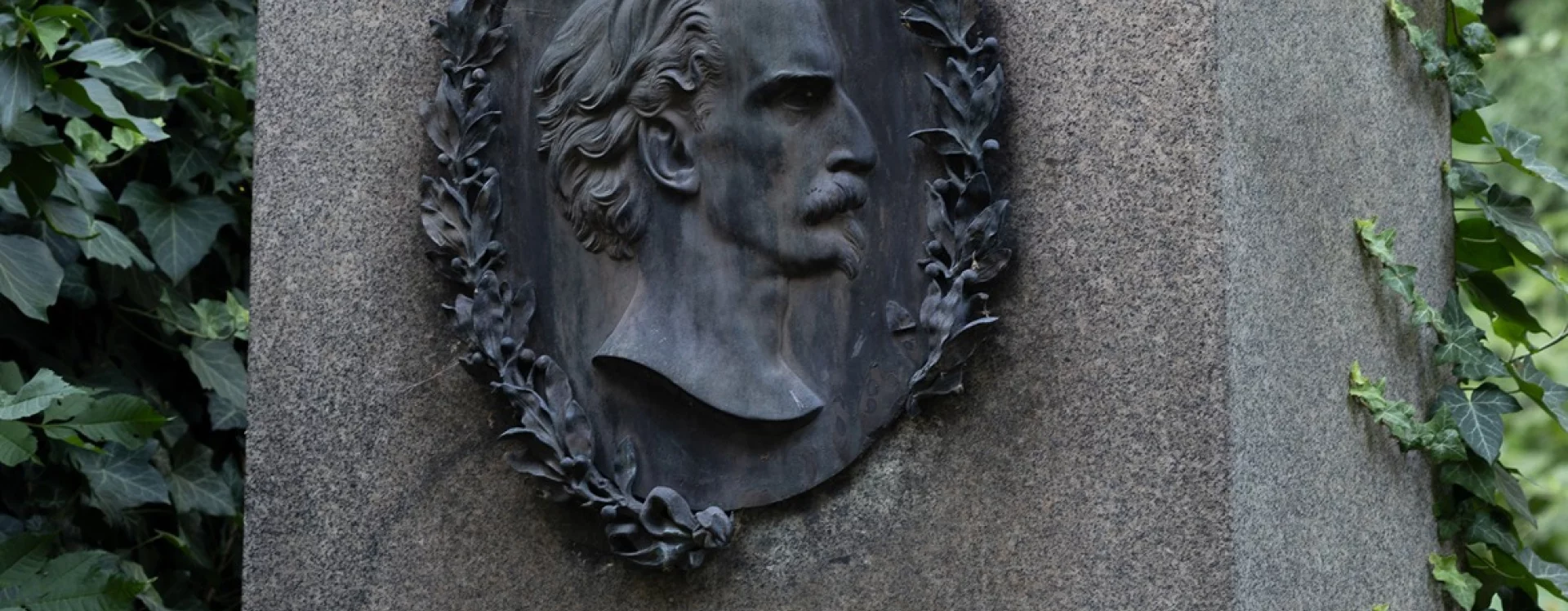
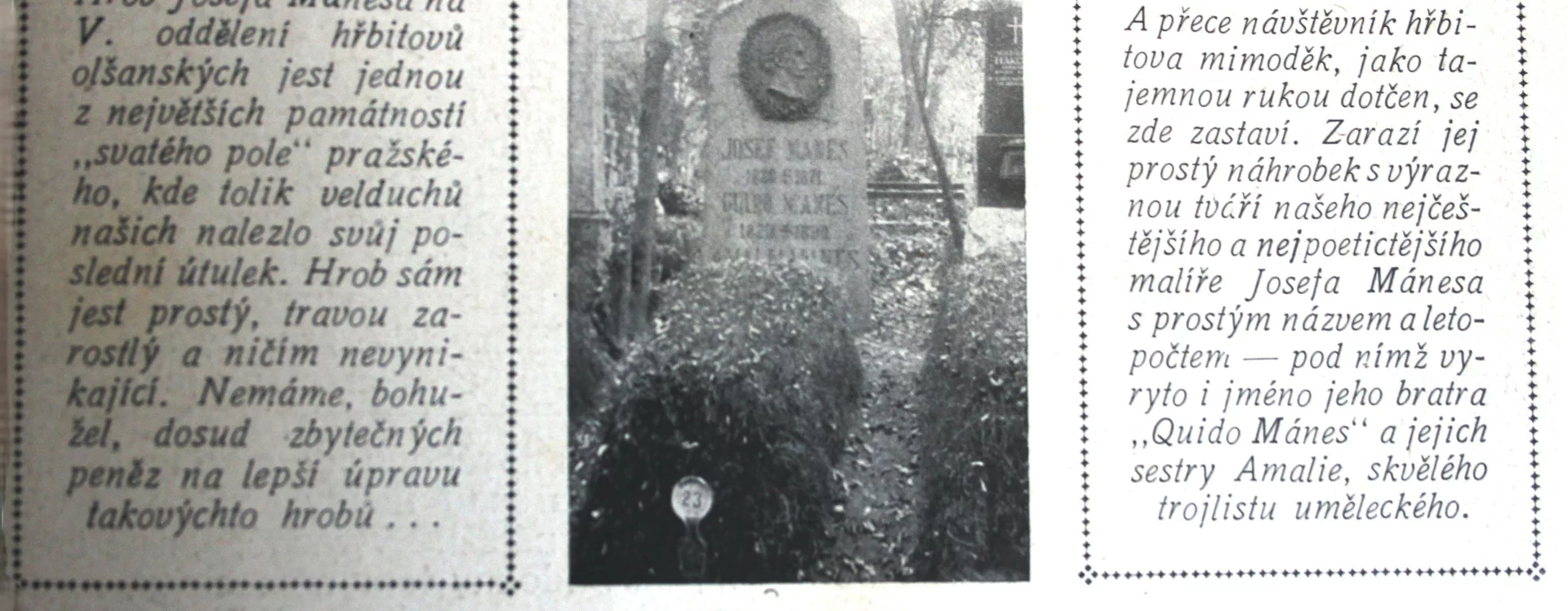
To the original gravestone – a classical yet unusual massive stele made of polished light granite, decorated with a bronze portrait medallion, and inscribed with the Mánes siblings' names in large, distinctive letters – Gočár added a Purist frame made of similarly light honed Mrákotín granite, whose volume compensates for the uneven terrain. In place of the usual small metal fence, he chose a massive stone border, into whose front end he cut a semicircular opening that seems to mirror the dark circular outline of the medallion on the light stone. With this design, Gočár was also referencing the basic shapes popularly used by the National Style, which was on the rise after Czechoslovak independence.
Josef Mánes was the most prominent painter and artist of his time, and his work went on to fundamentally influence future generations of artists. Although he is usually considered one of the most prolific Czech artists, it is a shame that he did not receive more prestigious commissions. What is more, he was limited by a mental illness that shortened his life. His most significant public work thus remains the calendarium on Prague's astronomical clock. He was buried across from the newly erected tomb of Vojtěch Knight of Lanna, who had been one of his main patrons.
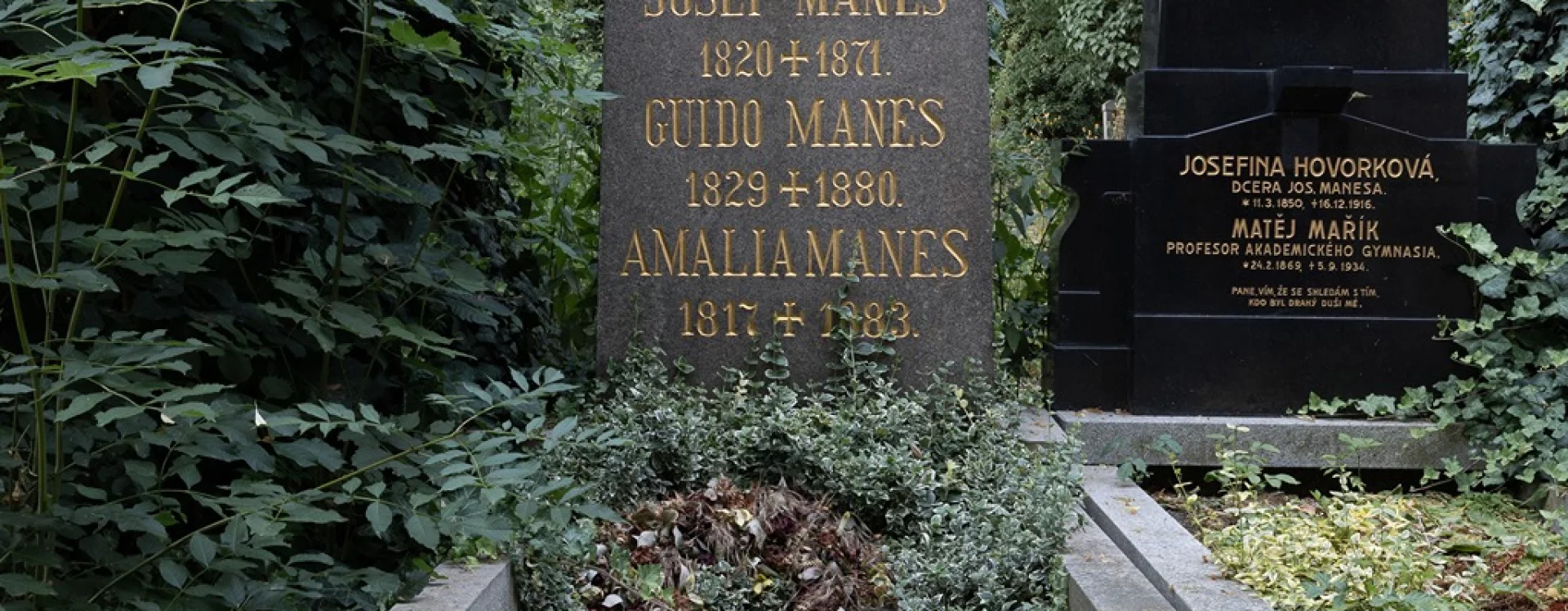
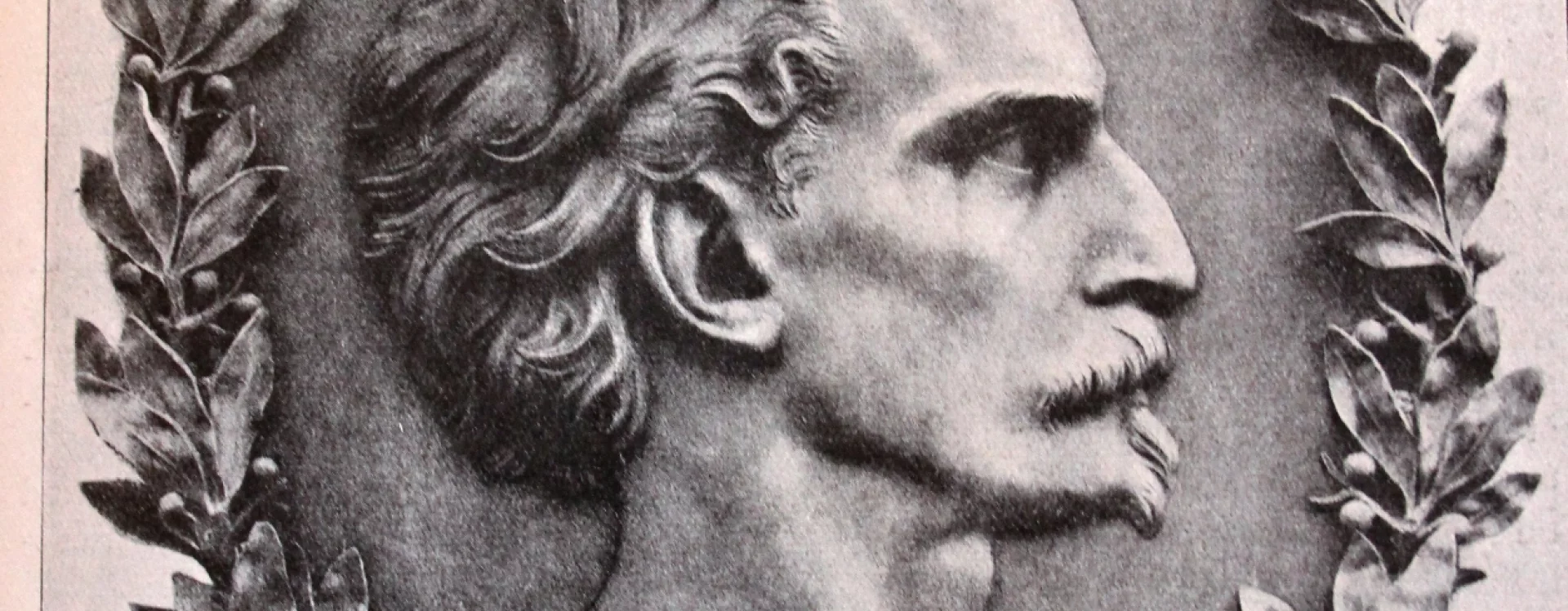
Buried alongside Josef Mánes are his siblings Quido and Amálie, who were excellent painters as well. Amálie ran their household and besides making her own art also taught painting to young girls, for at the time women were still not allowed to study at the Academy of Fine Arts. All three siblings lived and breathed art from a young age, since their father Antonín and uncle Václav were outstanding painters and teachers as well. When Josef left the Prague Academy in order to continue his studies in Munich, he met the sculptor Hans Gasser, who created the medallion whose cast, decorated with a laurel wreath, was later used on the gravestone. The original was replaced by a copy in 2008, but this did not deter its attempted theft in 2012, during which it was damaged.
In 2014, the remains of Josef Mánes's daughter Josefina Hovorková were moved to a neighboring plot along with the original gravestone from the Šárka cemetery. Her husband's remains were moved here as well from another site at Olšany. Unfortunately, the stone frame on their grave does not line up with Gočár's stone border, thus hindering a proper appreciation of his work. His original intent is clear when considered in relation to his other works at the Olšany cemeteries, in particular the border around the Pilc family grave and the geometric design of the Fiedler gravestone, where he also worked with a composition of right-angled and rounded elements.