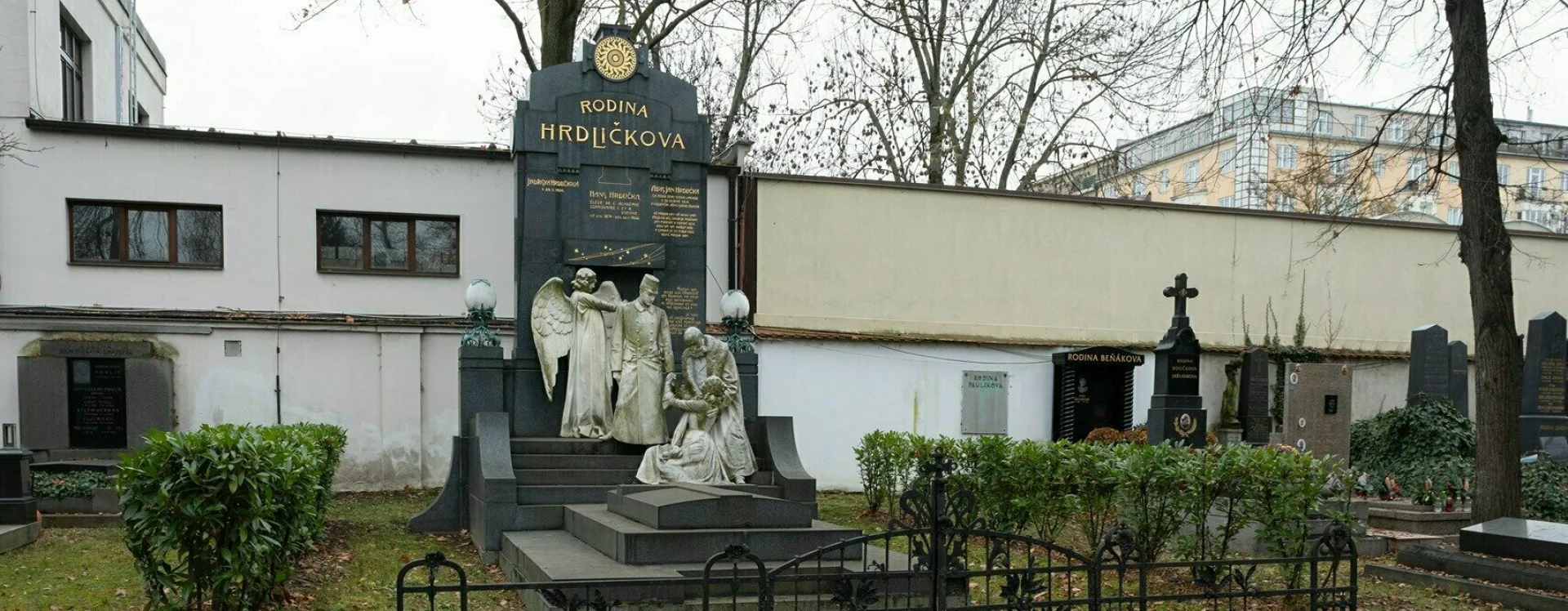
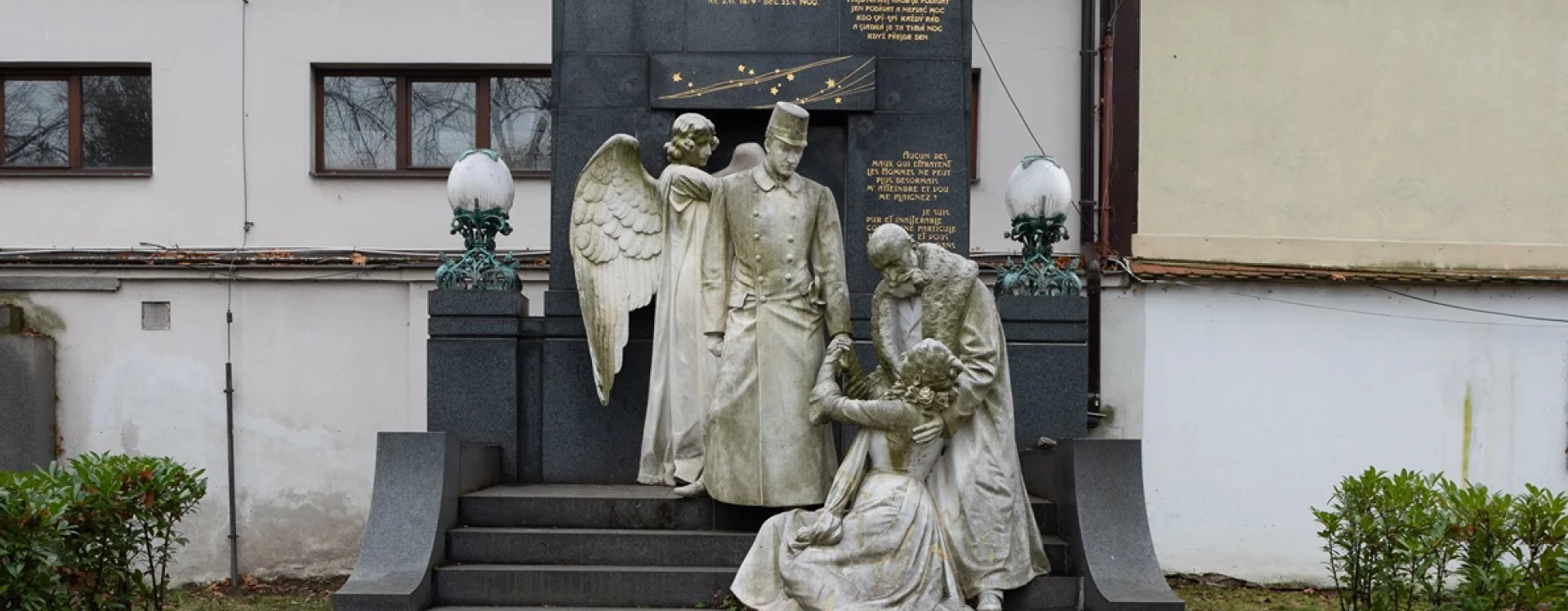
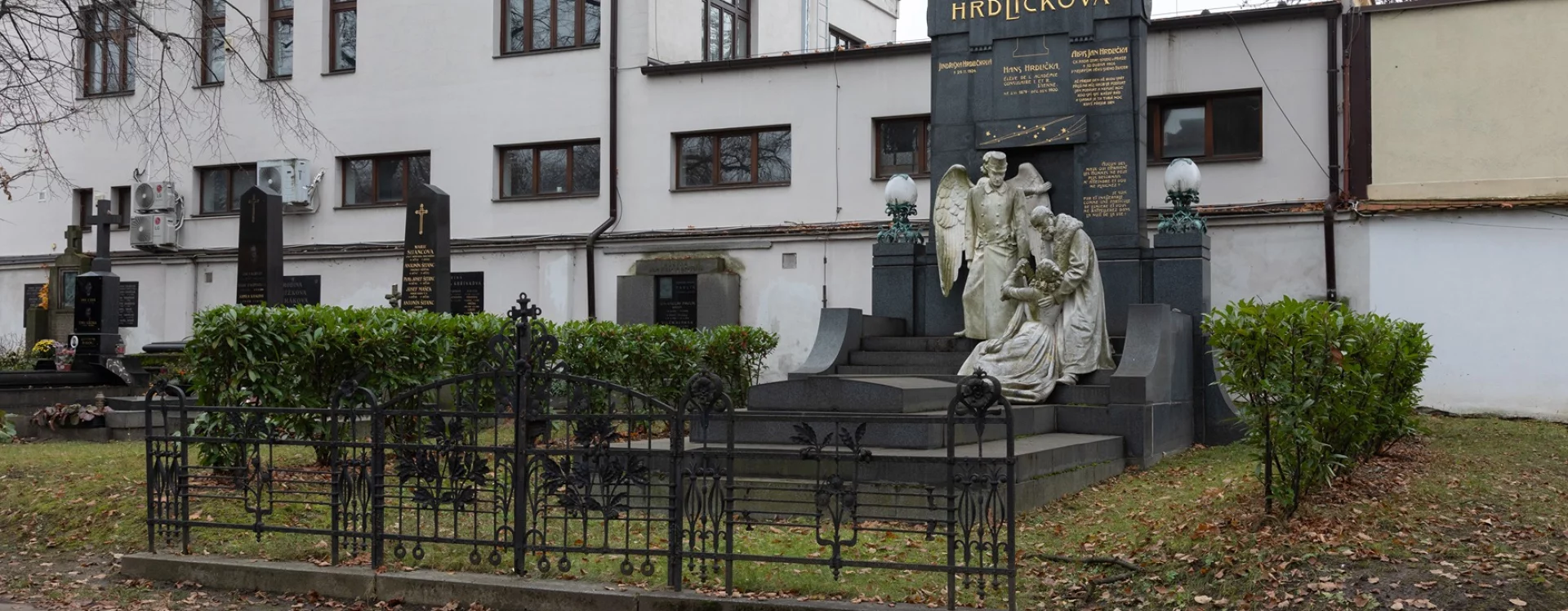
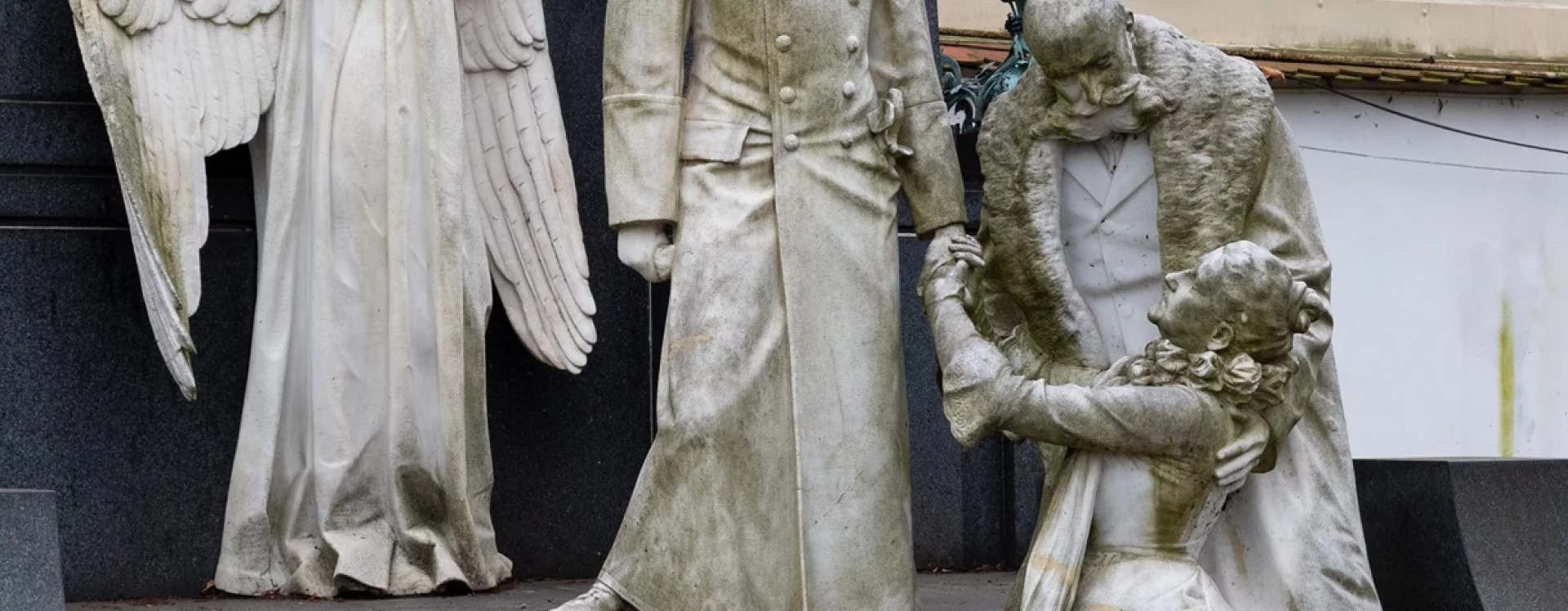
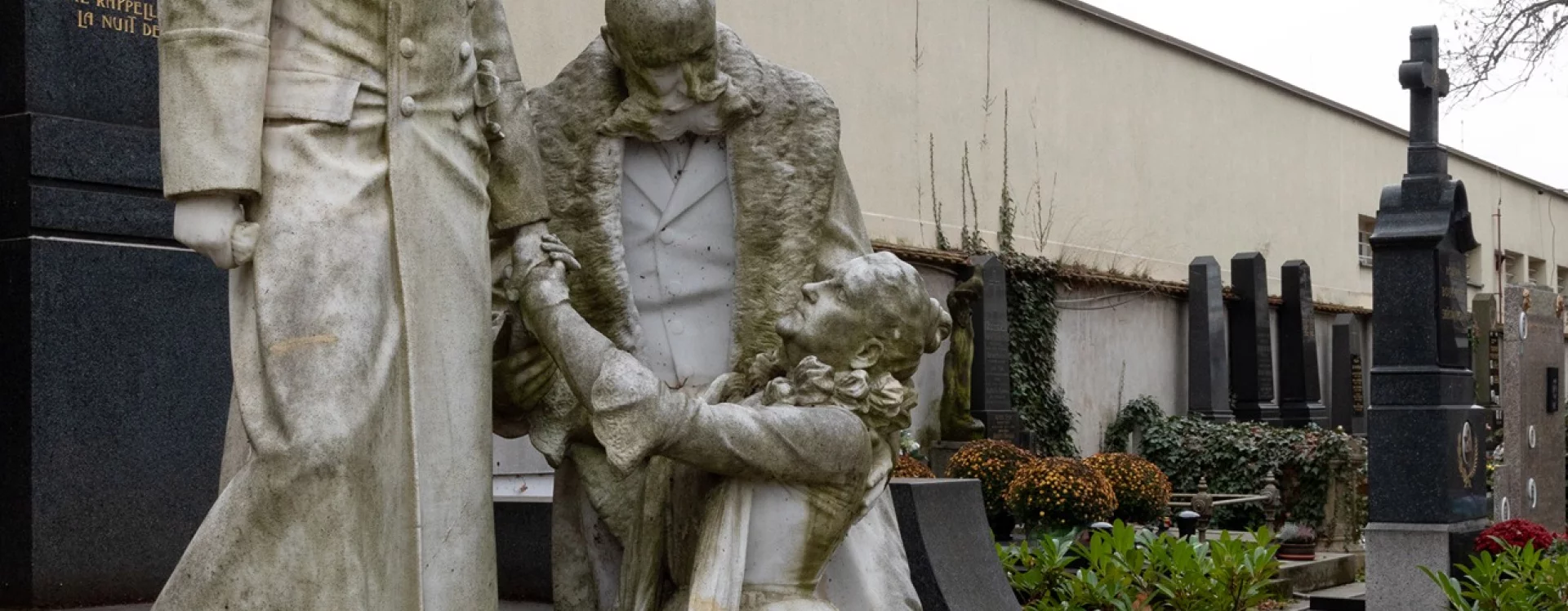
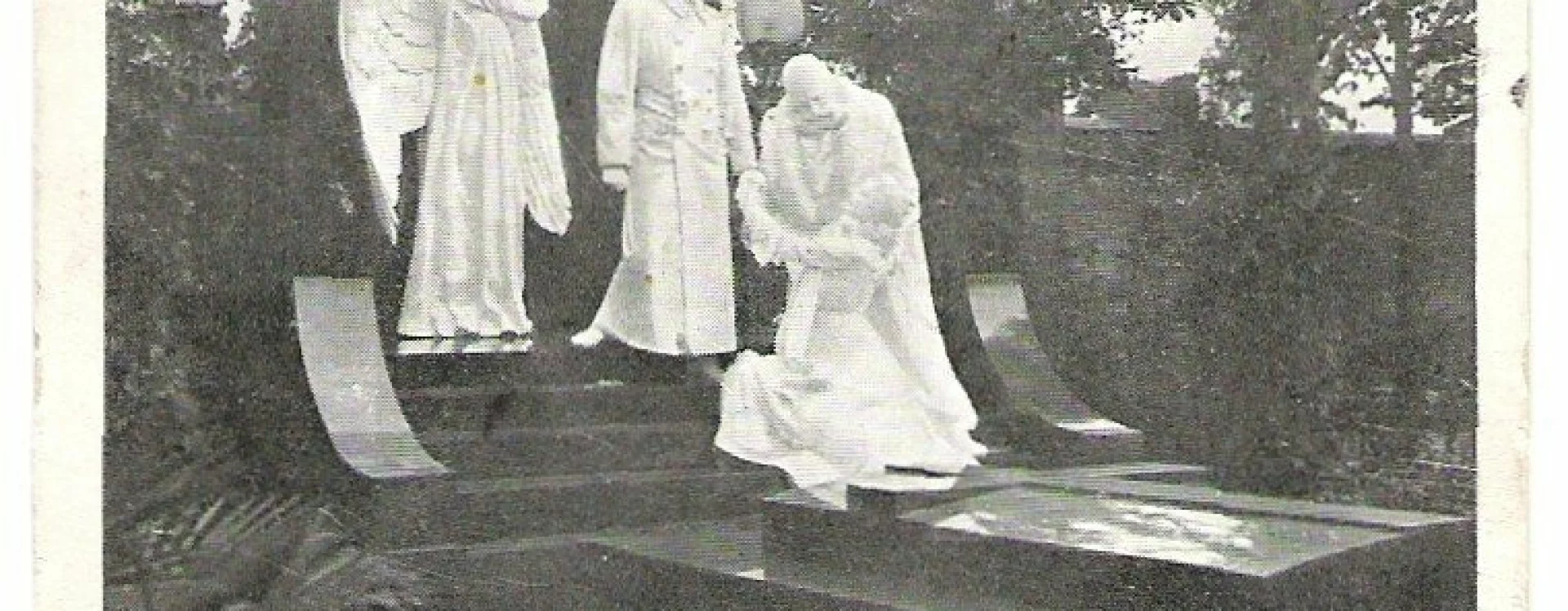
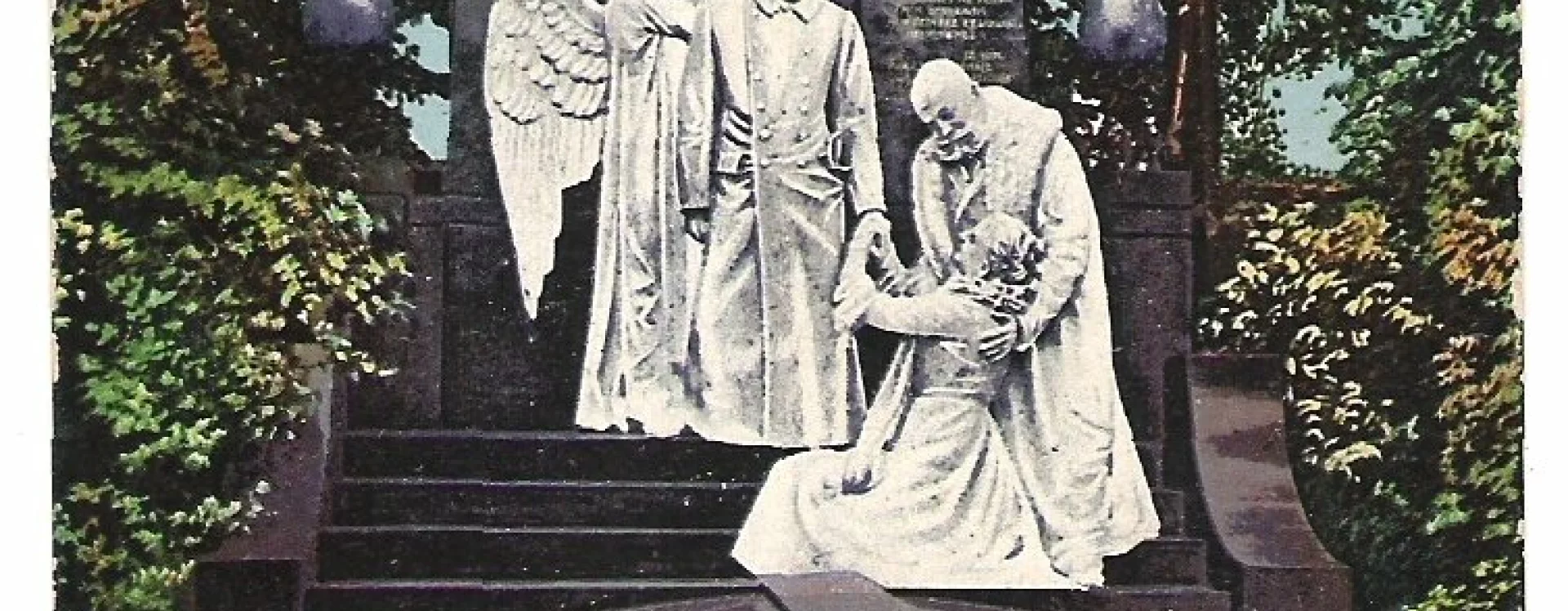
The monument for the Hrdlička family crypt, one of the most remarkable and at the same time most popular funerary monuments at Olšany, can boldly be described as an Art Nouveau Gesamtkunstwerk. It was commissioned by Alois and Jindřiška Hrdlička for their only son Hans, who died of pneumonia in 1900 at the age of just 21 while studying at the Diplomatic Academy of Vienna. The devastated parents decided to erect a grand monument for their son, an undertaking made possible by the family's social standing and financial background: Alois Hrdlička was a respected lawyer and court councilor. For monument's design, Hrdlička and his wife turned to two renowned individuals: the architect Antonín Balšánek and the sculptor František Rous.
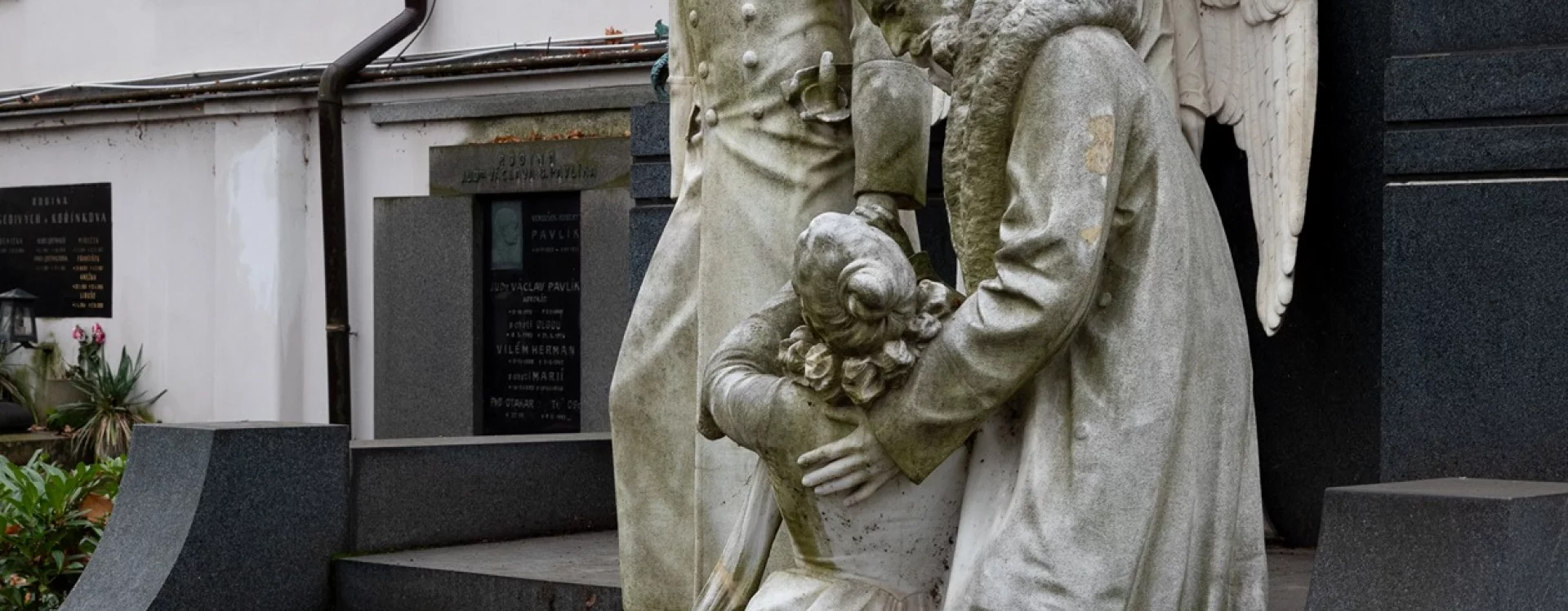
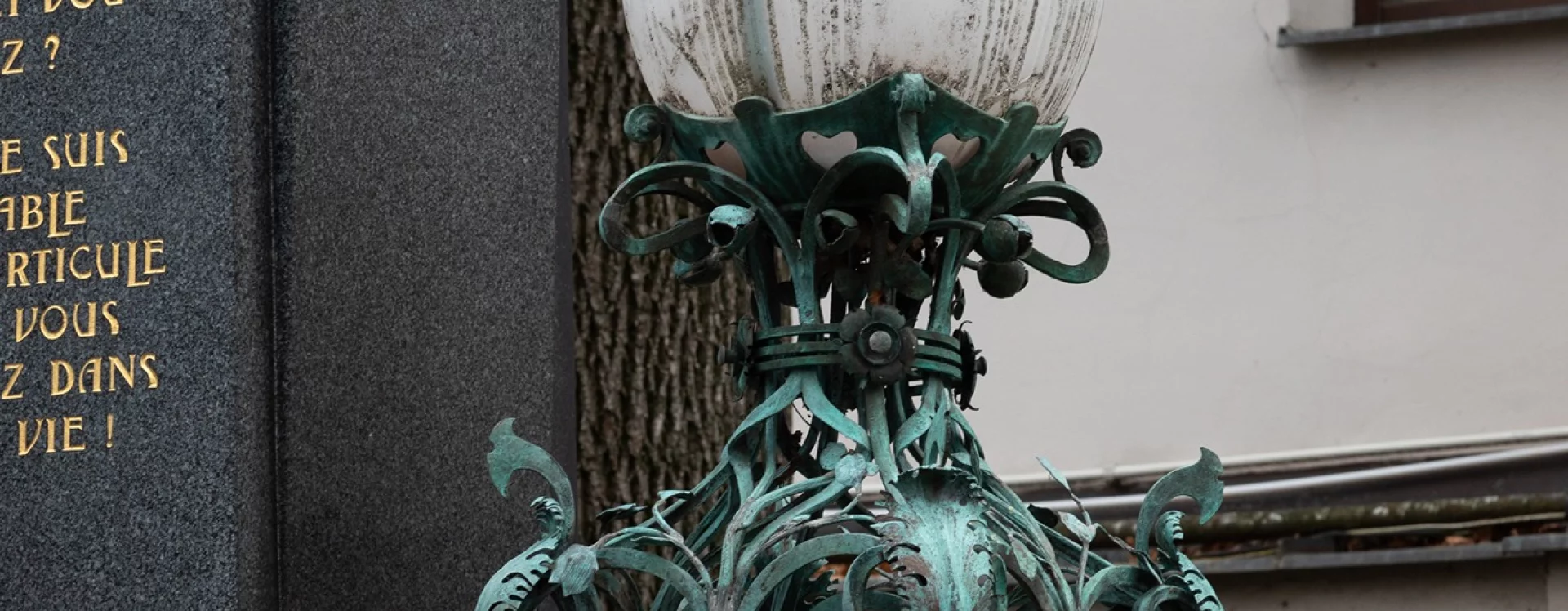
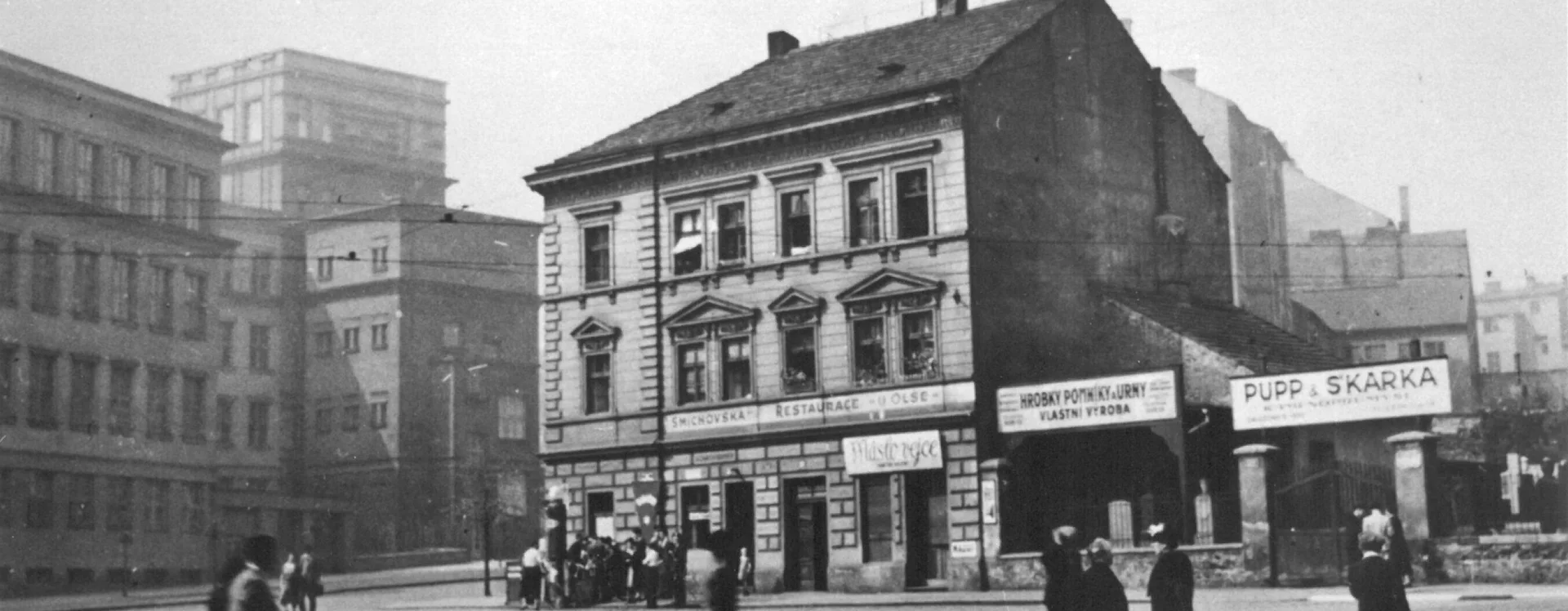
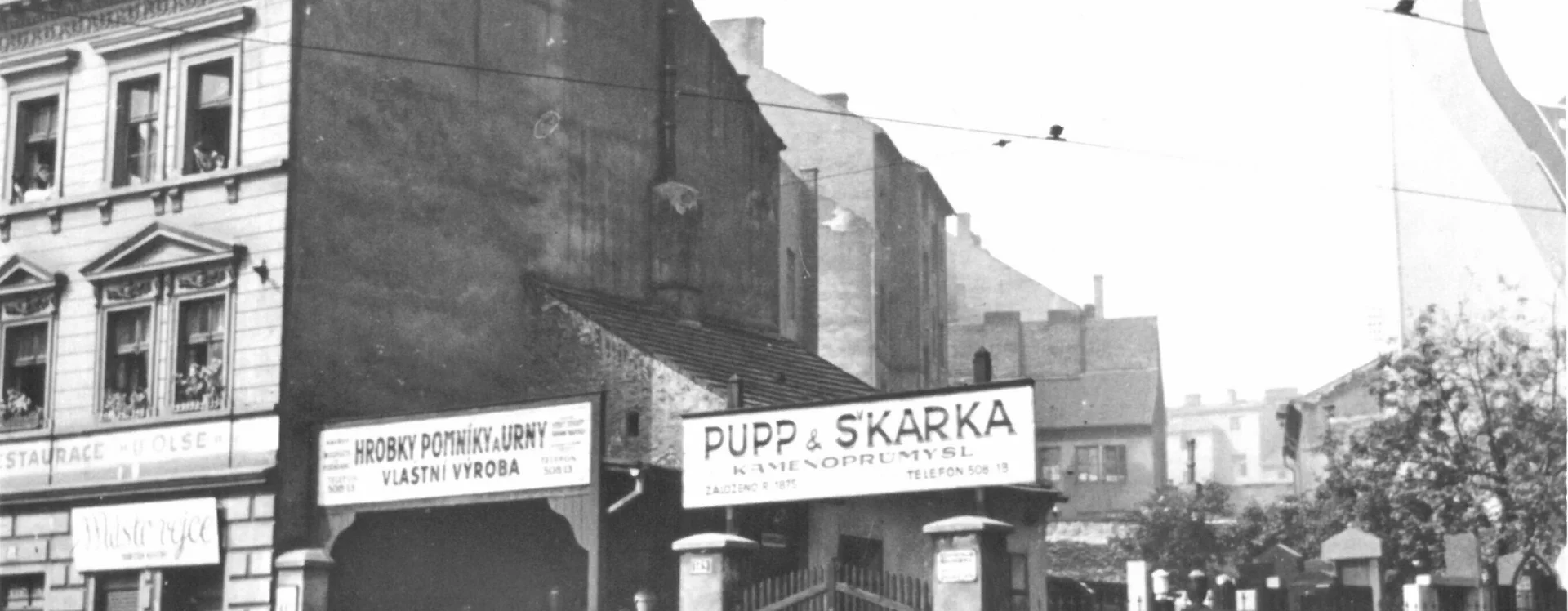
Balšánek – among other things, creator of the Museum of Prague and the Legion Bridge (Most Legií) and co-author of the Municipal House – designed an expansive Art Nouveau grave consisting of a stepped granite ledger and a tall stele with a staircase. Standing on the stairs is a set of marble sculptures – the largest sculptural group at Olšany – depicting a son being led into eternity by an angel while his father holds up the distraught mother. With his realistic, lifelike figures František Rous (who also drafted one of the designs for the St. Wenceslas monument on Wenceslas Square) succeeded in breathing real drama into the marble. The work quickly became a major attraction and gave rise to numerous legends, all of them on the theme of "a mother's dream." One false belief holds that Hans committed suicide because of a broken heart, while another legend misidentifies the cadet uniform of the Diplomatic Academy worn by the statue of Hans as a military uniform and therefore claims that he fell in war. Additionally, his father bears a resemblance to Emperor Franz Joseph, leading some visitors to mistakenly conclude that the aged monarch himself is a part of the story. The sculptor's masterful, realistic craftsmanship is among other things reflected in the meticulous treatment of details such as the feathers on the angel's wings, the drapery of the mother's dress, and the fur collar of the father's coat. The sculptures' white marble perfectly contrasts with the dark architectural elements. The monument's most distinctive feature is the tall stele representing a gate of death decorated with stars, which Hans enters in the company of an angel. Above their heads is an inscription panel crowned by a solar disk inside a Greek cross. The text with the names of the members of the Hrdlička family is accompanied by a French translation Josef Václav Sládek's poem "Až přejde den" (When the Day is Over) – the choice of language is a reference to the deceased's unfulfilled diplomatic career. Other decoration includes a pair of Art Nouveau lanterns in the shape of eggs – an ancient symbol of life – and a grille with vegetal ornament in the form of laurel branches and poppies, a symbol of eternal sleep. Realization of the monument was entrusted to the distinguished stonemasonry firm of Pupp & Škarka, who were headquartered on today's Olšany Square. The company also collaborated with the likes of Jan Kotěra, Josef Fanta, and Alois Dryák, among others
As part of renovation work in 2020, the monument's surfaces were cleaned and the Art Nouveau lanterns were replaced with replicas.
Literature
Jaromír Neumann. Český sochař František Rous. Žamberk, 1976.
Tomáš Vlček. Praha 1900. Praha, 1986, s. 106.
Vojtěch Lahoda (ed.). Dějiny českého výtvarného umění 1890/1938, IV/1. Praha, 1998, s. 136.
Petr Kovařík. Klíč k pražským hřbitovům. Praha, 2001, s. 93.
Alios Vanoušek‒ Vojtěch Grametbauer (a kol.). Olšany, jak je neznáme. Praha, 2004, s. 91.
Kateřina Kuthanová (a kol.). Metamorfózy politiky, Pražské pomníky 19. století. Praha, 2013, s. 307.