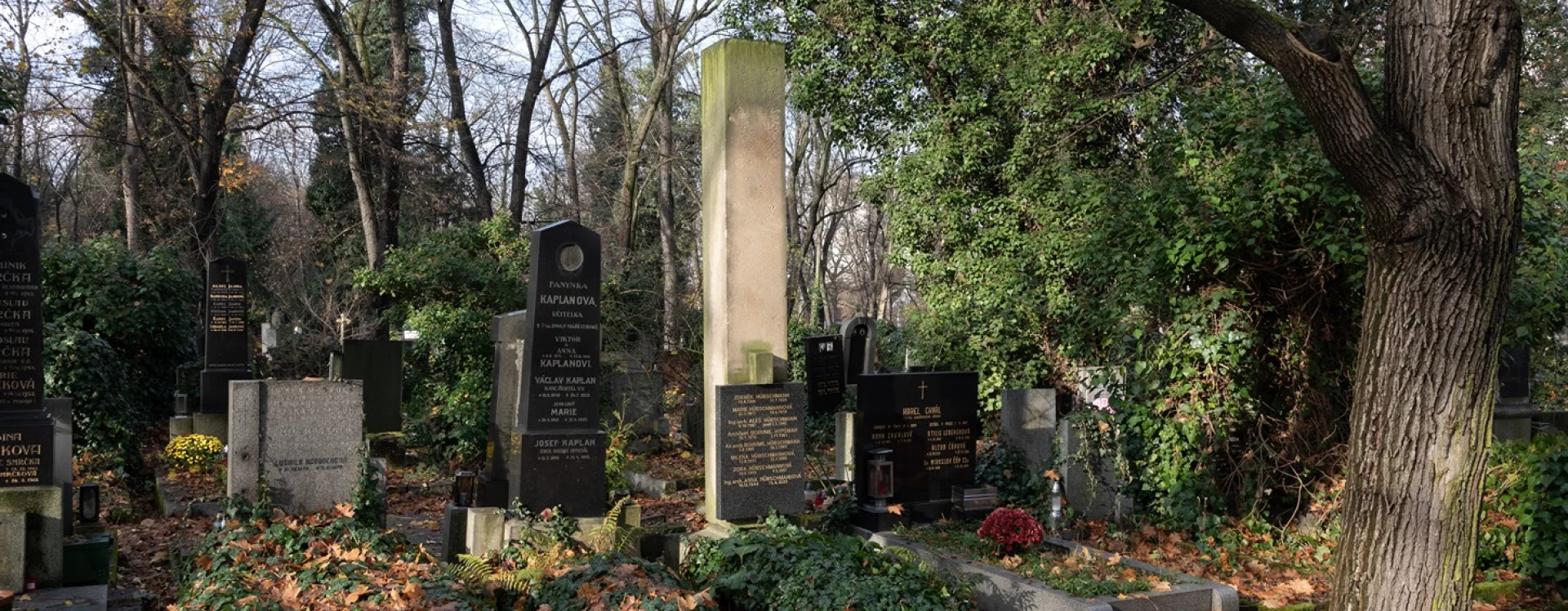
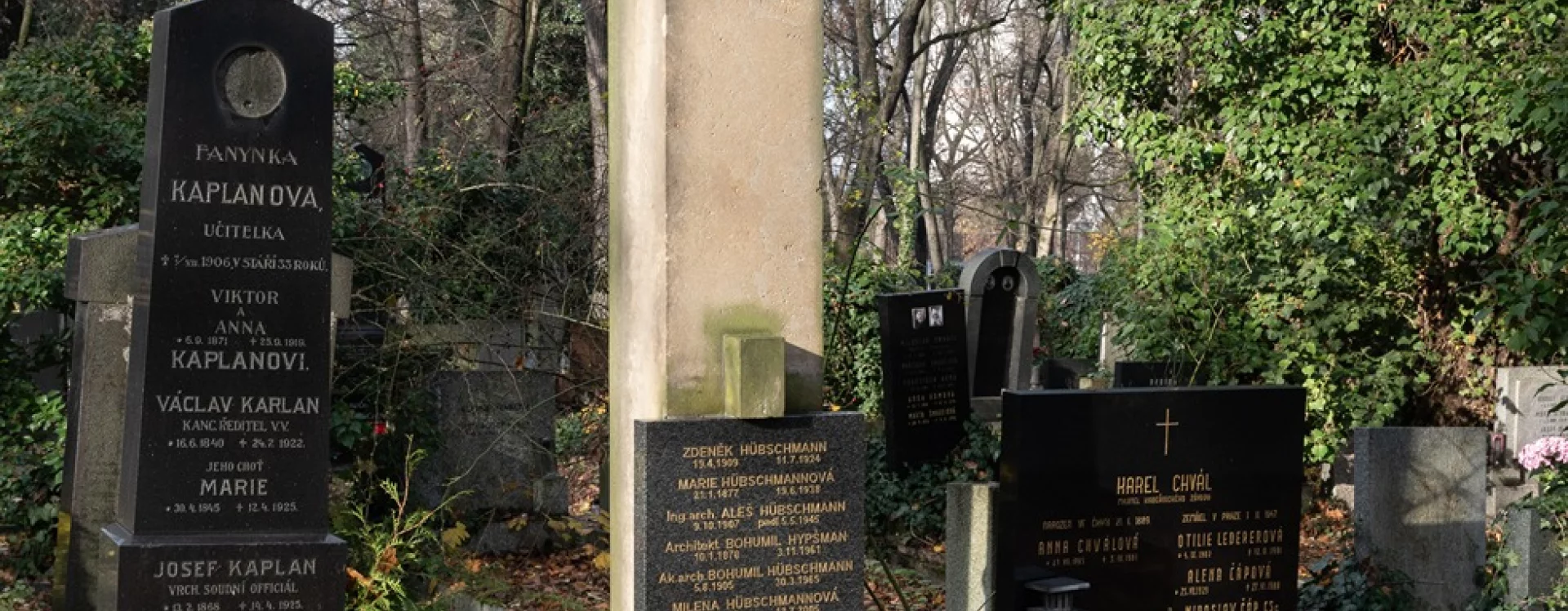
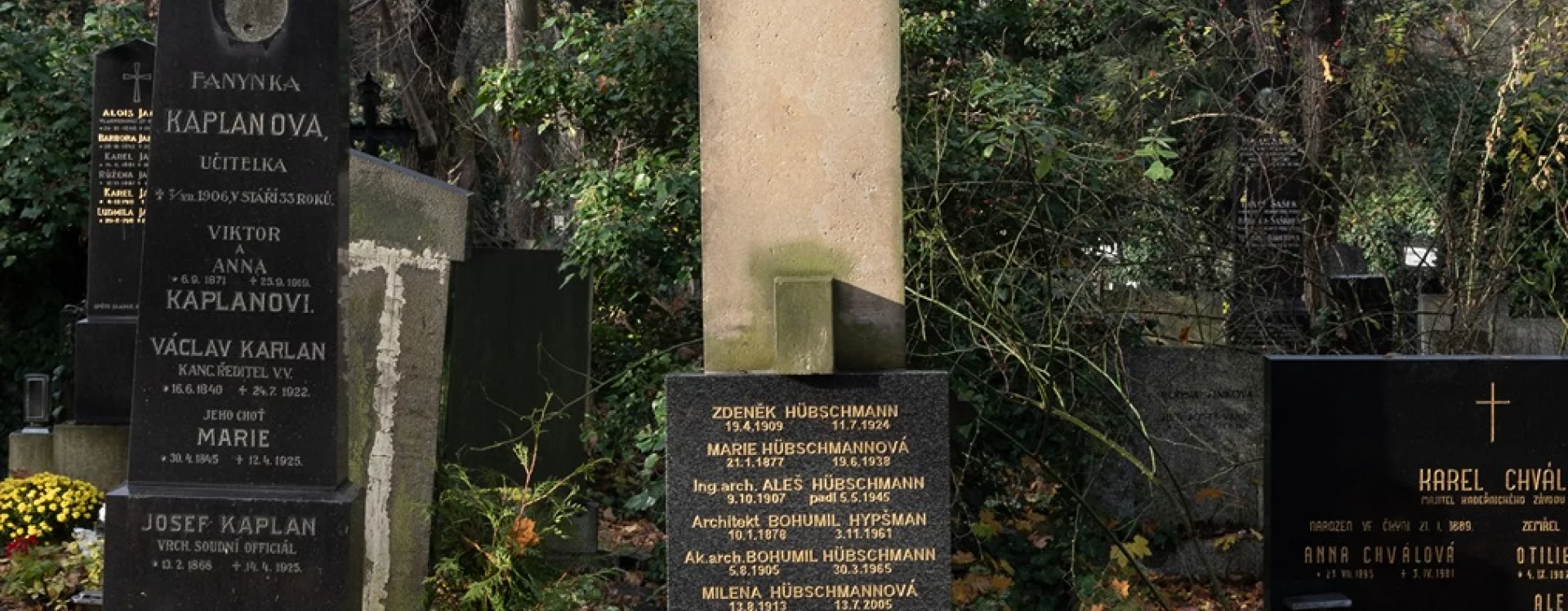
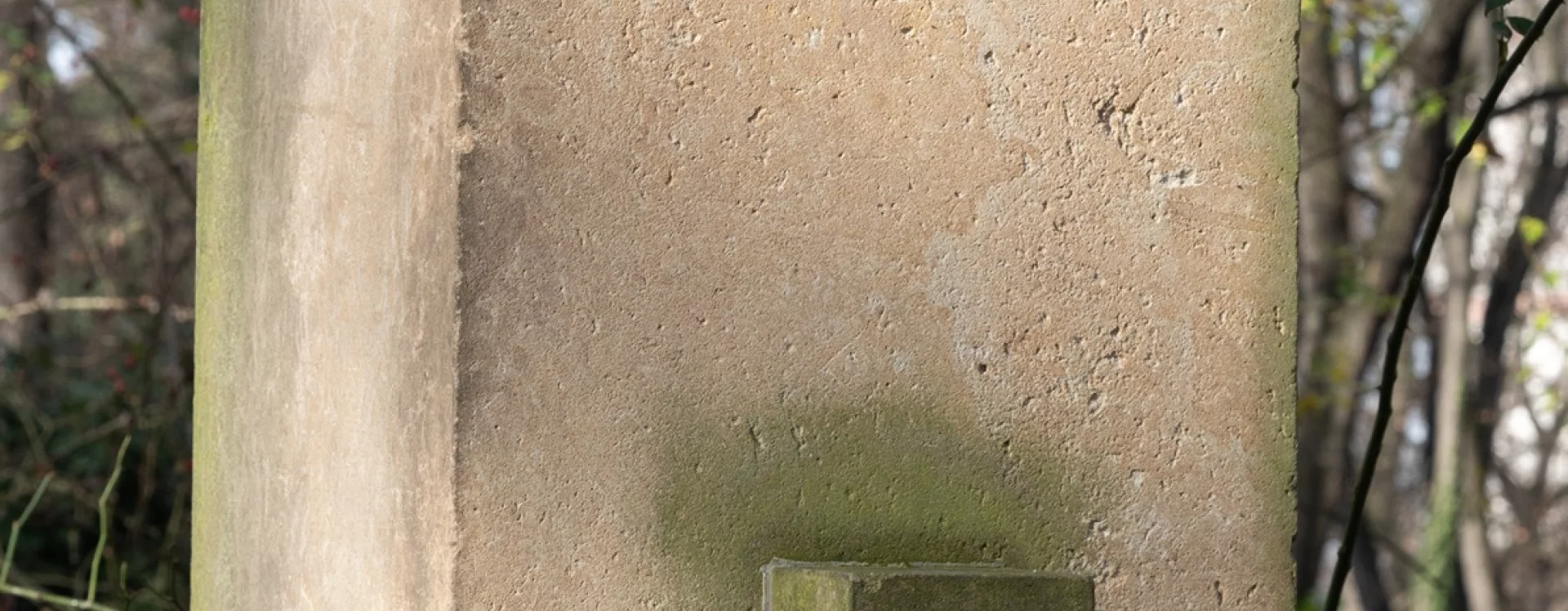
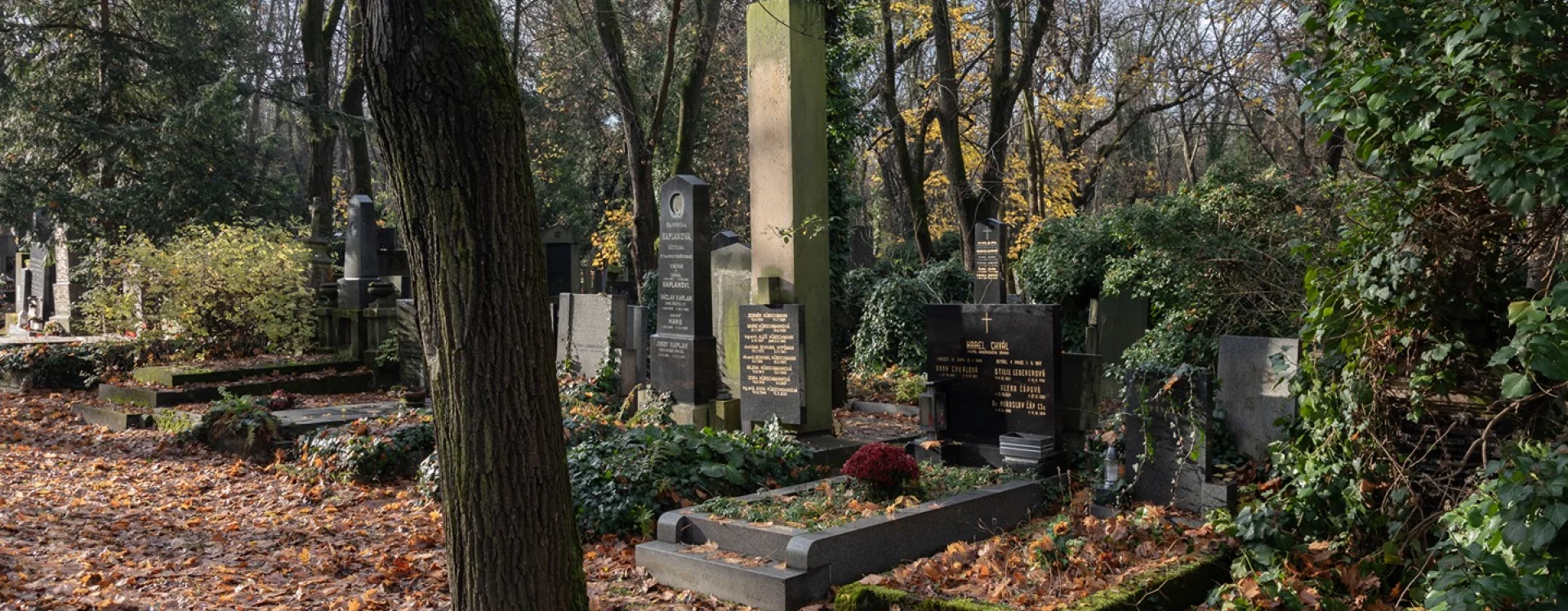
The gravestone was designed by the architect Bohumil Hübschmann in 1924 after the death of his son Zdeněk. It consists of a tall sandstone obelisk, with a dark granite inscription tablet at its foot creating a dramatic contrast. During the interwar era, Hübschmann made a name for himself through works in the style of classicist modernism. His architectural designs and urban plans for Malá Strana, Letná, the St. Peter's Quarter, and Parliament were considered groundbreaking.
At Olšany, Hübschmann chose a form stripped of any decorative elements, yet solemn and evocative. Obelisks and pyramids have served as symbols of respect and grandeur in the funerary arts since the time of ancient Egypt. Hübschmann also employed this motif in the monument titled Prague to Its Victorious Sons, which honors citizens of Prague who perished in the Great War and formed the focal point of his urban plan for Pod Emauzy square, which he drafted along with plans for the surrounding ministry buildings.
The grave is also the final resting place of his other son, the architect Aleš Hübschmann, who was killed during the Prague Uprising in May 1945. The gravestone's author himself was born in Prague in 1878 as Bohumil Hübschmann, but he officially changed his surname to Hypšman in 1945. Bohumil's brother Antonín, likewise an architect, was killed in the First World War. His older brother Otakar Hübschmann, an Austrian and Czech politician and a member of the Imperial Council in the early twentieth century, is also buried at Olšany, albeit in a different section (V, 10, 104).