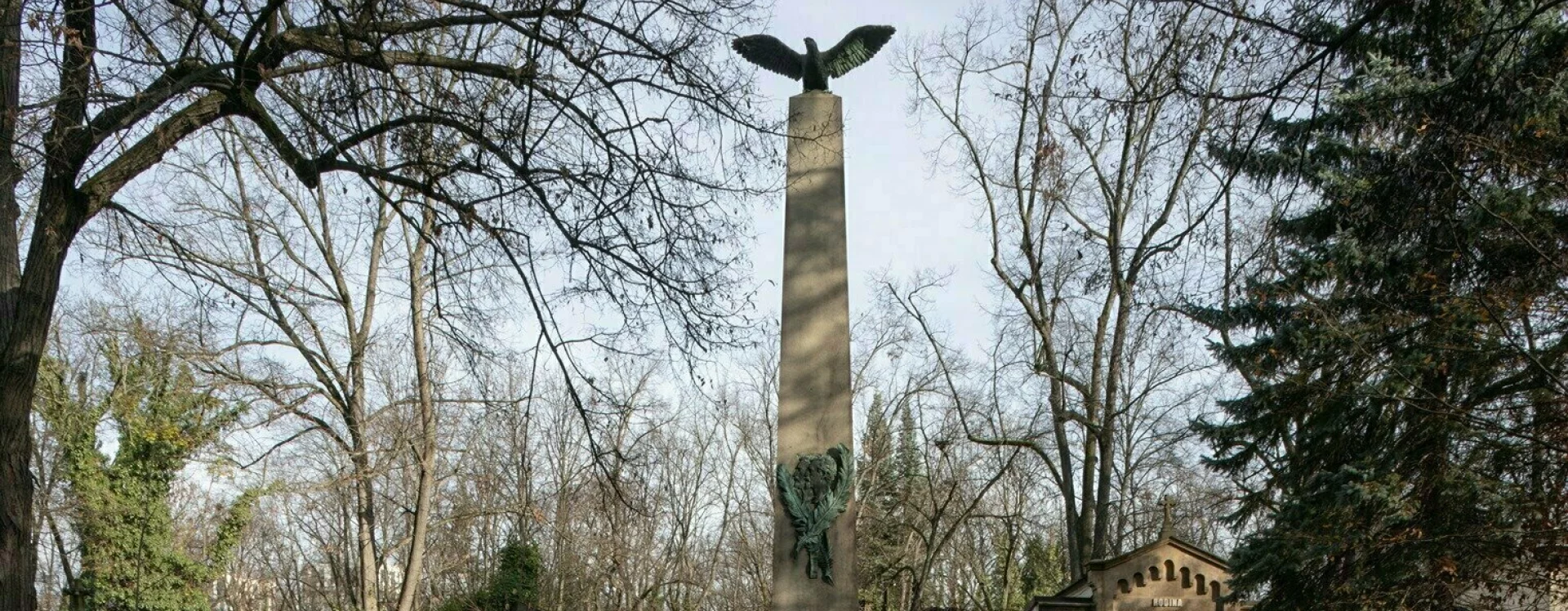
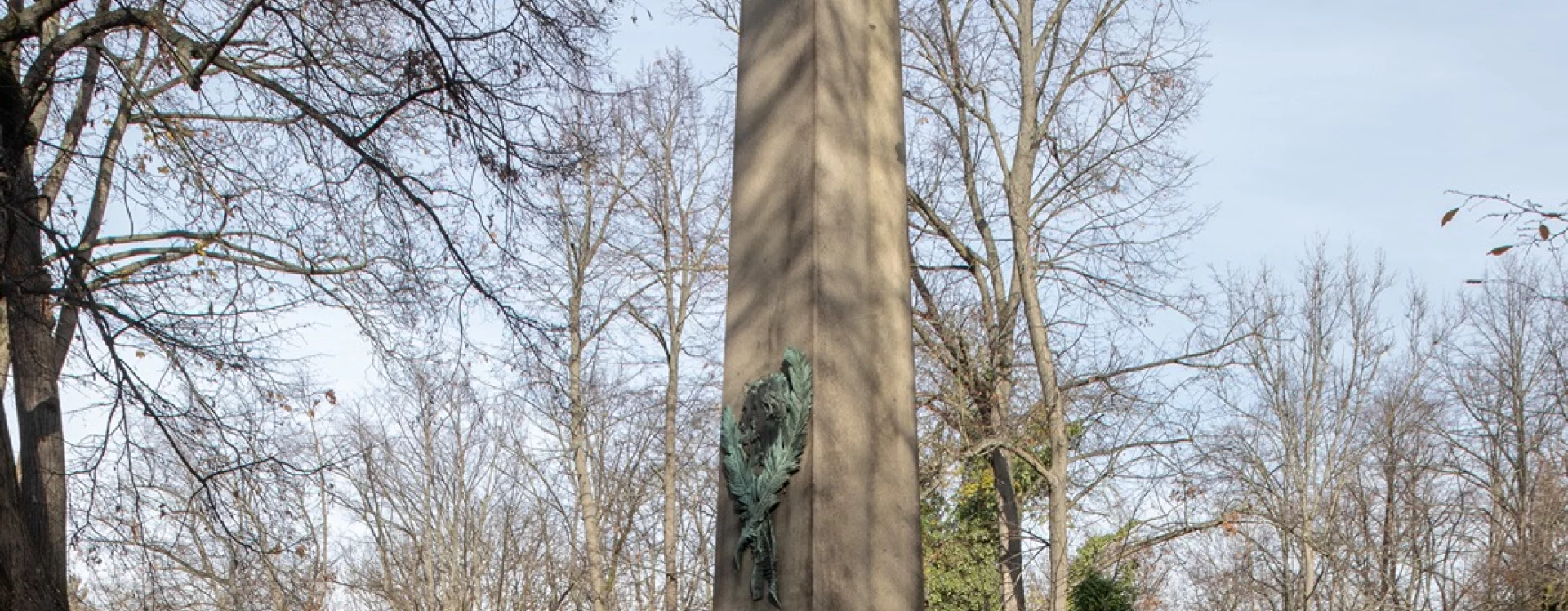
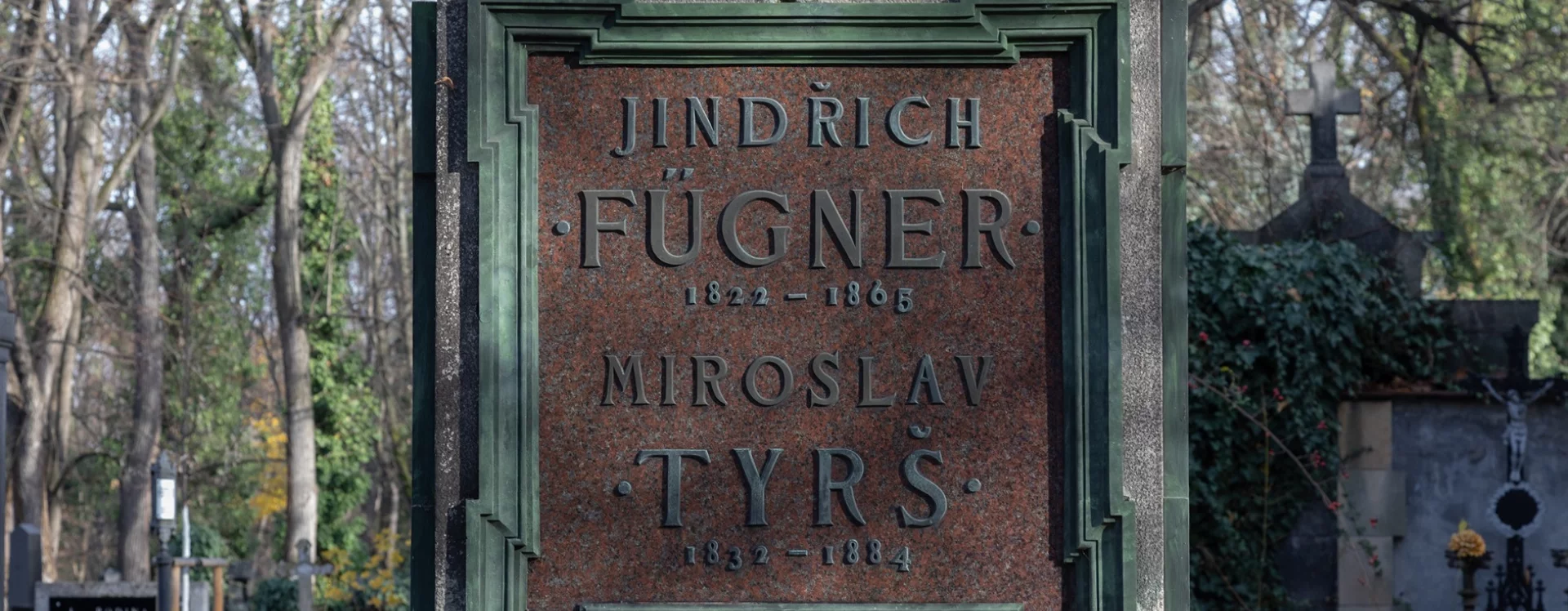
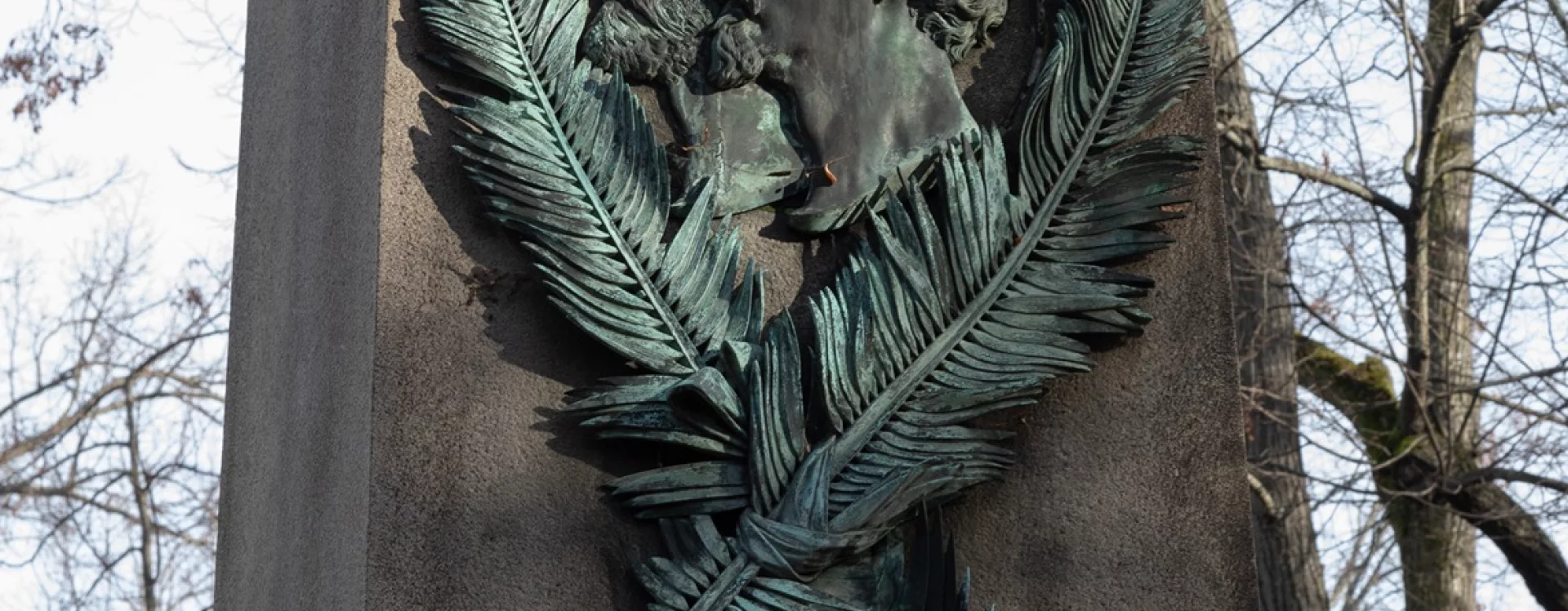
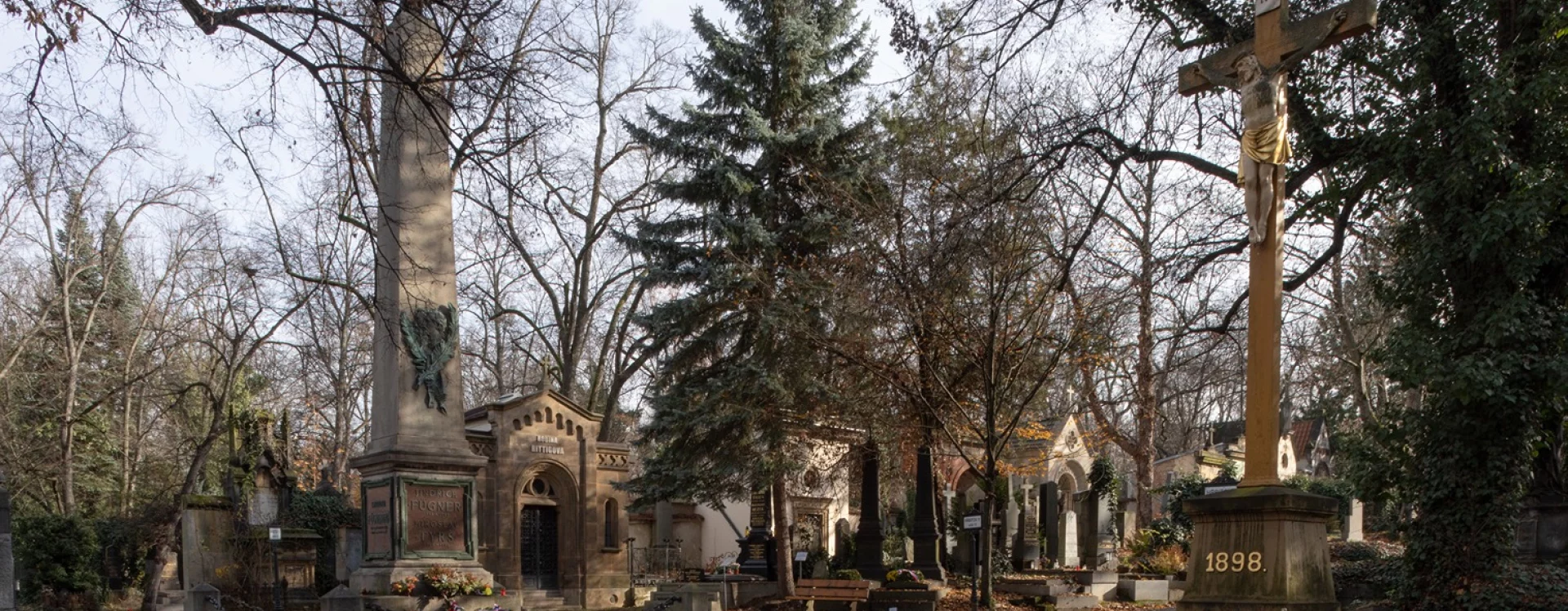
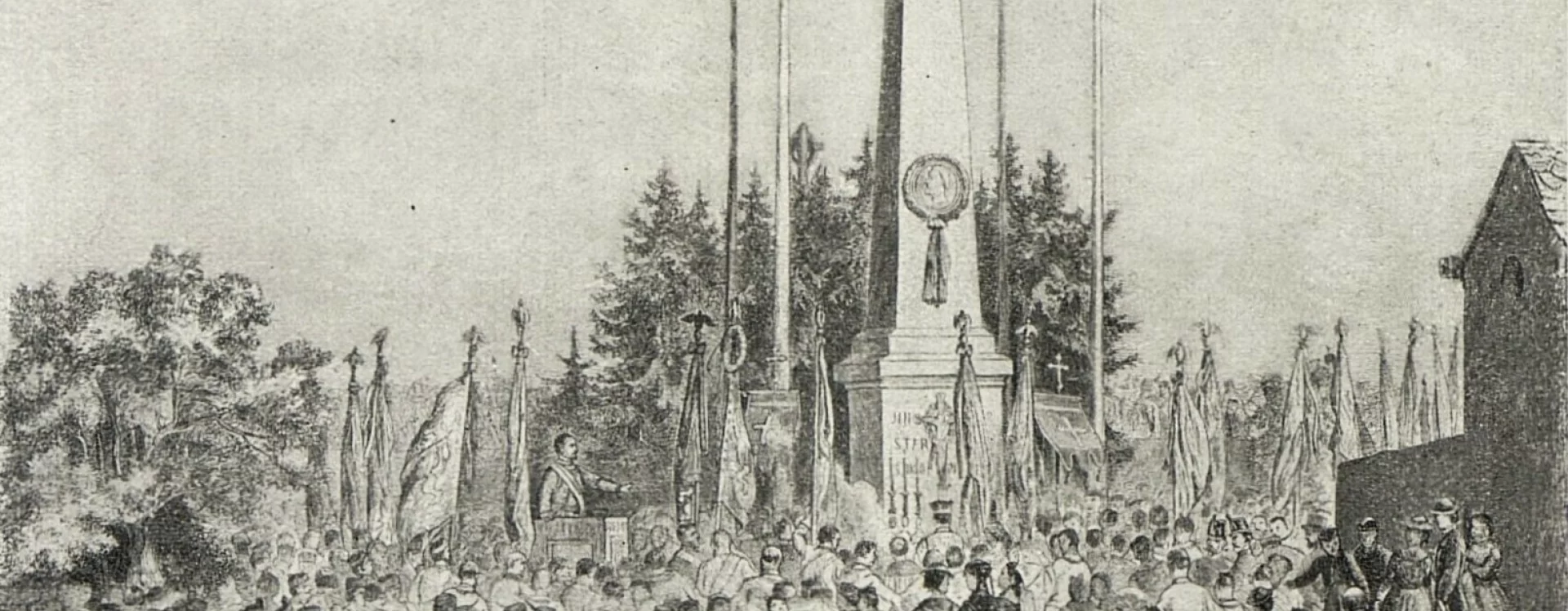
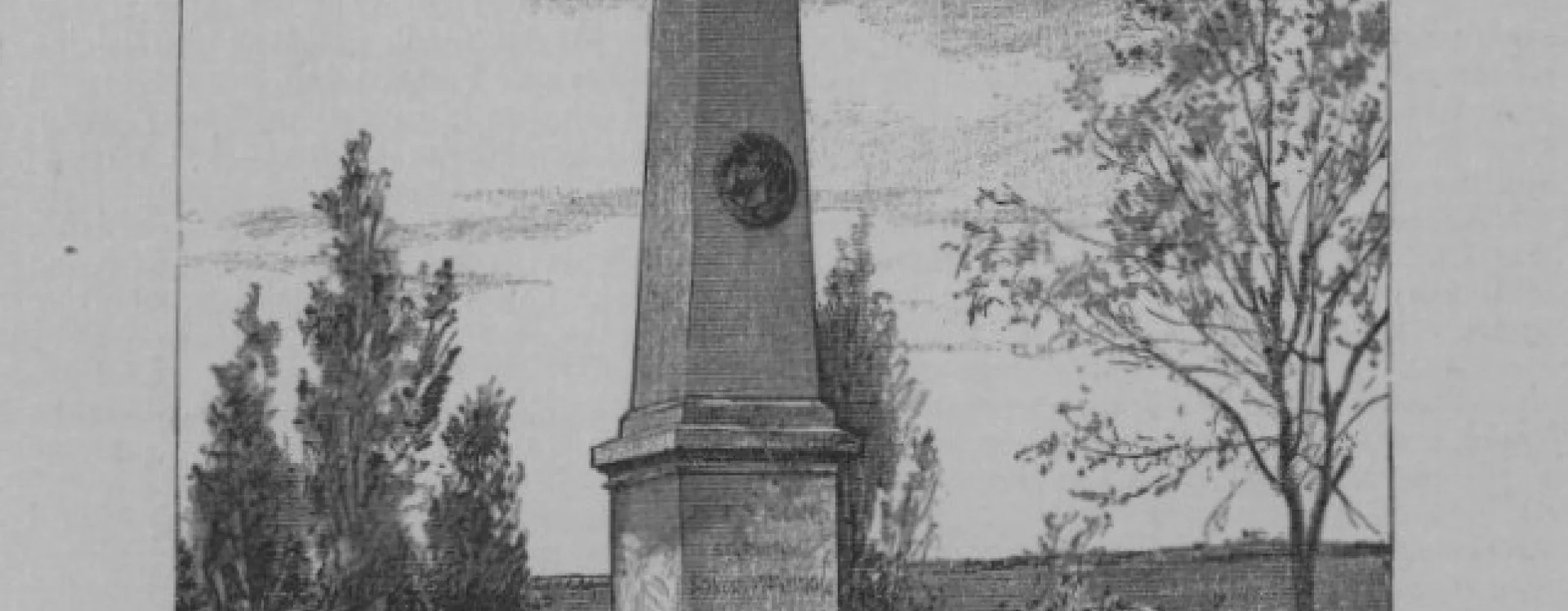
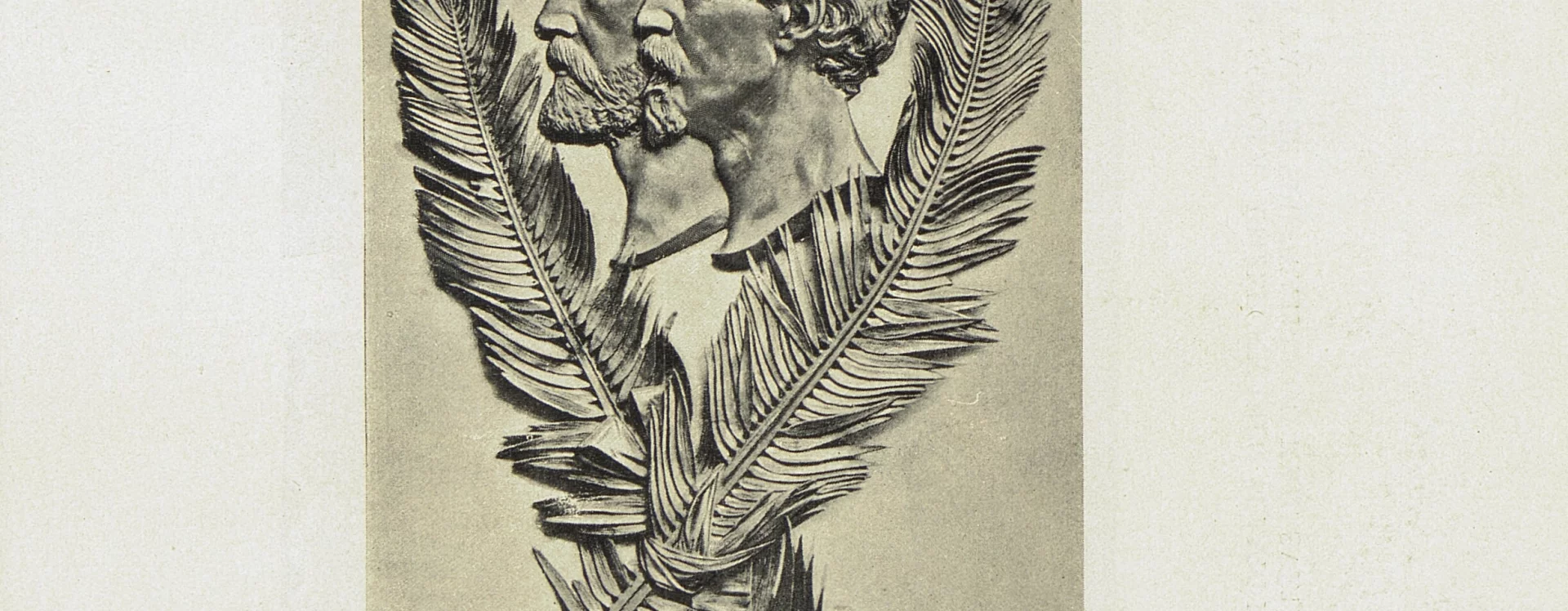
The author of this slender, impressively tall obelisk on a rectangular plinth (total height: 12 meters) is the architect Josef Schulz, while the bronze sculpture of the falcon with spread wings crowning the monument and the double portrait of Jindřich Fügner and Miroslav Tyrš were designed by Bohuslav Schnirch. The monument is thus a collaborative effort by both main designers of the National Theatre.
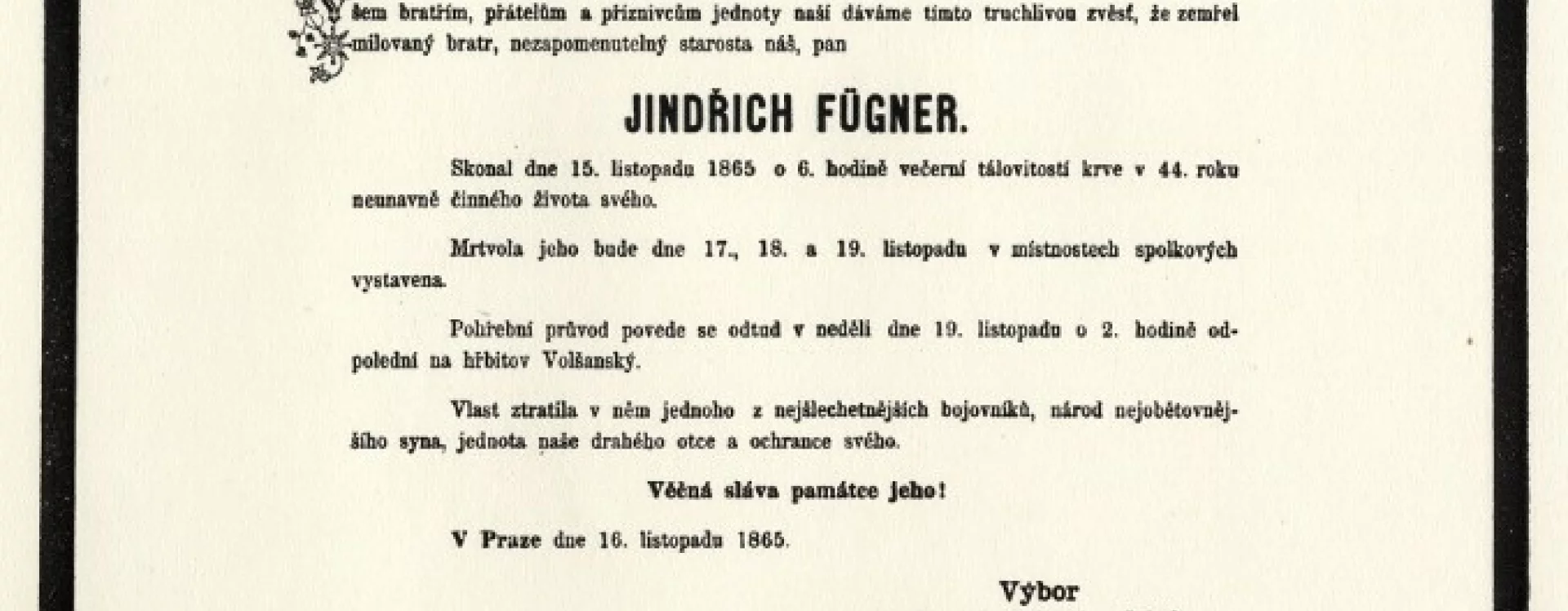
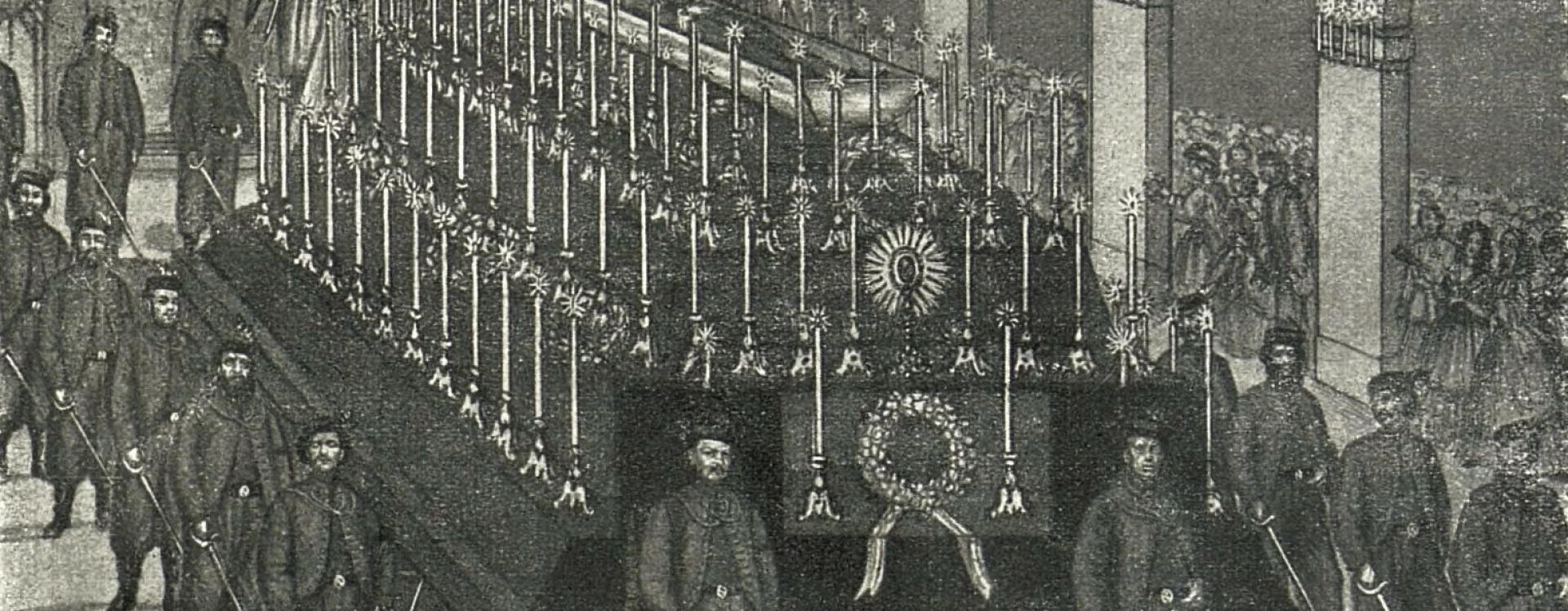
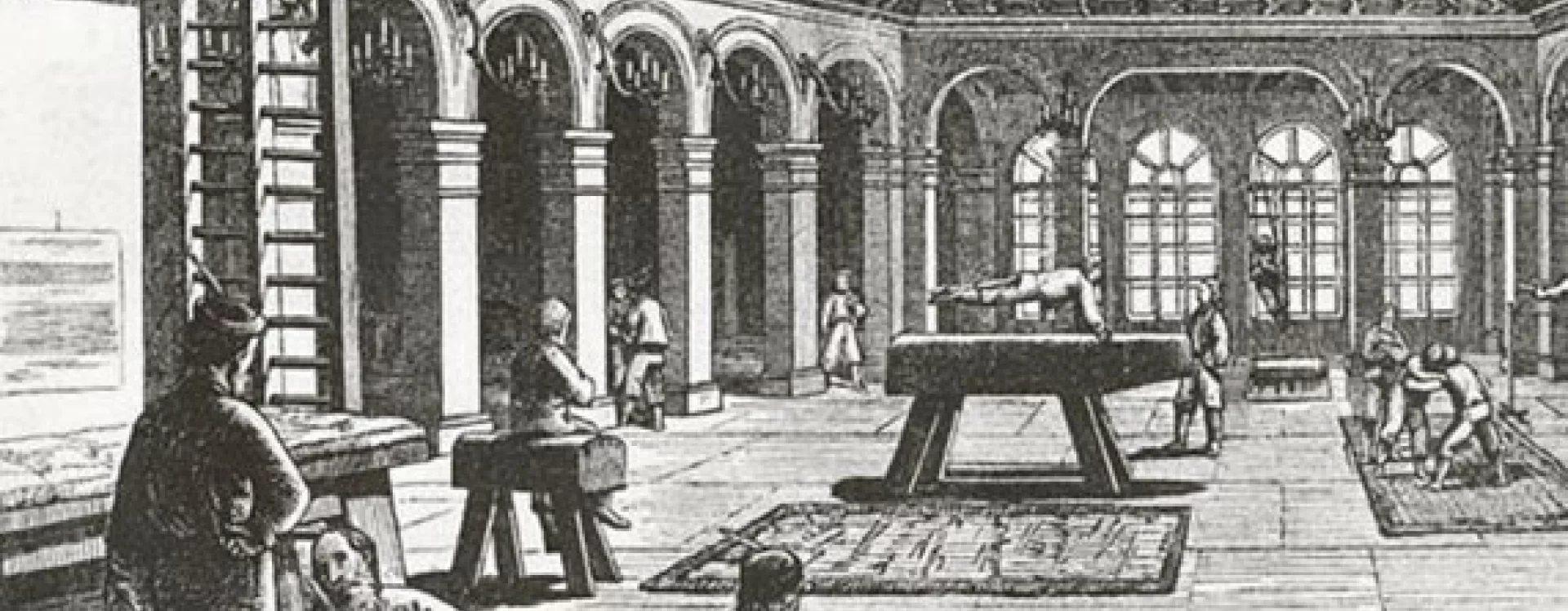
When Jindřich Fügner, the head and one of the founders of the Czech patriotic physical fitness association Sokol, passed away, he was buried in his family's grave. His funeral procession began at the newly built first Sokol building on today's Sokolská Street, where the Fügners lived. Soon, however, the members of the Sokol association came up with the idea of erecting a grave marker in his honor that would also serve as a memorial monument. The original proposals, submitted by members of the Umělecká Beseda, differed significantly from today's form. For instance, the sculptor Václav Levý proposed a larger-than-life figure of St. Christopher carrying the Christ child on his shoulders. However, Prague's Sokol association was facing unexpected financial difficulties at the time: after Fügner's death it was discovered that, besides initiating the construction of the Sokol building in 1864 (a Neorenaissance design by the architect V. I. Ullmann with a triple-nave gymnasium), he also paid for it – and it cost more money than he had. When the association inherited the building, it thus also inherited this debt. In the end, the Sokols were saved by a lucky coincidence: in 1868, a seven-meter tall piece of granite was mined at the quarry in Louňovice. The quarry's owner, the stonemason and sculptor František Wurzel, was an active member of the Sokol organization, and he donated and later also worked the massive stone. When the monument was unveiled to a record crowd, it was decorated with a circular bronze medallion containing a portrait of Fügner. When Tyrš was buried here as well following his tragic passing, it was replaced by today's double portrait of both founding fathers framed by palm fronds, a symbol of eternal triumph.
In its simplicity, the monument is as impossible to overlook as are other works by its architect, including the National Theatre (the rebuilding of which he undertook after the fateful 1881 fire), the Rudolfinum (it, too, in collaboration with Josef Zítek, for whom he had worked as an assistant), and two projects designed independently – the Museum of Decorative Arts and the National Museum.
The obelisk, whose simplicity still feels modern today, is based on ancient Egyptian forms. Numerous Egyptian obelisks can today be found in Rome, Paris, London, and other large cities, where they inspired various smaller monuments especially in the classicist era and evolved a type of grave marker in the second half of the nineteenth century, which was dominated by the Neorenainassance style. Tall, slender, pyramid-shaped obelisks tended to be four-sided, sometimes three-sided, usually stood on a rectangular plinth, and were often topped by a pyramidion (a low pyramid-shaped capstone). The monument's overall height is accentuated by the stepped plinth and the sculpture of a falcon on top.