Josef Gočár only rarely produced sepulchral architecture even though he did his first project in this field at the age of just twenty-four, when he designed a grave monument for his parents at the cemetery in Lázně Bohdaneč (1904). At the time, he found inspiration from the memorial his teacher Jan Kotěra had designed for Alois Jirásek's parents in Hronov (1902). Several Prague works followed: a funerary monument for Dr. Kaizl in the arcades of Vyšehrad Cemetery (1908, in collaboration with Bohumil Kafka), a Rondocubist work for the New Jewish Cemetery, a grave marker for Vojtěch Preissig's parents at the Vinohrady cemetery, and an ensemble of four monuments at Olšany (1922–1927).
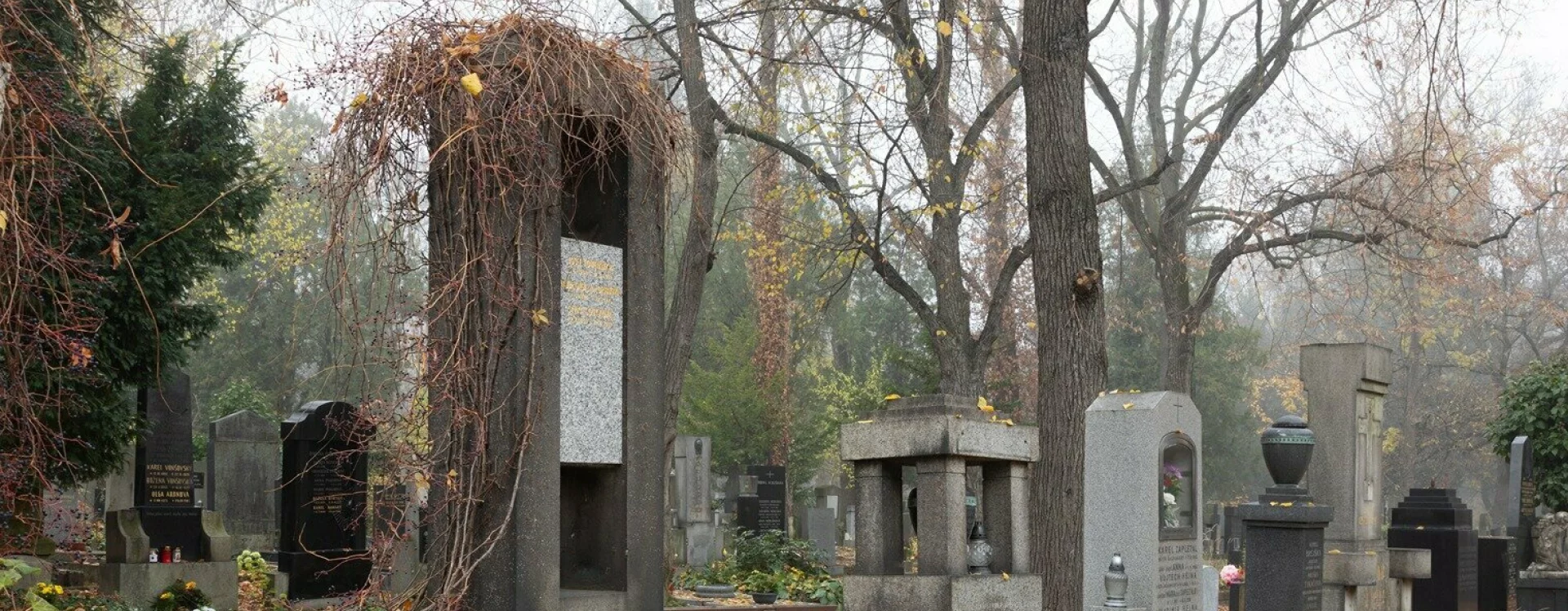
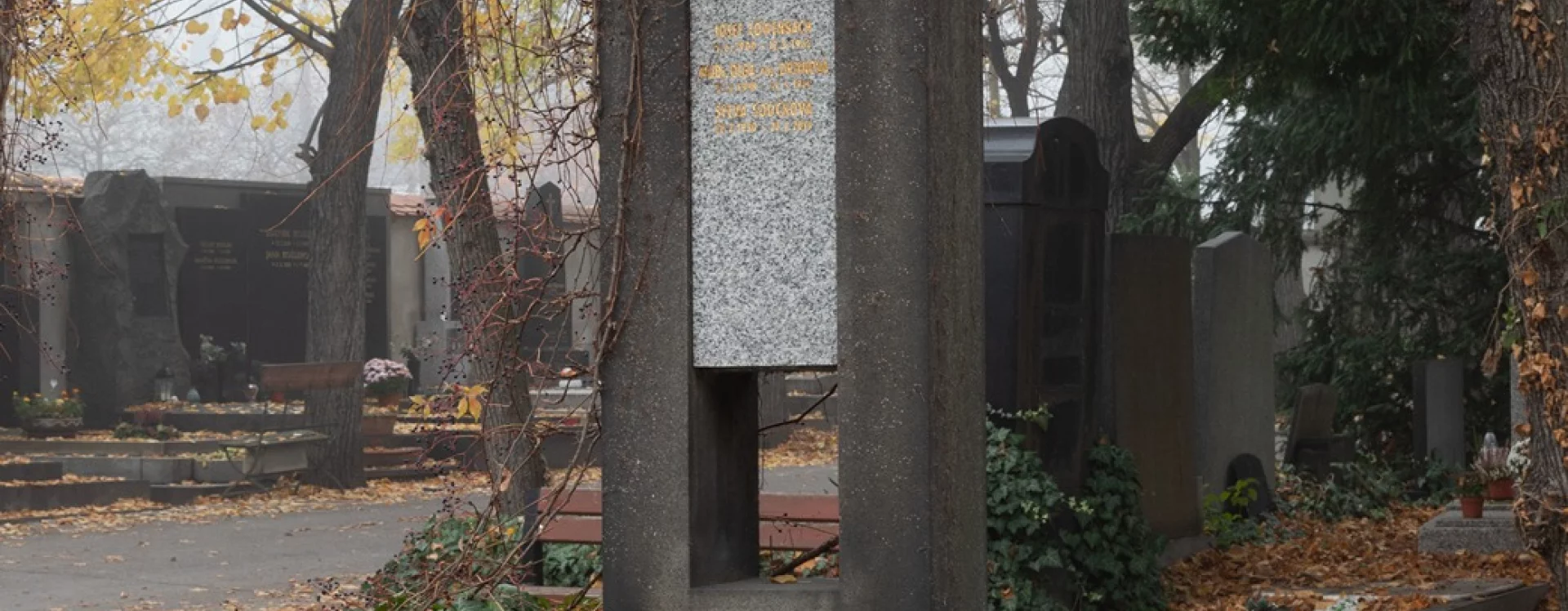
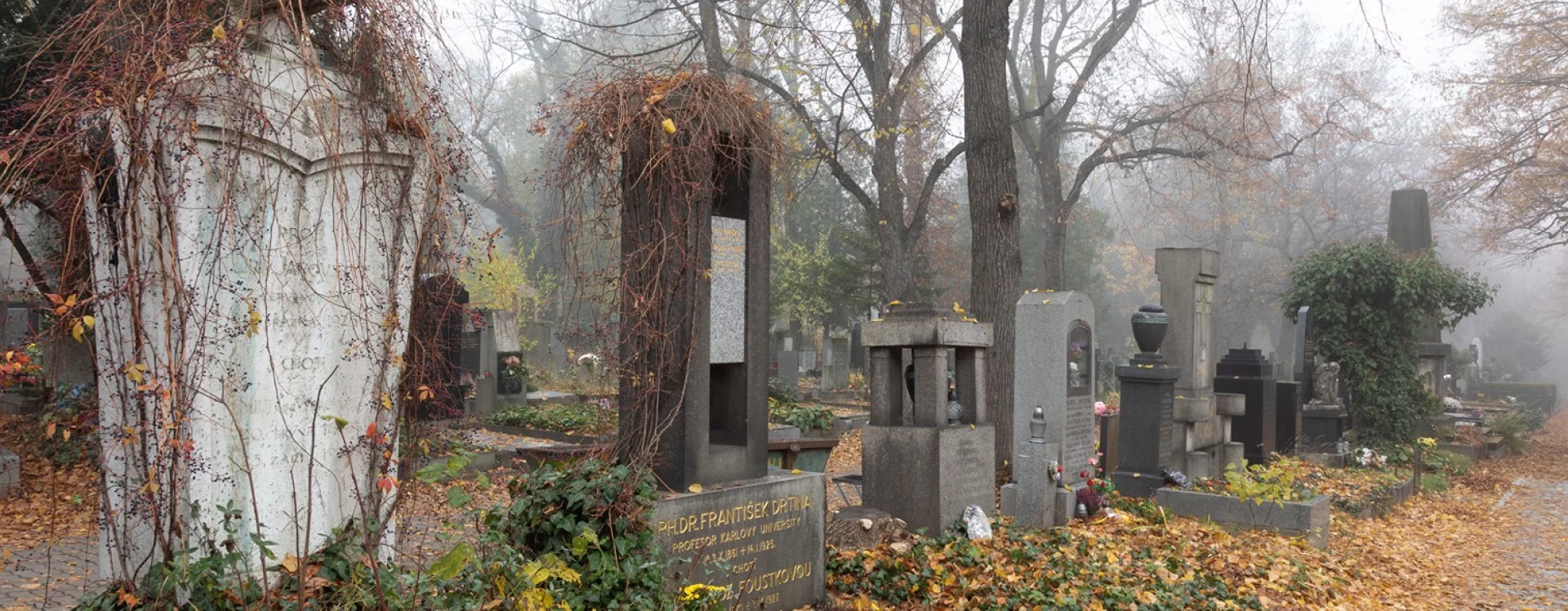
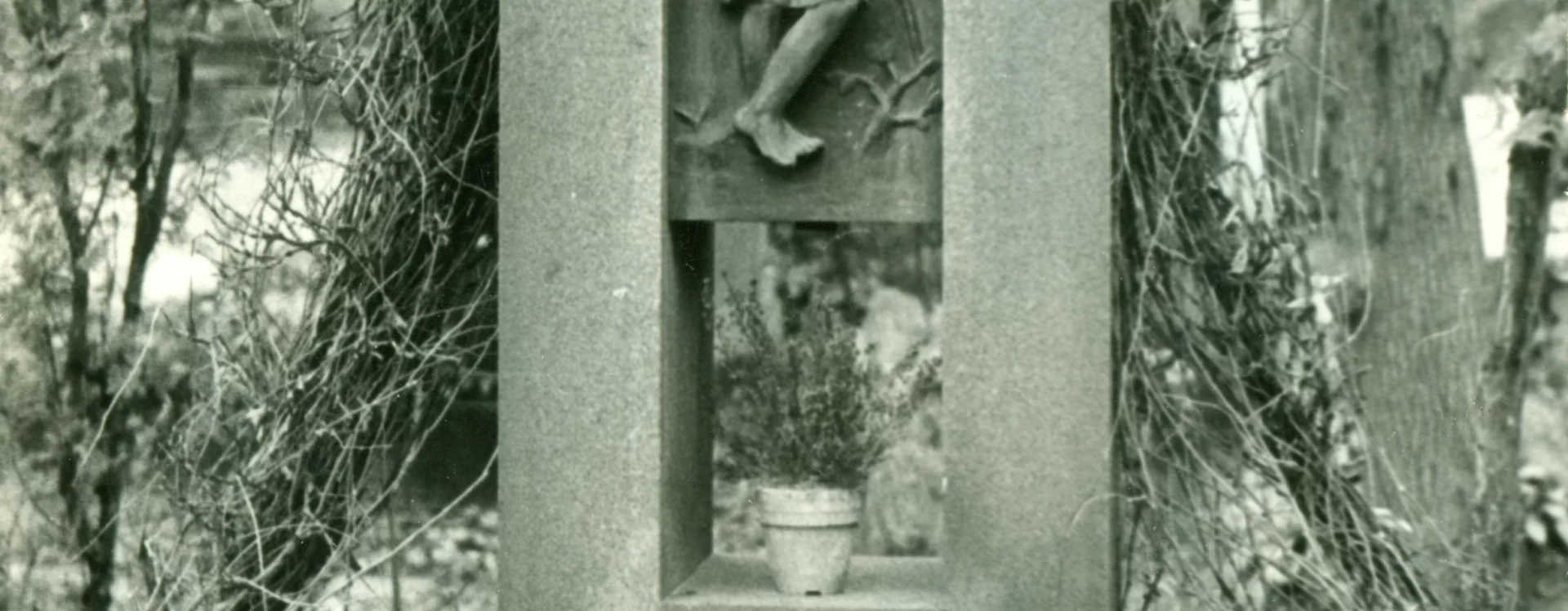
In designing the gravestone for the philosopher and politician František Drtina, Gočár would appear to have again drawn on a the work of Jan Kotěra, although with his own personal touch: the narrow stele, placed vertically on a massive horizontal block, is in the form of a massive rectangular frame, inside which he placed a bronze relief of a pilgrimess and a flower, with open space above and below the relief.
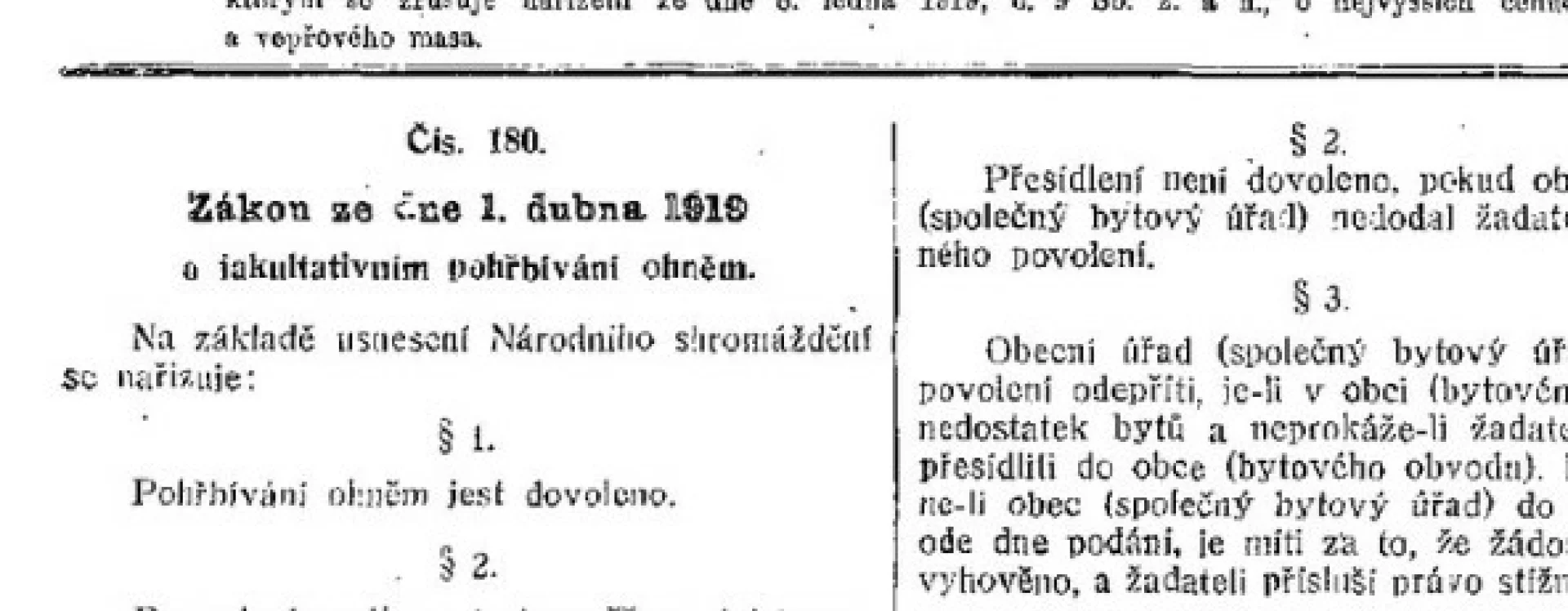
Conceptually, the gravestone recalls Kotěra's grave designs for Eduard Vojan and for the Janoušek family, except that its subdued form reflects the new era of shorter women's hairstyles, shorter skirts, and jazz music, a time when the young Czechoslovak Republic was one of the first countries to pass an Act on Cremation. Known as Lex Kvapil, the new law fulfilled the dreams of all those who had long yearned for a modern burial rite. Among other things, it introduced narrower burial plots, which led to a new aesthetic of grave markers for urn graves. Designed by leading architects, they inspired stonemasons as well, thus leading to the spread of new forms.
Grave markers for urn graves were designed for important figures as well, among them Professor František Drtina, who during the Austro-Hungarian era had co-founded the Czech Popular (Realist) Party, which he represented as a member of the Imperial Council. During the First World War, he was active in the resistance and collaborated with the so-called "Maffia," and after Czechoslovak independence he helped to shape the new country's educational system. He was a pupil and supporter of President Masaryk, who held similarly modern views.
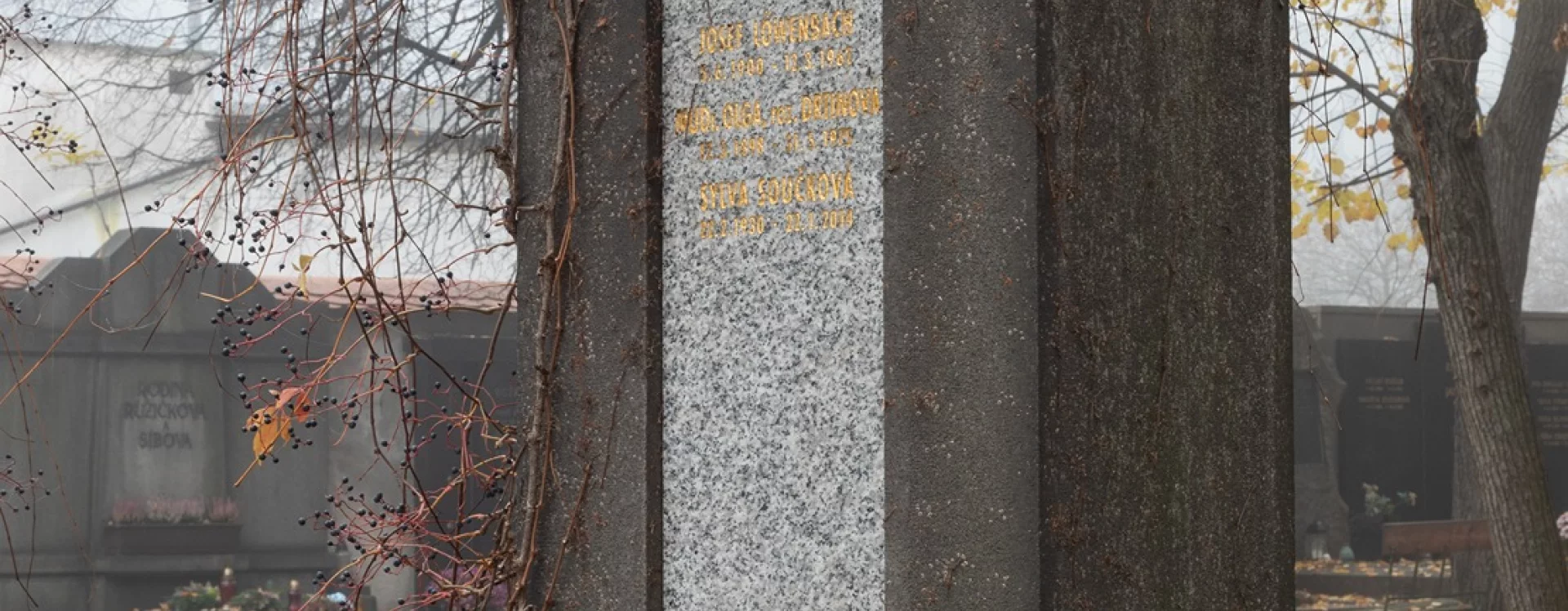
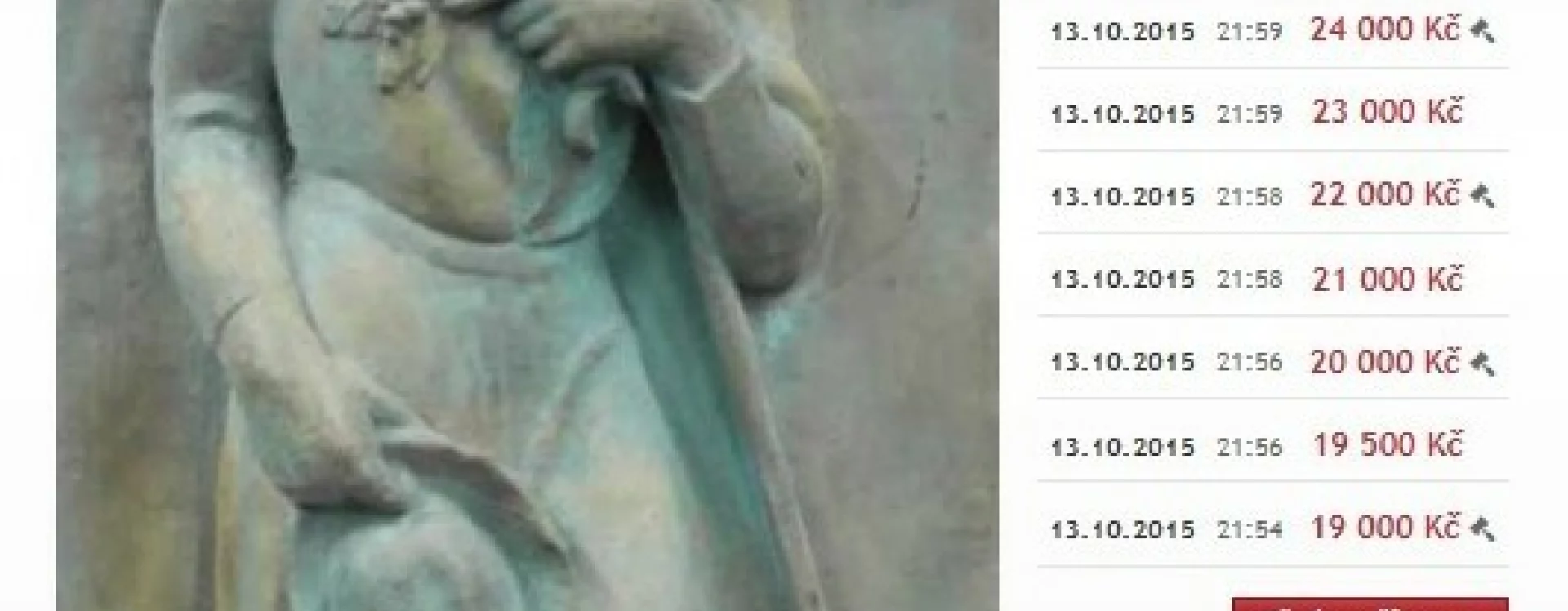
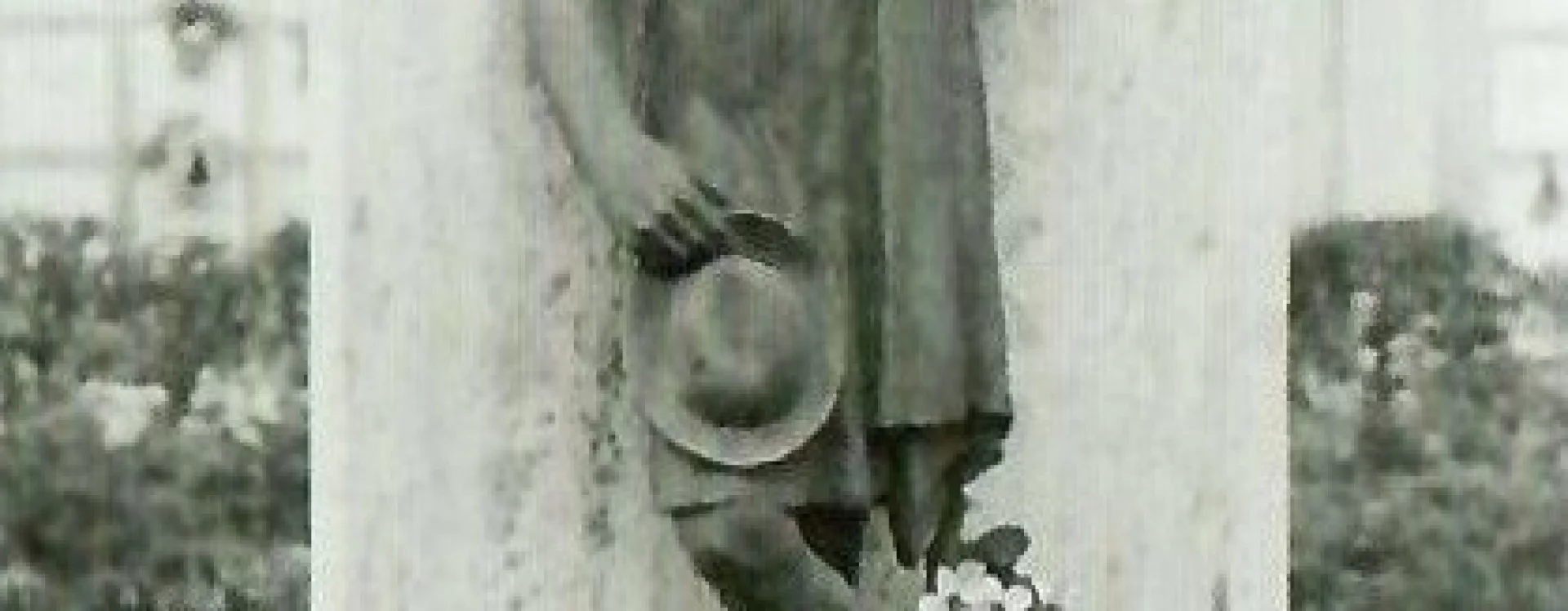
Unfortunately, the understated monument that commemorates this man can no longer be enjoyed in full, for the sculpture of the pilgrimess has since been stolen. In its place, there is today a plaque made of polished Sedlčany granite. A cast relief by Otakar Španiel, the pilgrimess can be seen in an archival photograph of Drtina's grave, thus refuting earlier authors who described it as a "pilgrim" (sometimes "shepherd") and equated it with the motif of a pilgrim/shepherd that Španiel did for a funerary monument by Ladislav Machoň at the Strašnice crematorium's cemetery.