Antonín Ausobský's life and work are inextricably connected with his beloved school, the Czech Technical University (ČVUT) in Prague. His activities in the fields of architecture and urban planning date back to the 1920s and 30s, and traces of his work are especially evident in Litomyšl, where he designed the grammar school and district council buildings, both of them forming the architectonic and urban basis for T. G. Masaryk Street.
After graduating from the Technical University in 1909 with a degree in architecture and structural engineering, and after undertaking his one-year military service, Ausobský became an assistant to Rudolf Kříženecký at the Department of Structural Engineering in 1910. In 1919 he was promoted to Doctor of Technology, in 1921 he was a professor by special appointment at the University of Architecture and Structural Engineering at ČVUT and, subsequently in 1928, became a regular professor. He also served several terms as dean of this university. He was most actively creative as an architect in the 1920s and 30s. However, he preferred teaching and took part in the creation of teaching texts for the Faculty of Architecture and Structural Engineering for whom he devised tables containing a detailed layout of all buildings mentioned in the lectures of the department.
His public activities were also an integral part of his life: membership of the Advisory Board of the Ministry of Health and Physical Education, the Regional Theatre Commission, the Technical Museum, the former Masaryk Academy of Work and the Academic House, of which he was chairman in 1925. From 1929 to 1954, he was also chairman of the Jednota organization's culture commission for completing the building of St. Vitus Cathedral at Prague Castle. For this activity he was awarded honorary membership in the Jednota organization. Furthermore, Ausobský was a member of the commission for the rebuilding of Lidice after the Second World War.
In the early 1920s, Ausobský was influenced by Neo-classicist architects, especially by his colleague Antonín Engel, as evidenced by his work on the grammar school building in Litomyšl. His later buildings were influenced by Purist and, later, by Functionalist trends.
Ausobský could be classified as a conservative architect, but in the best sense of the word. He himself characterized his work using the terms: clearly formulated, brightness, constructional simplicity, appropriate natural lighting, static and fire safety, beneficial to health.
In 1950, Ausobský received the lifetime achievement award, the Order of Labour.
Literature
- Architektonická a urbanistická činnost Antonína Ausobského v Litomyšli po roce 1918. In: Pomezí Čech, Moravy a Slezska. 2013, p. 100–116.
- Sekyrová. heslo Ausobský, Antonín. In: Pavla Vošahlíková (ed.), Biografický slovník českých zemí. Praha, 2004, 1. sešit – A, p. 145.
- Pavel Vlček. heslo Ausobský, Antonín. In: Encyklopedie architektů, stavitelů, zedníků a kameníků v Čechách. Praha, 2004, p. 35.
- Rostislav Švácha. Od moderny k funkcionalismu. Proměny pražské architektury první poloviny 20. století. Praha, 1994.
- František Lašek. Litomyšl v dějinách a výtvarném umění. Litomyšl, 1946, p. 100.
Prameny
- Antonín Ausobský, !!Curriculum vitae!!, strojopis po roce 1954, pozůstalost (v majetku rodiny)..
- Antonín Ausobský, !!Úvod do projektování budov!!, strojopis, pozůstalost (v majetku rodiny)..
- Petr Kočí, !!Architekt Antonín Ausobský!! (diplomová práce), Katedra dějin umění FF UP, Olomouc 1997..
- SOkA Svitavy, MSK, sign. KR–21, Kronika města Litomyšle II, 1924–1928, s. 283..
- Odbor výstavby a stavebního plánování MěÚ Litomyšl, spisovna, č. p. 590 a 650..
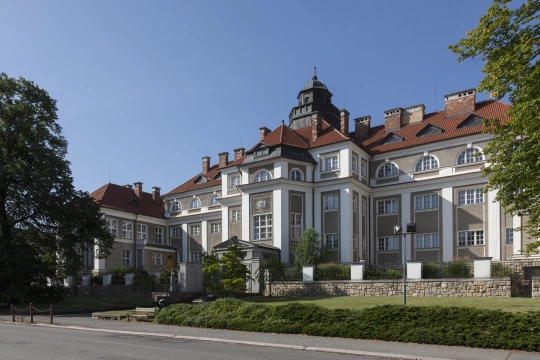 Alois Jirásek Grammar SchoolLitomyšlský architektonický manuál
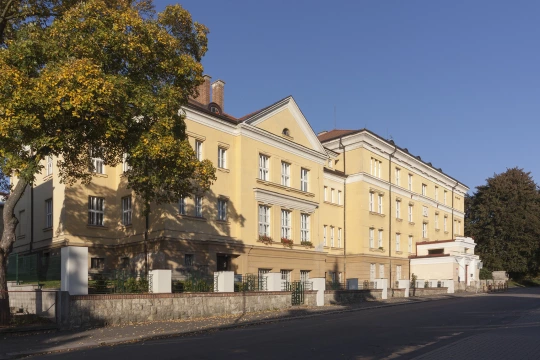 District administrative buildingLitomyšlský architektonický manuál
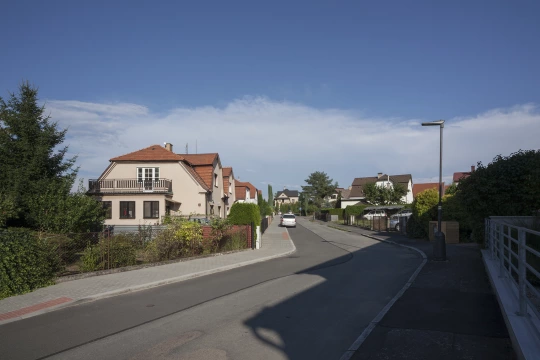 Housing development along the railway at U Morašická Road in Litomyšl (“Husovka”)Litomyšlský architektonický manuál
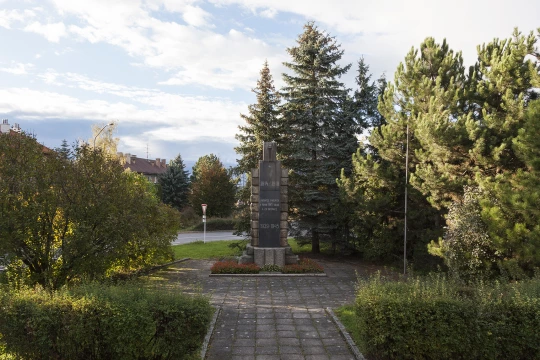 Memorial to the fallenLitomyšlský architektonický manuál
 Savings BankLitomyšlský architektonický manuál