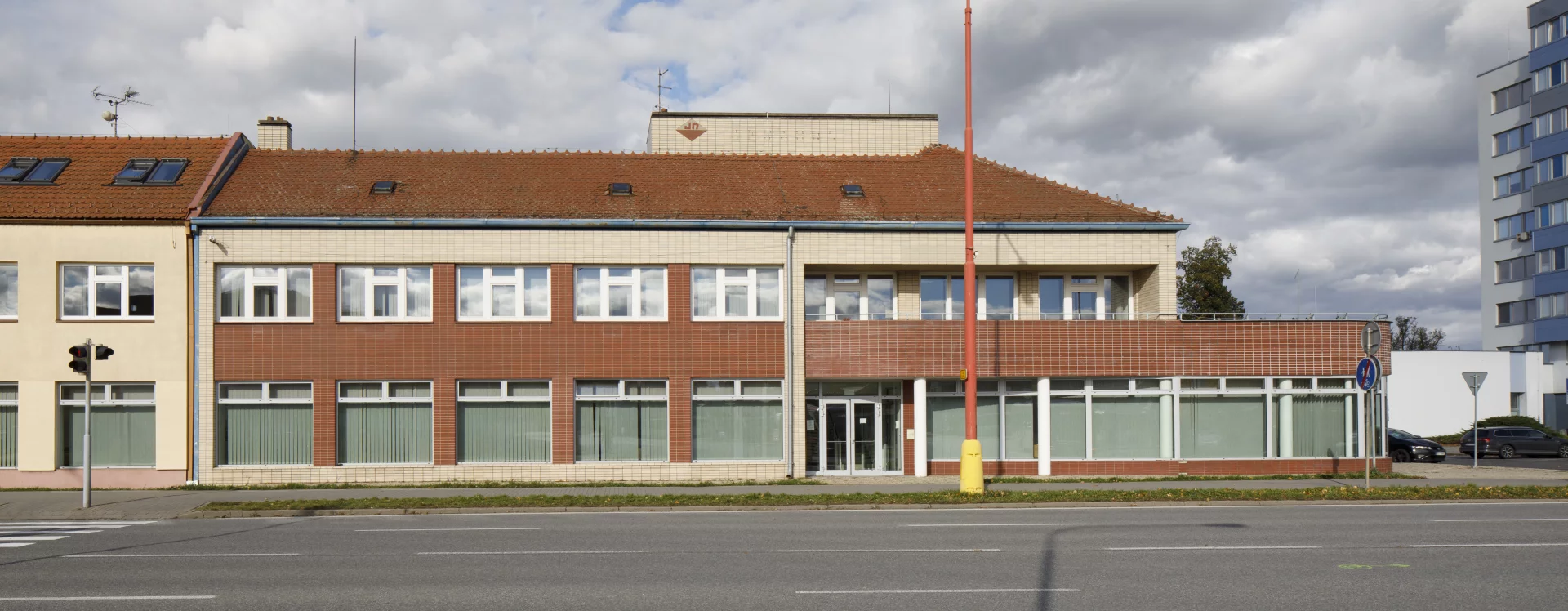
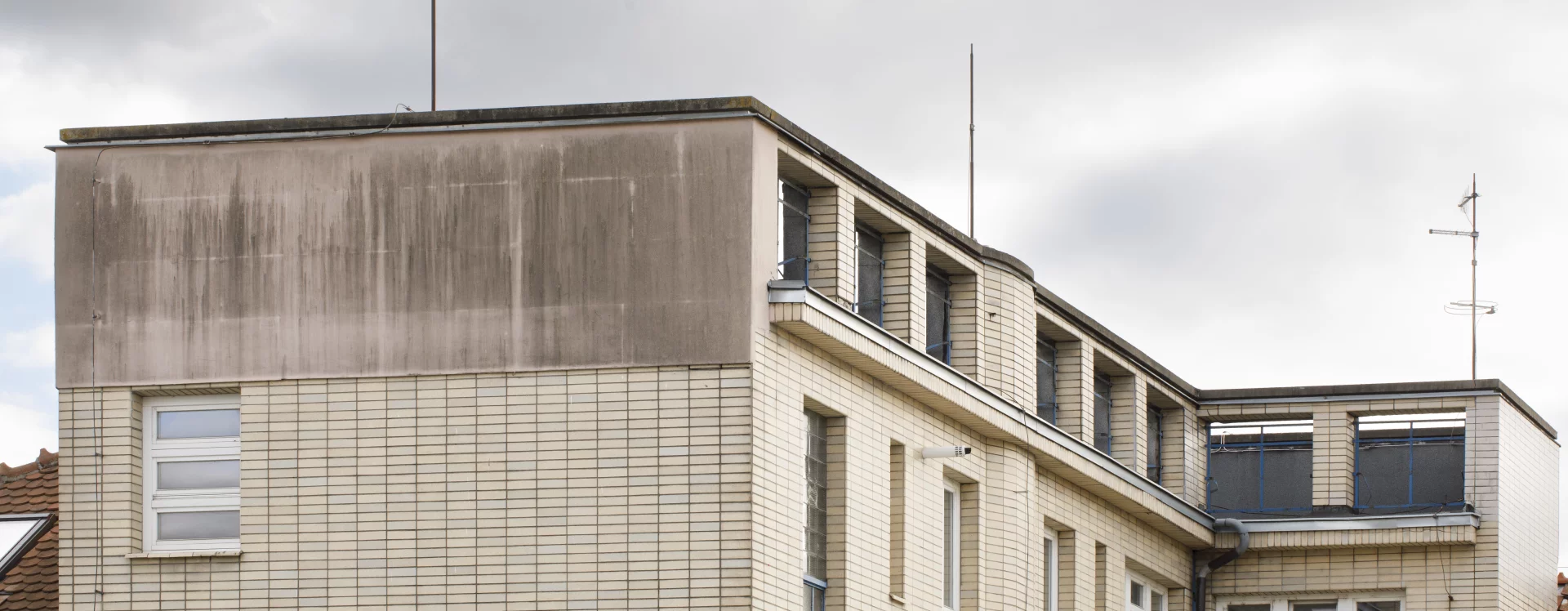
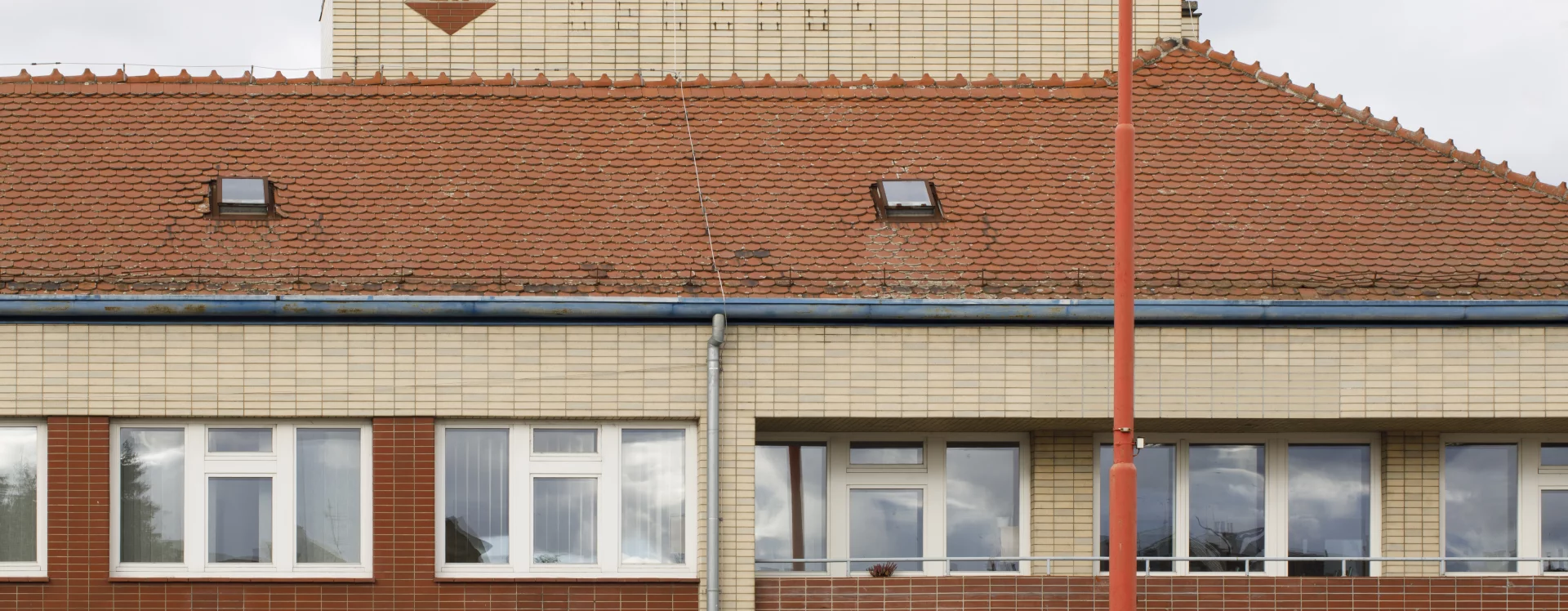
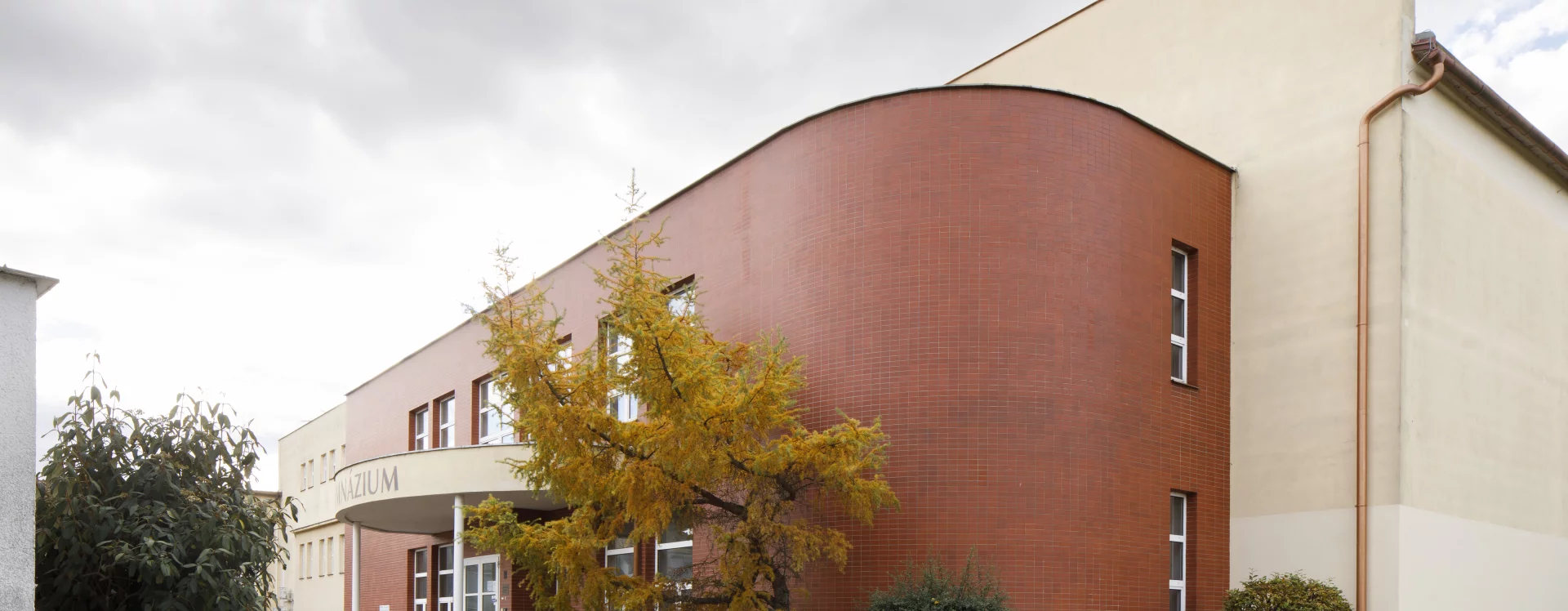
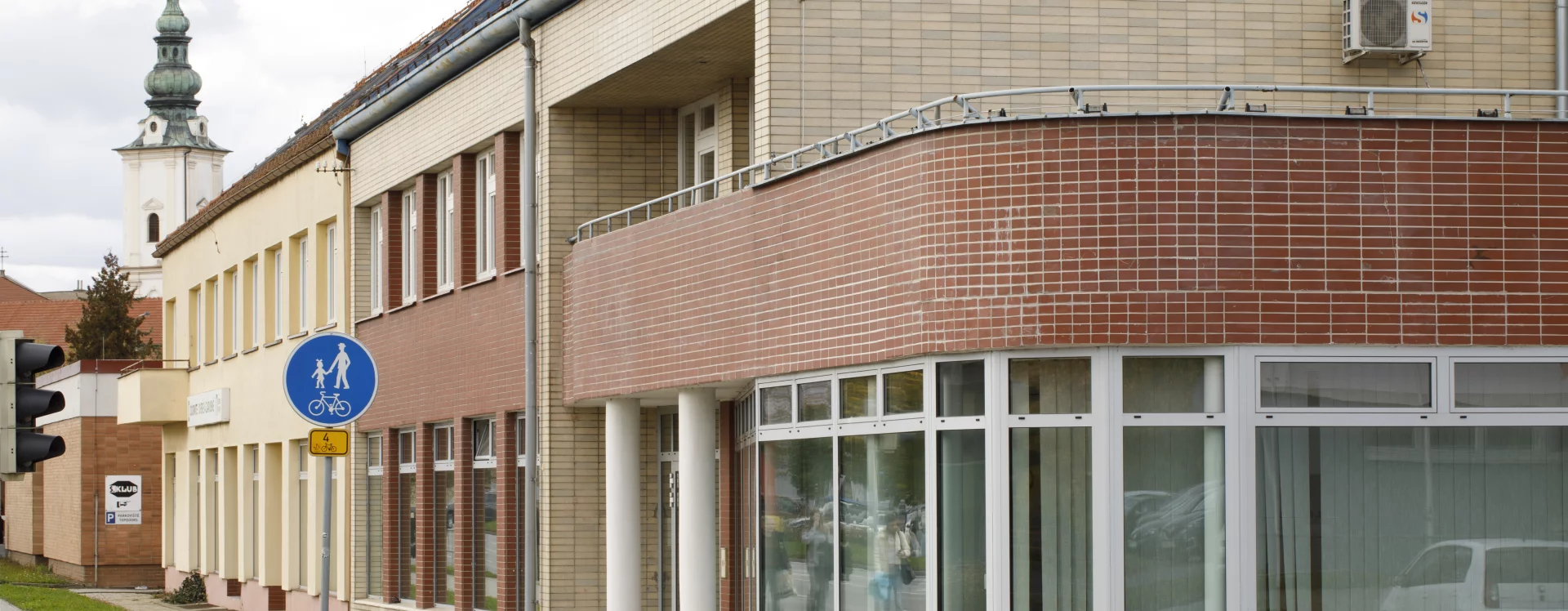
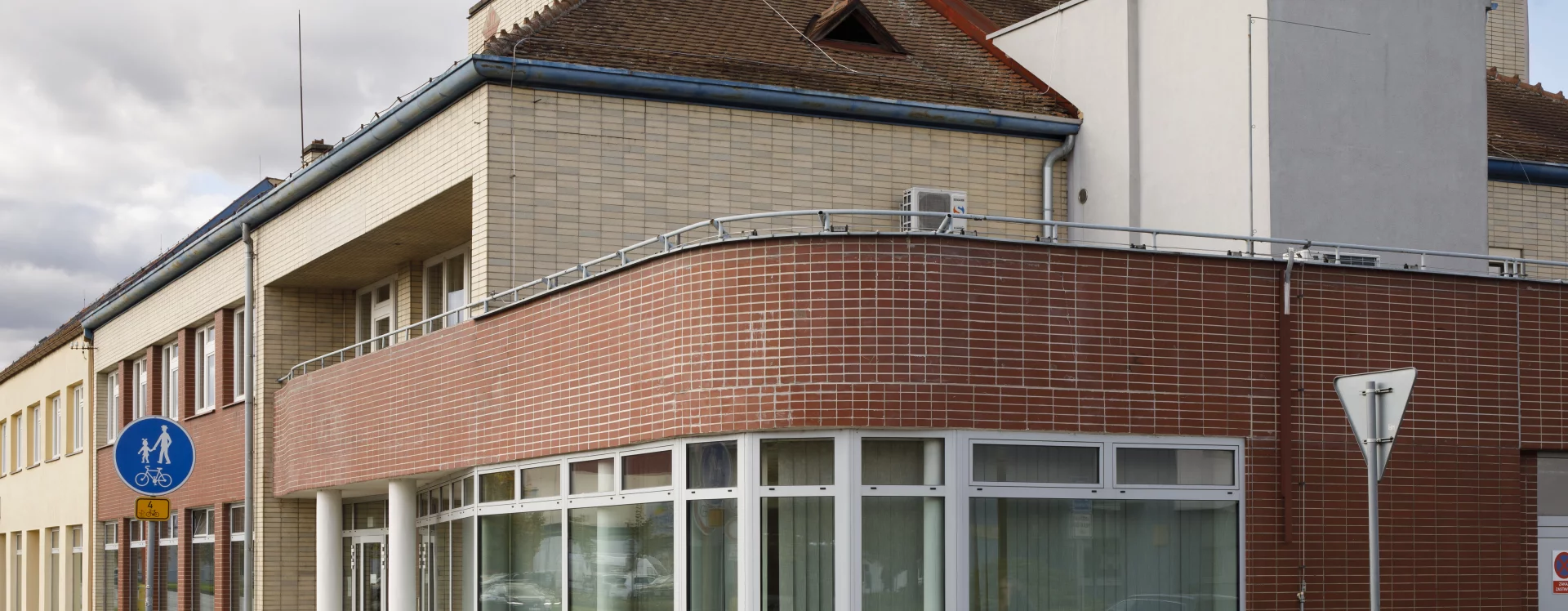
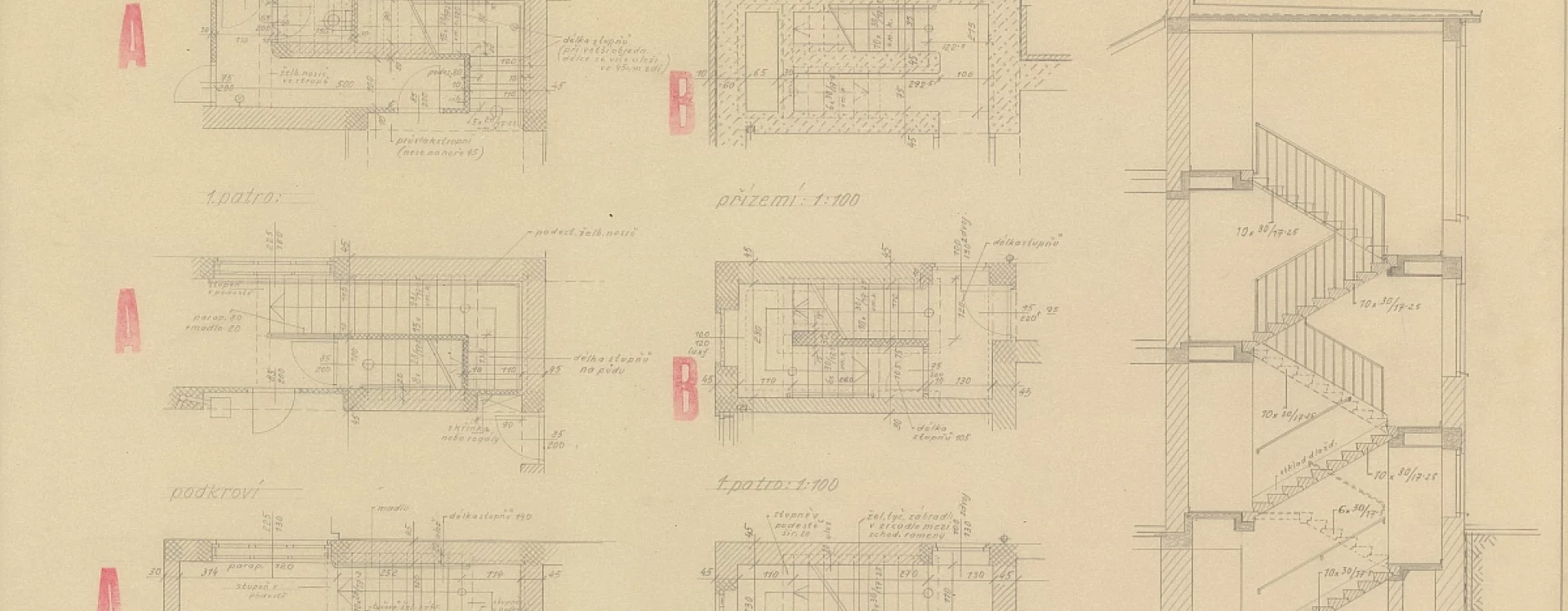
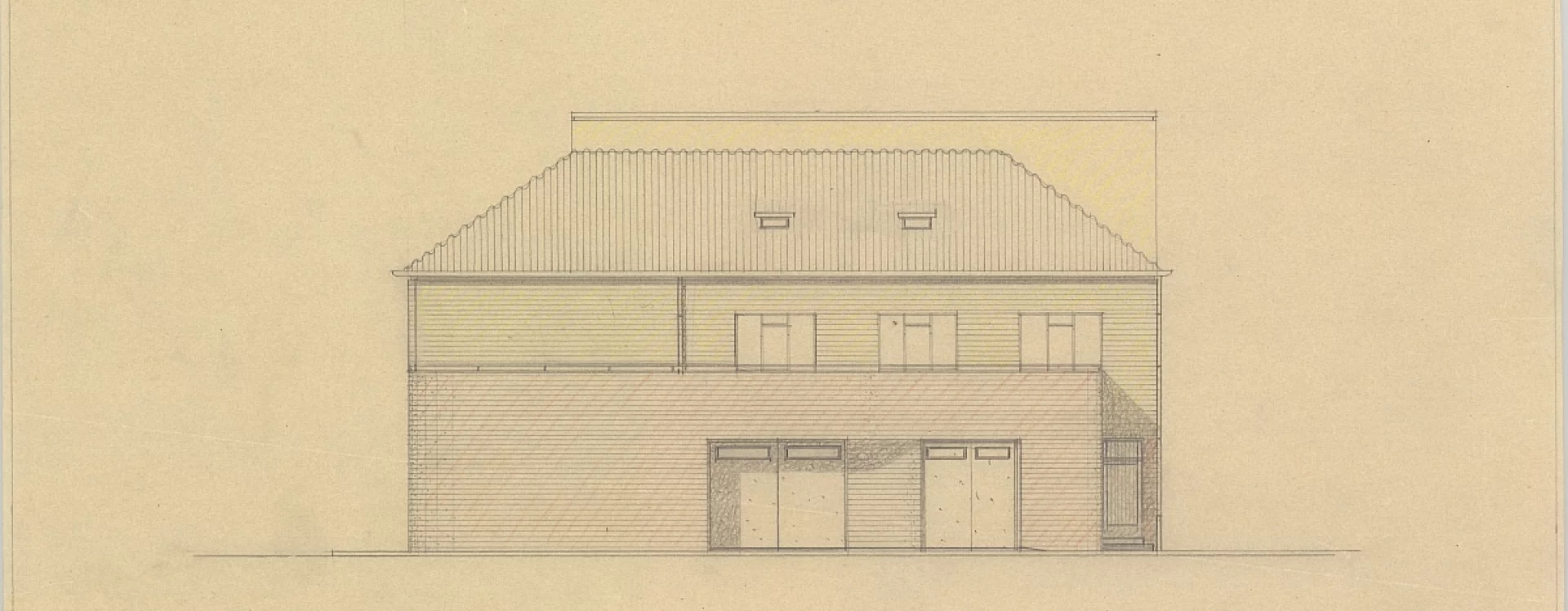
The building at Velehradská třída no. 682 was built in 1940–1941 by businessman Jan Noščák as part of a pair of functionally interconnected buildings (together with house no. 683). Both buildings were built on the basis of a joint building permit and represent an example of purposeful interwar architecture responding to the needs of the industrial and commercial company Keramos. While the neighboring building served primarily for commercial and sales purposes, house no. 682 housed the owner's apartment and the company's business premises.
The architectural solution corresponds to the late phase of interwar functionalism, when the emphasis on purposefulness, simplicity and operational logic was reflected in the modest expression of the building. The building is of moderate mass, with a clearly legible structure and without decorative elements typical of the pre-war modern architecture of the region.
After 1945, both houses underwent a fundamental transformation as a result of nationalization. At first, national enterprises operating here continued the original ceramic production, but from the late 1950s, the buildings became the headquarters of the regional center of the Center of Folk Art Production (ÚLUV) Prague. The house housed offices, workshops and the Krásná jizba store, which played a significant role in spreading contemporary cultivated housing culture in the region.
The Uherskohradiště center of the ÚLUV was one of the important centers of furniture production. The key figure in shaping its artistic direction was the architect Vladimír Bouček (1901–1985), a graduate of the Brno Technical University and a collaborator of Bohuslav Fuchs. Bouček formulated the principles of the so-called režné style, based on the use of natural materials, traditional technologies and respect for the tectonics of the subject. The products were to be functional, modest in shape and devoid of regional stylization and superfluous decoration.
A number of important designers worked in the Uherské Hradiště workshops, including Jan Kalous and Jaroslav Procházka, whose furniture – often combining wooden construction with wickerwork – became a characteristic feature of ÚLUV production. Solitary pieces intended primarily for urban interiors and recreational facilities enjoyed considerable popularity in the 1960s–1980s and significantly influenced the appearance of Czech interiors in the second half of the 20th century.
After the closure of ÚLUV in the 1990s, the building briefly served as a car showroom and Citroën car service. In 2012, it was purchased by the Zlín Region and the house became part of the Uherské Hradiště Gymnasium complex. This meant that the separate designation No. 682 ceased to exist, but the building remains an important witness to the changes in functional modern architecture and the post-war cultural history of the city.
Lucie Valdhansová
Literature
Meziválečná architektura v Uherském Hradišti. In: Umění : The Art : časopis Ústavu dějin umění Akademie věd České republiky. Praha, Ústav dějin umění ČSAV, 1996, p. 348–353. ISBN 0049-5123.
Iloš Crhonek. Architekt Bohuslav Fuchs. Celoživotní dílo. Brno, Petrov, 1995. p. 135.
Zdeněk Kudělka. Bohuslav Fuchs. Praha, NČSVU, 1966. p. 130.