


Jiří Guth-Jarkovský, as vice-chairman of the KČT, had a major role in establishing the club's branch in Hradec Králové in 1911. The branch, later led by Karel Slavomil Kašpar, set itself the goal of introducing the public to the beauties and monuments of the Hradec Králové region and the nearby Orlické Mountains.
The opportunity to build a mountain hut in this mountain range came only with the creation of an independent Czechoslovakia. The club focused its attention on the central part of the main ridge near the Prussian border, where the settlement of Scherlichgraben was established at the turn of the 17th and 18th centuries. whose Schierlichhäuser. The first project for this place was developed by the builder Beran and the architect Václav Rejchl. In 1920, the department published a proclamation in the Tourist Magazine "To Czechoslovak Tourists!" with an appeal for a nationwide collection. The foundation stone laying ceremony was to honor the seventieth birthday of President Masaryk. The national significance of the chalet was also evidenced by the characteristics of the building as a "great cultural and national act" or a "Czech mountain resort" in the Tourist Magazine . Leading Czech architects, led by Jan Kotěra, in whose studio the Brno architect Bohuslav Fuchs also worked in the years 1919–1921. The chalet was to be designed in such a way that "it would not only meet all the requirements of tourism and winter sports, but also blend in with the landscape character in size, material and outline." In 1920, the club selected the Fuchs project from several proposals, who also developed plans for the Klostermann cottage in Modrava in the Šumava Mountains (implemented in 1923). Both projects are similar because they were based on the requirements of the KČST building commission, which was a kind of typification of tourist cottages. Such cottages were to correspond to the universal mountain style - stone foundation, wooden frame construction, shingle roof. In the 1920s, the KČST built its largest and most daring projects, such as the Masaryk, Klostermann or Kramář cottages.
Although the club had money from private individuals and also received a state subsidy from the Ministry of Trade, it had to apply for a mortgage loan from the Hradec Králové Savings Bank, as the construction costs exceeded CZK 800,000. The largest share in the construction of the chalet was played by Josef Václav Pilňáček (1877–1949), an industrialist from Hradec Králové, owner of a soap factory and later long-time mayor of Hradec Králové, who was also a lover of hiking and skiing.
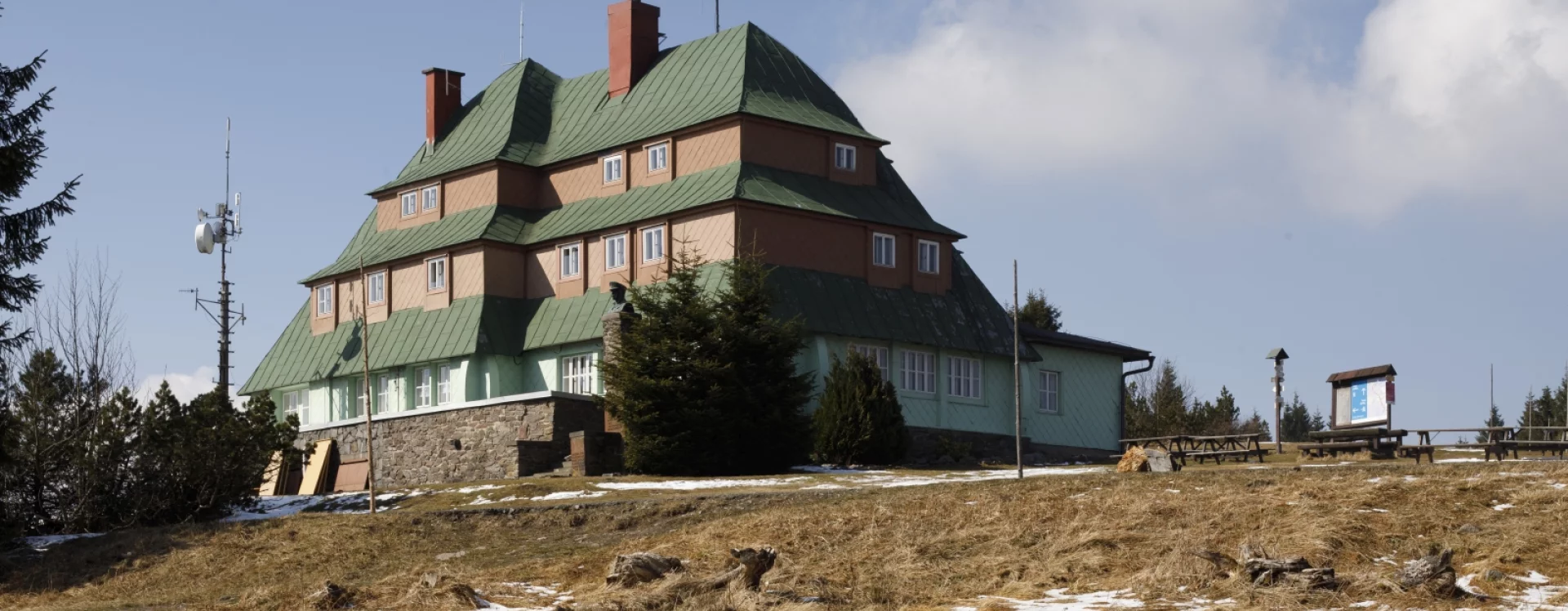
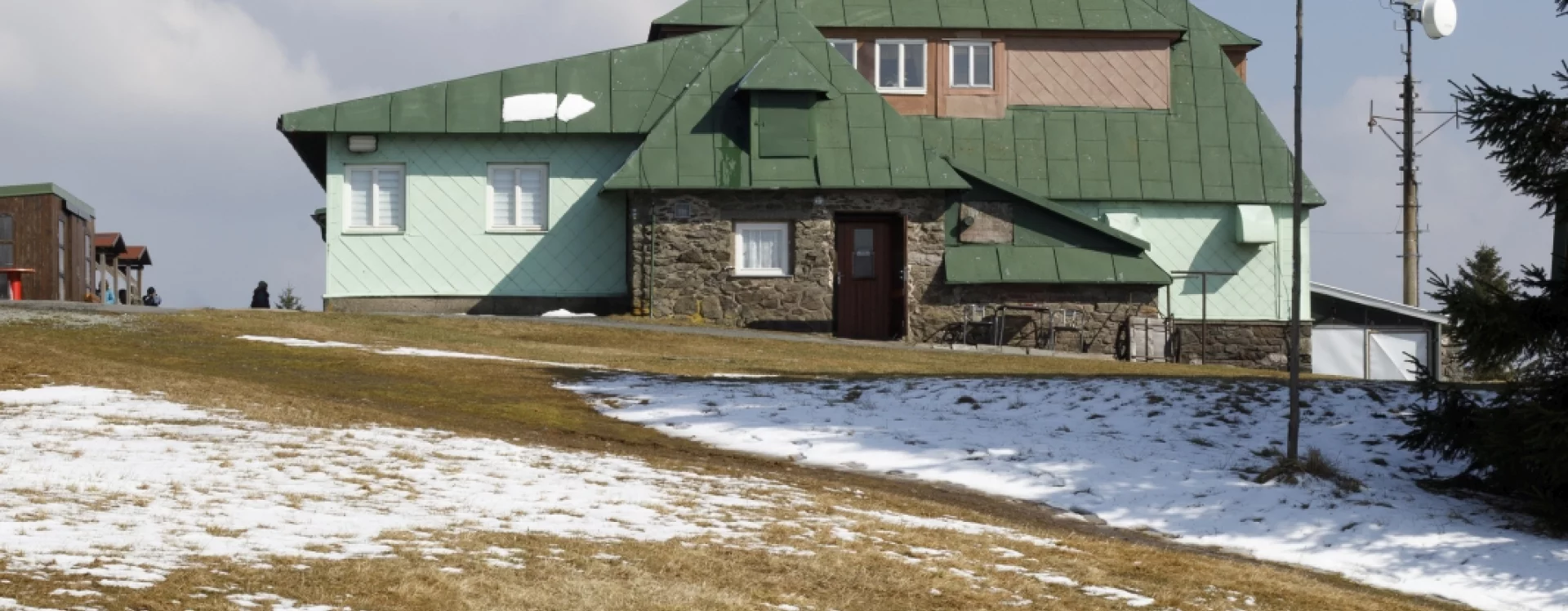
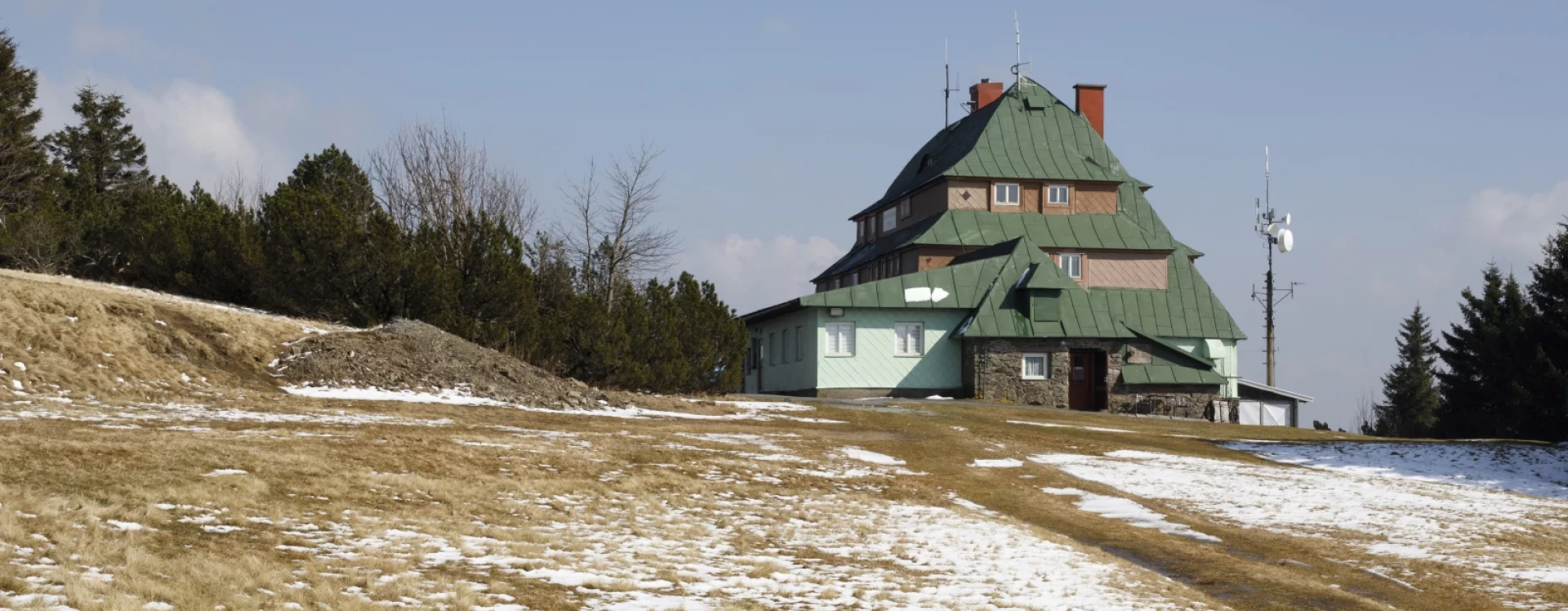
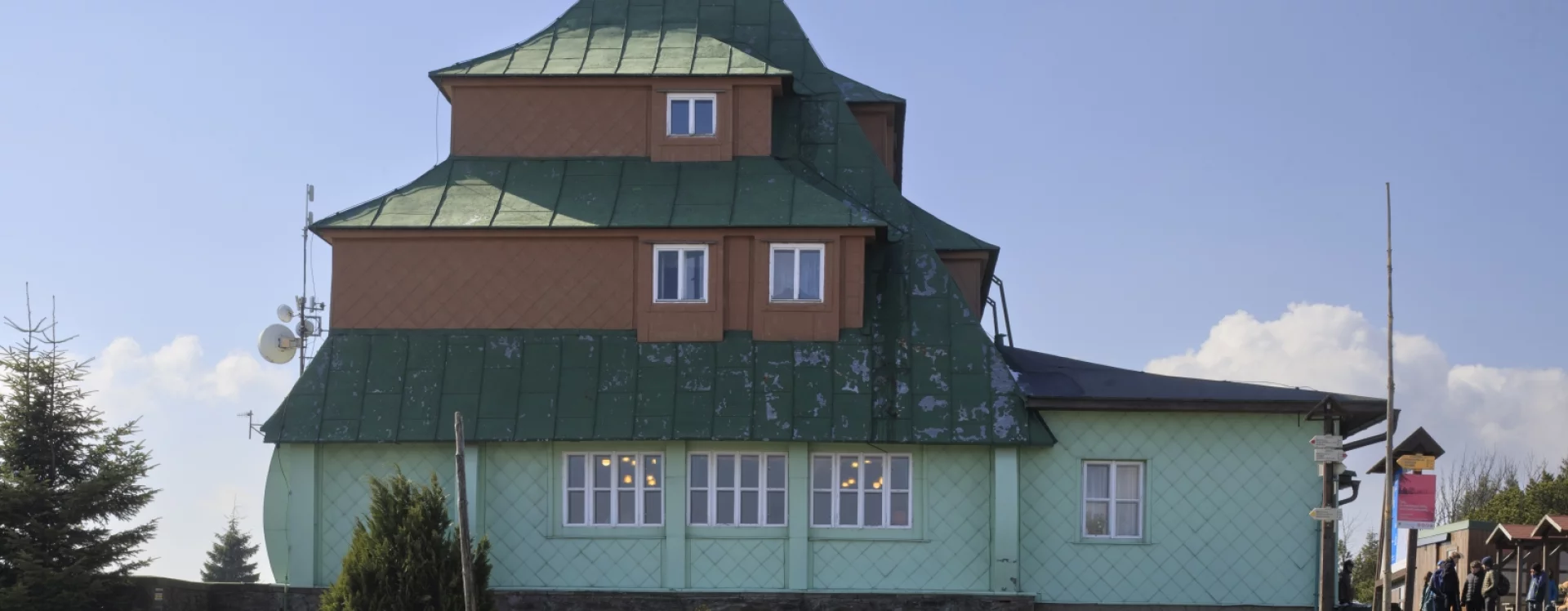
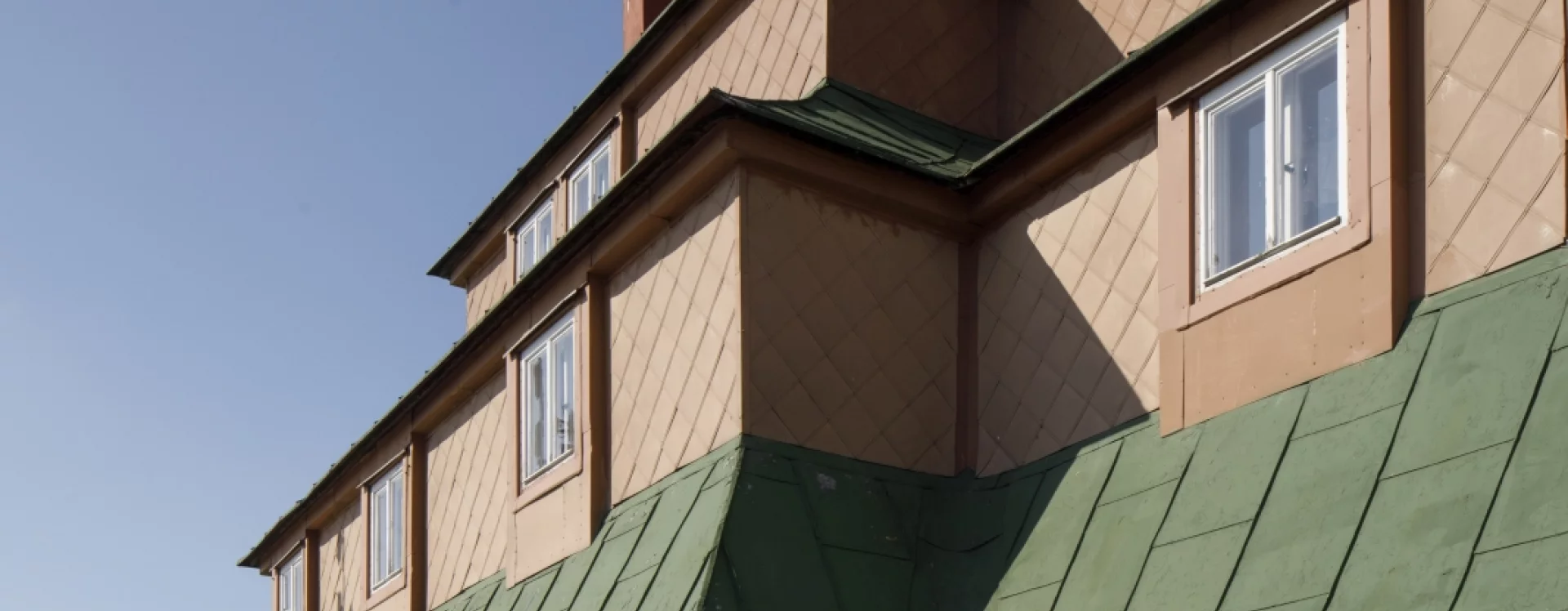
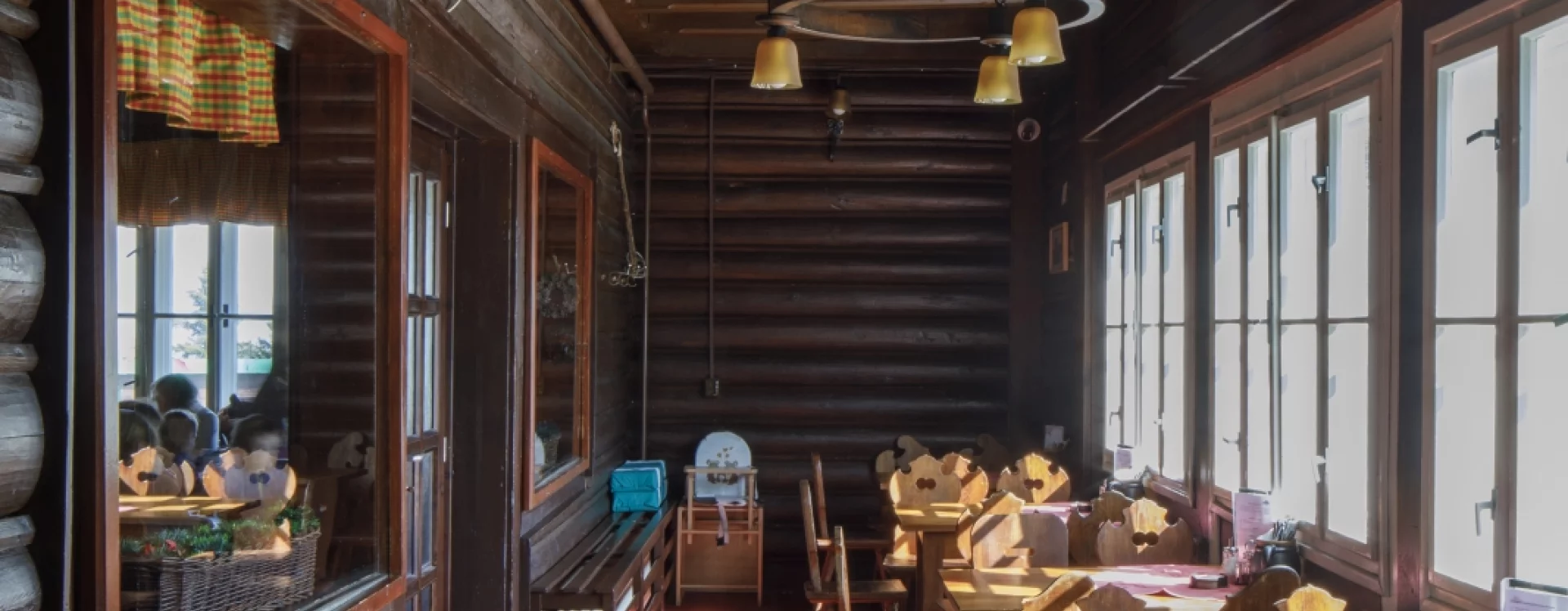
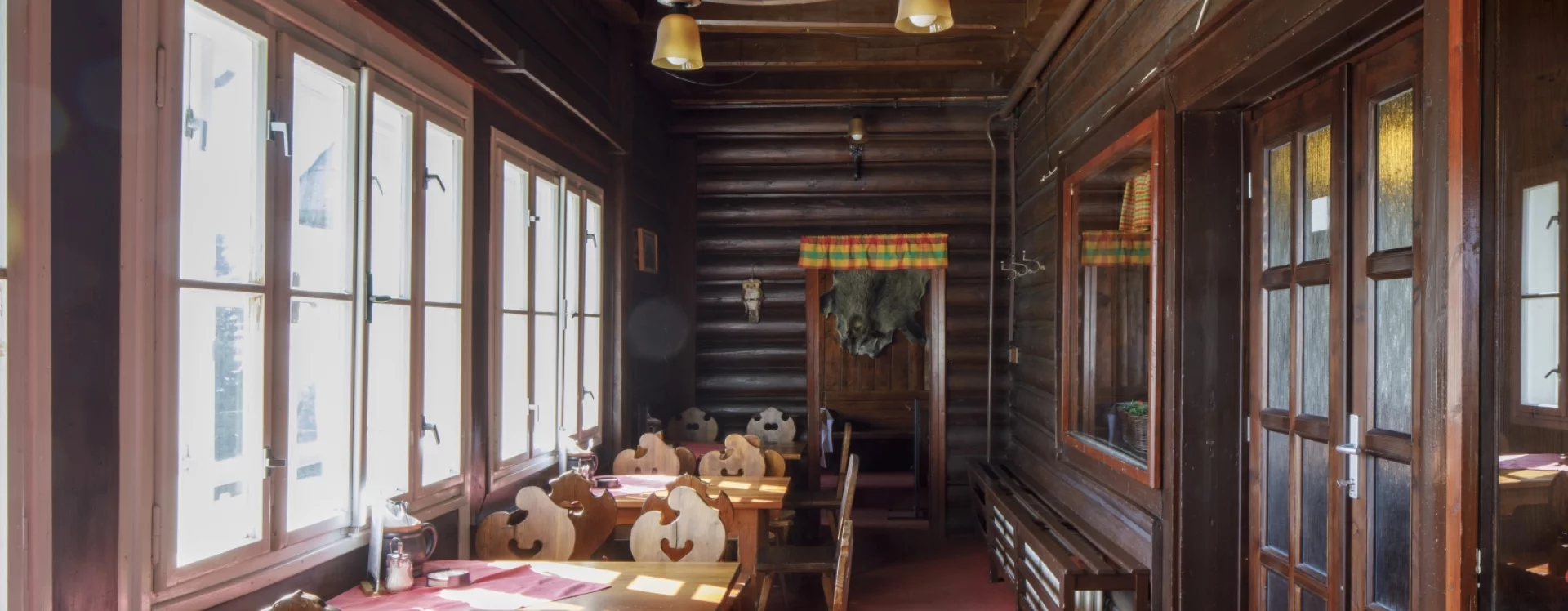
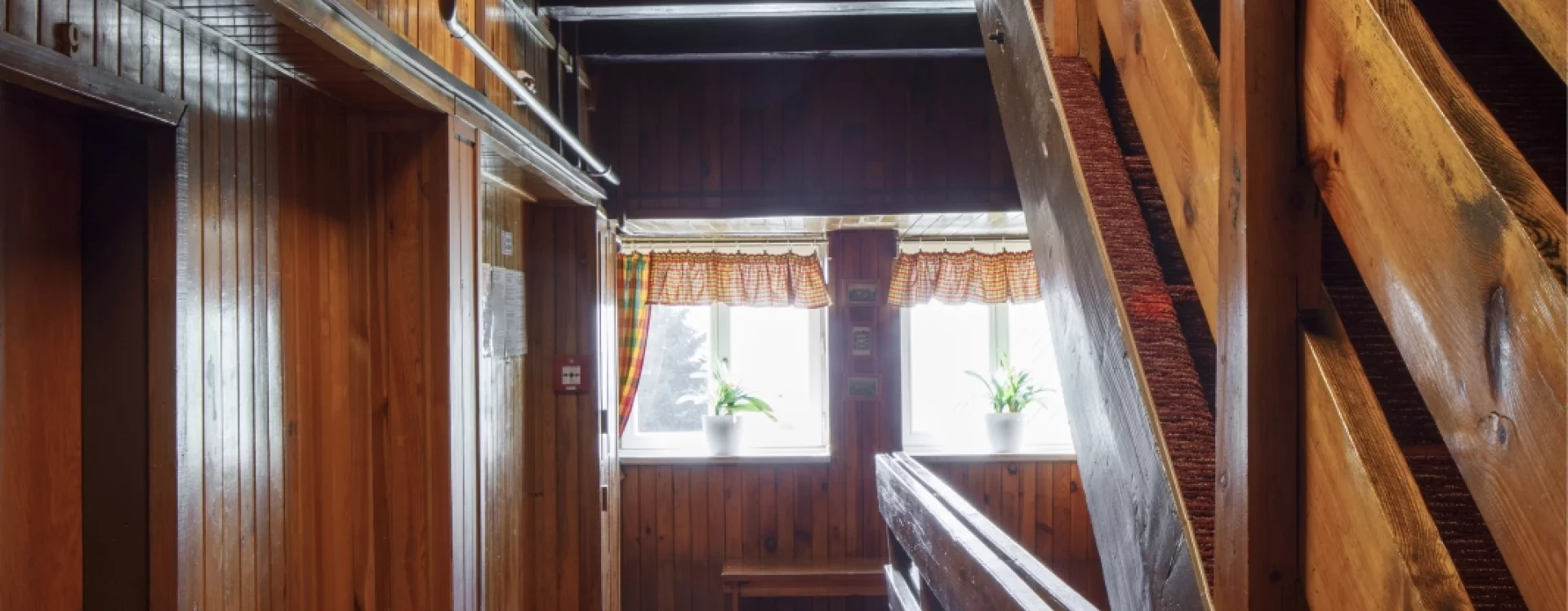
The foundations of the Masaryk cottage were laid on September 14, 1924, and it was built by the company of Václav and František Capoušek. The cellars, foundations, sewerage and well were made in the rock. The wooden log cottage stands on a massive stone foundation, which extends into a viewing terrace on the south side. The roof with two mansards had a wooden shingle covering. The ground floor housed a summer and winter restaurant room with a kitchen, while the upper floors served as accommodation. The building contained a men's and women's dormitory, twelve rooms, showers in the hallway, and water supply, electric lighting and central heating were installed. On the north side, a low barn and woodshed adjoin the cottage. Fuchs designed the cottage in a modern, functional way, without unnecessary references to folk buildings. The summer dining room is decorated only with an oak decorative column with a carving by the sculptor Josef Kubíček, depicting the synthesis of tourism with nature. Kubíček studied under Josef Václav Myslbek, among others, but his work was mainly based on the carving tradition of the foothills of the Orlické Mountains, where he came from.
The official opening of the chalet took place on September 27, 1925. Shortly afterwards, in 1928, a competing chalet, the Hindenburgbaude, was built on the Prussian side of the mountains according to a project by Konrad Goebel (it burned down in 1946). In 1930–1932, the club completed the marking of the tourist route leading to Šerlich from Hradec Králové, and in 1935, a road from the village of Deštná headed to the Masaryk chalet.
In September 1938, the Masaryk cottage was attacked by Nazi vandals, but an attempt to burn it down failed. After the occupation of the Sudetenland, the cottage was renamed the Hitlerbaude, and during the war it served as a dormitory for families of SS officers, as a Hitler Youth center, and as a convalescent home for wounded pilots. After the war and again in 1990, its original name was restored. The cottage was already sheathed with eternit boards before the war, and the shingle roof was replaced by sheet metal, but it still has the original wooden interiors and is among the best-preserved buildings of this type in our country; it is still owned by the Czech Cultural Heritage Association.
Markéta Svobodová
Literature
Markéta Svobodová. Hore zdar!. Praha, Artefactum, 2020. Masarykova chata na Šerlichu, Deštné v Orlických horách, p. 94–97. ISBN 9788088283478.
Iloš Crhonek. Architekt Bohuslav Fuchs. Celoživotní dílo. Brno, Petrov, 1995. p. 12–13.
Zdeněk Kudělka. Bohuslav Fuchs. Praha, NČSVU, 1966. p. 58.
Turistická chata na Šerlichu. Available from: https://pamatkovykatalog.cz/turisticka-chata-na-serlichu-12162921 [accessed 18. 9. 2025]
SUCHODOLSKI, Jacek. Architektura schronisk górskich w Sudetach. Wrocław, Oficyna Wydawnicza Politechniki Wrocławskiej, 2005. p. 228–230. ISBN 8374938455.