After the First World War, the lack of housing was significant throughout the Czechoslovak Republic. One of the biggest challenges for the architects was housing construction in the new capital of the Slovak part of the republic – in Bratislava – where it was necessary to design and implement in a relatively short period of time a large number of apartments for residents coming to work from the regions of Slovakia and the Czech Republic. Although the pace of housing construction started successfully, the approaching economic crisis at the turn of the 1920s and 1930s dampened this trend. However, the situation slowly stabilized, and in the mid-1930s several architecturally valuable apartment buildings were built in Bratislava. The largest share was cooperative construction for the socially weakest residents and the middle class, but rental houses with a small number of smaller apartments were also created. The profitability of this type of rental house was determined by the legislation determining state support especially for the construction of smaller apartments, its formal expression and layout was based on the current architectural discourse. The demand for smaller, but modernly equipped apartments was also supported by the increasing employment of women, for whom household care was rationalized precisely in the reduced and carefully arranged area of the apartment. One of the apartment buildings designed in this way is the rental house of Zuzana Rosenthal.
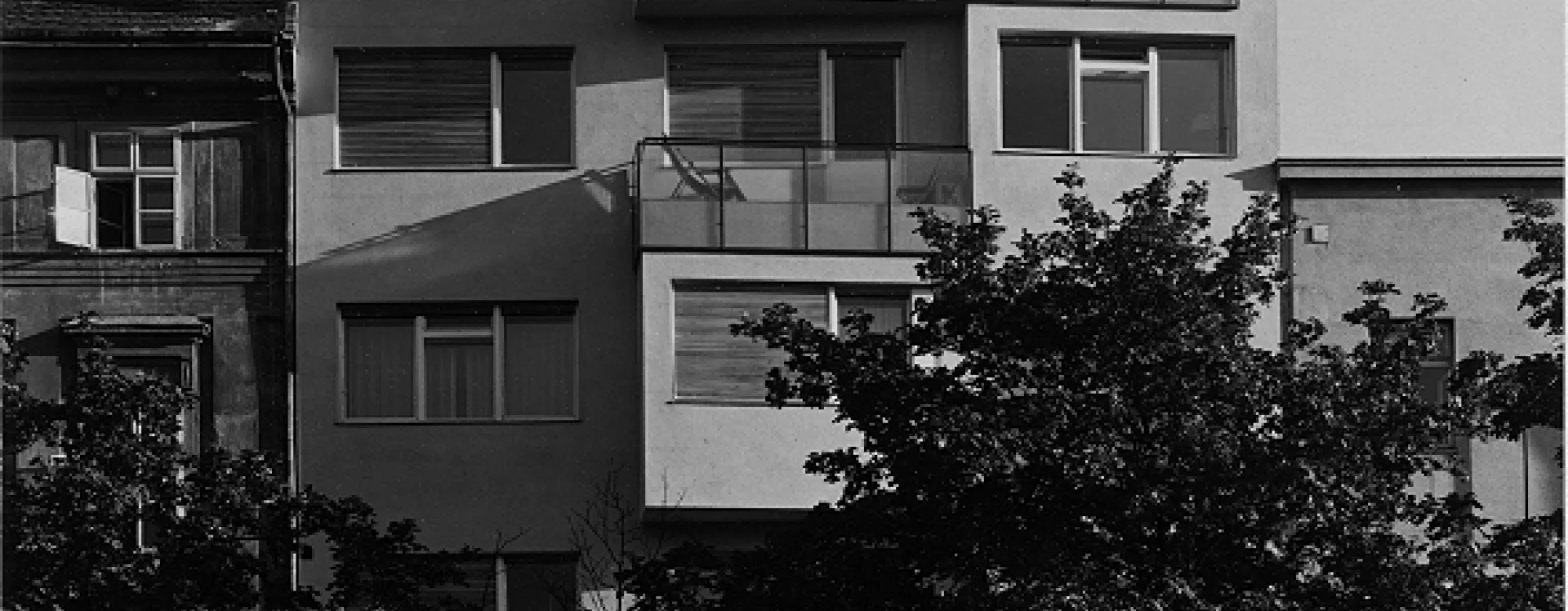
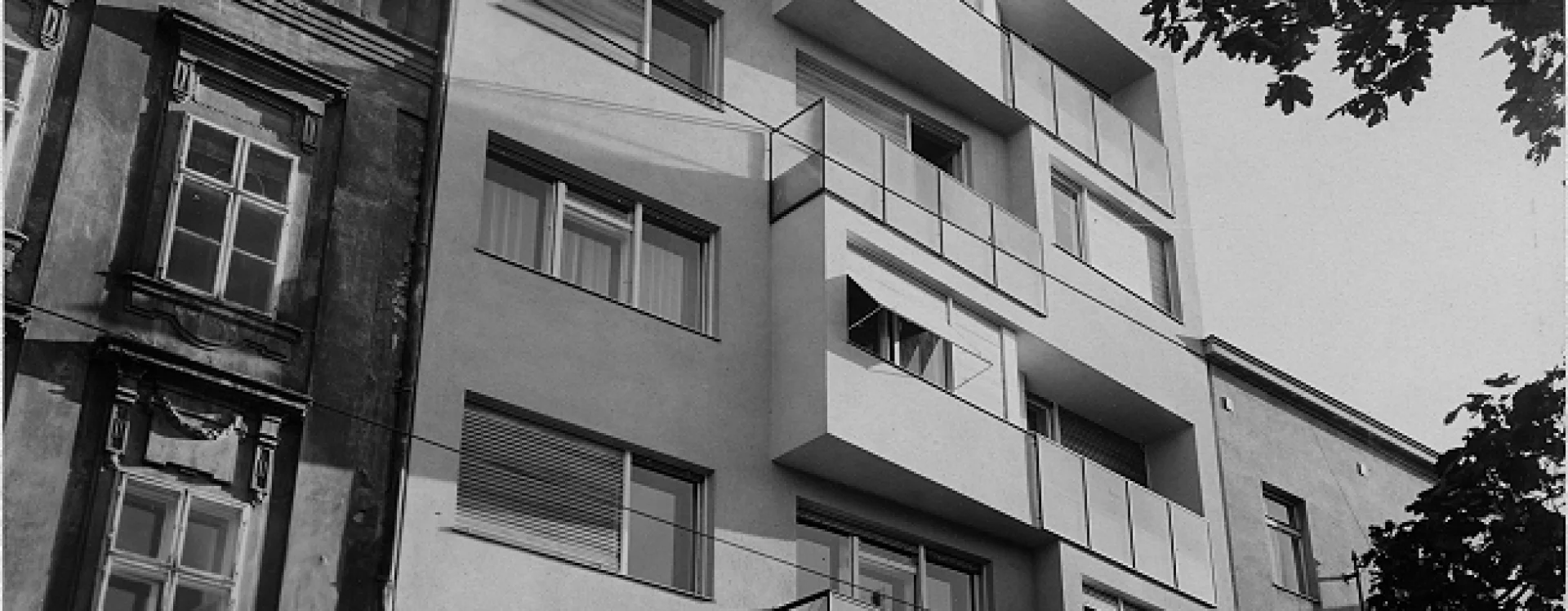
This functionalist apartment building was built on the site of an older pavlač house on Hviezdoslav Square. The Rosenthal couple initiated the demolition of the original house and the construction of the new one. The house was designed for them by the architect Bohuslav Fuchs under unknown circumstances. The architect mitigated the unfavorable orientation of the main facade to the north – towards the square – by turning the balconies towards the west, which ensured their longer glare. It was the balconies that became the cause of the prolonged assessment of the house project by the authorities, who considered them aesthetically unsatisfactory. Zuzana Rosenthalová, however, strongly argued for Fuchs's project when she wrote a letter to the advisory board of the city notary's office in which she stated that this beautiful house was designed by one of the most prominent architects from Brno. According to her, not approving this project would be a "restriction of the artistic movement".
After its completion, the house was also subjected to criticism in the magazine Slovenský staviteľ, where the author wrote that, in his opinion, the apartments on the exposed plot of land were inappropriate and that offices would be a better choice. The house was also criticized by the bay window cube on the facade facing Paulínyho Street, which gives the impression of being too heavy. According to this review, the "over-framed" facade from Hviezdoslavov Square is not good either, because it represents a kind of romantic cubism that contradicts the principles of modern urbanism.
The house consists of two blocks A and B. On the ground floor facing the square, the architect designed offices, on the upper floors small-sized apartments with a high standard. The apartments have a central, only indirectly lit hall, accessories vented to the skylight, a spacious living room and a maid's room. There are studio apartments in block B.
Mrs. Rosenthal's tenement house is one of the examples of the penetration of modern architecture of the 1930s into the historical structures of the city in the area of Hviezdoslav Square. Although contemporary critics perceived it as problematic, today we consider it a valuable and innovative entry into the construction of representative areas of the city promenade.
Katarina Haberlandová
Literature
Iloš Crhonek. Architekt Bohuslav Fuchs. Celoživotní dílo. Brno, Petrov, 1995. p. 91,123.
Zdeněk Kudělka. Bohuslav Fuchs. Praha, NČSVU, 1966.
CHATRNÝ, Jindřich; KYRC Filip; VALDHANSOVÁ, Lucie (eds.). Nový svět Bohuslava Fuchse a Rudolfa Sandala. Brno, Muzeum města Brna, 2025. p. 82–83. ISBN 978-80-88631-23-1.
HABERLNADOVÁ, Katarína. Nájomný dom Zuzany Rosenthalovej. In: MORAVČÍKOVÁ, Henrieta. BOČKOVÁ. Monika. HABRLANDOVÁ Katarína. KRIŠTĚKOVÁ Laura. SMETANOVÁ Gabriela. SZALAY Peter. 101: Slovenská architektúra v registri DOCOMOMO =: 101: Slovak architecture in the DOCOMOMO register. Překlad David MCLEAN. Vydanie prvé. Bratislava, Čierne Diery, 2024, p. 318–320. ISBN 978-80-69103-00-9.