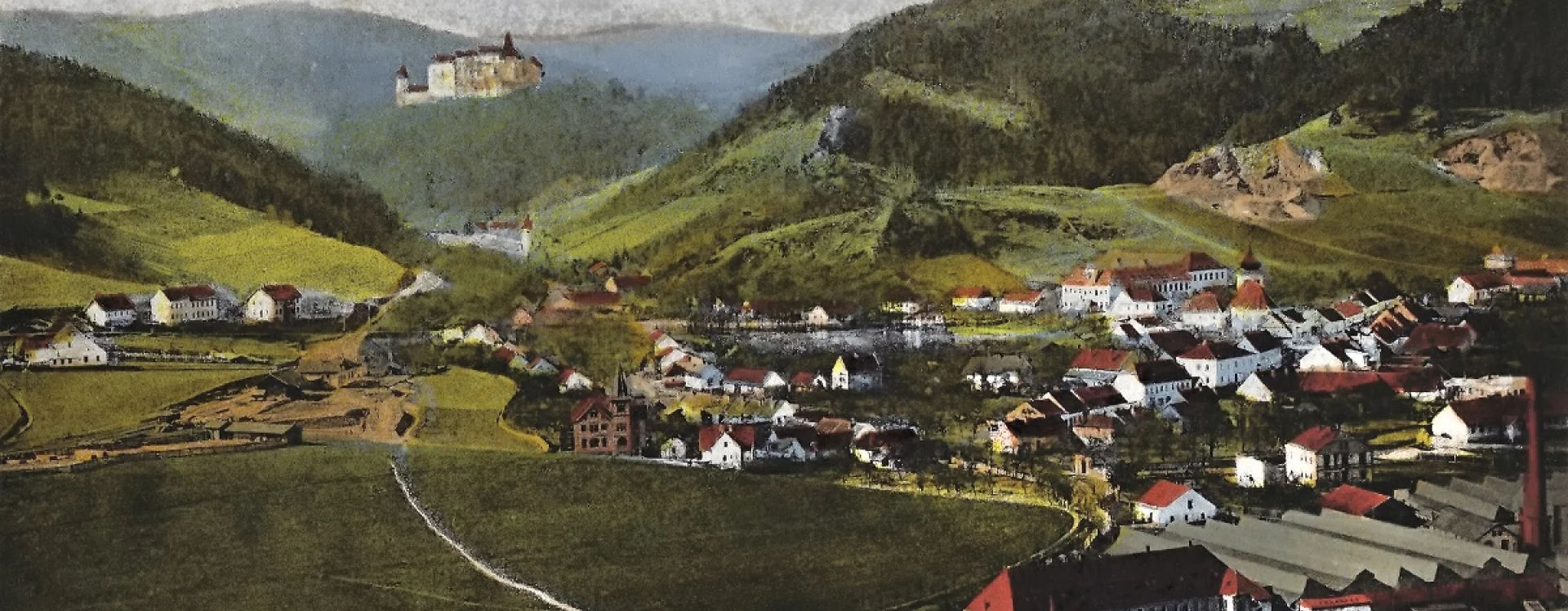
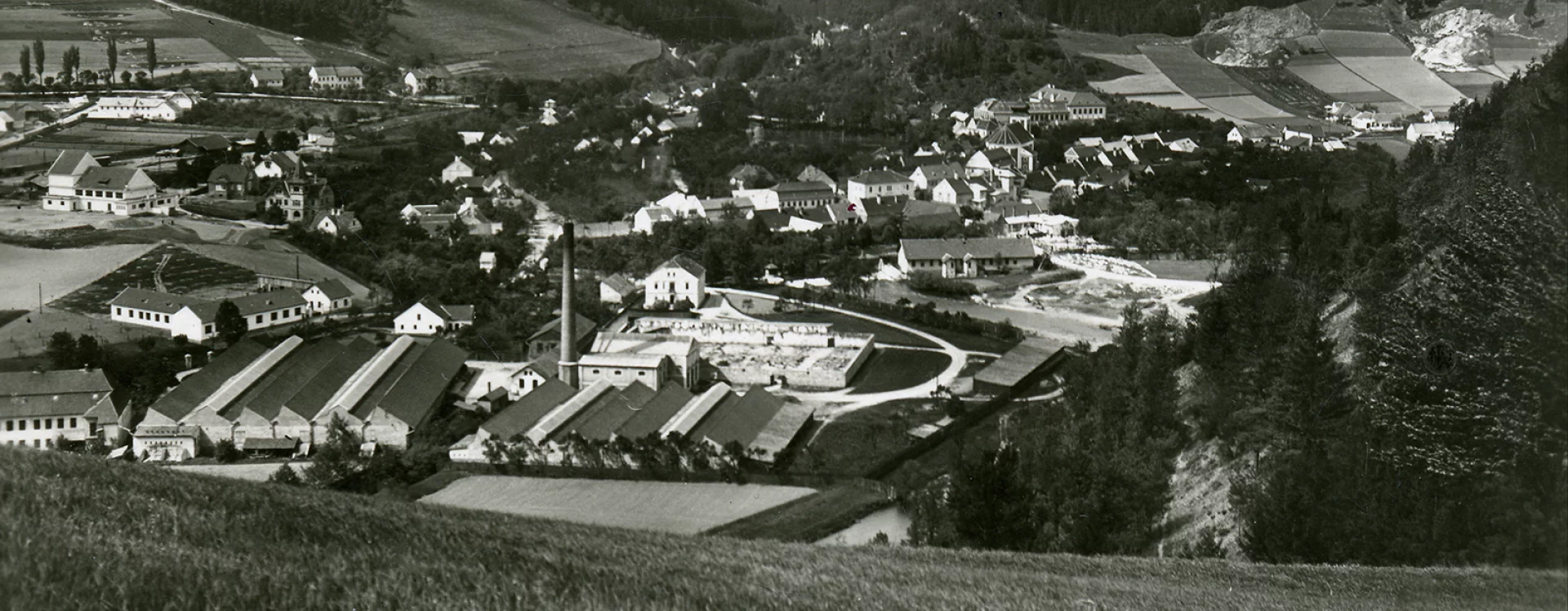
Together with the railway, which started its operation in 1905, the opening of a textile factory by the Brno entrepreneur Otto Kuhn in 1900 influenced the development of Nedvědice at the beginning of the 20th century. The largest industrial enterprise in the area attracted a large number of people to the village, whose arrival opened up new business opportunities for local entrepreneurs. The opportunity was seized as early as July 1907 by the mayor of Nedvědice, Jan Míček, who, together with his daughter Maria and his son-in-law Josef Očadlík, who was a member of the Provincial Assembly, applied to the municipality for the possibility of plotting land called Bílsko near the factory, on which he intended to build workers' houses. The entrepreneur Otto Khun, for whose company the whole construction enterprise was crucial, also participated in the investment. Until then, he himself had solved the situation by building a so-called dormitory directly on the textile factory premises, which was still functioning despite the construction of a workers' colony in the 1920s. Jan Míček invited the Brno architect Vladimír Fischer to carry out the project. He could have been recommended to the mayor by the Tišnov mayor František Müller, because at the same time he designed a cheap and at the same time high-quality project for the Municipal and Burgher School for Girls for the Tišnov town hall and made other proposals for the improvement of the town led by the Czech town hall.
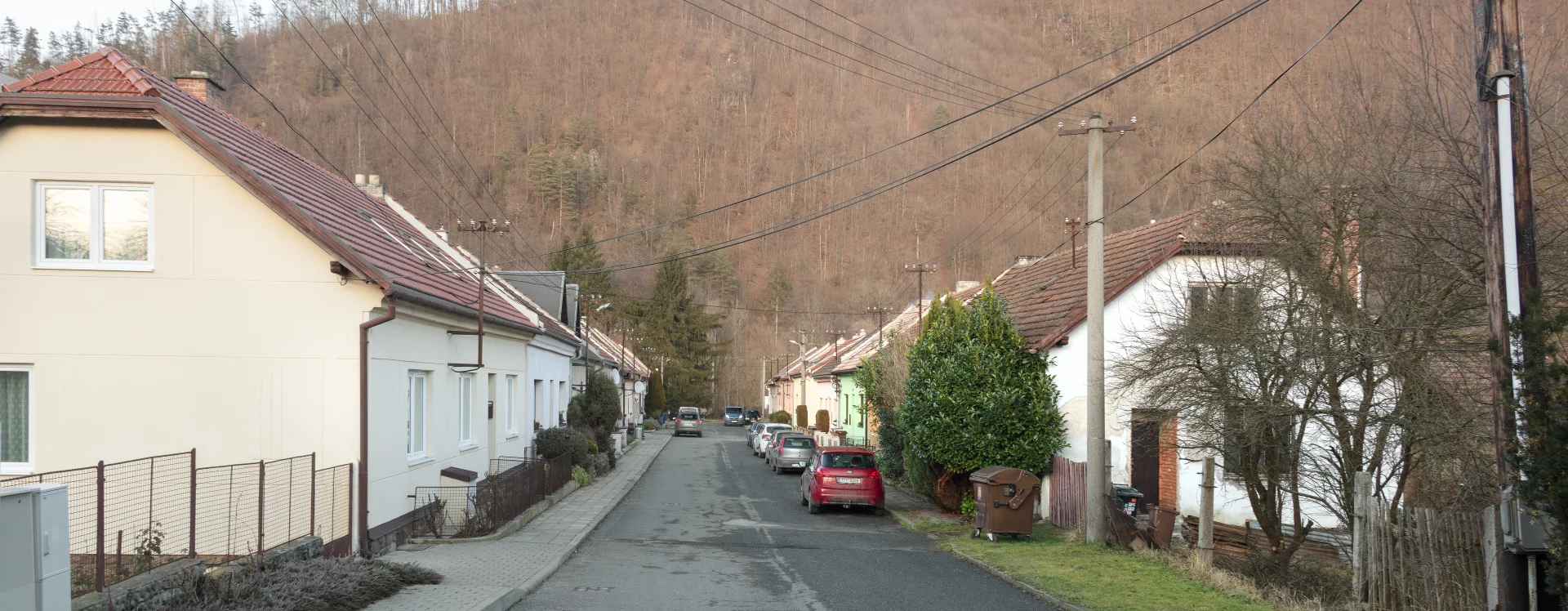
The workers' colony was based on theoretical works and realised examples, such as the Sidonie glass workers' colony in Brumov-Bylnice or some other urban interventions in Moravian industrial centres, which have not survived to our present day. According to them, the parallel streets were to be lined with buildings of similar type and proportions of ground-floor houses with small farms and gardens, allowing the workers to make a further living in the event of a decline in production.
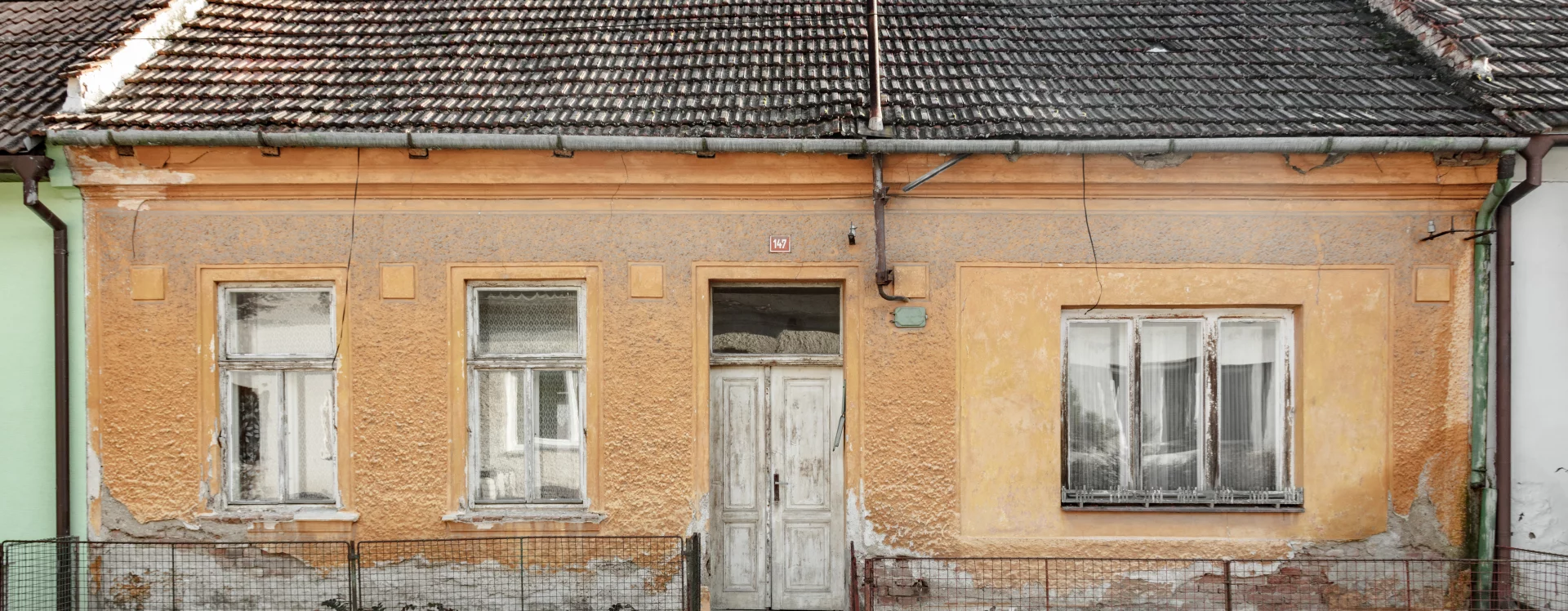
Slowly and in stages, the district, which was built by Jaroslav Hutař's construction company, consisted of two perpendicular T-shaped streets, the longer of which led to the factory. The houses with gabled roofs had a simple street layout, with two, three or four windows, fitted with simple jambs, between which the architect placed an entrance door with a skylight. Behind them was a corridor to the courtyard, dividing the interior of the house into two parts. Despite the efforts of the investors, the workers' colony was never completed and the second perpendicular street remained unfinished in the pre-war period. In spite of this fact, through the colony project, the builder Hutař came to Nedvědice and took the commission very seriously. In November 1907 he gave a lecture at the Jan Míček Hotel entitled "On Workers' Housing", in which he apparently discussed the subject of social housing in relation to Nedvědice. A rather unique event before the First World War. In February 1912, the factory owner Otto Kuhn bought all the houses in the newly built district and had them registered as the property of the factory. The achievements of businessman and art collector Otto Kuhn ended with the establishment of Czechoslovakia. His businesses were affected by the crisis of the 1920s and the fires at both of his factories. In Nedvědice, a hall with a spinning mill burned down, which he was unable to rebuild. Financial difficulties drove the entrepreneur to suicide in 1927 and the company was taken over by the banks he owed. In 1929 the bankers sold it to businessman Moritz Hansel, who with his wife Olga began to sell off the houses of the workers' colony to their existing tenants.
Nowadays the workers' colony "V Domkách" has lost its original form and atmosphere. A significant part of the buildings have had their windows, doors and roofing replaced and their facades are often insulated. The former character is still indicated only by the urban design, which makes both streets one of the most interesting examples of pre-World War I "social architecture" north of Brno.