During the winter of 1931–1932, the renowned German avant-garde architect of Jewish origin Erich Mendelsohn met the Ostrava merchant Mořic Bachner in St Moritz, Switzerland. Among the topics discussed during their meetings was the design of a modern department store, an area in which Mendelsohn had already established himself as a leading specialist. The encounter soon bore fruit: a project for a new department store in the very centre of Moravská Ostrava, on Zámecká Street, began to take shape in Mendelsohn’s Berlin design office.
Zámecká Street, one of the oldest streets in Moravská Ostrava, had already been laid out in the Middle Ages and originally connected the Hrabová (Vítkovice) Gate with the town square. Its earlier name, Na Zámčisku, probably referred to a municipal castle belonging to the Bishop of Olomouc that may once have stood here, perhaps on the very site later occupied by the Bachner Department Store. Nearby, by the town walls, there also stood the cemetery chapel of St Luke, demolished in the 1840s. The older houses nos. 67 and 68 (later nos. 177 and 178), which had stood here since at least the Middle Ages, were replaced in 1869 by a Czech boys’ secondary school designed by the Ostrava builder Franz Böhm. Behind it, between 1883 and 1889, the Church of the Divine Saviour was built to a design by Gustav Meretta. Only later, between 1894 and 1900, was Löfflerova Street (today Puchmajerova Street) laid out along the school building and the church, occupying part of the former cemetery grounds.
In 1931 the Jewish merchant Mořic Bachner, originally from Galicia, purchased part of the Czech municipal school building at the corner of Zámecká and Löfflerova streets with the intention of building a department store on the site. Bachner had founded his business trading in ironmongery and mixed goods as early as 1896. Initially located on Hlavní Street (today 28. října Avenue), the firm later moved to Zámecká Street 15 (house no. 1666). As the assortment of goods gradually expanded to include kitchenware, tools, glassware, and porcelain, the need arose to build a completely new and modern department store.
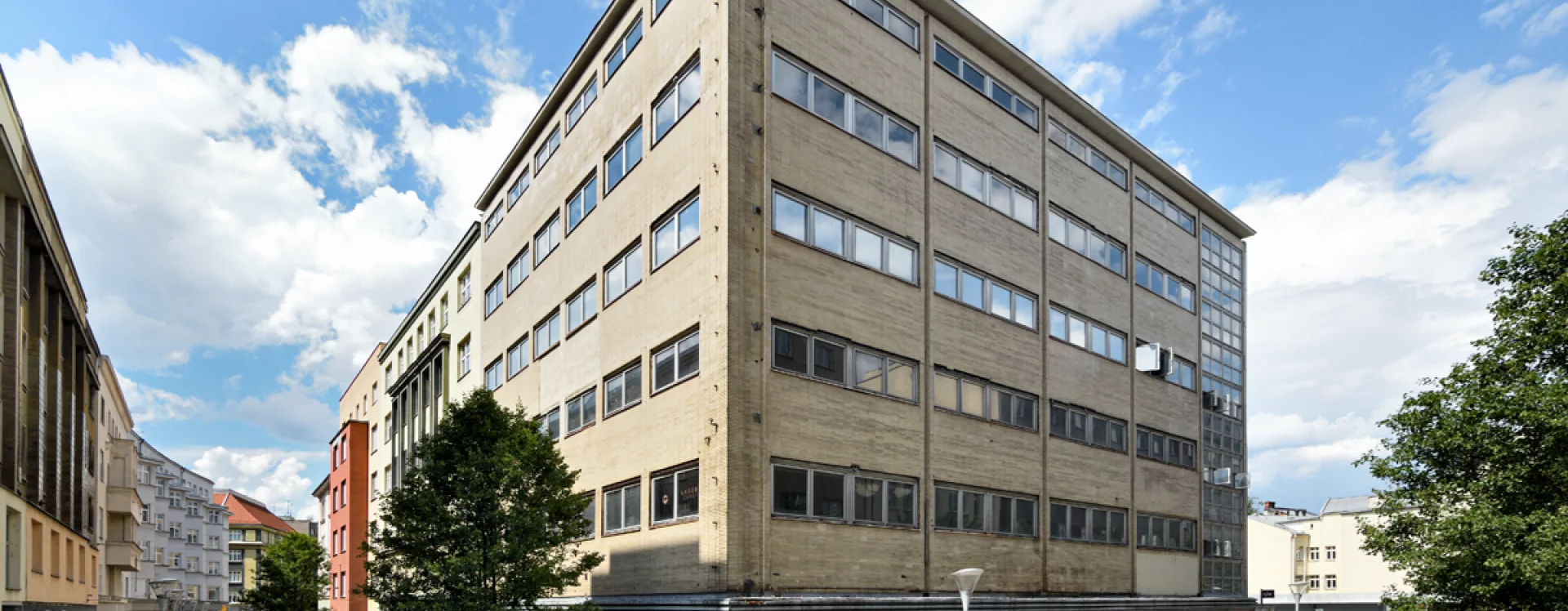
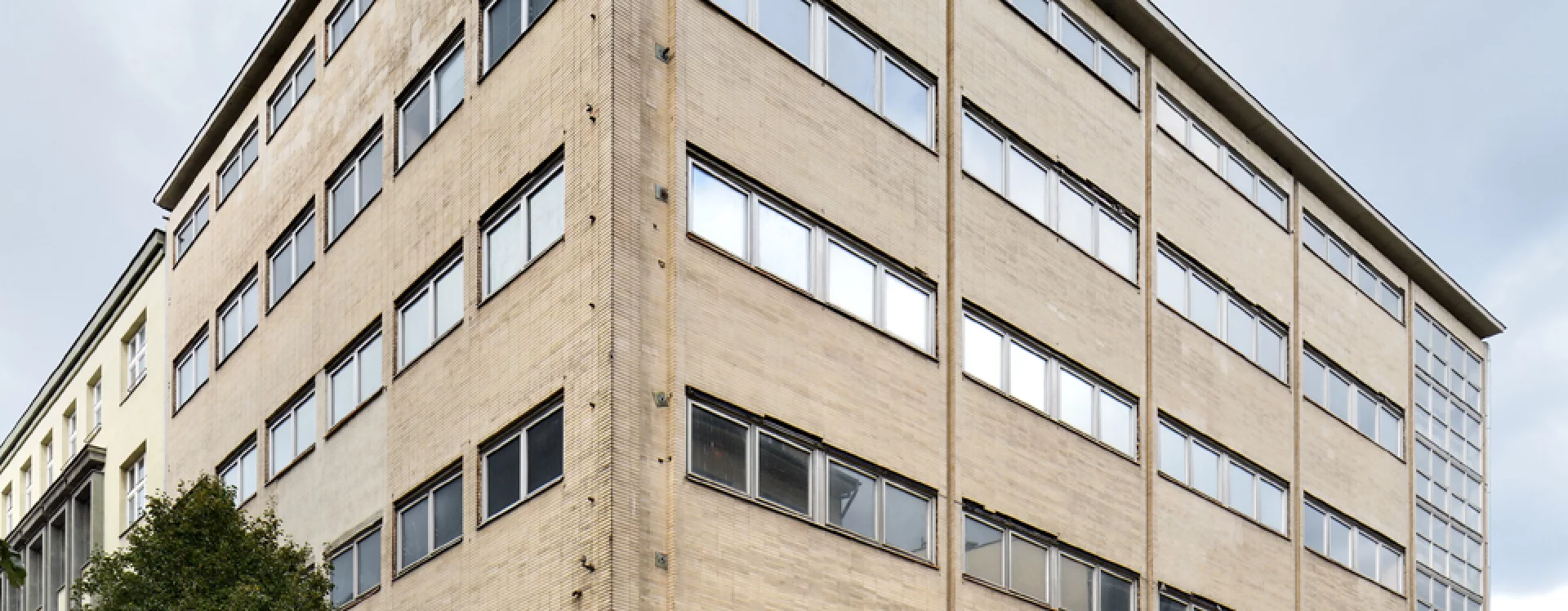
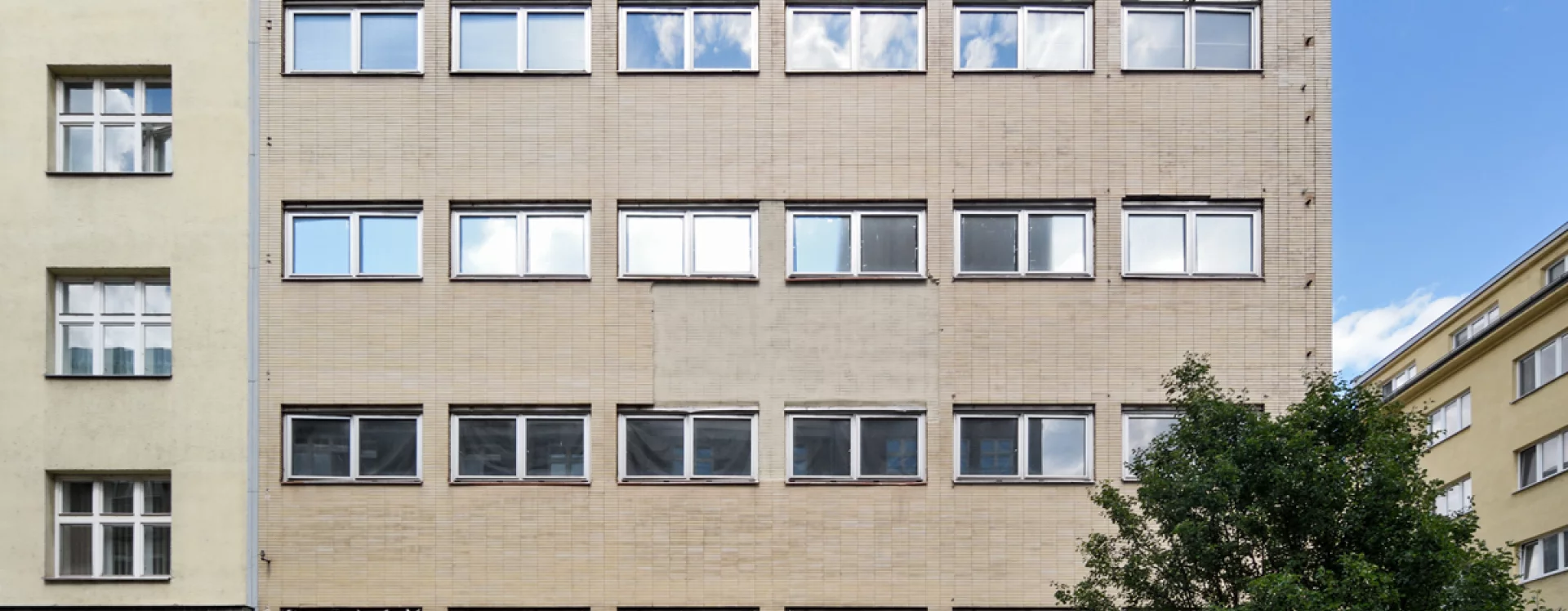
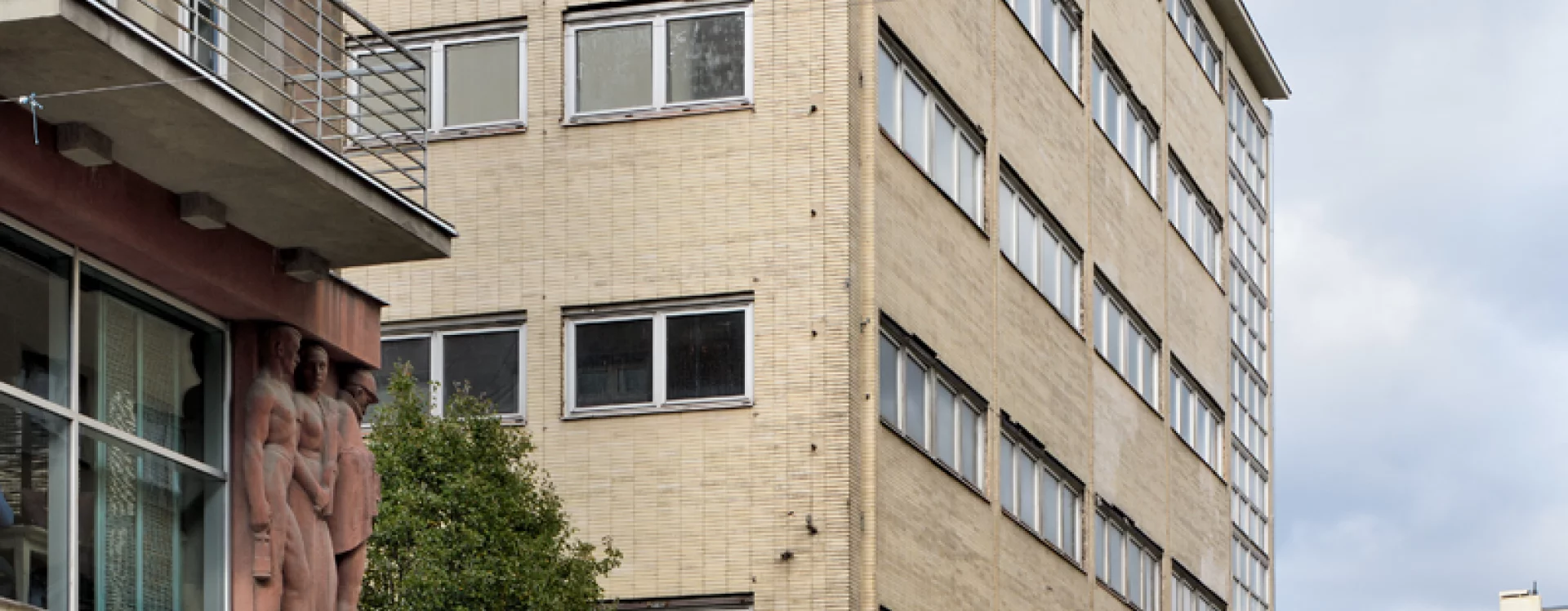
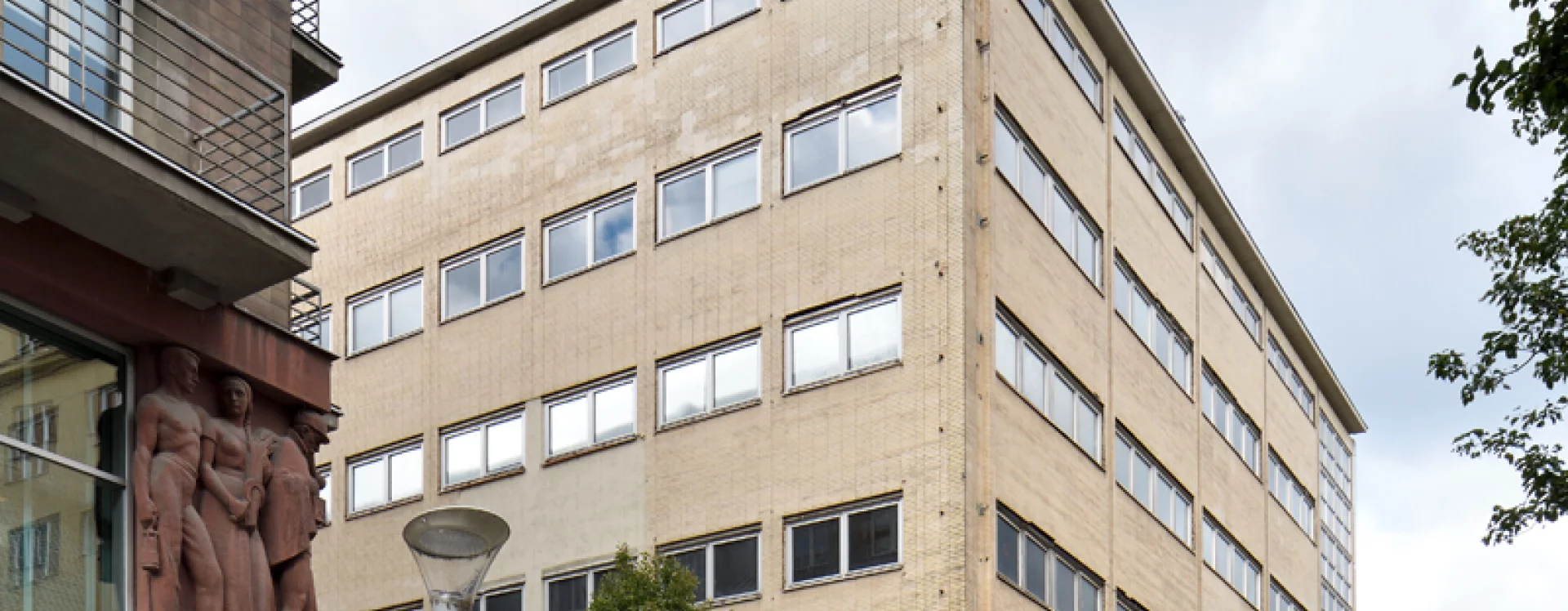
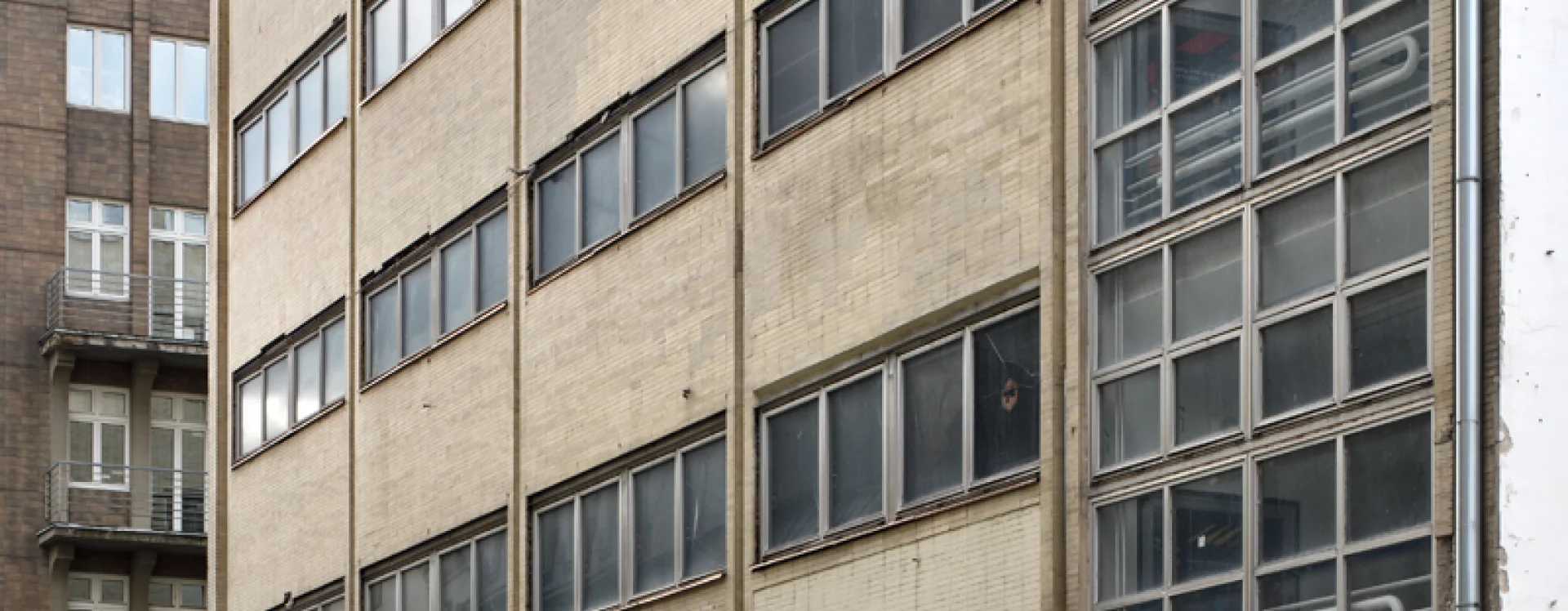
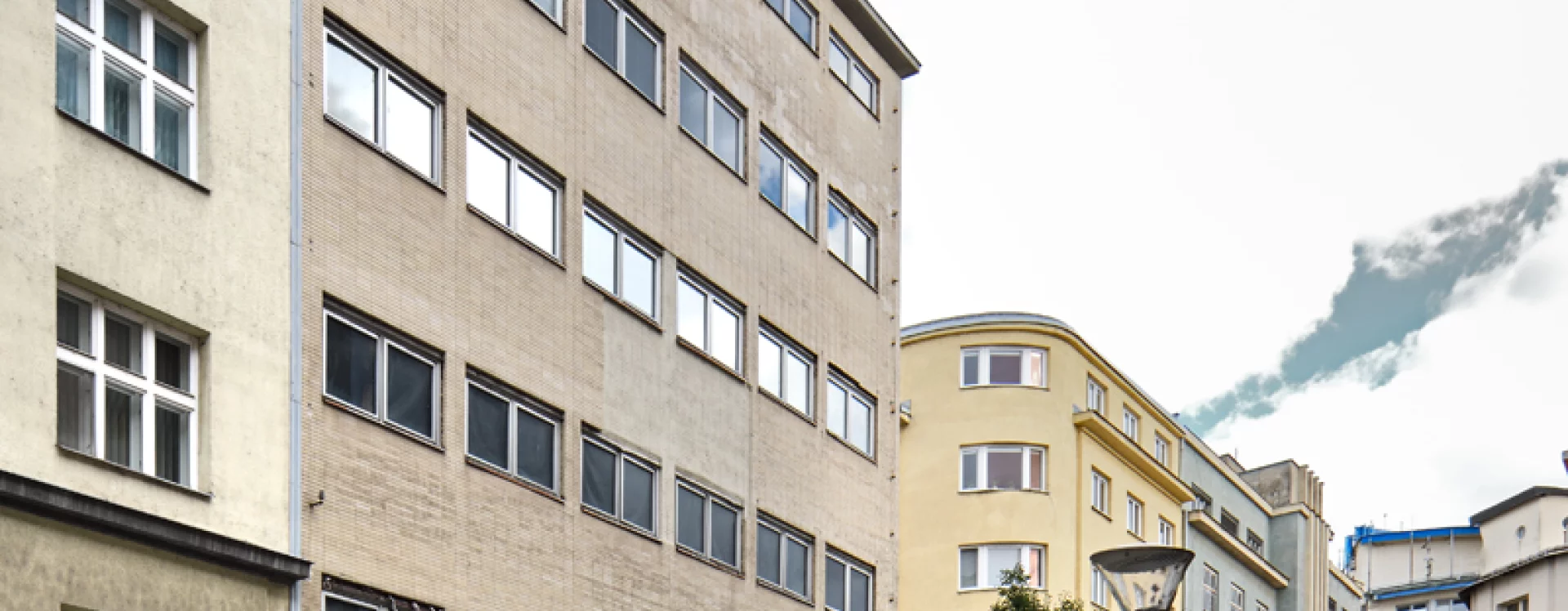
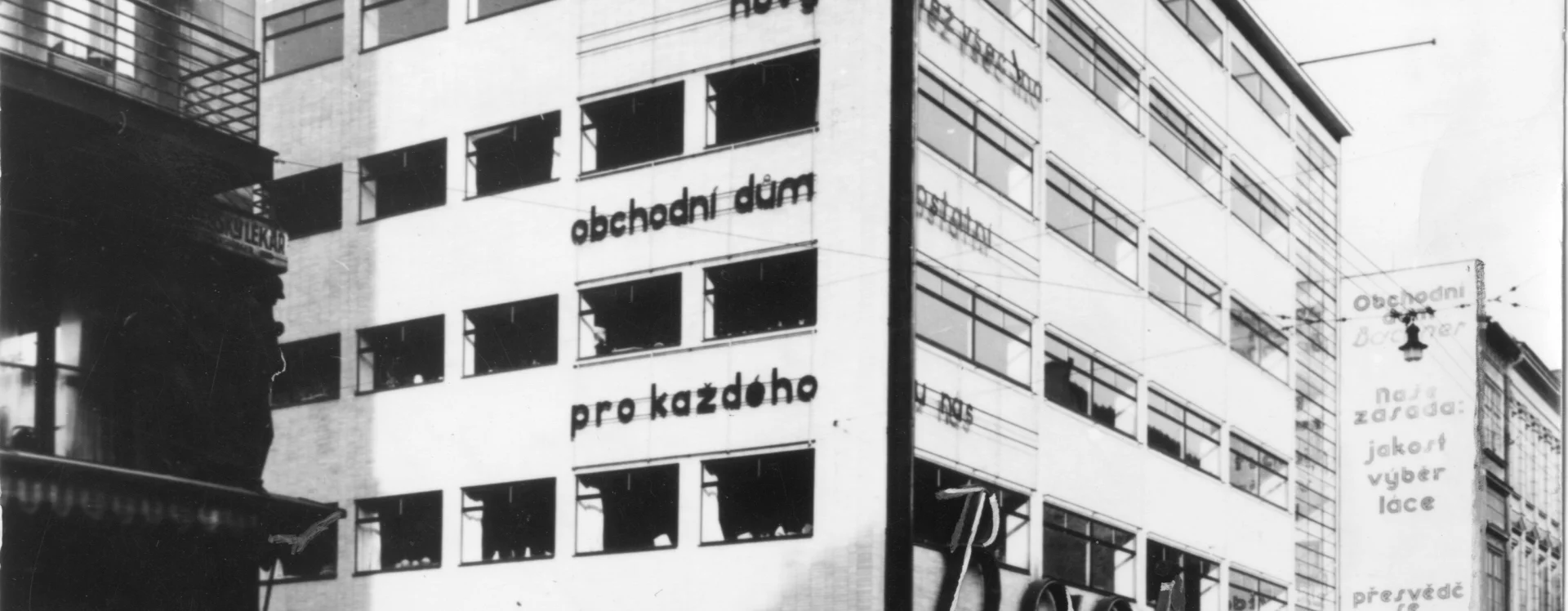
For the design of the new building, Bachner turned to the already renowned Erich Mendelsohn, who had gained international fame in the early 1920s with his expressionist sketches and projects, such as the Einstein Tower in Potsdam. Although Mendelsohn continued to develop expressionist ideas during the 1920s, towards the end of the decade his work increasingly incorporated the restrained forms of the New Objectivity. This tendency is evident not only in the villa Am Rupenhorn that he designed for himself, but also in the Bachner Department Store in Ostrava. The six-storey building, with a reinforced-concrete structure infilled with brick and arranged on an L-shaped plan, takes advantage of its prominent corner location at the intersection of Zámecká and Puchmajerova streets. The corner is accentuated by a dynamic vertical neon sign with the letter B enclosed in a circle at the level of the cornice. The ground floor is lightened by large areas of glazing with recessed entrances, forming an airy base for the upper storeys, which are separated from the lower part by a profiled metal cornice originally complemented by awnings. The upper floors are horizontally articulated by ribbon windows set in metal frames with high spandrel panels, while the vertical accent is provided by an asymmetrically positioned stair risalit illuminated by a grid of square windows. The building mass culminates in a slightly set-back cornice, enhancing the impression that the cornice floats above the body of the building. For the façade cladding Mendelsohn used ceramic Dursilit tiles produced by the Czechoslovak company RAKO. The façade facing Zámecká Street originally bore a prominent neon sign reading BACHNER, which unfortunately has not survived; today a symbolic reconstruction of the sign is displayed in a shop window. In the courtyard the department store was complemented by a four-storey side wing containing offices, storage spaces, and a staff terrace, which is now enclosed by a later extension.
Mendelsohn conceived the interior of the department store as an open space articulated only by reinforced-concrete columns. The individual floors were connected by a two-flight staircase with tubular metal railings and two lifts. The high-set windows provided good daylight while preventing customers from being distracted by outside activity; their high parapets also allowed shelving to be placed along the walls. Each floor specialised in a different type of merchandise: household goods were sold on the ground floor, women’s and men’s clothing and sports equipment on the first floor, kitchenware and fabrics on the second floor, and furniture and carpets on the third floor. The building was also equipped with the most modern technical facilities of the time, including warm-air heating, air conditioning, and sanitary facilities on every floor.
Construction began in the summer of 1932 after the demolition of the school building and was completed in September 1933. Erich Mendelsohn himself did not attend the ceremonial opening; in March 1933 he emigrated to Great Britain. The Bachner family was also forced to flee in March 1939 ahead of the Nazi occupation, and the department store became a branch of the Brouk & Babka chain. After the Second World War, Erich Bachner resumed running the company, but in 1948 it was nationalised and the department store was renamed Horník. Plans for reconstruction and extension were prepared in the 1960s but were never realised. Although the building was declared a cultural monument in 1984, this status did not prevent utilitarian alterations, including the replacement of window and door fittings and the insertion of partitions between the staircase and the sales halls, which disrupted the original spatial layout. In the 1990s the ground floor was partially restored, yet the building has suffered from persistent insufficient maintenance, visible both in its exterior and interior.
In comparison with Mendelsohn’s other Central European buildings – the Weichmann Department Store in Gliwice and the Petersdorff Department Store in Wrocław – both of which have been restored and well maintained, the current state of the only work by one of the most significant architects of the twentieth century located in the Czech Republic is regrettable and represents a clear failure in the care of modern architectural heritage.
RR + MSt
Literature
Naďa Goryczková. Historie obchodního domu Bachner v Ostravě. In: Památkový ústav v Ostravě. Výroční zpráva 1998. Ostrava, 1999. s. 57–60.
Ita Heinze, Greenberg. Erich Mendelsohn … ze života / Biografisches. Ostrava, SPOK – spolek pro ostravskou kulturu, o. s., 2012. ISBN 978-80-87508-06-0.
Eva Chvalová. Obchodní domy v Moravské Ostravě v období první republiky. In: Ostrava. Příspěvky k dějinám a současnosti Ostravy a Ostravska 22. 2005, p. . 119–146. 119–146.
Průvodce architekturou Ostravy. 2009. s. 176–177. ISBN 978-80-85034-54-7.
Martin Strakoš. Erich Mendelsohn v Československu a obchodní dům Bachner. In: Regina Stephan – Martin Strakoš, Erich Mendelsohn. Dynamika a funkce, vize kosmopolitního architekta, Ostrava. Ostrava, 2009. s. 51–69.
Martin Strakoš. Ostrava industriální a moderní: Velký průvodce po architektuře 1845–1949. Praha, Paseka, 2020. s. 88. ISBN 978-80-7637-123-1.
Jindřich Vybíral. Zrození velkoměsta: Architektura v obraze Moravské Ostravy 1890–1938. Šlapanice, ERA, 2003. s. 157–163. ISBN 80-86517-94-2.
Obchodní dům Bachner. Available from: https://pamatkovykatalog.cz/obchodni-dum-bachner-13066741 [accessed 19. 11. 2025]
Obchodní dům Bachner. Available from: https://pamatkovykatalog.cz/obchodni-dum-bachner-13066741 [accessed 19. 11. 2025]
Bachner. Available from: https://bachner.cz/od-bachner/ [accessed 11. 11. 2025]
OD Bachner. Available from: https://cs.wikipedia.org/wiki/Obchodn%C3%AD_d%C5%AFm_Bachner [accessed 11. 11. 2025]