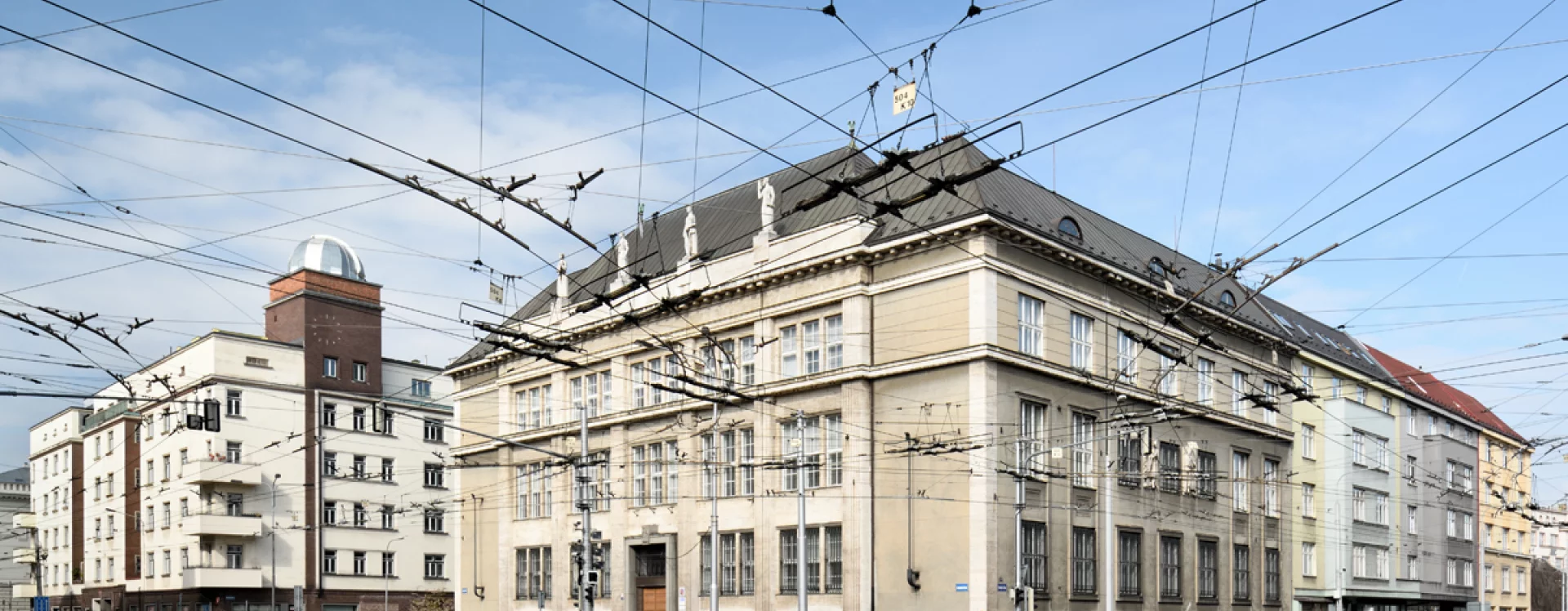

Following the establishment of the Czechoslovak Republic, Ostrava – a rapidly developing city whose significance was amplified by the creation of Greater Ostrava in 1924 – saw major institutions and enterprises, including key banks, establishing their head offices or branches there. Important architects of the era were commissioned to design these structures. Along Nádražní Street, impressive new buildings soon appeared: the Anglo-Czechoslovak Bank by Josef Gočár, the Živnostenská Bank by Kamil Hilbert, and the Unionbank by Ernst Korner. Nearby were also the branch offices of the Böhmische Escompte Bank, the Czech Industrial and Economic Bank, and the insurance company Riunione Adriatica di Sicurtà.
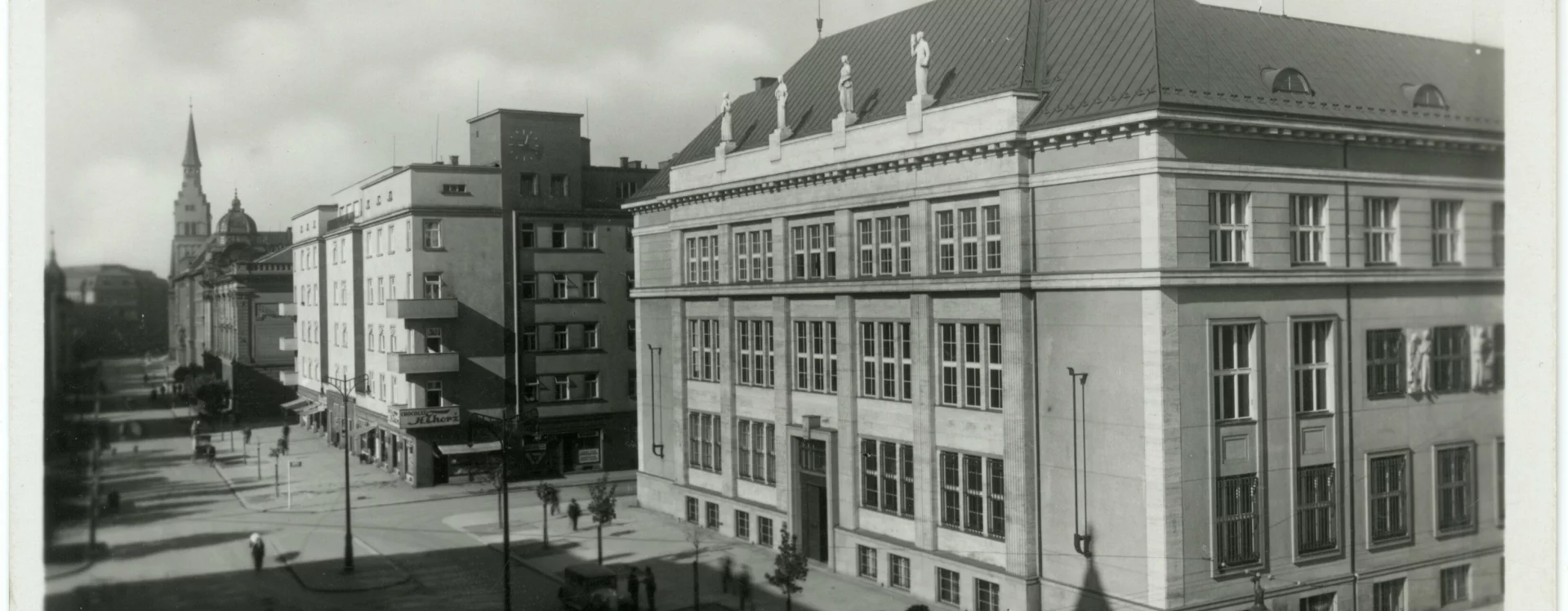
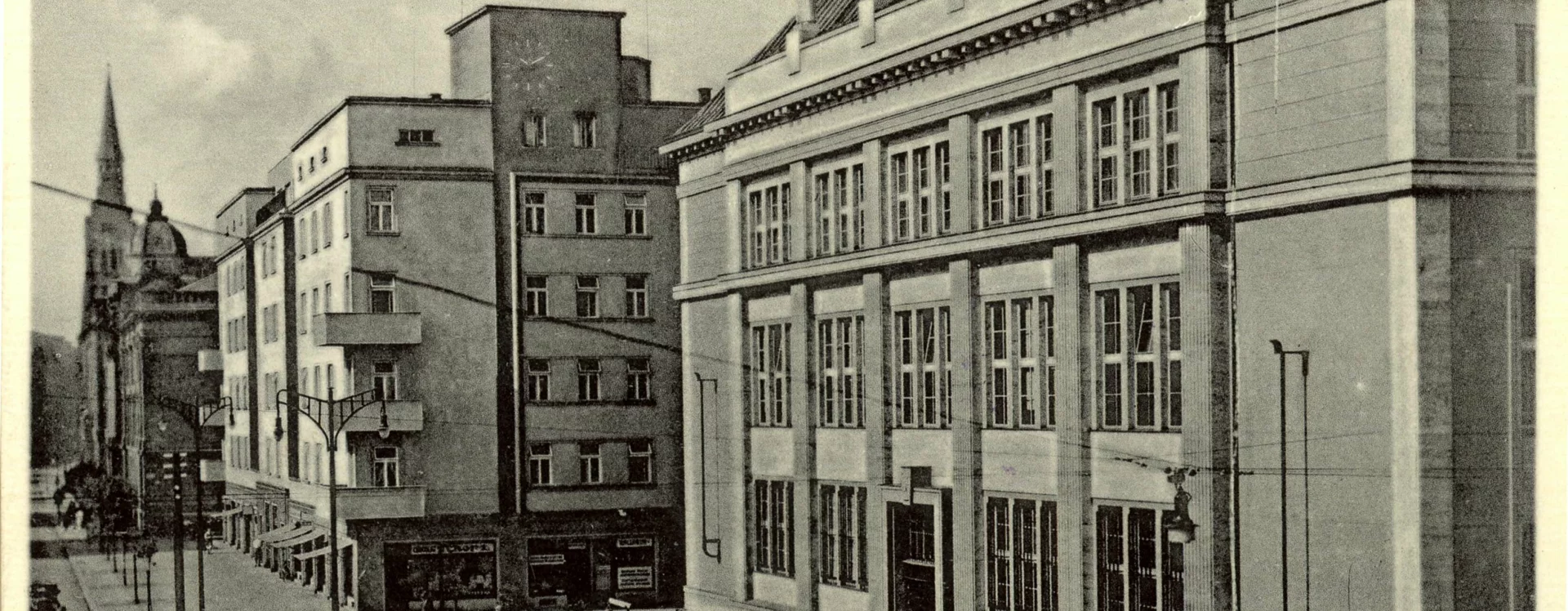
For its Ostrava branch, the National Bank of Czechoslovakia selected a site situated between the Evangelical Church on one side and the then newly rising New Town Hall on the other. At this location, Českobratrská Street formed a threshold between the historical urban core to the south and the predominantly industrial and only partially urbanised area to the north, dominated by the Jindřich Mine and a paper factory. This northern side remained sparsely built up well into the late 1920s. The construction of the New Town Hall, together with the urban development of its surroundings based on Karel Kotas’s regulatory plan, set in motion the transformation of this area into a new administrative district. The emergence of such a district had also been anticipated in the city’s regulatory plan drawn up by Vladimír Zákrejs.
In 1929, the National Bank organised an architectural competition for the design of its Ostrava branch. The winning entry was a relatively conservative project by Prague architect Jaroslav Rössler. His proposal – a palace-like building in the style of the new classicism – met with disapproval from city officials, who criticised it as an outdated “pre-war” design that would contrast sharply with the nearby New Town Hall, and especially with its constructivist tower. The bank’s leadership countered that traditional architectural forms were not inherently obsolete and that a monumental palatial structure was entirely appropriate for the institution’s needs. Nonetheless, Rössler, together with architect Karel Roštík, revised the design. The changes, however, remained partial, and the initial architectural concept was retained.
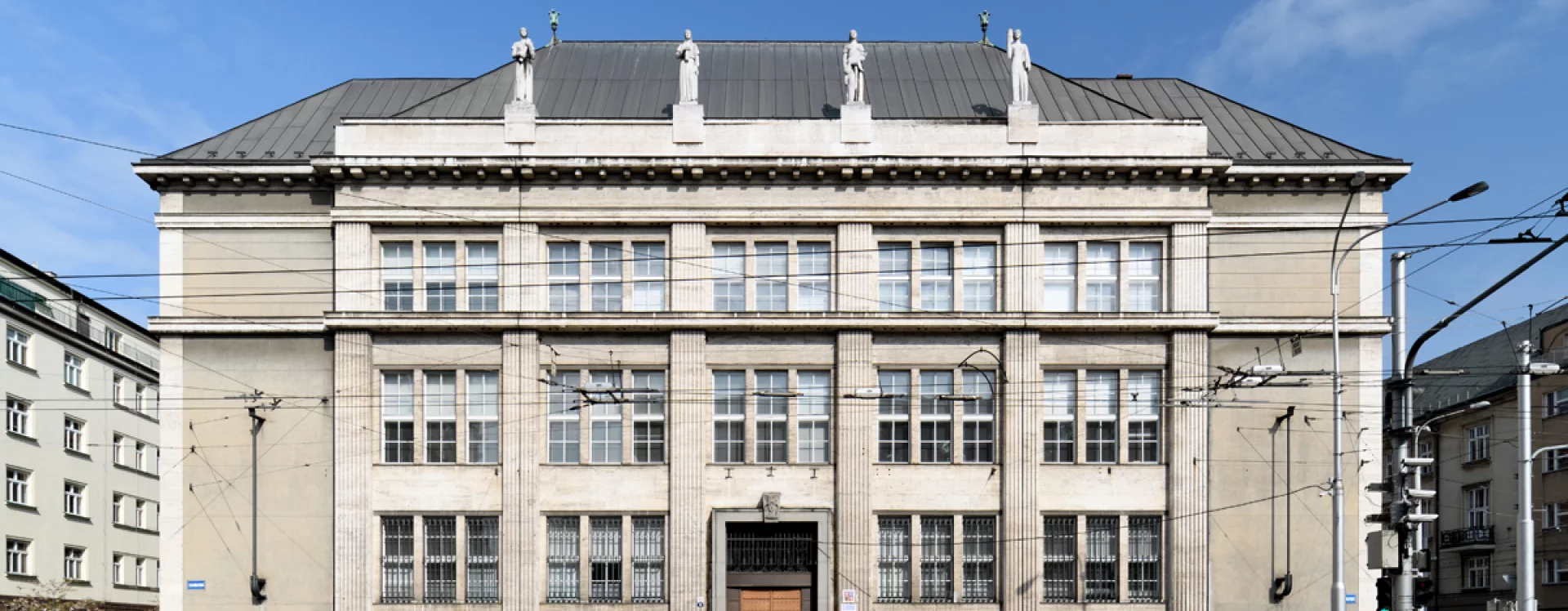
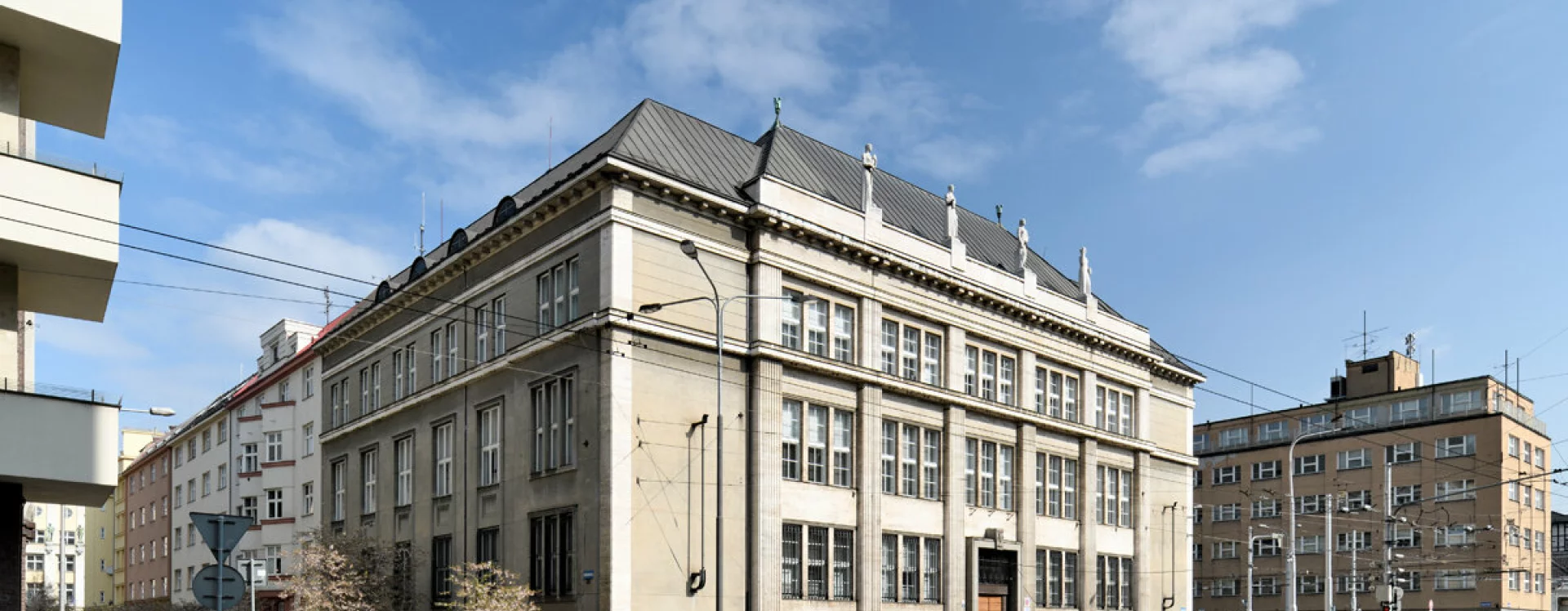
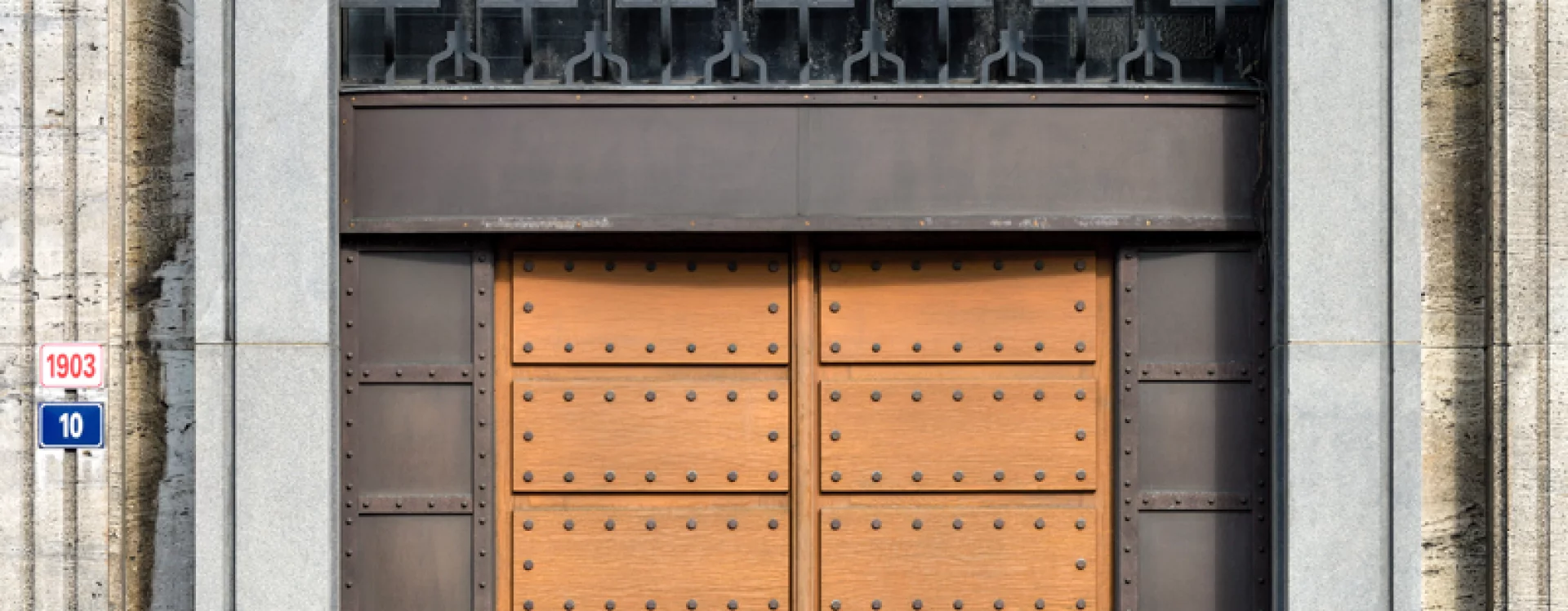
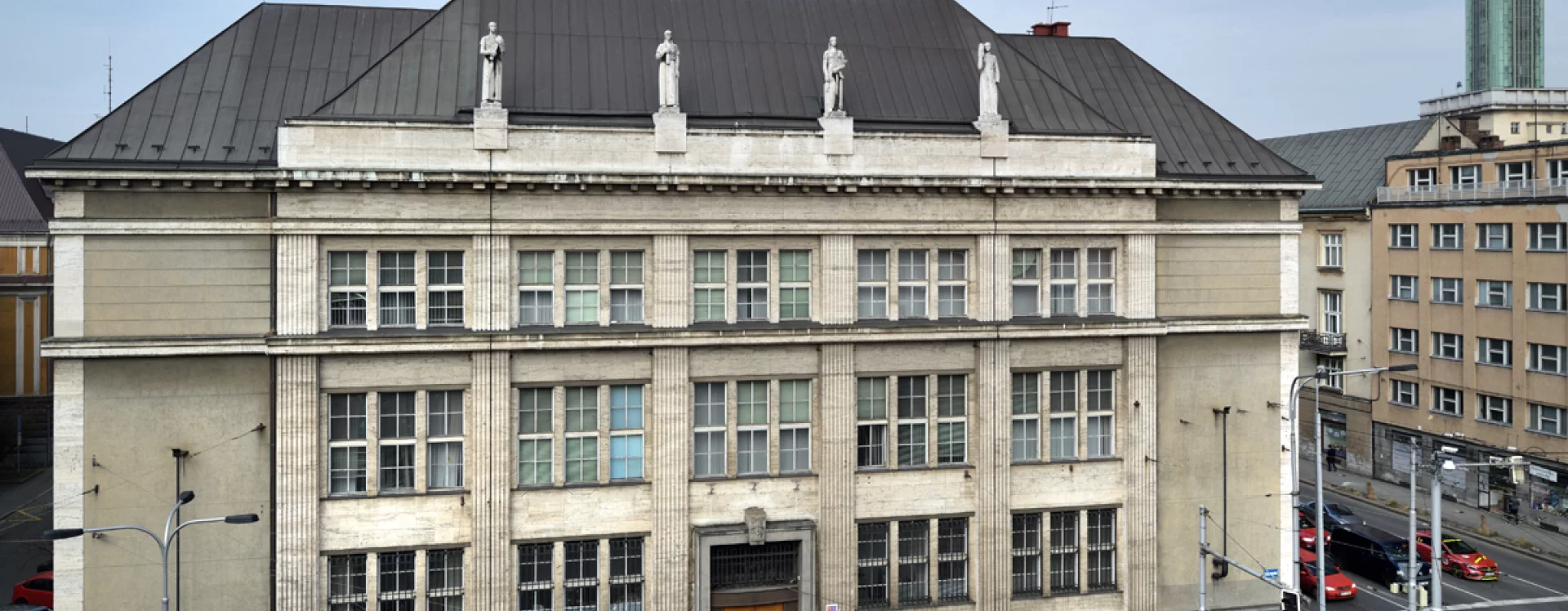
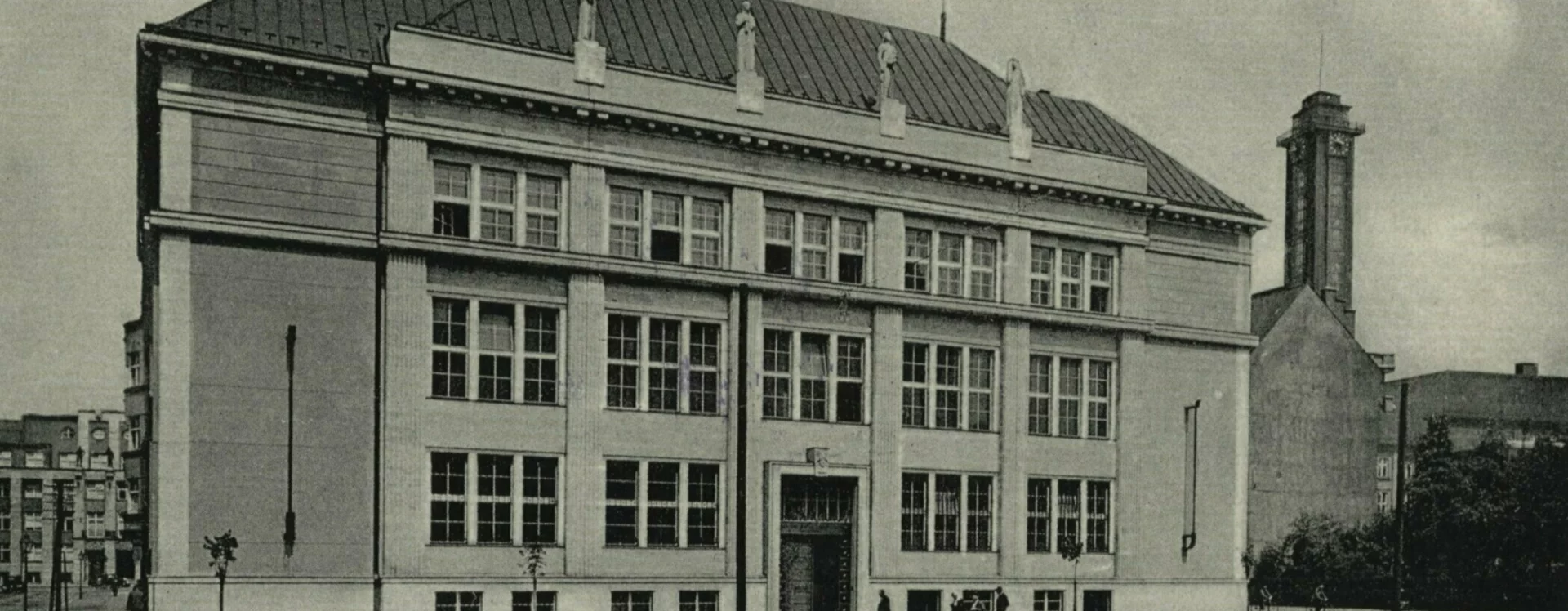
The three-storey, three-winged building with hipped roofs clad in copper sheet faces Českobratrská Street with its principal façade, which is symmetrically composed, featuring a five-axis risalit with large windows framed by vertically fluted pilaster strips. While the risalit is clad in travertine, the remaining façade surfaces, the plinth, and the portal adorned with the head of the god Mercury are finished in artificial stone. The architects equipped the basement and ground-floor windows, as well as the lightwell above the main entrance, with decorative grilles.
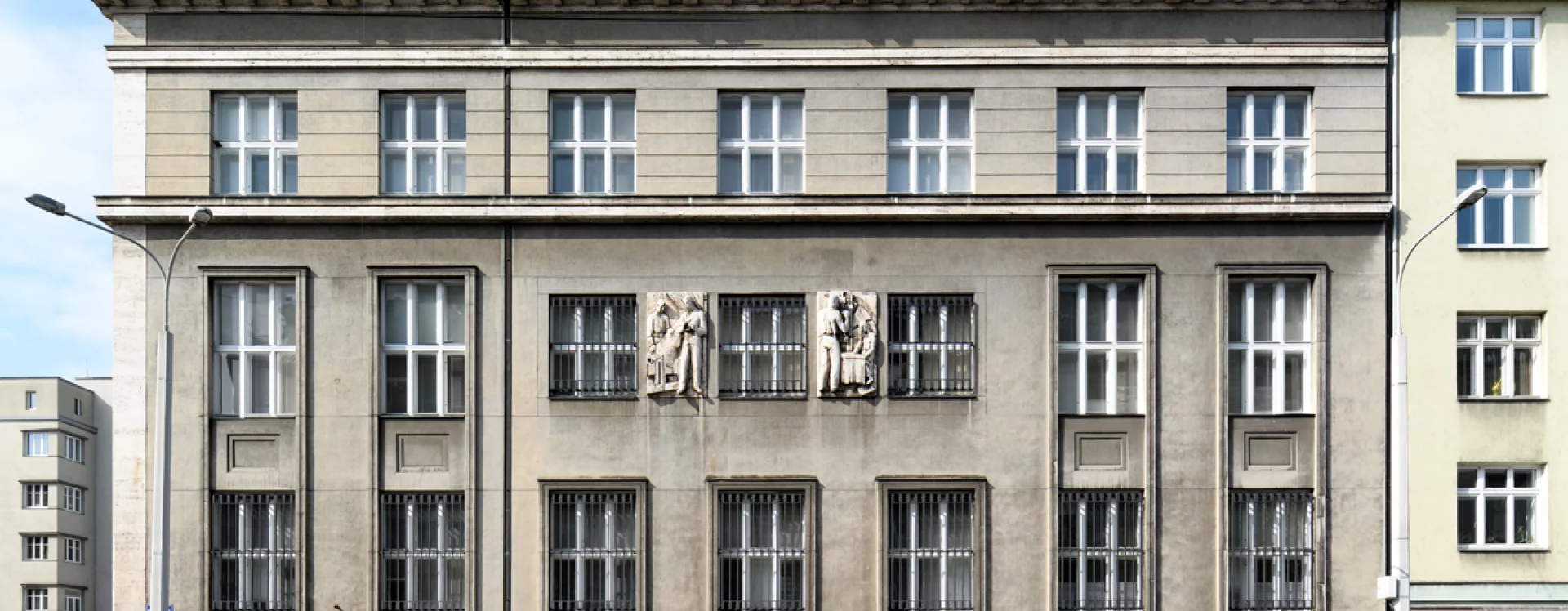
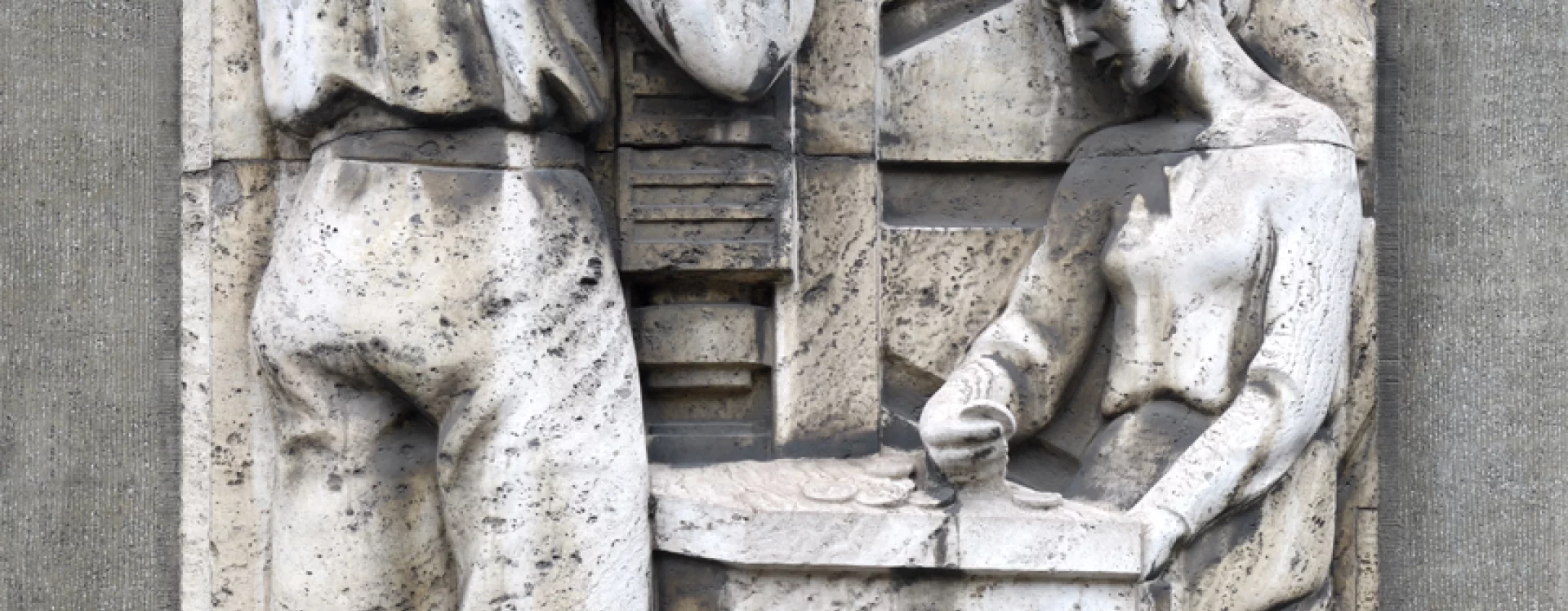
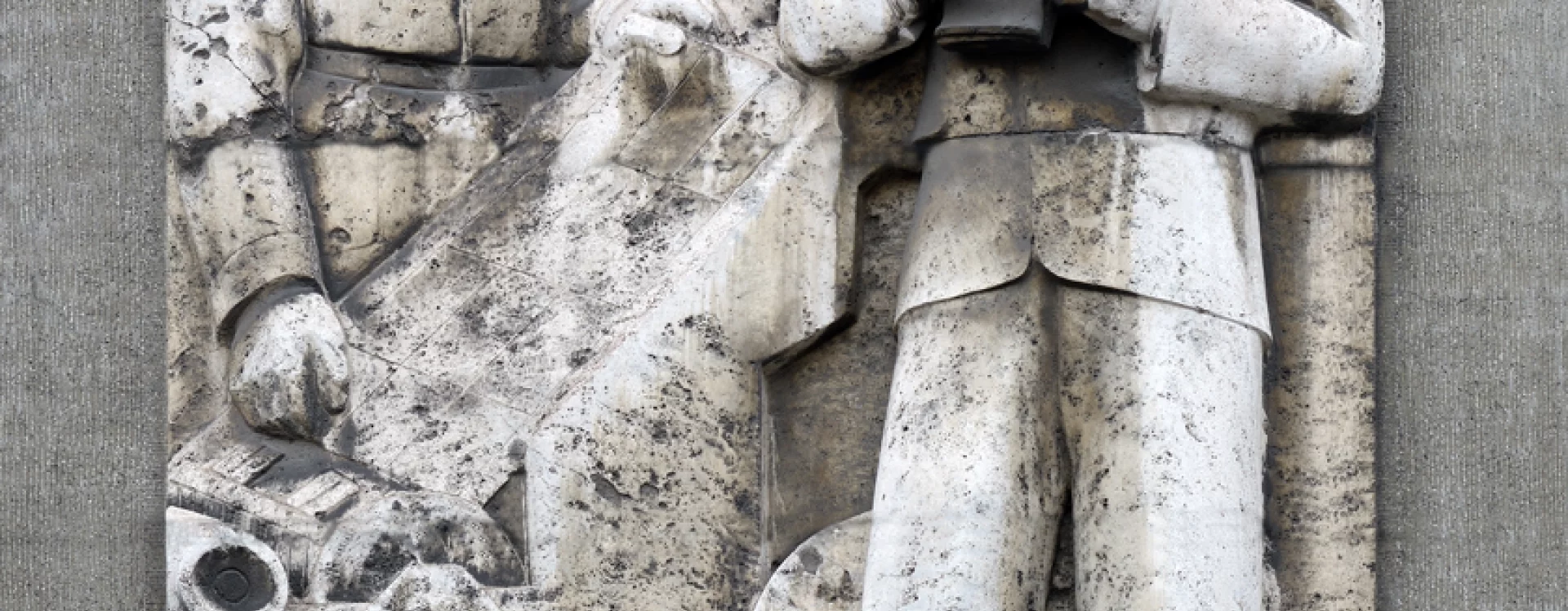
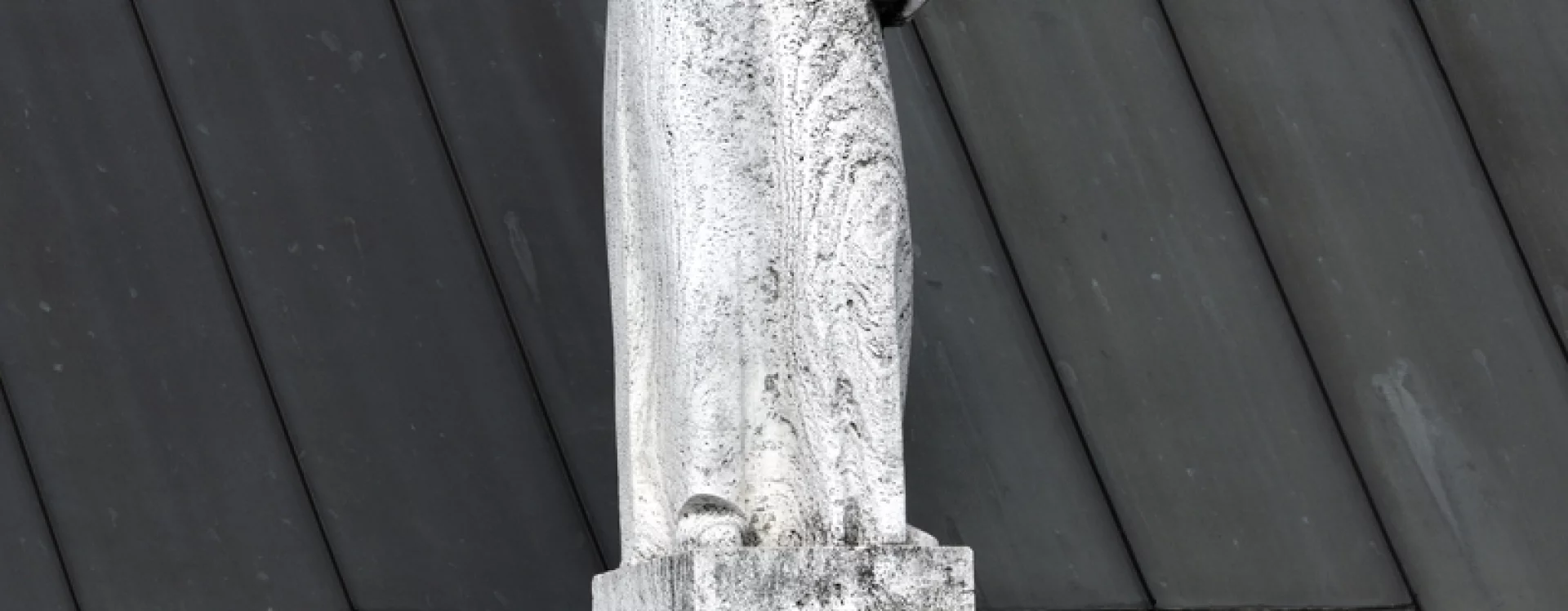
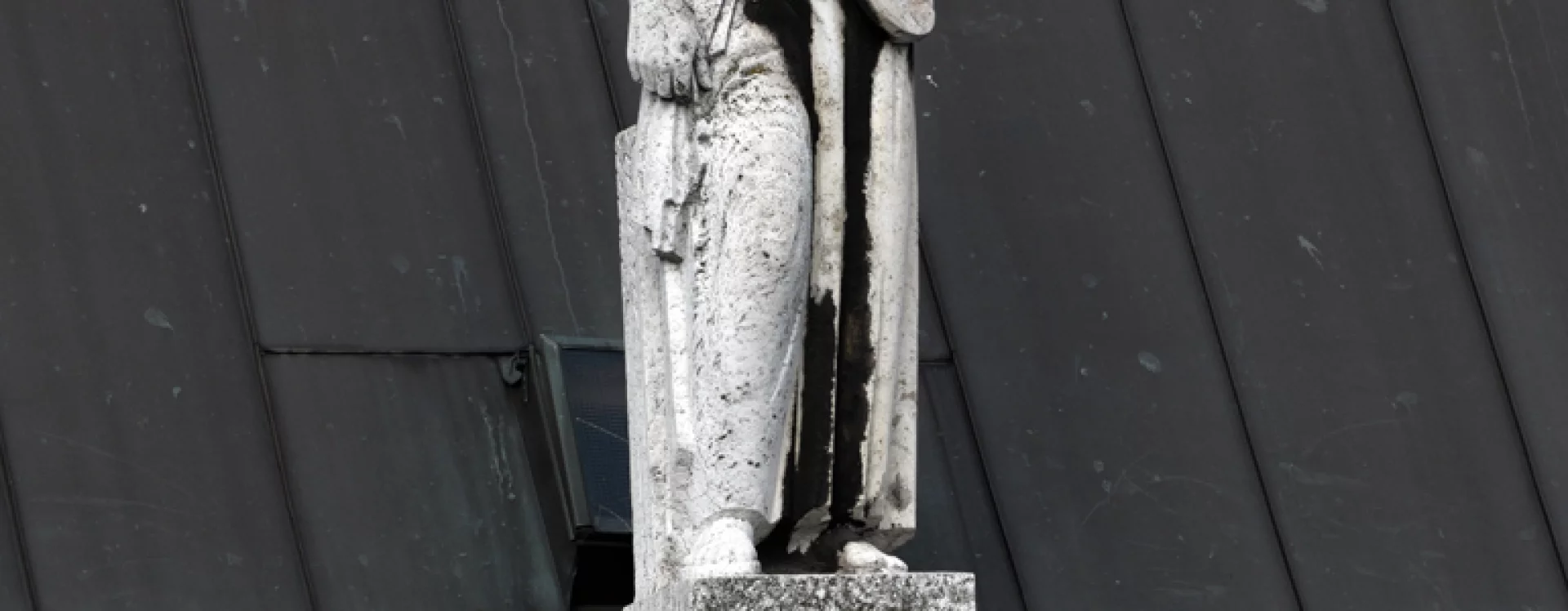
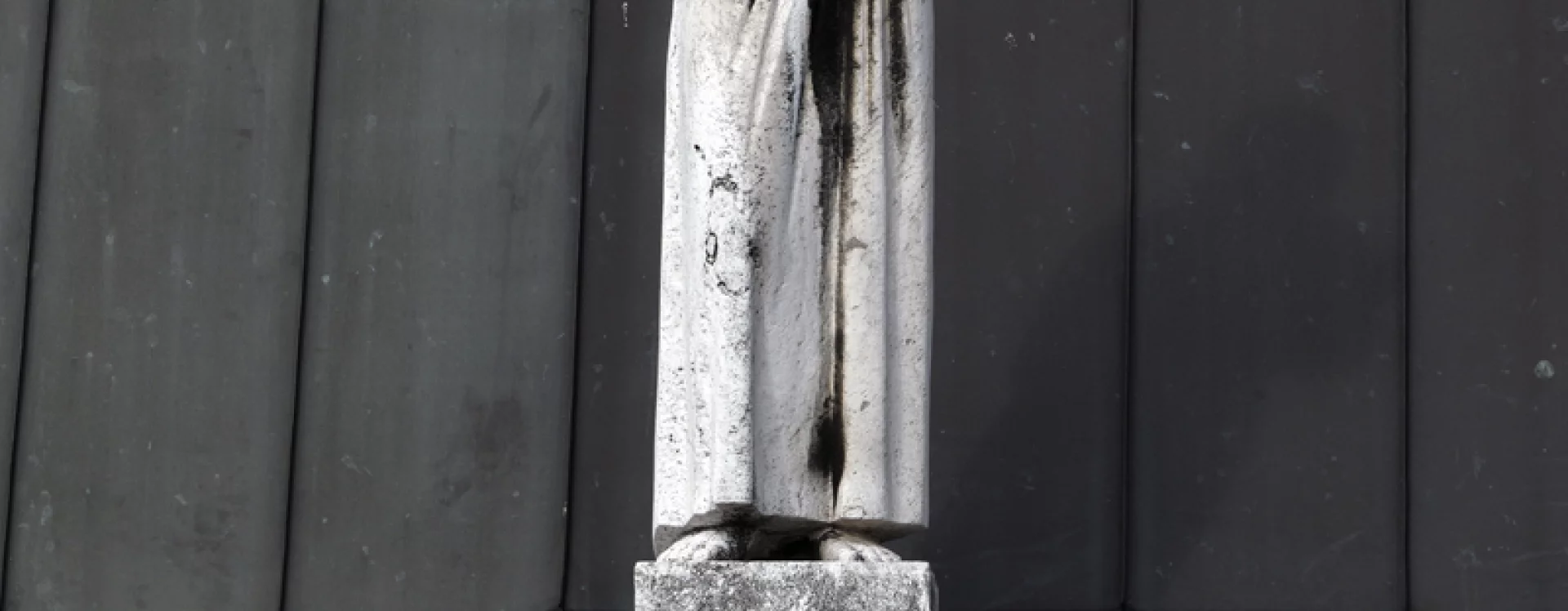
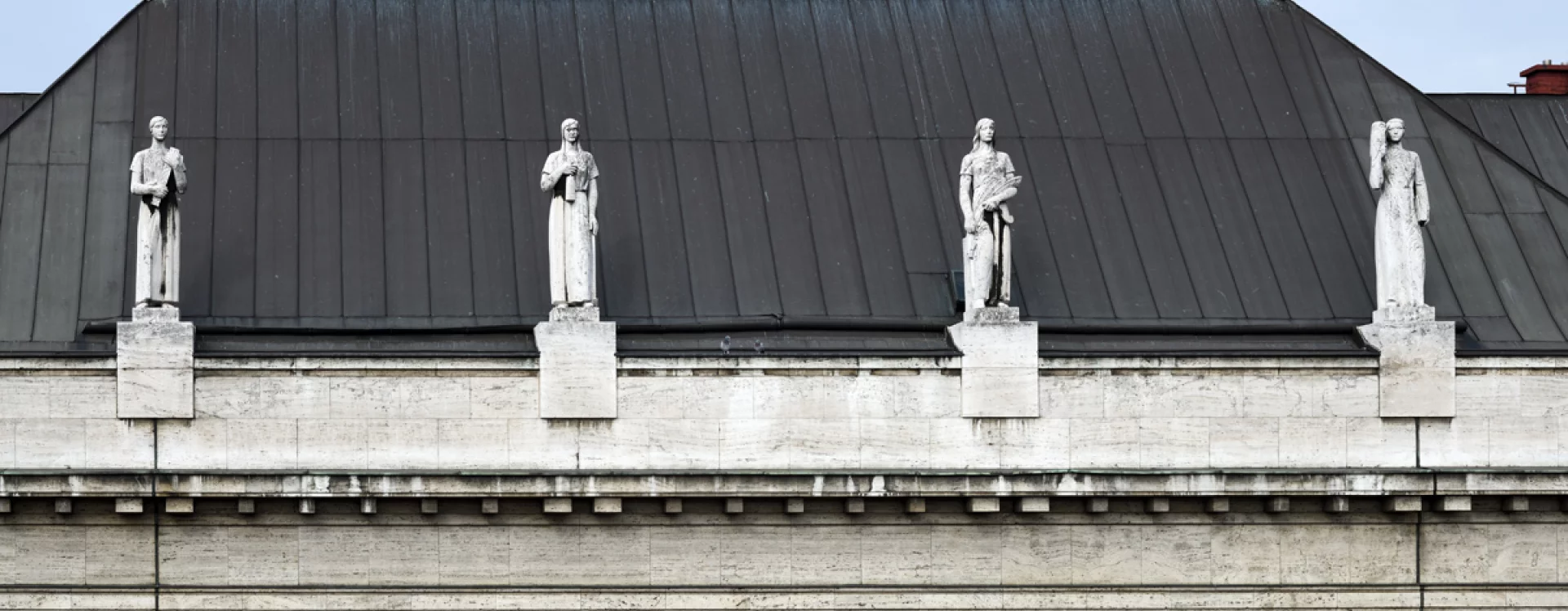
Above the crowning cornice, the attic is ornamented with four sculptural groups by the Prague sculptor Otakar Švec (later known as the author of the monumental Stalin statue in Prague), representing allegories of Justice (a woman with fasces), Agriculture (a woman with a sheaf of grain), Industry (a woman with a miner’s lamp), and Science (a woman with a book and an owl). Two further reliefs by the sculptor Břetislav Benda – Modern Coin Minting, and Printing and Verification of Banknotes – are placed on the façade facing Sokolská Street. Several original interiors have survived, including the entrance hall, staircase, corridors with marble cladding, and the original double-leaf doors. The vault rooms, equipped with armoured shutters and doors, have also remained intact.
Today, the building serves as the seat of the Police of the Czech Republic.
RR
Literature
Renata Skřebská. Architektura a udržitelný rozvoj/AUR14. Praha, 2015. p. 148–152.
Renata Skřebská. Oslava všedního dne. Architektonická plastika s atributy práce, dopravy, obchodu a peněžnictví. Ostrava, NPÚ, ÚOP v Ostravě, 2020. p. 144–145. ISBN 978-80-88240-21-1.
Průvodce architekturou Ostravy. 2009. p. 73. ISBN 978-80-85034-54-7.
Martin Jemelka, Gabriela Pelikánová, Romana Rosová, Martin Strakoš, Radomír Seďa. Jan Prokeš: Ostrava na cestě k velkoměstu. Ostrava, Fiducia, 2023. p. . 38–113. ISBN 978-80-907934-5-3.
Jindřich Vybíral. Zrození velkoměsta: Architektura v obraze Moravské Ostravy 1890–1938. Šlapanice, ERA, 2003. p. 118. ISBN 80-86517-94-2.
Národní banka československá - Policie ČR. In: Památkový katalog. Available from: https://pamatkovykatalog.cz/narodni-banka-ceskoslovenska-23309155 [accessed 7. 10. 2025]
Památka 31. Available from: https://www.ostravskepamatky.cz/pamatka/show/31 [accessed 6. 10. 2025]
Sources
Nová registratura. fond Archiv města Ostravy,, inv. no. kart. 339, Archiv města Moravské Ostravy.