Villas represent a specific architectural type. They are buildings that aristocracy or wealthy bourgeoisie constructed for themselves in the suburbs or countryside. In modern times, this term is used for distinguished individual housing. In Moravská Ostrava, the first villa districts began to emerge from the second half of the 19th century, particularly to the north around Nádražní Street and to the west towards Mariánské Hory. It was in the latter area that the Ostrava builder František Grossmann built his own villa. The plot along the road to Mariánské Hory and Opava, opposite the Jewish cemetery and close to the former miners’ colony of the Šalomoun mine, had already been laid out in 1911. Grossmann purchased it in 1917, but only five years later did he begin constructing a rather ambitiously conceived villa to his own design, which connected to an office building serving as the head office of his construction company.
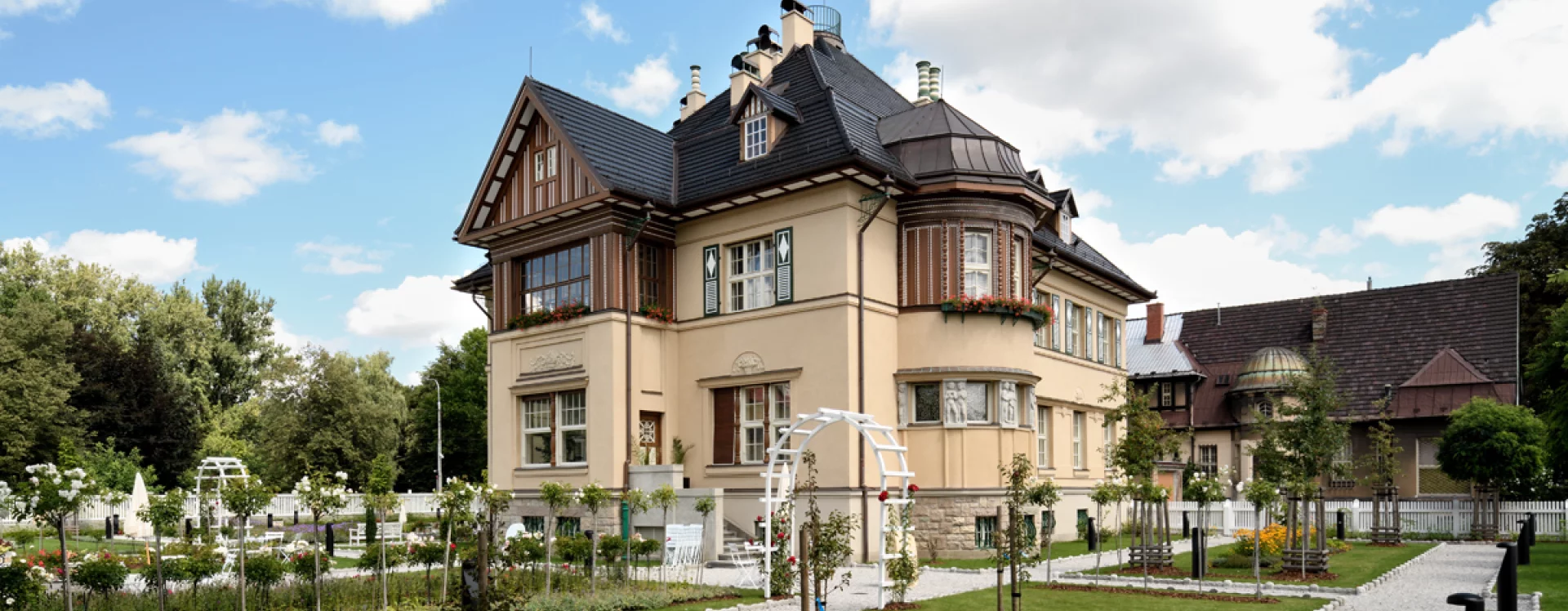
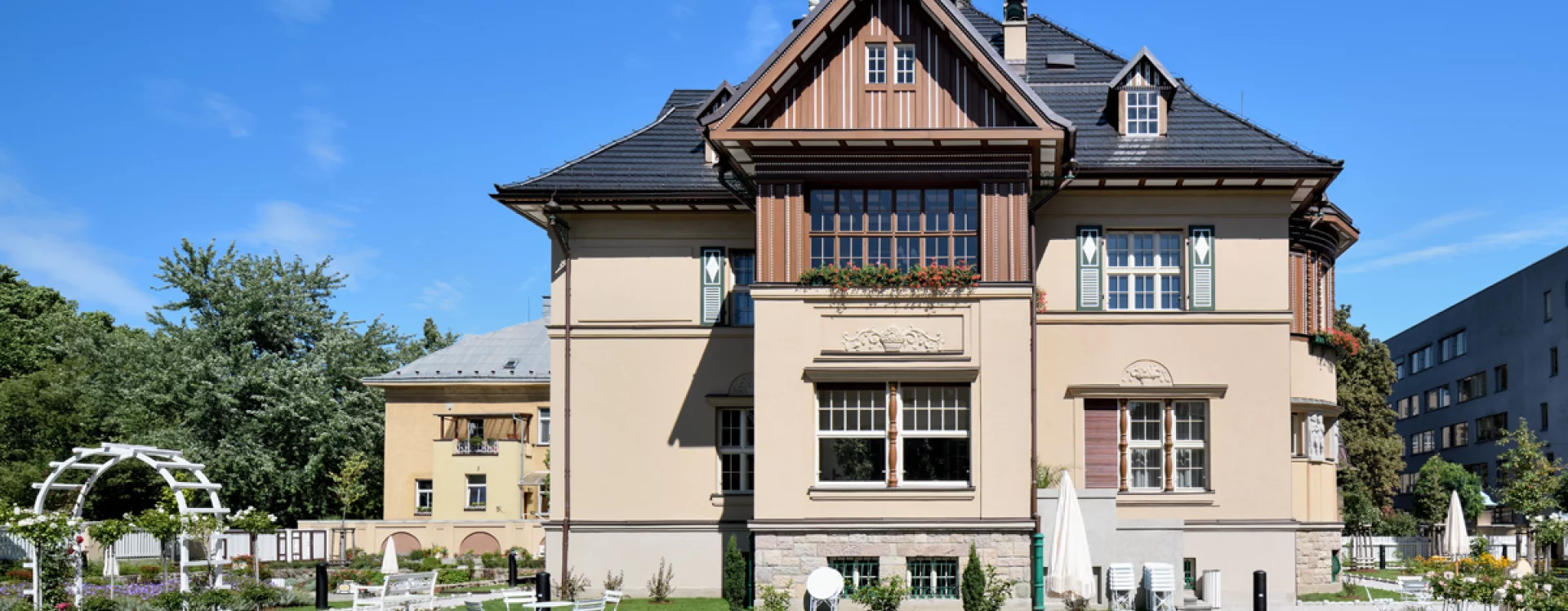
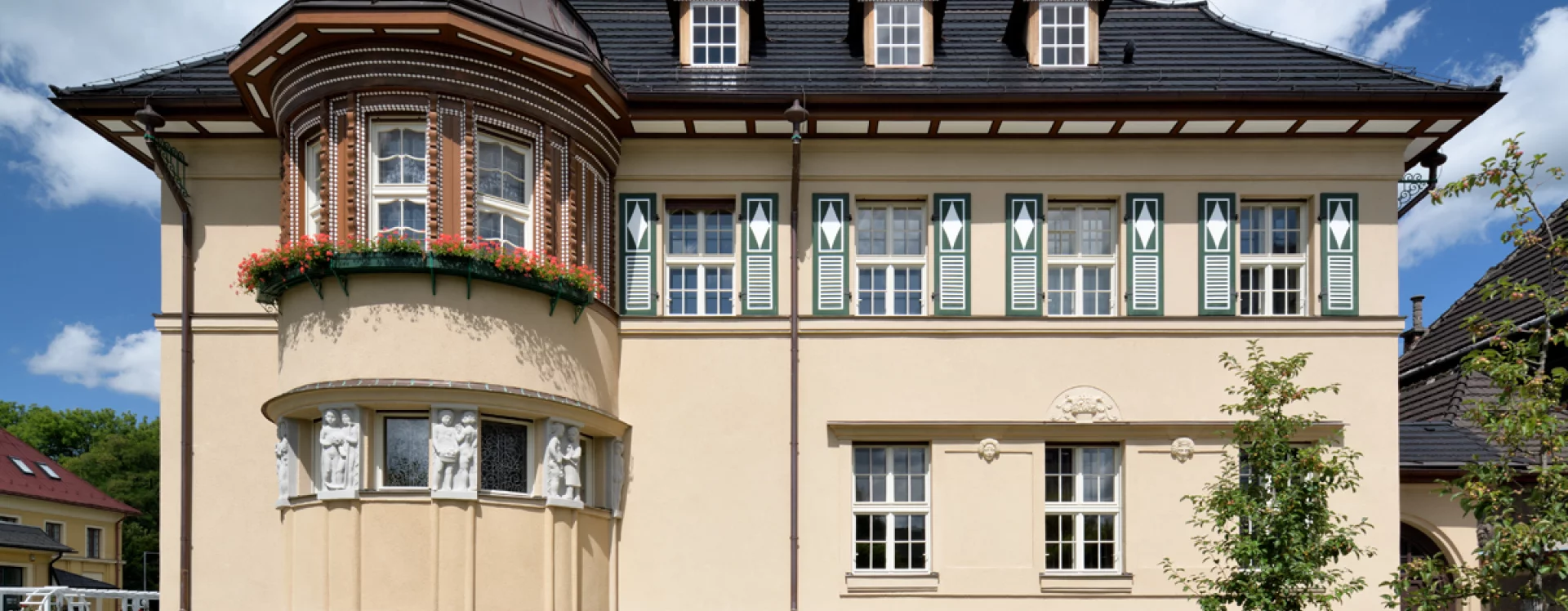
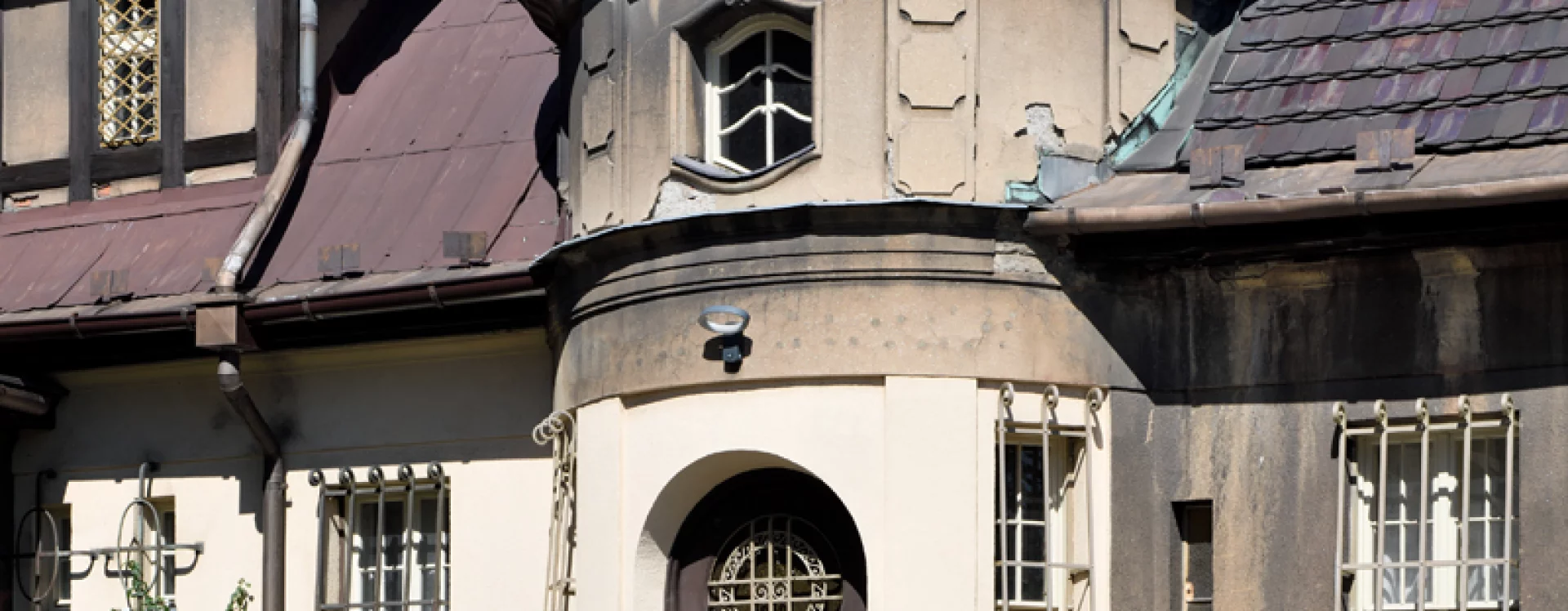
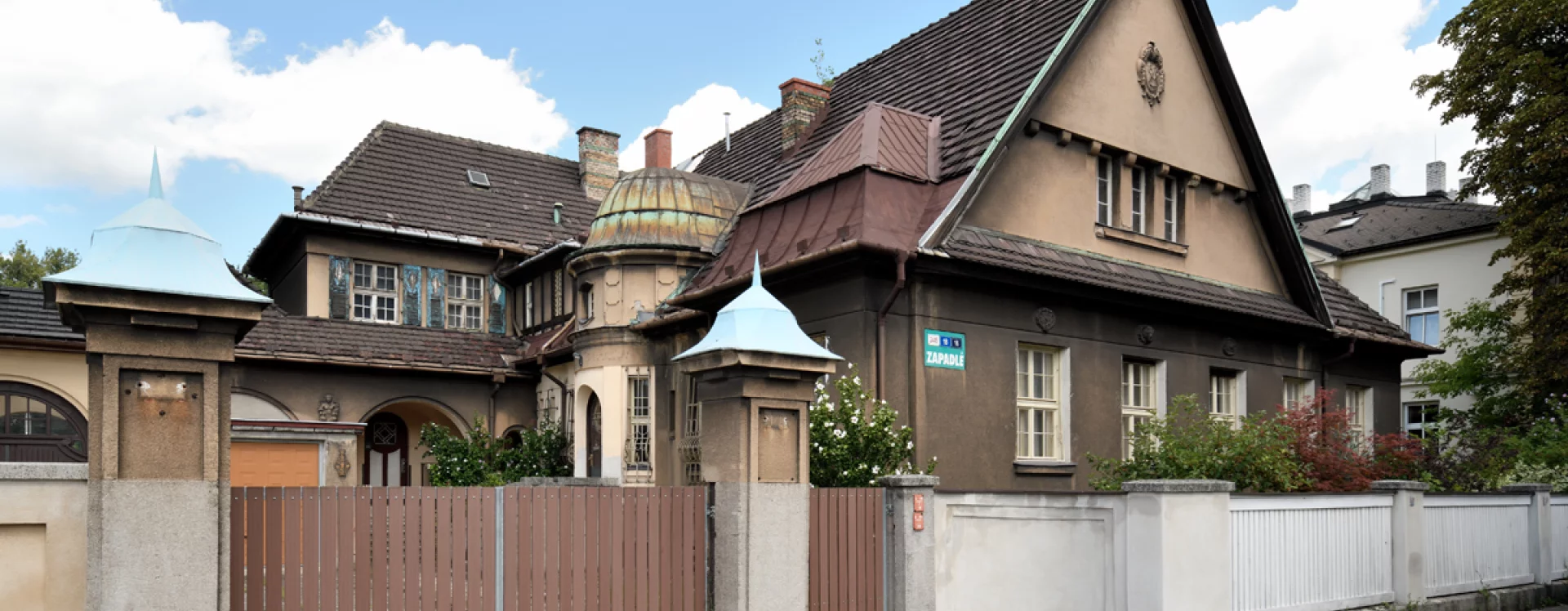
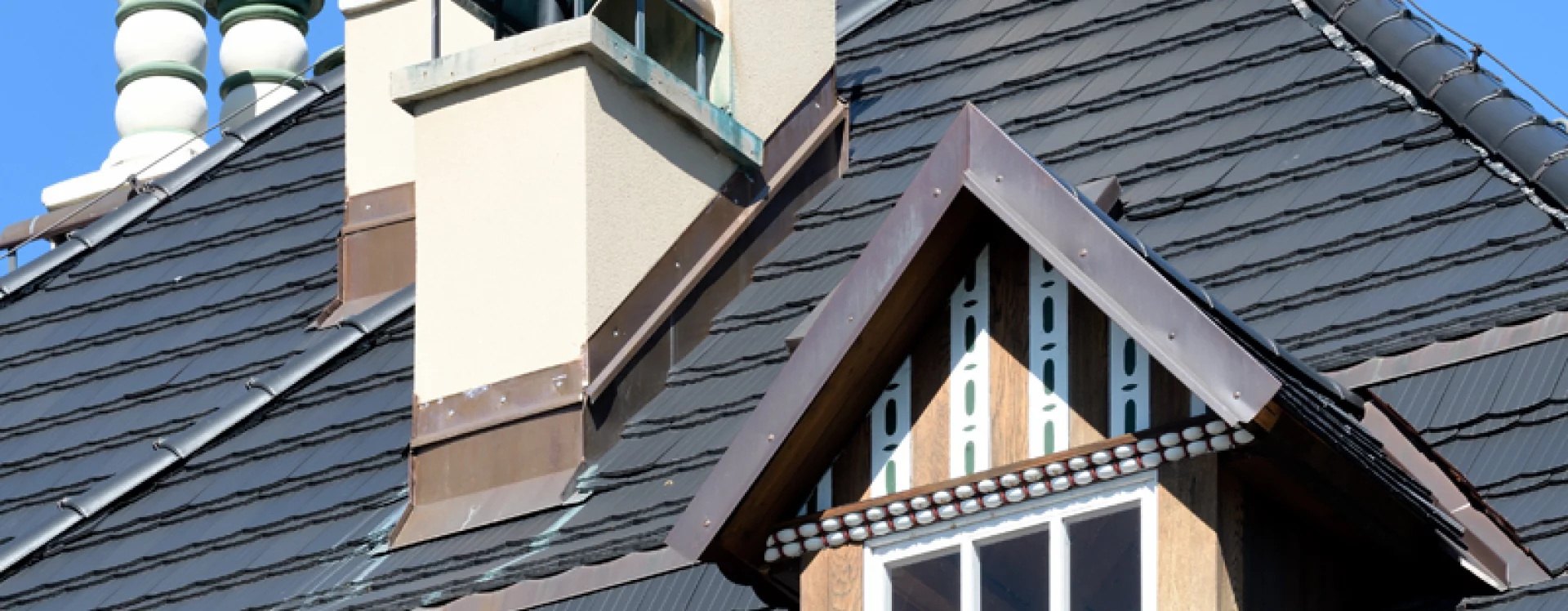
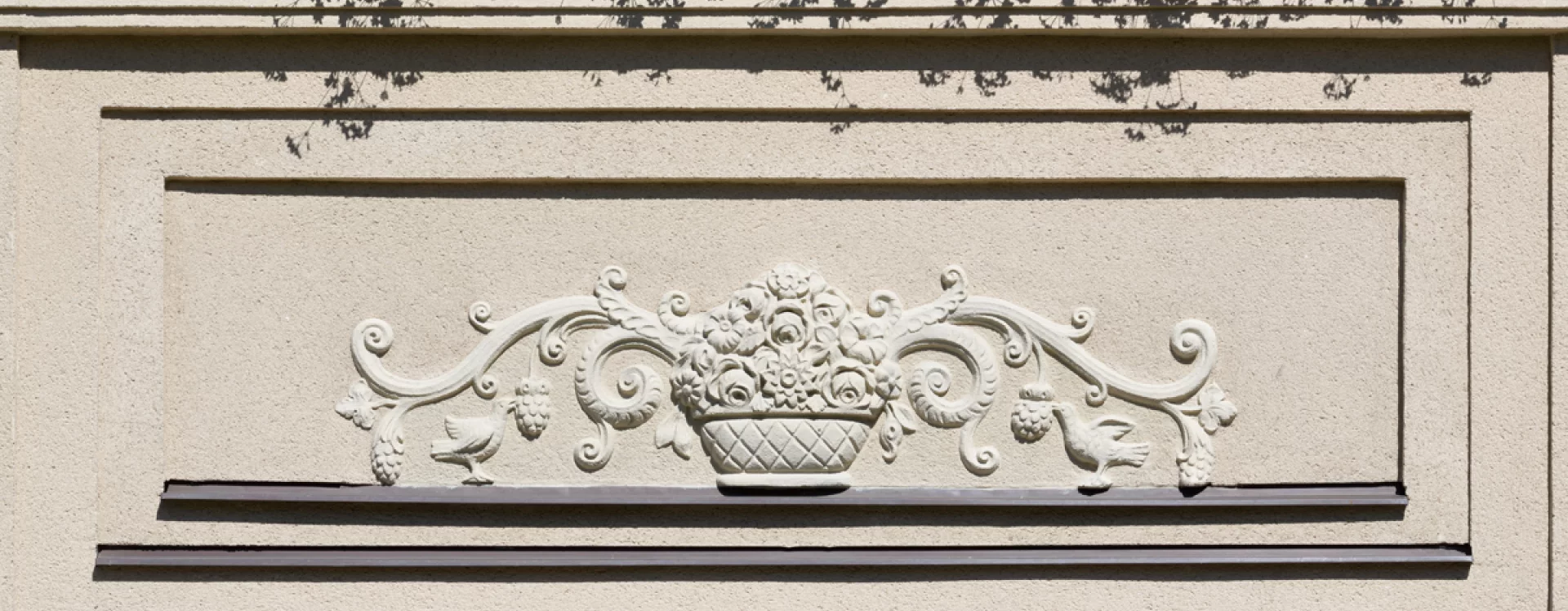
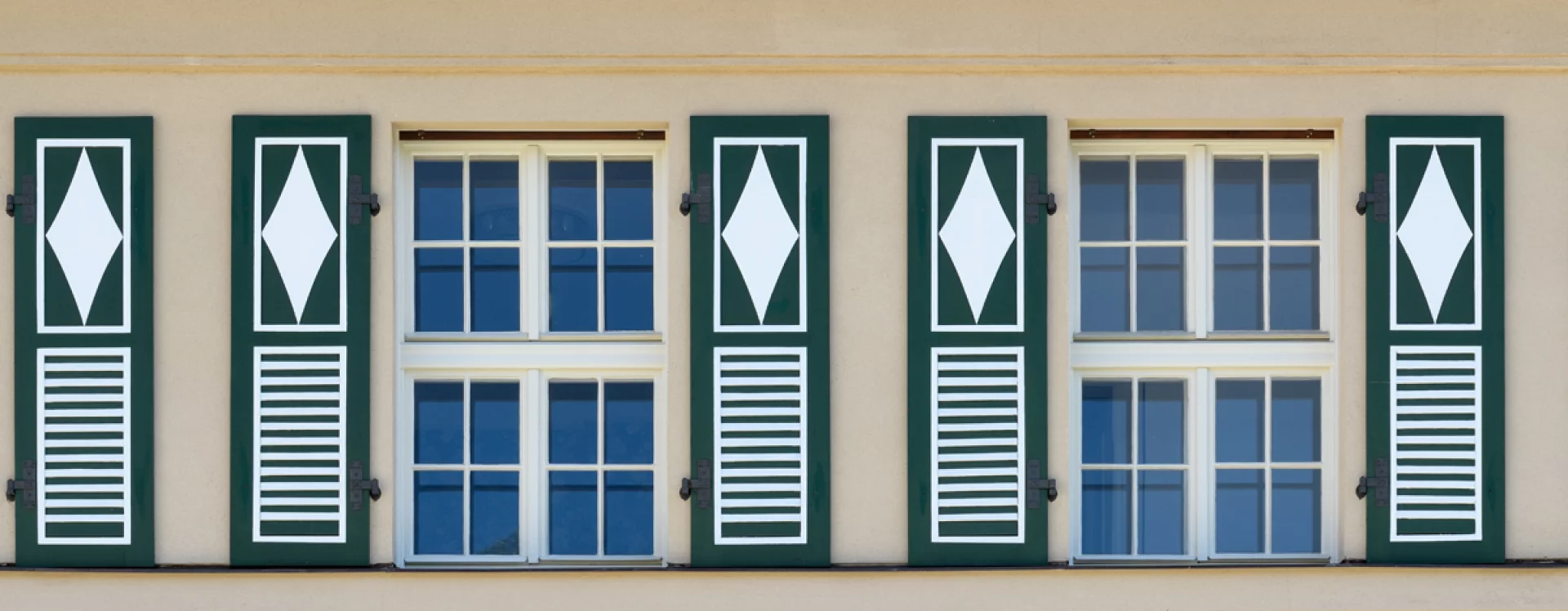
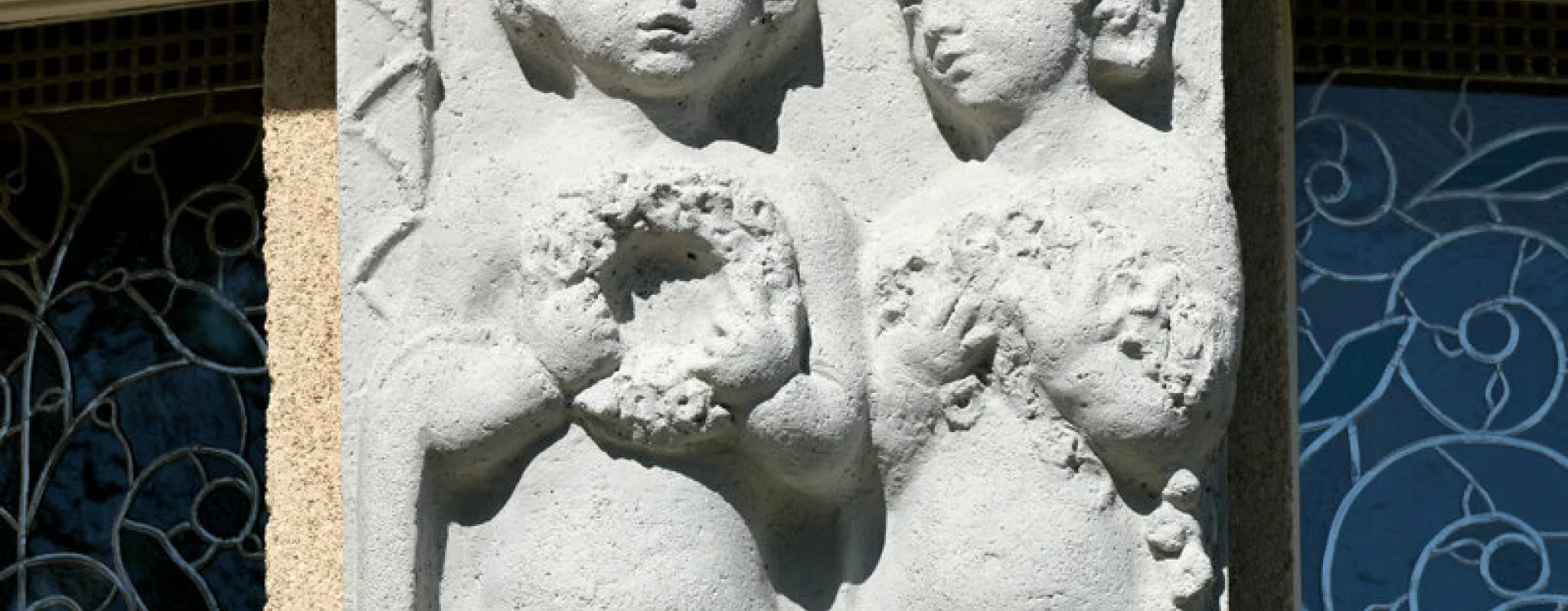
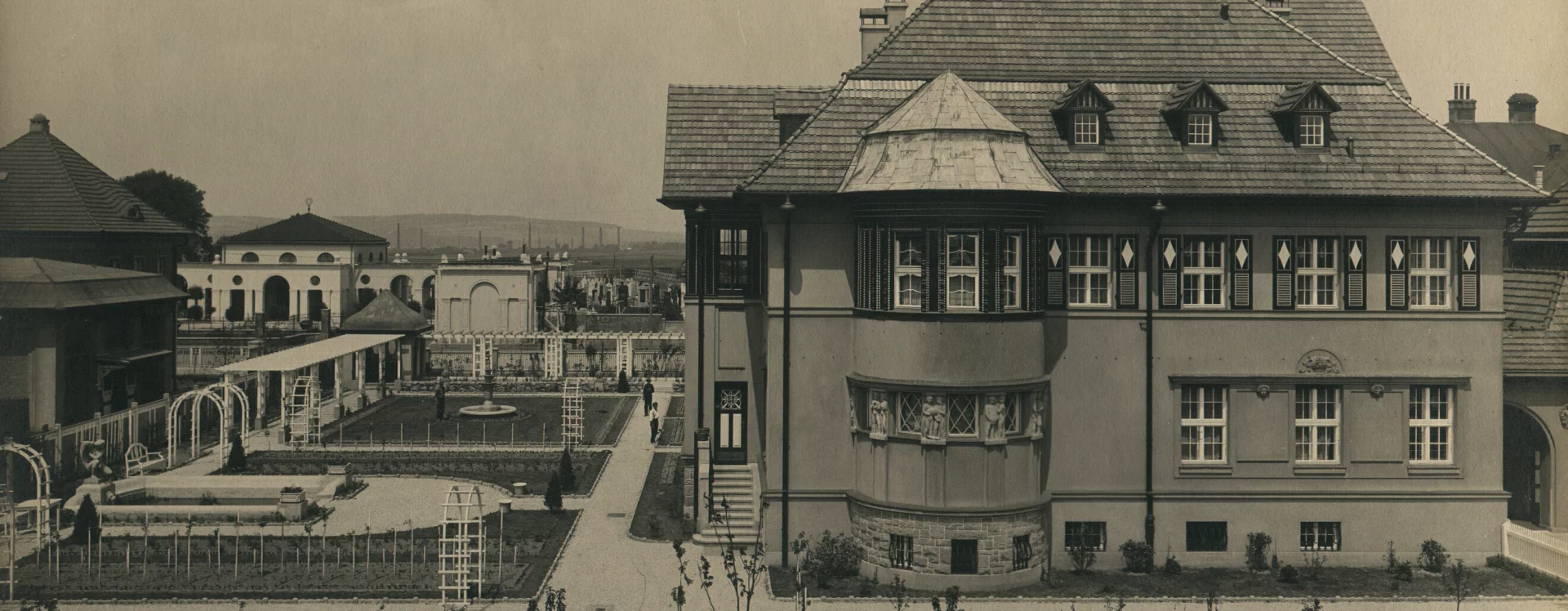
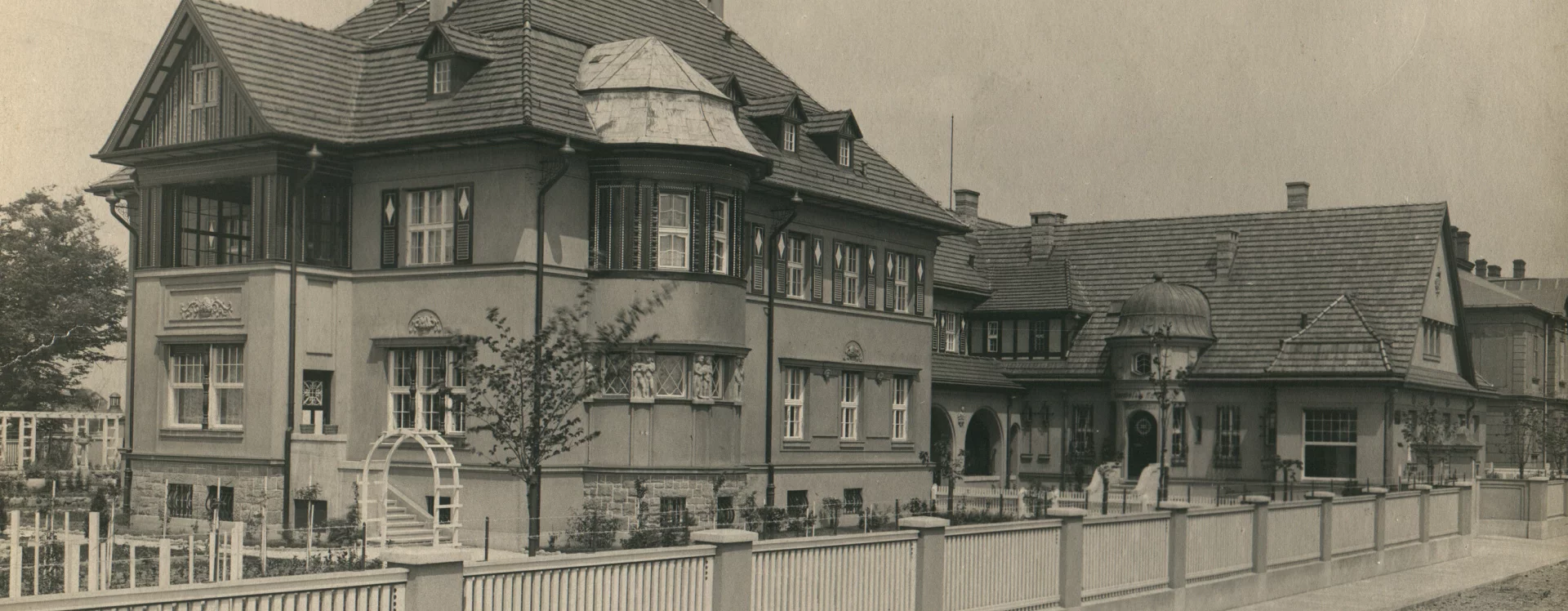
The two-storey residential building, set on a stone plinth, has an almost square floor plan, and its mass is asymmetrically articulated by projections for the salon, veranda with conservatory, and service staircase. The smooth façades, painted yellow and articulated only by a string course, were decorated with stucco vegetal motifs in recessed panels above the ground-floor windows, figurative reliefs with putti between the windows of the cylindrical risalit of the hall, carved wooden elements in the window frames, and green-and-white wooden shutters. The gables and the upper levels of the risalits, as well as the roof overhangs, were clad in timber panelling and coffered elements in contrasting brown and white paint. At the centre of the hipped roof rises a wooden tower, projecting above the roofline in the form of a low turret with a gallery. The villa was connected by a passageway to the neighbouring building, which housed the offices of Grossmann’s construction firm and his brother Richard’s flat.
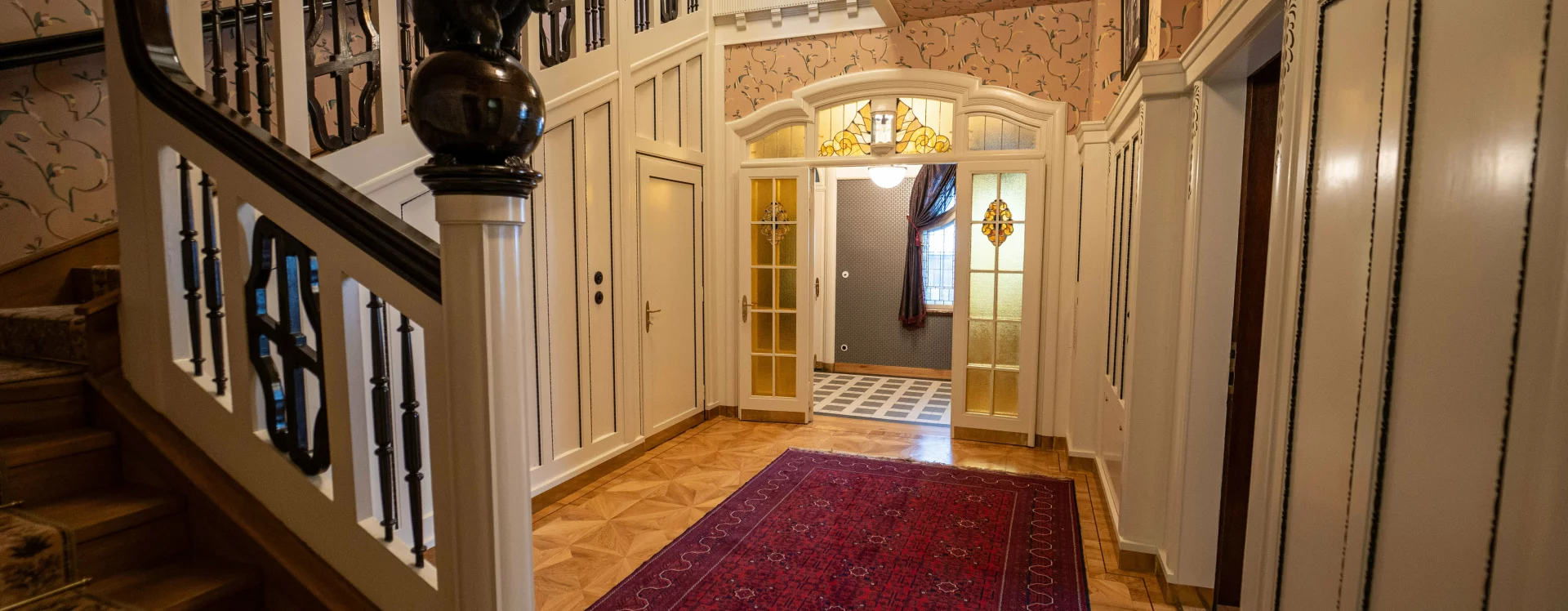
Grossmann designed the villa in the spirit of Neo-Biedermeier and late Art Nouveau, styles that were already waning at the time, and which he eclectically combined with motifs of classicising traditionalism and, especially in the interiors, the decorative tendencies of the 1920s. This approach probably reflected the architect’s personal taste and at the same time functioned as a kind of “pattern book” for Grossmann’s construction company. His sources of inspiration included interior designs by members of the Wiener Werkstätte, such as Otto Prutscher and Josef Hoffmann, and probably also the work of the architect Hermann Muthesius, whose books on English domestic architecture may have influenced the layout with a central (albeit relatively modest) hall with a two-flight staircase leading to the upper floor.
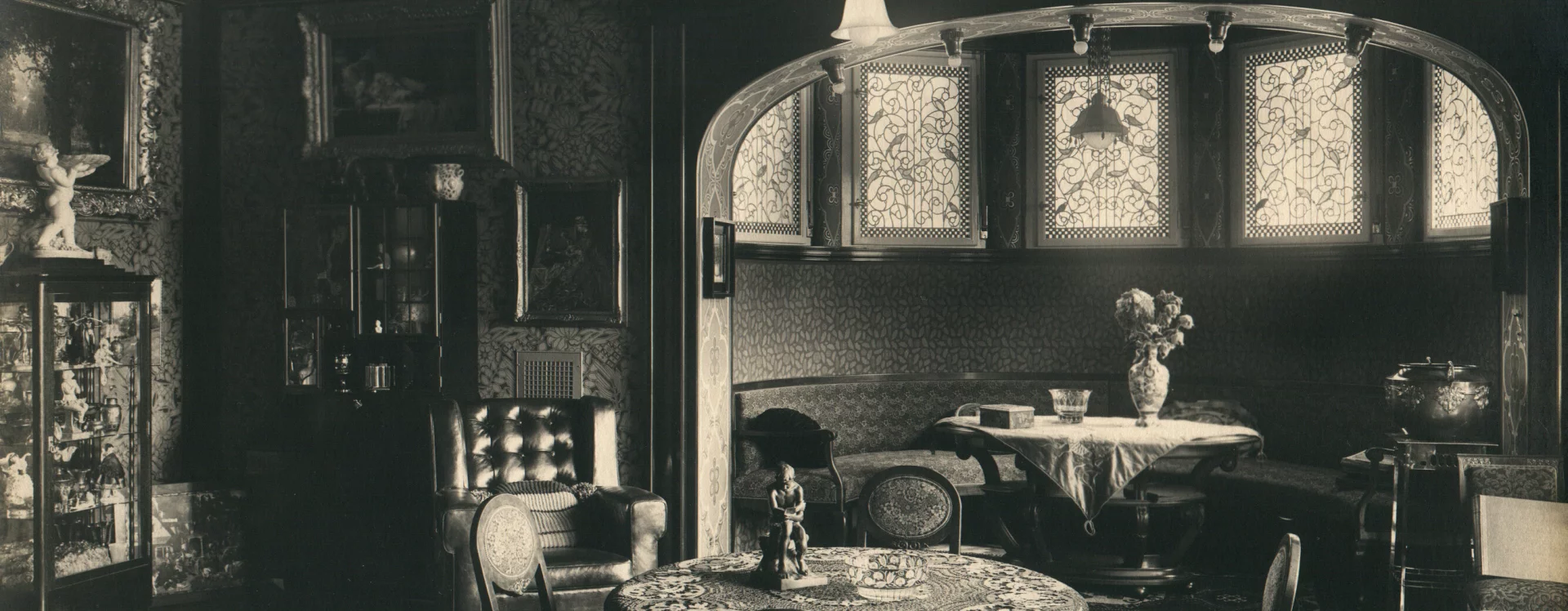
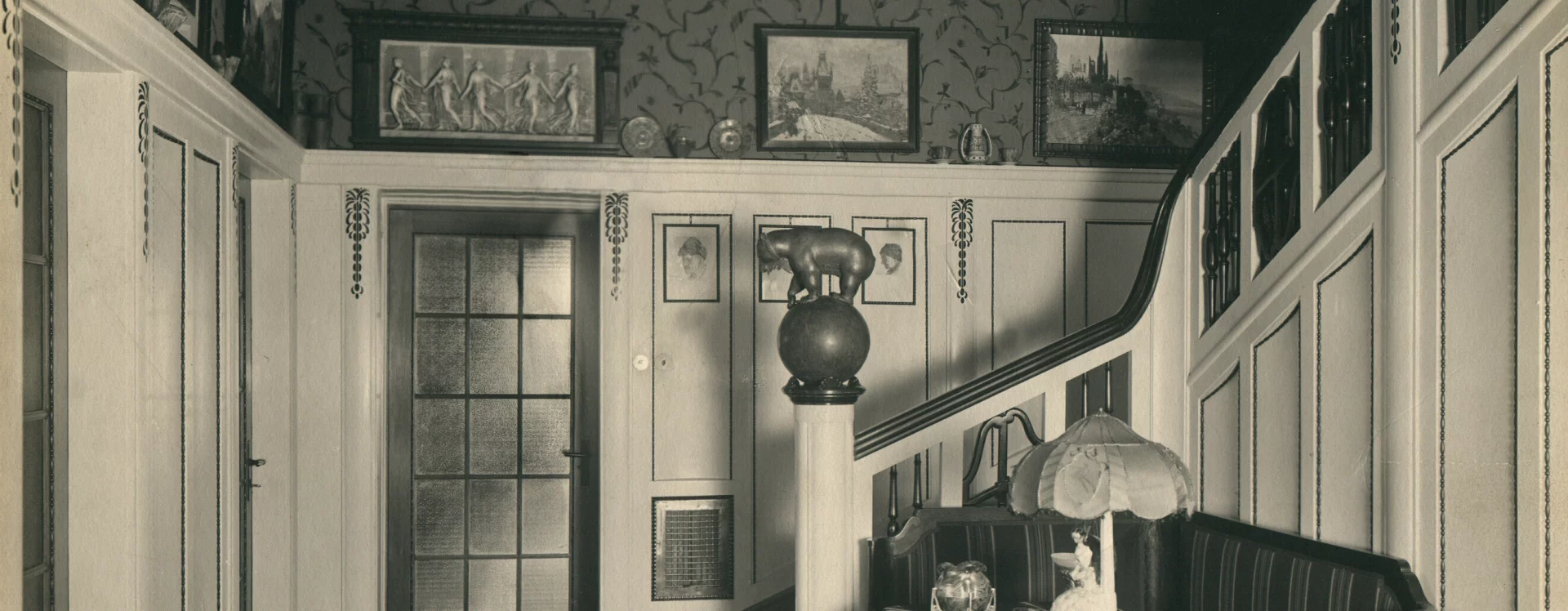
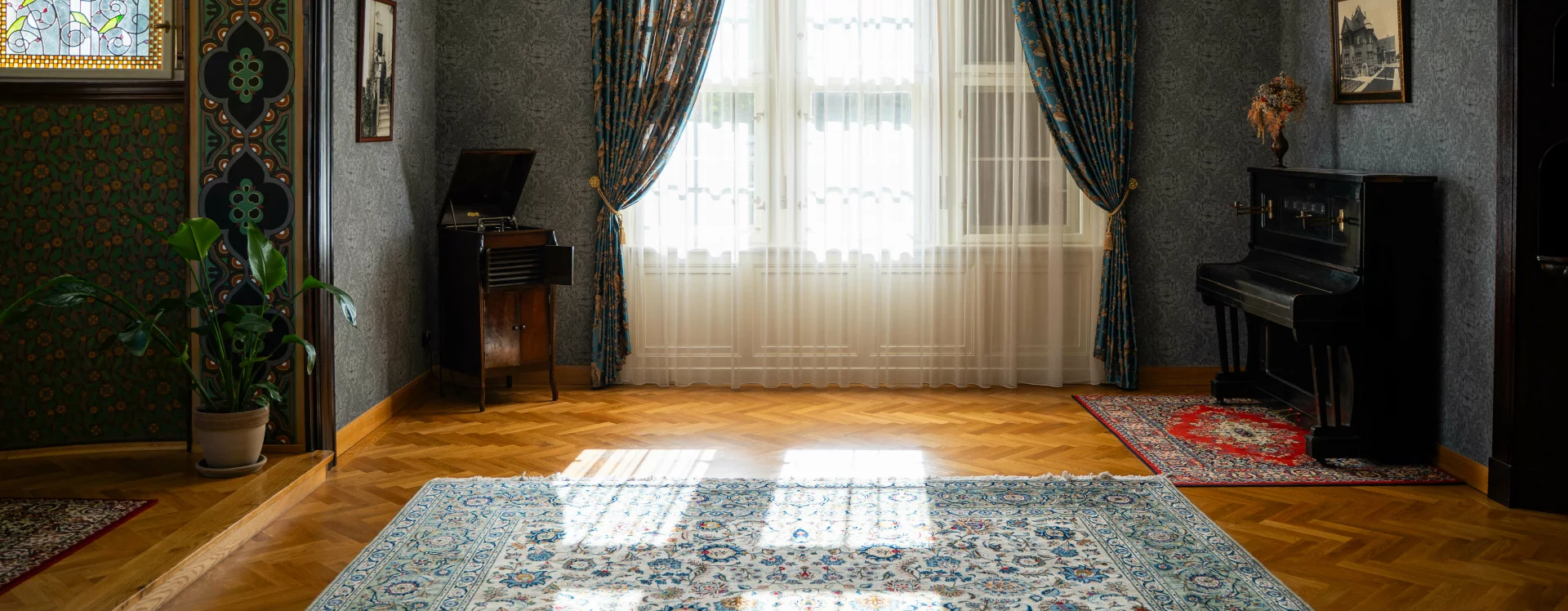
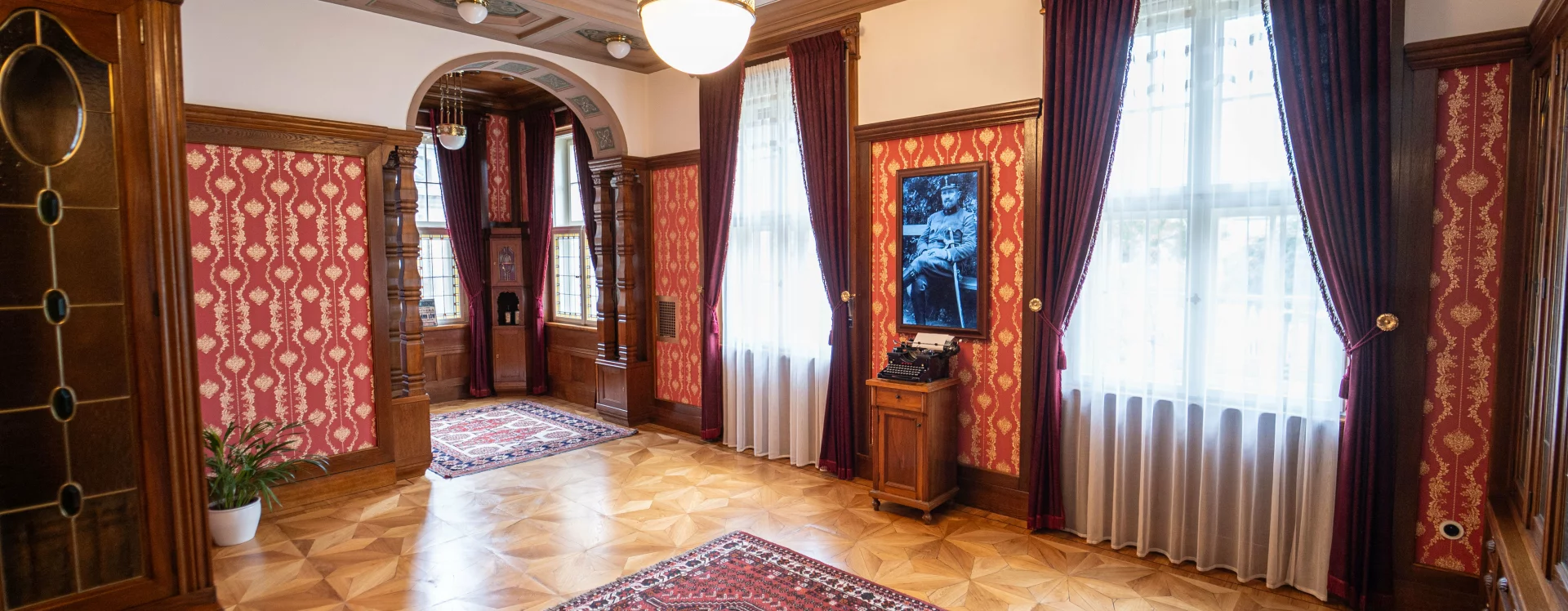
Around the hall, Grossmann grouped the remaining rooms, each floor having a distinct function. The ground floor, with entrance spaces, cloakroom, study, salon, and dining room with a veranda opening onto the garden, served representational purposes. The upper floor, containing the owners’ bedrooms and bathrooms (oriented to the south), a conservatory, and rooms for guests and staff, had a private character. The basement accommodated service facilities and the boiler room, while the attic housed the laundry and drying rooms. All floors, from the basement to the attic, were accessible via a side two-flight staircase in a polygonal risalit topped by a bell-shaped roof. Because the main living and representative rooms were concentrated on the southern side and the service areas on the northern side, the original main façade was oriented towards Dr Richtera Street (now Zelená Street). In the interior decoration, Grossmann employed decorative wallpapers and wall paintings with floral, zoomorphic, and figurative motifs (the figurative murals were painted by the Ostrava artist Alois Zapletal), plaster and ceramic reliefs, and timber panelling. The rooms were furnished with wooden furniture, built-in elements, ceramic fireplaces, and various art pieces.
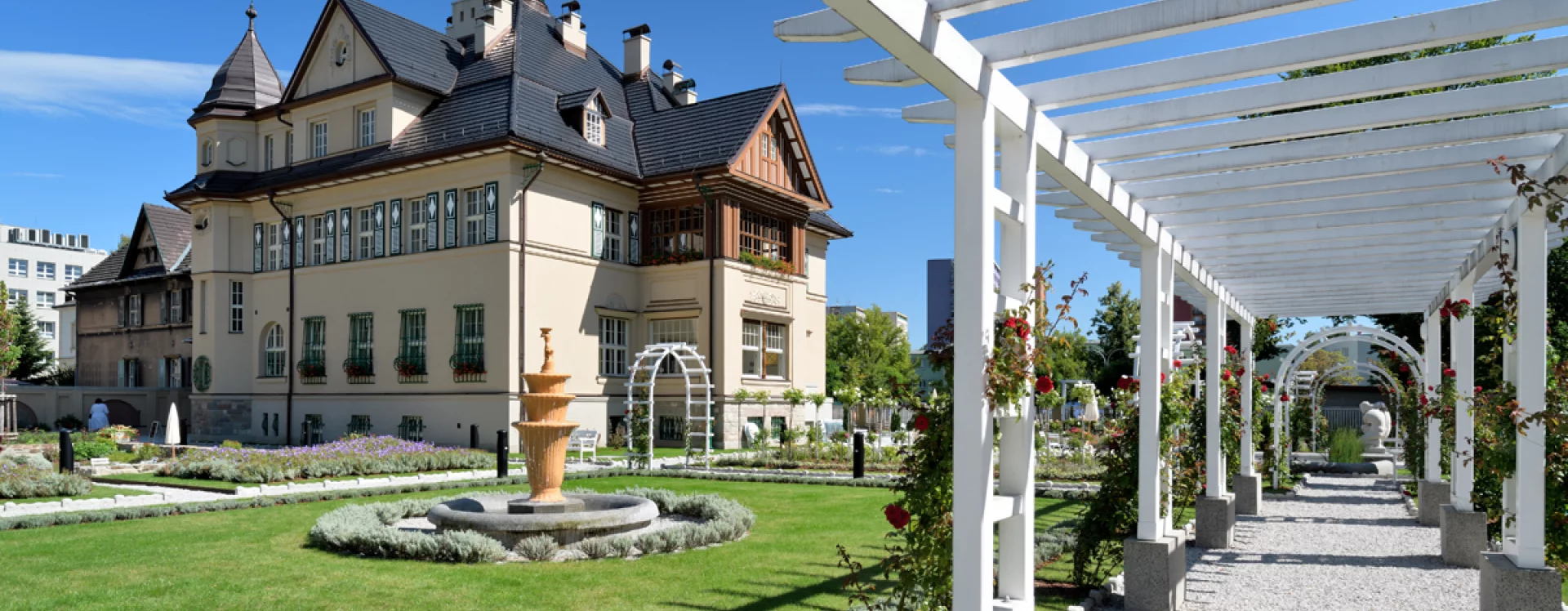
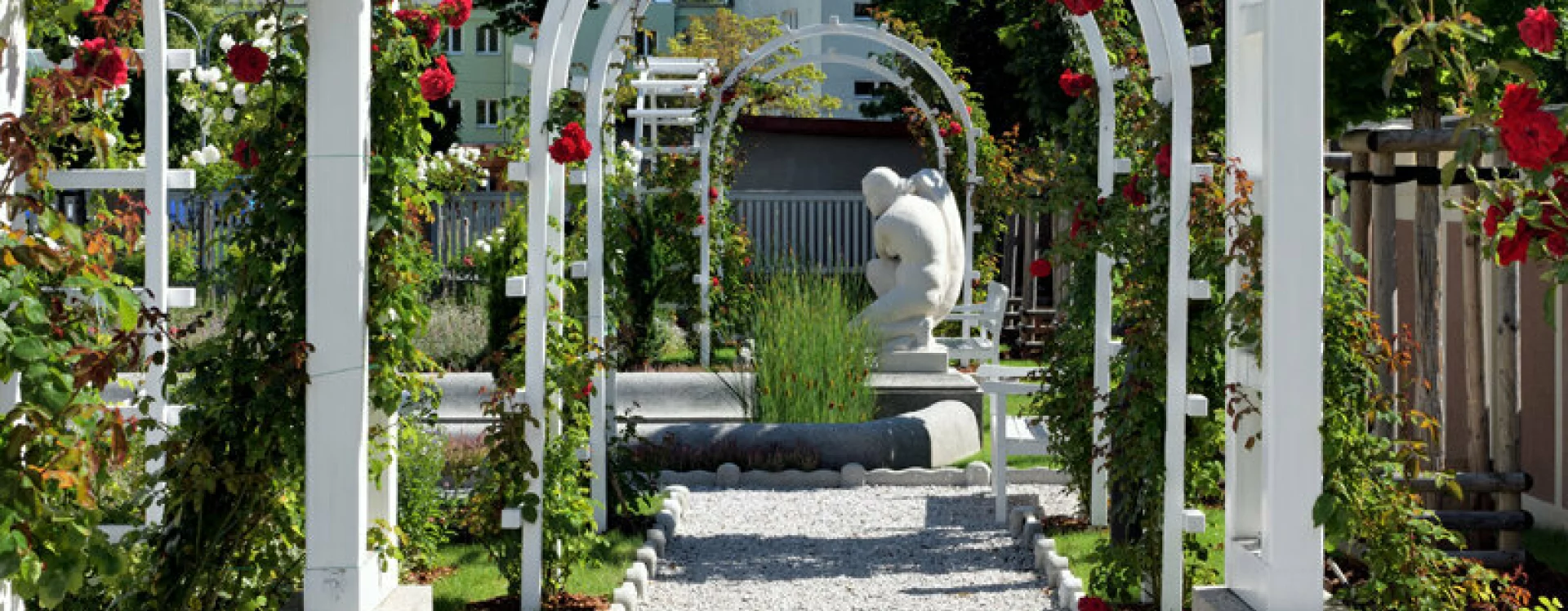
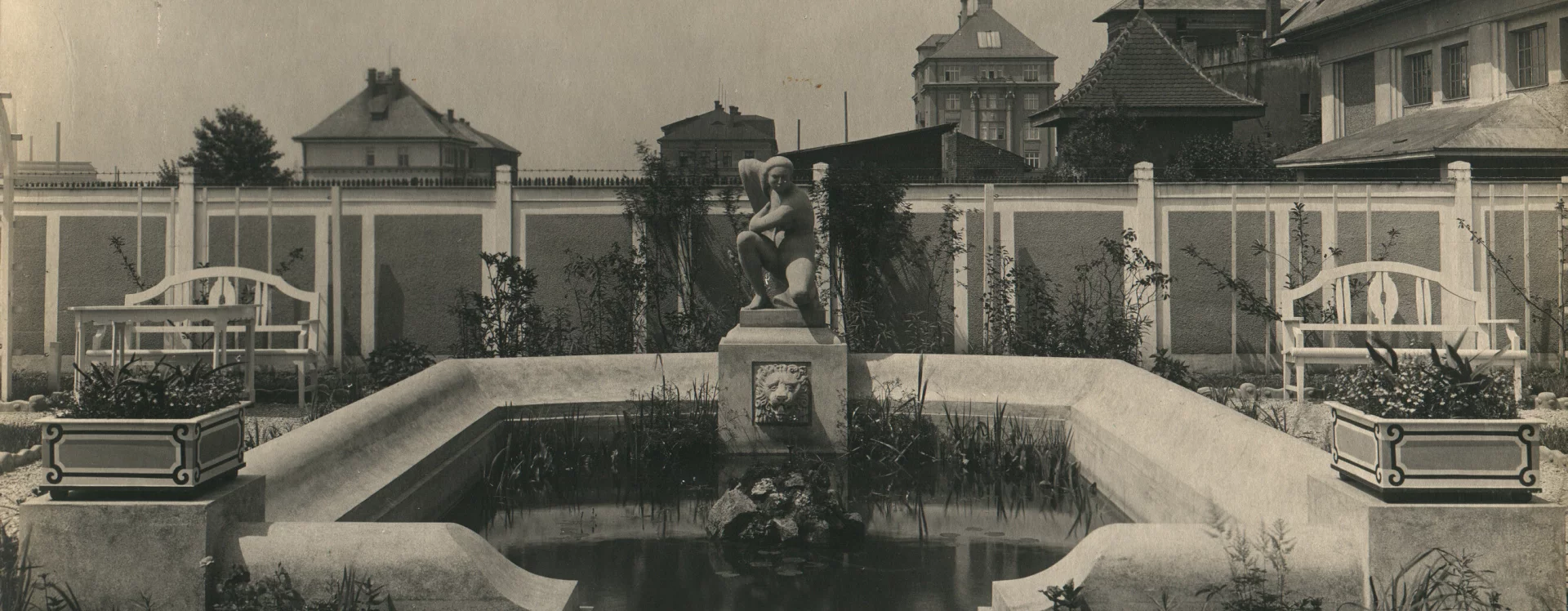
A generously designed formal garden in the Arts&Crafts style surrounded the house, connected to the living spaces by a veranda on the western side. The ground floor was bordered by walls of quarry stone with ornamental vases. The central area, with a fountain, was accessed by stone steps. Exotic trees, a rose garden, and perennial beds were complemented by small garden structures: a gazebo in the western corner with wooden pergolas, a rectangular pool with a figure of a kneeling woman, and a circular fountain. The model for the fountain with the female figure at the top, executed here on a reduced scale, was designed by the architect Otto Prutscher and the sculptor Michael Powolny, both associated with the Wiener Werkstätte. The garden also featured wooden benches and a table.
In the early 1930s, František Grossmann encountered serious financial difficulties, which he and his wife resolved by committing suicide. After the estate was settled, the house was purchased by the Moravian Mortgage and Agricultural Bank, which sold it in 1939 to Josef and Alžběta Rybová. The villa was divided into two residential units, a process that involved the removal of the main staircase and the insertion of a ceiling over the hall, significantly disrupting the original layout. In the 1960s, the building was adapted for use as a nursery school, and in the 1990s it served as a school aftercare facility. Despite these changes, the interiors remained relatively intact, including built-in furniture, ceramic reliefs, some wall panelling, murals, and remnants of wallpapers. Thanks to this state of preservation, the villa was declared a listed building in three stages between 1992 and 2000.
At the beginning of the 21st century, the building stood unused for a long time, and it proved difficult to find a new function for it. In 2017, the City of Ostrava decided to restore the villa as an installed historic interior open to the public. The restoration could draw on preserved period photographs of both the exterior and, especially, the interior. In 2021, reconstruction began to a design by the architect Daniel Vaněk. The project successfully reinstated the original layout, notably by removing the later ceiling inserted into the stair hall and reinstating some of the demolished partitions. Parts of the original wall paintings were uncovered and restored, while the remaining decoration was recreated in replica. The stained glass, window and door frames were refurbished, as were the timber panelling, built-in furniture, and wooden floors. The façades were restored and returned to their historically documented colour scheme. The garden was also renovated according to period photographs, including the original planting, while replicas were made of the garden furniture.
Literature
Jindřich Vybíral (ed.), Vladimír Šlapeta, Naďa Goryczková a Martin Strakoš. Slavné vily Moravskoslezského kraje. Praha, 2008. p. 70-72. ISBN 9788087073094.
Kateřina Kubová. Historie stavební firmy Grossmann a Fiala v epoše urbanistického rozmachu Ostravska v 1. třetině 20. století. Ostrava, Filozofická fakulta Ostravské univerzity, 2007, Diplomová práce.
Průvodce architekturou Ostravy. 2009. p. 58. ISBN 978-80-85034-54-7.
Martin Strakoš, Romana Rosová, Dalibor Halátek, Andrea Miczková. Vila stavitele Františka Grossmanna v Moravské Ostravě a její obnova. In: Zprávy památkové péče 84, č.2. 2024. sv. 2, p. 85-99.
Romana Rosová, Martin Strakoš, Andrea Čeplá. Vila čp. 1674, ulice 28. října 131, Moravská Ostrava, stavebně historický průzkum. Ostrava, 2009. Available from: Archiv NPÚ-ÚOP v Ostravě.
Památkový katalog. In: vila č.p. 261, 1674, 2445. Available from: https://pamatkovykatalog.cz/vila-c-p-261-1674-2445-13064777 [accessed 17. 11. 2025]
Ostravské památky. Available from: https://www.ostravskepamatky.cz/pamatka/show/16 [accessed 17. 11. 2025]
Vila Grossmann. Available from: https://www.vilagrossmann.cz/ [accessed 17. 11. 2025]
Sources
Bez názvu - Grossmannova vila. Archiv města Ostravy, fond Berní správa Moravská Ostrava, inv. no. 2001, fol. kart. 74.
Bez názvu - vila Grossmann. Archiv města Ostravy, fond Okresní soud Moravská Ostrava.
Dům čp. 1624. k. ú. Moravská Ostrava. Městský obvod Moravská Ostrava a Přívoz, fond spisovna stavebního úřadu.