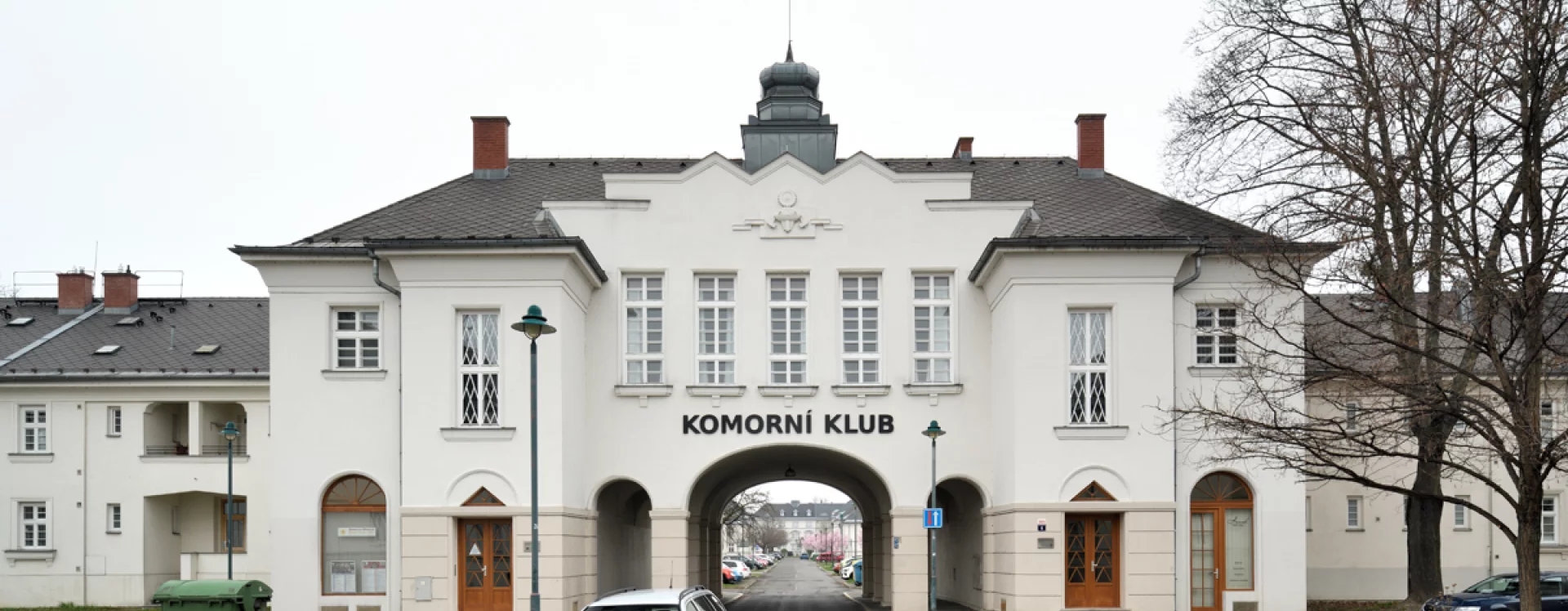
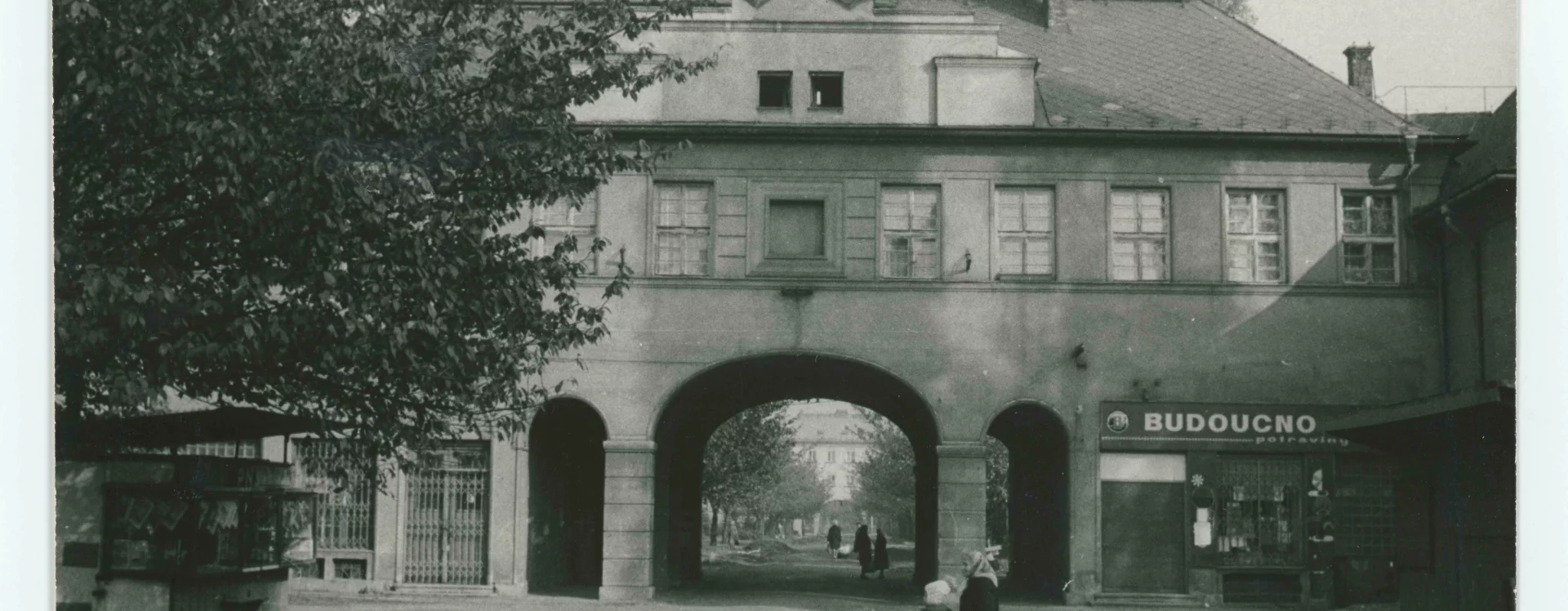
As part of the second phase of construction of the Jubilee Colony, two semi-detached houses with carriage passages were built according to a design by the architect Ernst/Arnošt Korner. These buildings, sometimes referred to as passage houses, played an important role in structuring the colony. The residential and commercial building no. 330 formed the main entrance to the Jubilee Colony from the east, from Závodní Street, while the second passage building, no. 285, divided the colony’s development into two sections at the level of Velflíkova Street.
The area east of house no. 285 and Velflíkova Street featured nine older houses from the first construction phase of 1921, which were incorporated into a row development in 1928. The section west of house no. 285 consisted of newly built apartment houses from the second construction phase. The upper floor of house no. 285 itself was intended to accommodate a public library with a reading room, whose interior design reflected the expressive architectural forms of the building and was likewise created by Arnošt Korner. The ground floor housed retail premises. The building also included a flat for the colony caretaker.
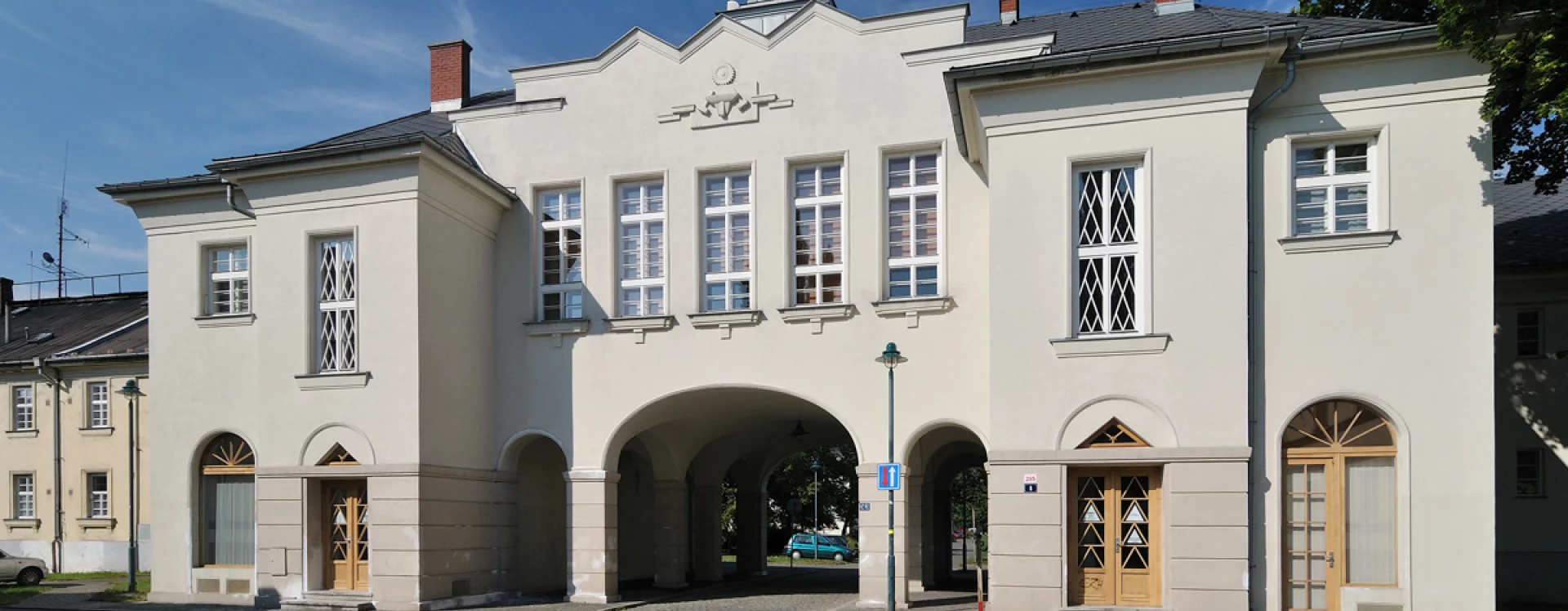
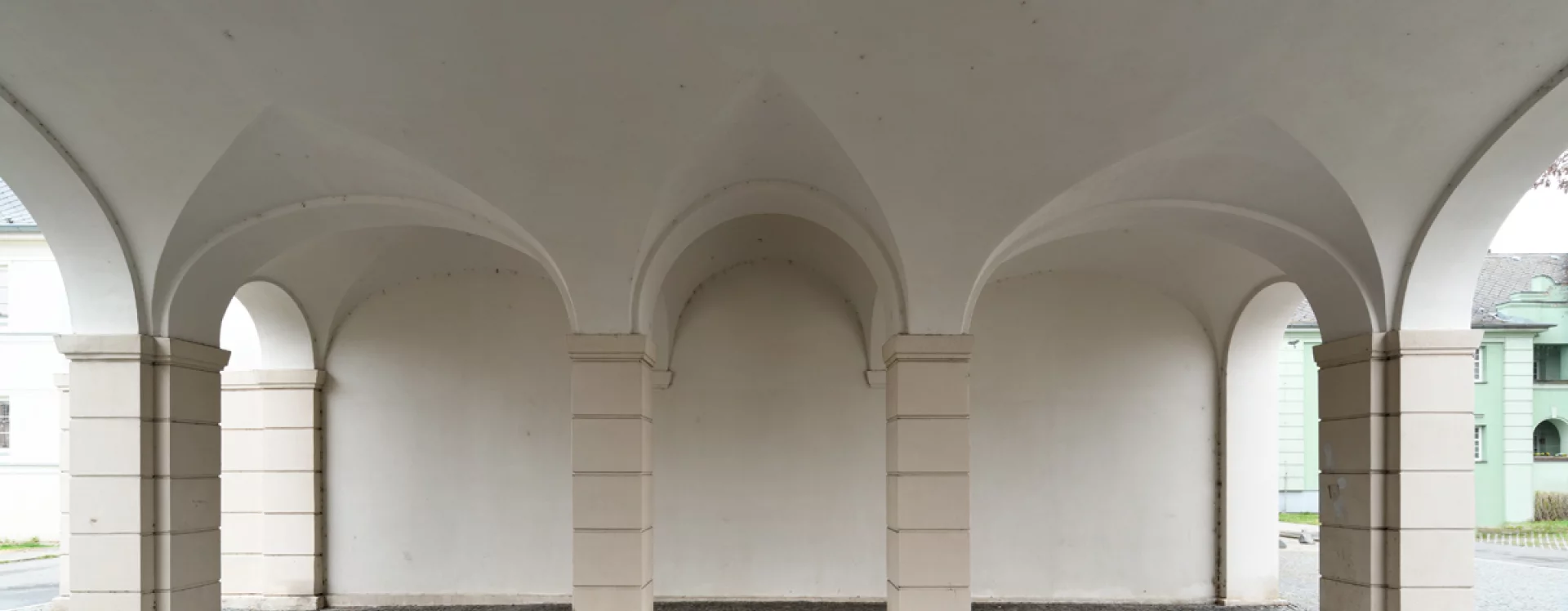
House no. 285 has an articulated elongated U-shaped plan and is symmetrically organised along a transverse axis into two identical halves. On this axis, the building is divided at ground-floor level by a carriage passage with a segmental vault articulated with lunettes. On either side of it are pedestrian passages with barrel vaults likewise subdivided by lunettes. On the eastern side, the passage and pedestrian corridors are framed by projecting wings containing stair risalits with entrances leading to the two dog-legged staircases to the upper floor.
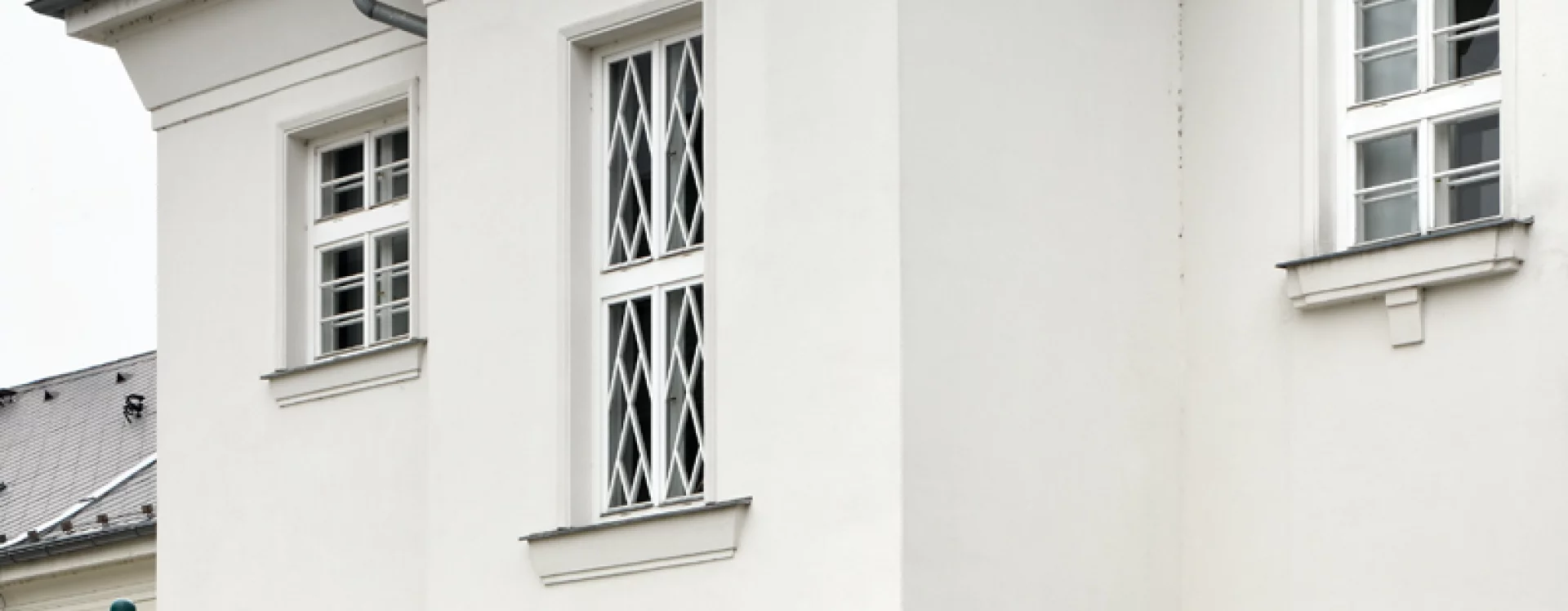
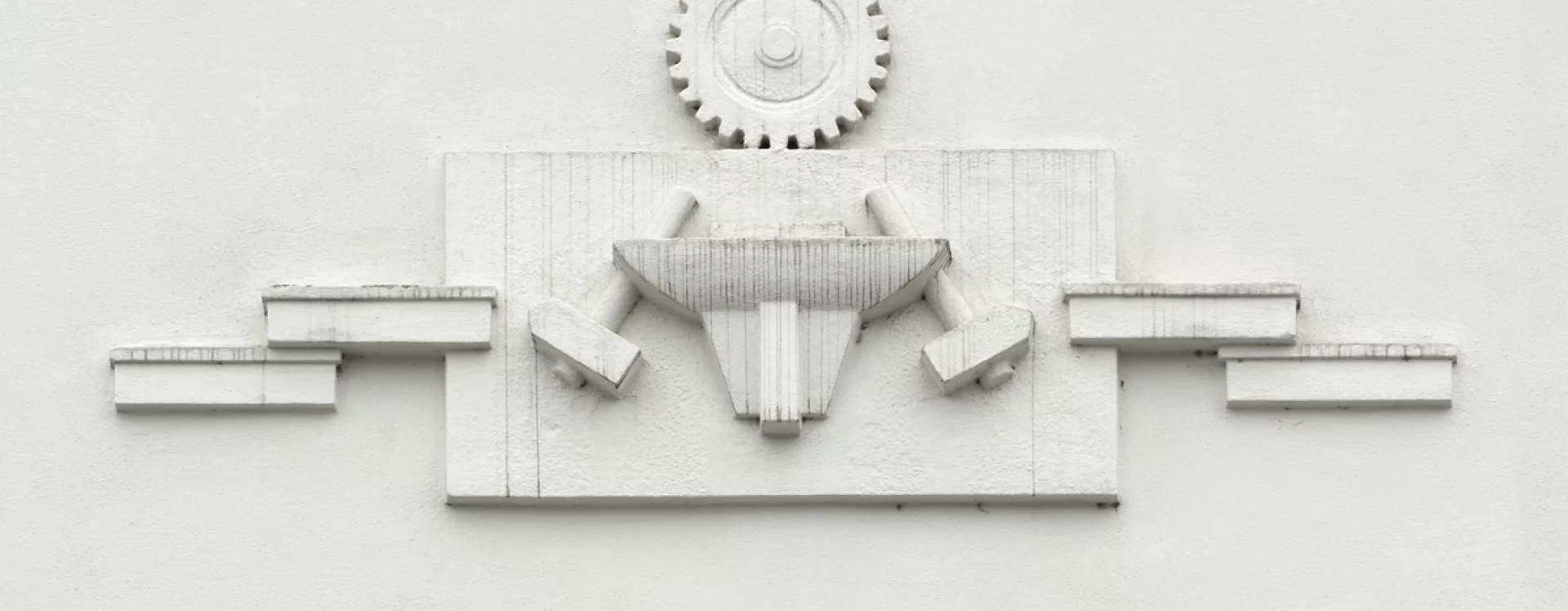
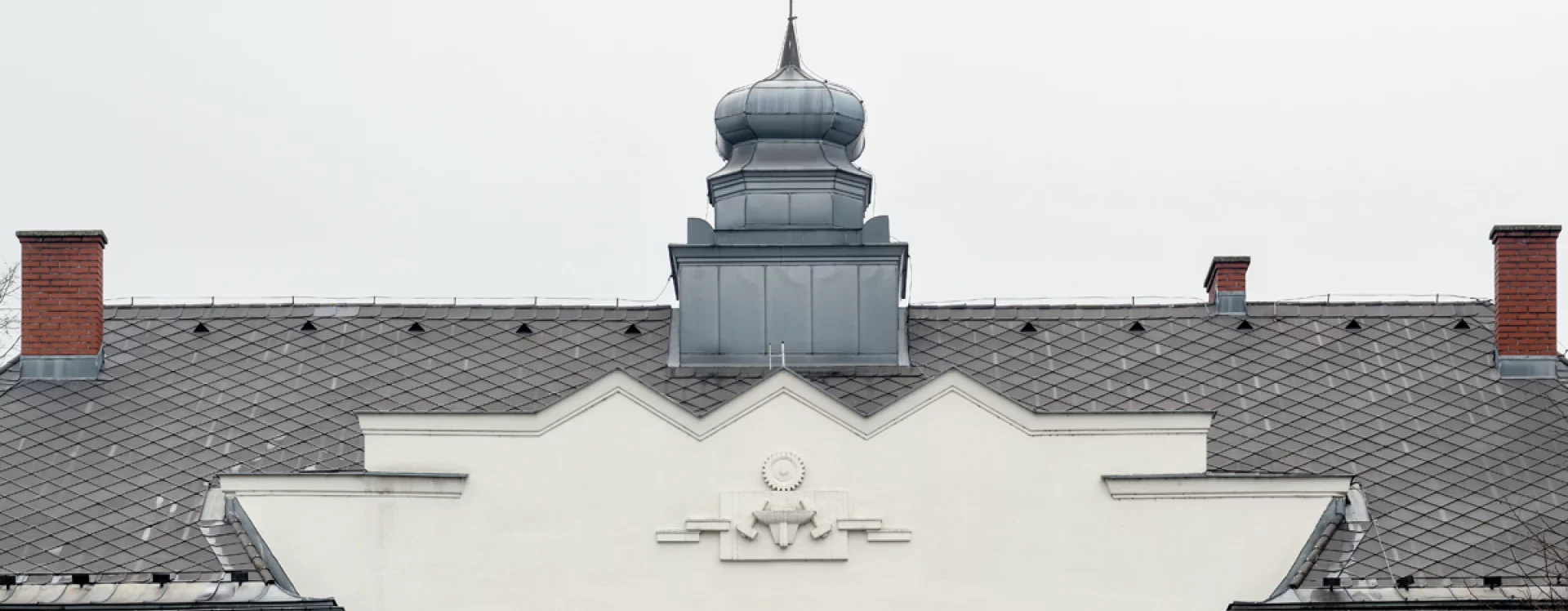
At ground-floor level, the façade of the eastern elevation is articulated by banded rustication, while the upper part is smooth. Today, the doors and shopfronts of the premises in the side wings are replicas based on Korner’s original design, as are the five vertical windows of the social hall. The serrated attic gable above the central section of the eastern façade is decorated with a relief depicting a wooden clapper that once summoned workers to their shifts, together with a cogwheel representing the engineering production of the ironworks.
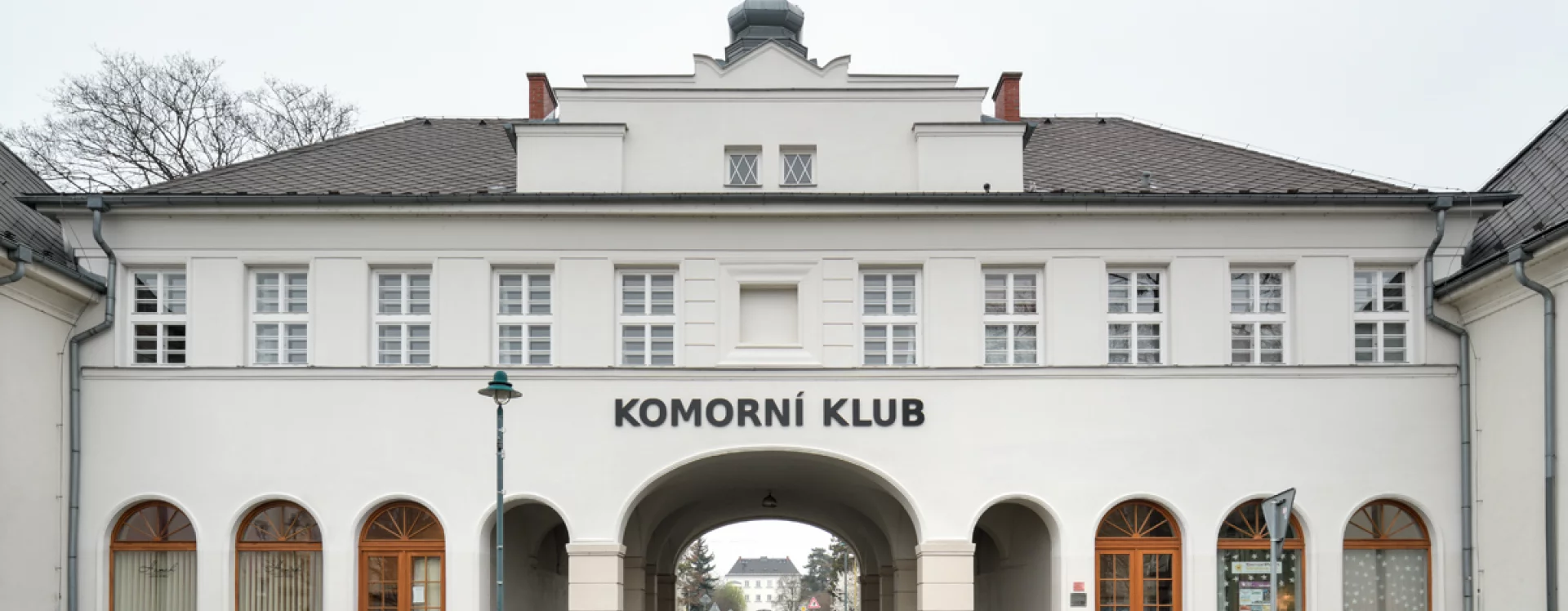
The western façade of the house is likewise symmetrical but conceived in a single plane. At ground level, the central section is articulated by the passage and pedestrian corridors, while on either side there is one entrance to a shop and two display windows. All three openings are barrel-vaulted and decorated with a glazed motif of the sun. On the upper floor there are nine rectangular windows set on a continuous sill cornice and separated by shallow recessed pilaster strips. Above the chamfered crowning cornice rises a stepped attic gable with a pair of small windows. The building’s hipped roof is topped in the central section by an octagonal metal-clad turret with a finial.
The semi-detached building represents an important public structure within the Jubilee Colony. It rhythmically articulates the development and separates the public space of the block between Závodní and Velflíkova streets from the block between Velflíkova and Letecká streets. In the design of the building, Ernst/Arnošt Korner drew on inspirations both from the historical tradition of passage houses and gateways and from contemporary Art Deco and Expressionist architecture, influenced by the Viennese architectural milieu.
The library that had operated here, with various interruptions, since the 1920s finally closed in July 2004 when it moved to the corner building at Závodní Street no. 331. The move was prompted by the planned reconstruction of the building, as well as by the results of a structural survey which concluded that the load-bearing structure no longer met the requirements required for library use.
The reconstruction project for the building, like that for the other structures of the Jubilee Colony, was prepared by the architect Pavel Sedlecký (1946). After the completion of the heritage-focused rehabilitation of the building in 2006, the premises of the former library began to house the Chamber Club, a venue dedicated to cultural programmes. On the first floor, where the reading room and other library spaces had once been located, a social hall was created that is now used for a variety of social gatherings and cultural events.
MSt
Literature
100 let Vítkovických železáren 1828–1928. Moravská Ostrava, Vítkovické železárny, 1928.
Petr Přendík, Radomír Seďa, Martin Strakoš. Jubilejní kolonie. 90 let dělnické kolonie v Ostravě-Hrabůvce. Ostrava, Montanex , Statutární město Ostrava, 2018. p. 99-119.
Petr Přendík, Radomír Seďa, Martin Strakoš. Jubilejní kolonie. 90 let dělnické kolonie v Ostravě-Hrabůvce. Ostrava, Montanex , Statutární město Ostrava, 2018. p. 21-68.
Petr Přendík, Radomír Seďa, Martin Strakoš. Jubilejní kolonie. 90 let dělnické kolonie v Ostravě-Hrabůvce. Ostrava, Montanex , Statutární město Ostrava, 2018. p. 185–192.
Petr Přendík, Radomír Seďa, Martin Strakoš. Jubilejní kolonie. 90 let dělnické kolonie v Ostravě-Hrabůvce. Ostrava, Montanex , Statutární město Ostrava, 2018. p. 145-183.
Sources
plánová dokumentace 1920–1942. fond Archiv Vítkovice, a. s., fond Vítkovické horní a hutní těžířstvo, inv. no. 9579a a 1579a, fond Jubilejní kolonie v Hrabůvce.