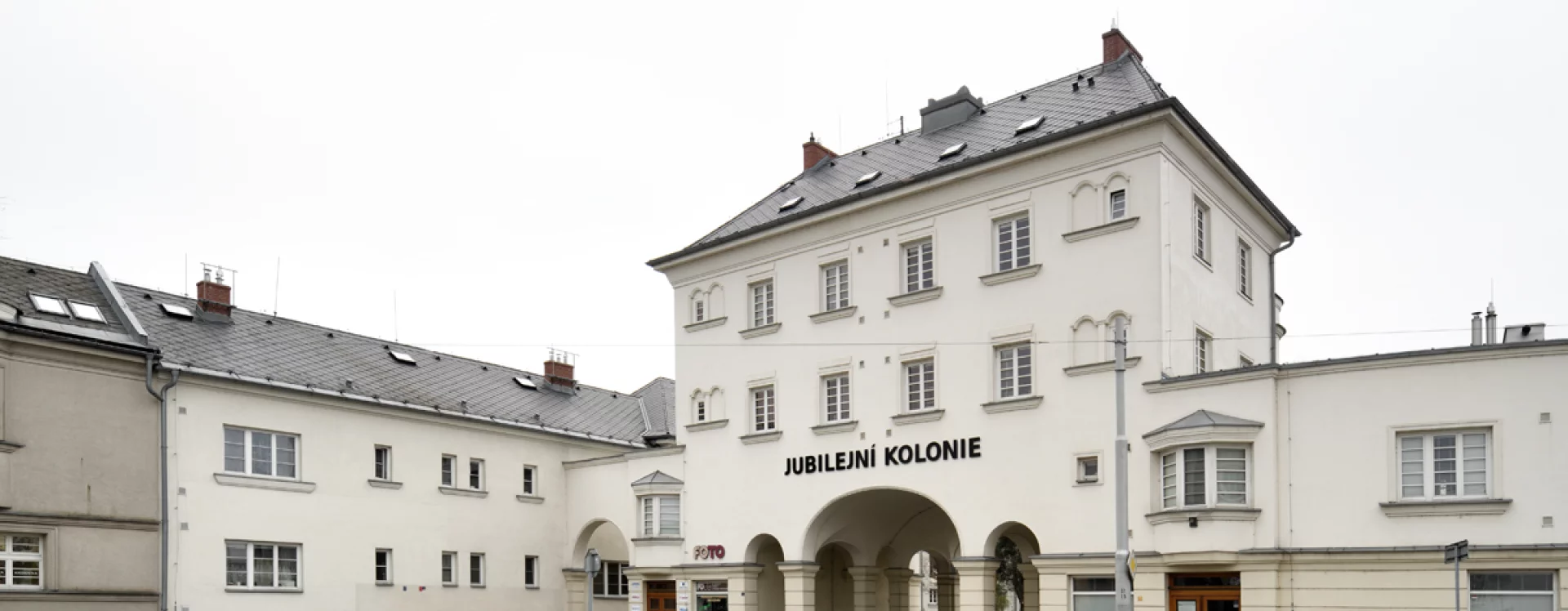
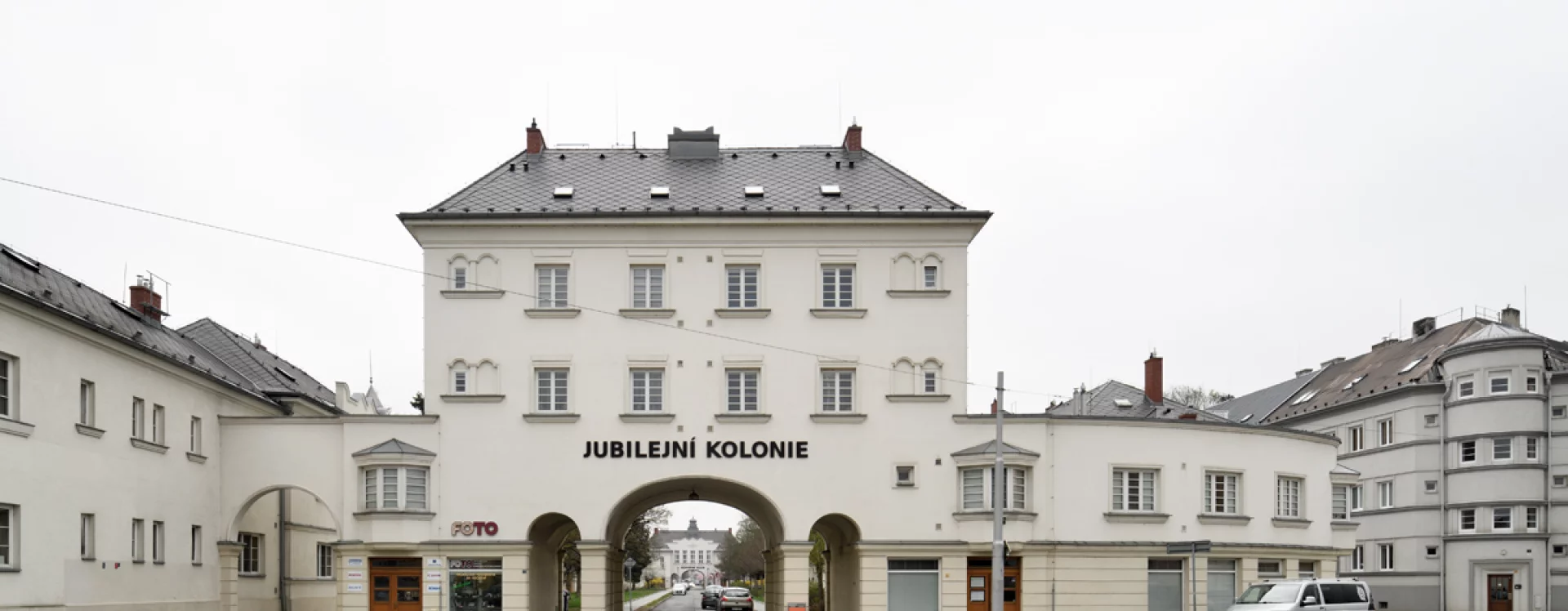
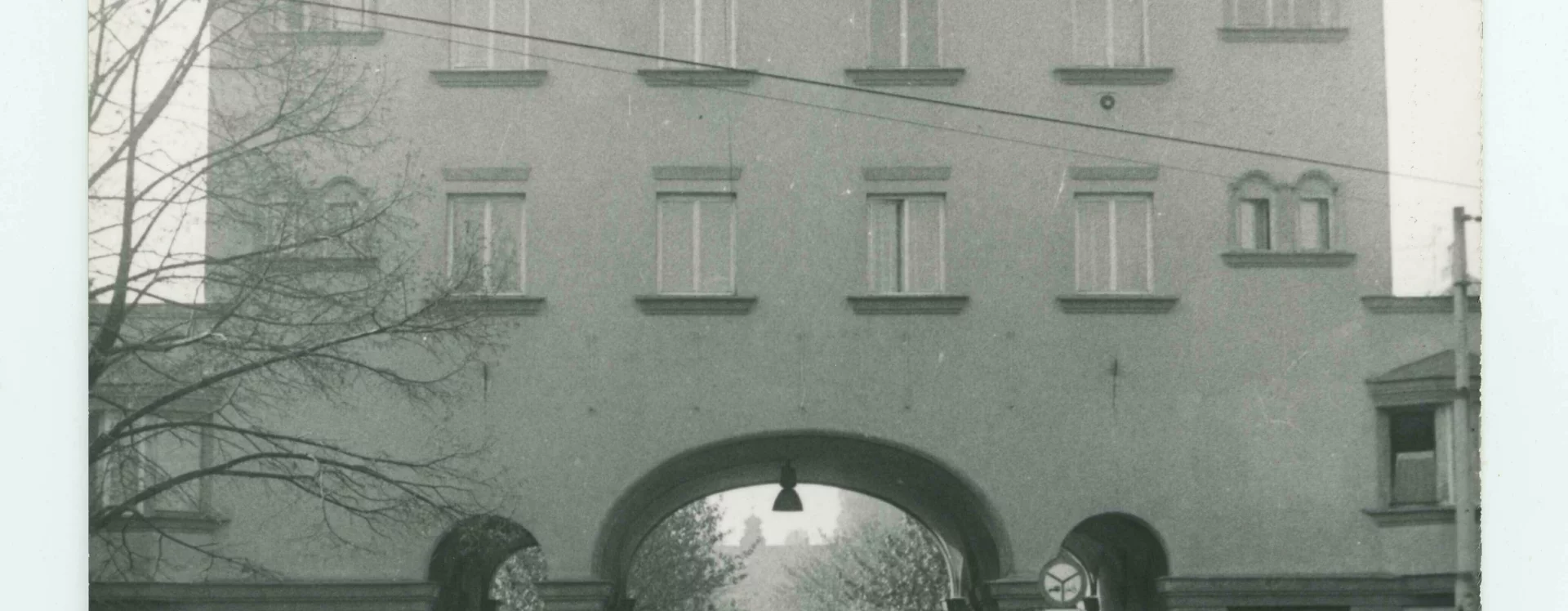
The second phase of construction of the Jubilee Colony for employees of the Vítkovice Ironworks began in 1926 according to a design by the architect Ernst/Arnošt Korner (1888–1966). His concept was based on incorporating the detached houses of the first phase into a much larger and more enclosed urban complex, accessible along the axis of the main street through a gate formed by a semi-detached residential building. Korner integrated the earlier detached houses into a more compact row development by inserting new buildings between them, thereby creating blocks that enclose the space around Jubilejní Street. The above-mentioned residential semi-detached house was provided with a carriage passageway and pedestrian corridors, forming a gateway that marks the eastern entrance to the complex from Závodní Street. In this way the development acquired the character of an enclosed colony.
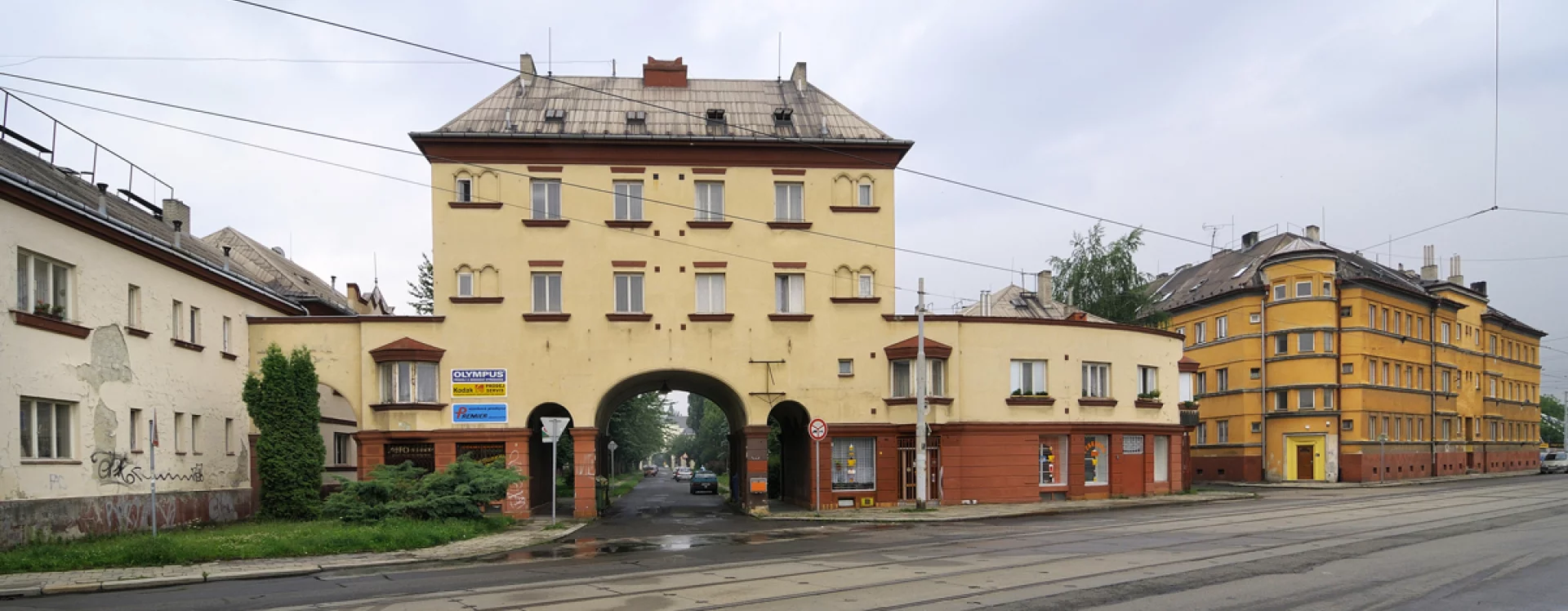
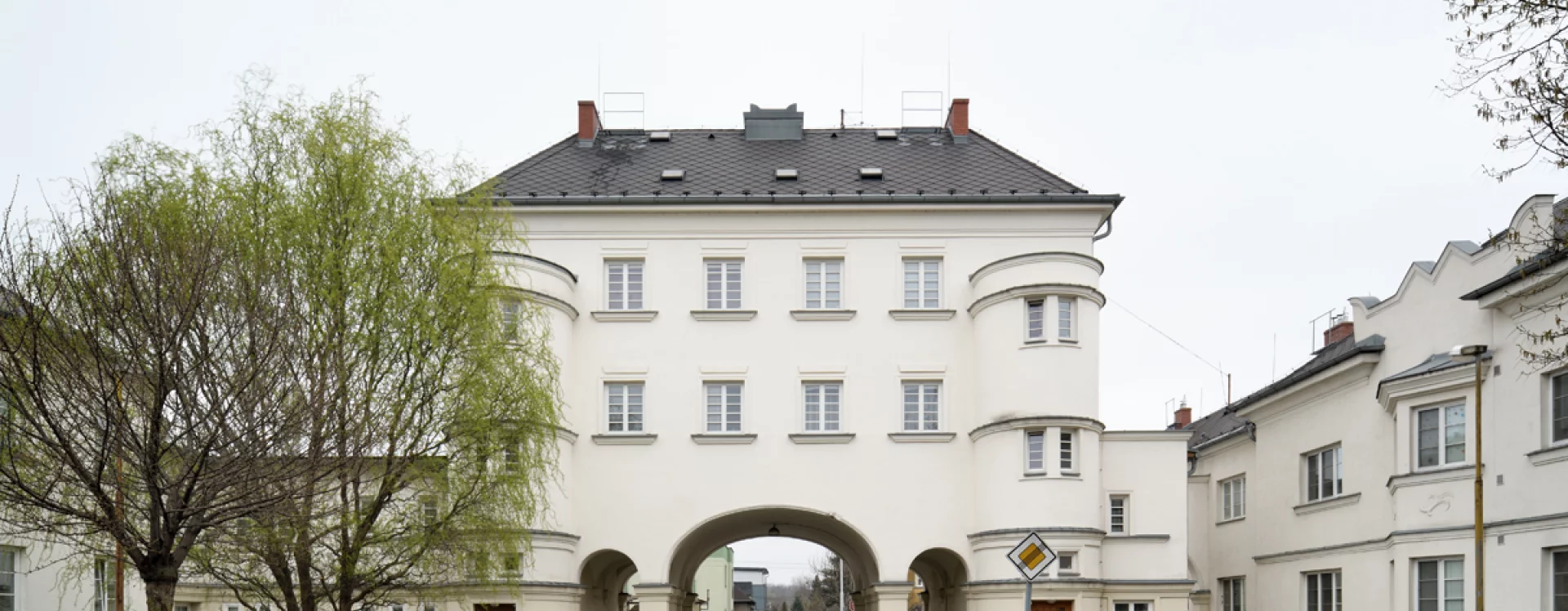
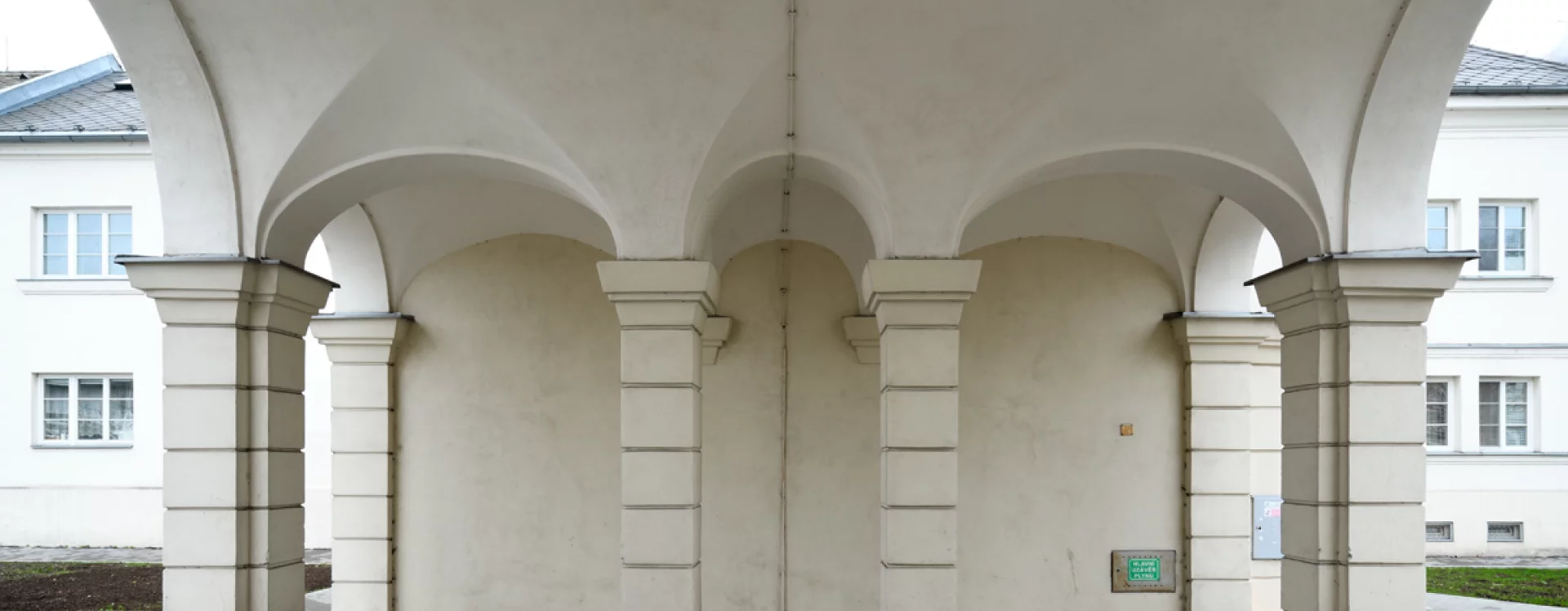
The semi-detached building consists of a central three-storey section with a rectangular plan and a symmetrically composed façade. At ground level this central section is opened by a wide carriage passageway with a flattened barrel vault, flanked on both sides by arched pedestrian passages. While the carriage passageway has a flattened vault, the pedestrian corridors are covered by regular barrel vaults. The eastern and western façades of the central raised section differ in response to the functional organisation of the building.
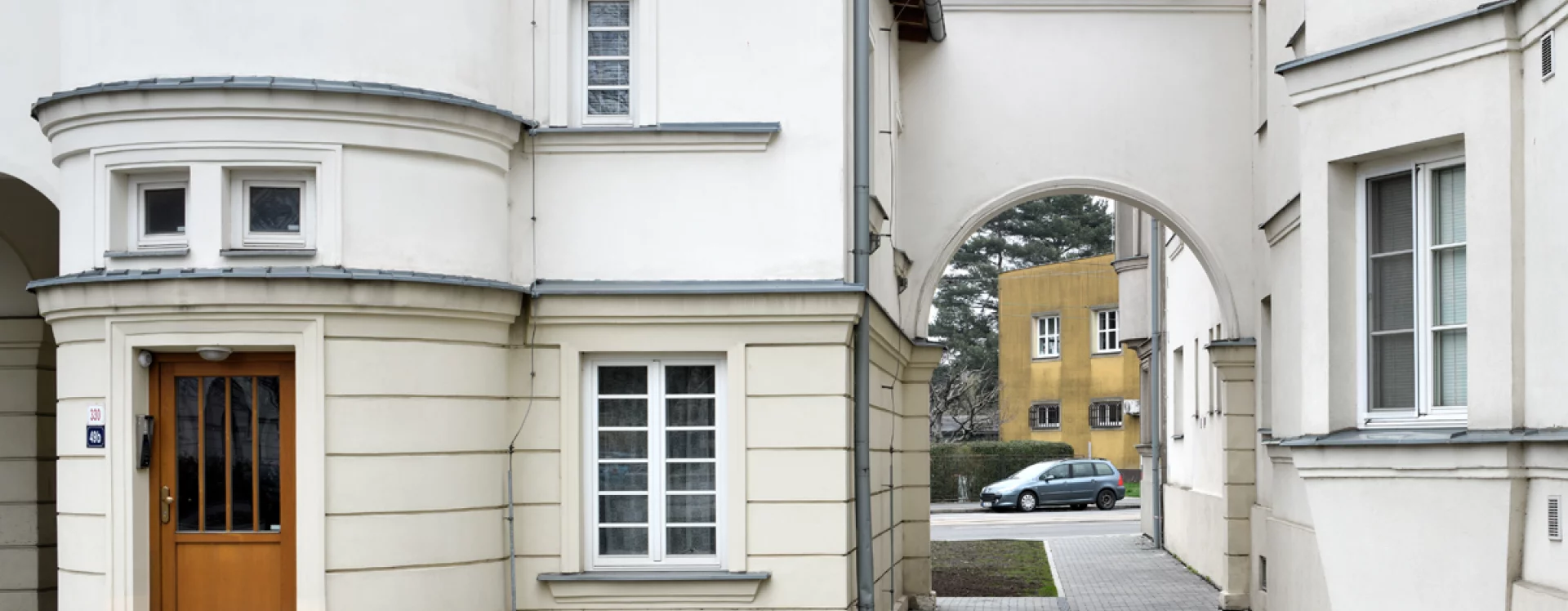
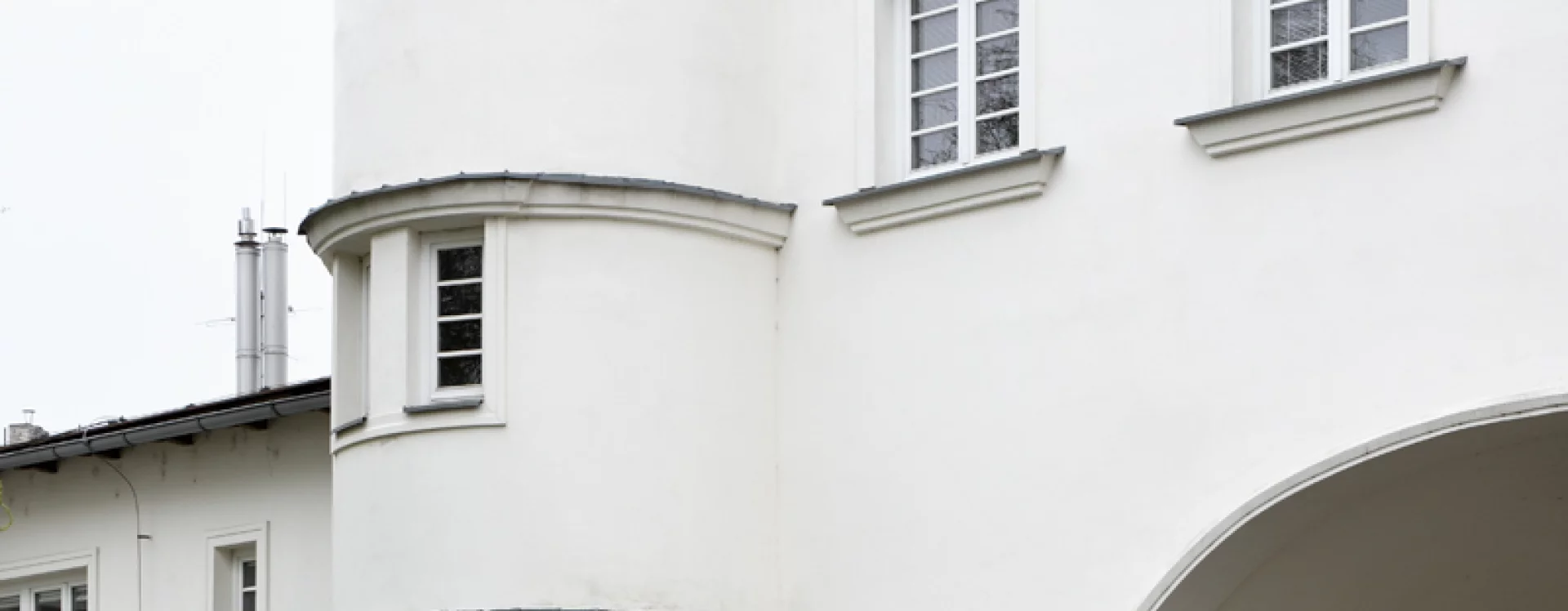
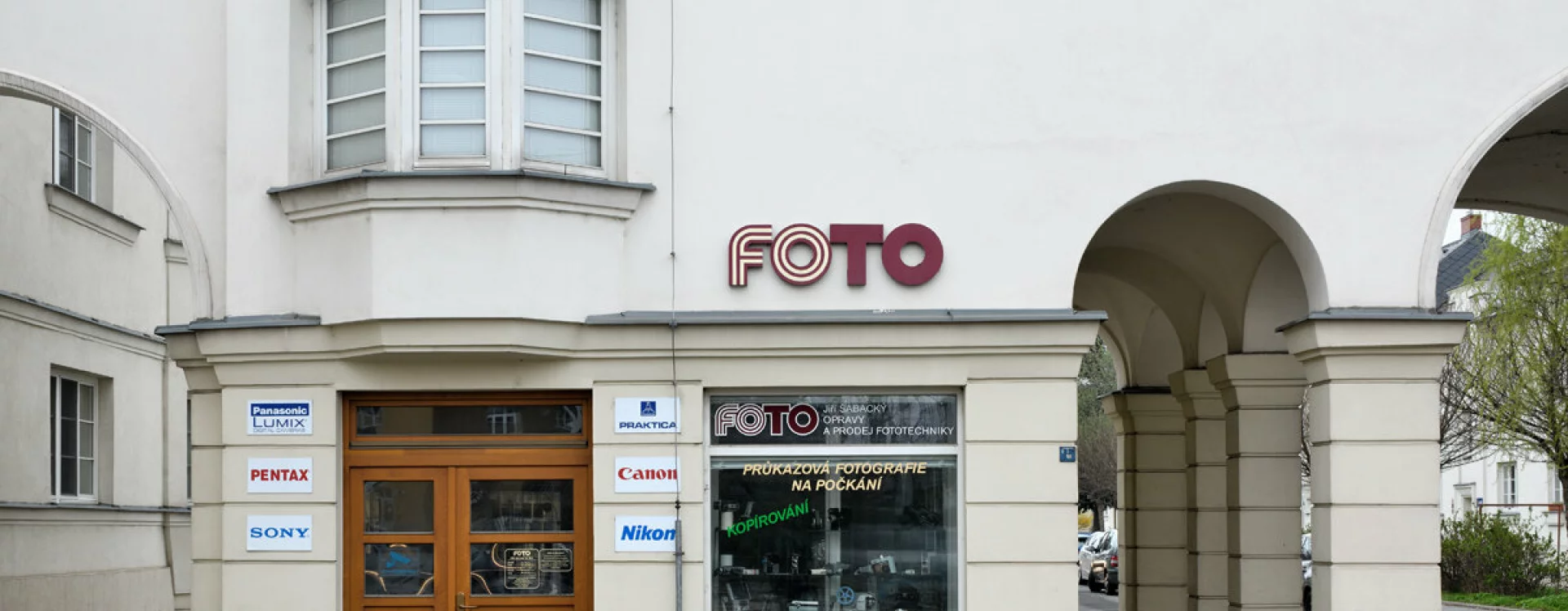
On the eastern façade, the passages are flanked on each side by a shop window with a horizontal lintel and by an entrance to a retail unit. By contrast, the western façade is dynamically articulated by cylindrical stair projections placed symmetrically on either side of the passages, containing the main entrances to the two residential sections of the semi-detached house. On both sides, the ground floor is treated with banded rustication and separated from the upper parts of the façade by a string course. The rustication is also applied to the pillars of the carriage passageway, which are further articulated by cornice-like capitals aligned with the string course.
On the eastern façade, the first and second floors are symmetrically organised by the window axes of the living rooms, while small paired windows serving the bathrooms are placed at the sides. Today, one of these paired openings contains a new rectangular window while the other has been blocked up. Between the bathroom windows are four window axes with rectangular openings set on sill cornices and topped with cornice pediments. On the western façade, the same floors are framed by the cylindrical stair projections, with four window axes opening between them.
On the southern side, the raised section of house no. 49b is connected to a single-storey projection that joins the neighbouring house by a barrel-vaulted passage forming a pedestrian gateway. On the northern side of house no. 49a extends a longer rounded two-storey wing, attached to the northern block of terraced houses and enclosing the inner space along Jubilejní Street. At the corner of Závodní and Heritesova Streets there is an entrance to the ground-floor premises, emphasised at first-floor level by a three-sided bay window.
The semi-detached house with its gateway represents a design inspired by the architectural tradition of city gates and passage houses. In its architectural language, the building incorporates motifs drawn from Art Deco and Expressionist architecture, reflecting influences from the Viennese architectural milieu.
MSt
Literature
Průvodce architekturou Ostravy. 2009. p. 125 a 393. ISBN 978-80-85034-54-7.
Martin Jemelka, Gabriela Pelikánová, Romana Rosová, Martin Strakoš, Radomír Seďa. Jan Prokeš: Ostrava na cestě k velkoměstu. Ostrava, Fiducia, 2023. p. 80–81. ISBN 978-80-907934-5-3.
Tvořit město. Opava a Moravská Ostrava 1850–1950: architektura a urbanismus. Opava, 2017. p. 168, 207, 229. ISBN 978-80-87789-46-9.
Jindřich Vybíral. Zrození velkoměsta: Architektura v obraze Moravské Ostravy 1890–1938. Šlapanice, ERA, 2003. p. 95–97. ISBN 80-86517-94-2.
Pavel Zatloukal. Ostrava. Příspěvky k dějinám a současnosti Ostravy a Ostravska 18. Šenov u Ostravy, 1997, roč. 18. p. 161–194.
Sources
plánová dokumentace 1920–1942. fond Archiv Vítkovice, a. s., fond Vítkovické horní a hutní těžířstvo, inv. no. 9579a a 1579a, fond Jubilejní kolonie v Hrabůvce.