The German company Julius Rütgers, active in tar processing and the impregnation of railway sleepers, began operating in the Ostrava region and Silesia as early as 1854, at a time when railway transport, hard-coal mining, and coking were developing rapidly. In 1894, Rütgers established a tar plant in Zábřeh and subsequently founded further operations. In 1921, the company sold its Ostrava branch to a limited partnership whose owners were all the mining and metallurgical companies in the Ostrava and Karviná regions that operated coke works. This company, which retained the name Julius Rütgers in its title, further expanded its activities and, in the early 1920s, employed 420 workers and 44 clerical staff. The company’s management was based in Zábřeh when the partnership decided to construct an office building with apartments in the centre of Moravská Ostrava, on the corner of what were then Hviezdoslavova Street (now Dr Šmerala Street) and Michala Hodži Street (now Na Hradbách Street). The commission was awarded to the Ostrava-based architect Ernst Korner, who at that time had completed his first major project – the conversion of the Kraus Villa on Nádražní Avenue into the headquarters of Unionbank.
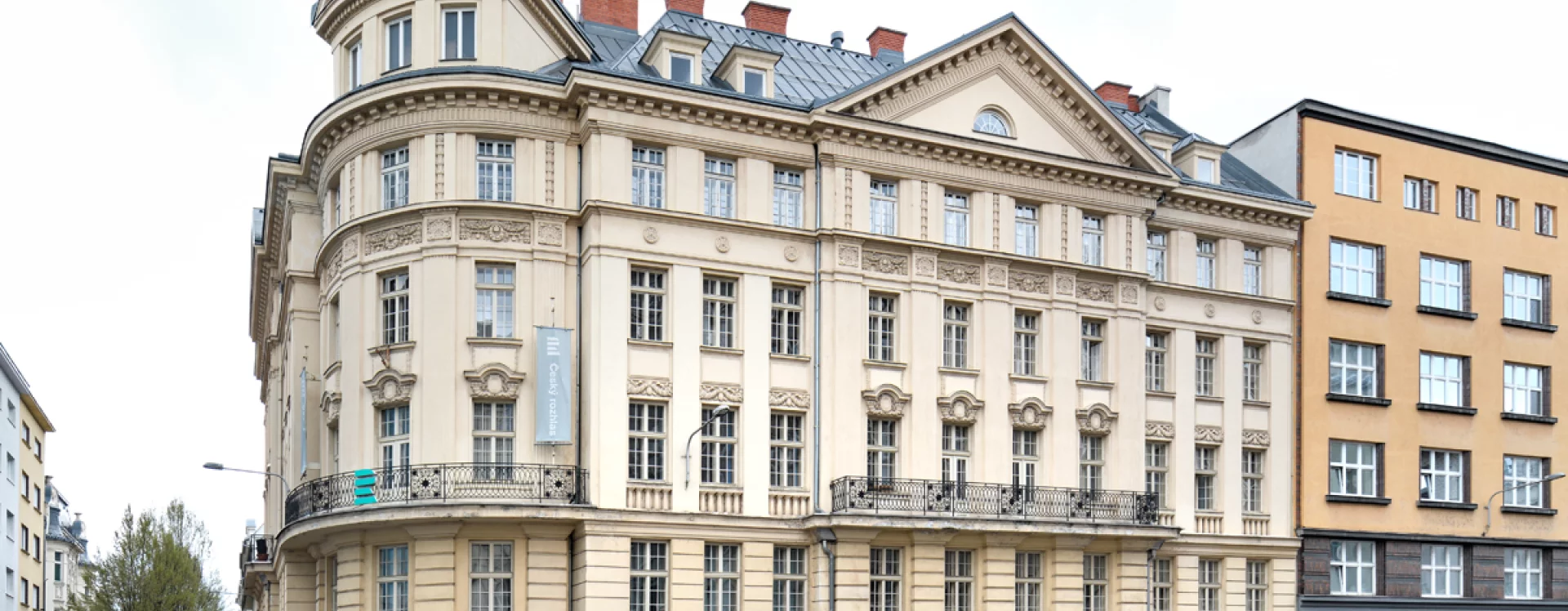
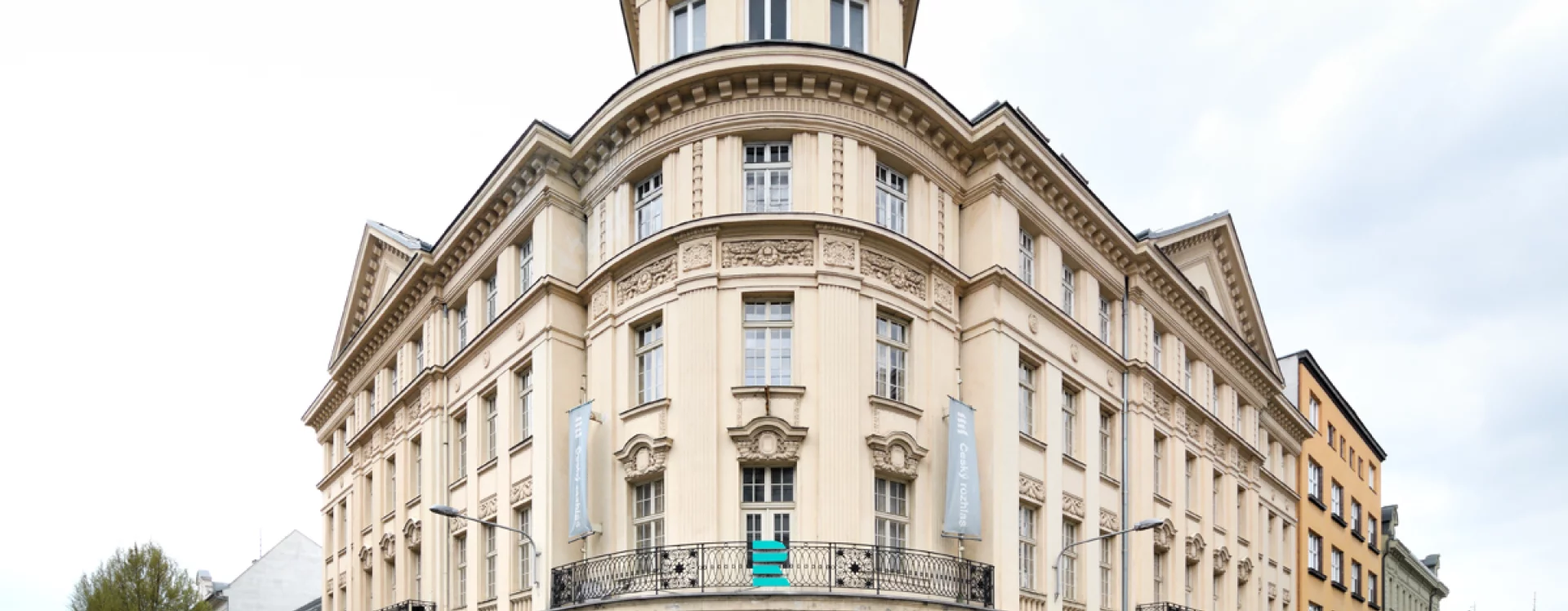
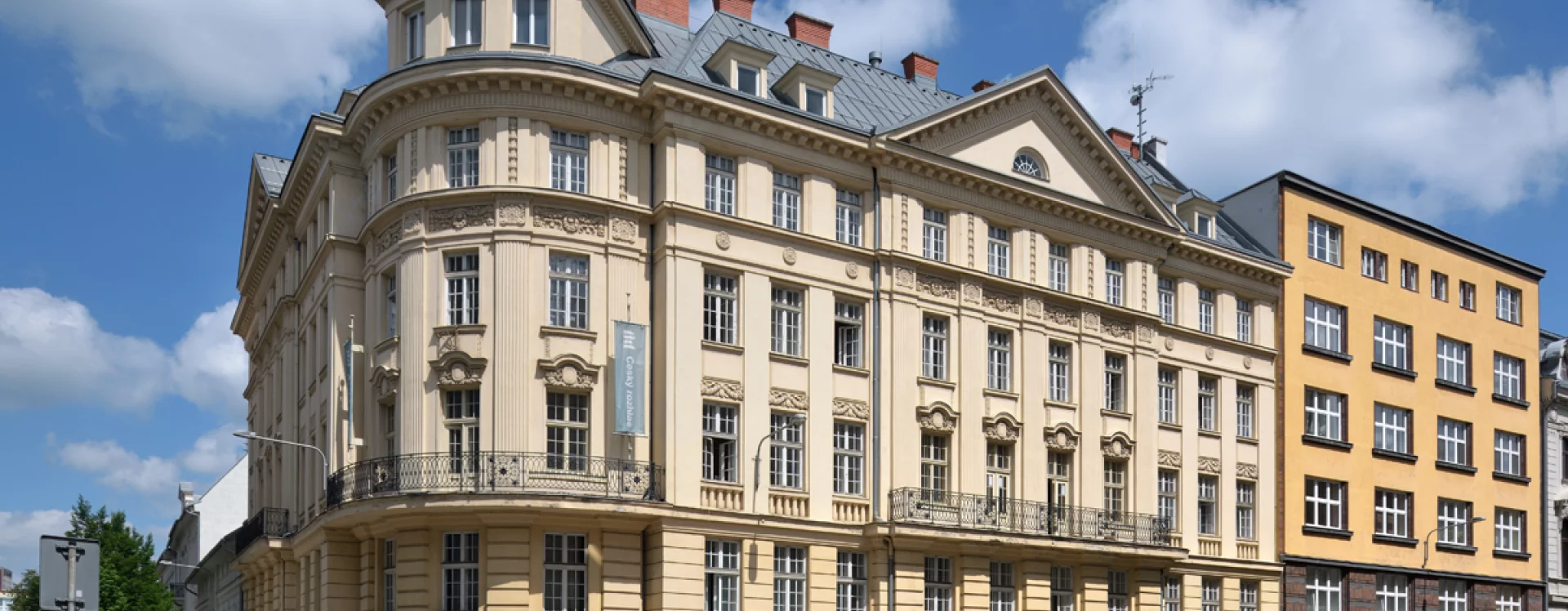
Korner drew inspiration from Viennese architecture around 1910 and from palatial buildings of the first half of the 19th century, designing a five-storey, two-wing corner building in the Neo-Biedermeier style. At the outset of his career, he had a particular affinity for this mode, having studied at the Vienna University of Technology between 1906 and 1911, an institution representing a conservative strand of architectural education in the imperial capital.
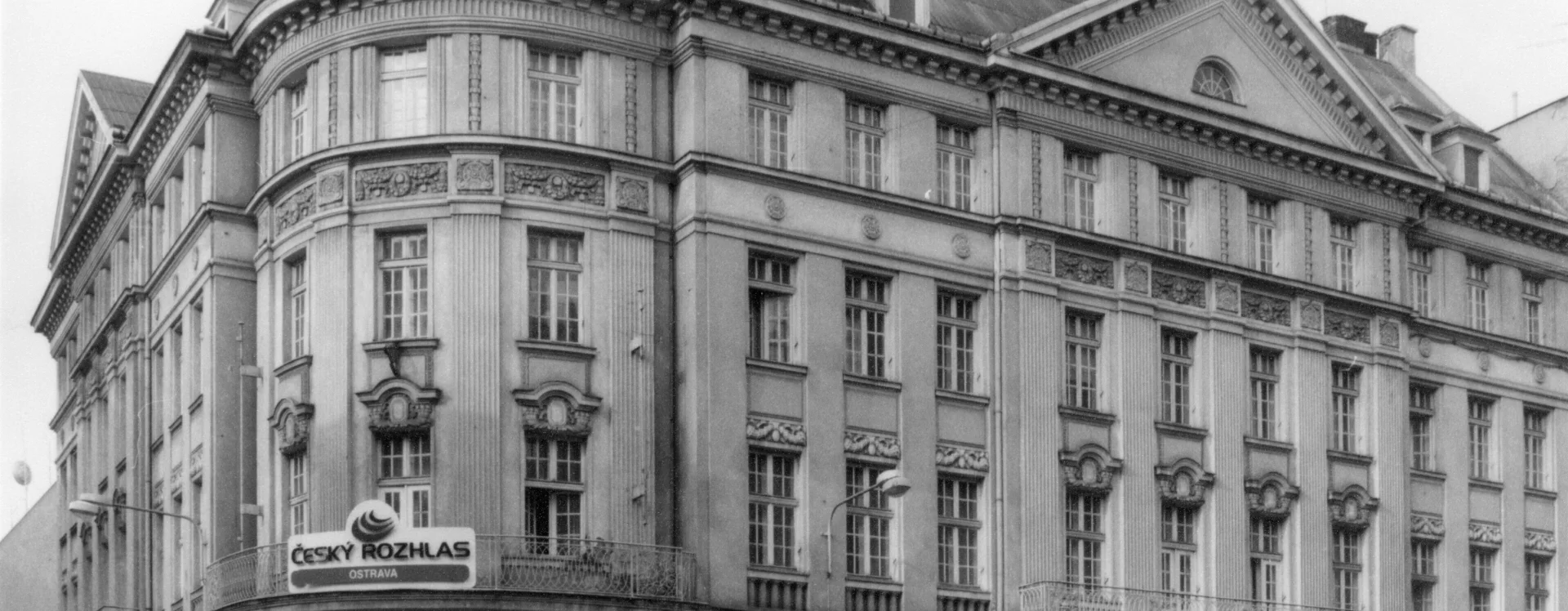
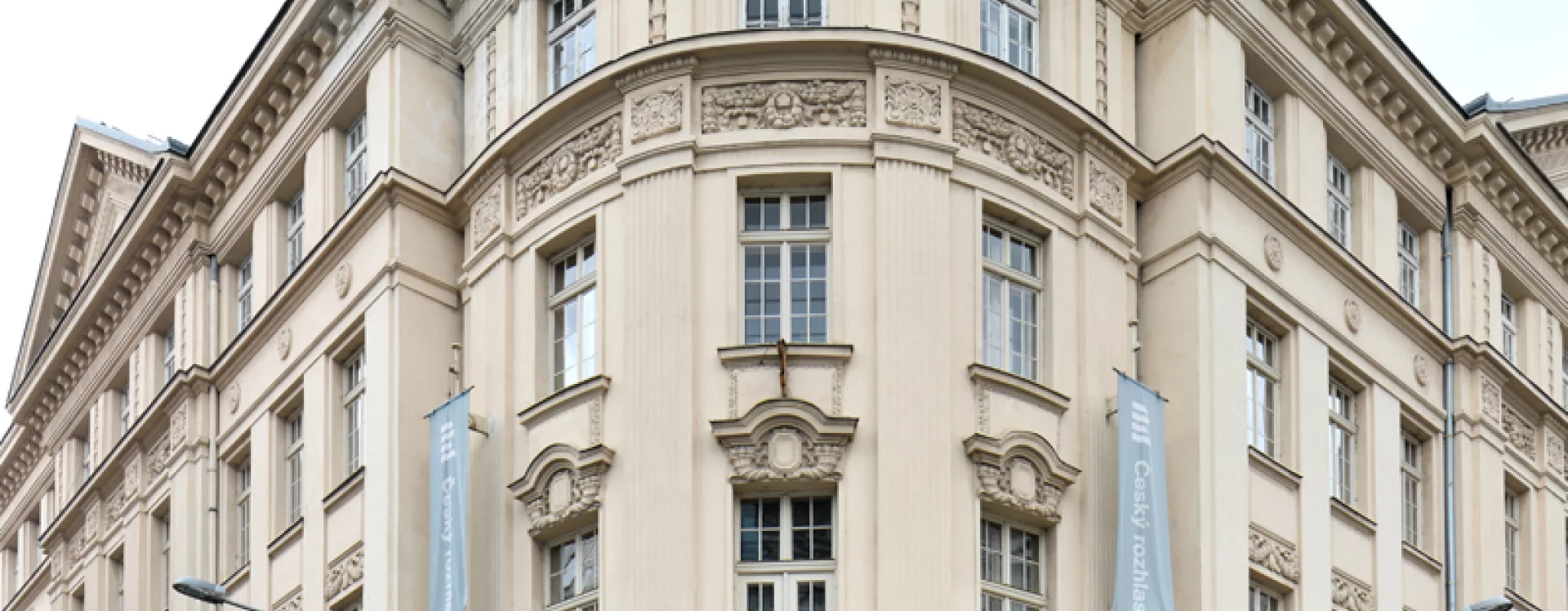
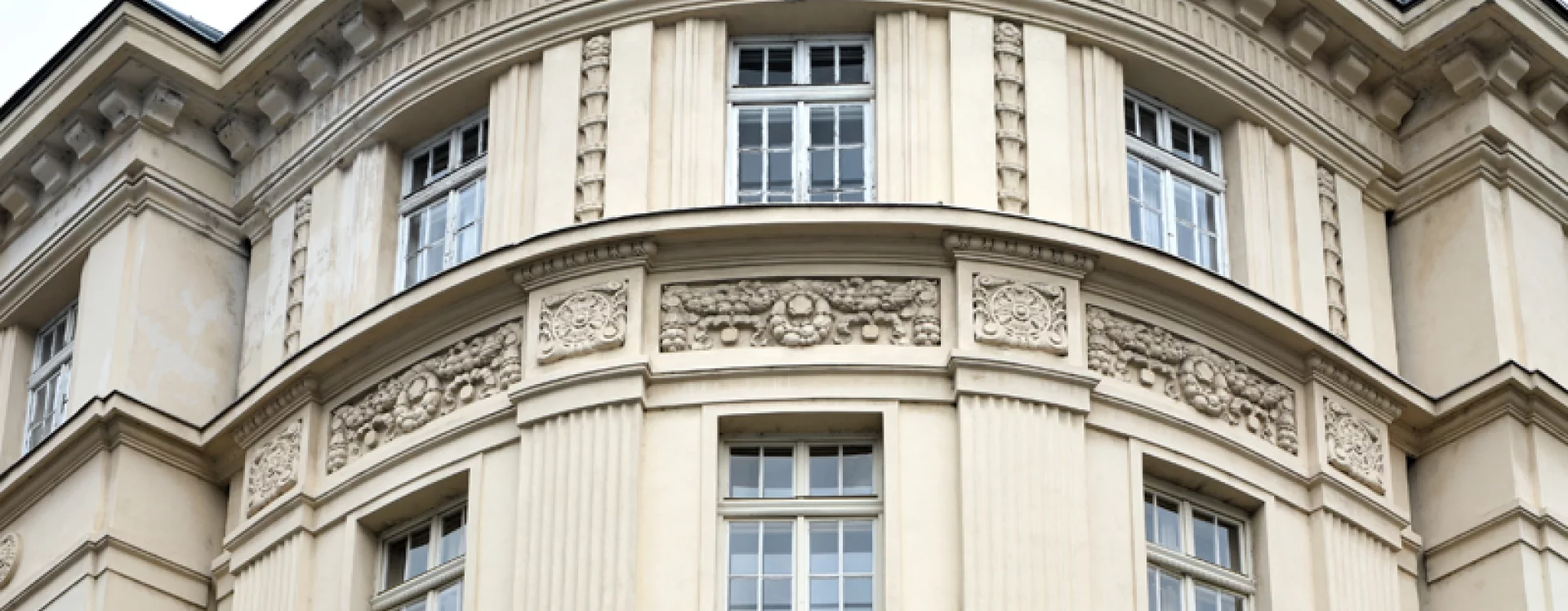
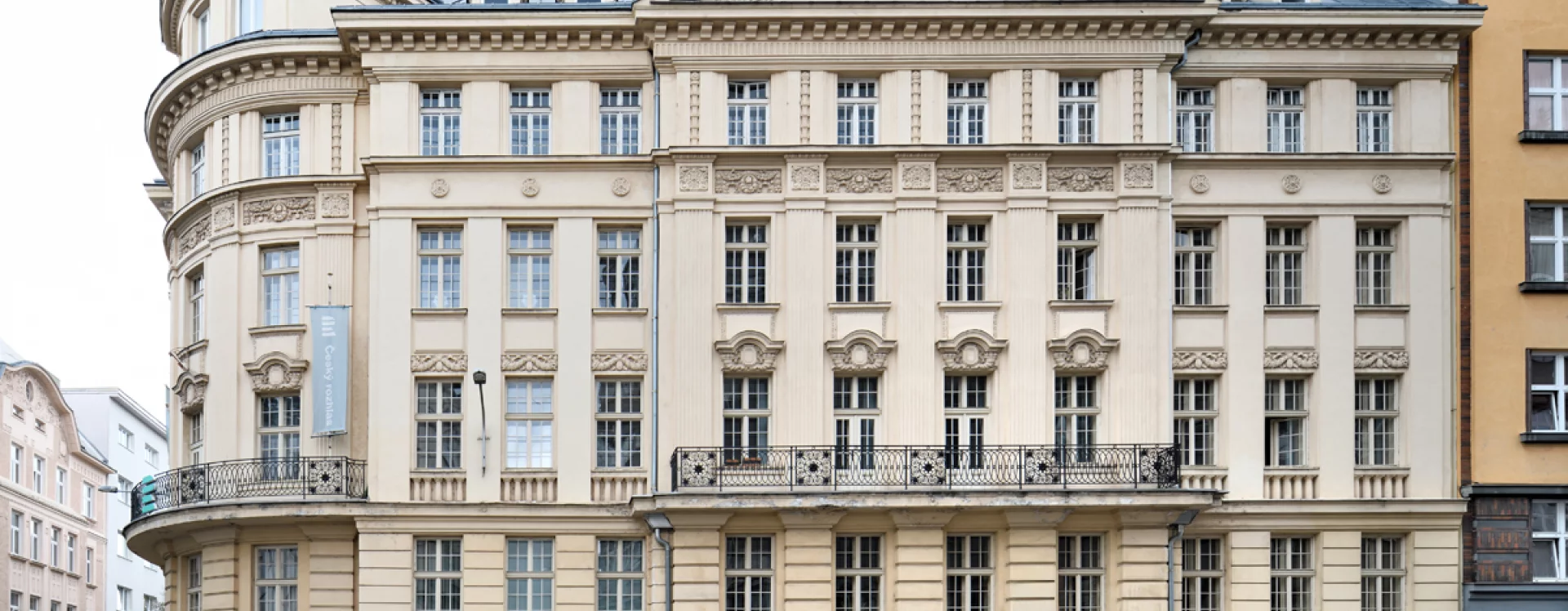
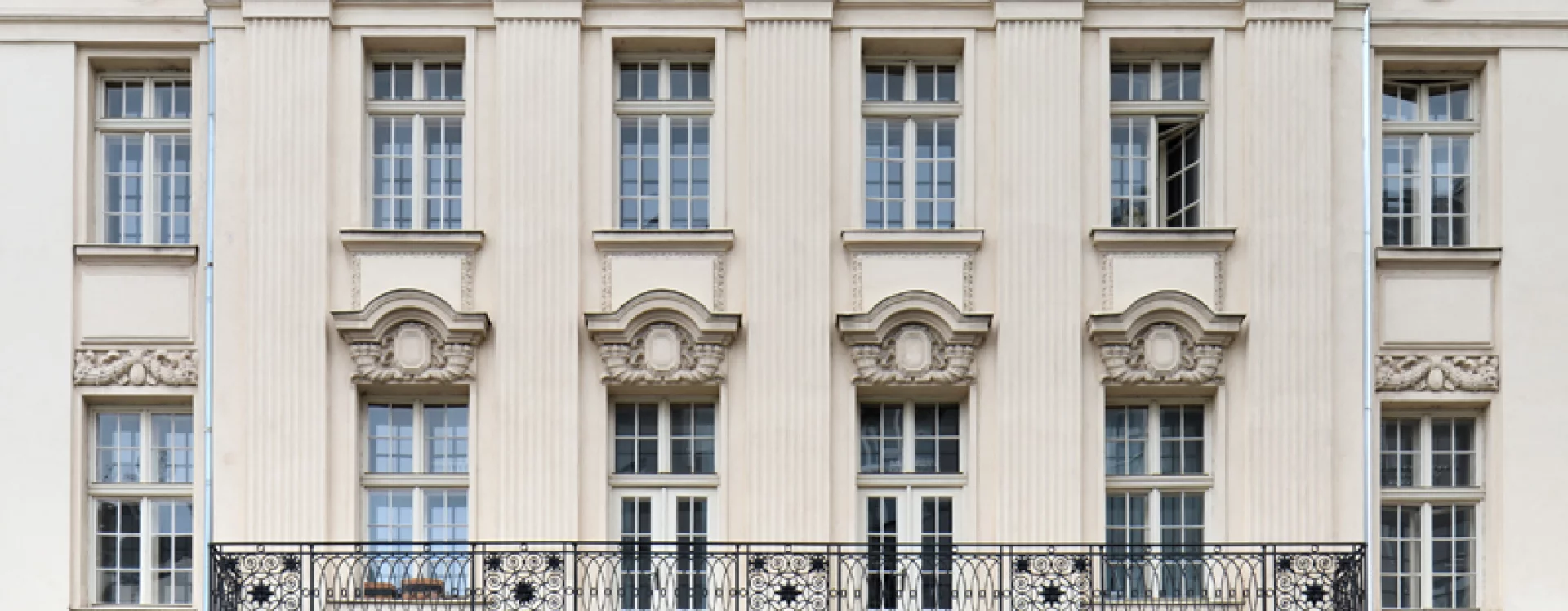
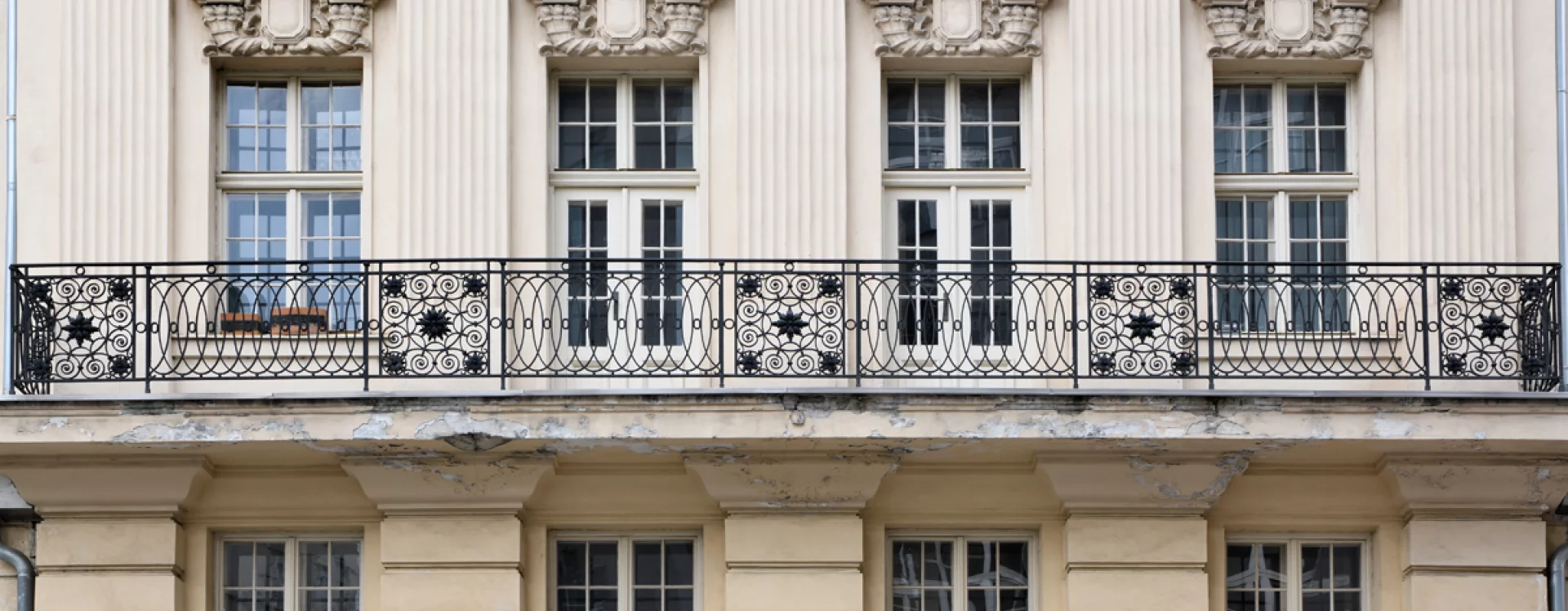
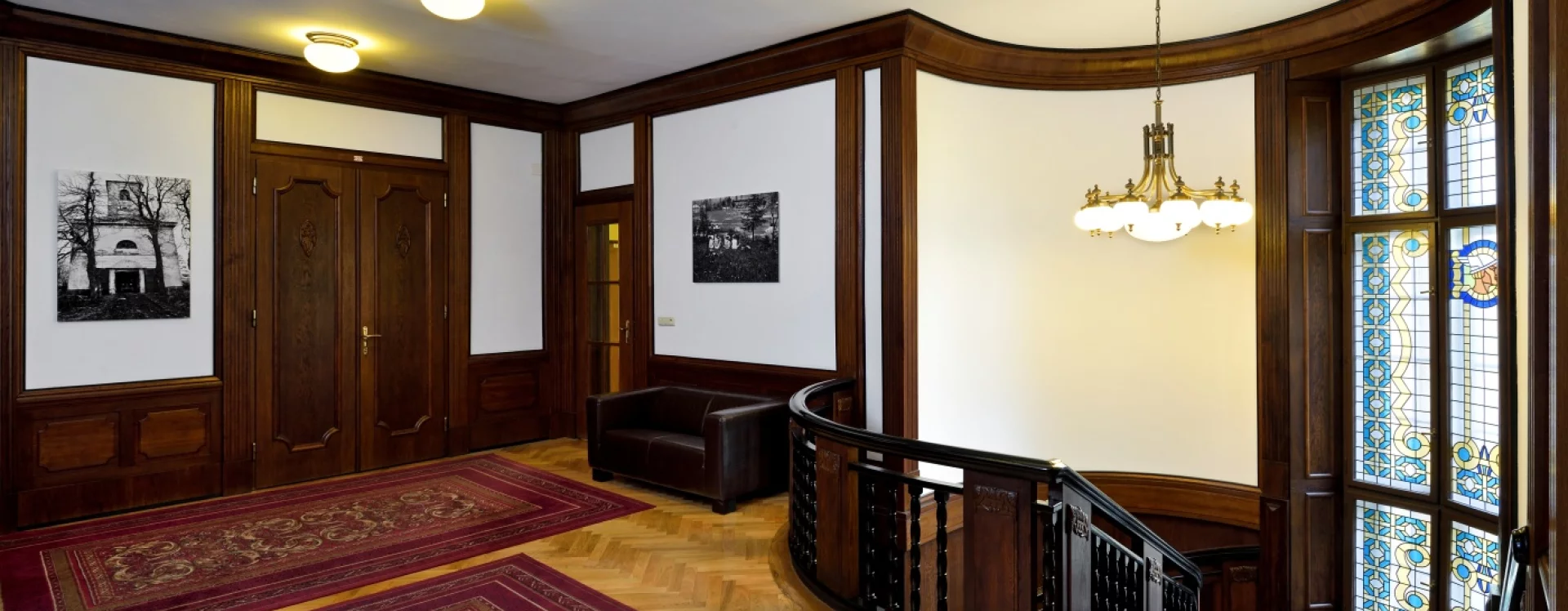
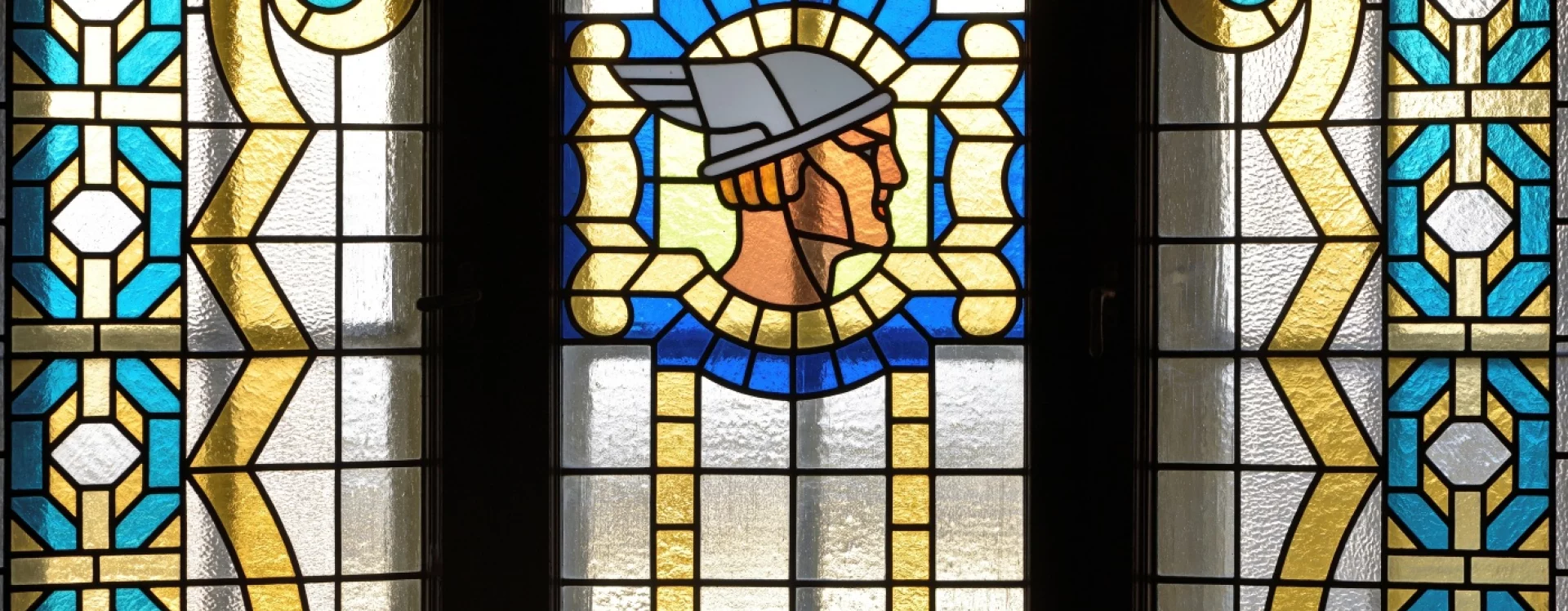
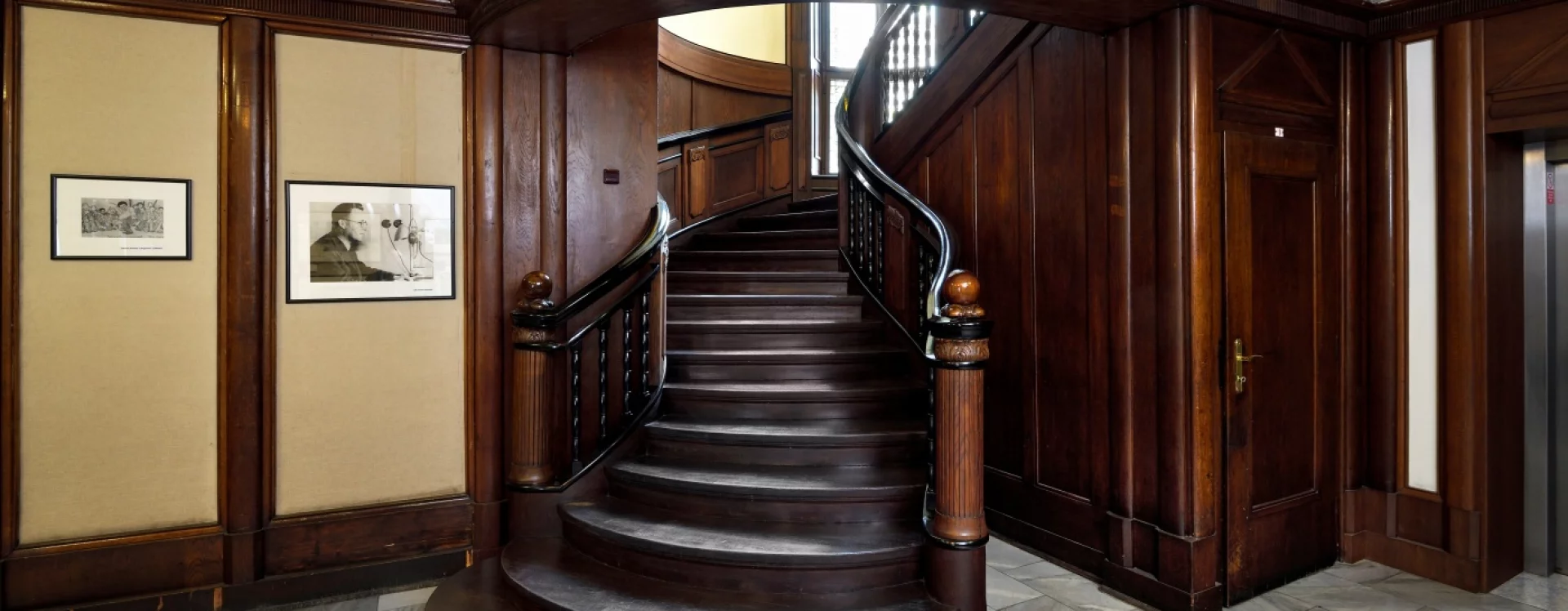
Both wings of the Ostrava palace are symmetrical and feature a rusticated ground floor. The façades are horizontally articulated by cornices with delicate stucco decoration in the form of classicising garlands and wreaths in the frieze. Shallow risalits and the rounded corner are emphasised by pilasters, lending the building a vertical accent. French windows on the first floor open onto balconies with decoratively designed metal railings and are crowned by segmental window cornices. Above the pronounced crowning cornice carried on consoles rise the triangular pediments of the risalits and a striking three-bay dormer with a triangular pediment at the rounded corner. The plan is double-tract and arranged diagonally. The main entrance at the corner leads into an oval vestibule, mirrored on the floor above by an identically shaped office, and then into a hall lined with timber panelling and featuring a wooden spiral staircase leading to the upper floor. The stairwell is lit by a stained-glass window. The staircase leads to the principal floor conceived as a palatial piano nobile, which housed the company’s management offices. The apartments occupying the remaining floors were accessed via side staircases. These double-flight staircases with decorative metal railings are located in stair risalits facing the courtyard and positioned at the centre of both wings.
Both the architecture and the rare surviving interior elements of this office and residential palace draw on Viennese models of representative banking and corporate buildings designed and erected shortly before the First World War and in the early 1920s. Since the mid-1930s, the building has housed the Ostrava studio of Czech Radio, founded in 1929. In 2008, Jaroslav Jakubek’s Ostrava workshop restored the staircases and the wooden panelling of the halls on the ground and first floors.
Literature
Průvodce architekturou Ostravy. 2009. p. 170. ISBN 978-80-85034-54-7.
Jindřich Vybíral. Zrození velkoměsta: Architektura v obraze Moravské Ostravy 1890–1938. Šlapanice, ERA, 2003. p. 117. ISBN 80-86517-94-2.
Administrativní budova - kancelářský a obytný dům firmy Rütgers. Available from: https://pamatkovykatalog.cz/administrativni-budova-13062568 [accessed 12. 10. 2025]
Památka 116. Available from: https://www.ostravskepamatky.cz/pamatka/show/116 [accessed 12. 10. 2025]
Julius Rütgers. Available from: https://cs.wikipedia.org/wiki/Julius_R%C3%BCtgers [accessed 12. 10. 2025]
Továrna Julia Rütgerse v Zábřehu n. O. Available from: https://historie.ovajih.cz/tovarna-julia-rutgerse-v-zabrehu-n-o/ [accessed 12. 10. 2025]