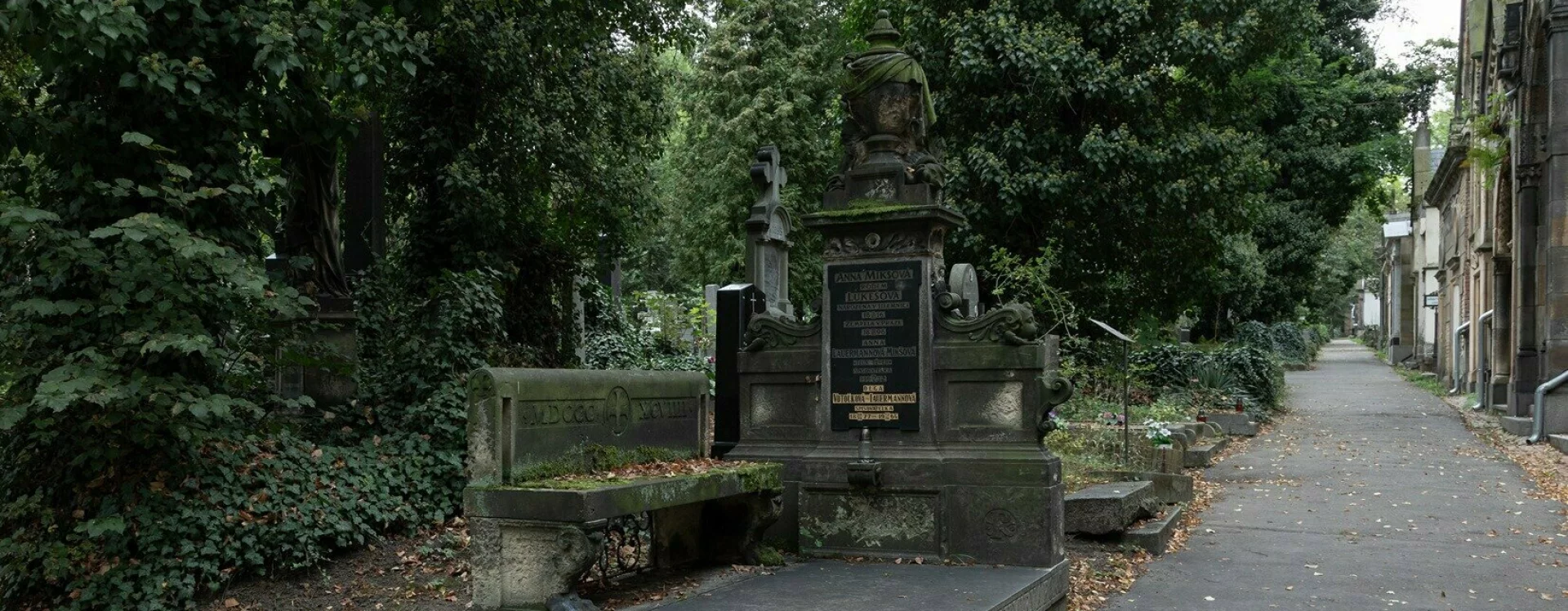
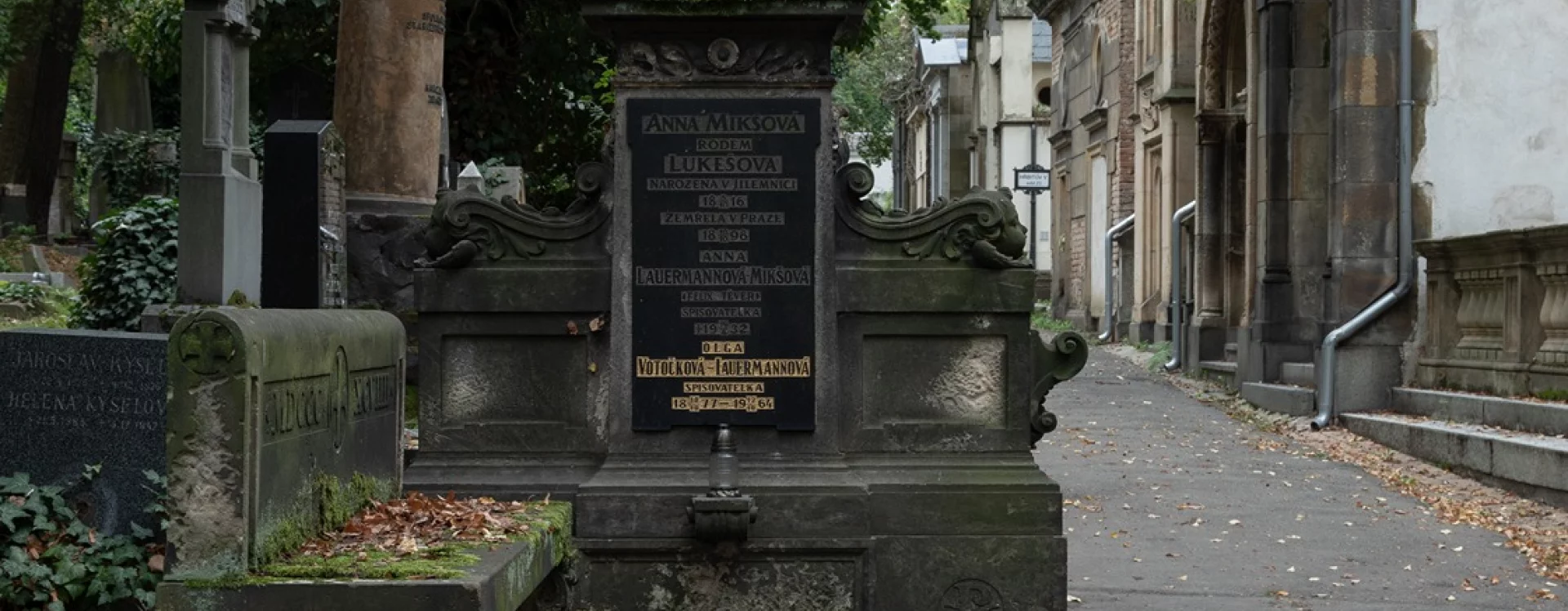
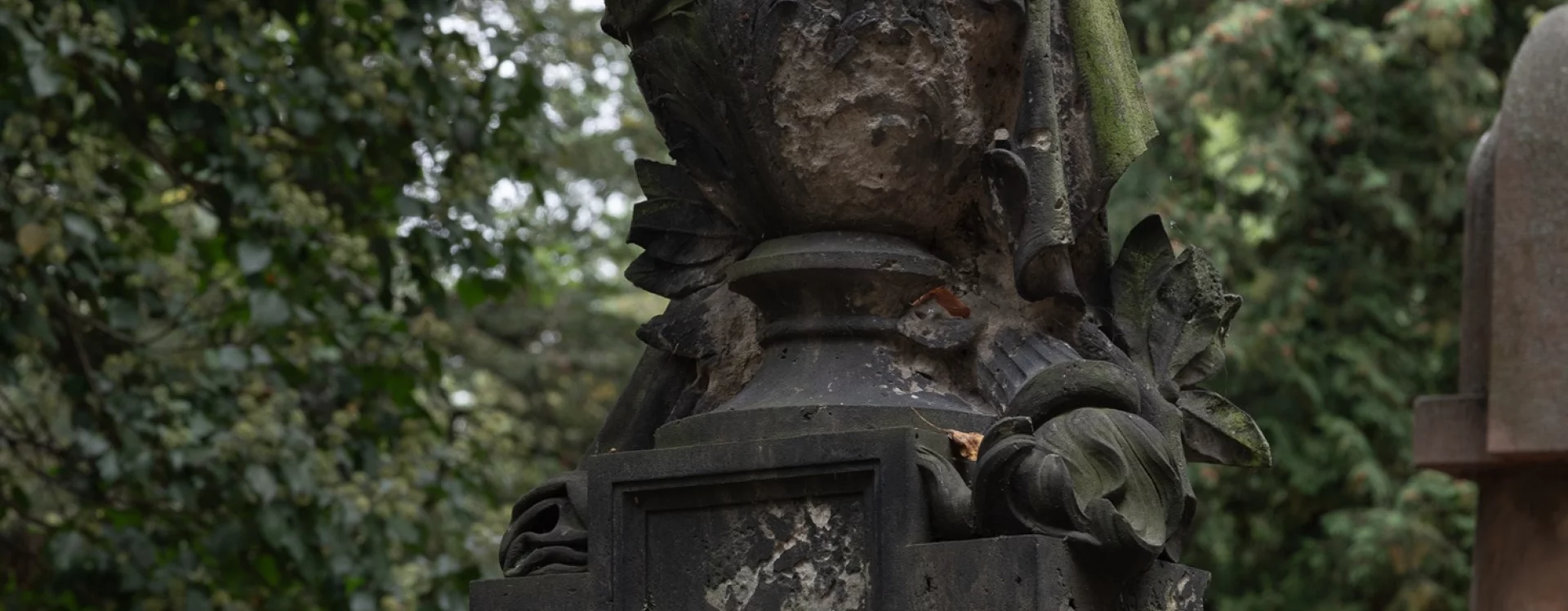
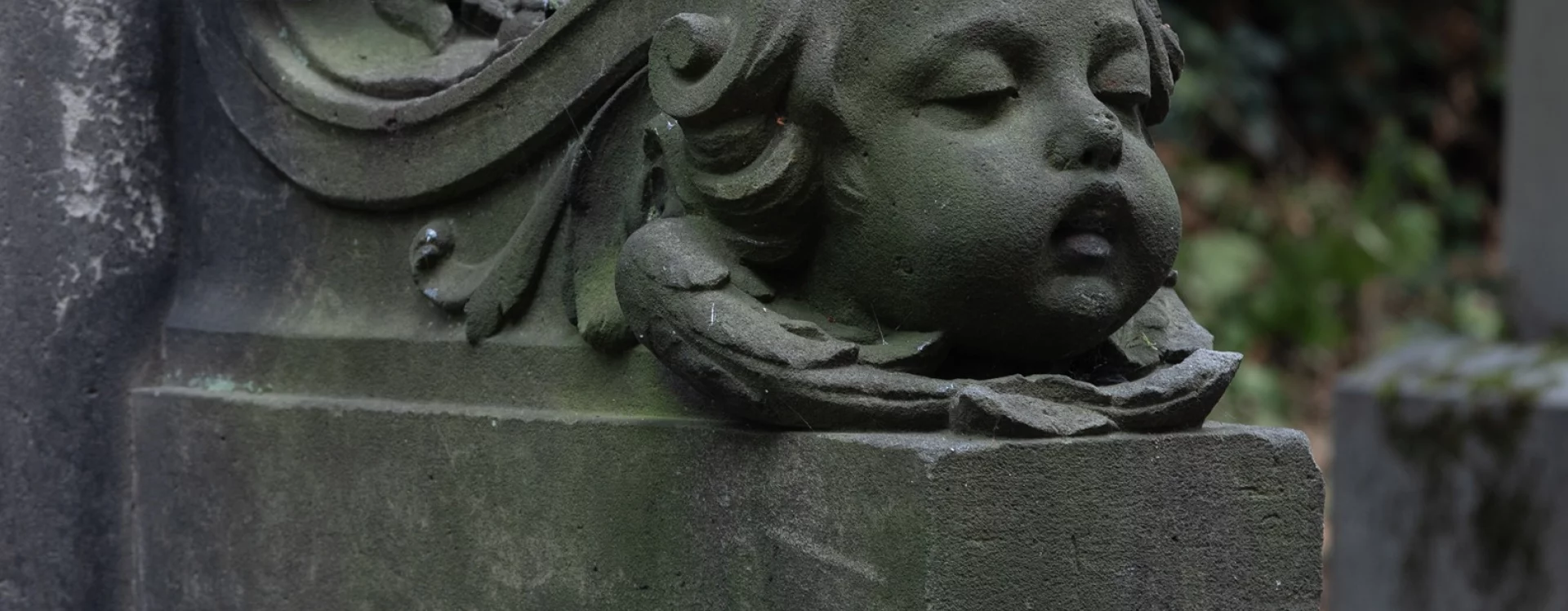
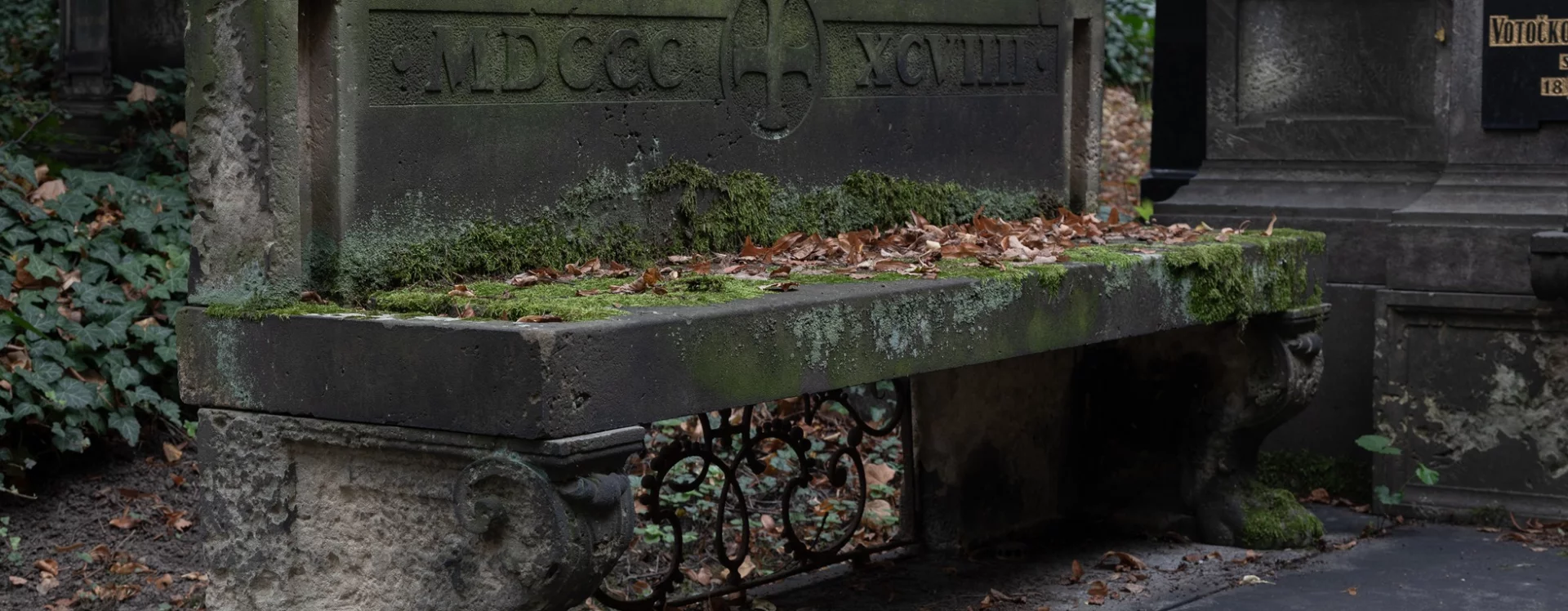
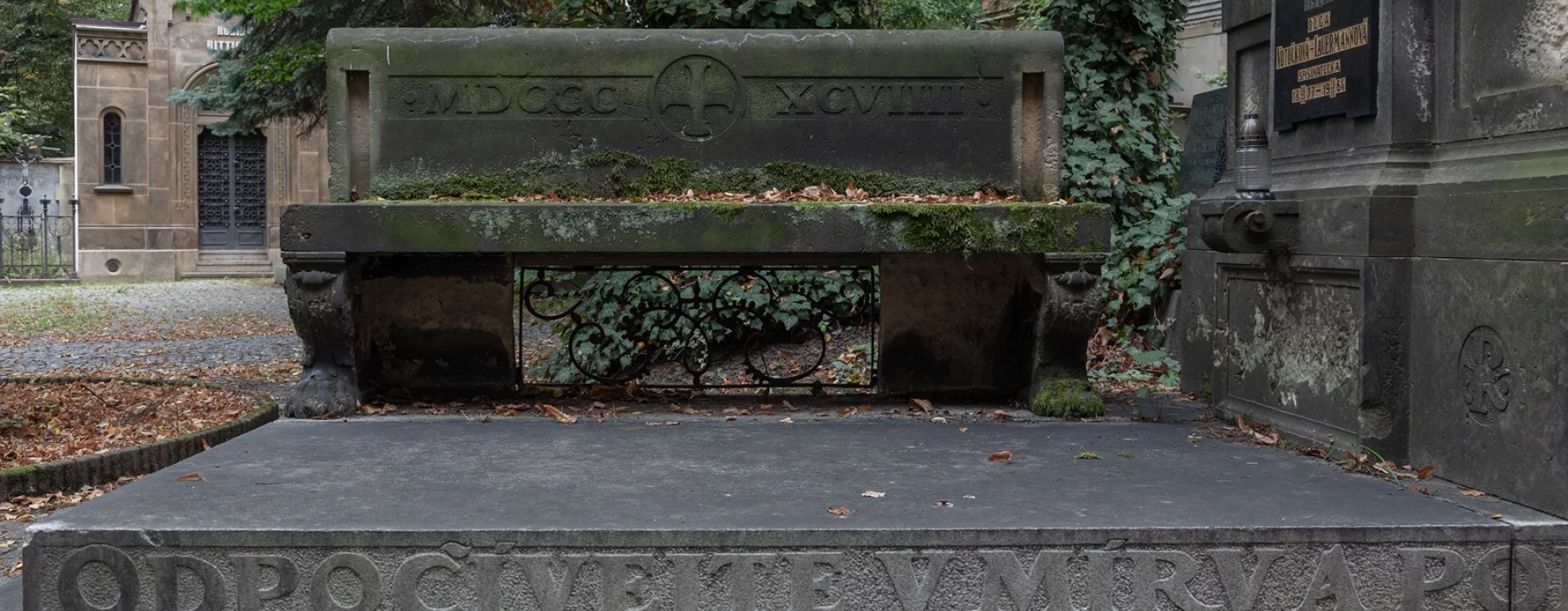
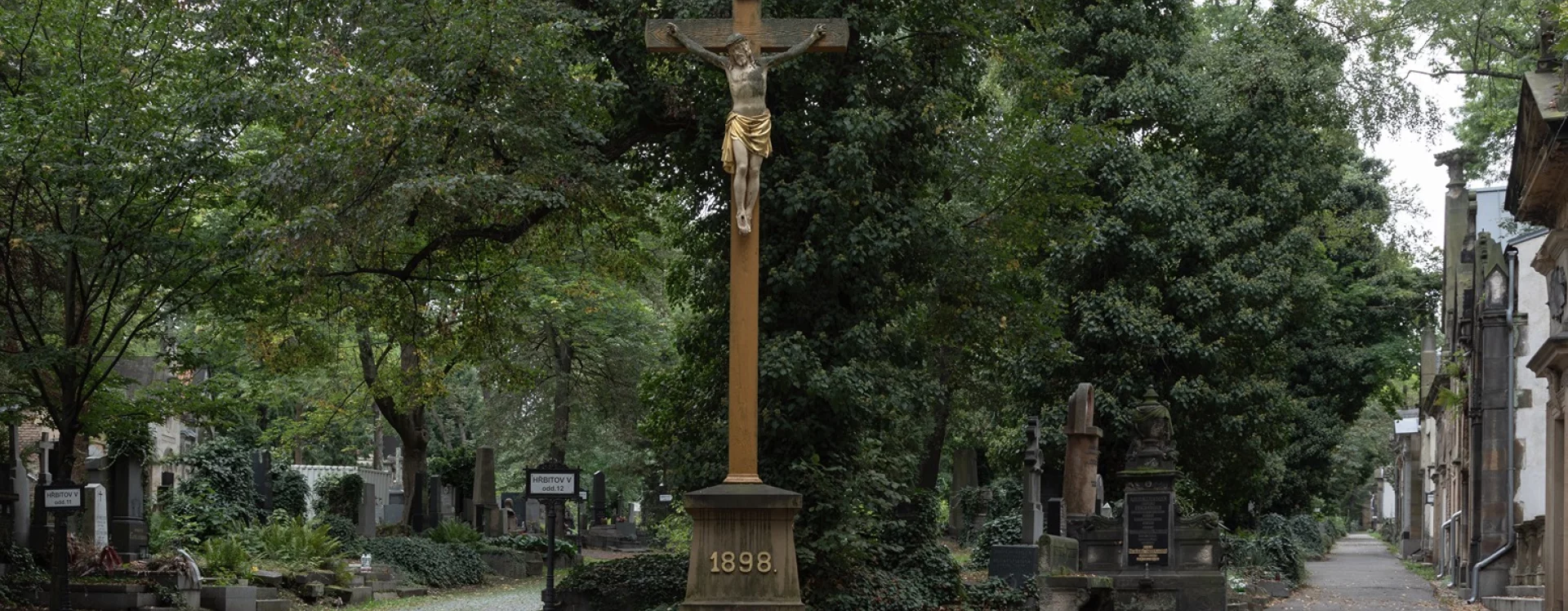
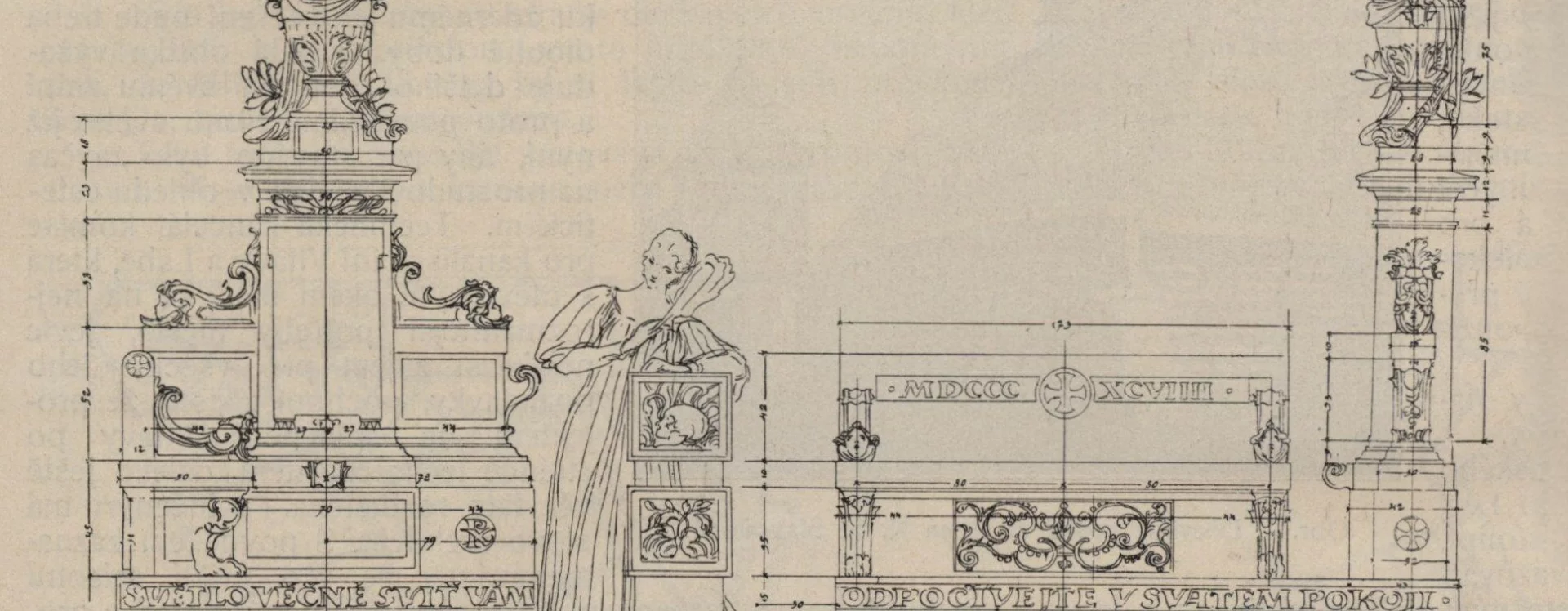
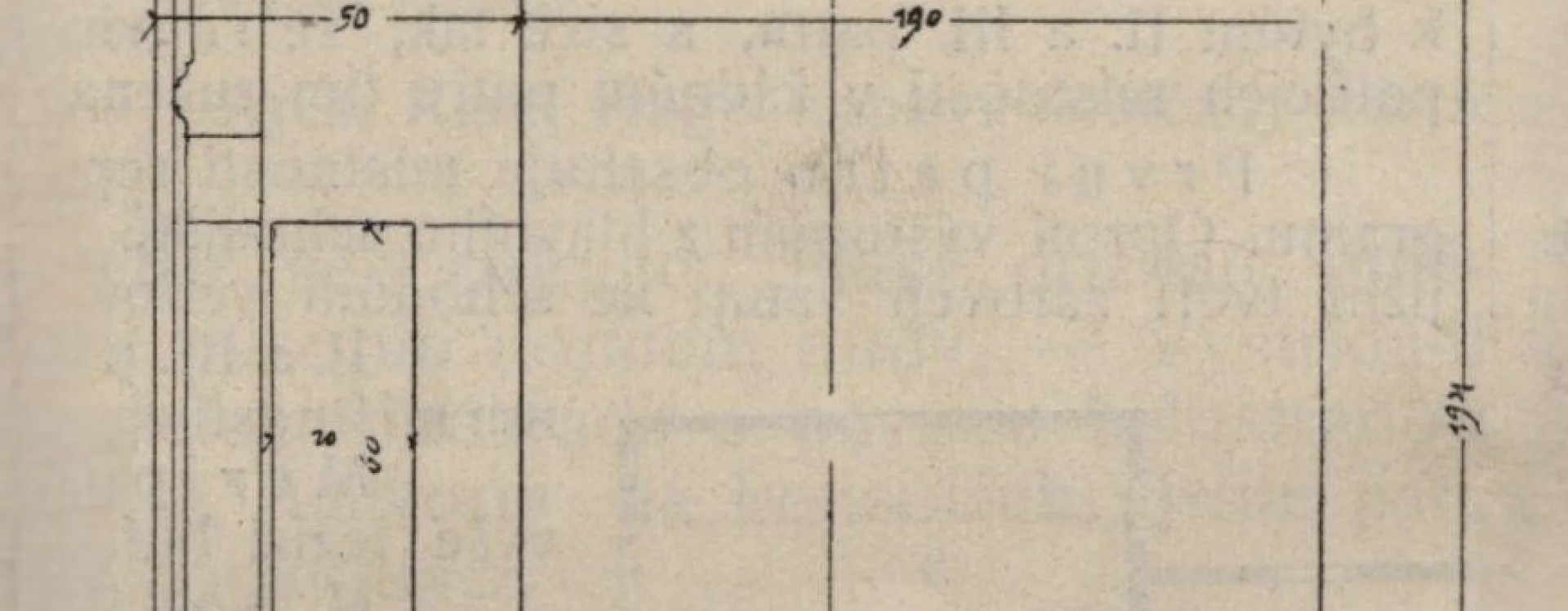
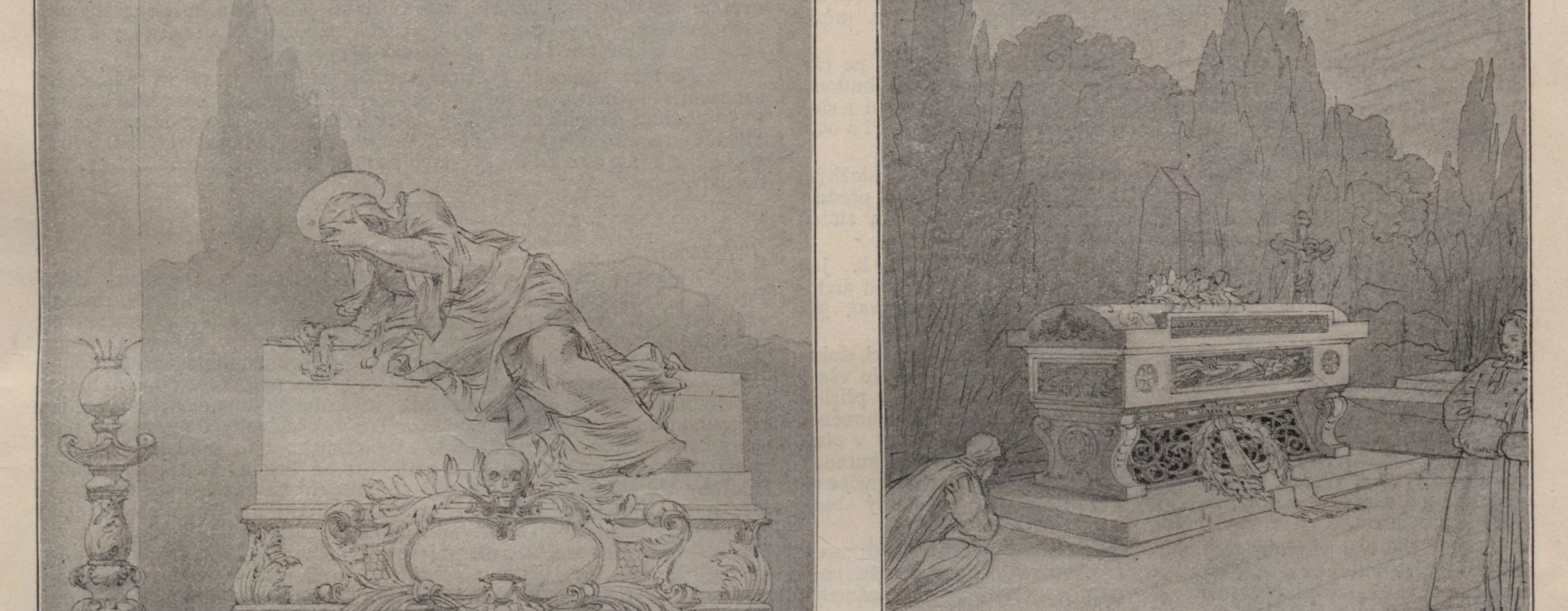
This unique sandstone grave monument combines elegance with practicality. It consists of a stone ledger and a tastefully decorated stele, with a bench on lion’s paw feet incorporated into the overall composition. Stylistically, the design draws on the waning historicism but in spirit it is already Art Nouveau. The stele with inscription plaque is flanked by volutes with angel’s heads and is topped by a decorative sculpture of an urn partially draped in fabric alongside a laurel branch and an upside-down torch with an extinguished flame. Another decorative element is the lettering in Fanta’s typeface: the date of the monument’s creation MDCCCXCVIIII on the bench (with decorative metal grillwork beneath the seat) and the inscriptions MAY ETERNAL LIGHT SHINE UPON YOU and REST IN PEACE on the sides of the ledger stone.
Josef Fanta created this decorative monument with great attention to the wishes of his dear friend, who buried her mother here. Anna Lauermannová’s father had died twenty years earlier at her older sister’s home in Nymburk, where his grave marker is decorated with a portrait medallion by J. V. Myslbek. Myslbek’s involvement was a reflection of her father’s renown: the obstetrician Mikuláš Miksche had numerous friends from among the highest circles of culture and public life, and the socially-inclined Anna had been exposed to discussions of culture and politics from a young age. Her best friend was Marie, the daughter of František Ladislav Rieger, the “Leader of the Nation.” Rieger later even advised Lauermannová to set up a literary salon as a form of therapy following a difficult marriage. With this, she followed on the home salons that Rieger and František Palacký held in their living rooms. Hers was a pleasant and popular place for artists and publicly active Czechs from various generations to meet and gather. Though the salon on today’s Jungmann Square was focused primarily on literature, visitors discussed other subjects as well, including art, theater, and architecture. It was attended by such figures as Eliška Krásnohorská, Julius Zeyer, the historian Jaroslav Goll, and the Čapek brothers. Anna was also active in literary production: besides translating, she also wrote under the pseudonym Felix Téver (“Happy Tiber”) – a reminder of a felicitous summer she and her young daughter Olga spent in Italy.
Another guest at her salon was the architect Josef Fanta. At the time that he was working on Lauermannová’s monument (i.e., shortly before the turn of the century), he was fluidly transitioning from the Neorenaissance to Art Nouveau and was also occupied with the building most frequently associated with his name – Franz Josef Station (today Prague Main Station). With his shift to the Art Nouveau style, his work, including churches and funerary works, fully came into bloom. He designed a large number of grave monuments, in particular at Vyšehrad Cemetery, but also a large crypt for the industrialist and philanthropist Bohumil Bondy at the New Jewish Cemetery. Nevertheless, Fanta’s best known funerary work is in Poděbrady, where he designed a new cemetery, including its main gate and chapel. The cemetery’s eastern wall, divided by blind arcades into sections for lavish crypts, is adorned with reliefs by František Bílek.