Josef Fanta studied civil engineering at the Czech Technical University in Prague From 1873 to 1877 and subsequently worked in Josef Zítek’s factory on the construction of the National Theatre. In 1881 he returned to his alma mater as an assistant to the famous architect and teacher Josef Schulz. In 1890 he completed a scholarship tour of Italy, where he studied ancient and Renaissance architecture. After that he began to work as an independent architect, but he also helped Schulz with the decoration of his larger projects (Rudolfinum, National Museum). He also remained associated with the school, where he was even appointed full professor of ancient Christian and medieval architecture in 1909. The above-mentioned stylistic periods also influenced his work on repairs and renovations of historical buildings, especially churches – for example the Church of the Assumption of the Virgin Mary in Zlonice (which he designed together with Friedrich Ohmann), the Church of St. Wenceslas in Zderaz in Prague or the Church of the Assumption of the Virgin Mary in the town of Klatovy. In addition to the reconstruction of monuments, he also designed interiors and tombstones and produced various works of art in wood, ceramics, metal and textiles. He also tried his hand at designing sgraffiti with Mikoláš Aleš during the decoration of Wiehl’s house on Wenceslas Square in Prague (no. 792, 1894–1896). Fanta’s designs of houses were quite original, including two Neo-Renaissance villas in Pod brady town of inspired by the Nordic style. Exposed masonry in combination with red bricks and decorative sandstone elements, dynamic morphology in the form of stepped gables and dormers, and sometimes sculptural decor and sculptural decoration are also characteristic features.
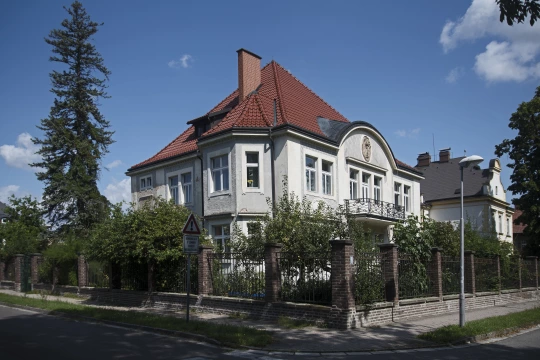
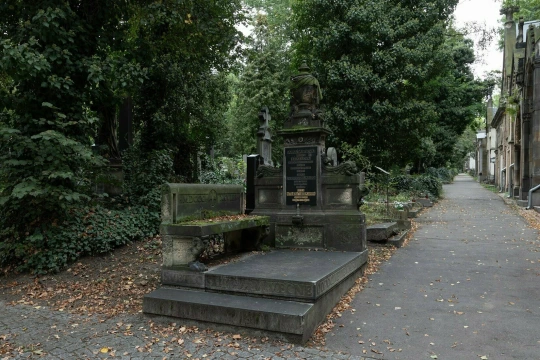
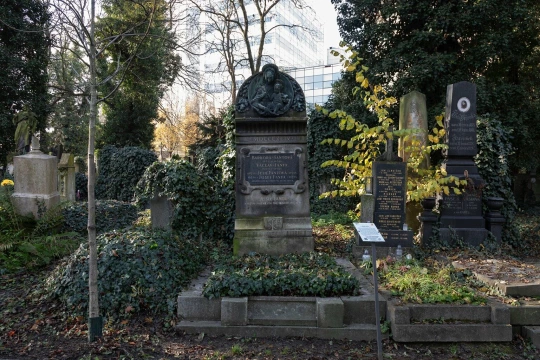
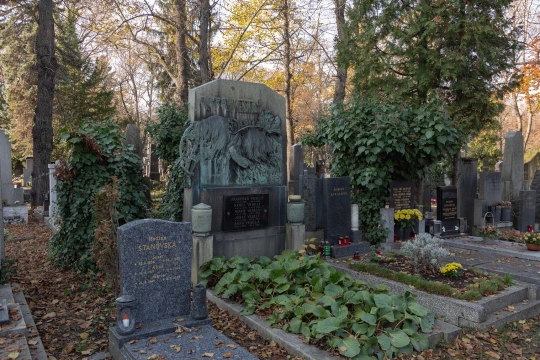
In Hradec Králové, Fanta designed a villa on the embankment of the Orlice River (447 Balbínova Street) for the grammar school Bohumil Hobzek in 1909. Its conception reflects more closely the contemporary neo-Baroque tendencies developed in the East Bohemian metropolis, especially by Rudolf Němec. In the typical arched gable of the main façade there is Madonna and Child by the sculptor Čeňek Vosmík. Fanta designed a villa for this frequent collaborator of his the very next year. It was built in Smíchov and embodies the architect’s efforts to transform his creative concept. The softening of form and spare decor already demonstrate the partial adoption of Art Nouveau influences and the search for their application to the domestic environment. However, Fanta was unable to make his efforts convincing, so they seem mostly only superficial. The architect’s distinctive development of modernism was also limited by the generational issue, which was best summed up by the difference between his conservative conception of the Czechoslovak presentation at the World Exhibition in Paris (1900) and the progressive exposition of Czech art prepared four years later by Jan Kotěra for the St. Louis exhibition. Fanta’s deepest commitment to the search for a new style was demonstrated in the largest and most prestigious commission he ever completed. In addition to its captivating ornamentation, the František Josef I train station building in Prague will undoubtedly impress with its “struggle for a new form”, as Antonín Engel perceived the monumental and functionally clearly defined building.[1] Art Nouveau ornamentation also distinguishes the house of the Hlahol choir on Prague’s Vltava embankment and several filigree decorated tombs in Vyšehrad Cemetery. The monument to the Napoleonic Battle of Slavkov from 1912 became a fundamental representative of Fanta’s freer style. After the establishment of the Czechoslovak Republic, he became a member of the Academy of Sciences and Arts and worked at the Prague Czech Technical University until 1926. His last major work was the building of the Ministry of Commerce in Na Františku Street (1925–1932), which, however, at its inception represented the trend of anachronistic, albeit magnificent public buildings. Fanta lived to be almost a hundred years old; he died in 1954 in his home in Jevany and is buried in the family tomb in Olšany Cemetery, which he designed himself.
Note:
[1] Cf. Styl, 1912, IV., p. 34
MP
Literature
- Archiv NTM, fond č. 10, Josef Fanta, osobní pozůstalost.
- Prokop Toman. Nový slovník československých výtvarných umělců, I. A–K. Praha, 1947. p. 209.
- Encyklopedie architektů, stavitelů, zedníků a kameníků v Čechách. Praha, 2004. p. 163.
- Marie Benešová. Česká architektura v proměnách dvou století. Praha, 1984. p. 213–218.
Related objects
Objects of the author in other architectural manuals