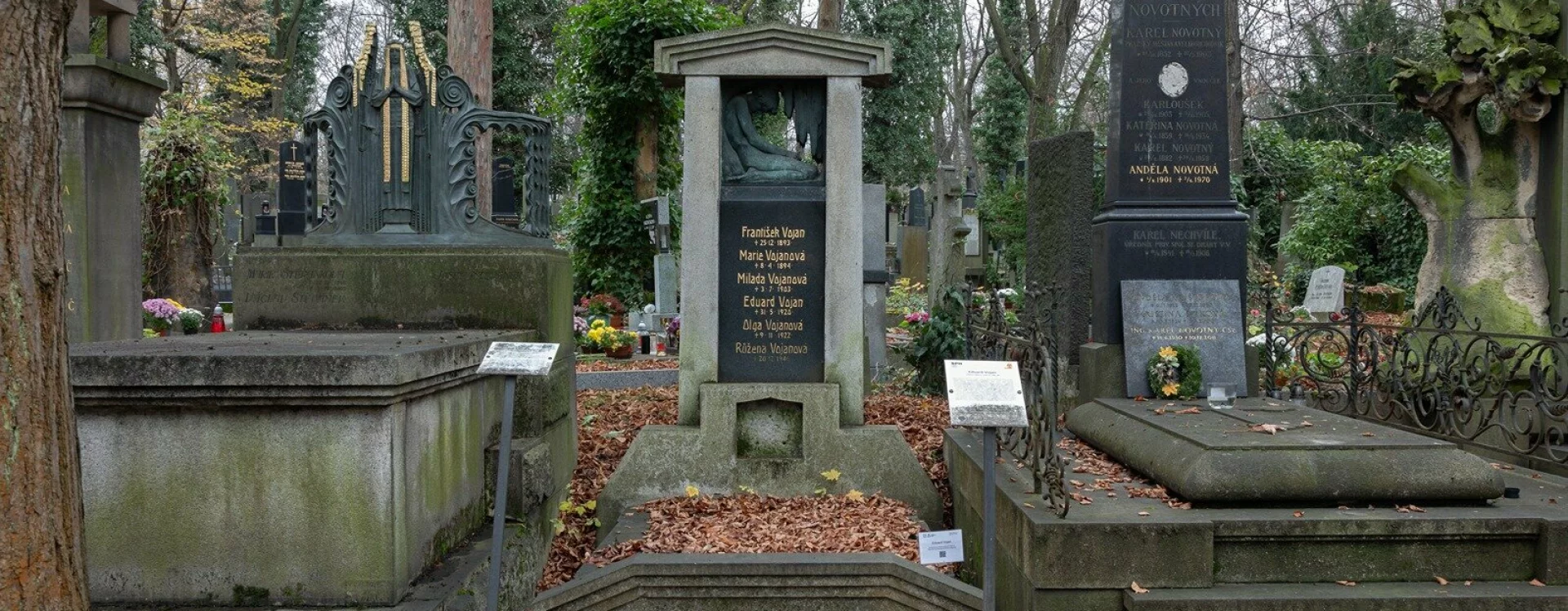
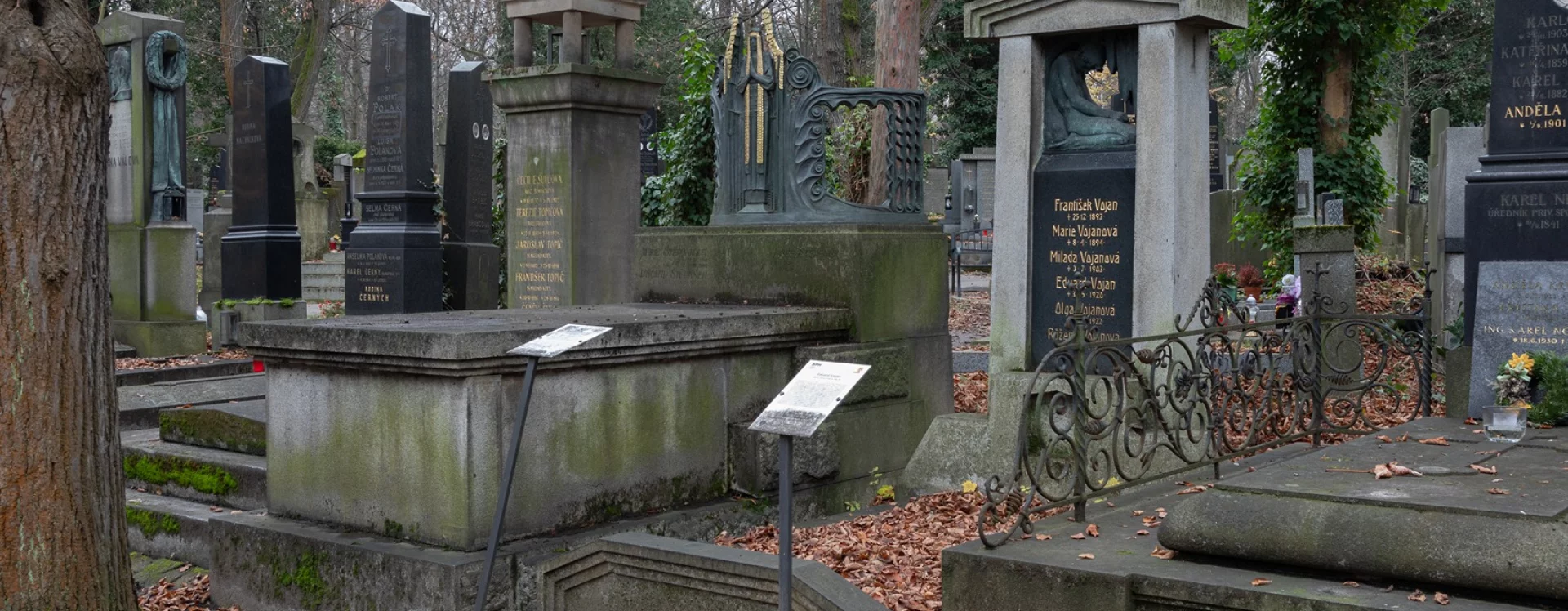
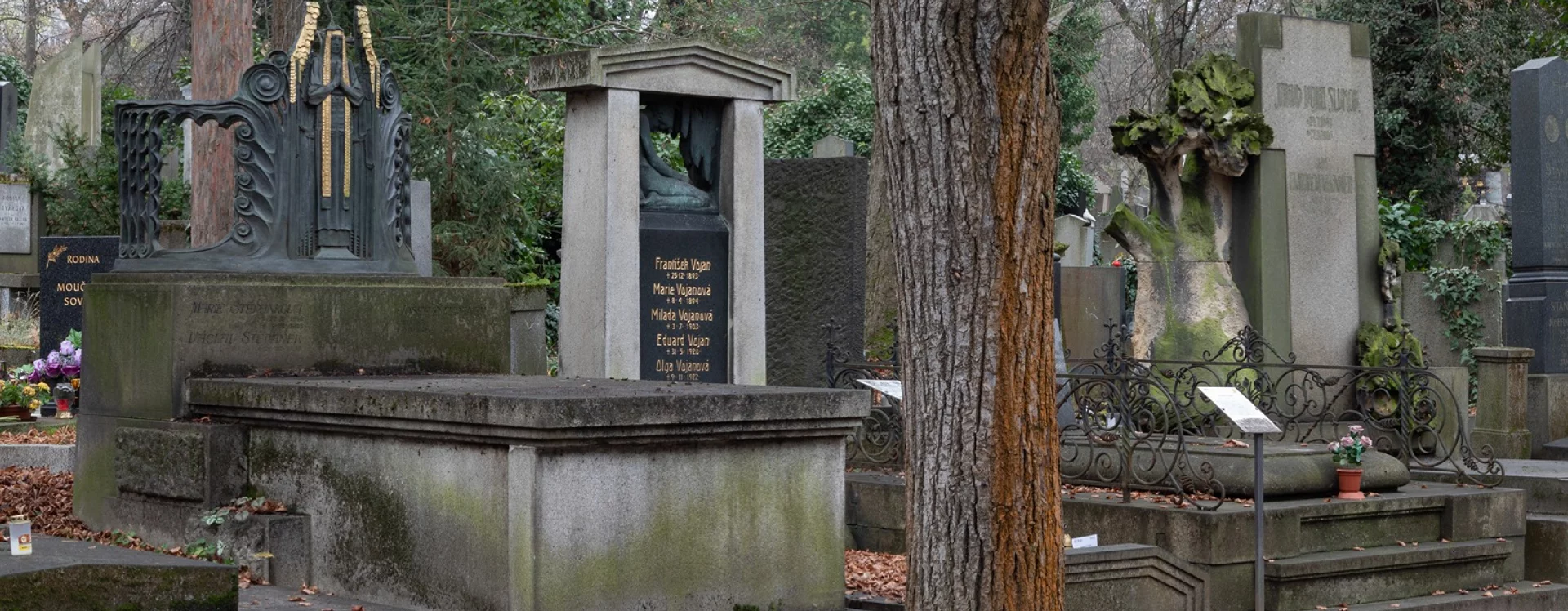
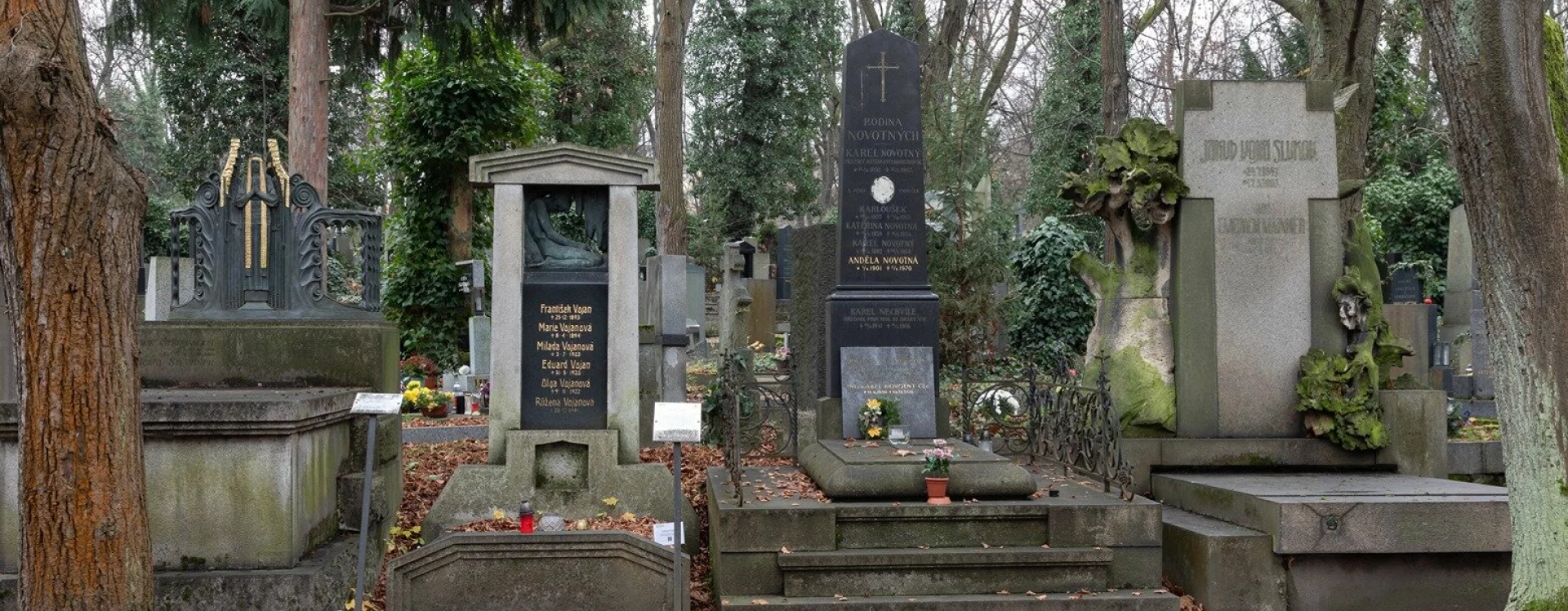
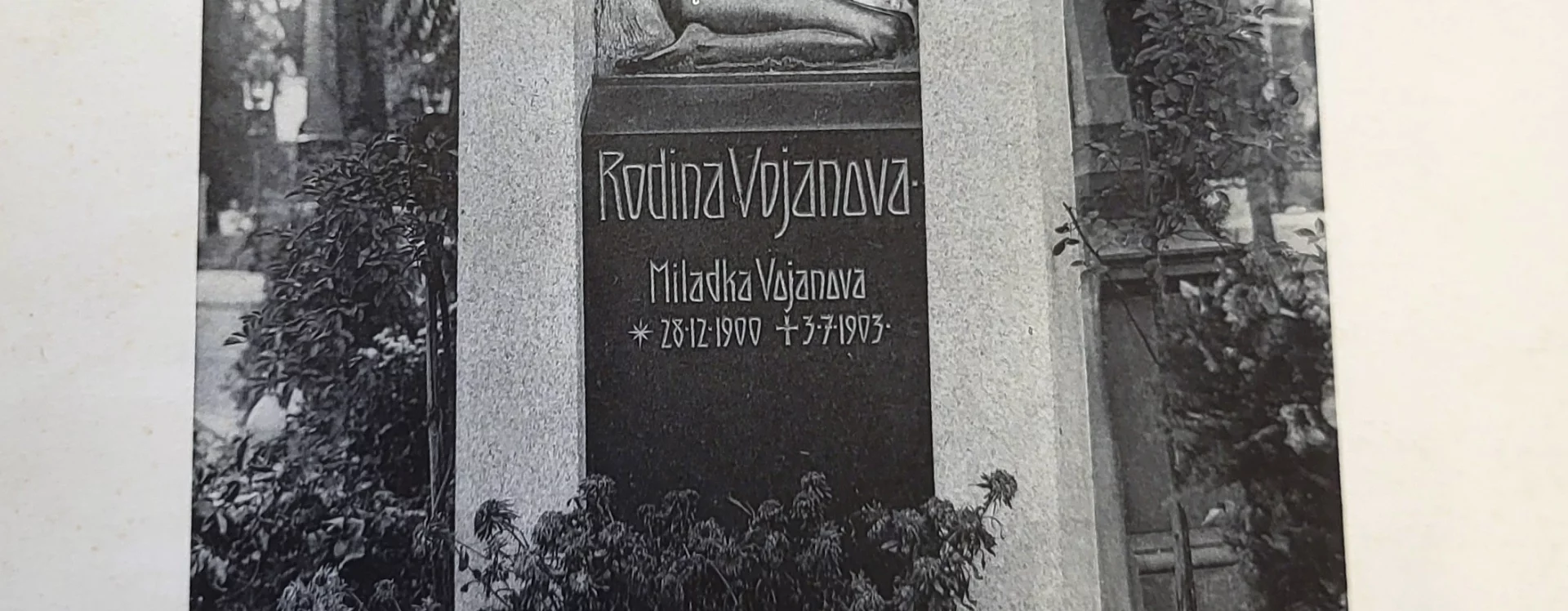
Just a few months after completing a monument for the popular actor Slukov and almost right next to his grave, the same creative duo – architect Jan Kotěra and sculptor Stanislav Sucharda – produced a grave monument for another legendary actor of the National Theatre, Eduard Vojan. It is of an entirely different design, however, among other things because it was not erected to commemorate the actor himself; instead, Vojan commissioned the memorial for his deceased three-year-old daughter Milada. Since the inscription tablet was later replaced, this fact is no longer apparent, and so the monument is generally perceived as being dedicated to Eduard Vojan.
Vojan developed a passion for the stage at a young age, pursuing it against his parents' wishes and leaving home at sixteen to join a traveling theater. He soon became a success at the famous Švanda Theatre, where critics described his acting style as psychological realism, and he ultimately appeared on stage of every Czech actor's dream – the National Theatre. But joy soon gave way to disappointment. Such a large stage demanded grand spectacle and expressive emotions, whereas Vojan's style was more modern and natural. He had to wait for his moment, and it came in the form of contemporary Czech authors repeatedly asking him to perform the lead in their plays. Thanks to the Mrštík brothers, Alois Jirásek, and director Jaroslav Kvapil – who staged even classical plays in a contemporary manner – Vojan became a star of Europe-wide renown and a founding figure of modern Czech acting. Even President Masaryk attended his funeral.
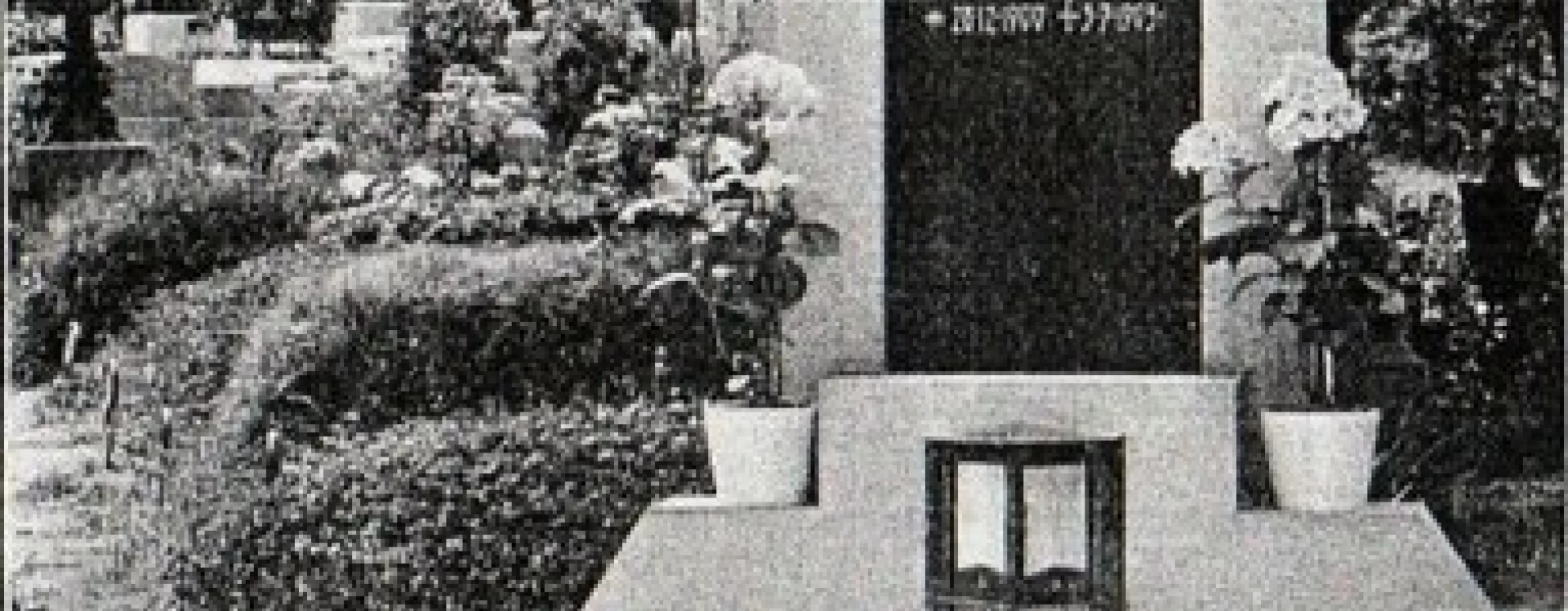
Jan Kotěra worked with funerary design during the last twenty years of his life, producing unexpectedly new and inspirational works. Although each of his monuments is different (there are eleven at Olšany alone), they all possess a high level of compositional quality, are made of noble stone, and are characterized by the harmonious combination of architecture with sculptural decoration and metalwork – in this case, a wrought bronze lantern from the workshop of Franta Anýž (visible in a historical photograph).
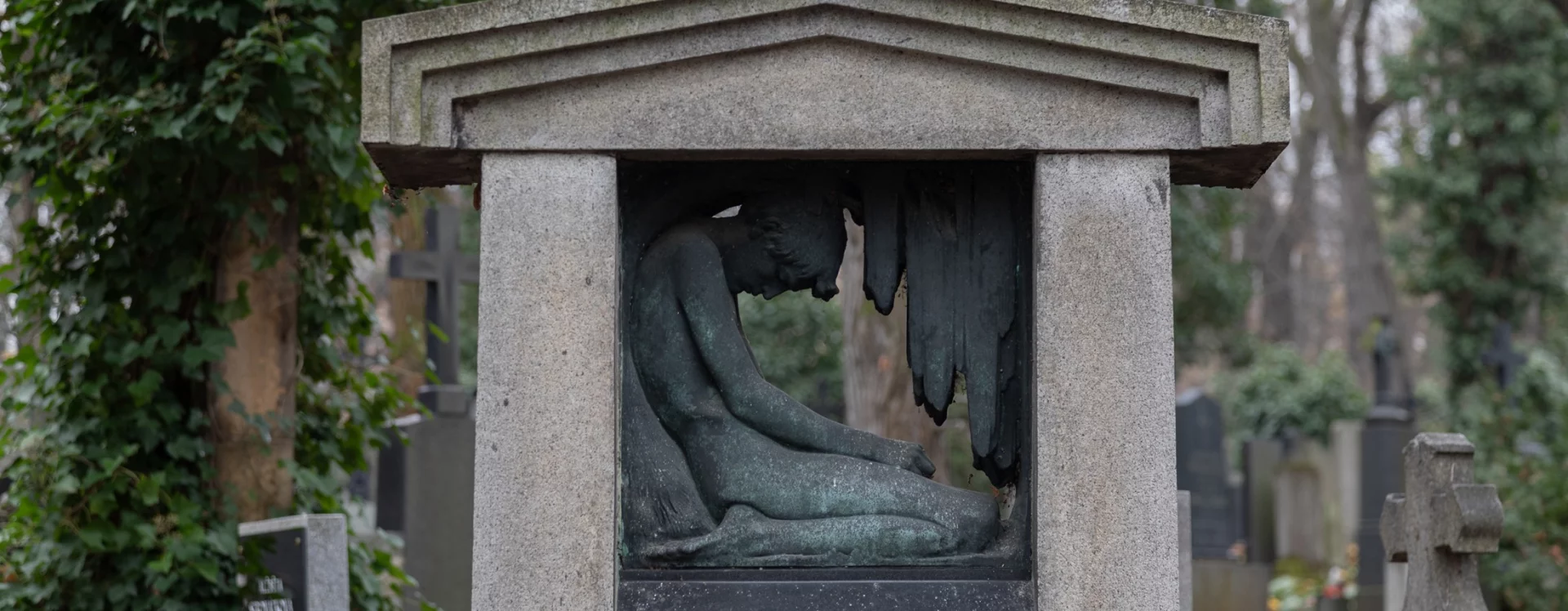
The symmetrical, tectonically structured composition has been done in honed Mrákotín granite. The end pieces on the ledger, especially the polygonal section at the front, evoke the semblance of a bed. The stele is crowned by a classicist tympanum that forms a small roof above the sculptural decoration and the black gabrodiorite inscription tablet. The main thing, however, is the small space underneath the roof, an opening almost entirely filled with a relief by Stanislav Sucharda depicting a crouched, mourning youth and the branches of a weeping willow. In this small frame, the burden of grief is expressed subtly, free of the era's typical pathos. It even includes a small unexpected miracle: through the narrow opening one cannot help but catch sight of the space beyond the monument, the sight of "somewhere further on."
Ten years later, Kotěra developed this motif of interior space and light in his design for the Janoušek family crypt.