Architect Jan Kotěra has been known as the “founder of modern Czech architecture”. We may ask why, but the important thing is that the Kotěra-founder’s myth was embraced by the generation of his pupils and the interwar avant-garde that professed his legacy. Jaromír Krejcar wrote in Kotěra’s obituary: “The secret of his school and its vitality is that it never produced willing or forced [...] epigons. Kotěra’s name is now again on the shield of the youngest generation of artist.” [1].
Jan Kotěra was born in Brno and he studied an architectural vocational school in Pilsen. After graduation, he met Josef Mladota of Solopysky and designed the rennovation of his chateau in Červená Lhota near Sedlčany; Mladota later financially supported him during his studies in Vienna. Kotěra studied in Otto Wagner’s studio at the Academy of Fine Arts Vienna between 1894 and 1897. In the studio, he also met important representatives of the Vienna Secession – Josef Maria Olbrich, Koloman Moser, Josef Hoffmann (later, a representative of the Wiener Werkstätte), Jože Plečnik from Slovenia, and his compatriot Leopold Bauer. Although Kotěra thought highly of Wagner, he soon had to abandon his principles of universal modern architecture, like many other graduates of the school. Architectural historian Jindřich Vybíral wrote: “Wagner taught young artists to be greatly reserved about their wish to use artistic means to express and create national or local originality [because] he promoted the universal language of modern architecture, corresponding to the common Western culture and technical achievements.” [2]
Kotěra’s diploma project of the ideal classicist town of Calais, contrasting Wagner’s grid of a universal city and based on the concept of a classicist star, won the so-called Rome Prize. In 1897, Kotěra went to Italy to study classical architecture. When he returned to Prague, he first worked as a temporary (1898), and then a permanent professor of architecture after Friedrich Ohmann. Between 1902 and 1905, Kotěra, influenced by the interest in folk culture inspired by the Jubilee Ethnographic Exhibition in 1895, designed a number of buildings using variations of folk ornaments and traditional materials. The projects included Jan and Božena Herben’s weekend house, František Trmal’s villa, the villa of František Fröhlich, and the National House in Prostějov (1905–1907). At the same time, Kotěra developed a type of metropolitan house with floral Art Nouveau decorations such as the house of František and Lev Peterka in Wenceslas Square in Prague (1899–1900) and the District House in Hradec Králové (1901–1904). Around 1908, Kotěra turned to modernism. He designed utilitarian workers’ housing for the railway colony in Louny and his own large house in Hradešínská Street, Prague–Vinohrady, which had no Art Nouveau decorations or national Renaissance features. The exterior of the massive stair tower was designed as an empty, abstract space with lesenes of light brickwork and rough plaster. The tower was adjacent to a cubic form with a tented roof whose internal layout was based on current knowledge of the rationalization of the living space. In his villa, Kotěra had his architectural studio and architectural school he founded at the Academy of Fine Arts in 1910.
At that time, he also began to work on the project of a museum building in Hradec Králové, considered an example of the greatest synthesis of Kotěra’s principles: modern historicism and efforts to refine and abstract the architectural space. Between 1910 and 1914, Kotěra designed public and residential buildings. According to his theory, their function and resulting structures should be “space structures”, simplifying and synthesizing the principles of Gottfried Semper, Karl Bötticher and Otto Wagner [3]. Kotěra’s objectivity can be seen in the design of Laicher’s house in Prague–Vinohrady and Vilém Charvát’s villa in Vysoké Mýto. However, Kotěra never abandoned his metropolitan monumental style as manifested in the General Pension Institute building in Prague with cubist features. He also liked modern classicism, used primarily in the designs for his Jewish clientele: the duplex for the Mandelík brothers in Ratboř near Kolín and Lemberg-Gombrich villa in Vienna.
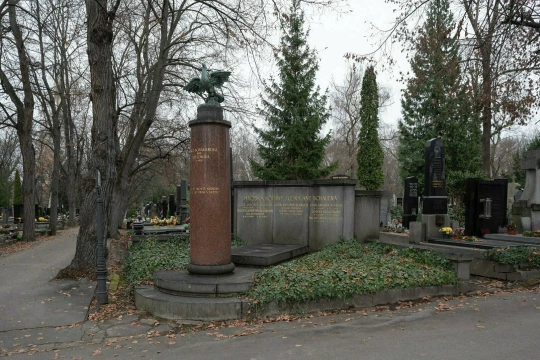
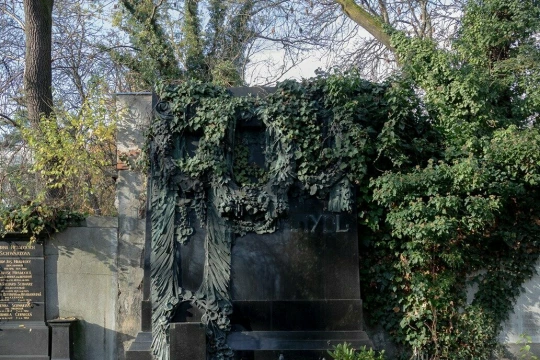
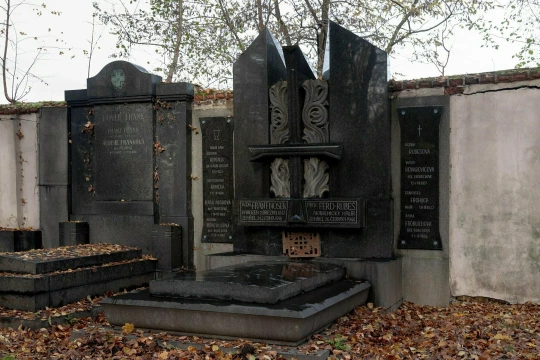
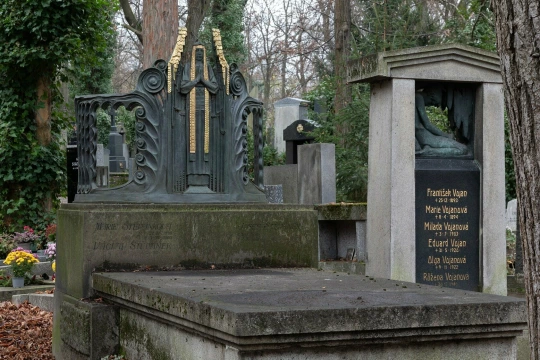
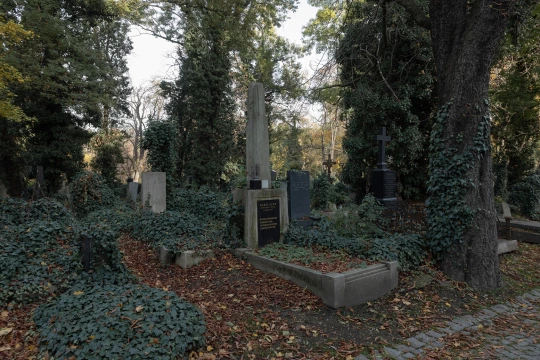
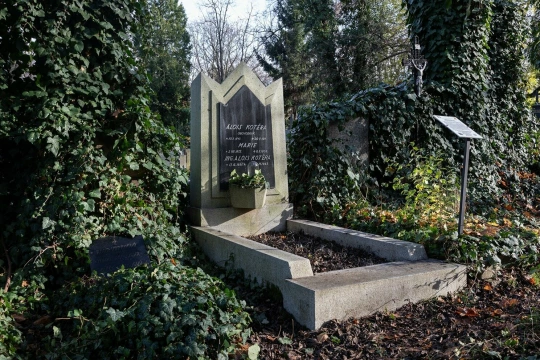
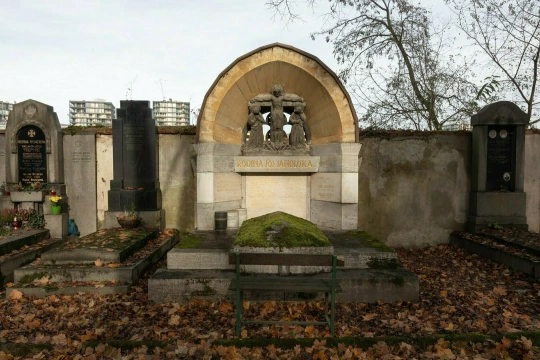
During World War I, Kotěra was exempted from military service because he ensured the functioning of the state as the Royal and Imperial Building Counsel and due to his worsening mental illness. During the war, he designed mainly funeral and memorial architecture he worked on occasionally already at the beginning of his career. In 1918, he was accused of collaborating with the defeated Austrian-Hungarian Empire, yet he was allowed to participate in several prestigious projects: the project of the Law Faculty he had worked on since 1908 – the construction of which was prevented by the conservative heir to of the throne, Franz Ferdinand d ‘Este, before WWI [4] – was renewed, and he also designed the government complex in Petrská čtvrť District, the headquarters of Ringhoffer’s factory in Prague–Smíchov, the municipal house in Hradec Králové, and the headquarters of the Vítkovice Metallurgical Mining Company. Only the last two projects were built. At that time, Kotěra, like architects in Vienna, was more inclined to monumental forms and the forms of modern historicism. Kotěra died of lung disease at the age of fifty two. The Kotěra-founder’s myth began to be built the next day by Zdeněk Wirth who wrote in Kotěra’s obituary: “[he was] the great founder of Czech modern architecture of his own will and thanks to his favourable fate”. [5]
LZL
Notes
[1] Jaromír Krejcar, Jan Kotěra, Stavba, year 1923–1924, vol. II, pp. 4–7
[2] Jindřich Vybíral, Regionalismus jako umělecký program a tržní strategie. Josef Hoffmann a Leopold Bauer na severní Moravě a ve Slezsku, Bulletin Moravské galerie v Brně, vol. 2005, no. 51, pp. 97–102, cit. pp. 98
[3] Kotěra formulated his theoretical ideas in his early and almost the only one article in Volné směry magazine he edited at that time. Jan Kotěra, O novém umění, Volné směry, vol. 1900, IV., no. 4, pp. 189–195
[4] It was completed after Kotěra’s death by his closest collaborator Ladislav Machoň between 1926 and 1930.
[5] Zdeněk Wirth, Jan Kotěra, České slovo, vol. 1923, No. 18. 4. 1923, unpaginated.
Literature
- Otázky dne. In: Socialistické listy. roč. 1918. sv. 40.
- Návrhy a provedené stavby Jana Kotěry od roku 1900–1921. In: Styl. 1921, II. (VII.). p. 94–95.
- Jan Kotěra. In: Národní listy. 1923, roč. 63. sv. 18, p. 1–2.
- Architekt Jan Kotěra. In: Host. 1923, II.. p. 314–318.
- Jan Kotěra. In: České slovo. 1923.
- Jan Kotěra. In: Volné směry. 1923, XXII.. p. 81–82.
- Jan Kotěra. In: Stavba. 1923, II.. p. 4–7.
- Jan Kotěra. In: Styl. 1925, VI. (XI.). p. 147.
- Z dopisů Jana Kotěry svému příteli R. G. ve Vídni. In: Stavitel. 1926, VI.. sv. 8–9, p. 63–65.
- Z italských dopisů Jana Kotěry se vzpomínkovým úvodem Jos. Šusty. In: Umění, Sborník pro českou výtvarnou práci. 1931, IV.. sv. IV, p. 113–128, 269–275, 313–316, 356–358.
- Data k projektu pro Právnickou a Theologickou fakultu české university. In: Styl. roč. 1931. sv. 1931, p. 93.
- Karel Polívka, Jan Kotěra, Časopis českých architektů, 1932, 17. 5. 1932, č. 4–5, s. 64–65. In: Časopis českých architektů. roč. 1932. sv. 4–5, p. 64–65.
- Jan Kotěra – kreslíř. In: Umění. 1943, roč. XV. p. 253–270.
- Poznámky ke Kotěrovu muzeu. In: Umění. 1986, roč. 34. p. 171–179.
- Lemberger-Gombrich villa in Vienna by Jan Kotěra. In: Umění. 1994, roč. XLII. sv. 5–6, p. 388–392.
- Jan Kotěra: 1871–1923: Zakladatel moderní české architektury. Praha, 2001.
- Jan Kotěra – protagonista moderny a zakladatelského mýtu. In: Stavba. roč. 2002. sv. 1, p. 3–4.
- Nekrolog k úmrtí Jana Kotěry. In: Architekt. roč. 2003. sv. 12, p. 75–80.
- Rodina Mandelíků a architekt Jan Kotěra. In: Židé v Kolíně a okolí. Kolín, 2005.
- Rodinné domy Jana Kotěry. Praha, 2011.
- Chrám vzdělání a vědy. In: Cesty filosofie a práva 1882–1912. Praha, 2012.
- Jakub Potůček. Kotěra: Po stopách moderny. Hradec Králové, 2013.
- Jan Kotěra: Jeho učitelé, doba a žáci: Sborník textů Mezinárodní konference k výstavě Kotěra. Po stopách moderny. Hradec Králové, 2013.
- Budova muzea v Hradci Králové: 1909–1913: Jan Kotěra. Hradec Králové, 2013.
- Ladislav Zikmund-Lender. Jan Kotěra v Hradci / Jan Kotěra in Hradec. Hradec Králové, 2016.
Related objects
Objects of the author in other architectural manuals
 Completion of the museum (Kotěra’s design)Královéhradecký architektonický manuál
 Jan Kotěra’s VillaUmělecké památky Prahy
 Kiosks on Prague BridgeKrálovéhradecký architektonický manuál
 Kotěra’s regulatory planKrálovéhradecký architektonický manuál
 MuseumKrálovéhradecký architektonický manuál
 The Credit Union Building (Kotěra’s design)Královéhradecký architektonický manuál
 The District HouseKrálovéhradecký architektonický manuál
 The Municipal HouseKrálovéhradecký architektonický manuál
 The Museum FountainKrálovéhradecký architektonický manuál
 The Palm GardenKrálovéhradecký architektonický manuál