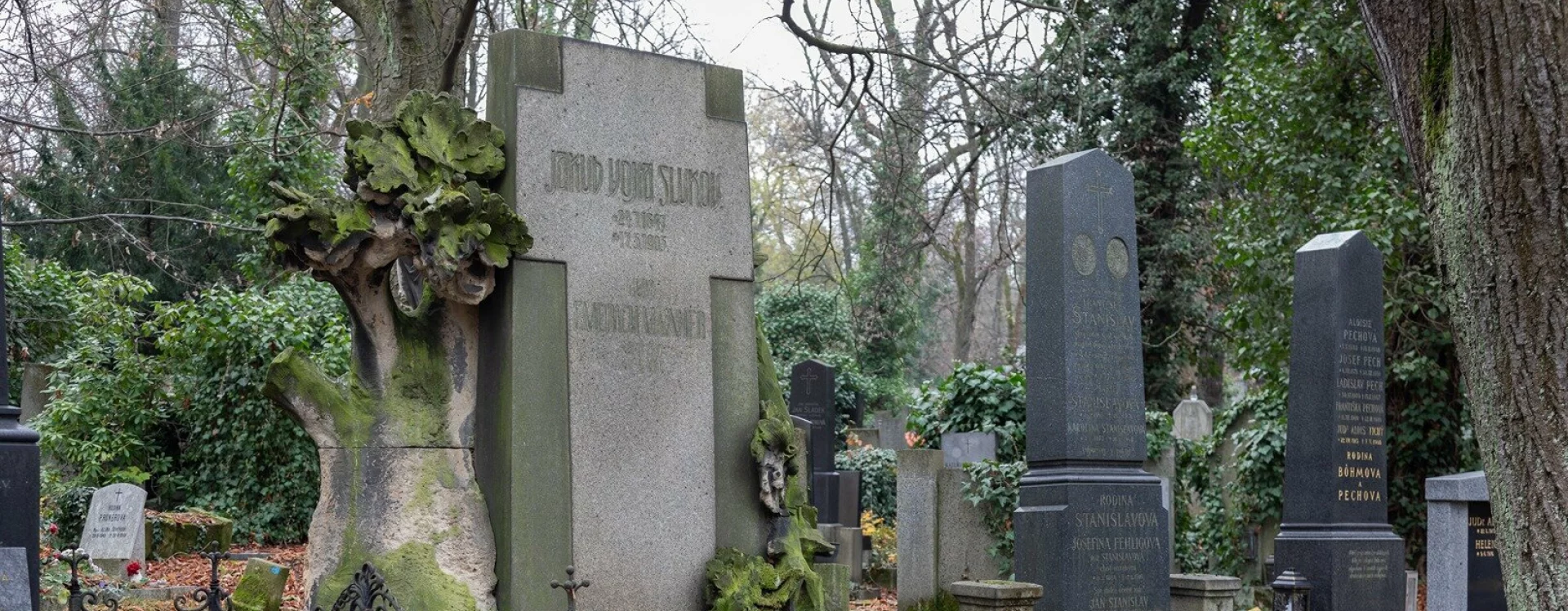
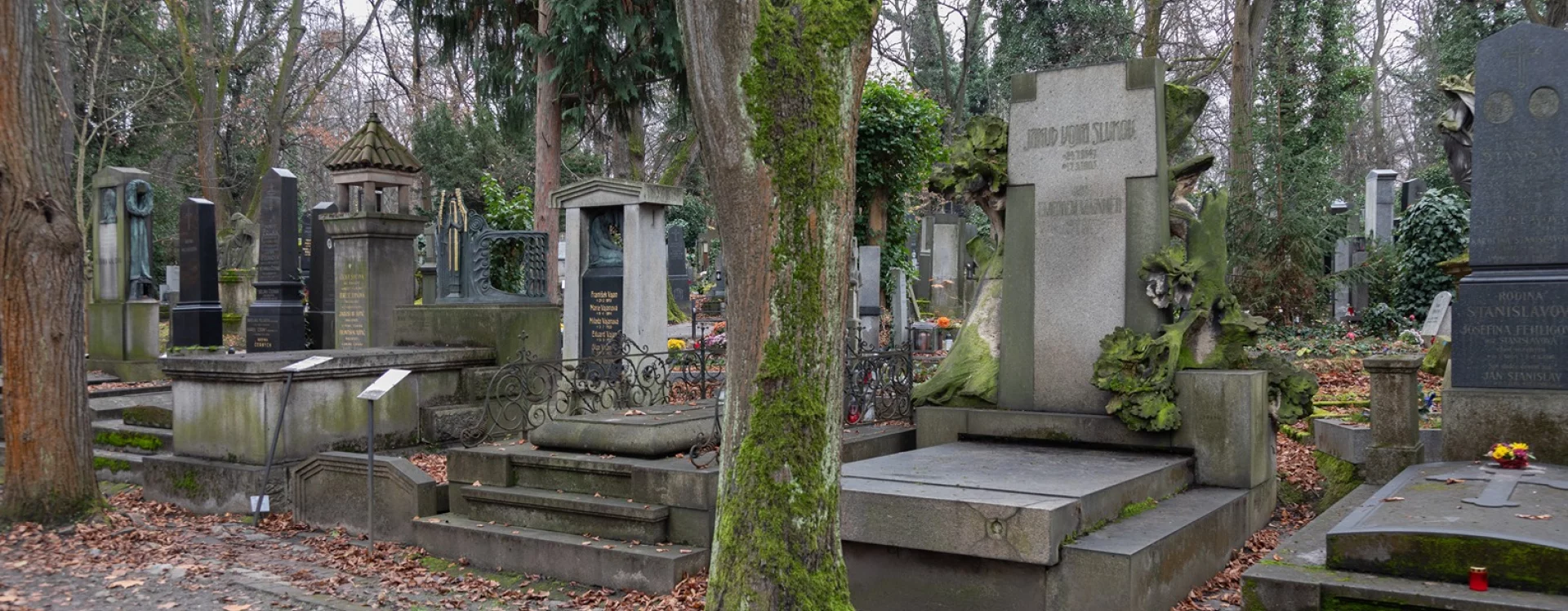
The monument for the popular actor Vojta Slukov was architect Jan Kotěra's first funerary work at Olšany, although he had previously done two large grave monuments at the New Jewish Cemetery (1901–1902) and one for the arcades at Vyšehrad Cemetery. Unlike his early projects, in which Kotěra focused exclusively on architecture, at Vyšehrad he was already collaborating with a sculptor (Stanislav Sucharda), and this cooperation between two leading figures of their time successfully continued at Olšany as well.
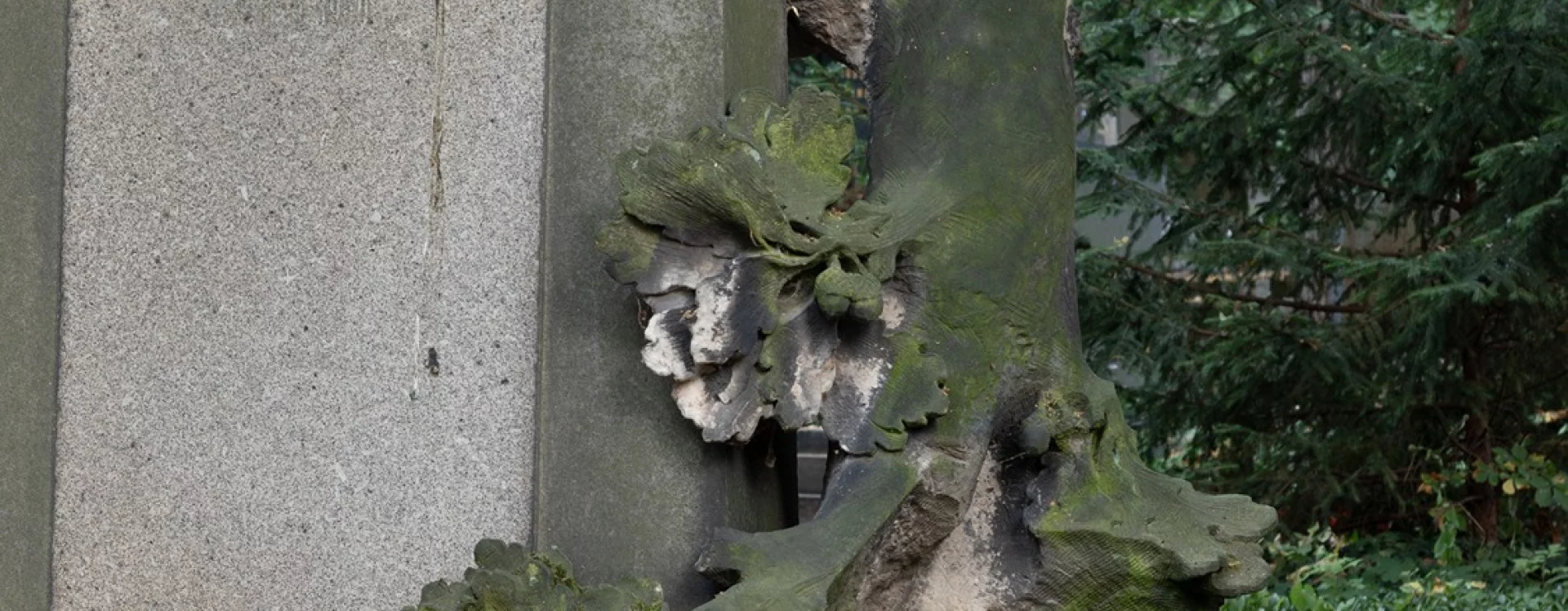
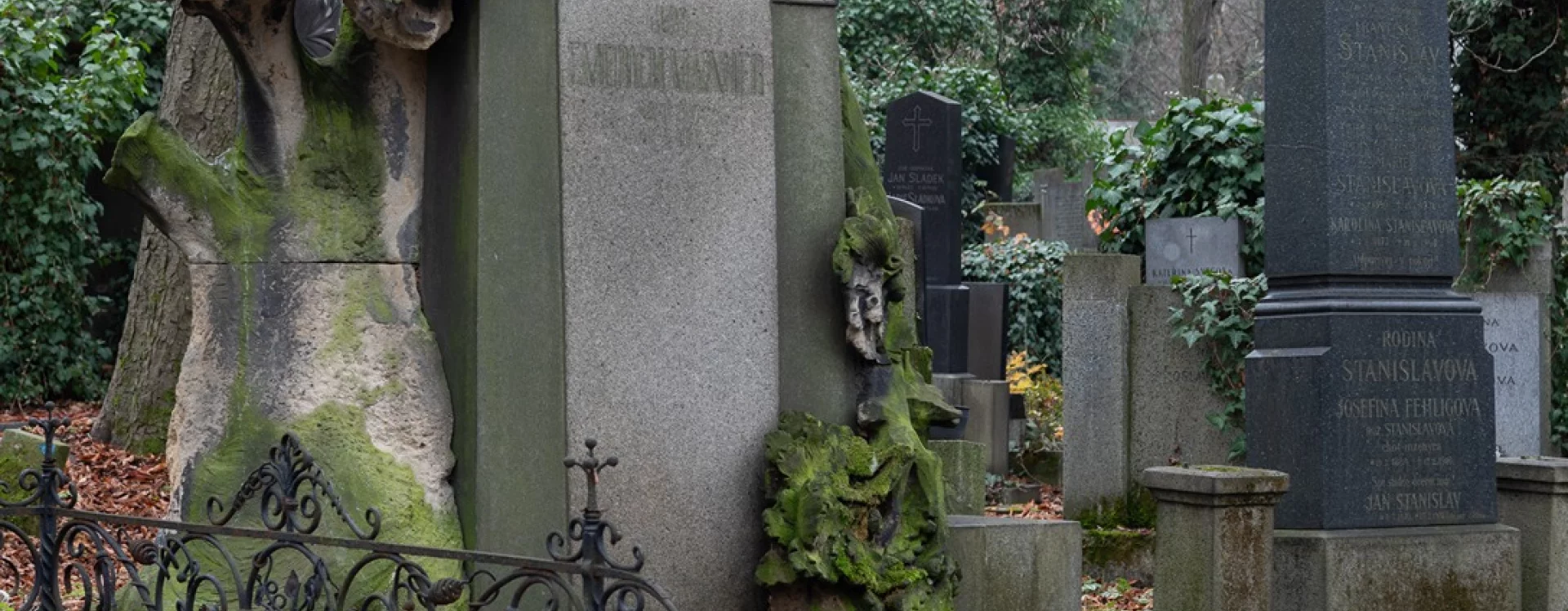
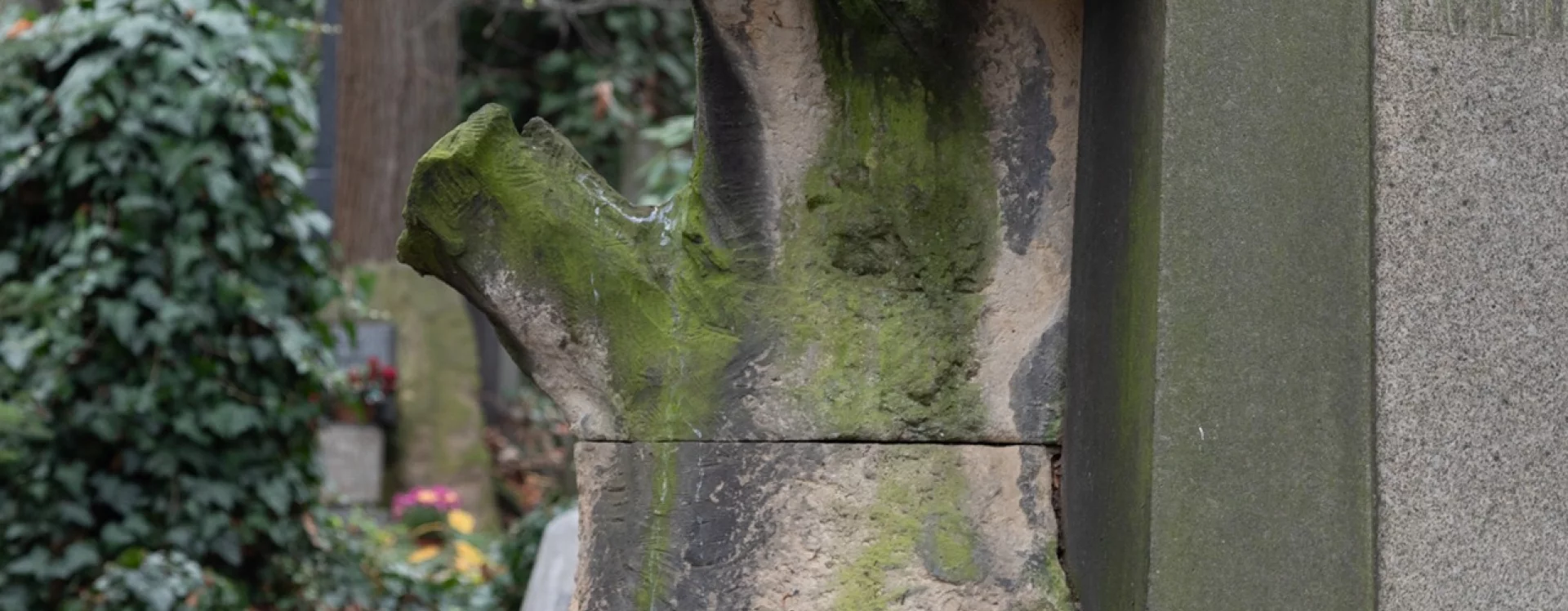
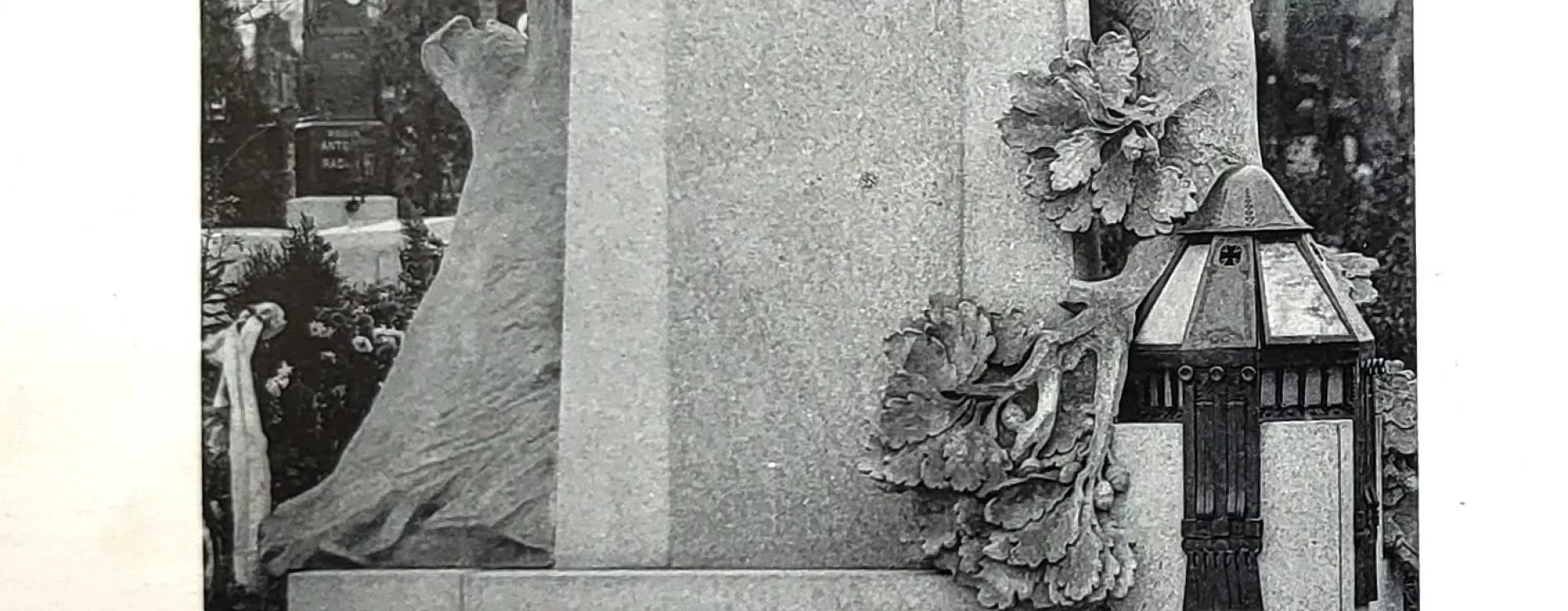
The pure modernist composition of the rectangular volumes (consisting of a stele and a stepped ledger) both complements and contrasts with the Art Nouveau sculptural decoration. The motif of a broken oak trunk was a popular and easily understood symbol of a fruitful life cut short in its prime. The sandstone sculpture of the stately tree is an admirable example of craftsmanship with highly detailed leaves and fruit on its branches.
The monument thus concisely summarizes the character of the deceased, a prominent artist, director, actor of the Provisional and National Theatres, and – many years before he was struck down by tuberculosis – the founder of the Central Union of Czech Actors and briefly the first director of the Uranie Theatre. Besides acting, Slukov poured his energy into patriotic associations, and he also translated and wrote a part of his memoirs. His name lived on in public memory for a long time after his passing: theatre ensembles were named after him, and to this day he is commemorated in his hometown of Zlukov (from which he took his stage name – his actual name was Jakub Vojta).
Kotěra achieved a powerful effect with simple, yet elegant means, beginning with his decision to use light-colored stone: the main part of the monument is made of Mrákotín granite, while the above-described oak is from Hořice sandstone. Besides the choice of material, an important role is also played by the sophisticated workmanship, with the polished cross containing the engraved name of the deceased subtly emerging from the stele's lighter honed background. Mrákotín granite is a noble stone of the highest quality (the obelisk and Plečnik's bowl at Prague Castle were made from it) and has the unique characteristic that it can be found in warm colors as well. In fact, this variant of the marble was chosen for the monument, which weds the solid geometry of the hard stone with the dynamic nature of the sculpture made of fine stone, all of it in golden hues. An important feature of the monument is that its design has taken all points view into account; only from the rear can one see the full volume of the sturdy tree, which lived with many broken branches until the loss of the last one proved fateful. Originally, a crystal-shaped wrought bronze lantern, again bearing a symbol of the cross, was placed into the carefully conceived stone composition. Made in the workshop of metal artist Franta Anýž, who frequently collaborated with Kotěra and Sucharda, it lent the ensemble a sense of harmony. Unfortunately, the grave site's bronze elements have since been stolen (besides the lantern, these also include circular handles on the ledger stone).
Another name inscribed on the cross is that of Dr. Emerich Maixner, the husband of Slukov's daughter and the son of the famous physician of the same name.