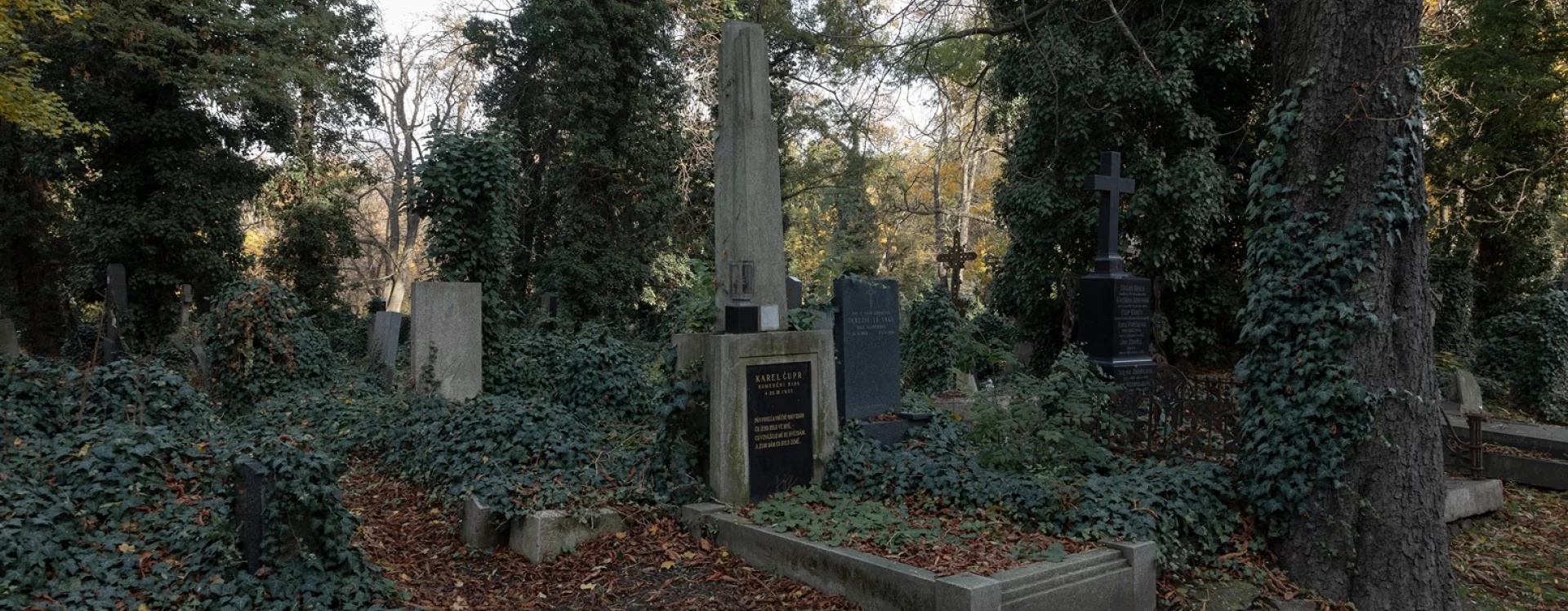
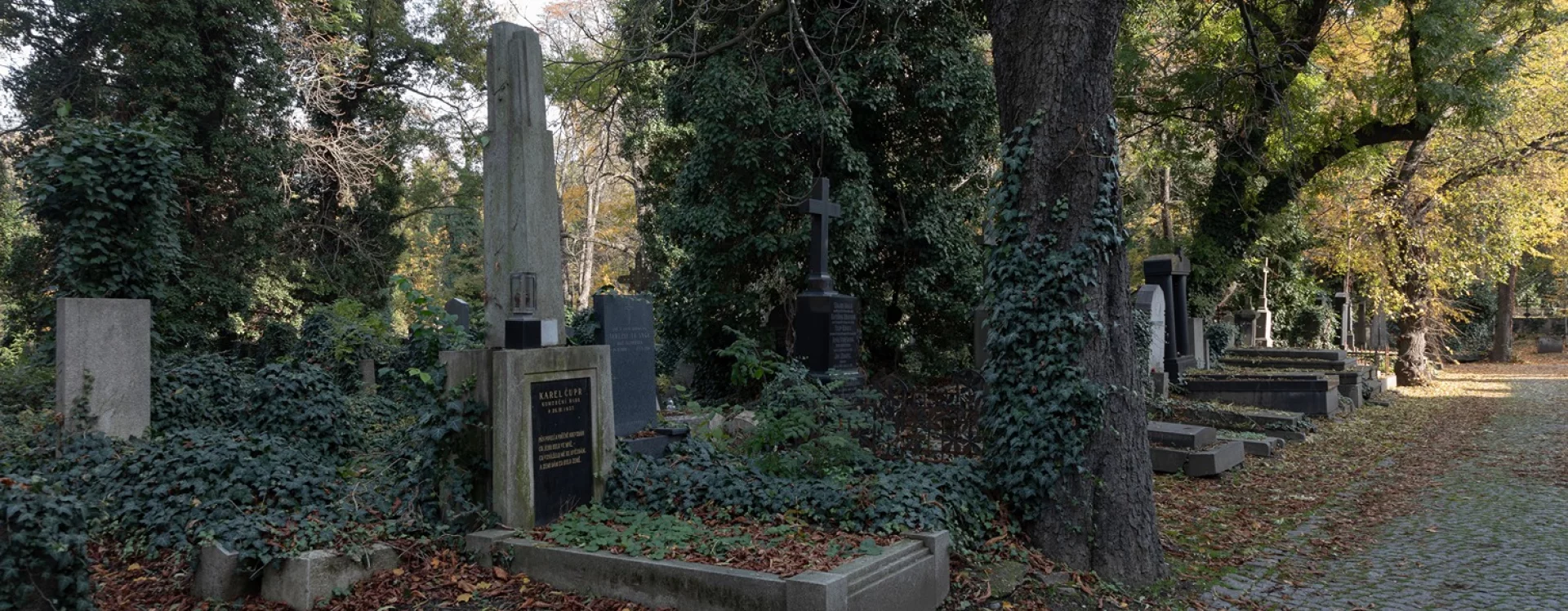
One of Jan Kotěra's grave monuments at Olšany was commissioned by the Rubeš family, which originally owned the relevant plot. In 1933, however, the family's remains were transferred to the tomb of the Nosek family in Cemetery VII, which had also been designed by Kotěra. When and under what circumstances the grave was acquired by Karel Čupr remains unknown.
Karel Čupr was the son of the prominent Czech philosopher, educator, and member of the Bohemian Diet and Imperial Council František Čupr (1821–1882). In the mid-nineteenth century, the elder Čupr had married into the old Kolčavka estate in Libeň (then not yet a part of Prague), where he established a school of agriculture as the first private institute of higher education in Bohemia. Both his sons were born on the Kolčavka estate. Ladislav (1855–1930), a promoter of the Kneipp cure, founded two hydrotherapy spas in Libeň, but not much is known about Karel's business or agricultural activities, except that he achieved the honorary title of commercial councilor. One area of activity about which we have more information is his work as a journalist: writing under the pseudonym K. Č. Kolčavský (after the family estate), Karel contributed to satirical magazines such as Paleček, Světla, and Švanda dudák. He also worked on the editorial board of Národní listy and published several books, including Různá zrnka: epigramní drobty K. Č. Kolčavského (Various Grains: Epigrammatic Fragments by K. Č. Kolčavský, 1885) and Stranou cesty: hrsť poznání a domněnek (By the Wayside: A Handful of Observations and Impressions, 1932).
Čupr's gravestone was long thought to have been destroyed, and its appearance was known only from surviving sketches by Kotěra. It wasn't until 2009 that an appendix to the Bulletin of the Club for Old Prague published a current photograph and basic data. Kotěra designed the work around the time that he was completing his plans for a municipal museum in Hradec Králové in the style of geometric modernism.
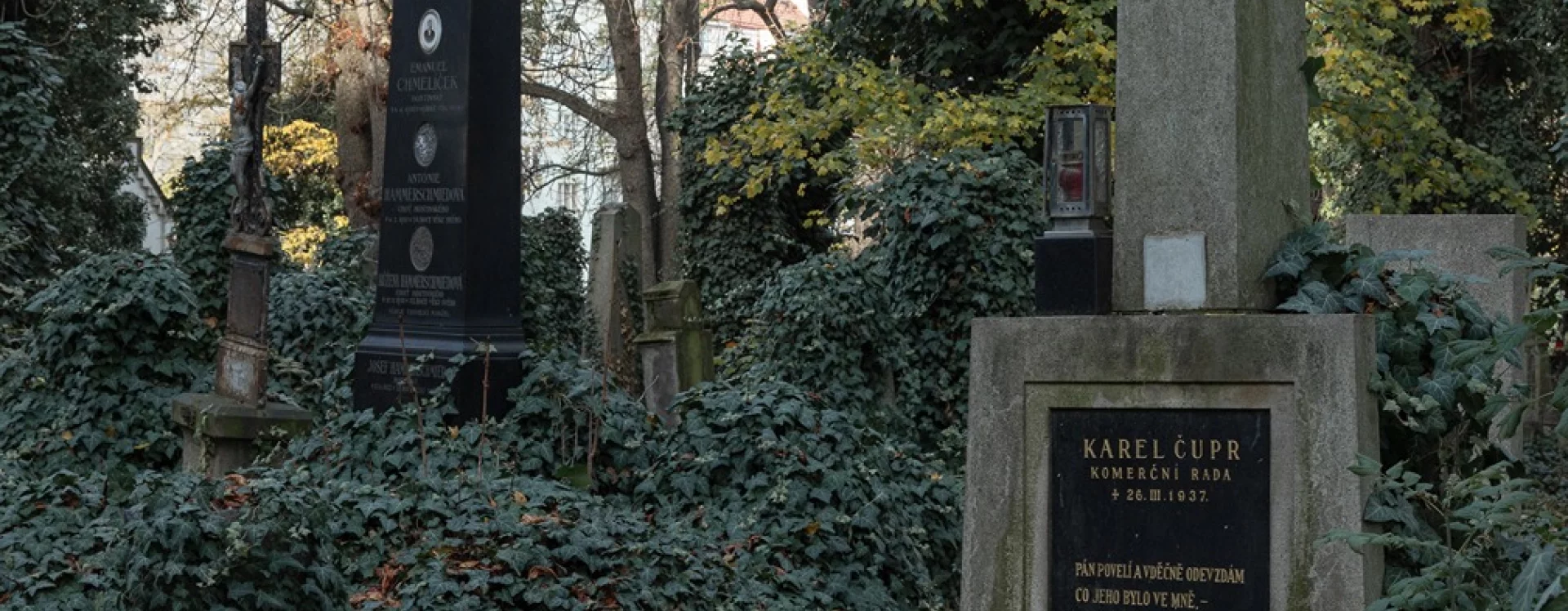
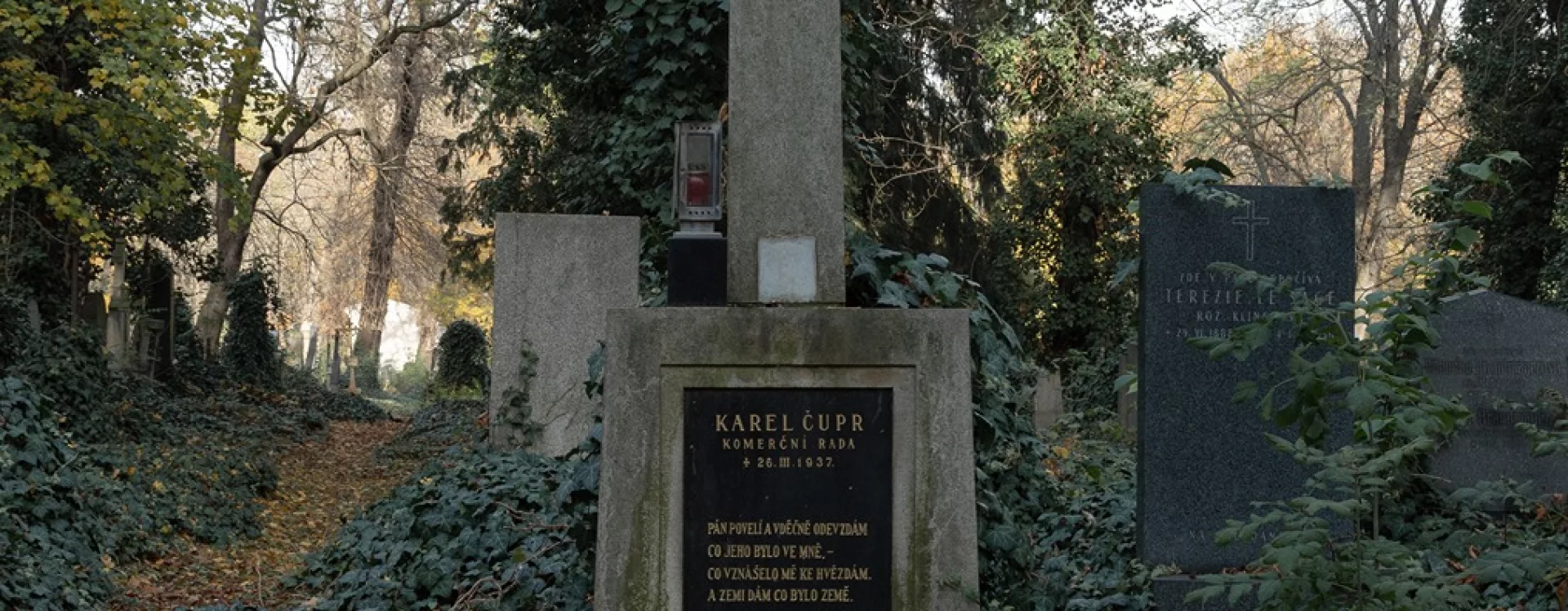
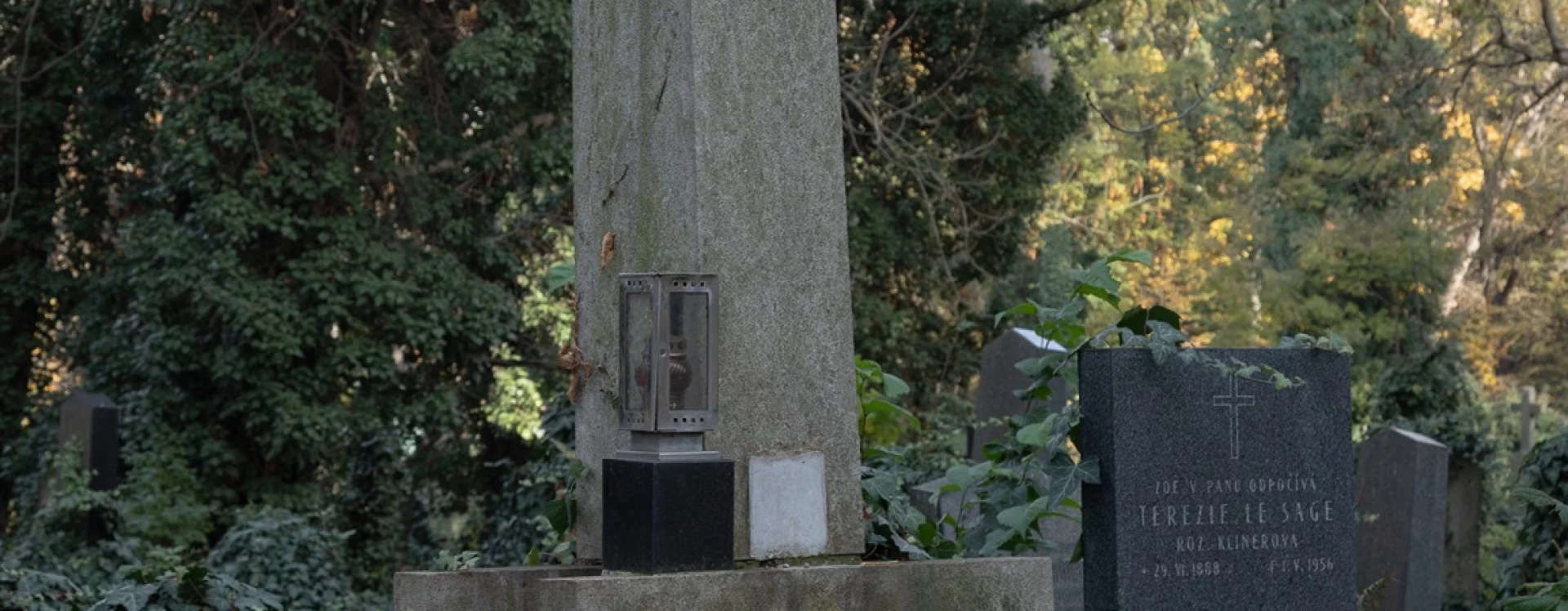
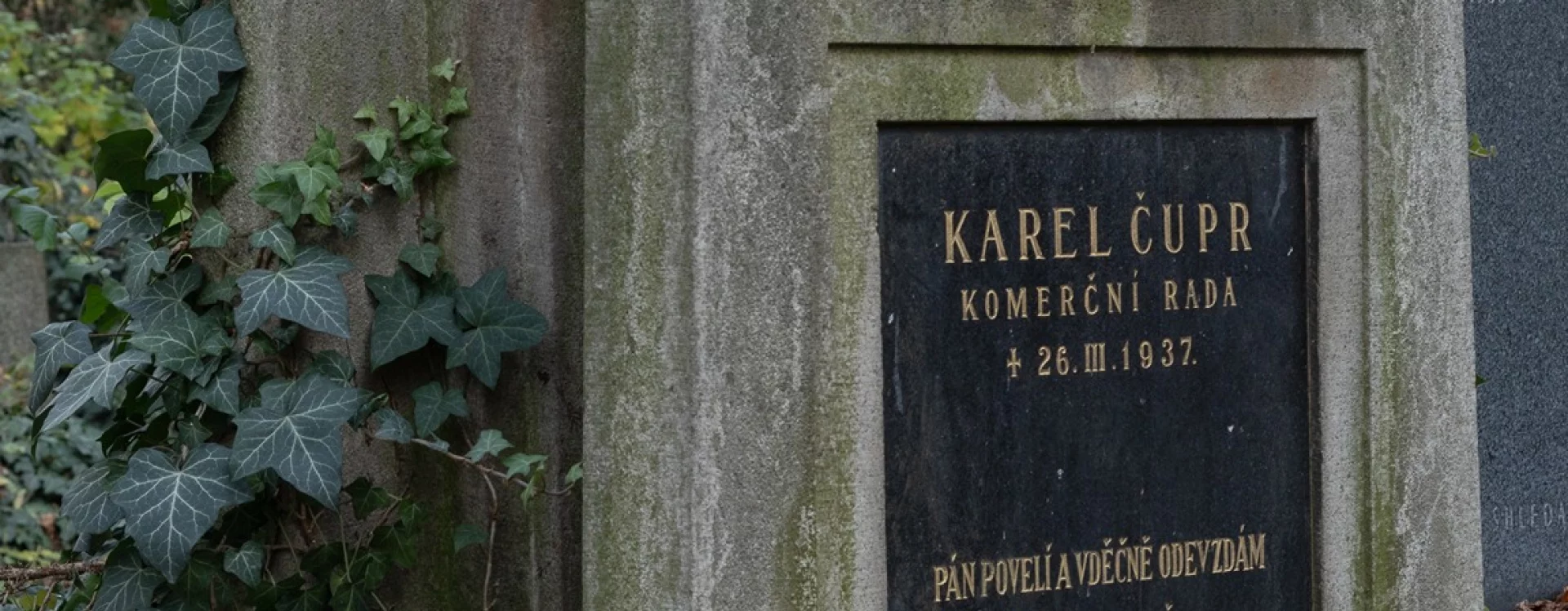
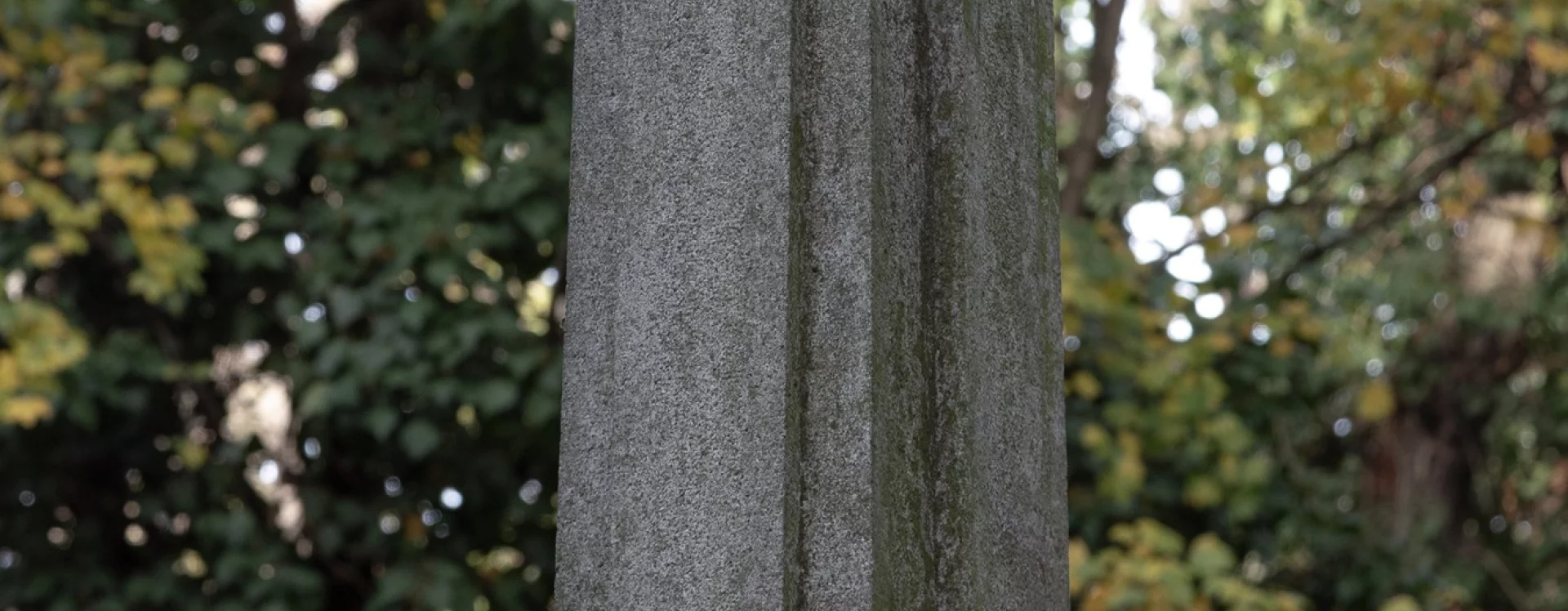
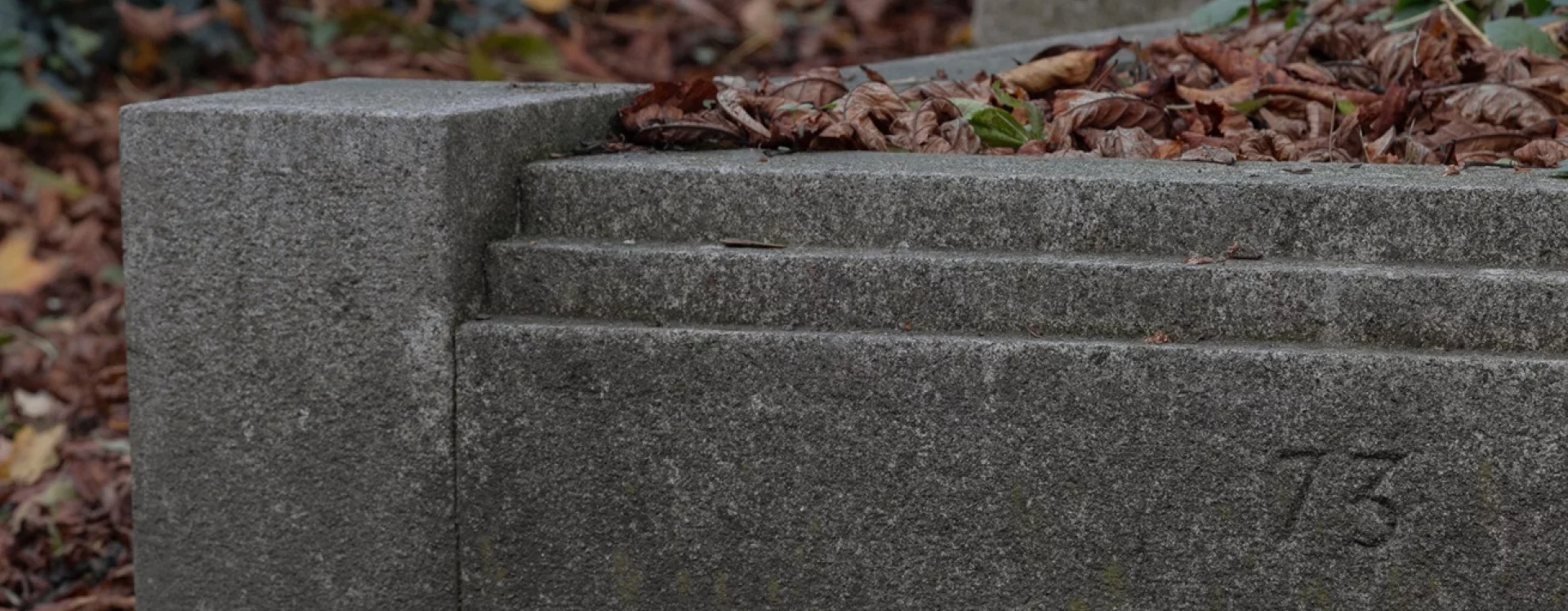
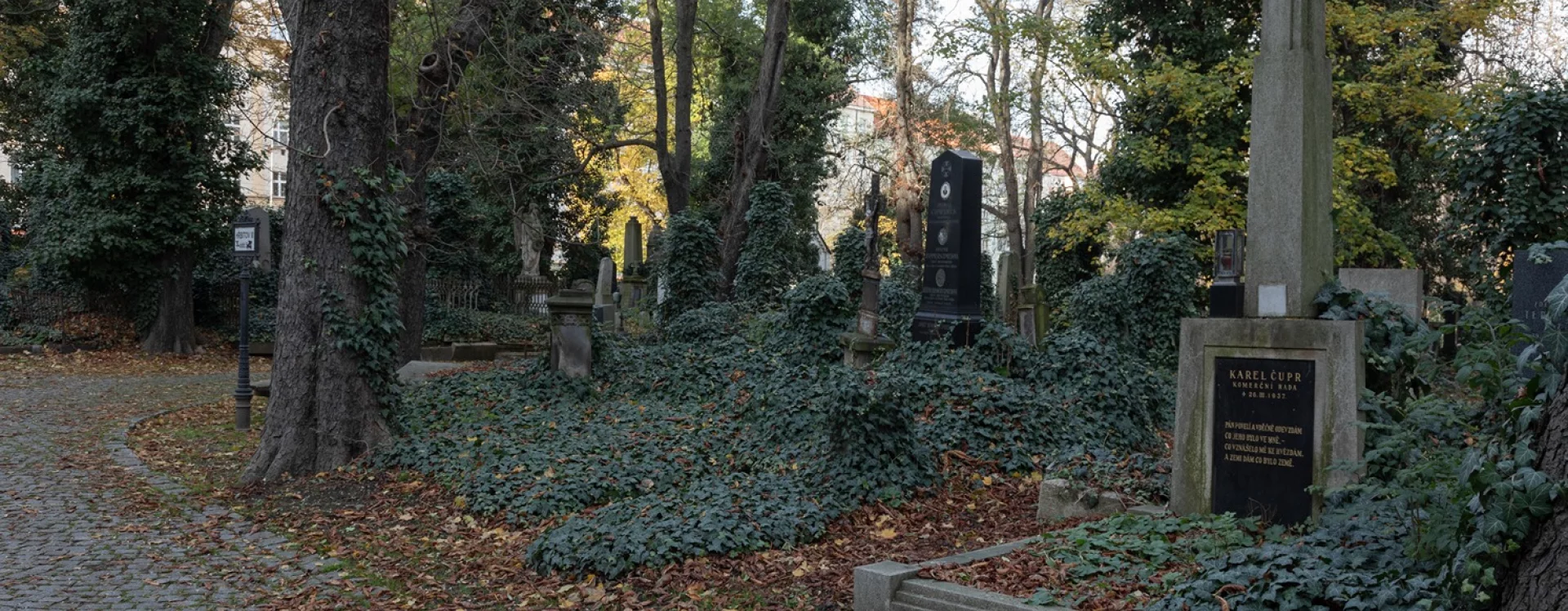
The honed Mrákotín granite gravestone stands at the head of a simple grave bed without a top slap. The front curbstone is topped by a stepped profile. The gravestone is simple, symmetrical, and distinctly vertical in nature. Its lower part consists of two parallel slabs that taper slightly at the top. A slender pylon rises from between them, topped by a section with indented corners. When seen from in profile from above (a view not usually available to passers-by), it looks like a cross. A polished black Swedish granite console with a metal lantern on it originally stood at the foot of the pylon at the center of the stele. Today, this element has been moved to the left, which somewhat reduces the quality of the original design. The simple yet sophisticated composition makes a highly dignified, almost monumental impression. Several of the motifs, for instance the stepped profiling or the parallel slabs with the space between them, resemble elements found on the main elevation of the museum in Hradec Králové. A plaque made of polished gabbro is inscribed with the name of the deceased, his date of death, and a poetic epitaph (author unknown):
The Lord commands, and I gratefully surrender
that of His which was in me, –
that which lifted me to the stars.
And I give to the earth what was of the earth.
Literature
Vladimír Šlapeta, Daniela Karasová et al.. Jan Kotěra 1871–1923: Zakladatel moderní české architektury. Praha, 2001. s. 324.
Drahomíra Březinová, Barbora Dudíková Schulmannová, Jana Růžičková. Jan Kotěra a Olšanské hřbitovy, Za Starou Prahu, Věstník za starou Prahu XXXIX. (X.), č. 3/2009, Příloha. p. nepag.
Otakar Novotný. Jan Kotěra a jeho doba. Praha, 1958.
Sources
Archiv HPS, archiv pražských hřbitovů, složka Čupr bývalý Rubeš III, 5, 73.
Vladislava Holzapfelová, Funerální umění na vybraných pražských hřbitovech 1850–1950 (disertační práce), Ústav dějin křesťanského umění KTF UK, Praha 2016, s.117n.
Jan Vobořil. Komunální elity v Libni 1880–1901 (diplomová práce), Ústav hospodářských a politických dějin FF UK, Praha 2006. Diplomová práce.
ČUPR Kolčavský Karel 1862–1937. Available from: https://biography.hiu.cas.cz/wiki/ČUPR_Kolčavský_Karel_1862–1937 [accessed 1. 5. 2025]
Karel Čupr Kolčavský. Available from: https://aleph.nkp.cz/F/1EPSPCDJMUFJ91AFUPYMVAGFJRUG6HS7VV9QEXNQG4HCSXX3D3-28500?func=short-rank&action=RANK&W01=Karel&W02=ČUpr&W03=Kolčavský [accessed 1. 5. 2025]
František Čupr (filosof). Available from: https://cs.wikipedia.org/wiki/František_Čupr_(filozof) [accessed 1. 5. 2025]
O Františku Čuprovi na cestu k jeho refugiu. Available from: https://czumalo.wordpress.com/2019/03/31/u3v-fsv-cvut-pamatky-velke-prahy-prednaska-2-dubna-2019/ [accessed 1. 5. 2025]
Kolčavka. Available from: https://www.praha9.cz/kolcavka [accessed 1. 5. 2025]
Čupr, Ladislav. Available from: https://katalog.cbvk.cz/arl-cbvk/cs/detail-cbvk_us_auth-0348133-cupr-Ladislav/ [accessed 1. 5. 2025]