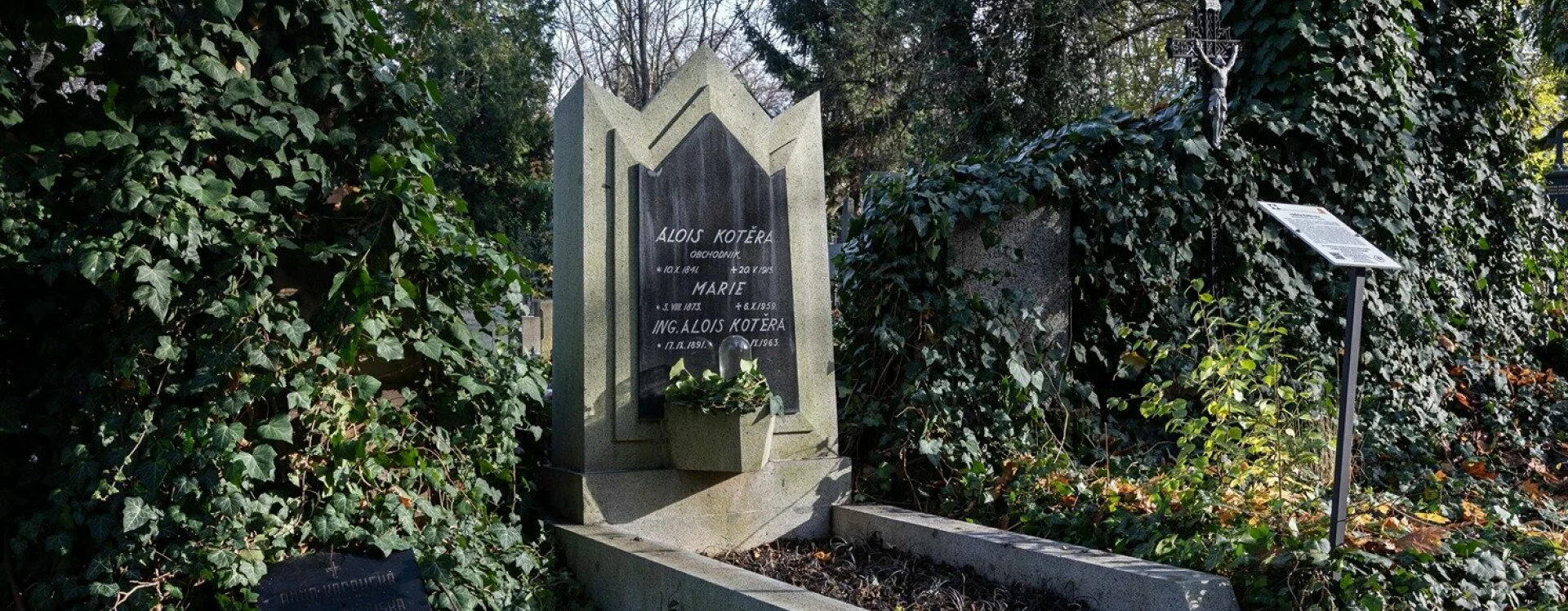
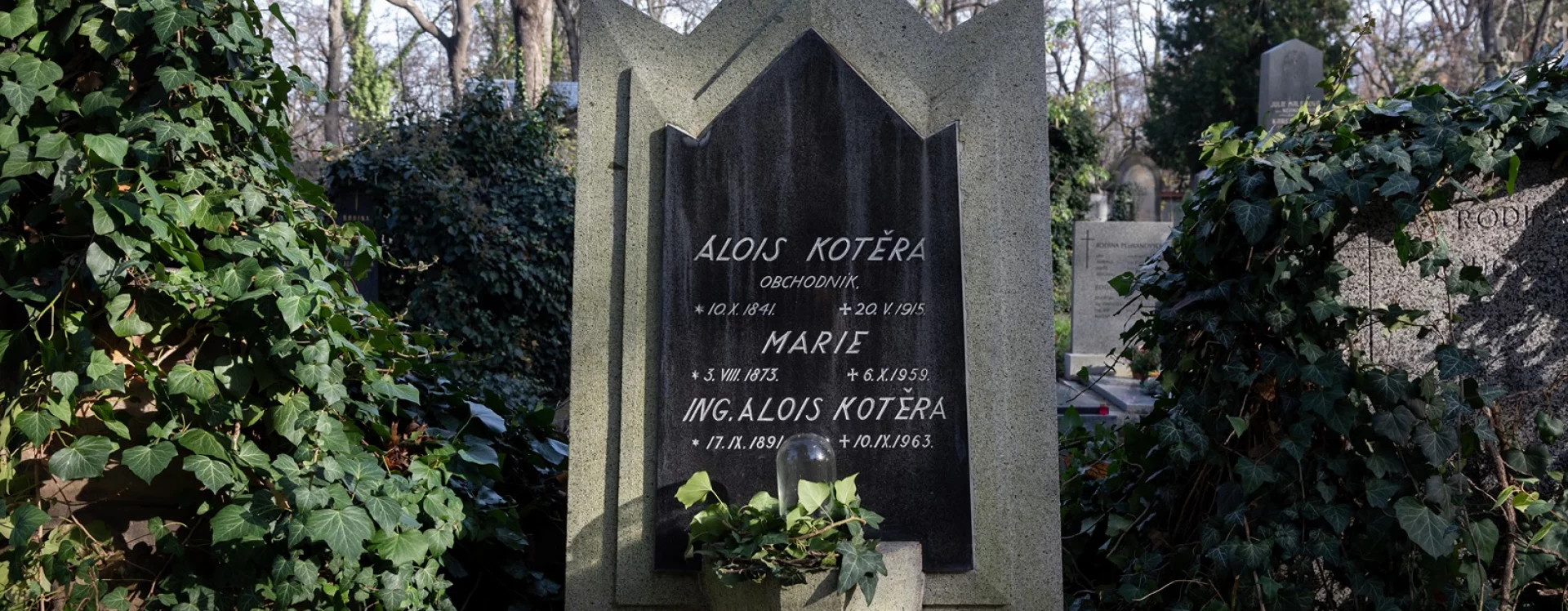
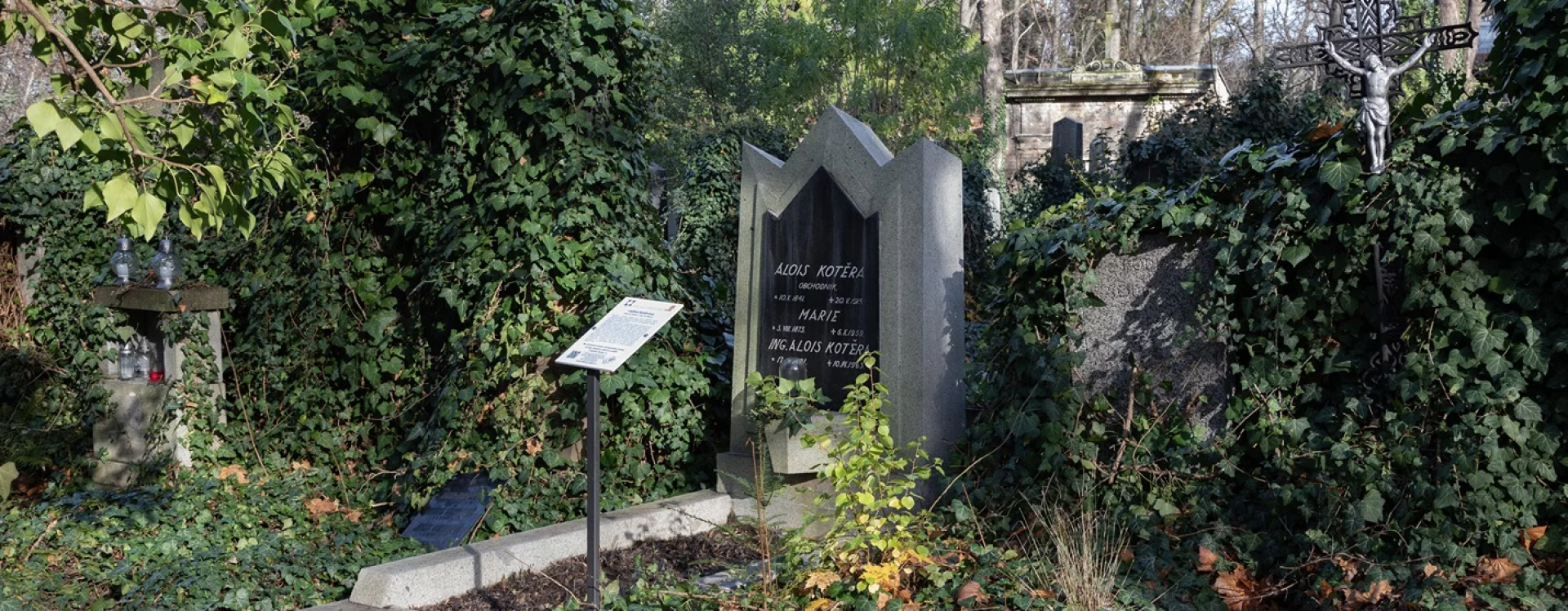
Jan Kotěra designed this grave for his relatives during the difficult years of the First World War, when the sharp decline in building activity made private tombs and grave monuments welcome commissions for architects. The grave was for Alois Kotěra, whom the literature usually identifies as the architect's uncle. Next to his name, the inscription on the gravestone describes him simply as "merchant." Buried alongside him are Marie (1853–1959) and Alois Kotěra (1891–1963).
Although Kotěra was active during the Cubist period, it is generally known that he did not design buildings in this style. In funerary architecture, he drew on Cubist influences to varying degrees. In terms of stylistic purity, the most distinctive of his Cubist works is the gravestone for Alois Kotěra. Unfortunately, his proposed crystalline Cubist grave for Emil Hácha was never realized.
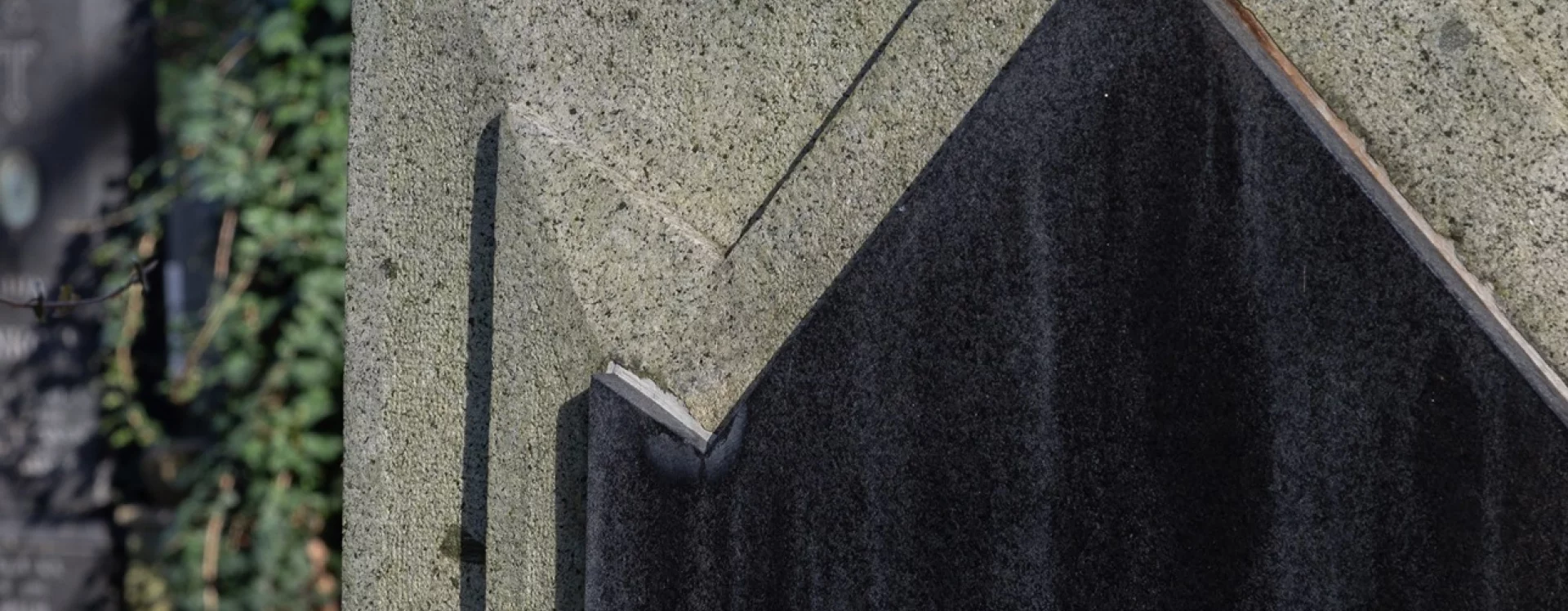
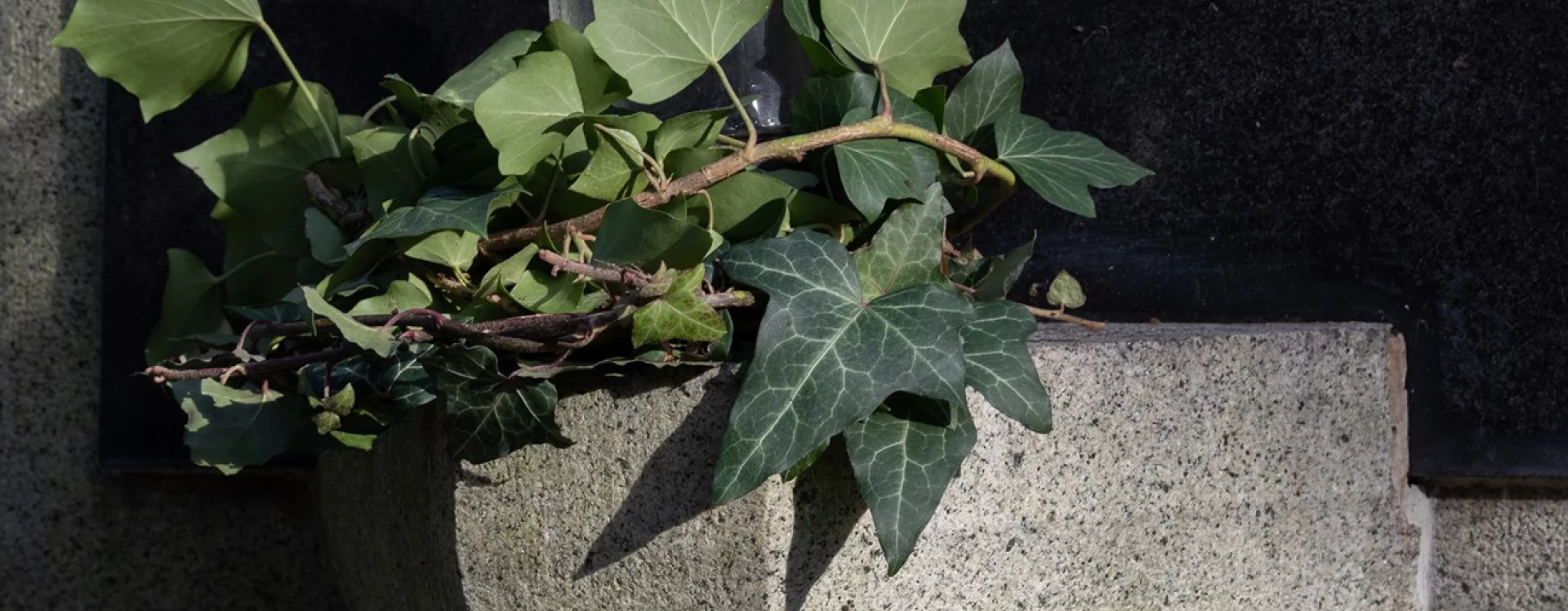
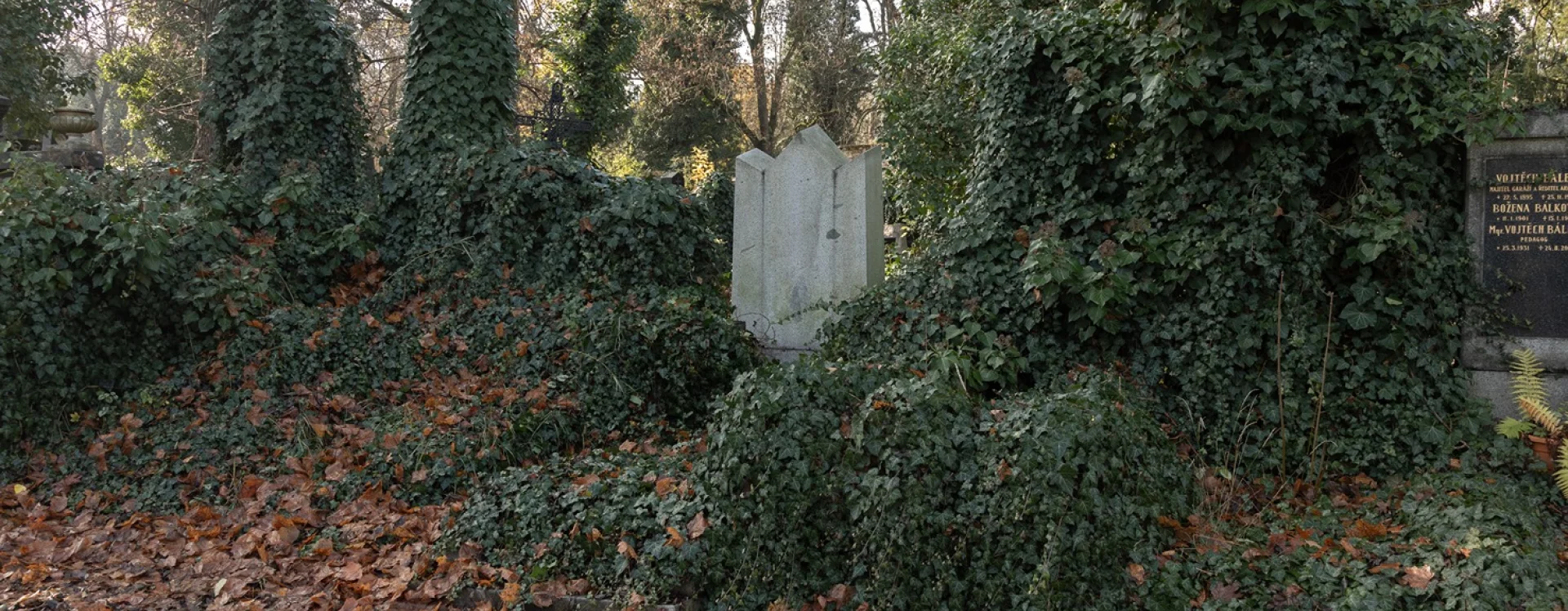
The grave marker's overall design works with the contrast between the "green" grave plot (today planted with tulips) and the symmetrical stone stele with a triple-pointed upper edge in the style of pyramidal Cubism. The taller central peak is geometrically founded on an equilateral triangle, a typically Cubist shape that here probably symbolizes the Holy Trinity. In terms of composition, the gravestone works with a set of diagonal surfaces and repeating angled lines. The faces of the kerbstones bordering the planted area are at an angle, as is the stele itself, whose front face is not perfectly vertical but is inclined slightly to the rear, as is its upper surfac. The gravestone's pointed outline is mirrored on the inscription tablet and on its protruding frame. Jan Kotěra here used a simpler form of recessed framing, a more monumental and complicated version of which can be found on the Mozarteum Palace on Jungmannova Street (1913). At the foot of the stele is a centrally placed triangular console for a metal candleholder (since stolen). Overall, it is a dynamic composition that slowly rises from the front panel up to the highest peak. This sophisticated system of delicate interacting elements guides the visitors eyes diagonally, "forward and upward."
The gravestone was carved from light honed Požáry granite, while the inscription tablet is made of black polished Swedish granite. The distinctive color contrast between these materials accentuates the grave architecture's dynamic impact. The names on the tablet are written with an angular "E" whose form reflects Cubist typography's tendency toward deformation and fragmentation and its use of sharp edges and angled lines.
The grave was completely renovated in 2018 thanks to financial support from the Prázdné Domy association.
Amáta M. Wenzlová, 2025
Although Kotěra was active during the Cubist period, it is generally known that he did not design buildings in this style. In funerary architecture, he drew on Cubist influences to varying degrees. In terms of stylistic purity, the most distinctive of his Cubist works is the gravestone for Alois Kotěra. Unfortunately, his proposed crystalline Cubist grave for Emil Hácha was never realized.
The grave marker's overall design works with the contrast between the "green" grave plot (today planted with tulips) and the symmetrical stone stele with a triple-pointed upper edge in the style of pyramidal Cubism. The taller central peak is geometrically founded on an equilateral triangle, a typically Cubist shape that here probably symbolizes the Holy Trinity. In terms of composition, the gravestone works with a set of diagonal surfaces and repeating angled lines. The faces of the kerbstones bordering the planted area are at an angle, as is the stele itself, whose front face is not perfectly vertical but is inclined slightly to the rear, as is its upper surfac. The gravestone's pointed outline is mirrored on the inscription tablet and on its protruding frame. Jan Kotěra here used a simpler form of recessed framing, a more monumental and complicated version of which can be found on the Mozarteum Palace on Jungmannova Street (1913). At the foot of the stele is a centrally placed triangular console for a metal candleholder (since stolen). Overall, it is a dynamic composition that slowly rises from the front panel up to the highest peak. This sophisticated system of delicate interacting elements guides the visitors eyes diagonally, "forward and upward."
The gravestone was carved from light honed Požáry granite, while the inscription tablet is made of black polished Swedish granite. The distinctive color contrast between these materials accentuates the grave architecture's dynamic impact. The names on the tablet are written with an angular "E" whose form reflects Cubist typography's tendency toward deformation and fragmentation and its use of sharp edges and angled lines.
The grave was completely renovated in 2018 thanks to financial support from the Prázdné Domy association.
Amáta M. Wenzlová, 2025
Literature
Vladimír Šlapeta, Daniela Karasová et al.. Jan Kotěra 1871-1923: Zakladatel moderní české architektury. Praha, 2001, s. 324.
Drahomíra Březinová, Barbora Dudíková Schulmannová, Jana Růžičková. Jan Kotěra a Olšanské hřbitovy, Za Starou Prahu, Věstník za starou Prahu XXXIX. (X.), č. 3/2009, Příloha. 2009.
Miloš Szabo. Pražské hřbitovy. Olšanské hřbitovy V./1. díl. Praha, 2014, s. 184, 189.